Another Episode — Nicola Verlato

(More at Nicola Verlota’s website).

Woman with a Book — Fernand Leger

Watch Derek Jarman’s Stylized Wittgenstein Biography


The Dingoes That Park Their Brains with Their Gum — Jean-Michel Basquiat

Book Shelves #30, 7.21.2012


20120721-170117.jpg


Book shelves series #30, thirtieth Sunday of 2012

See a full length shot of this book shelf (or don’t).

Lots of publication series editions here, including this batch of Melville House Art of the Contemporary Novella:

20120721-170132.jpg

I reviewed most of these and they’re all very good—especially Sandokan.

Some ratty ratty Penguin Classics that I procured from various institutions I won’t name here. The Mallory was a particular obsession for a few years:

20120721-170147.jpg

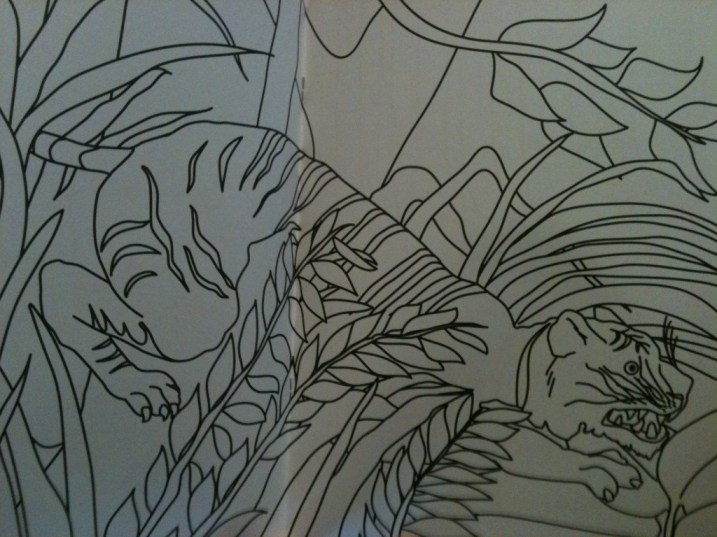
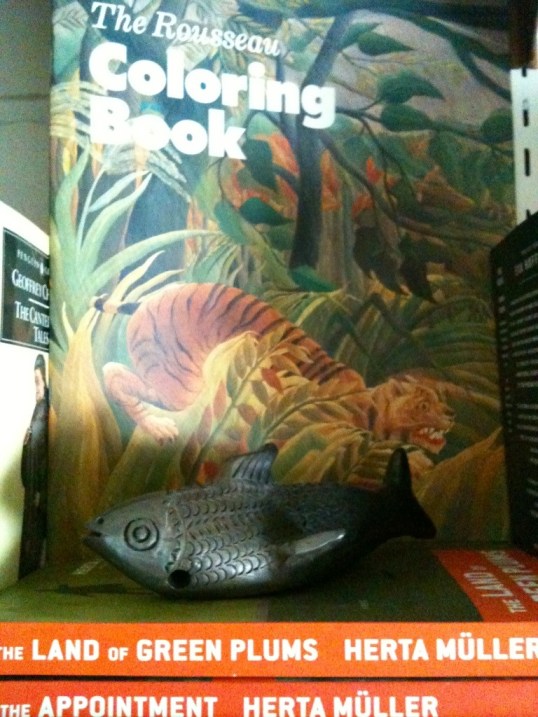
The Rousseau Coloring Book was a gift from a friend to our daughter, but I stole it and put it up here.
20120721-170158.jpg

20120721-170224.jpg

I reviewed all of Picador’s BIG IDEAS // small books series; I actually got a new one, Privacy, in the mail the other day. Violence and  Humiliation are particularly good.

Next to those: various World of Art series books, most of them my wife’s. (Bonus points if you guess mine correctly):

20120721-172745.jpg

I have no idea why these books are grouped here like this; I’m guessing they were all in the same box when we moved. I know we have multiple copies of several of these:

20120721-170738.jpg

There’s a basket with a Klee book and some mini umbrellas and other stuff, not pictured, and then this lot on the end, including to “Introducing” books that are remainders from my freshman year of college; they are terrible and I should get rid of them. I stole this edition of The Stranger from my high school in the 10th or 11th grade. The Chronicles of Narnia box set was a gift from my aunt when I was like seven or eight:
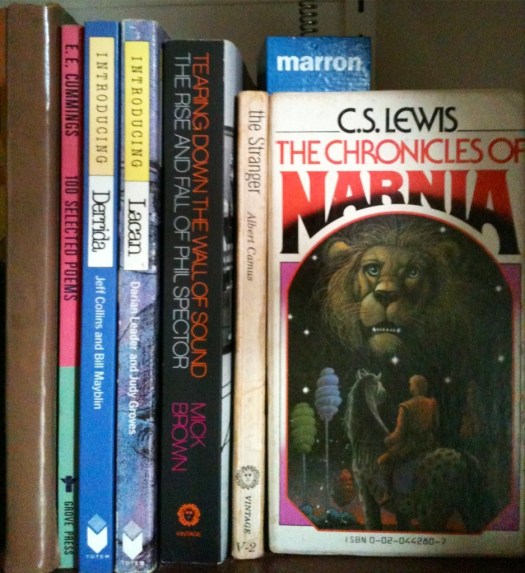
20120721-170753.jpg


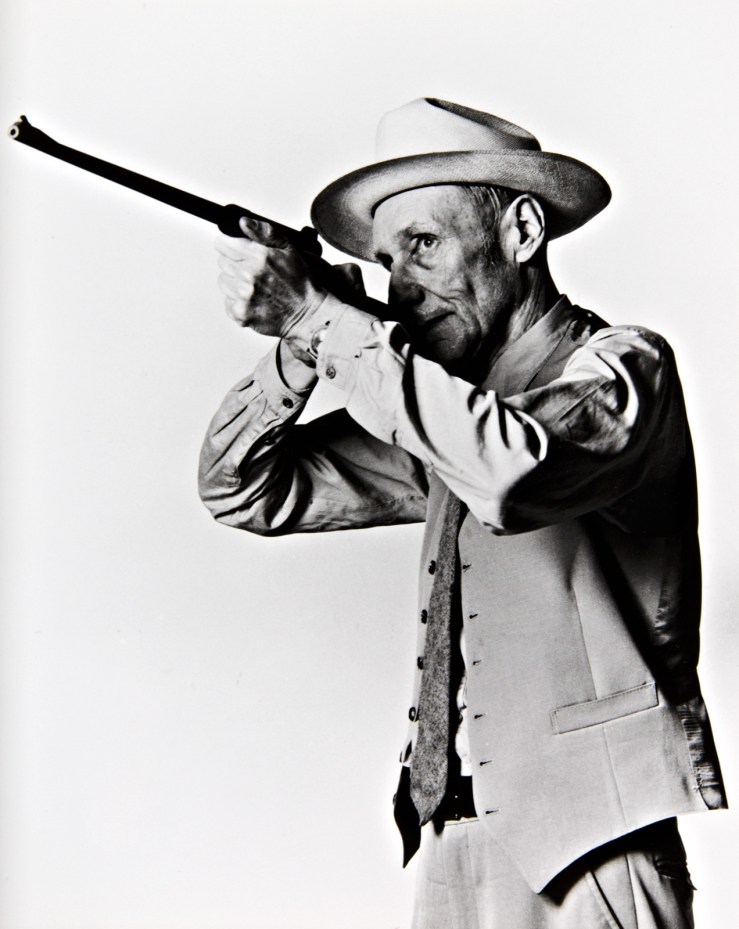
Portrait of William Burroughs — Robert Mapplethorpe

Portrait of a Man with a Book — Parmigianino

“Cities” (Live in 1980) — Talking Heads

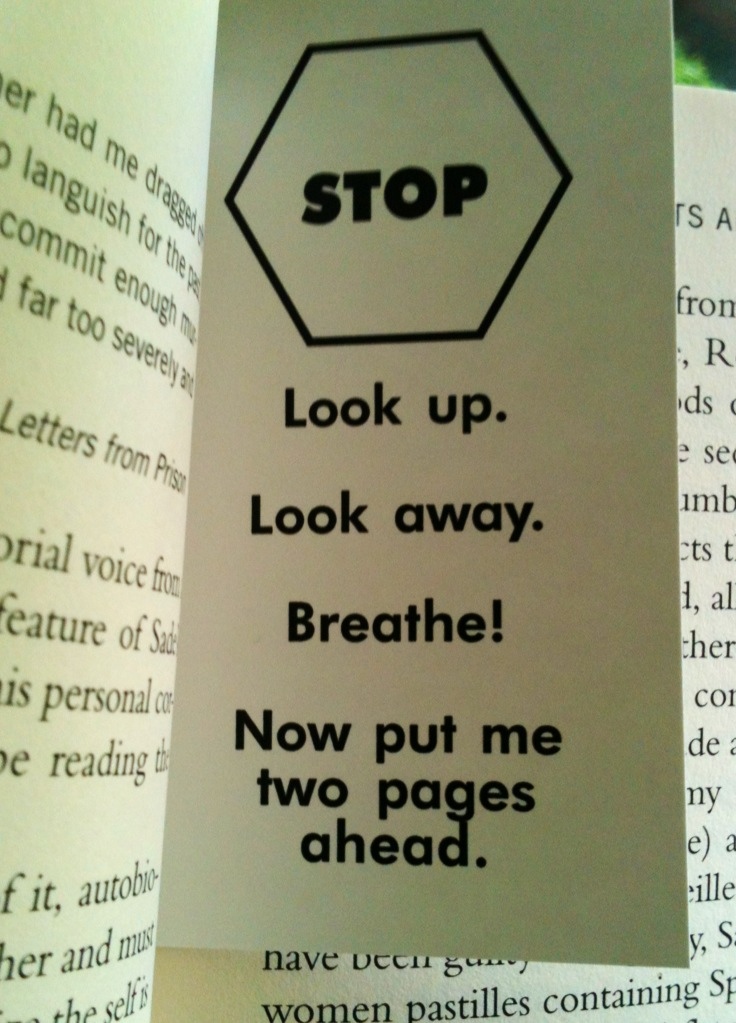
Bookmark Acquired, Some Time Last Week

20120716-124626.jpg

Hart Crane — David Alfaro Siqueiros

The Marquis de Sade: “You Need Only Have a Good Heart”

PRIEST – Then we should not shrink from the worst of all crimes.

DYING MAN – I say nothing of the kind. Let the evil deed be proscribed by law, let justice smite the criminal, that will be deterrent enough; but if by misfortune we do commit it even so, let’s not cry over spilled milk; remorse is inefficacious, since it does not stay us from crime, futile since it does not repair it, therefore it is absurd to beat one’s breast, more absurd still to dread being punished in another world if we have been lucky to escape it in this. God forbid that this be construed as encouragement to crime, no, we should avoid it as much as we can, but one must learn to shun it through reason and not through false fears which lead to naught and whose effects are so quickly overcome in any moderately steadfast soul. Reason, sir – yes, our reason alone should warn us that harm done our fellows can never bring happiness to us; and our heart, that contributing to their felicity is the greatest joy Nature has accorded us on earth; the entirety of human morals is contained in this one phrase: Render others as happy as one desires oneself to be, and never inflict more pain upon them than one would like to receive at their hands. There you are, my friend, those are the only principles we should observe, and you need neither god nor religion to appreciate and subscribe to them, you need only have a good heart. But I feel my strength ebbing away; preacher, put away your prejudices, unbend, be a man, be human, without fear and without hope forget your gods and your religions too: they are none of them good for anything but to set man at odds with man, and the mere name of these horrors has caused greater loss of life on earth than all other wars and all other plagues combined. Renounce the idea of another world; there is none, but do not renounce the pleasure of being happy and of making for happiness in this. Nature offers you no other way of doubling your existence, of extending it. – My friend, lewd pleasures were ever dearer to me than anything else, I have idolized tham all my life and my wish has been to end it in their bosom; my end draws near, six women lovelier than the light of day are waiting in the chamber adjoining, I have reserved them for this moment, partake of the feast with me, following my example embrace them instead of the vain sophistries of superstition, under their caresses strive for a little while to forget your hypocritical beliefs.

NOTE: The dying man rang, the women entered; and after he had been a little while in their arms the preacher became one whom Nature had corrupted, all because he had not succeeded in explaining what a corrupt nature is.

From the Marquis de Sade’s Dialogue Between a Priest and a Dying Man (1782).

Still Life with Books and Candle — Henri Matisse

Thaishun with Elephants — Utagawa Kuniyoshi

Guy Debord: “The spectacle obliterates the boundaries between self and world”

The spectacle obliterates the boundaries between self and world by crushing the self besieged by the presence-absence of the world. It also obliterates the boundaries between true and false by repressing all directly lived truth beneath the real presence of the falsehood maintained by the organization of appearances. Individuals who passively accept their subjection to an alien everyday reality are thus driven toward a madness that reacts to this fate by resorting to illusory magical techniques. The essence of this pseudoresponse to an unanswerable communication is the acceptance and consumption of commodities. The consumer’s compulsion to imitate is a truly infantile need, conditioned by all the aspects of his fundamental dispossession. As Gabel puts it in describing a quite different level of pathology, “the abnormal need for representation compensates for an agonizing feeling of being at the margin of existence.”

Guy Debord, The Society of the Spectacle (section 219).

Evening Wind — Edward Hopper

Waldhaus — Thomas Bernhard

“Waldhaus” by Thomas Bernhard:

We had no luck with the weather and the guests at our table were repellent in every respect. They even spoiled Nietzsche for us. Even after they had had a fatal car accident and had been laid out in the church in Sils, we still hated them.

Still Life with Three Books — Vincent van Gogh