I had been reading William T. Vollmann’s enormous book Imperial. I bought the book in paperback and then put an illicit copy on my Kindle (this riff is not about the ethics of that move). It’s just easier to read that way, especially at night. At some point in Imperial, probably at some mention of coyotes or polleros—smugglers of humans—I felt a tug in the back of my brain pan, a tug that wanted to pull up Roberto Bolaño’s big big novel 2666—also on my Kindle (also an illicit copy, although I bought the book twice).
This is how I ended up rereading 2666 straight through. It was unplanned.
Like many readers, I aim to reread more than I actually end up rereading.
Truly excellent novels are always better in rereading: richer, fuller, more resonant. Sometimes we might find we’ve thoroughly misread them. (Imagine my horror rereading Lolita in my twenties to discover the vein of evil throbbing through it). Sometimes we find new tones that seemed impossible on the first run through. (I’ve read Blood Meridian at least once a year since the first time I read it, and it keeps getting funnier and funnier). Most of the time, rereading confirms the greatness of the novel, a greatness inhabiting the smallest details. (I’m looking at you Moby-Dick).
Even a riff should have a thesis, and here’s mine: 2666 has a reputation for being fragmentary and inconclusive—and in some ways, yes, of course it is—but a second full reading of 2666 reveals a book that is cohesive, densely allusive, and thematically precise.
Rereading is one way of stepping back to see the bigger picture that Bolaño twists together from smaller fragments. Rereading reveals the intertextual correspondences betweenthe books of 2666 (the five books proper, the “Parts,” of course, but also the texts, invented or real, that those books house).
2666 is also a book about writing.
Earth, Giuseppe Arcimboldo
To wit: “The Part About Archimboldi,” the fifth and final book of 2666, the book that features Benno von Archimboldi, the writer at the heart of 2666—this final chapter sews together many of the book’s (apparently) loose threads.
Two problems with the point above:
A. Benno von Archimboldi (aka Hans Reiter) is not at the heart of 2666 but rather a shadowy trace slipping through the margins, a ghost-presence that’s always there, but not generative or muscular like a heart. (I’m not sure exactly what I mean by this).
B. “The Part About Archimboldi” most decidedly does not sew together all the loose threads: That’s the reader’s job (or task or pleasure or plight or burden).
And so then: “2666 is also a book about writing”): 2666 is also a book about reading: A book about reading as detective work.
Who are the heroes of 2666?
They are all detectives of some kind, literal or otherwise.
Literary critics. Journalists. Philosophers. Psychologists. Psychics and fortune tellers. Police detectives. Private detectives. An American sheriff. A rogue politician. Poets. Publishers. Parents. Searchers.
Archimboldi shows up in the first book of 2666, “The Part About the Critics”; the eponymous critics, literary detectives are searching for him.
How does Archimboldi show up?
Inside a story (the Frisian lady’s) inside a story (the Swabian’s) (inside the story of “Critics,” which is inside the story of 2666).
The Frisian lady asks:
“Does anyone know the answer to the riddle? Does anyone understand it? Is there by chance a man in this town who can tell me the solution, even if he has to whisper it in my ear?”
And Archimboldi answers. He’s a reader, a detective.
Swinging back to the previous point: 2666 is a book about writing, and it shares the postmodern feature of calling attention to its own style and construction, yet it never does this in an overtly clever or insufferable fashion: It’s far more sly.
Water, Giuseppe Arcimboldo
What is the construction or shape of 2666?
A straightforward answer: Five books in an intertextual conversation that seem to loop back around, where the last book prefigures the first book in a strange circuit.
Some possible metaphorical answers:
A void (“Voids can’t be filled,” Archimboldi says).
A labyrinth (the word labyrinth appears 14 times in Wimmer’s translation of 2666).
A mirror (61 times).
An abyss (22 times)
An asylum (43 times; madhouse appears 5 times).
How does Bolaño slyly announce or criticize or puncture his style in 2666?
In Ignacio Echevarria’s “Note to the First Edition” of 2666, he tells us that:
Among Bolaño’s notes for 2666 there appears the single line: “The narrator of 2666 is Arturo Belano.” And elsewhere Bolaño adds, with the indication “for the end of 2666”: “And that’s it, friends. I’ve done it all, I’ve lived it all. If I had the strength, I’d cry. I bid you all goodbye, Arturo Belano.”
Belano is Bolaño’s alter ego, a trace who slips and sails and ducks through the Bolañoverse (he also shows up unnamed in 2666 with his partner Ulises Lima; they manage to father a bastard son, Lalo Cura).
So Belano who narrates 2666 (how?!) is Bolaño: Okay: So? Now?
The channeling is metatextual or intertextual, a series of transpositions between the various narrators and protagonists and readers (detectives all).
The passage that I see most frequently cited from 2666 points to its intertextuality.
The passage is likely frequently cited because
A) Ignacio Echevarria cites it in his note at the beginning of 2666 and
B) it describes Bolaño’s project in 2666, both internally (the book as a strange beast, with intertextual readings within its five (plus) parts), and also externally (intertextually against the canon). Here is the passage (from “The Part About Amalfitano”):
One night, while the kid was scanning the shelves, Amalfitano asked him what books he liked and what book he was reading, just to make conversation. Without turning, the pharmacist answered that he liked books like The Metamorphosis, Bartleby, A Simple Heart, A Christmas Carol. And then he said that he was reading Capote’s Breakfast at Tiffany’s. Leaving aside the fact that A Simple Heart and A Christmas Carol were stories, not books, there was something revelatory about the taste of this bookish young pharmacist, who in another life might have been Trakl or who in this life might still be writing poems as desperate as those of his distant Austrian counterpart, and who clearly and inarguably preferred minor works to major ones. He chose The Metamorphosis over The Trial, he chose Bartleby over Moby-Dick,he chose A Simple Heart over Bouvard and Pecuchet, and A Christmas Carol over A Tale of Two Cities or The Pickwick Papers. What a sad paradox, thought Amalfitano. Now even bookish pharmacists are afraid to take on the great, imperfect, torrential works, books that blaze paths into the unknown. They choose the perfect exercises of the great masters. Or what amounts to the same thing: they want to watch the great masters spar, but they have no interest in real combat, when the great masters struggle against that something, that something that terrifies us all, that something that cows us and spurs us on, amid blood and mortal wounds and stench.
At the risk of belaboring or repeating the last point: Bolaño, ever the canon-maker, the list maker, situates 2666, his final work (he knows it’s his final work) along with “the great, imperfect, torrential works, books that blaze paths into the unknown,” a book that struggles “against that something, that something that terrifies us all, that something that cows us and spurs us on, amid blood and mortal wounds and stench.”
Air, Giuseppe Arcimboldo
So some metatextual moments that, read intertextually, perhaps (perhaps!) work to outline that “unknown,” that “something” of 2666:
Near the end of “The Part About Crimes,” a culminating moment, where a female journalist (NB: a female journalist is the first murder victim in “Crimes”) reads the work of the poet/journalist Mercado:
Hernandez Mercado’s style wavered between sensationalism and flatness. The story was riddled with clichés, inaccuracies, sweeping statements, exaggerations, and flagrant lies. Sometimes Hernandez Mercado painted Haas as the scapegoat of a conspiracy of rich Sonorans and sometimes Haas appeared as an avenging angel or a detective locked in a cell but by no means defeated, gradually cornering his tormentors solely by dint of intelligence.
A description of the style of “The Part About the Crimes”: “The story was riddled with clichés, inaccuracies, sweeping statements, exaggerations, and flagrant lies.”
And, from “The Part About Archimboldi,” a moment where some critics read Ivanov’s novel Twilight and assess it:
Professor Stanislaw Strumilin read it. It struck him as hard to follow. The writer Aleksei Tolstoy read it. It struck him as chaotic. Andrei Zhdanov read it. He left it half finished. And Stalin read it. It struck him as suspect.
These are internal criticisms of 2666.
Another moment from Ansky’s journal that seems to describe “The Part About the Crimes,” 2666, and the Bolañoverse in general:
He mentions names Reiter has never heard before. Then, a few pages on, he mentions them again. As if he were afraid of forgetting them. Names, names, names. Those who made revolution and those who were devoured by that same revolution, though it wasn’t the same but another, not the dream but the nightmare that hides behind the eyelids of the dream.
While I’m using Ansky’s journal as a pseudo key for the intertextual labyrinth of 2666, let me grab this nugget:
Only in chaos are we conceivable.
(I added the note “thesis” in the electronic margin).
Or another description of the novel, couched in a description of history:
. . . history, which is a simple whore, has no decisive moments but is a proliferation of instants, brief interludes that vie with one another in monstrousness.
Another description of 2666 can be found in Bubis’s description of Archimboldi’s second novel:
Lüdicke had yet to come off the presses when Mr. Bubis received the manuscript of The Endless Rose, which he read in two nights, after which, deeply shaken, he woke his wife and told her they would have to publish this new book by Archimboldi.
“Is it good?” asked the baroness, half asleep and not bothering to sit up.
“It’s better than good,” said Bubis, pacing the room.
Then he began to talk, still pacing, about Europe, Greek mythology, and something vaguely like a police investigation, but the baroness fell back asleep and didn’t hear him.
The names of the novels here also suggest something about the structure of 2666: The Endless Rose suggests an eternal loop, as does Lüdicke, which etymologically suggests ludic, recursively playful . . . (Again, I’m just riffing here).
Another description of Archimboldi’s writing, which is of course a description of Bolaño’s 2666:
The style was strange. The writing was clear and sometimes even transparent, but the way the stories followed one after another didn’t lead anywhere: all that was left were the children, their parents, the animals, some neighbors, and in the end, all that was really left was nature, a nature that dissolved little by little in a boiling cauldron until it vanished completely.
Fire, Giuseppe Arcimboldo
Archimboldi’s name is some sort of secret key to the novel. He invents the name, of course, seemingly on the spot. (Invents is not the right word—rather, he synthesizes the name, cobbles it together from his readings. The name is intertextual).
The last name he appropriates from the painter Arcimboldo, whose paintings are instructive in understanding the structure of 2666, a narrative that comprises hundreds of internal discrete narratives that define the shape of the larger picture. The first name?
“They called me Benno after Benito Juarez,” said Archimboldi, “I suppose you know who Benito Juarez was.”
The dark heart of 2666, site of “Crimes,” is Santa Teresa, a transparent stand-in for Ciudad Juarez.
(Florita Almada, psychic medium and honest detective of “Crimes” channels Benito Juarez, the shepherd boy who became the president of Mexico; I’m tempted to quote here at some length but resist).
Re: Above: I foolishly suggested that Archimboldi’s name is some sort of secret key. I don’t think there is a secret key. Just reading. Rereading.
But, still dwelling on “Archimboldi,” there’s a moment in it where an old alpine hermit confesses to murdering his wife by pushing her into a ravine. In some way his confession seems to answer all the puzzles of “Crimes,” all the unresolved abysses, all the falls (literal and metaphorical). How can I justify this claim? How does a man confessing to a murder in a remote German border town in the 1950s answer the murders in Mexico in the 1990s? Or any of the other murders in the book? I suppose it’s a thematic echo, not a solution. Sweating late at night, reading past midnight, the moment struck me as larded with significance. I’m losing whatever thread I had . . .
So to end—how to end? Perhaps I’ll raid my first review of 2666, from January, 2009—surely I must have remarked on the end of the book, or on its apparent inconclusiveness—
—and so I did. And I don’t know if I can do better than this:
Readers enthralled by the murder-mystery aspects of the novel, particularly the throbbing detective beat of “The Part About The Crimes,” may find themselves disappointed by the seemingly ambiguous or inconclusive or open-ended ending(s) of 2666. While the final moments of “The Part About Archimboldi” dramatically tie directly into the “Crimes” and “Fate” sections, they hardly provide the types of conclusive, definitive answers that many readers demand. However, I think that the ending is perfect, and that far from providing no answers, the novel is larded with answers, bursting at the seams with answers, too many answers to swallow and digest in one sitting. Like a promising, strangely familiar turn in the labyrinth, the last page of the book invites the reader back to another, previously visited corridor, a hidden passage perhaps, a thread now charged with new importance . . . 2666 is a book that demands multiple readings.
It was a good suggestion three years ago and I’ll take it up again.
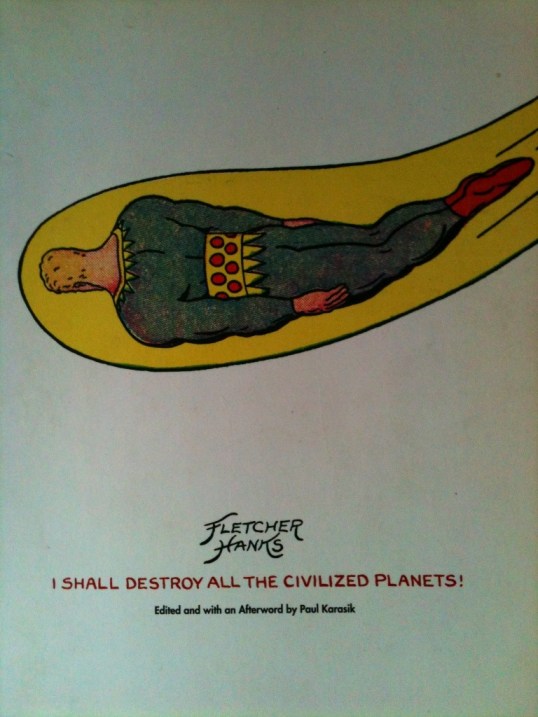
I’ve been wanting to get my mitts on this Fletcher Hanks collection since I first read about it in The Believer five years ago. Finally came across a used copy in pristine shape.
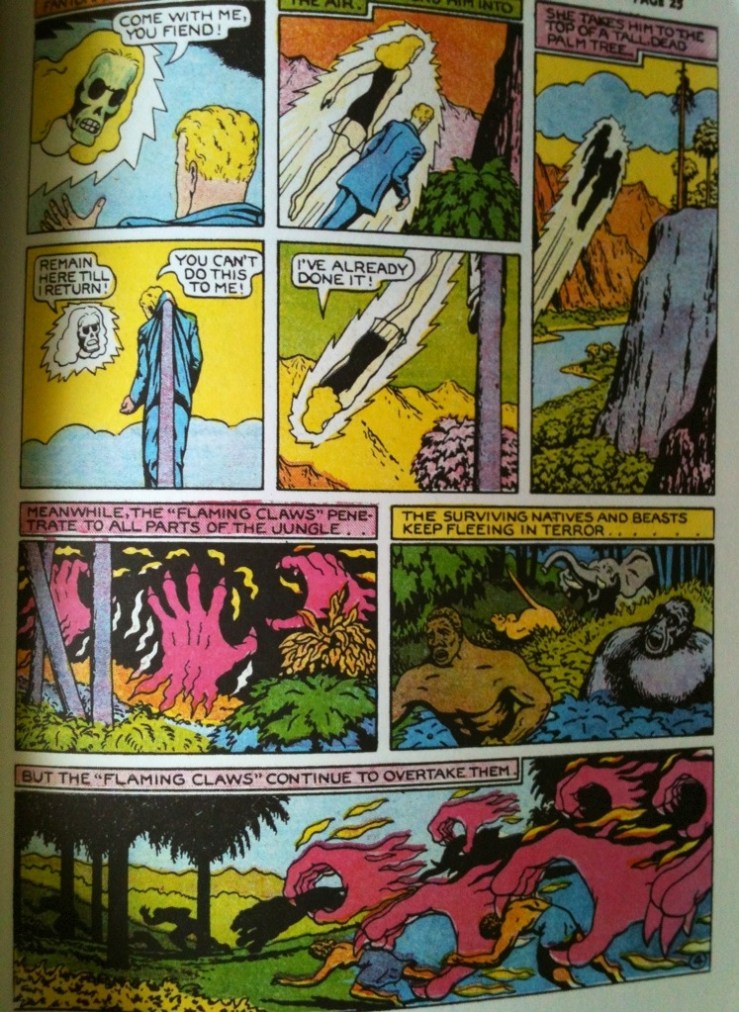
It’s really, really fucking weird. Sample page; full write-up forthcoming:
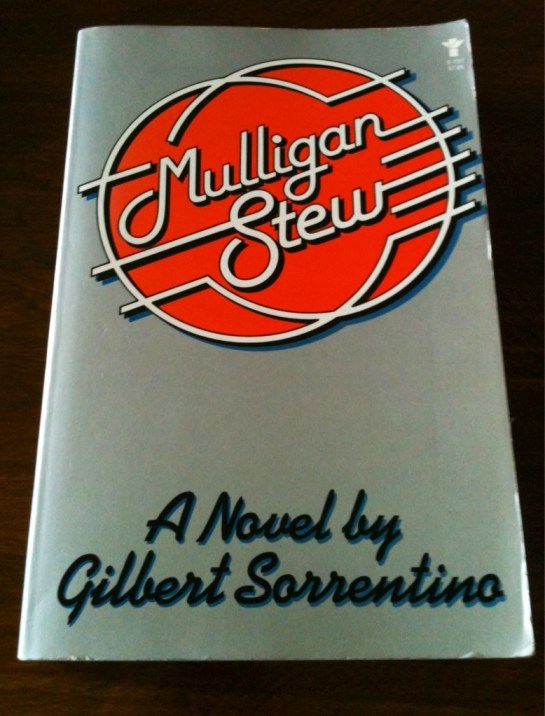
I’ve been itching to read Gilbert Sorrentino’s Mulligan Stew for a while. This copy may or may not be a first edition paperback—the rejection letters in the front are on a different type of paper than the rest of the novel (color/stock). It’s a big book—I’m finishingup a rereading of 2666, so maybe this one will jump in front of Georges Perec’s Life: A User’s Manual. Thoughts?
Neal Stephenson’s 1992 novel Snow Crash opens with an extended scene in which the book’s protagonist races to deliver a pizza on time for the mafia. The scene is thrilling and ridiculous, establishing the book’s frenetic, ironic tone and painting a rough outline of Snow Crash’s milieu. Like many sprawling works of speculative fiction, Snow Crash is more interested in rendering its milieu in vibrant, hyperkinetic color than it is concerned with delivering plot and character development. Snow Crash’s plot is the sort of joyfully convoluted careening mess that makes a reviewer (okay, this reviewer) shudder at the thought of having to successfully paraphrase, so I’m not even going to make an earnest effort. Let’s get to that milieu and the cartoon characters who inhabit it.
Snow Crash is set in the early 21st century, primarily in Los Angeles, which is no longer part of the United States. Actually, there isn’t much of a United States to speak of, really—and not even a municipal Los Angeles, per se. Instead, the terrain is totally privatized. Privatized roads, privatized spaces. People (who can afford to) live in franchised burbclaves protected by hired mercenaries or private militias or robots that keep out the undesirables. (The white folks who live in New South Africa want “racial purity,” while some franchise nations, like Mr. Lee’s Greater Hong Kong are open to anyone who can trade information). Authority is for sale. Conditions are so laissez-faire that the Mafia is truly a Legitimate Business now (complete with their own CosaNostra Pizza University). In fact, all business is legitimate; several times in Snow Crash, a character will refer to “the old days when they had laws.” Without regulation, hyperinflation is the norm; the homeless use trillion-dollar bills to light their campfires.
There’s a hard-edged griminess to the world Stephenson conjures in Snow Crash, but the book is never grim or dour, and instead embraces the anarchic-capitalism it proposes. Perhaps this is because Stephenson’s heroes are such radically exceptional people. The book’s hero is named Hiro Protagonist, the kind of Pynchonian goof that characterizes Snow Crash’s zany tone. Hiro meets the book’s other protagonist, a fifteen year old blonde who goes by Y.T. (“Yours Truly,” although most of the folks tend to hear “whitey”). Y.T. is a Kourier, a skateboarding delivery person who harpoons vehicles to catch a free ride. She helps Hiro deliver that pizza in the opening scene and the two team up after Hiro gives her his business card. It reads: “Last of the Freelance Hackers / Greatest swordfighter in the world / Stringer, Central Intelligence Corporation. Specializing in Software related Intel. (Music, Movies & Microcode.)” Did I neglect to mention that Hiro carries two samurai swords with him wherever he goes?
Hiro’s pretty handy with those swords, but his real skill is hacking, and he spends a good deal of time in the Metaverse, a virtual reality-based internet space where avatars go to bars and chat and sell &c. It’s sort of like a mix between Facebook and World of War Craft. In 1992 (earlier, I suppose), Stephenson’s way ahead of the curve. Here, he describes avatars:
Your avatar can look any way you want it to, up to the limitations of your equipment. If you’re ugly, you can make your avatar beautiful. If you’ve just gotten out of bed, your avatar can still be wearing beautiful clothes and professionally applied makeup. You can look like a gorilla or a dragon or a giant talking penis in the Metaverse. Spend five minutes walking down the Street and you will see all of these.
There are plenty of passages like this, where Stephenson pegs some aspect of internet culture ten years before it actually happens. (I couldn’t help but think about Wikipedia during Hiro’s conversations with a program called Librarian). It’s probably fair to say that the Wachowskis lifted as much from Snow Crash as they did from William Gibson’s cyberpunk trilogies.
While I’m there, I might as well lazily point out that Snow Crash would fit neatly at home on a shelf with Neuromancer or Mona Lisa Overdrive. There’s also a heavy dose of Philip K. Dick weirdness in Snow Crash, particularly when the book settles into its major metaphysical plot about ancient Sumerian gods and goddesses and linguistic viruses and the Tower of Babel. Stephenson’s Snow Crash is zanier than William Gibson’s dark depictions or Dick’s mindmelted milieux, and it would hardly do to call what he does here light—but there is something joyful, playful about his satire. I invoked Pynchon earlier and I’ll do it again; parts of Snow Crash also reminded me of David Foster Wallace’s opus Infinite Jest. Both IJ and SC obsess over the minutest details of speculative technologies and how people might react to such technologies. This is often what sets Snow Crash heads and shoulders above run of the mill cyberpunk. In just one instance, Stephenson parodies the language of bureaucratic speech at length; Y.T.’s mom, who works for what’s left of the Federal Government, is subjected to a memo about toilet paper usage that goes on for pages. The passage is hilarious, and adds absolutely nothing to the plot development—it simply helps to flesh out the contours of the world that Stephenson has imagined.
All of this detailed imagining unfortunately comes at the expense of a plot that only coheres through massive exposition dumps. About a third of the way into the novel, the major conflict is finally established, but only through a dialog between Hiro and the Librarian that reads almost like a catechism. As the book reaches its climax, Hiro actually explains what’s going on to a few of the other major characters—and the reader, of course. It’s a cringe-worthy moment, the sort of rhetorical weakness that smacks of genre fiction; even worse, the plot’s action ultimately hangs on some fairly basic hoary old tropes that wouldn’t be unfamiliar to anyone who’s ever played a video game. The book lags under a juvenile obsession with weapons and badassery in general. And the book’s resolution . . . well, let’s just say that Stephenson sticks the ending, but it all feels too pat and too slight after the dazzling weight of the world that he’s established. Still, at its finest, Stephenson’s prose is zippy, shining, hilarious stuff, and his employment of multiple character perspectives moves the book with an addictive energy. Snow Crash is beach reading for folks who like some humor with their dystopia.
A film adaptation of Snow Crash is supposedly going into production soon, with British director Joe Cornish taking charge. I liked Cornish’s last film Attack the Block, and Snow Crash clearly has a highly-imagistic, cinematic feel to it—but I think a film is not the way to go. Simply put, Snow Crash is too big, too larded with characters and details (so many that I failed to touch on in this review) to translate well onscreen. I think an eight part miniseries on HBO (or a similar network) would be perfect, even if it came at the expense of special effects—-a miniseries would give the filmmakers time to build Stephenson’s nuanced world. I’m afraid otherwise we’ll get a travesty like the adaptation of The Golden Compass, or something like The Hunger Games film, where all but the most basic plot points are elided. But I suppose a miniseries is not as lucrative as a blockbuster film. I hope the filmmakers at least split the book in two. In any case, I’ll be interested to check out the results.
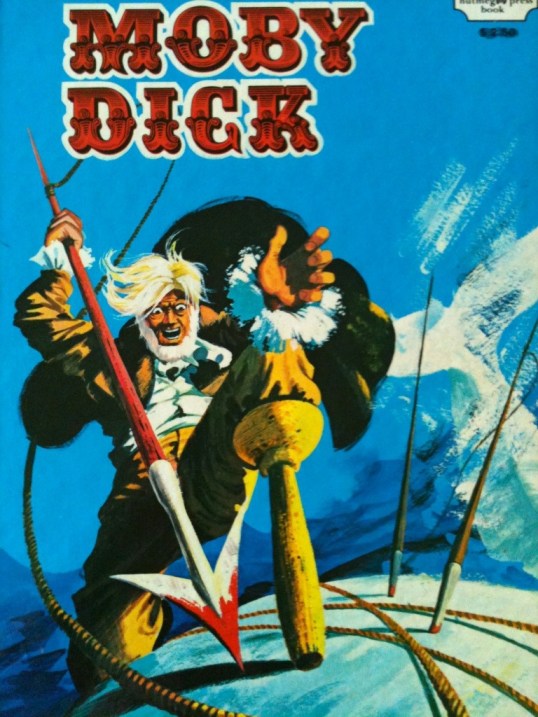
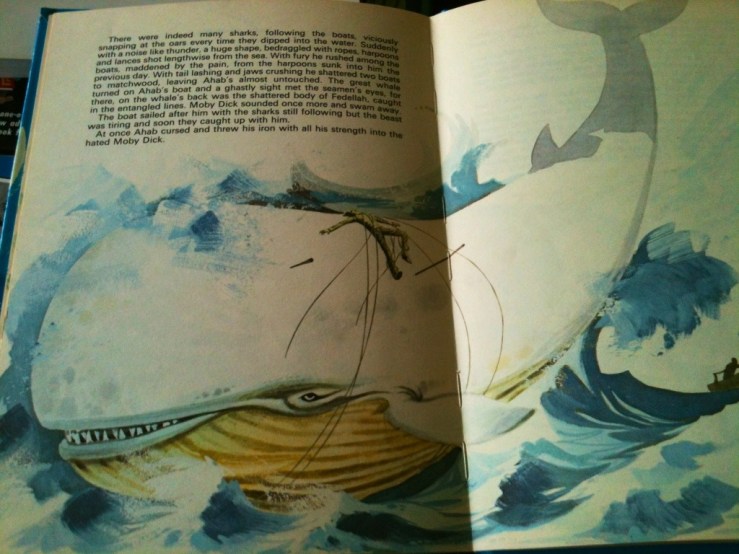
I picked this one up a few weeks ago to add to a small collection of Moby-Dick adaptations. It’s especially weird: I can’t find the name of an illustrator or author anywhere (it doesn’t even mention Herman Melville!). The adaptation is also kinda weird, lingering on the gold piece scene. Anyway. Some of the pics are cool, I guess.
Ethan Allen is perhaps most noted for leading the Green Mountain Boys on a daring raid to take Fort Ticonderoga from the British. Willard Sterne Randall’s biography Ethan Allen: His Life and Times reveals and explores much more to the Vermont statesman than many fans of American history are likely aware of. Randall also makes good on the promise of the second part of his book’s subtitle, painting the Revolutionary and post-Revolutionary years in keen detail. Randall was kind enough to talk to me about his book (which is new in a trade paperback edition from Norton) via email.
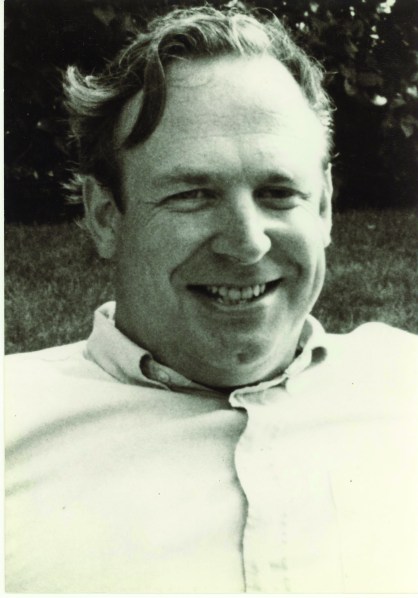
Randall has written many books on the American colonial and Revolutionary periods, including biographies of Thomas Jefferson, George Washington, Alexander Hamilton, and Benedict Arnold. He lives in Vermont, where he teaches American history at Champlain College. Check out his website.
Biblioklept: You’ve written books about George Washington and Thomas Jefferson, figures who obviously bear considerable influence on American history. Ethan Allen is a less-remarked upon figure. What made you want to tell his story?
Will Randall: When I moved to Vermont thirty years ago after a journalism career, I ran into Ethan Allen’s name everywhere—on a ferry, a federal firing range, an old cavalry fort, streets and highways, a bowling alley—but if you asked people what they knew about him, invariably it was with a chuckle and a sign of tippling or a wink and they’d say, “Ole Ethan, that drunk” or “that scoundrel.” Other than that, he knew he had captured a fort with the Green Mountain Boys (their names and his were always run together), but beyond one day at the beginning of the Revolution, they knew nothing.
As I worked on other biographies of more patrician and recognizable revolutionaries, I kept running into Allen’s name. The editors of a new compendium on the American Enlightenment asked me to do a profile of Allen as philosopher: turned out Allen was the first published American Deist philosopher. My son wrote a thesis in college on the precedents of the Union’s treatment of POW’s in the Civil War: turned out it was the treatment of Ethan Allen as a prisoner of the British in the Revolution. Treatment of the British: turned out Allen wrote a memoir of his captivity under horrible conditions for nearly three years as he was shunted by ship from Canada to England to Bermuda to Halifax to New York, etc., while George Washington laid down the law that, as Allen was treated, so would be British prisoners. That narrative turned out to be the second-best-selling book of the Revolution, only behind Tom Paine. And so it went, with virtually every Founding Father in one way or another interacting with Allen while he beat off, with four
volumes and scores of pamphlets of highly-charged words and weapons from clubs and daggers to the heavy artillery that drove the British out of Boston and saved Washington’s army, anyone who tampered with Vermont, which was virtually his creation. That, I decided, warranted a book.
Biblioklept: Allen often comes across as a sort of mythical frontiersman—you note in your prologue that he “projects himself as a populist frontier philosopher on horseback.” How accurate is this reputation?
WR: I think he fills his own bill. He was so popular that some 10,000 people braved February weather in Vermont to come to his funeral (out of a population of 80,000. He spoke for the poor who couldn’t make it in other more hierarchical New England colonies and, after revolting in Massachusetts, fled to Vermont, where he protected them. All his adult life, he took on, in person and in writing, the Puritan theocracy, selling virtually everything he had to attack their Old Testament religion in publishing 1,500 copies of a book, of which only about 200 copies survived the flames of a suspicious fire. While most other Founders prospered from the Revolution—Monticello, Mount Vernon, etc.—Allen chose to live out his days in a one-and-a-half story log house with the best view of his beloved Green Mountains and Lake Champlain. There, giving Voltaire’s name to one of his sons, he raised cattle and scribbled away, signing himself, “Clodhopper Philosopher” that the philosophes of Paris read in their salons on the eve of the French Revolution. And what finally killed him: according to a toxicologist I consulted, too much applejack mixed with rum in a “flowing bowl” of punch he consumed liberally in one last party with his Green Mountain Boys.
Biblioklept: At the beginning of Ethan Allen, you point out that there are few books or credible biographies of your subject. I’m curious how this impacted the composition of the book—was it frustrating? Liberating?
WR: Actually, it was liberating. It forced me to employ all the investigative techniques I had learned and made me read as widely as I have with any other Founding Father, following the research wherever it led me.






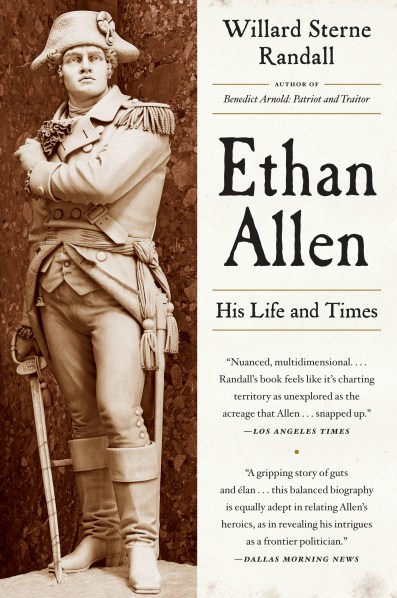 Ethan Allen is perhaps most noted for leading the Green Mountain Boys on a daring raid to take Fort Ticonderoga from the British. Willard Sterne Randall’s biography Ethan Allen: His Life and Times reveals and explores much more to the Vermont statesman than many fans of American history are likely aware of. Randall also makes good on the promise of the second part of his book’s subtitle, painting the Revolutionary and post-Revolutionary years in keen detail. Randall was kind enough to talk to me about his book (which is new in a trade paperback edition from Norton) via email.
 Biblioklept: Allen often comes across as a sort of mythical frontiersman—you note in your prologue that he “projects himself as a populist frontier philosopher on horseback.” How accurate is this reputation?
 Biblioklept