Fighting Seekentauren — Albrecht Dürer

Hiroshima Mon Amour — Alain Resnais (Full Film)

Another paradox (David Foster Wallace)

This is another paradox, that many of the most important impressions and thoughts in a person’s life are ones that flash through your head so fast that fast isn’t even the right word, they seem totally different from or outside of the regular sequential clock time we all live by, and they have so little relation to the sort of linear, one-word-after-another-word English we all communicate with each other with that it could easily take a whole lifetime just to spell out the contents of one split-second’s flash of thoughts and connections, etc. — and yet we all seem to go around trying to use English (or whatever language our native country happens to use, it goes without saying) to try to convey to other people what we’re thinking and to find out what they’re thinking, when in fact deep down everybody knows it’s a charade and they’re just going through the motions. What goes on inside is just too fast and huge and all interconnected for words to do more than barely sketch the outlines of at most one tiny little part of it at any given instant. The internal head-speed or whatever of these ideas, memories, realizations, emotions and so on is even faster, by the way — exponentially faster, unimaginably faster — when you’re dying, meaning during that vanishingly tiny nanosecond between when you technically die and when the next thing happens, so that in reality the cliché about people’s whole life flashing before their eyes as they’re dying isn’t all that far off — although the whole life here isn’t really a sequential thing where first you’re born and then you’re in the crib and then you’re up at the plate in Legion ball, etc., which it turns out that that’s what people usually mean when they say ‘my whole life,’ meaning a discrete, chronological series of moments that they add up and call their lifetime. It’s not really like that. The best way I can think of to try to say it is that it all happens at once, but that at once doesn’t really mean a finite moment of sequential time the way we think of time while we’re alive, plus that what turns out to be the meaning of the term my life isn’t even close to what we think we’re talking about when we say ‘my life.’ Words and chronological time create all these total misunderstandings of what’s really going on at the most basic level. And yet at the same time English is all we have to try to understand it and try to form anything larger or more meaningful and true with anybody else, which is yet another paradox.

From David Foster Wallace’s short story “Good Old Neon,” collected in Oblivion.

I read “Good Old Neon” first back when Oblivion came out in hardback. It was good then, but it seemed more poignant and deeper after Wallace’s suicide. I reread it again last night, and I’m convinced it’s his finest discrete piece, and rivals some of the strongest sections of Infinite Jest and The Pale King. Anyway, I encourage doubters to check it out if they haven’t read it.

I’ll close by suggesting that in some way I think the story works through an idea from Ludwig Wittgenstein:

Death is not an event in life: we do not live to experience death. If we take eternity to mean not infinite temporal duration but timelessness, then eternal life belongs to those who live in the present. Our life has no end in the way in which our visual field has no limits. (Tractatus Logico-Philosophicus, 6.4311).

The Goblin — William Blake

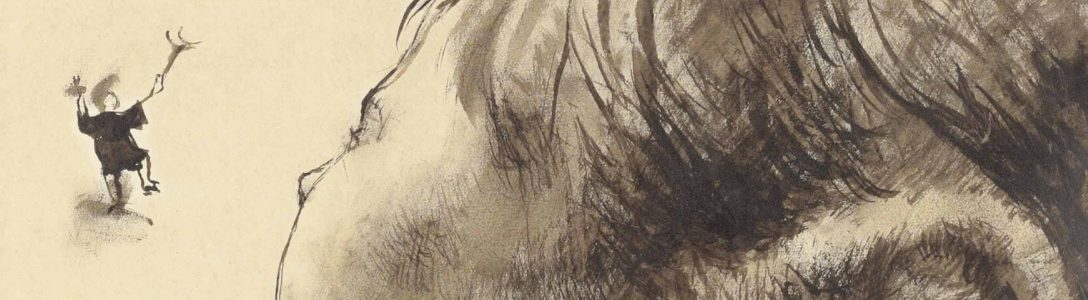
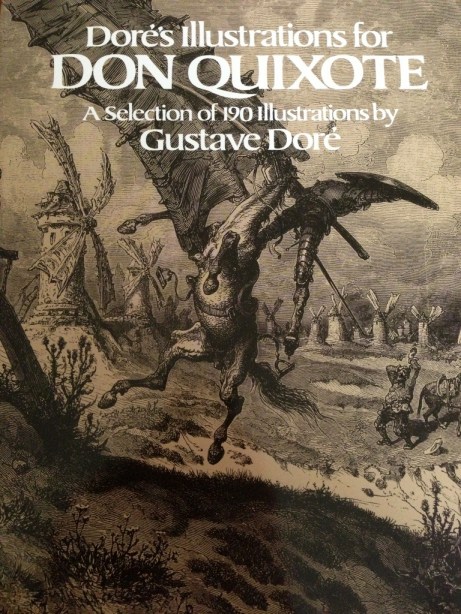
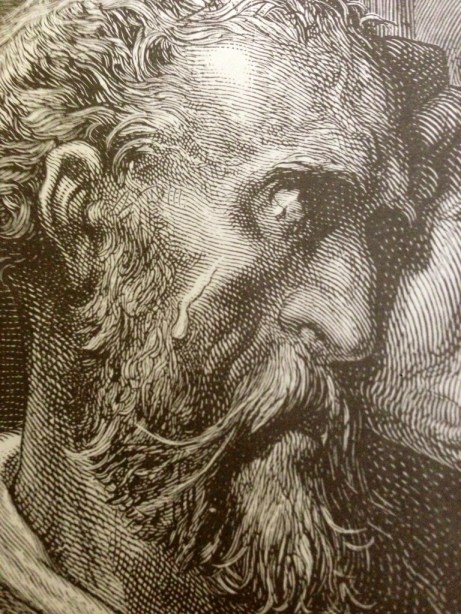
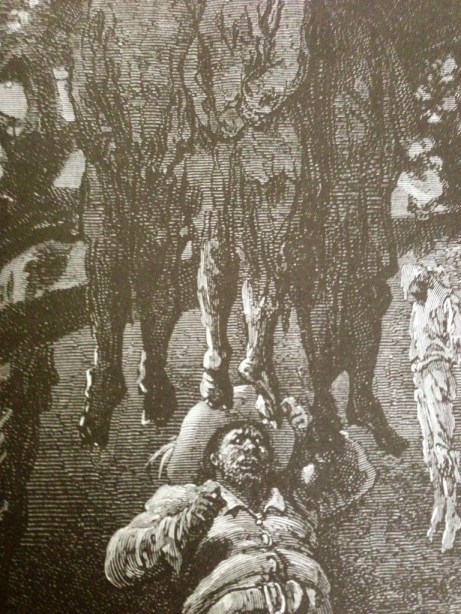
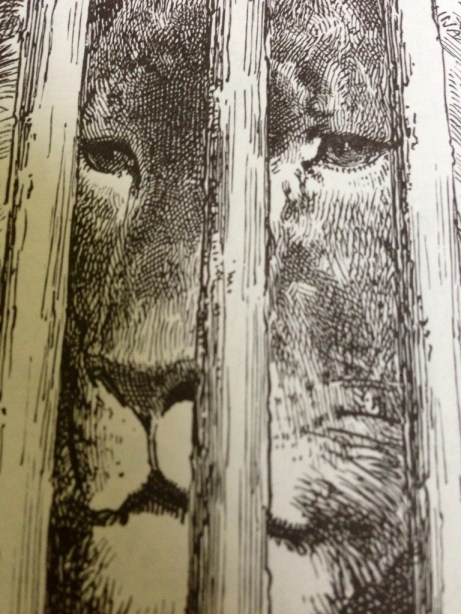
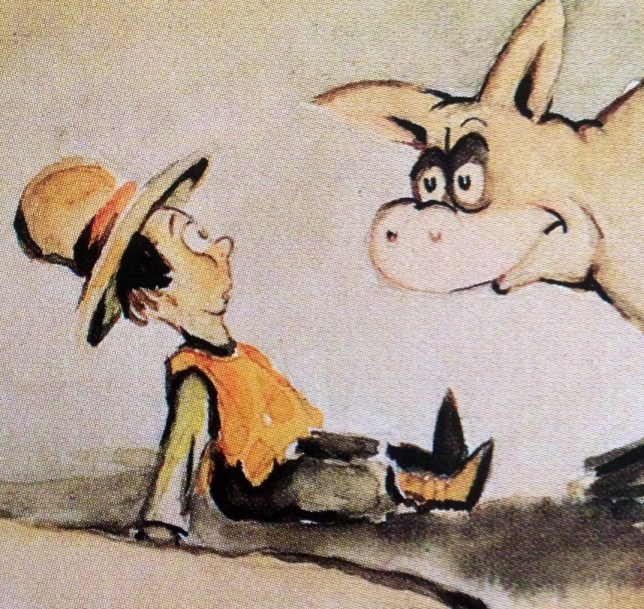
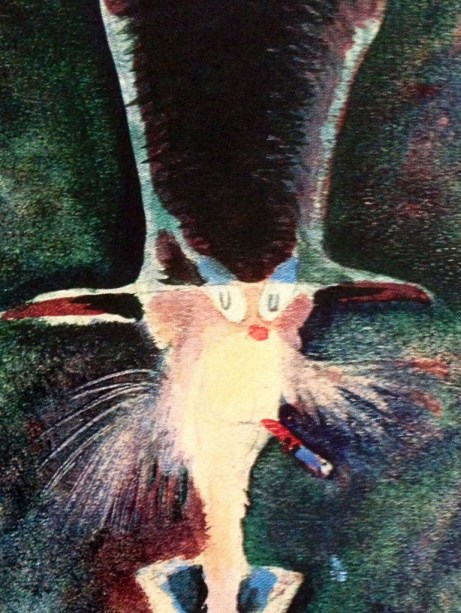
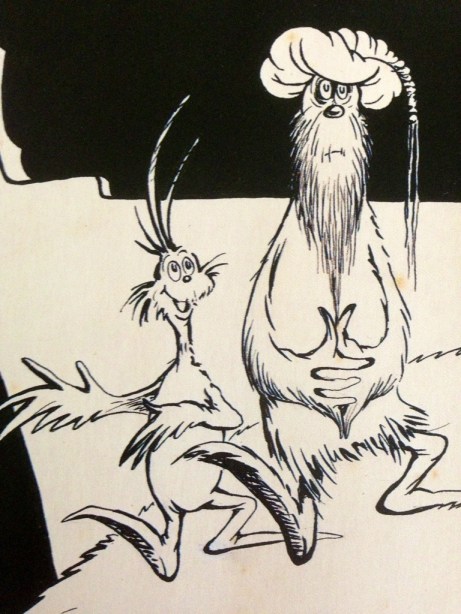
Gustave Doré / Dr. Seuss (Books Acquired, 4.16.2013)

20130420-153946.jpg

20130420-153951.jpg

20130420-153956.jpg

20130420-154002.jpg

20130420-154007.jpg

20130420-154012.jpg

20130420-154018.jpg

20130420-154026.jpg

20130420-154033.jpg


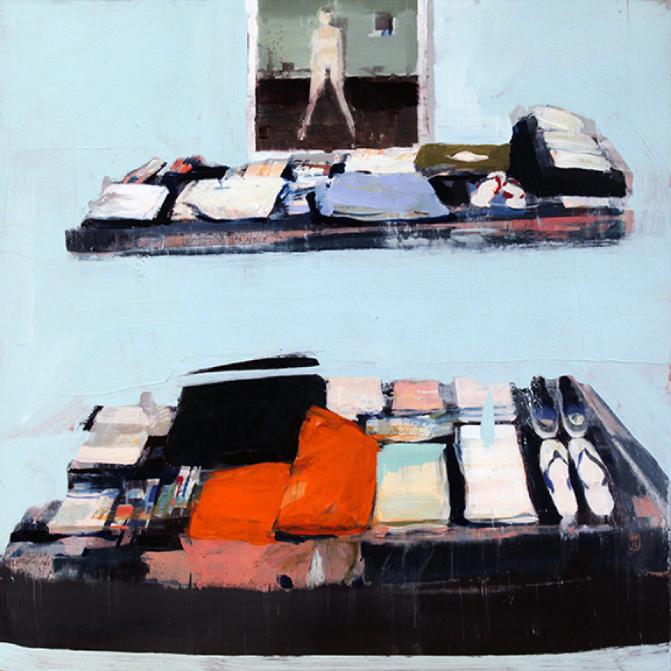
Issued Items — Alex Kanevsky

issueditemswithaa

(More/via).

“The Hounds of Fate” — Saki

“The Hounds of Fate” — Saki

In the fading light of a close dull autumn afternoon Martin Stoner plodded his way along muddy lanes and rut-seamed cart tracks that led he knew not exactly whither. Somewhere in front of him, he fancied, lay the sea, and towards the sea his footsteps seemed persistently turning; why he was struggling wearily forward to that goal he could scarcely have explained, unless he was possessed by the same instinct that turns a hard-pressed stag cliffward in its last extremity. In his case the hounds of Fate were certainly pressing him with unrelenting insistence; hunger, fatigue, and despairing hopelessness had numbed his brain, and he could scarcely summon sufficient energy to wonder what underlying impulse was driving him onward. Stoner was one of those unfortunate individuals who seem to have tried everything; a natural slothfulness and improvidence had always intervened to blight any chance of even moderate success, and now he was at the end of his tether, and there was nothing more to try. Desperation had not awakened in him any dormant reserve of energy; on the contrary, a mental torpor grew up round the crisis of his fortunes. With the clothes he stood up in, a halfpenny in his pocket, and no single friend or acquaintance to turn to, with no prospect either of a bed for the night or a meal for the morrow, Martin Stoner trudged stolidly forward, between moist hedgerows and beneath dripping trees, his mind almost a blank, except that he was subconsciously aware that somewhere in front of him lay the sea. Another consciousness obtruded itself now and then—the knowledge that he was miserably hungry. Presently he came to a halt by an open gateway that led into a spacious and rather neglected farm-garden; there was little sign of life about, and the farm-house at the further end of the garden looked chill and inhospitable. A drizzling rain, however, was setting in, and Stoner thought that here perhaps he might obtain a few minutes’ shelter and buy a glass of milk with his last remaining coin. He turned slowly and wearily into the garden and followed a narrow, flagged path up to a side door. Before he had time to knock the door opened and a bent, withered-looking old man stood aside in the doorway as though to let him pass in.

“Could I come in out of the rain?” Stoner began, but the old man interrupted him.

“Come in, Master Tom. I knew you would come back one of these days.”

Stoner lurched across the threshold and stood staring uncomprehendingly at the other. Continue reading ““The Hounds of Fate” — Saki”

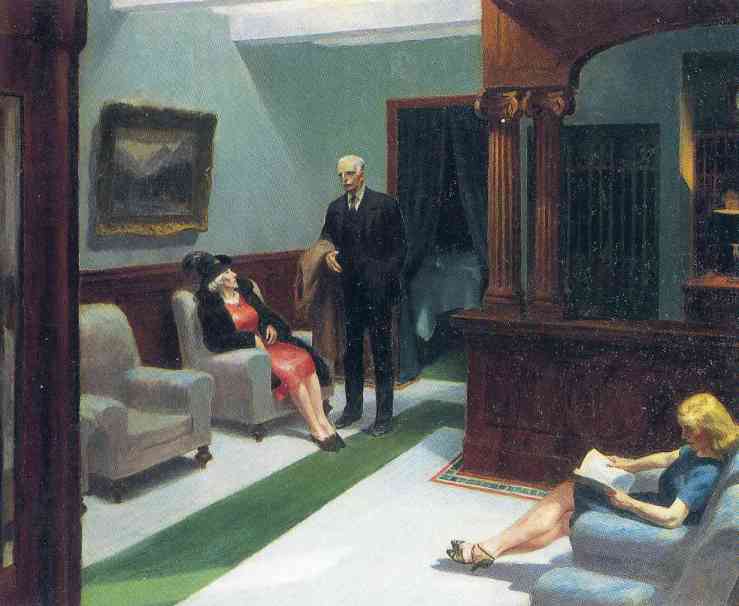
Hotel Lobby — Edward Hopper

hotel-lobby