“Buds and Bird-voices” by Nathaniel Hawthorne
BALMY Spring—weeks later than we expected, and months later than we longed for her—comes at last to revive the moss on the roof and walls of our old mansion. She peeps brightly into my study window, inviting me to throw it open and create a summer atmosphere by the intermixture of her genial breath with the black and cheerless comfort of the stove. As the casement ascends, forth into infinite space fly the innumerable forms of thought or fancy that have kept me company in the retirement of this little chamber during the sluggish lapse of wintry weather—visions gay, grotesque and sad, pictures of real life tinted with nature’s homely gray and russet, scenes in dreamland bedizened with rainbow-hues which faded before they were well laid on. All these may vanish now, and leave me to mold a fresh existence out of sunshine. Brooding Meditation may flap her dusky wings and take her owl-like flight, blinking amid the cheerfulness of noontide. Such companions befit the season of frosted window-panes and crackling fires, when the blast howls through the black-ash trees of our avenue, and the drifting snowstorm chokes up the wood paths and fills the highway from stone wall to stone wall. In the spring and summer time all somber thoughts should follow the winter northward with the somber and thoughtful crows. The old paradisiacal economy of life is again in force: we live, not to think nor to labor, but for the simple end of being happy; nothing for the present hour is worthy of man’s infinite capacity save to imbibe the warm smile of heaven and sympathize with the reviving earth.
The present Spring comes onward with fleeter footsteps because Winter lingered so unconscionably long that with her best diligence she can hardly retrieve half the allotted period of her reign. It is but a fortnight since I stood on the brink of our swollen river and beheld the accumulated ice of four frozen months go down the stream. Except in streaks here and there upon the hillsides, the whole visible universe was then covered with deep snow the nethermost layer of which had been deposited by an early December storm. It was a sight to make the beholder torpid, in the impossibility of imagining how this vast white napkin was to be removed from the face of the corpse-like world in less time than had been required to spread it there. But who can estimate the power of gentle influences, whether amid material desolation or the moral winter of man’s heart? There have been no tempestuous rains—even no sultry days—but a constant breath of southern winds, with now a day of kindly sunshine, and now a no less kindly mist, or a soft descent of showers, in which a smile and a blessing seemed to have been steeped. The snow has vanished as if by magic; whatever heaps may be hidden in the woods and deep gorges of the hills, only two solitary specks remain in the landscape, and those I shall almost regret to miss when to-morrow I look for them in vain. Never before, methinks, has spring pressed so closely on the footsteps of retreating winter. Along the roadside the green blades of grass have sprouted on the very edge of the snowdrifts. The pastures and mowing fields have not yet assumed a general aspect of verdure, but neither have they the cheerless brown tint which they wear in later autumn, when vegetation has entirely ceased; there is now a faint shadow of life, gradually brightening into the warm reality. Some tracts in a happy exposure—as, for instance, yonder southwestern slope of an orchard, in front of that old red farmhouse beyond the river—such patches of land already wear a beautiful and tender green to which no future luxuriance can add a charm. It looks unreal—a prophecy, a hope, a transitory effect of some peculiar light, which will vanish with the slightest motion of the eye. But beauty is never a delusion; not these verdant tracts but the dark and barren landscape all around them is a shadow and a dream. Each moment wins some portion of the earth from death to life; a sudden gleam of verdure brightens along the sunny slope of a bank which an instant ago was brown and bare. You look again, and, behold an apparition of green grass!
The trees in our orchard and elsewhere are as yet naked, but already appear full of life and vegetable blood. It seems as if by one magic touch they might instantaneously burst into full foliage, and that the wind which now sighs through their naked branches might make sudden music amid innumerable leaves. The moss-grown willow tree which for forty years past has overshadowed these western windows will be among the first to put on its green attire. There are some objections to the willow: it is not a dry and cleanly tree, and impresses the beholder with an association of sliminess. No trees, I think, are perfectly agreeable as companions unless they have glossy leaves, dry bark, and a firm and hard texture of trunk and branches. But the willow is almost the earliest to gladden us with the promise and reality of beauty in its graceful and delicate foliage, and the last to scatter its yellow, yet scarcely-withered, leaves upon the ground. All through the winter, too, its yellow twigs give it a sunny aspect which is not without a cheering influence even in the grayest and gloomiest day. Beneath a clouded sky it faithfully remembers the sunshine. Our old house would lose a charm were the willow to be cut down, with its golden crown over the snow-covered roof, and its heap of summer verdure.
The lilac shrubs under my study windows are likewise almost in leaf; in two or three days more I may put forth my hand and pluck the topmost bough in its freshest green. These lilacs are very aged, and have lost the luxuriant foliage of their prime. The heart or the judgment or the moral sense or the taste is dissatisfied with their present aspect. Old age is not venerable when it embodies itself in lilacs, rose-bushes, or any other ornamental shrubs; it seems as if such plants, as they grow only for beauty, ought to flourish only in immortal youth—or, at least, to die before their sad decrepitude. Trees of beauty are trees of paradise, and therefore not subject to decay by their original nature, though they have lost that precious birthright by being transplanted to an earthly soil. There is a kind of ludicrous unfitness in the idea of a time-stricken and grandfatherly lilac-bush. The analogy holds good in human life. Persons who can only be graceful and ornamental—who can give the world nothing but flowers—should die young, and never be seen with gray hair and wrinkles, any more than the flower-shrubs with mossy bark and blighted foliage, like the lilacs under my window. Not that beauty is worthy of less than immortality. No; the beautiful should live forever, and thence, perhaps, the sense of impropriety when we see it triumphed over by time. Apple trees, on the other hand, grow old without reproach. Let them live as long as they may, and contort themselves into whatever perversity of shape they please, and deck their withered limbs with a springtime gaudiness of pink-blossoms, still they are respectable, even if they afford us only an apple or two in a season. Those few apples—or, at all events, the remembrance of apples in bygone years—are the atonement which utilitarianism inexorably demands for the privilege of lengthened life. Human flower shrubs, if they will grow old on earth, should, besides their lovely blossoms, bear some kind of fruit that will satisfy earthly appetites, else neither man nor the decorum of nature will deem it fit that the moss should gather on them.
One of the first things that strikes the attention when the white sheet of winter is withdrawn is the neglect and disarray that lay hidden beneath it. Nature is not cleanly, according to our prejudices. The beauty of preceding years, now transformed to brown and blighted deformity, obstructs the brightening loveliness of the present hour. Our avenue is strewn with the whole crop of autumn’s withered leaves. There are quantities of decayed branches which one tempest after another has flung down, black and rotten, and one or two with the ruin of a bird’s nest clinging to them. In the garden are the dried bean-vines, the brown stalks of the asparagus-bed, and melancholy old cabbages which were frozen into the soil before their unthrifty cultivator could find time to gather them. How invariable throughout all the forms of life do we find these intermingled memorials of death! On the soil of thought and in the garden of the heart, as well as in the sensual world, lie withered leaves—the ideas and feelings that we have done with. There is no wind strong enough to sweep them away; infinite space will not garner them from our sight. What mean they? Why may we not be permitted to live and enjoy as if this were the first life and our own the primal enjoyment, instead of treading always on these dry bones and mouldering relics from the aged accumulation of which springs all that now appears so young and new? Sweet must have been the spring-time of Eden, when no earlier year had strewn its decay upon the virgin turf, and no former experience had ripened into summer and faded into autumn in the hearts of its inhabitants! That was a world worth living in.—Oh, thou murmurer, it is out of the very wantonness of such a life that thou feignest these idle lamentations. There is no decay. Each human soul is the first created inhabitant of its own Eden.—We dwell in an old moss-covered mansion and tread in the worn footprints of the past and have a gray clergyman’s ghost for our daily and nightly inmate, yet all these outward circumstances are made less than visionary by the renewing power of the spirit. Should the spirit ever lose this power—should the withered leaves and the rotten branches and the moss-covered house and the ghost of the gray past ever become its realities, and the verdure and the freshness merely its faint dream—then let it pray to be released from earth. It will need the air of heaven to revive its pristine energies.
What an unlooked for flight was this from our shadowy avenue of black-ash and balm-of-gilead trees into the infinite! Now we have our feet again upon the turf. Nowhere does the grass spring up so industriously as in this homely yard, along the base of the stone wall and in the sheltered nooks of the buildings, and especially around the southern door-step—a locality which seems particularly favorable to its growth, for it is already tall enough to bend over and wave in the wind. I observe that several weeds—and, most frequently, a plant that stains the fingers with its yellow juice—have survived and retained their freshness and sap throughout the winter. One knows not how they have deserved such an exception from the common lot of their race. They are now the patriarchs of the departed year, and may preach mortality to the present generation of flowers and weeds.
Among the delights of spring, how is it possible to forget the birds? Even the crows were welcome, as the sable harbingers of a brighter and livelier race. They visited us before the snow was off, but seem mostly to have betaken themselves to remote depths of the woods, which they haunt all summer long. Many a time shall I disturb them there, and feel as if I had intruded among a company of silent worshipers as they sit in Sabbath stillness among the treetops. Their voices, when they speak, are in admirable accordance with the tranquil solitude of a summer afternoon, and, resounding so far above the head, their loud clamor increases the religious quiet of the scene instead of breaking it. A crow, however, has no real pretensions to religion, in spite of his gravity of mien and black attire; he is certainly a thief, and probably an infidel. The gulls are far more respectable, in a moral point of view. These denizens of sea-beaten rocks and haunters of the lonely beach come up our inland river at this season, and soar high overhead, flapping their broad wings in the upper sunshine. They are among the most picturesque of birds, because they so float and rest upon the air as to become almost stationary parts of the landscape. The imagination has time to grow acquainted with them; they have not flitted away in a moment. You go up among the clouds and greet these lofty-flighted gulls, and repose confidently with them upon the sustaining atmosphere. Ducks have their haunts along the solitary places of the river, and alight in flocks upon the broad bosom of the overflowed meadows. Their flight is too rapid and determined for the eye to catch enjoyment from it, although it never fails to stir up the heart with the sportsman’s ineradicable instinct. They have now gone farther northward, but will visit us again in autumn.
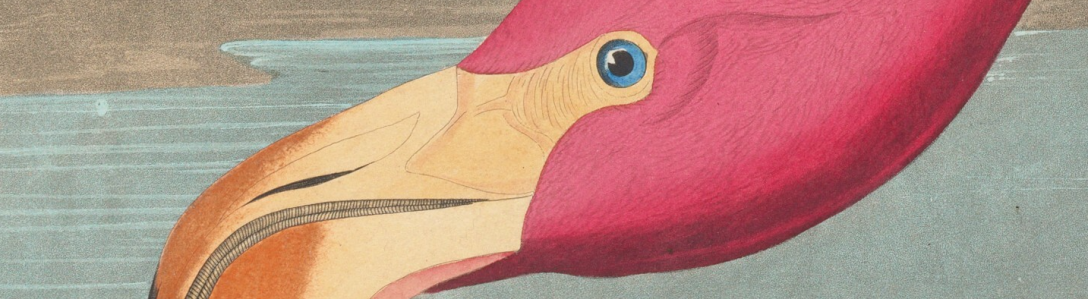
The smaller birds—the little songsters of the woods, and those that haunt man’s dwellings and claim human friendship by building their nests under the sheltering eaves or among the orchard trees—these require a touch more delicate and a gentler heart than mine to do them justice. Their outburst of melody is like a brook let loose from wintry chains. We need not deem it a too high and solemn word to call it a hymn of praise to the Creator, since Nature, who pictures the reviving year in so many sights of beauty, has expressed the sentiment of renewed life in no other sound save the notes of these blessed birds. Their music, however, just now seems to be incidental, and not the result of a set purpose. They are discussing the economy of life and love and the site and architecture of their summer residences, and have no time to sit on a twig and pour forth solemn hymns or overtures, operas, symphonies and waltzes. Anxious questions are asked, grave subjects are settled in quick and animated debate, and only by occasional accident, as from pure ecstasy, does a rich warble roll its tiny waves of golden sound through the atmosphere. Their little bodies are as busy as their voices; they are in a constant flutter and restlessness. Even when two or three retreat to a tree-top to hold council, they wag their tails and heads all the time with the irrepressible activity of their nature, which perhaps renders their brief span of life in reality as long as the patriarchal age of sluggish man. The blackbirds—three species of which consort together—are the noisiest of all our feathered citizens. Great companies of them—more than the famous “four-and-twenty” whom Mother Goose has immortalized—congregate in contiguous tree-tops and vociferate with all the clamor and confusion of a turbulent political meeting. Politics, certainly, must be the occasion of such tumultuous debates, but still, unlike all other politicians, they instill melody into their individual utterances and produce harmony as a general effect. Of all bird-voices, none are more sweet and cheerful to my ear than those of swallows in the dim, sun-streaked interior of a lofty barn; they address the heart with even a closer sympathy than Robin Redbreast. But, indeed, all these winged people that dwell in the vicinity of homesteads seem to partake of human nature and possess the germ, if not the development, of immortal souls. We hear them saying their melodious prayers at morning’s blush and eventide. A little while ago, in the deep of night, there came the lively thrill of a bird’s note from a neighboring tree—a real song such as greets the purple dawn or mingles with the yellow sunshine. What could the little bird mean by pouring it forth at midnight? Probably the music gushed out of the midst of a dream in which he fancied himself in paradise with his mate, but suddenly awoke on a cold, leafless bough with a New England mist penetrating through his feathers. That was a sad exchange of imagination for reality.
Insects are among the earliest births of spring. Multitudes, of I know not what species, appeared long ago on the surface of the snow. Clouds of them almost too minute for sight hover in a beam of sunshine, and vanish as if annihilated when they pass into the shade. A mosquito has already been heard to sound the small horror of his bugle-horn. Wasps infest the sunny windows of the house. A bee entered one of the chambers with a prophecy of flowers. Rare butterflies came before the snow was off, flaunting in the chill breeze, and looking forlorn and all astray in spite of the magnificence of their dark velvet cloaks with golden borders.
The fields and wood-paths have as yet few charms to entice the wanderer. In a walk the other day I found no violets nor anemones, nor anything in the likeness of a flower. It was worth while, however, to ascend our opposite hill for the sake of gaining a general idea of the advance of spring, which I had hitherto been studying in its minute developments. The river lay round me in a semi-circle, overflowing all the meadows which give it its Indian name, and offering a noble breadth to sparkle in the sunbeams. Along the hither shore a row of trees stood up to their knees in water, and afar off, on the surface of the stream, tufts of bushes thrust up their heads, as it were, to breathe. The most striking objects were great solitary trees here and there with a mile-wide waste of water all around them. The curtailment of the trunk by its immersion in the river quite destroys the fair proportions of the tree, and thus makes us sensible of a regularity and propriety in the usual forms of nature. The flood of the present season, though it never amounts to a freshet on our quiet stream, has encroached farther upon the land than any previous one for at least a score of years. It has overflowed stone fences, and even rendered a portion of the highway navigable for boats. The waters, however, are now gradually subsiding; islands become annexed to the mainland, and other islands emerge like new creations from the watery waste. The scene supplies an admirable image of the receding of the Nile—except that there is no deposit of black slime—or of Noah’s flood, only that there is a freshness and novelty in these recovered portions of the continent which give the impression of a world just made rather than of one so polluted that a deluge had been requisite to purify it. These upspringing islands are the greenest spots in the landscape; the first gleam of sunlight suffices to cover them with verdure.
Thank Providence for spring! The earth—and man himself, by sympathy with his birthplace—would be far other than we find them if life toiled wearily onward without this periodical infusion of the primal spirit. Will the world ever be so decayed that spring may not renew its greenness? Can man be so dismally age-stricken that no faintest sunshine of his youth may revisit him once a year? It is impossible. The moss on our time-worn mansion brightens into beauty, the good old pastor who once dwelt here renewed his prime, regained his boyhood, in the genial breezes of his ninetieth spring. Alas for the worn and heavy soul if, whether in youth or age, it have outlived its privilege of springtime sprightliness! From such a soul the world must hope no reformation of its evil—no sympathy with the lofty faith and gallant struggles of those who contend in its behalf. Summer works in the present and thinks not of the future; autumn is a rich conservative; winter has utterly lost its faith, and clings tremulously to the remembrance of what has been; but spring, with its outgushing life, is the true type of the movement.





 Biblioklept