Portrait of H.P. Lovecraft — Mike Mignola

mignola

(Via).

Plagiarism

It was an icy day.

Pierre Pinoncelli damaged two of the eight copies of Fountain by Marcel Duchamp with a hammer.

The attacks were separated by 13 years: The latest on January 4, 2006 at Centre Pompidou in Paris.

And in Nîmes in 1993.

Where he also urinated into it before using the hammer.

Accordingly, in our Mongolian age all change has been only reformatory or ameliorative, not destructive or consuming and annihilating.

The substance, the object, remains.

All our assiduity was only the activity of ants and the hopping of fleas, jugglers’ tricks on the immovable tight-rope of the objective, corvée -service under the leadership of the unchangeable or “eternal.”

I have seen

The old gods go

And the new gods come.

The Stone Breakers (FrenchLes Casseurs de pierres) was an 1849–50 painting by the French painter Gustave Courbet.

It was a work of social realism, depicting two peasants, a young man and an old man, breaking rocks.

The painting was first exhibited at the Paris Salon of 1850. It was destroyed during World War II, along with 154 other pictures, when a transport vehicle moving the pictures to the castle of Königstein, near Dresden, was bombed by Allied forces in February 1945.

Day by day

And year by year

The idols fall

And the idols rise.

Damage then recovery, damage then recovery.

We buried the cat,

then took her box

and set fire to it

in the back yard.

Even to his death, Duchamp retained a sense of humor.

The evening of 1 October 1968 had been a pleasant one, dinning at home with his friends Man Ray and Robert Lebel. Shortly after his guests had left, it happened suddenly and peacefully. Just before retiring at 1:05 A.M. his heart simply stopped beating.

Those fleas that escaped

earth and fire

died by the cold.

Courbet died, age 58, in La Tour-de-Peilz,Switzerland, of a liver disease aggravated by heavy drinking.

But he hammered his poor heart to death, Lord, Lord,
    He hammered his poor heart to death.

“D’ailleurs, c’est toujours les autres qui meurent;” or “Besides, it’s always the others who die”.

Today

I worship the hammer.
Another Trailer for Wong Kar Wai’s New Film The Grandmasters

Not too different from the one that came out last fall…except some English intertitles. Excited for this one. Maybe this actioner moves Wong Kar Wai one step closer to directing the new Star Wars films?

TheGrandMaster_01

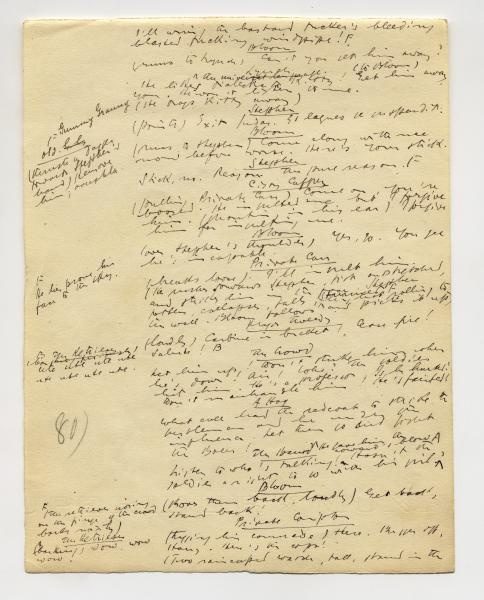
Handwritten Fragment of James Joyce’s Ulysses

ulysses

A fragment from the “Circe” episode of James Joyce’s Ulysses. Via/more.

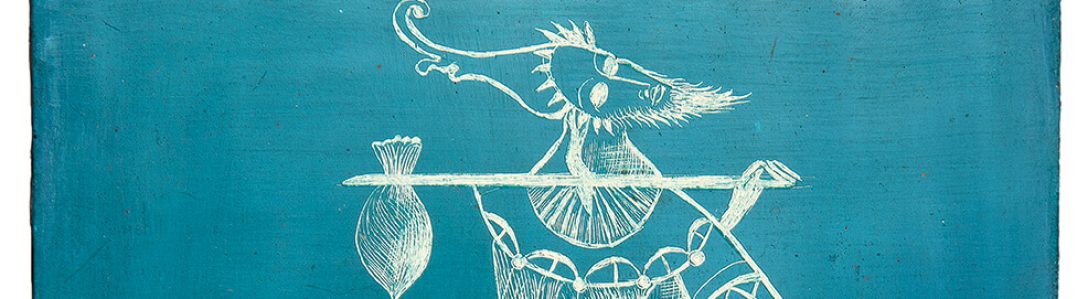
Illustration from A Week of Kindness — Max Ernst

Nine Notes from Nathaniel Hawthorne’s Note-Books

  1. The elephant is not particularly sagacious in the wild state, but becomes so when tamed. The fox directly the contrary, and likewise the wolf.
  2. A modern Jewish adage,–“Let a man clothe himself beneath his ability, his children according to his ability, and his wife above his ability.”
  3. It is said of the eagle, that, in however long a flight, he is never seen to clap his wings to his sides. He seems to govern his movements by the inclination of his wings and tail to the wind, as a ship is propelled by the action of the wind on her sails.
  4. In old country-houses in England, instead of glass for windows, they used wicker, or fine strips of oak disposed checkerwise. Horn was also used. The windows of princes and great noblemen were of crystal; those of Studley Castle, Holinshed says, of beryl. There were seldom chimneys; and they cooked their meats by a fire made against an iron back in the great hall. Houses, often of gentry, were built of a heavy timber frame, filled up with lath and plaster. People slept on rough mats or straw pallets, with a round log for a pillow; seldom better beds than a mattress, with a sack of chaff for a pillow.
  5. In this dismal chamber FAME was won. (Salem, Union Street.)
  6. Those who are very difficult in choosing wives seem as if they would take none of Nature’s ready-made works, but want a woman manufactured particularly to their order.
  7. A council of the passengers in a street: called by somebody to decide upon some points important to him.
  8. Every individual has a place to fill in the world, and is important, in some respects, whether he chooses to be so or not.
  9. Merry, “in merry England,” does not mean mirthful; but is corrupted from an old Teutonic word signifying famous or renowned.

Notations from Nathaniel Hawthorne’s American Note-Books

Madame Monet Reading — Pierre-Auguste Renoir