The Chums of Chance Reading List (Thomas Pynchon’s Against the Day)

hgdTitles of The Chums of Chance books mentioned in Thomas Pynchon’s Against the Day:

  • The Chums of Chance and the Evil Halfwit
  • The Chums of Chance and the Curse of the Great Kahuna
  • The Chums of Chance and the Ice Pirates
  • The Chums of Chance Nearly Crash into the Kremlin
  • The Chums of Chance and the Caged Women of Yokohama
  • The Chums of Chance and the Wrath of the Yellow Fang
  • The Chums of Chance at Krakatoa
  • The Chums of Chance Search for Atlantis
  • The Chums of Chance in Old Mexico
  • The Chums of Chance in the Bowels of the Earth
  • The Chums of Chance at the Ends of the Earth

The Chums of Chance bits have been some of my favorites in Pynchon’s Against the Day, and have given me more than one occasion to riff. There’s something wonderfully generative (and even generous) about these pulpy, romantic titles—an invitation to daydream, to fly with the boys a bit.

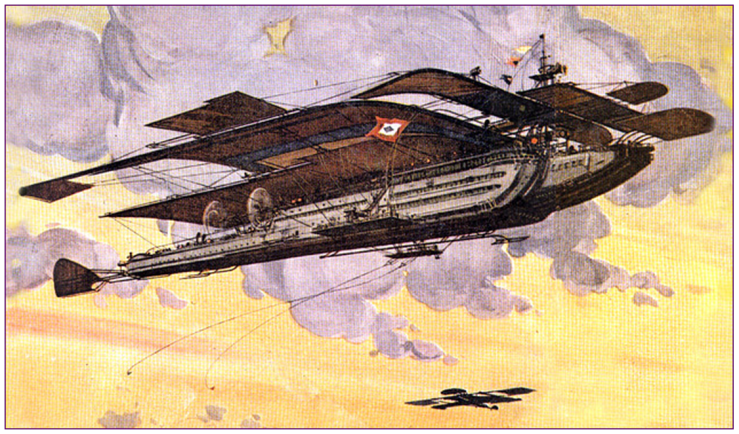
The painting of the airship at the top is by Harry Grant Dart, whose comic strip The Explorigator undoubtedly influenced Pynchon’s vision of The Chums of Chance. You can perhaps glean some of that inspiration in this 1908 broadside:

Explorigator19080503Intro


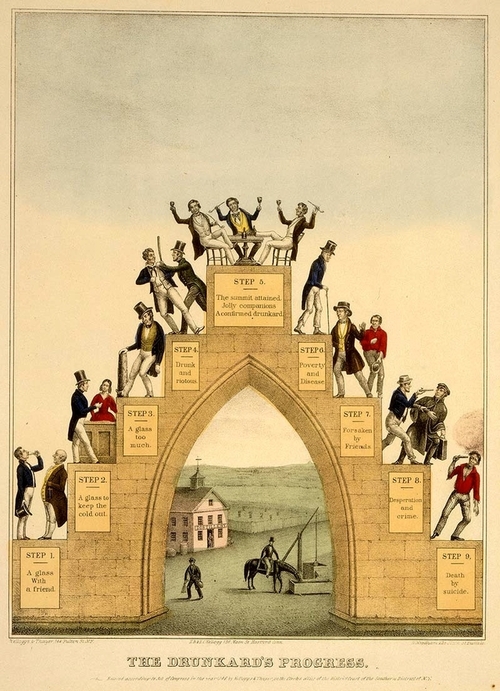
The Drunkard’s Progress

drunkards

(Via).

But Where Is the Lamb? (Book Acquired, 8.23.2013)

20130824-102817.jpg

But Where Is the Lamb? by James Goodman. The book is about Genesis ch. 22, the story where God says to Abraham, kill me your son. Good design on this one:

20130824-102824.jpg

Publisher Random House’s blurb:

“I didn’t think he’d do it. I really didn’t think he would. I thought he’d say, whoa, hold on, wait a minute. We made a deal, remember, the land, the blessing, the nation, the descendants as numerous as the sands on the shore and the stars in the sky.”

So begins James Goodman’s original and urgent encounter with one of the most compelling and resonant stories ever told—God’s command to Abraham to sacrifice his son Isaac.

A mere nineteen lines in the book of Genesis, it rests at the heart of the history, literature, theology, and sacred rituals of Judaism, Christianity, and Islam. For more than two millennia, people throughout the world have grappled with the troubling questions about sacrifice, authority, obedience, and faith to which the story gives rise. Writing from the vantage of “a reader, a son, a Jew, a father, a skeptic, a historian, a lover of stories, and a writer,” Goodman gives us an enthralling narrative history that moves from its biblical origins to its place in the cultures and faiths of our time. He introduces us to the commentary of Second Temple sages, rabbis and priests of the late antiquity, and early Islamic exegetes (some of whom imagined that Ishmael was the nearly sacrificed son). He examines Syriac hymns (in which Sarah stars), Hebrew chronicles of the First Crusade (in which Isaac often dies), and medieval English mystery plays. He looks at the art of Europe’s golden age, the philosophy of Kant and Kierkegaard, and the panoply of twentieth-century interpretation, sacred and profane, including the work of Bob Dylan, Elie Wiesel, and A. B. Yehoshua. In illuminating how so many others have understood this story, Goodman tells a gripping and provocative story of his own.


“So of course we use them” / Scarsdale Vibe’s Last Evil Monologue (Pynchon’s Against the Day)

Scarsdale Vibe was addressing the Las Animas-Huerfano Delegation of the Industrial Defense Alliance (L.A.H.D.I.D.A~) gathered in the casino of an exclusive hot-springs resort up near the Continental Divide. Enormous windows revealed and framed mountain scenery like picture postcards hand-tinted by a crew brought in from across the sea and all slightly colorblind. The clientele looked to be mostly U.S. white folks, pretty well-off in a flash sort of way—vacationers from back east and beyond, though an observer might be forgiven if he thought he recognized faces from the big hotel bars in Denver, with a few that might’ve fit in on upper Arapahoe as well.

The evening was advanced, the ladies had long since retired, and with them any need for euphemism.

“So of course we use them,” Scarsdale well into what by now was his customary stemwinder, “we harness and sodomize them, photograph their degradation, send them up onto the high iron and down into mines and sewers and killing floors, we set them beneath inhuman loads, we harvest from them their muscle and eyesight and health, leaving them in our kindness a few miserable years of broken gleanings. Of course we do. Why not? They are good for little else. How likely are they to grow to their full manhood, become educated, engender families, further the culture or the race? We take what we can while we may. Look at them—they carry the mark of their absurd fate in plain sight. Their foolish music is about to stop, and it is they who will be caught out, awkwardly, most of them tonedeaf and never to be fully aware, few if any with the sense to leave the game early and seek refuge before it is too late. Perhaps there will not, even by then, be refuge.

“We will buy it all up,” making the expected arm gesture, “all this country. Money speaks, the land listens, where the Anarchist skulked, where the horsethief plied his trade, we fishers of Americans will cast our nets of perfect ten-acre mesh, leveled and varmint-proofed, ready to build on. Where alien muckers and jackers went creeping after their miserable communistic dreams, the good lowland townsfolk will come up by the netful into these hills, clean, industrious, Christian, while we, gazing out over their little vacation bungalows, will dwell in top-dollar palazzos befitting our station, which their mortgage money will be paying to build for us. When the scars of these battles have long faded, and the tailings are covered in bunch-grass and wildflowers, and the coming of the snows is no longer the year’s curse but its promise, awaited eagerly for its influx of moneyed seekers after wintertime recreation, when the shining strands of telpherage have subdued every mountainside, and all is festival and wholesome sport and eugenically-chosen stock, who will be left anymore to remember the jabbering Union scum, the frozen corpses whose names, false in any case, have gone forever unrecorded? who will care that once men fought as if an eight-hour day, a few coins more at the end of the week, were everything, were worth the merciless wind beneath the shabby roof, the tears freezing on a woman’s face worn to dark Indian stupor before its time, the whining of children whose maws were never satisfied, whose future, those who survived, was always to toil for us, to fetch and feed and nurse, to ride the far fences of our properties, to stand watch between us and those who would intrude or question?” He might usefully have taken a look at Foley, attentive back in the shadows. But Scarsdale did not seek out the eyes of his old faithful sidekick. He seldom did anymore. “Anarchism will pass, its race will degenerate into silence, but money will beget money, grow like the bluebells in the meadow, spread and brighten and gather force, and bring low all before it. It is simple. It is inevitable. It has begun.”

—Nearing the end of Thomas Pynchon’s novel Against the Day, we get this (final—sorry if that’s a spoiler, but this mutherfucker needed to get got!) monologue from mustache-twirling super-capitalist arch-villain Scarsdale Vibe. His speech here (to the L.A.H.D.I.D.A., another wonderful throwaway gag) recalls an earlier bit of the book that I riffed on at some length—it almost feels as if Pynchon, at the end of Against the Day is going through the motions of checking in on everyone and reminding the readers, Hey, look, this guy is downright dastardly. Also: Manifest Destiny, exploitation, environmental degradation, etc. And again—not trying to set up any spoilers, but I could totally see not just this guy’s demise on the radar, but also the means of his demise. And despite that, it was very, very satisfying.

Esbjorn Doing His Homework — Carl Larsson