Hope/desperation (Schopenhauer)

Hope is the result of confusing the desire that something should take place with the probability that it will. Perhaps no man is free from this folly of the heart, which deranges the intellect’s correct appreciation of probability to such an extent that, if the chances are a thousand to one against it, yet the event is thought a likely one. Still in spite of this, a sudden misfortune is like a death stroke, whilst a hope that is always disappointed and still never dies, is like death by prolonged torture.

He who has lost all hope has also lost all fear; this is the meaning of the expression “desperate.” It is natural to a man to believe what he wishes to be true, and to believe it because he wishes it, If this characteristic of our nature, at once beneficial and assuaging, is rooted out by many hard blows of fate, and a man comes, conversely, to a condition in which he believes a thing must happen because he does not wish it, and what he wishes to happen can never be, just because he wishes it, this is in reality the state described as “desperation.”

From Arthur Schopenhauer’s “Psychological Observations.” Translated by T. Bailey Saunders.

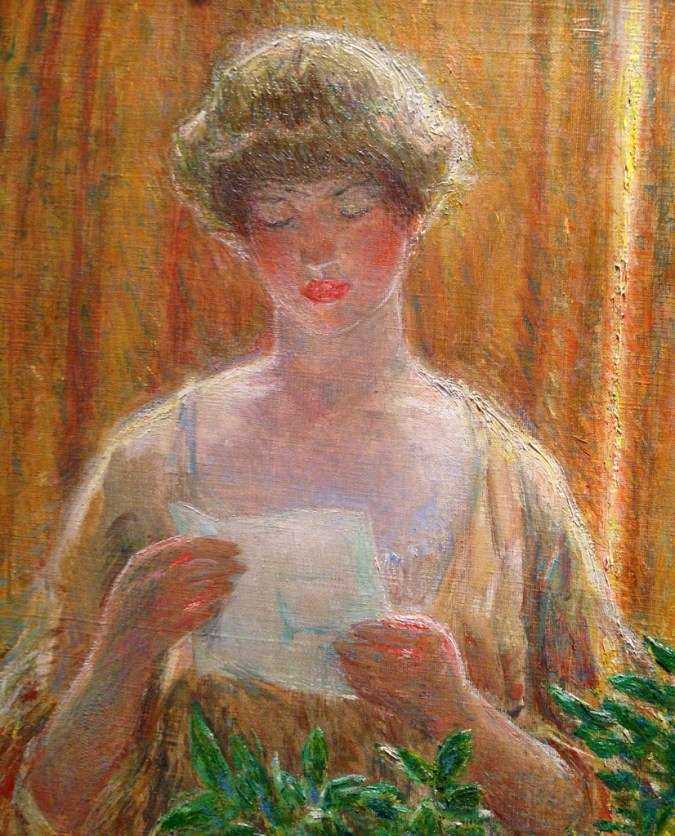
Miss Ingram (Detail) — Childe Hassam

20140604-130710-47230517.jpg

Forest Fire in Moonlight — Charles Burchfield

forest fire

Capitalism arose and took off its pajamas (Donald Barthelme)

Capitalism arose and took off its pajamas. Another day, another dollar. Each man is valued at what he will bring in the marketplace. Meaning has been drained from work and assigned instead to remuneration. Unemployment obliterates the world of the unemployed individual. Cultural underdevelopment of the worker, as a technique of domination, is found everywhere under late capitalism. Authentic self-domination by individuals is thwarted. The false consciousness created and catered to by mass culture perpetuates ignorance and powerlessness. Strands of raven hair floating on the surface of the Ganges . . . Why can’t they clean up the Ganges? If the wealthy capitalists who operate the Ganges wig factories could be forced to install sieves, at the mouths of their plants . . . And now the sacred Ganges is choked with hair, and the river no longer knows where to put its flow, and the moonlight on the Ganges is swallowed by the hair, and the water darkens. By Vishnu! This is an intolerable situation! Shouldn’t something be done about it?

From Donald Barthelme’s short story “The Rise of Capitalism.”

Eleanor — Harry Callahan

callahan

Watch The Lives of Brian, A Documentary About Flann O’Brien

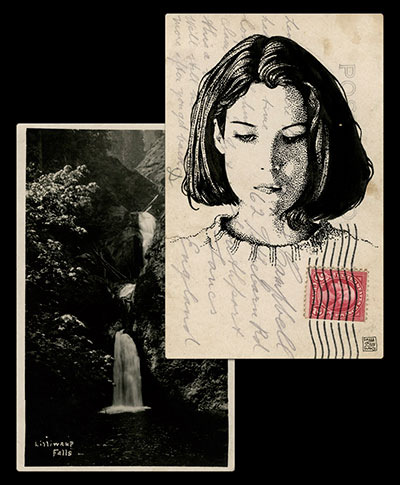
Paul Willoughby’s Twin Peaks Postcards

willoughby-audrey willoughby-donna willoughby-jocelyn willoughby-laura

From the Twin Peaks 20th Anniversary Art Exhibition.

List with No Name #46

  1. Flann O’Brien
  2. Mark Twain
  3. Daniel Defoe
  4. Iceberg Slim
  5. Edith Van Dyne
  6. Acton Bell
  7. Victoria Lucas
  8. Æ
  9. H.D.
  10. S.E. Hinton
  11. George Eliot
  12. George Sand
  13. George Orwell
  14. Toni Morrison
  15. Anne Rice
  16. Ford Madox Ford
  17. Robert Galbraith
  18. Paul Celan
  19. Boz
  20. Saki
  21. Stendahl
  22. Novalis
  23. Voltaire
  24. Lewis Carroll
  25. Franklin W. Dixon
  26. Lemony Snickett
  27. O. Henry
  28. Richard Bachman
  29. John le Carré
  30. Italo Svevo

Spring in Zimme — Emil Nolde

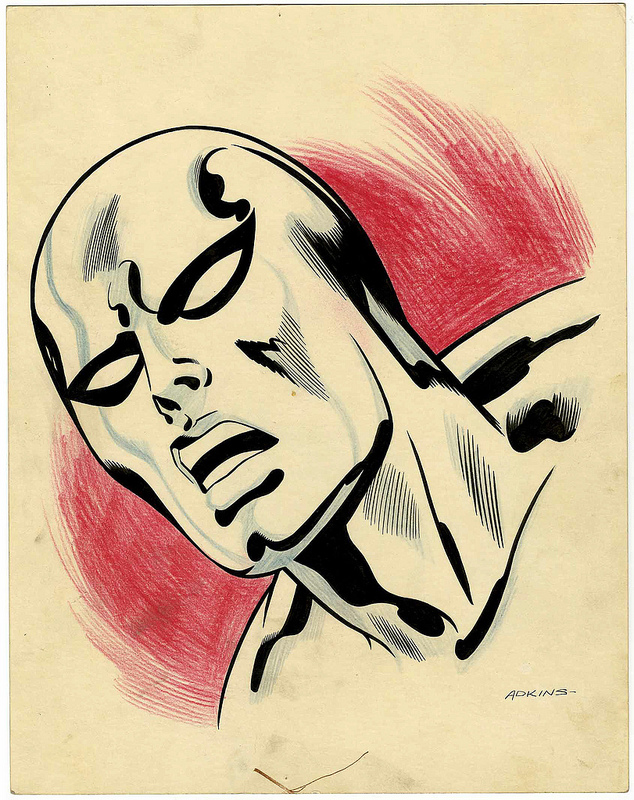
Silver Surfer — Dan Adkins

ssda

“All art constantly aspires towards the condition of music”

“The Sea” — Roberto Bolaño

20140607-153139-55899001.jpg

Americana — Charles Scheeler

To paint a rag-picker (Van Gogh)

Apparently nothing is more simple than to paint a rag-picker, a beggar or any other kind of workman; but there are no subjects which are so difficult to paint as these everyday figures. I do not think there is a single academy where one can learn to draw or paint a man digging or sowing seed, a woman hanging a pot over the fire or doing needlework. But in every city, however insignificant it may be, there is an academy with a whole selection of models for historical, Arabian, and in short, all kinds of figures, which do not exist in the real everyday world of Europe.

From a letter Vincent van Gogh wrote to his brother.

Posted in Art

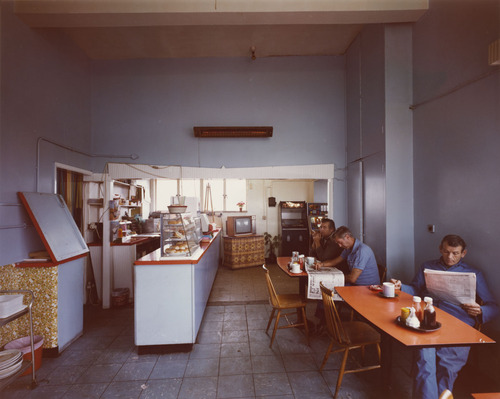
Interior, John’s Cafe, Sandy, Bedfordshire — Paul Graham

CRI_221412

The Ruling Class (Full Film)