Read Gertrude Stein’s prose poem “Miss Furr and Miss Keene”

“Miss Furr and Miss Keene”

by

Gertrude Stein

from

Geography and Plays (1922)


Helen Furr had quite a pleasant home. Mrs. Furr was quite a pleasant woman. Mr. Furr was quite a pleasant man. Helen Furr had quite a pleasant voice a voice quite worth cultivating. She did not mind working. She worked to cultivate her voice. She did not find it gay living in the same place where she had always been living. She went to a place where some were cultivating something, voices and other things needing cultivating. She met Georgine Skeene there who was cultivating her voice which some thought was quite a pleasant one. Helen Furr and Georgine Skeene lived together then. Georgine Skeene liked travelling. Helen Furr did not care about travelling, she liked to stay in one place and be gay there. They were together then and travelled to another place and stayed there and were gay there.

They stayed there and were gay there, not very gay there, just gay there. They were both gay there, they were regularly working there both of them cultivating their voices there, they were both gay there. Georgine Skeene was gay there and she was regular, regular in being gay, regular in not being gay, regular in being a gay one who was one not being gay longer than was needed to be one being quite a gay one. They were both gay then there and both working there then.

They were in a way both gay there where there were many cultivating something. They were both regular in being gay there. Helen Furr was gay there, she was gayer and gayer there and really she was just gay there, she was gayer and gayer there, that is to say she found ways of being gay there that she was using in being gay there. She was gay there, not gayer and gayer, just gay there, that is to say she was not gayer by using the things she found there that were gay things, she was gay there, always she was gay there.

They were quite regularly gay there, Helen Furr and Georgine Skeene, they were regularly gay there where they were gay. They were very regularly gay. Continue reading “Read Gertrude Stein’s prose poem “Miss Furr and Miss Keene””
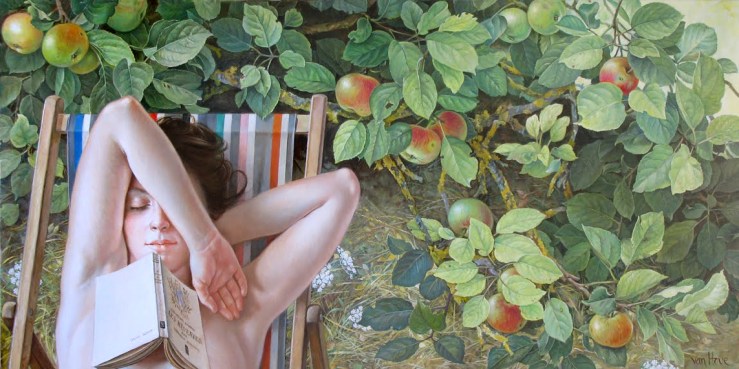
Musings under an Apple Tree — Francine Van Hove

vanhove

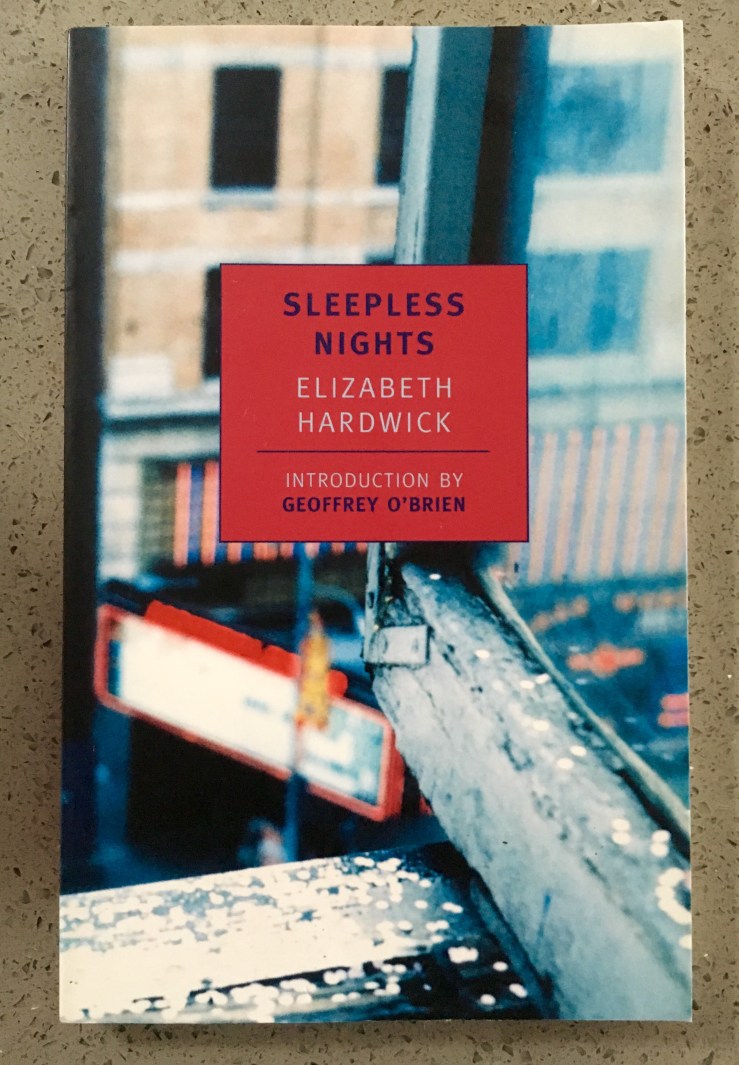
Elizabeth Hardwick’s Sleepless Nights (Book acquired, 3.07.2016)

img_1676

 I picked up Elizabeth Hardwick’s Sleepless Nights yesterday. (I was browsing the “H, classics” for something else, which I did not find, but I found this). Here’s the beginning of Joan Didion’s 1979 review in The New York Times:

“I have always, all of my life, been looking for help from a man,” we are told near the beginning of Elizabeth Hardwick’s subtle new book. “It has come many times and many more than not. This began early.” . . . “Sleepless Nights” is a novel, but it is a novel in which the subject is memory and to which the “I” whose memories are in question is entirely and deliberately the author: we recognize the events and addresses of Elizabeth Hardwick’s life not only from her earlier work, but from the poems of her husband, the late Robert Lowell. We study in another light the rainy afternoons and dyed satin shoes and high-school drunkenness of the Kentucky adolescence, the thin coats and yearnings toward home of the graduate years at Columbia, the households in Maine and Europe and on Marlborough Street in Boston and West 67th Street in New York. We are presented the entire itinerary, shown all the punched tickets and transfers. The result is less a “story about” or “of” a life than a shattered meditation on it, a work as evocative and difficult to place as Claude Levi-Strauss’s “Tristes Tropiques,” which it oddly recalls. The author observes of her enigmatic narrative: “It certainly hasn’t the drama of: I saw the old, white-bearded frigate master on the dock and signed up for the journey. But after all, ‘I’ am a woman.”

This strikes an interesting note, a balance of Oriental diffidence and exquisite contempt, of irony and direct statement, that exactly expresses the sensibility at work in “Sleepless Nights.” “But after all, ‘I’ am a woman.” Triste Tropique indeed. By way of suggesting his own intention, Levi-Strauss quoted Chateaubriand: “Every man carries within himself a world made up of all that he has seen and loved, and it is to this world that he returns, incessantly.” In certain ways, the mysterious and somnambulistic “difference” of being a woman has been, over 35 years, Elizabeth Hardwick’s great subject, the tropic to which she has returned incessantly: it colored both of her early novels, “The Ghostly Lover” in 1945 and “The Simple Truth” in 1955, as well as many of the essays collected in 1962 as “A View of My Own” and all of those published in 1974 as “Seduction and Betrayal: Women and Literature.”

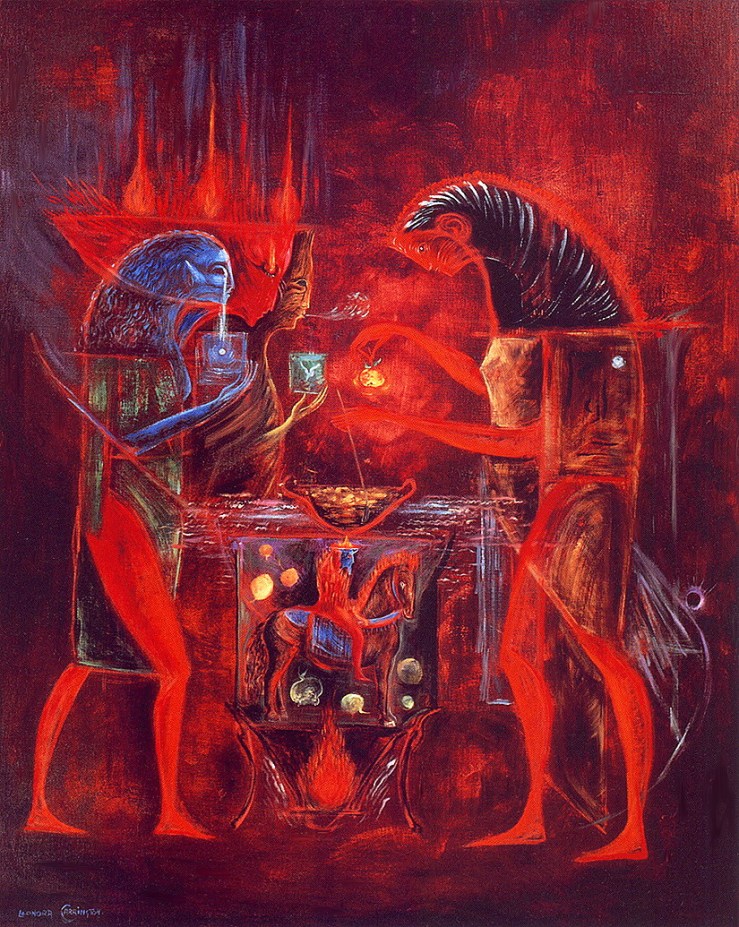
The Ordeal of Owain — Leonora Carrington

ordeal

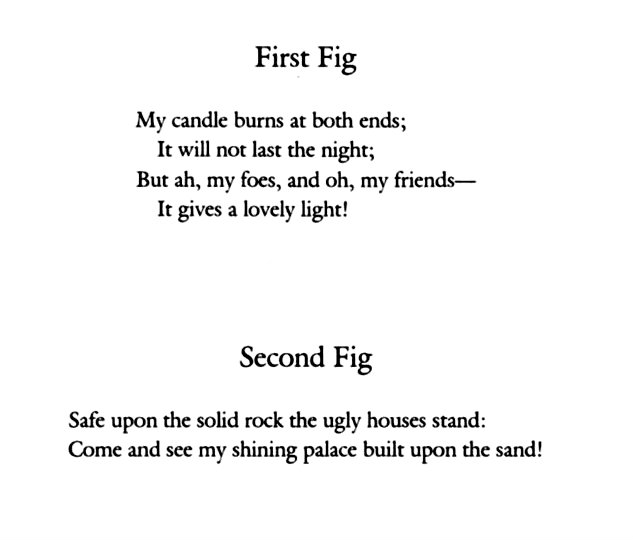
“First Fig” and “Second Fig” — Edna St. Vincent Millay

Capture