Reading/Have Read/Should Write About

img_1954

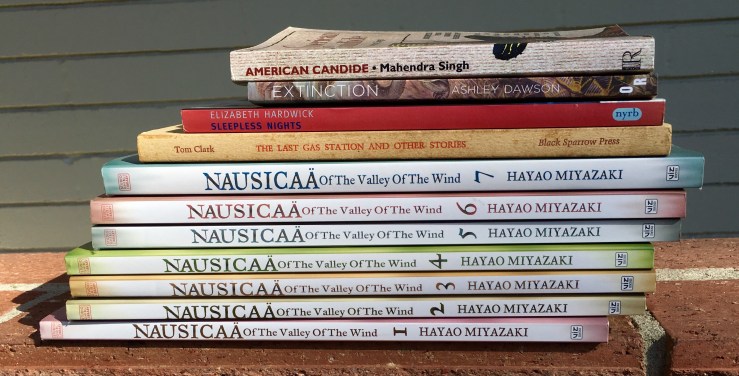
I just spent the past hour reading from Tom Clark’s 1980 short story collection The Last Gas Station and Other Stories. Is this the only collection of short stories by Clark? I don’t know. Maybe I prefer not knowing. I was excited to find this at the bookstore yesterday so maybe I’ll be excited to find some other phantom collection in some eventual phantom future. Stories that are like poems, or infused by poems—or dialogues, or spirit rants, ersatz music reviews for bands that may or may not exist. Heidegger complains to Hitler; Ty Cobb gets turned on to Little Orphan Annie. Tales of sex and love and other things. Find it if you can get it.

Sleepless Nights by Elizabeth Hardwick is a riff-novel, or a thought-novel, or an I-don’t-know-what, I mean. Is it about memory? Or is it memory?  “If only one knew what to remember or what to pretend to remember”—If I remember correctly, this is the first sentence of the novel’s second paragraph.

Mahendra Singh’s American Candide is forthcoming from Rosarium. It is funny and sad and even cruel, but also sweet (and bitter and very very funny). I’ll have a full review forthcoming closer to its pub date, but the short review is: Buy it.

I wrote about Ashley Dawson’s Extinction  a week or two ago…finished it since then and it’s a good, sad, angrifying read. I read Extinction with/against a viewing of Miyazaki’s Princess Mononoke, and then I got sick, like, the next week, which led to a big re-read of  Nausicaä of the Valley of the Wind. I’m better now, thanks to fantasy and manga.

Three Books

img_1947

Has Man a Future? by Bertrand Russell. 1961 Penugin U.S. paperback. Cover design by Richard Hollis, using a photo credited to USIS.

img_1949

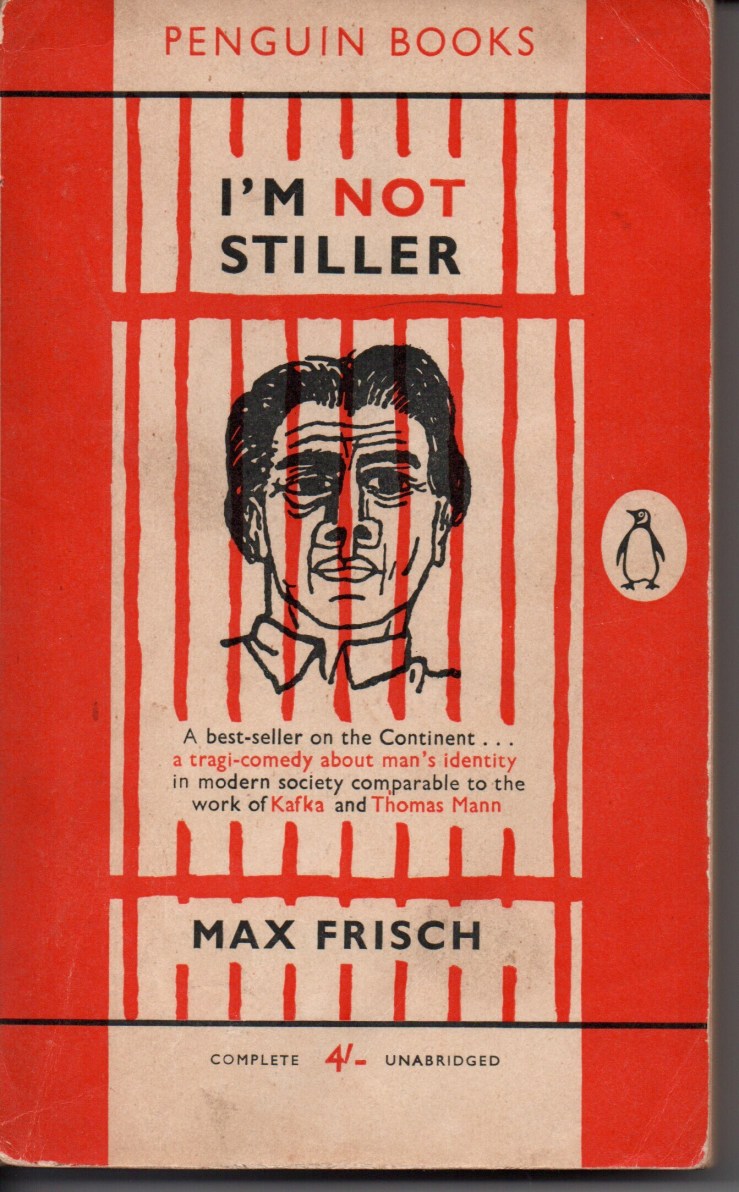
I’m Not Stiller by Max Frisch. English translation by Michael Bullock. 1961 Penguin paperback (Great Britain). Cover by John Griffiths.

img_1946

The Last Summer by Boris Pasternak. English translation by George Reavey. 1961 Penguin paperback (Great Britain). Cover illustration of the author by his father, Leonid Pasternak.

Read “In the Red Room” by Paul Bowles

“In the Red Room”

by

Paul Bowles


When I had a house in Sri Lanka, my parents came out one winter to see me. Originally I had felt some qualms about encouraging their visit. Any one of several things–the constant heat, the unaccustomed food and drinking water, even the presence of a leprosy clinic a quarter of a mile from the house might easily have an adverse effect on them in one way or another. But I had underestimated their resilience; they made a greater show of adaptability than I had thought possible, and seemed entirely content with everything. They claimed not to mind the lack of running water in the bathrooms, and regularly praised the curries prepared by Appuhamy, the resident cook. Both of them being in their seventies, they were not tempted by the more distant or inaccessible points of interest. It was enough for them to stay around the house reading, sleeping, taking twilight dips in the ocean, and going on short trips along the coast by hired car. If the driver stopped unexpectedly at a shrine to sacrifice a coconut, they were delighted, and if they came upon a group of elephants lumbering along the road, the car had to be parked some distance up ahead, so that they could watch them approach and file past. They had no interest in taking photographs, and this spared me what is perhaps the most taxing duty of cicerone: the repeated waits while the ritual between man and machine is observed. They were ideal guests.

Colombo, where all the people I knew lives, was less than a hundred miles away. Several times we went up for weekends, which I arranged with friends by telephone beforehand. There we had tea on the wide verandas of certain houses in Cinnamon Gardens, and sat at dinners with professors from the university, Protestant ministers, and assorted members of the government. (Many of the Sinhalese found it strange that I should call my parents by their first names, Dodd and Hannah; several of them inquired if I were actually their son or had been adopted.) These weekends in the city were hot and exhausting, and they were always happy to get back to the house, where they could change into comfortable clothing.

One Sunday not long before they were due to return to America, we decided to take in the horse races at Gintota, where there are also some botanical gardens that Hannah wanted to see. I engaged rooms at the New Oriental in Galle and we had lunch there before setting out.

As usual, the events were late in starting. It was the spectators, in any case, who were the focus of interest. The phalanx of women in their shot-silk saris moved Hannah to cries of delight. The races themselves were something of a disappointment. As we left the grounds, Dodd said with satisfaction: It’ll be good to get back to the hotel and relax.

But we were going to the botanical gardens, Hannan reminded him. I’d like to have just a peek at them. Continue reading “Read “In the Red Room” by Paul Bowles”