Girl — Tsuguharu Foujita

Flying Carpet — Viktor Vasnetsov

Viktor Mikhailovich Vasnetsov Flying Carpet

The Poet — Adrian Gottlieb

The_Poet_internet

A girl discovers the whole world in a leaf in Angela Steffen’s animated short film Lebensader

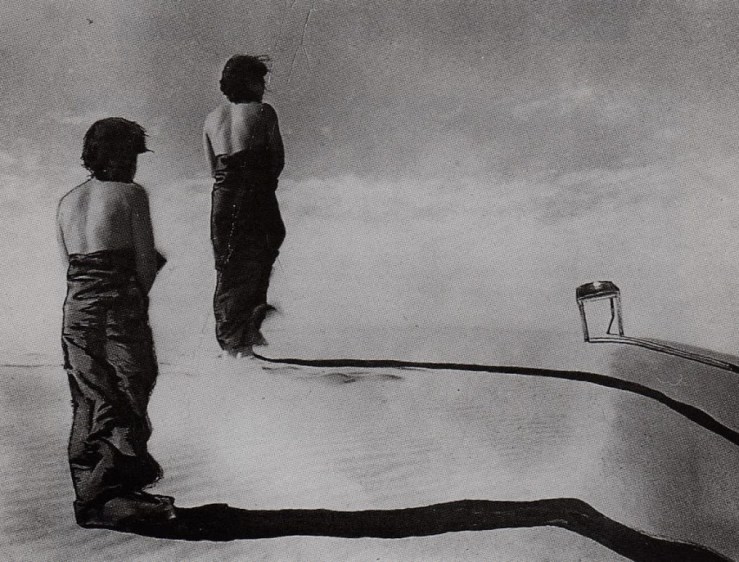
Untitled (Two Women) — Kansuke Yamamoto

EPSON035

Two Women — Tsuguharu Foujita

二人の女-Two-women-1918

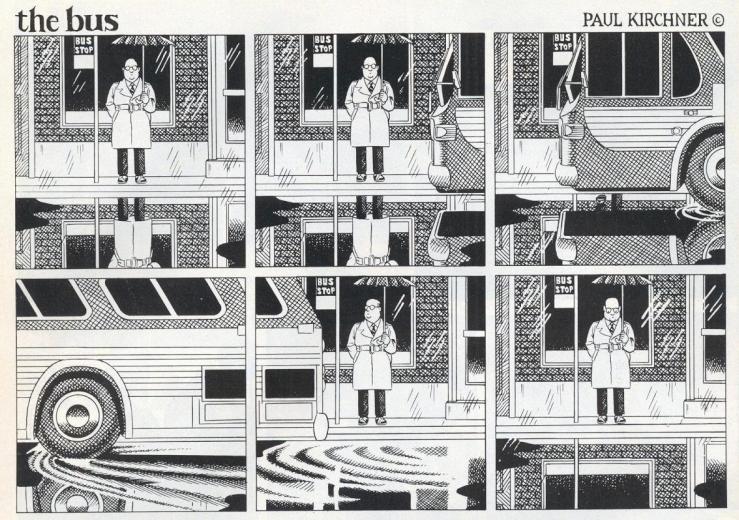
The Bus — Paul Kirchner

DGsYlDA

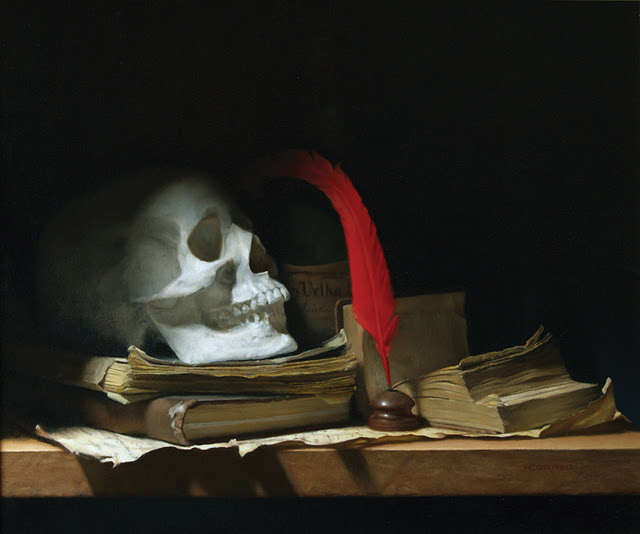
Vanitas of the Angels — Martinho Correia

tumblr_ltrk52Z9CG1r5569zo1_1280 (1)

We have to articulate ourselves, otherwise we would be cows in the field (Werner Herzog)

(An Incomplete) List of Ridiculous Names in Charles Dickens Novels

Abel Garland

Abel Magwich

Adolphus Tetterby

Alfred Jingle

Affery Flintwinch

Anne Chickenstalker

Anthony Jeddler

Augustus Snodgrass

Barnaby Rudge

Bayham Badger

Bazzard

Bella Wilfer

Bentley Drummle

Betsy Prig

Betsy Quilp

Betsy Trotwood

Brownlow

Bucket

Bumble

Caroline “Caddy” Jellyby

Charity Pecksniff 

Clara Peggotty

Cleopatra Skewton

Clickett

Cornelia Blimber

Canon Crisparkle

Charles Cheeryble

Chevy Slyme

Clarence Barnacle

Clarriker

Creakle Continue reading “(An Incomplete) List of Ridiculous Names in Charles Dickens Novels”

The Moment of Birth — Alfred Kubin

Doc Sportello’s Interstellar Trip (Pynchon’s Inherent Vice)

It had all begun, apparently, some 3 billion years ago, on a planet in a binary star system quite a good distance from Earth. Doc’s name then was something like Xqq, and because of the two suns and the way they rose and set, he worked some very complicated shifts, cleaning up after a labful of scientist-priests who invented things in a gigantic facility which had formerly been a mountain of pure osmium. One day he heard some commotion down a semiforbidden corridor and went to have a look. Ordinarily sedate and studious personnel were running around in uncontrolled glee. “We did it!” they kept screaming. One of them grabbed Doc, or actually Xqq. “Here he is! The perfect subject!” Before he knew it he was signing releases, and being costumed in what he would soon learn was a classic hippie outfit of the planet Earth, and led over to a peculiarly shimmering chamber in which a mosaic of Looney Tunes motifs was repeating obsessively away in several dimensions at once in vividly audible yet unnamable spectral frequencies. . . . The lab people were explaining to him meanwhile that they’d just invented intergalactic time travel and that he was about to be sent across the universe and maybe 3 billion years into the future. “Oh, and one other thing,” just before throwing the final switch, “the universe? it’s been, like, expanding? So when you get there, everything else will be the same weight, but bigger? with all the molecules further apart? except for you—you’ll be the same size and density. Meaning you’ll be about a foot shorter than everybody else, but much more compact. Like, solid?”


“Can I walk through walls?” Xqq wanted to know, but by then space and time as he knew it, not to mention sound, light, and brain waves, were all undergoing these unprecedented changes, and next thing he knew he was standing on the corner of Dunecrest and Gordita Beach Boulevard, and watching what seemed to be an endless procession of young women in bikinis, some of whom were smiling at him and offering thin cylindrical objects whose oxidation products were apparently meant to be inhaled. . . .


As it turned out, he was able to go through drywall construction with little discomfort, although, not having X-ray vision, he did run into some disagreeable moments with wall studs and eventually curtailed the practice. His new hyperdensity also allowed him sometimes to deflect simple weapons directed at him with hostile intent, though bullets were another story, and he also learned to avoid those when possible. Slowly the Gordita Beach of his trip merged with the everyday version, and he began to assume that things were back to normal, except for when, now and then, he’d forget and lean against a wall and suddenly find himself halfway through it and trying to apologize to somebody on the other side.

From Thomas Pynchon’s novel Inherent Vice.

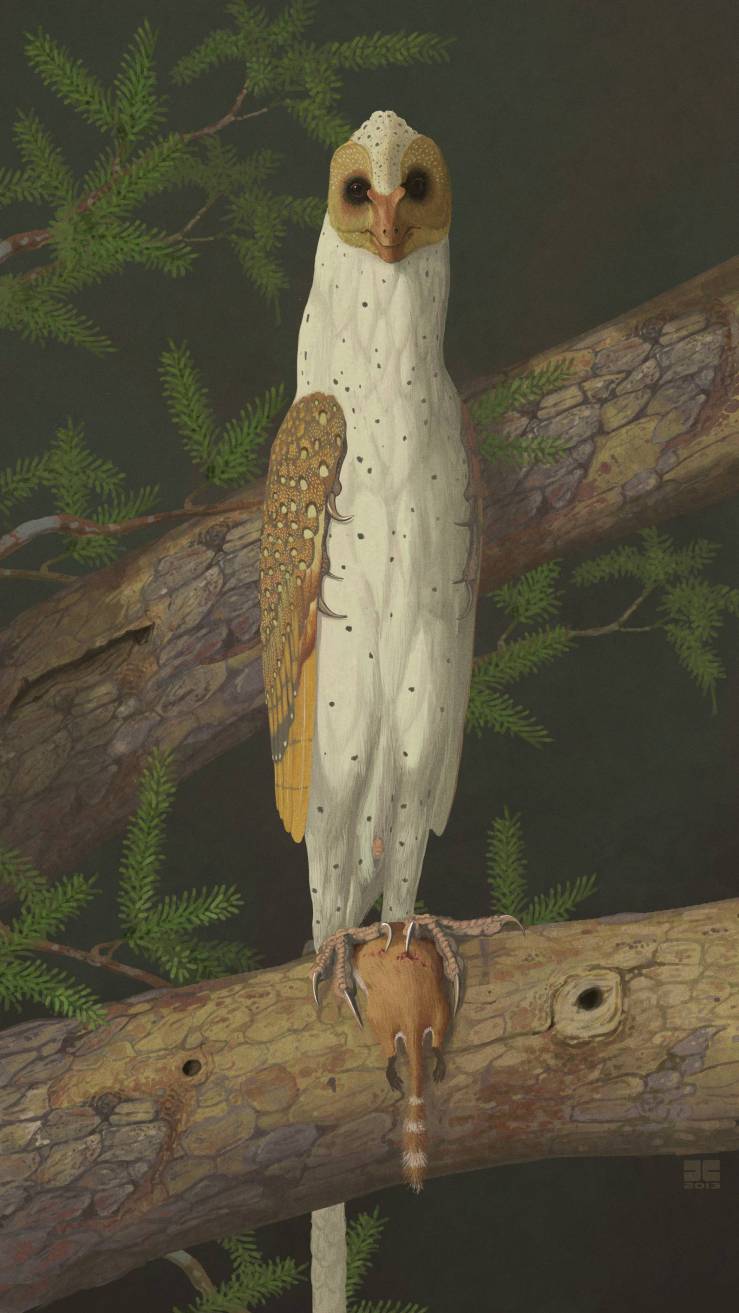
Sinovenator Changii — John Conway

sinovenator-changii

Utopia — Saul Steinberg

“An Inhabitant of Carcosa” by Ambrose Bierce

“An Inhabitant of Carcosa”

by

Ambrose Bierce

For there be divers sorts of death — some wherein the body remaineth; and in some it vanisheth quite away with the spirit. This commonly occurreth only in solitude (such is God’s will) and, none seeing the end, we say the man is lost, or gone on a long journey — which indeed he hath; but sometimes it hath happened in sight of many, as abundant testimony showeth. In one kind of death the spirit also dieth, and this it hath been known to do while yet the body was in vigor for many years. Sometimes, as is veritably attested, it dieth with the body, but after a season is raised up again in that place where the body did decay.

Pondering these words of Hali (whom God rest) and questioning their full meaning, as one who, having an intimation, yet doubts if there be not something behind, other than that which he has discerned, I noted not whither I had strayed until a sudden chill wind striking my face revived in me a sense of my surroundings. I observed with astonishment that everything seemed unfamiliar. On every side of me stretched a bleak and desolate expanse of plain, covered with a tall overgrowth of sere grass, which rustled and whistled in the autumn wind with heaven knows what mysterious and disquieting suggestion. Protruded at long intervals above it, stood strangely shaped and somber- colored rocks, which seemed to have an understanding with one another and to exchange looks of uncomfortable significance, as if they had reared their heads to watch the issue of some foreseen event. A few blasted trees here and there appeared as leaders in this malevolent conspiracy of silent expectation. Continue reading ““An Inhabitant of Carcosa” by Ambrose Bierce”

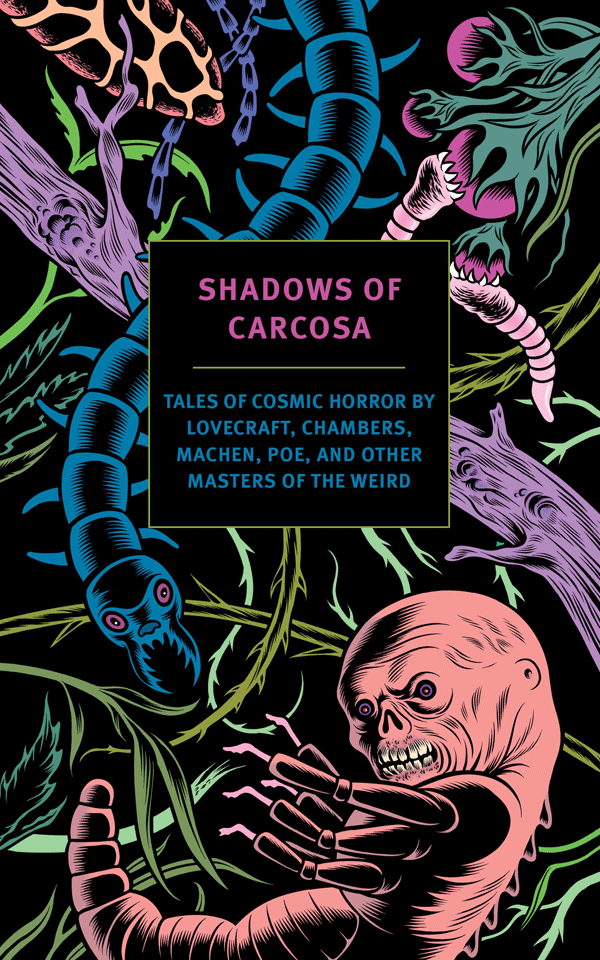
Charles Burns’s Shadows of Carcosa Cover

productimage-picture-shadows-of-carcosa-456

Nude Reading on the Seashore — William Orpen