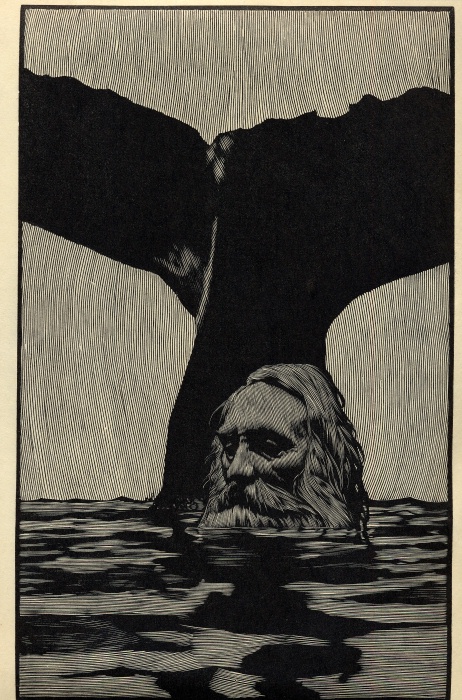
Jonah — Barry Moser

Book Acquired, 2.08.2012—D.H. Lawrence’s Apocalypse

20120209-145955.jpg

I need another book like I need a hole in the head, but, when I’ve had a stressful day at work, I like to browse the huge, labyrinthine used bookstore conveniently located just over a mile from my house. I don’t know how I wound up browsing D.H. Lawrence books, but Apocalypse stood out—first for its name, and second because, in a section of literally hundreds and hundreds of Lawrence volumes, it seemed to be the only one. Five minutes with the thing and I knew I was going to pick it up. It’s essentially a long essay on the Book of Revelation—and the concept of apocalypse and end-of-the-world in general.

Lawrence’s Studies in Classic American Literature is a seminal volume for me, one I return to repeatedly—but I’ve never made it through one of his novels; I even found his short fiction tedious. Anyway, read a huge chunk of this last night. More to come.

William S. Burroughs BBC Documentary

Young Nietzsche (Detail)

20120208-155542.jpg

“Order Is Simply a Thin, Perilous Condition We Try to Impose on the Basic Reality of Chaos” (A Citation from William Gaddis’s Novel JR)

Near the beginning of William Gaddis’s sprawling novel J R, erstwhile protagonist Jack Gibbs rants about knowledge to his students:

Before we go any further here, has it ever occurred to any of you that all this is simply one grand misunderstanding? Since you’re not here to learn anything, but to be taught so you can pass these tests, knowledge has to be organized so it can be taught, and it has to be reduced to information so it can be organized do you follow that? In other words this leads you to assume that organization is an inherent property of the knowledge itself, and that disorder and chaos are simply irrelevant forces that threaten it from the outside. In fact it’s the opposite. Order is simply a thin, perilous condition we try to impose on the basic reality of chaos . . .

Books Acquired, 2.07.2012

20120208-151957.jpg

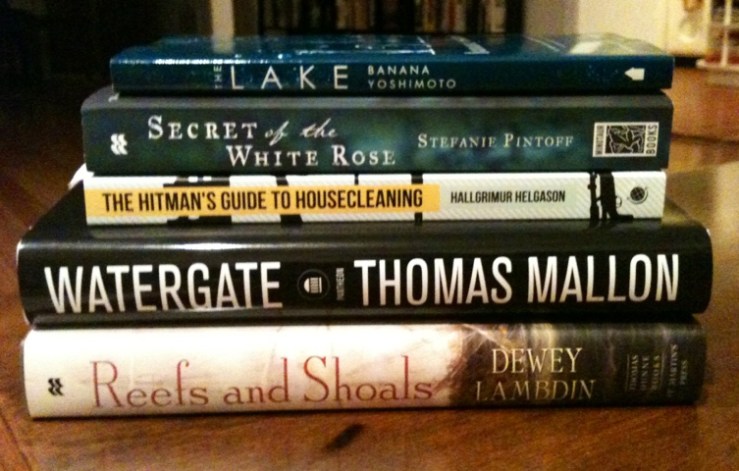
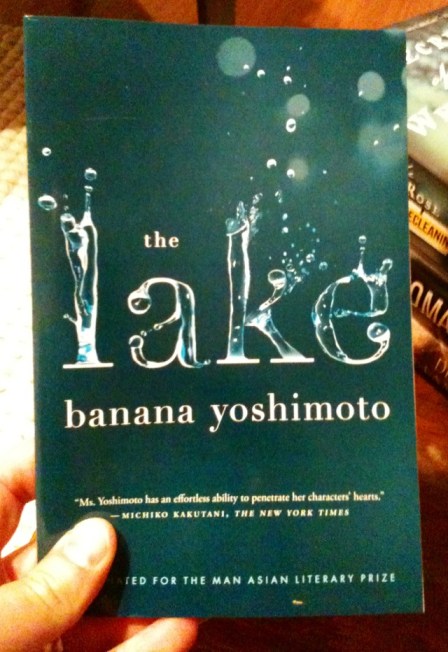
Large pile accrued yesterday although some of these were sent to the old abode. First: Lake by Banana Yoshimoto:
20120208-152021.jpg

Publisher Melville House’s description:

With its echoes of the infamous, real-life Aum Shinrikyo cult (the group that released poison gas in the Tokyo subway system), The Lake unfolds as the most powerful novel Banana Yoshimoto has written. And as the two young lovers overcome their troubled past to discover hope in the beautiful solitude of the lake in the country- side, it’s also one of her most moving.
20120208-152033.jpg

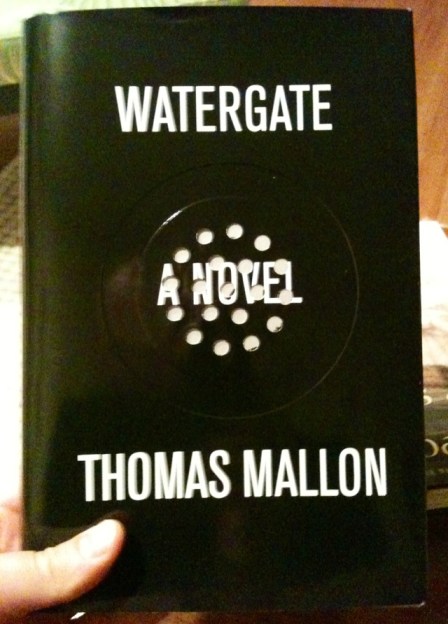
Thomas Mallon’s novelization of a scandal: Watergate. From the author’s website:

In Watergate: A Novel, Thomas Mallon conveys the drama and high comedy of the Nixon presidency through the urgent perspectives of seven characters we only thought we knew before now, moving readers from the private cabins of Camp David to the klieg lights of the Senate Caucus Room, from the District of Columbia Jail to the Dupont Circle mansion of Theodore Roosevelt’s sharp-tongued ninety-year-old daughter, and into the hive of the Watergate complex itself, home not only to the Democratic National Committee but also to the president’s attorney general, his recklessly loyal secretary, and the shadowy man from Mississippi who pays out hush money to the burglars. Mallon achieves with Watergate a scope and historical intimacy that surpasses even what he attained in his previous novels, as he turns a “third-rate burglary” into a tumultuous, first-rate entertainment.

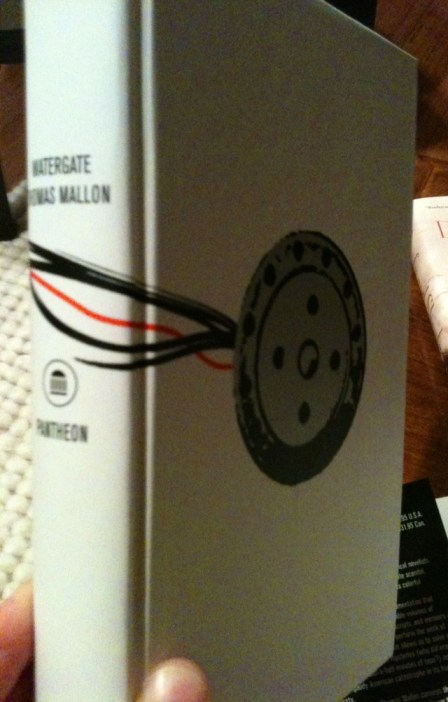
Watergate gets big points for its cover: the book jacket (oh, how I loathe them!) is punctuated with holes suggesting one of those antique things your grandfather called a telephone; strip away the jacket and there’s this (far lovelier) cover:
20120208-152041.jpg

20120208-152054.jpg

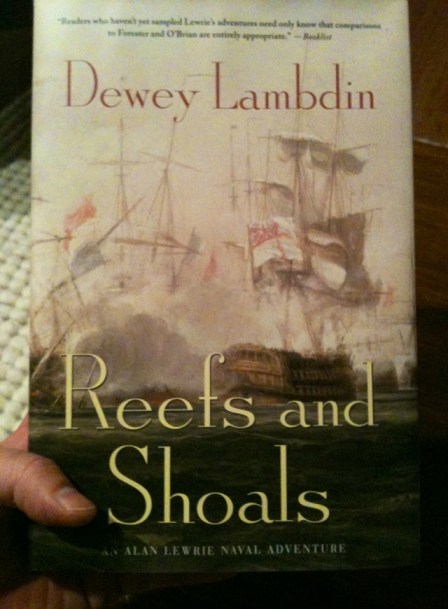
Reefs and Shoals, a naval adventure historical thing from Dewey Lambdin. From publisher Macmillan:

Pity poor Captain Alan Lewrie, Royal Navy! He’s been wind-muzzled for weeks in Portsmouth, snugly tucked into a warm shore bed with lovely, and loving, Lydia Stangbourne, a Viscount’s daughter, and beginning to enjoy indulging his idle streak, when Admiralty tears Lewrie away and order him to the Bahamas, into the teeth of ferocious winter storms. It’s enough to make a rakehell such as he weep and kick furniture!
20120208-152245.jpg

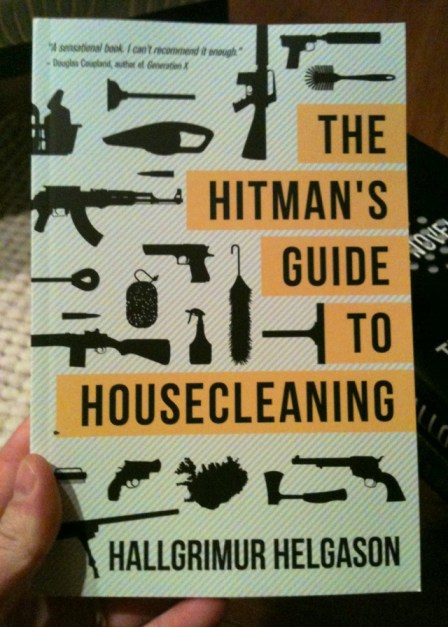
The Hitman’s Guide to Housecleaning by Hallgrimur Helagason, from, uh, Amazon’s publishing imprint:

Toxic, the hero of Hallgrimur Helgason’s The Hitman’s Guide to Housecleaning, had a record of 66 perfect kills. Then came the 67th–an undercover FBI agent–and suddenly he found himself in Iceland with a new identity. Oops. Avoid this kind of careless error by following Toxic’s handy tips.

1. Don’t miss the target. People tend to get a bit upset if they notice you’re trying to kill them.
2. Don’t waste a bullet. You have to think about the environment, too–you really shouldn’t add an unnecessary gunshot to an already noisy city.
3. Morning is for murder. Nobody expects a bullet for breakfast.
4. Don’t kill a priest. He who kills a man of the church will be killed by a church.
5. Don’t confuse killing and murder. Murder is for amateurs, killing is for the professionals.
6. If you have to take on another person’s identity, never let it be a priest. With that collar around your neck, your sex appeal is gone.
7. When you’re dating, don’t talk about your job–unless you’re overseas. Foreign girls are crazy about guys who kill Americans.
8. Embrace every new passport they give you. It’s always nice to get a new life now and then.
9. Don’t kill the wrong guy. Or you’ll end up in Iceland.
10. When in Iceland, stop the killing. There are so few of them.

 

Zissou Shoes

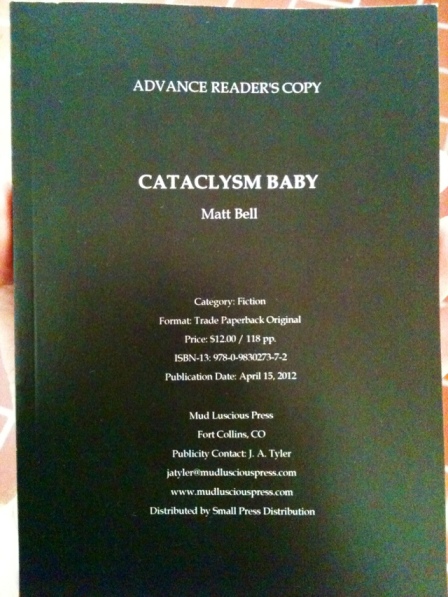
Book Acquired, 2.04.2012 — Cataclysm Baby

20120205-164712.jpg

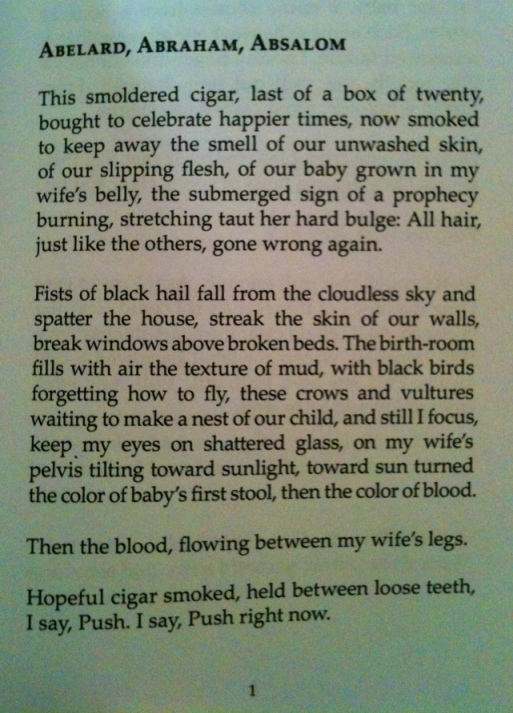
Okay, this one looks pretty cool—Cataclysm Baby by Matt Bell from indie Mud Luscious Press. More to come. Bell’s site describes the book as “twenty-six post-apocalyptic parenting stories, all narrated by fathers, each revealing some different family, some new end of the world.” First page:

20120205-164907.jpg

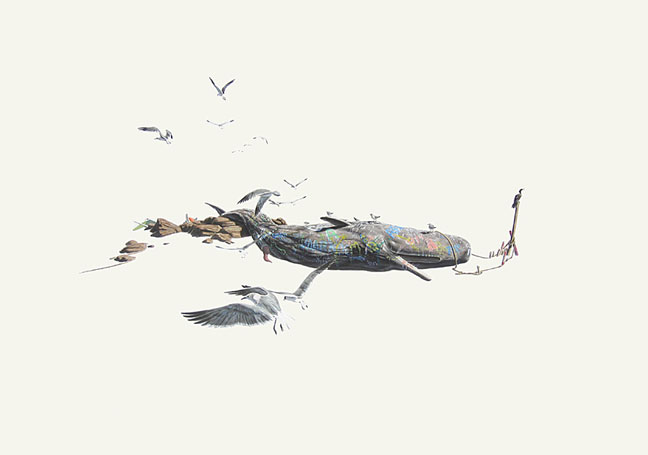
Flotsam — George Boorujy

(An Incomplete) List of Ridiculous Names in Charles Dickens Novels

Abel Garland

Abel Magwich

Adolphus Tetterby

Alfred Jingle

Affery Flintwinch

Anne Chickenstalker

Anthony Jeddler

Augustus Snodgrass

Barnaby Rudge

Bayham Badger

Bazzard

Bella Wilfer

Bentley Drummle

Betsy Prig

Betsy Quilp

Betsy Trotwood

Brownlow

Bucket

Bumble

Caroline “Caddy” Jellyby

Charity Pecksniff 

Clara Peggotty

Cleopatra Skewton

Clickett

Cornelia Blimber

Canon Crisparkle

Charles Cheeryble

Chevy Slyme

Clarence Barnacle

Clarriker

Creakle

Dick Datchery

Dick Swiveller

Dolge Orlick

Duff

Durdles

Ebenezer Scrooge

Elijah Pogram

Ephraim Flintwinch

Fanny Cleaver

Fanny Squeers

Flora Finching

Fagin

Fezziwig

Fledgeby “Fascination”

Grace Jeddler

Gaffer Hexam

General Cyrus Choke

Grewgious

Helena Landless

Henrietta Boffin

Henrietta Petowker

Ham Peggotty

Hannibal Chollop

Harold Skimpole

Herbert Pocket

Isabella Wardle

Jemima Bilberry

Jerry Cruncher

Job Trotter

John Peerybingle

Josiah Bounderby

Kit Nubbles

Kenge

Krook

Lavinia Wilfer

Lucretia Tox

Luke Honeythunder

Malta Bagnet

Mercy Pecksniff 

Martin Chuzzlewit

M’Choakumchild

Mealy Potatoes

Mould

Ninetta Crummles

Nadgett

Nathaniel Winkle

Neckett

Nemo

Newman Noggs

Noddy Boffin

Oliver Twist

Peg Sliderskew

Pet Meagles

Pleasant Riderhood

Polly Toodle

Paul Sweedlepipe

Perker

Phil Squod

Prince Turveydrop

Pumblechook

Quinion

Ruth Pinch

Redlaw

Rogue Riderhood

Sairey Gamp

Sissy Jupe

Sophronia Lammle

Susan Nipper

Sleary

Sloppy

Slurk

Smalweed

Smike

Snagsby

Snawley

Stryver

Tartar

Theophile Gabelle

Toots

Trabb

Tulkinghorn

Tungay

Tattycoram

Uriah Heap

Vholes

Vincent Crummles

Volumnia Dedlock

Wackford Squeers

Zephaniah Scadde


The Life of Charles Dickens (BBC)

“Words Ruin One’s Thoughts” — William Gaddis Quotes Thomas Bernhard

Late in his life, William Gaddis became a big fan of Thomas Bernhard who he quoted at length in a letter he sent to critic Gregory Comnes (that’s Gaddis’s handwriting). Via/more.

Book Acquired, 2.01.2012

20120205-164602.jpg

Haley Tanner’s acclaimed novel Vaclav & Lena is new in trade paperback (excellent cover on this one, by the bye). From Page Pulp’s review:

You could try to categorize this book as a love story or an immigrant story, but it is really simply a human story.  Like life itself, it can be sometimes funny, sometimes awkward (like the scene where Vaclav’s father walks in on him getting out the tub and makes a wrong assumption about what Vaclav was doing), sometimes happy, sometimes sad, and yes, sometimes incredibly dark.  It reflects the human experience so well, but never feels cliché.  Tanner’s prose has a simplicity that mimics the characters’ imperfect English.  She creates beauty with her words, but is never too flowery. This allows the story to shine through, unobscured. Her characters almost do not seem like characters; after awhile they start to feel wondrously real, like you could reach out and touch Lena’s messy black curls.  Tanner is adept at shaping both the story and the characters so that they feel realistic.

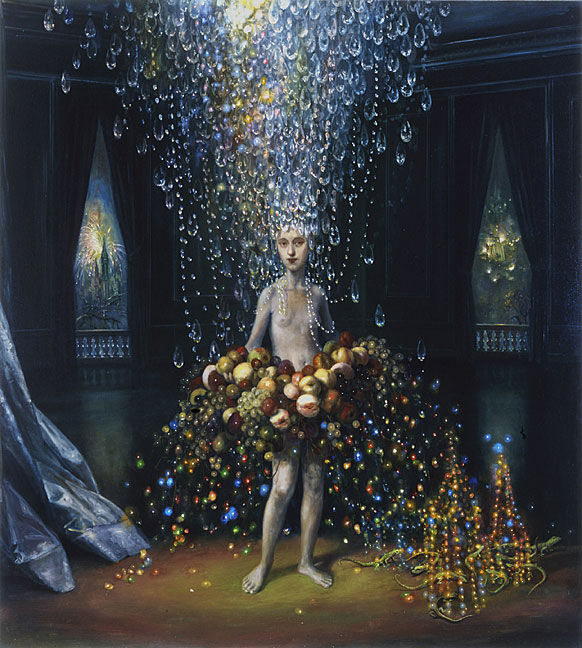
Self-Portrait as Gorgeous Tumor — Julie Heffernan

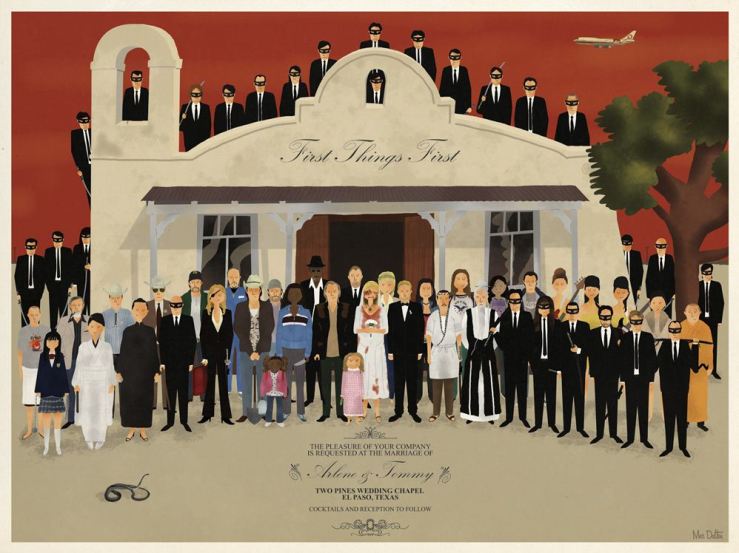
First Things First — Max Dalton (Kill Bill Wedding Invitation)

Love this poster by Max Dalton. (More/via).

Pilgrimage, A Short Documentary by Werner Herzog

From Wikipedia (final emphasis mine):

Pilgrimage is a 2001 documentary film by Werner Herzog. Accompanied only by music the film alternates between shots of pilgrims near the tomb of Saint Sergei in Sergiyev Posad, Russia and pilgrims at the Basilica of Guadalupe in Mexico. The score was composed by John Tavener and performed by the BBC Symphony Orchestra with vocal accompaniment by Parvin Cox and the Westminster Cathedral Choir. The film begins with an opening quote by Thomas à Kempis which is a fake quote invented by the filmmaker himself.

Book Acquired, 2.03.2012 — Edward St. Aubyn Edition

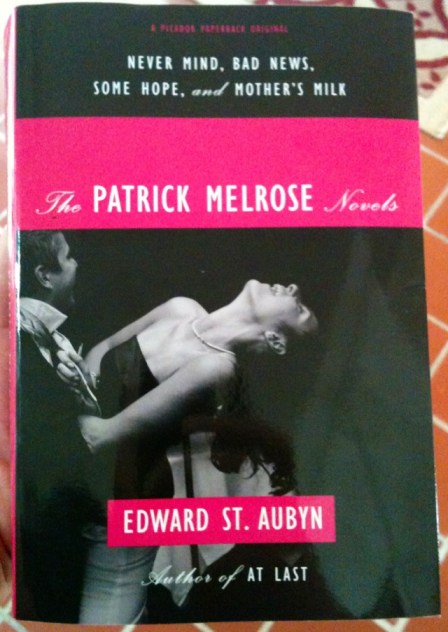
20120205-164456.jpg

Picador has put together all four of Edward St. Aubyn’s Patrick Melrose novels in anticipation of the final novel, At Last, which debuts later this month from FS&G. I haven’t read St. Aubyn’s stuff, which hasn’t been widely available in the US until now, but I do know that Open City put some of it out, and they put out stuff by heroes of mine like David Berman and Sam Lipsyte (who blurbs the book). Anyway, here’s a short description from Picador:

For more than twenty years, acclaimed author Edward St. Aubyn has chronicled the life of Patrick Melrose, painting an extraordinary portrait of the beleaguered and self-loathing world of privilege. This single volume collects the first four novels—Never Mind, Bad News,Some Hope, and Mother’s Milk, a Man Booker finalist—to coincide with the publication of At Last, the final installment of this unique novel cycle.

By turns harrowing and hilarious, these beautifully written novels dissect the English upper class as we follow Patrick Melrose’s story from child abuse to heroin addiction and recovery. Never Mind,the first novel, unfolds over a day and an evening at the family’s chateaux in the south of France, where the sadistic and terrifying figure of David Melrose dominates the lives of his five-year-old son, Patrick, and his rich and unhappy American mother, Eleanor. From abuse to addiction, the second novel, Bad News opens as the twenty-two-year-old Patrick sets off to collect his father’s ashes from New York, where he will spend a drug-crazed twenty-four hours. And back in England, the third novel, Some Hope, offers a sober and clean Patrick the possibility of recovery. The fourth novel, the Booker-shortlisted Mother’s Milk, returns to the family chateau, where Patrick, now married and a father himself, struggles with child rearing, adultery, his mother’s desire for assisted suicide, and the loss of the family home to a New Age foundation.

Edward St. Aubyn offers a window into a world of utter decadence, amorality, greed, snobbery, and cruelty—welcome to the declining British aristocracy.

I haven’t had much time to dip into this, even though it intrigues, because my wife immediately snapped it up. I had to go find it in her night stand to do this post. At the risk of mangling this completely though (and correct me if I’m wrong), it seems like a little bit like a contemporary Henry James shot through with Bret Easton Ellis (and maybe a touch of Downton Abbey). I will ask my wife to report.