Last week I finally got into a collection of Fernando Pessoa’s writing called Writings on Art and Poetical Theory. The books contains pieces that Pessoa composed in English, and is out next year from Contra Mundum Press. Their blurb:
Writings on Art and Poetical Theory contains a selection of Fernando Pessoa’s writings (or those of his heteronyms) on art and poetical theory, originally written in English. In Pessoa’s oeuvre one finds not only literary and fictional works but also a multiplicity of theoretical texts on the most diverse subjects concerning artistic movements, literature, and writers.
In this book, we witness Pessoa explore, through various heteronyms, general theories on poetics, the poetries of other heteronyms, the uses and abuses of criticism, and more. Also included are essays on sensationism (an aesthetic movement Pessoa dubs a new species of Weltanschauung), translation, and a brief history of English literature, which is comprised of fragments on Shakespeare, Milton, the British Romantics, Dickens, Wilde, and others, as well as additional material, such as Pessoa’s own poem Antinous.
This edition, prepared by Nuno Ribeiro and Cláudia Souza, allows us to have an overview of Pessoa’s writings on art and poetic theory — most of which are presented here for the first time to English readers —, thus opening the way for future studies on one of the most significant authors of Portuguese modernism.
Dabbling about in Writings reminded me that I’ve never made a stab at Pessoa’s monumental work, The Book of Disquiet. I picked up New Directions’ recent Complete Edition in translation by Margaret Jull Costa. I ended up reading a big chunk of it that night and have dipped into it all week and I’m notsure if I love it or hate it. It’s like the anti-Leaves of Grass, if that makes sense. It also seems like the kind of book to just pick up and read and random, which I’ve been doing since my initial fifty-page jog into it. In a short doses the fragments are lovely, poetic, aphoristic, but in longer dives the language becomes oppressive, the spirit draining and even venomous.
While I was at the bookstore I also spied a copy of Zak Smith’s Gravity’s Rainbow Illustrated. I’d found a used copy at this same story maybe ten years ago and thought twenty bucks was too much for it, and have regretted that decision for years now. Here’s the first page:
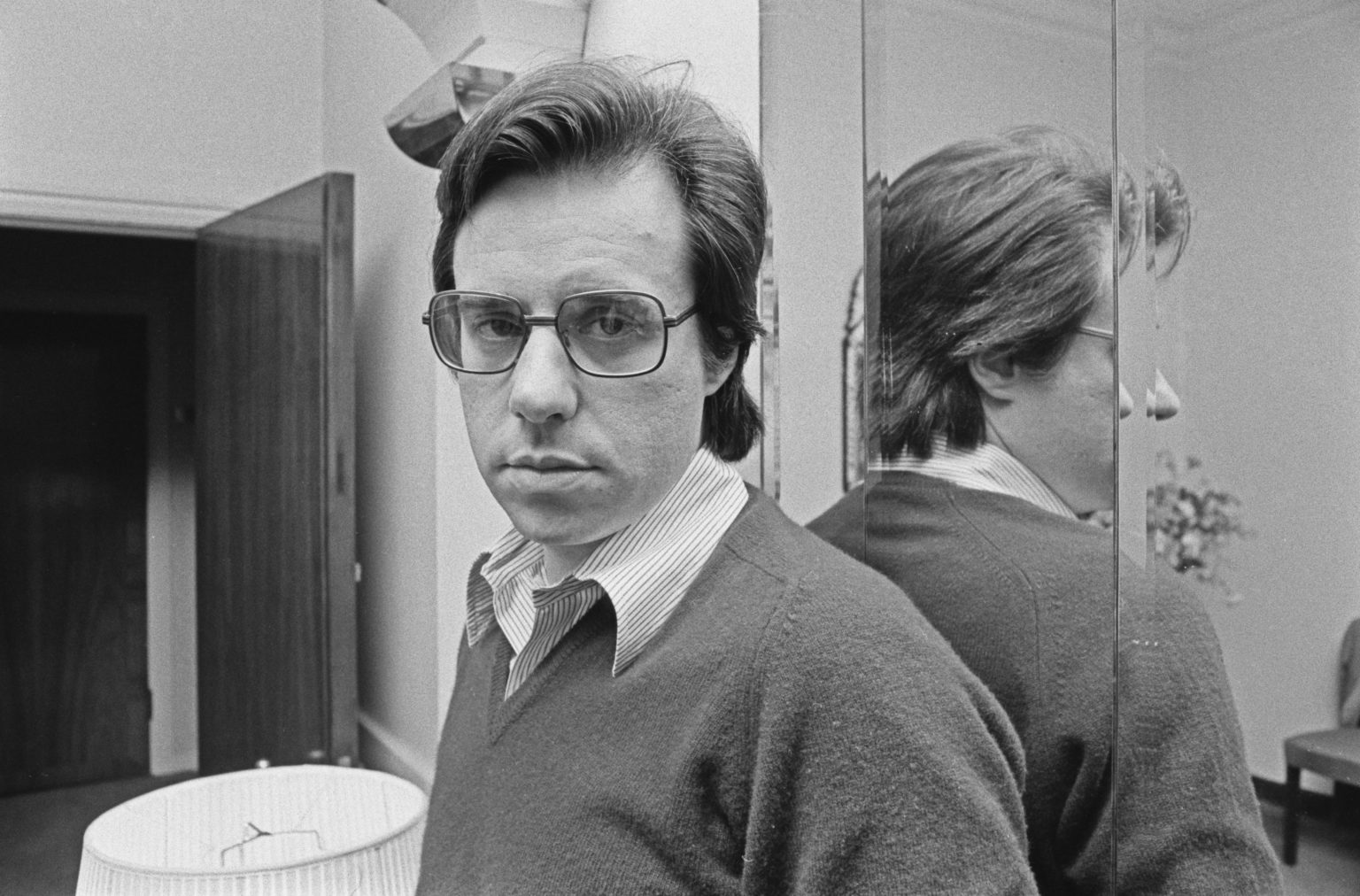
Bogdanovich was an actor, writer, producer, and film critic, but will most likely be remembered as a film director.
The first Bogdanovich film I saw was Mask (1985) starring Eric Stoltz and Cher. I was probably eight or nine, and I did not know it was a “Peter Bogdanovich film.” Mask was one of the many films my grandfather taped from HBO, Disney, or Cinemax, and mailed to my family on VHS cassettes, little bundles of cinema my brother and I consumed repeatedly and indiscriminately in our remote village in the highlands of Papua New Guinea. Mask is one of the first films I ever saw that genuinely hurt my feelings.
Years later I’d see Bogdanovich’s most celebrated film, The Last Picture Show (1971), and it would also hurt my feelings. I was maybe eighteen or nineteen and the film just shattered my stupid heart (Cybill Shepherd as Jacy Farrow did something very particular to me, forever). This was the first time I knew I was watching a “Peter Bogdanovich film”—I’d learned about the New Hollywood guys and even seen some of the film stuff he’d written. (It would be years later until I realized that he was behind Noises Off (1992), which I’d watched as a VHS rental with my grandmother one Saturday night.)
Paper Moon (1973), starring real-life father and daughter Ryan and Tatum O’Neal is the sweetest (yet still a little heart-breaking) film I’ve seen by Bogdanovich, and maybe the best starting place for anyone interested in his work. There’s a touch of De Sica’s The Bicycle Thief in it–a kind of gritty neorealism that hums alongside the film’s tender core.
I found some of Bogdanovich’s films less successful. His adaptation of Henry James’s novel Daisy Miller (1974) doesn’t work and the screwball farce What’s Up Doc? (1972) is never as good as the films it pays homage to. (Avoid Texasville (1990), the sequel to The Last Picture Show, at all costs. It’s like The Two Jakes, by which I mean, a bad sequel to a great film, and it should never have happened.) But even his failures are far more interesting than most basic Hollywood fare.
Bogdanovich was also great in bit parts in film and TV. His perhaps most notable performance was playing Dr. Melfi’s therapist Dr. Kupferberg on The Sopranos. He was also the voice of the DJ in Tarantino’s Kill Bill films, perhaps a nod to his voiceover work in The Last Picture Show, where he also played a DJ.
For me though, Bogdanovich’s most significant acting role is that of director Brooks Otterlake in Orson Welles’ film The Other Side of the Wind (2018). I wrote “Orson Welles’ film” in the previous sentence, but that’s not quite true–The Other Side of the Wind is a bizarre beautiful mess of cinema spanning four decades. It’s a film about film (about film about film…), and Bogdanovich was instrumental in getting it finally released a few years ago.
Bogdanovich’s work in finally bringing Welles’ lost classic to screens is emblematic of his filmmaking career—a filmmaker in love with film, an artist enamored of film as art who came to prominence during the New Hollywood movement that rejected film as commerce. While so much of what makes it to theaters (and streaming platforms) today is simply “content,” or established “intellectual property” that execs know will do numbers, Bogdanovich’s spirit (and the New Hollywood DNA) inheres in current filmmakers who bear his influence, like the Safdie brothers, Sofia Coppola, Noah Baumbach, Wes Anderson, and Quentin Tarantino. That influence will continue to ripple forward, and I hope that we get more films that will disturb us, hurt our feelings, and break our hearts.
The New York Timesand other sources have reported that “Filippo Bernardini, an Italian citizen who worked in publishing,” has been arrested by the FBI for fraud and identity theft. Bernandini stole numerous unpublished manuscripts over five years, mainly through email phishing scams. Bernandini’s motives have yet to surface. From the Times:
For years, the scheme has baffled people in the book world. Works by high-profile writers and celebrities like Margaret Atwood and Ethan Hawke have been targeted, but so have story collections and works by first-time authors. When manuscripts were successfully stolen, none of them seemed to show up on the black market or the dark web. Ransom demands never materialized. Indeed, the indictment details how Mr. Bernardini went about the scheme, but not why.
When I was a kid one of the greatest small joys of my short existence was reading the comics page in the morning newspaper, an experience that seems and quite literally is of another century. I loved Calvin & Hobbes, Bloom County,and The Far Side, but my favorite was Peanuts. While it’s not exactly the same as poring over the morning paper’s comics, I love to see Peanuts on this Day in my Twitter feed. So much has been written on Charles Schulz‘s genius, so I won’t wax more – I’ll just add that Charlie Brown’s strange defeated ever-reemerging optimism still brings me a weird dark hope.
I also continue to really dig Drew Lerman‘s Snake Creek series. Roy and Dav are perfect heroes for the 21st century, a new Vladimir and Estragon wandering through Weirdest Florida. Lerman publishes Snake Creek on Instagram. He collected the first few years of the strip in a volume that is now out of print. I hope he’ll reprint it and put out the latest strips in a paperback at some point soon.
Another artist I followed initially on a social media app (Tumblr) is Yvan Guillo, aka Samplerman. Samplerman’s collages initiate his audience into a new world of pop art surrealism where the Ben-Day dots of twentieth-century pulp transmute into a comic book you read in a dream when you were a kid. I picked up his 2021 book Anatomie Narrative (Ion Edition) and got lost in it again and again. The word narrative in the title asks the audience to understand story in a new way (or to take the title ironically, which I do not). The story here is pure aesthetics.
Another book I loved this year was Paul Kirchner‘sDope Rider: A Fistful of Delirium (Éditions Tanibis), which collects the Dope Rider revival published in High Times from 2015 to 2020 (Dope Rider‘s initial run was in the ’70s). Great art, great jokes, great goofy fun.
I also spent way too much of the little free time I have going through old issues of The East Village Other. The scans I pulled from JSTOR are difficult to read, but the graphics are really what interests me. Initially I was looking for comix by folks like Bernie Wrightson, Art Spiegelman, Robert Crumb, and Kim Deitch – but I also love all the old ads for weird albums, concerts, films, and books. A digital scan of an old, weird paper with its own weird comix isn’t exactly the same as having the paper in your hand. But it’s better than nothing.
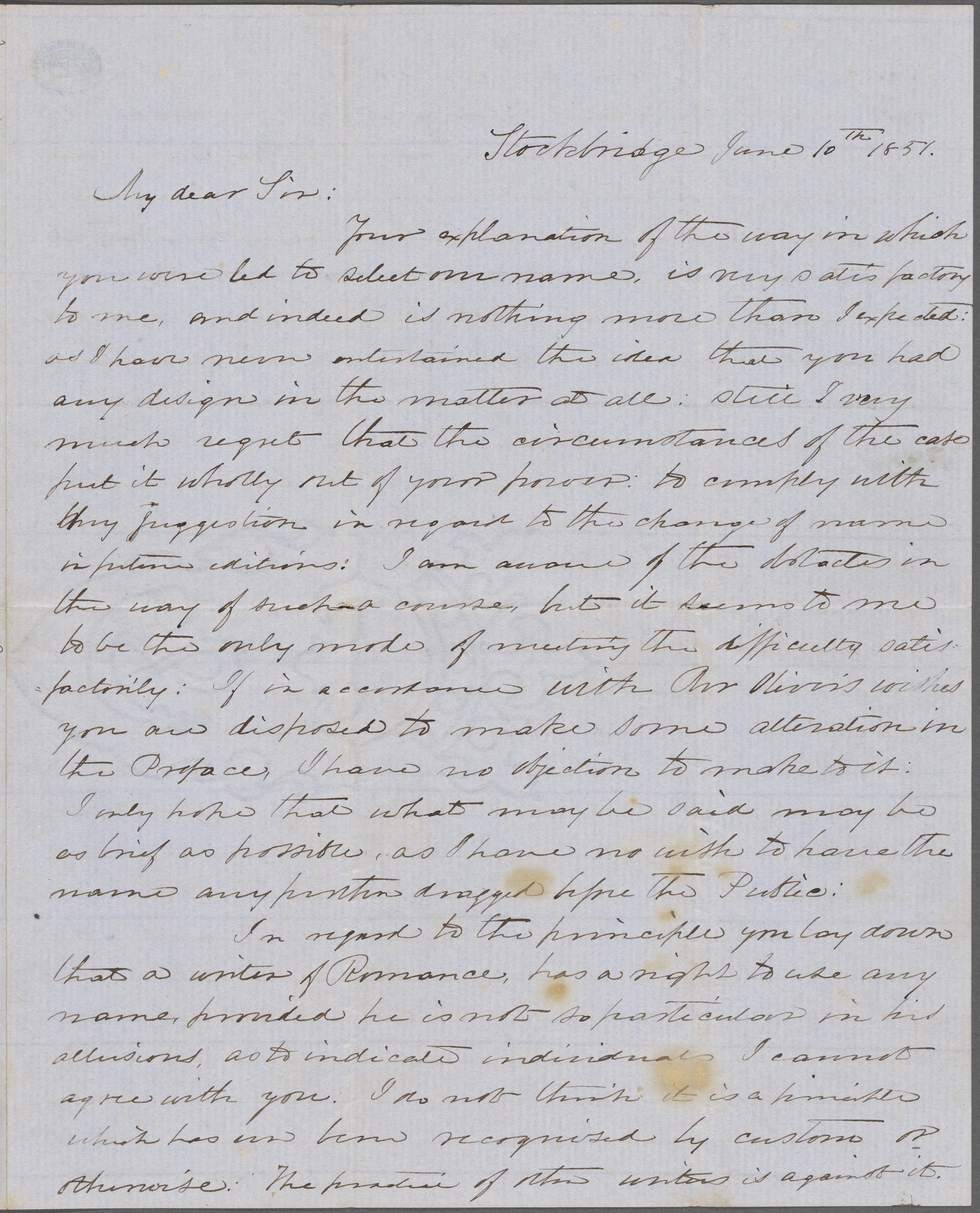
Nathaniel Hawthorne publishes The House of the Seven Gables. Rev. Thomas Ruggles Pynchon (1823-1904) writes the author a letter, complaining about the ‘abuse’ of the ‘Pyncheon’ name. This rev. Thomas Ruggles Pynchon will become the ninth president of Trinity College in Hartford, Conn, where he teaches science and religion. In 1881 he publishes an Introduction to Chemical Physics. His brother William is the great-grandfather of author Thomas Pynchon.

 Moon in Alabama, 1963 by Lynn Chadwick (1914-2003)






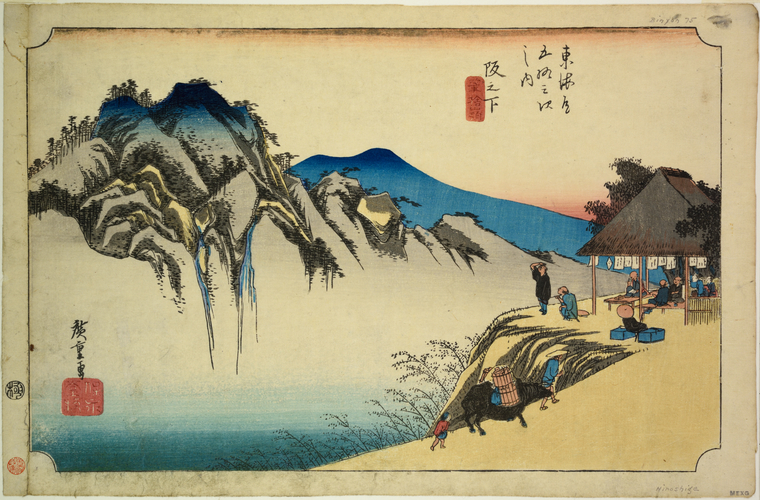 Sakanoshita, c. 1834 by Utagawa Hiroshige (1797-1858)
 Biblioklept