The Glass Is Half Full — Lola Gil

The Glass Is Half Full, 2019 by Lola Gil (b. 1975)

Kobo Abe’s Inter Ice Age 4 (Book acquired, 1 April 2022)

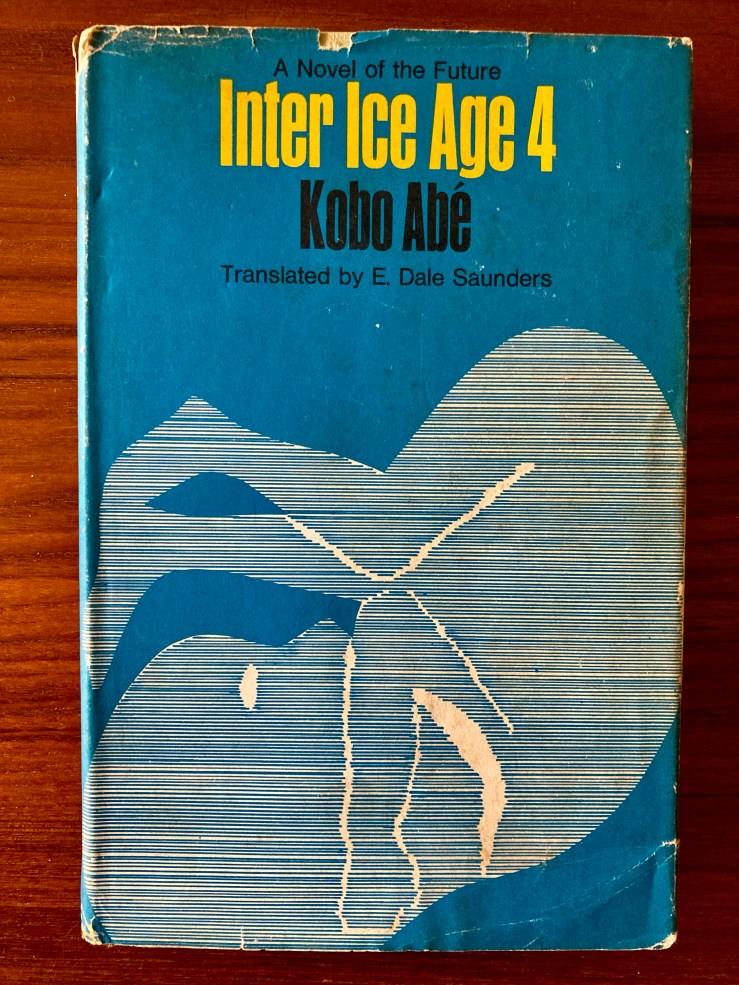
I was thrilled to find a first-edition U.S. hardback (Knopf, 1970, Book Club Edition) of Kobo Abe’s novel Inter Ice Age 4. The translation is by E. Dale Saunders, and is the only English translation of the novel that I am aware of. The jacket design is by Joseph del Gaudio; I’m not sure if he is responsible for this lovely little embossed image that takes up the bottom-right corner of the cover:

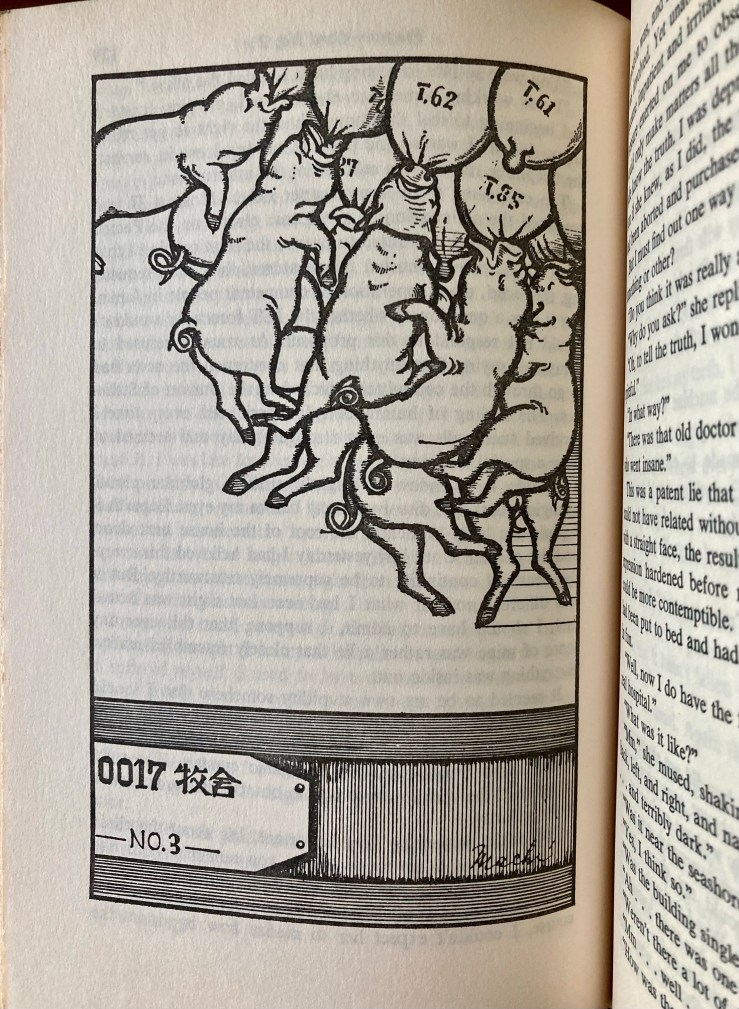
This edition includes five line drawings by Abe’s wife, the artist Machi Abe. Here is one of those drawings:

I’ve had a samizdat e-copy of Inter Ice Age 4 for ages now, but haven’t made it past the first 20 or so pages, but the intriguing, prescient plot has always intrigued me. First composed and published in serialization at the end of the 1950s, Inter Ice Age 4 is set in a world where the polar ice caps are rapidly melting. Scientists genetically modify gilled children to survive this new reality. A proto-AI, a computer that can tell the future is the novel’s central antagonist. Thank god nothing like that’s shaking down these days!

Motel — Pavel Guliaev

Motel, 2019 by Pavel Guliaev (b. 1967)

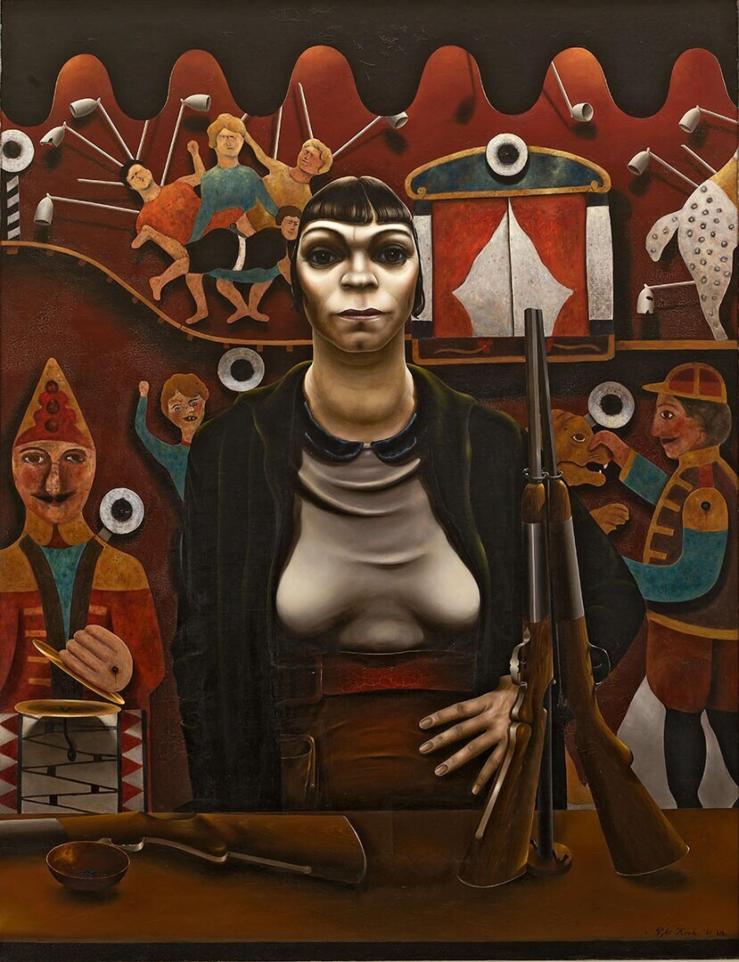
The Shooting Gallery — Pyke Koch

The Shooting Gallery, 1931 by Pyke Koch (1901–1991)

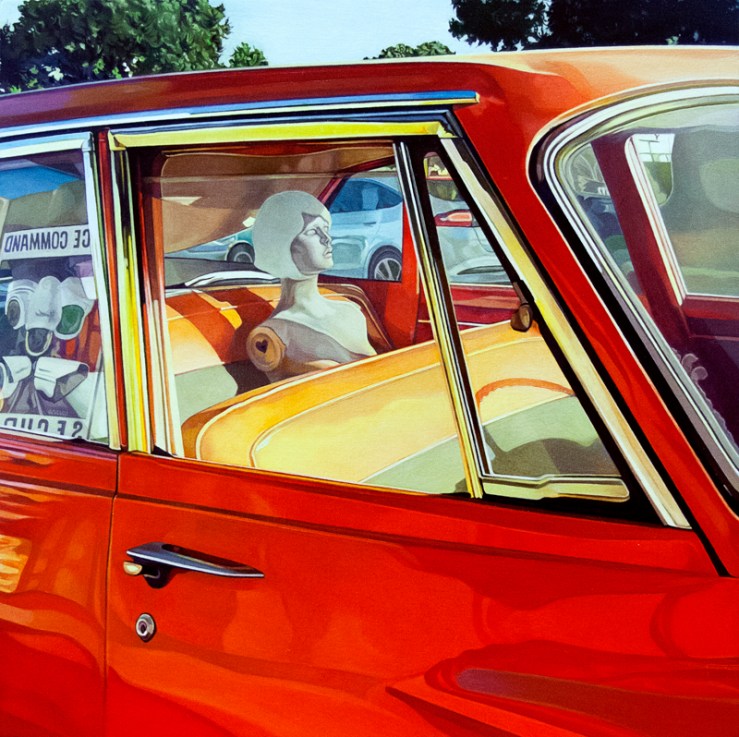
Carpool — Jolene Lai

Carpool., 2018 by Jolene Lai (b. 1980)

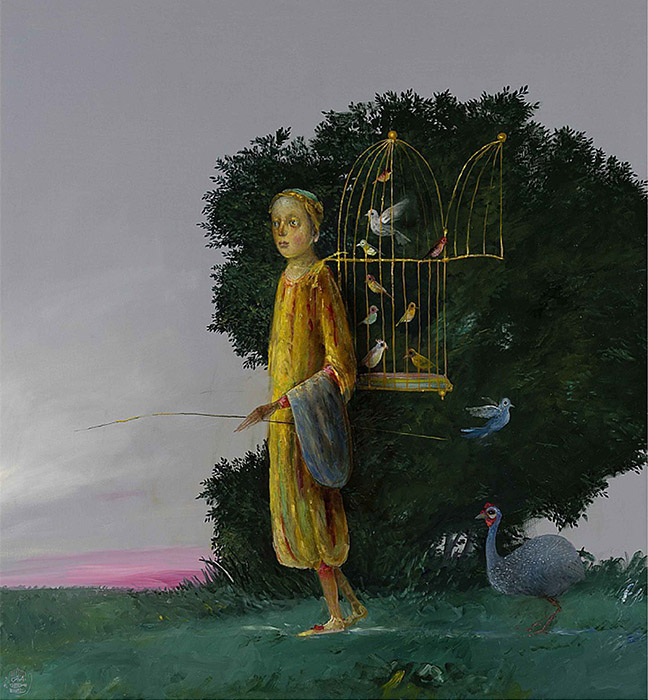
The Cage — Stefan Caltia

The Cage, 2006 by Stefan Caltia (b. 1942)

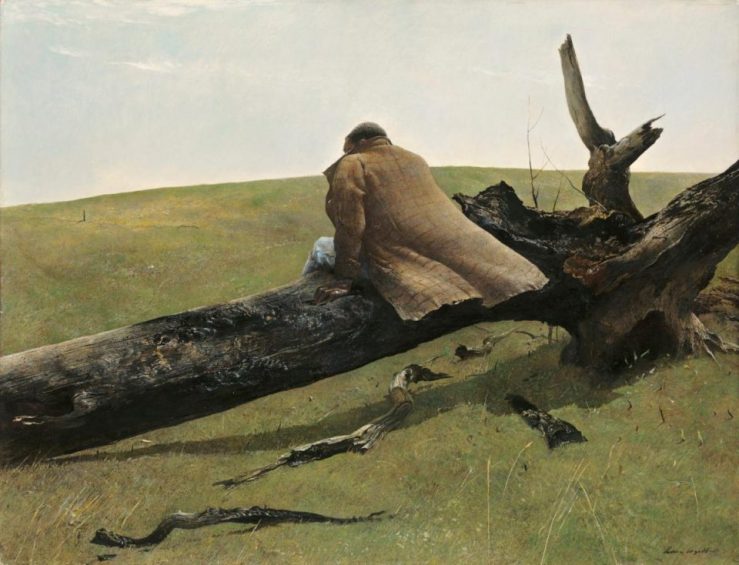
April Wind — Andrew Wyeth

April Wind, 1952 by Andrew Wyeth (1917-2009)

The Fools — Agostino Arrivabene

i-folli

The Fools, 2017 by Agostino Arrivabene (b. 1967)

Cruelest month

New books by Caren Beilin and Cristina Rivera Garza from the Dorothy Project (Books acquired, 28 March 2022)

Two new enticing titles from the Dorothy Project: Caren Beilin’s novel Revenge of the Scapegoat and Cristina Rivera Garza’s collection New and Selected Stories. 

The Beilin seems like a picaresque surrealist joint, which is right up my alley. Press copy:

One day Iris, an adjunct at a city arts college, receives a terrible package: recently unearthed letters that her father wrote to her in her teens, in which he blames her for their family’s crises. Driven by the raw fact of receiving these devastating letters not once but twice in a lifetime, and in a panic of chronic pain brought on by rheumatoid arthritis, Iris escapes to the countryside—or some absurdist version of it. Nazi cows, Picassos used as tampons, and a pair of arthritic feet that speak in the voices of Flaubert’s Bouvard and Pécuchet are standard fare in this beguiling novel of odd characters, surprising circumstances, and intuitive leaps, all brought together in profoundly serious ways.

I spent a half hour reading a few of the stories in the Rivera Garza collection, going from an older track to a few that haven’t yet been published in Spanish yet. The later stories seem more daring in form and content–exciting stuff.

New and Selected Stories brings together in English translation stories from across Rivera Garza’s career, drawing from three collections spanning over 30 years and including new writing not yet published in Spanish. It is a unique and remarkable body of work, and a window into the ever-evolving stylistic and thematic development of one of the boldest, most original, and affecting writers in the world today.

The collection seems like a great introduction to Rivera Garza’s three decades of work. The translations are by Sara Brooker, Lisa Dillman, Francisca González Arias, Alex Ross, and Rivera Garza herself.

The Rooster and the Devil — Susannah Martin 

The Rooster and the Devil, 2020 by Susannah Martin (b. 1964)

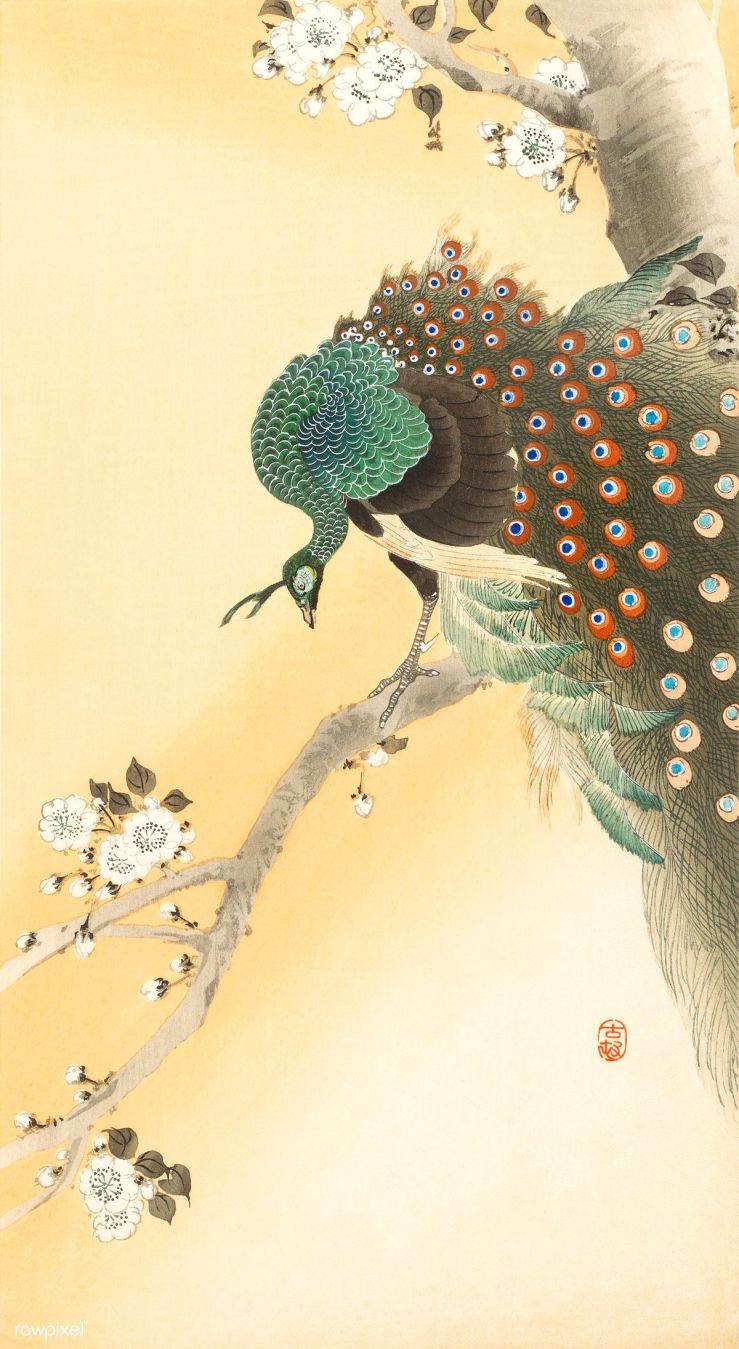
Peacock on a Cherry Blossom Tree — Ohara Koson

Peacock on a Cherry Blossom Tree, 1930 by Ohara Koson (1877-1945)

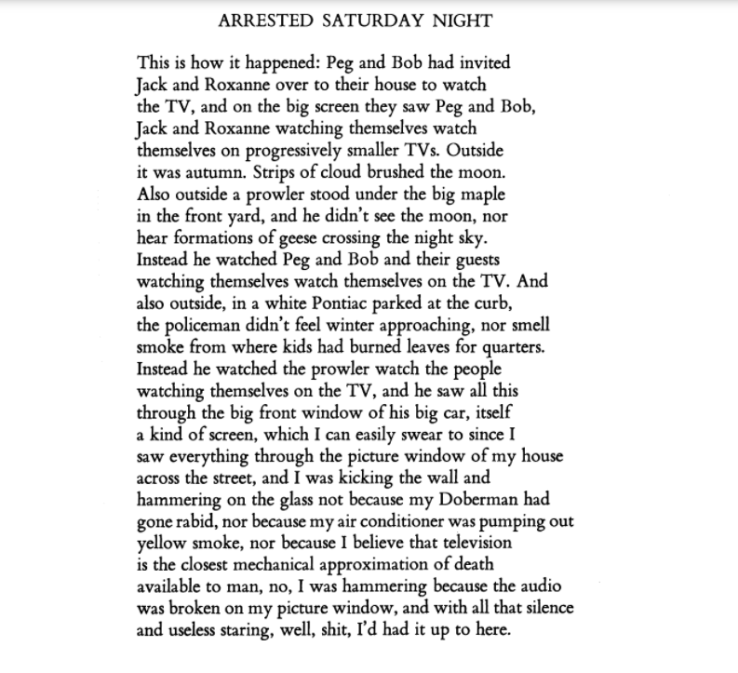
“Arrested Saturday Night” — Stephen Dobyns

“Primer” — Rita Dove

“Primer”
by
Rita Dove

In the sixth grade I was chased home by
the Gatlin kids, three skinny sisters
in rolled-down bobby socks. Hissing
Brainiac! and Mrs. Stringbean!, they trod my heel.
I knew my body was no big deal
but never thought to retort: who’s
calling who skinny? (Besides, I knew
they’d beat me up.) I survived
their shoves across the schoolyard
because my five-foot-zero mother drove up
in her Caddie to shake them down to size.
Nothing could get me into that car.
I took the long way home, swore
I’d show them all: I would grow up.

Friday — Verne Dawson

Friday, 2004 by Verne Dawson (b. 1961)