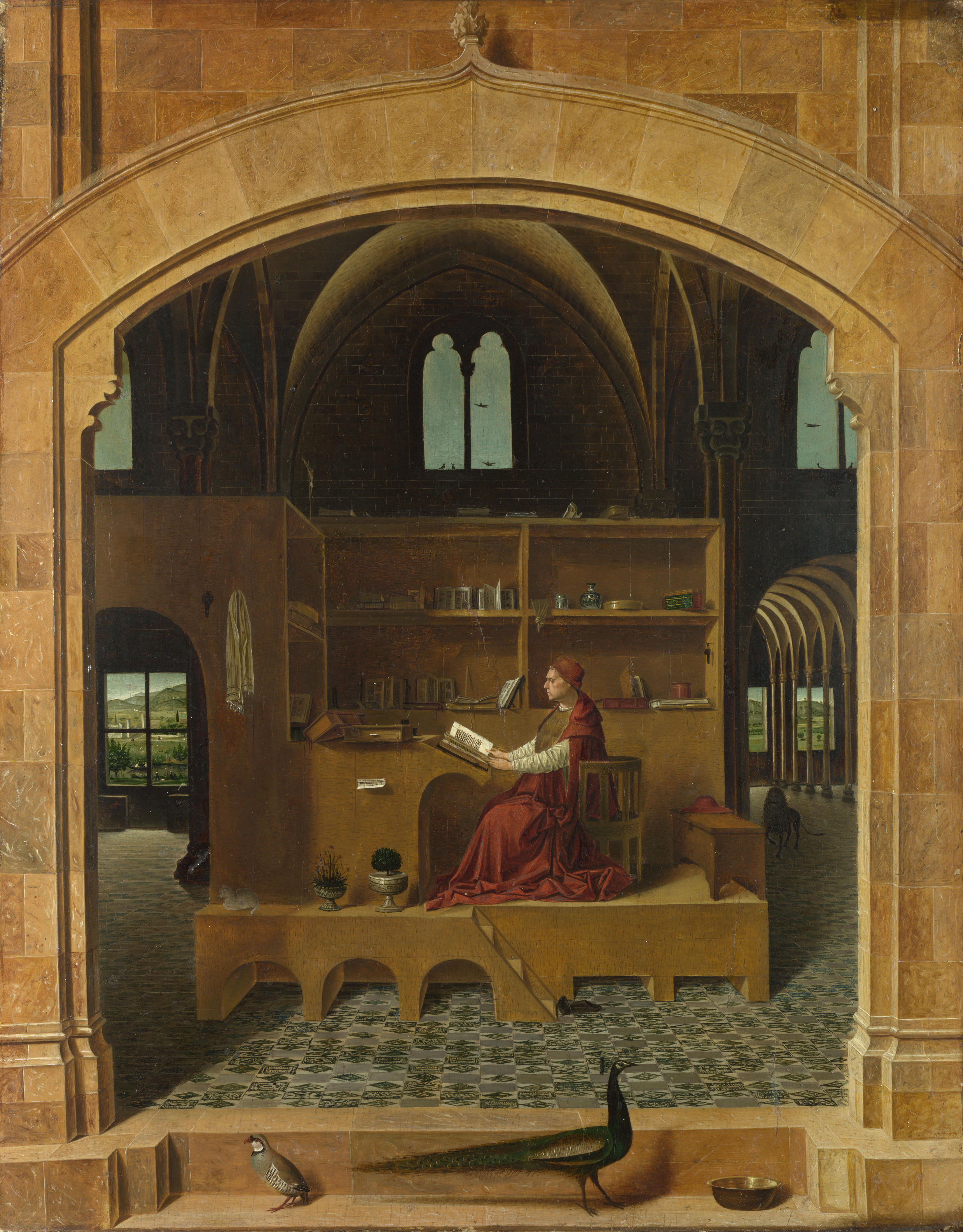

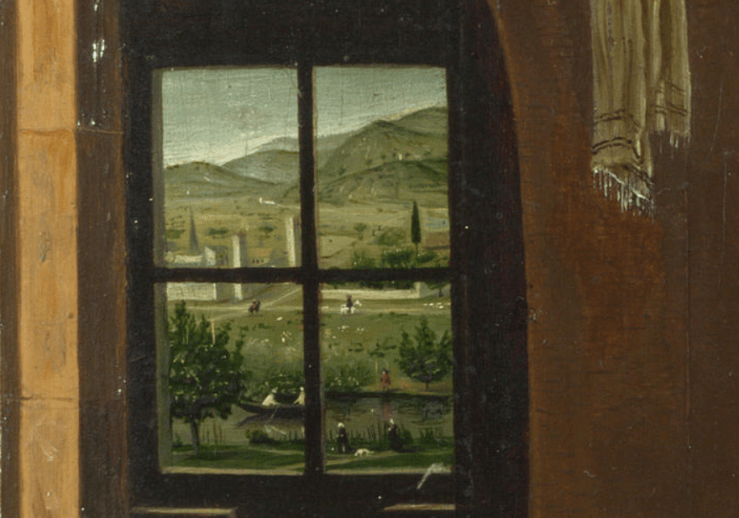
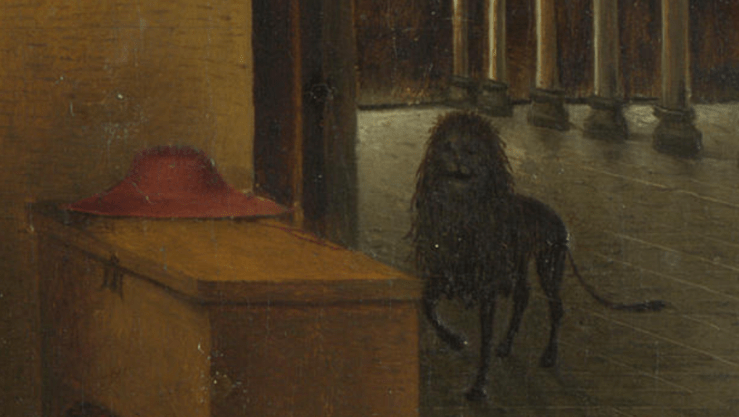
St. Jerome in His Study, c. 1475 by Antonello da Messina (c.1430 – 1479)

St. Jerome in His Study, c. 1475 by Antonello da Messina (c.1430 – 1479)
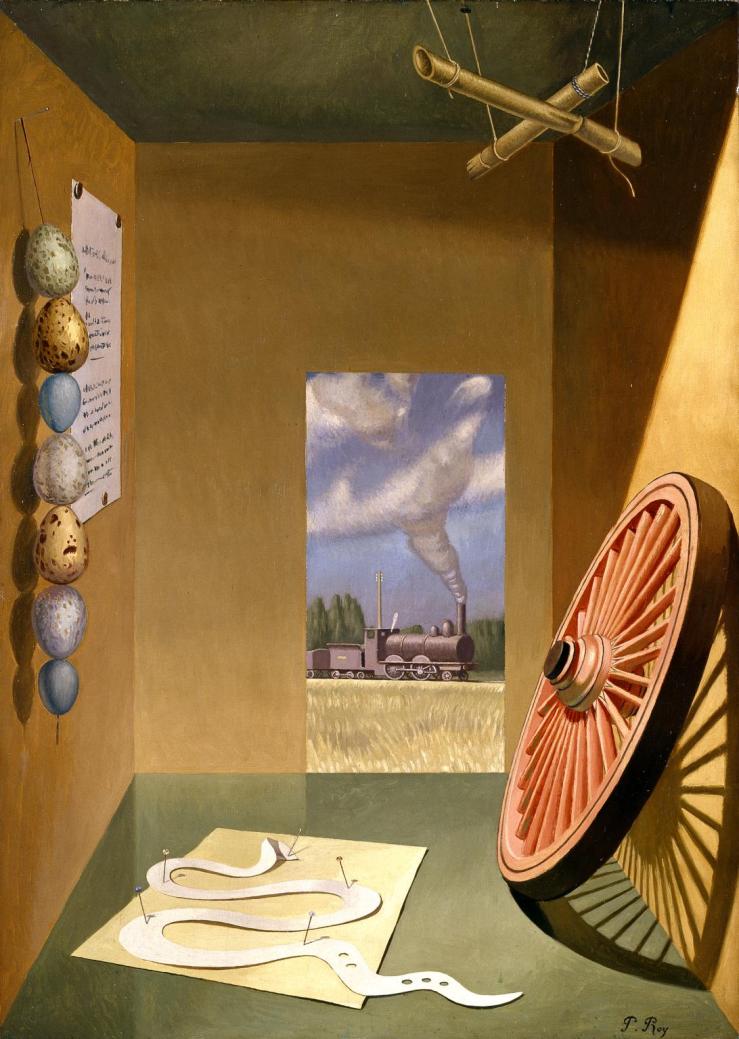
A Naturalist’s Study, 1928 by Pierre Roy (1880–1950)

St. Genevieve, 1793 by Élisabeth Vigée Le Brun (1755—1842)
We first went into Wolsey’s great Hall, up a most spacious staircase, the walls and ceiling of which were covered with an allegorical fresco by Verrio, wonderfully bright and well preserved; and without caring about the design or execution, I greatly liked the brilliancy of the colors. The great Hall is a most noble and beautiful room, above a hundred feet long and sixty high and broad. Most of the windows are of stained or painted glass, with elaborate designs, whether modern or ancient I know not, but certainly brilliant in effect. The walls, from the floor to perhaps half their height, are covered with antique tapestry, which, though a good deal faded, still retains color enough to be a very effective adornment, and to give an idea of how rich a mode of decking a noble apartment this must have been. The subjects represented were from Scripture, and the figures seemed colossal. On looking closely at this tapestry, you could see that it was thickly interwoven with threads of gold, still glistening. The windows, except one or two that are long, do not descend below the top of this tapestry, and are therefore twenty or thirty feet above the floor; and this manner of lighting a great room seems to add much to the impressiveness of the enclosed space. The roof is very magnificent, of carved oak, intricately and elaborately arched, and still as perfect to all appearance as when it was first made. There are banners, so fresh in their hues, and so untattered, that I think they must be modern, suspended along beneath the cornice of the hall, and exhibiting Wolsey’s arms and badges. On the whole, this is a perfect sight in its way.
Next to the hall there is a withdrawing-room, more than seventy feet long, and twenty-five feet high. The walls of this apartment, too, are covered with ancient tapestry, of allegorical design, but more faded than that of the hall. There is also a stained-glass window; and a marble statue of Venus on a couch, very lean and not very beautiful; and some cartoons of Carlo Cignani, which have left no impression on my memory; likewise, a large model of a splendid palace of some East Indian nabob.
I am not sure, after all, that Verrio’s frescoed grand staircase was not in another part of the palace; for I remember that we went from it through an immensely long suite of apartments, beginning with the Guard-chamber. All these rooms are wainscoted with oak, which looks new, being, I believe, of the date of King William’s reign. Over many of the doorways, or around the panels, there are carvings in wood by Gibbons, representing wreaths of flowers, fruit, and foliage, the most perfectly beautiful that can be conceived; and the wood being of a light hue (lime-wood, I believe), it has a fine effect on the dark oak panelling. The apartments open one beyond another, in long, long, long succession,–rooms of state, and kings’ and queens’ bedchambers, and royal closets bigger than ordinary drawing-rooms, so that the whole suite must be half a mile, or it may be a mile, in extent. From the windows you get views of the palace-grounds, broad and stately walks, and groves of trees, and lawns, and fountains, and the Thames and adjacent country beyond. The walls of all these rooms are absolutely covered with pictures, including works of all the great masters, which would require long study before a new eye could enjoy them; and, seeing so many of them at once, and having such a nothing of time to look at them all, I did not even try to see any merit in them. Vandyke’s picture of Charles I., on a white horse beneath an arched gateway, made more impression on me than any other, and as I recall it now, it seems as if I could see the king’s noble, melancholy face, and armed form, remembered not in picture, but in reality. All Sir Peter Lely’s lewd women, and Kneller’s too, were in these rooms; and the jolly old stupidity of George III. and his family, many times repeated; and pictures by Titian, Rubens, and other famous hands, intermixed with many by West, which provokingly drew the eye away from their betters. It seems to me that a picture, of all other things, should be by itself; whereas people always congregate them in galleries. To endeavor really to see them, so arranged, is like trying to read a hundred poems at once,–a most absurd attempt. Of all these pictures, I hardly recollect any so well as a ridiculous old travesty of the Resurrection and Last Judgment, where the dead people are represented as coming to life at the sound of the trumpet,–the flesh reëstablishing itself on the bones,–one man picking up his skull, and putting it on his shoulders,–and all appearing greatly startled, only half awake, and at a loss what to do next. Some devils are dragging away the damned by the heels and on sledges, and above sits the Redeemer and some angelic and sainted people, looking complacently down upon the scene!
From Nathaniel Hawthorne’s journal entry for March 24th, 1856. From Passages from the English Note-Books.
The boldface emphasis on the sentences in the last paragraph is mine.

The Chintz Couch, 1911 by Ethel Sands (1873–1962)

Dora had been in the National Gallery a thousand times and the pictures were almost as familiar to her as her own face. Passing between them now, as through a well-loved grove, she felt a calm descending on her. She wandered a little, watching with compassion the poor visitors armed with guide books who were peering anxiously at the masterpieces. Dora did not need to peer. She could look, as one can at last when one knows a great thing very well, confronting it with a dignity which it has itself conferred. She felt that the pictures belonged to her, and reflected ruefully that they were about the only thing that did. Vaguely, consoled by the presence of something welcoming and responding in the place, her footsteps took her to various shrines at which she had worshipped so often before: the great light spaces of Italian pictures, more vast and southern than any real South, the angels of Botticelli, radiant as birds, delighted as gods, and curling like the tendrils of a vine, the glorious carnal presence of Susanna Fourment, the tragic presence of Margarethe Trip, the solemn world of Piero della Francesca with its early-morning colours, the enclosed and gilded world of Crivelli. Dora stopped at last in front of Gainsborough’s picture of his two daughters. These children step through a wood hand in hand, their garments shimmering, their eyes serious and dark, their two pale heads, round full buds, like yet unlike.
Dora was always moved by the pictures. Today she was moved, but in a new way. She marvelled, with a kind of gratitude, that they were all still here, and her heart was filled with love for the pictures, their authority, their marvellous generosity, their splendour. It occurred to her that here at last was something real and something perfect. Who had said that, about perfection and reality being in the same place? Here was something which her consciousness could not wretchedly devour, and by making it part of her fantasy make it worthless. Even Paul, she thought, only existed now as someone she dreamt about; or else as a vague external menace never really encountered and understood. But the pictures were something real outside herself, which spoke to her kindly and yet in sovereign tones, something superior and good whose presence destroyed the dreary trance-like solipsism of her earlier mood. When the world had seemed to be subjective it had seemed to be without interest or value. But now there was something else in it after all.
These thoughts, not clearly articulated, flitted through Dora’s mind. She had never thought about the pictures in this way before; nor did she draw now any very explicit moral. Yet she felt that she had had a revelation. She looked at the radiant, sombre, tender, powerful canvas of Gainsborough and felt a sudden desire to go down on her knees before it, embracing it, shedding tears.
From Iris Murdoch’s novel The Bell.

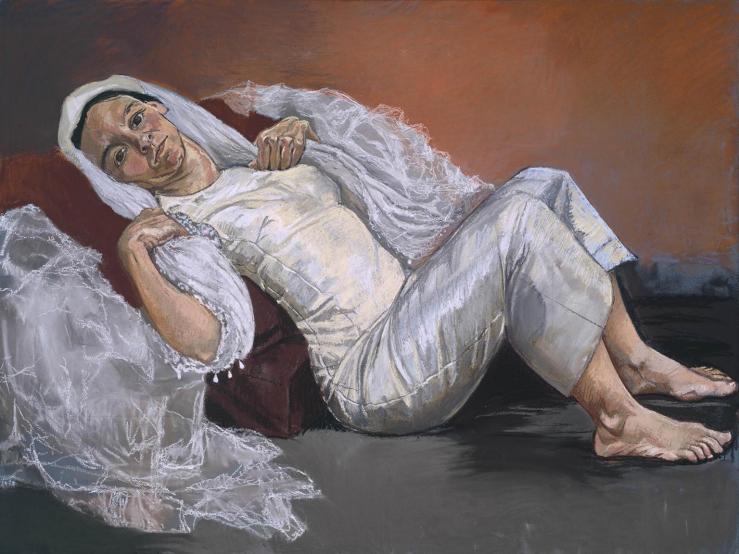
Bride, 1994 by Paul Rego (b. 1935)
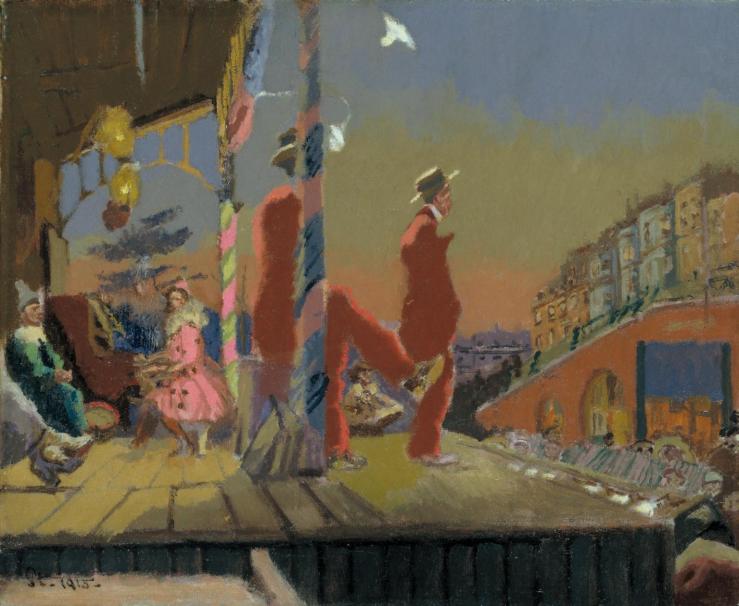
Brighton Pierrots, 1915 by Walter Richard Sickert (1860–1942)
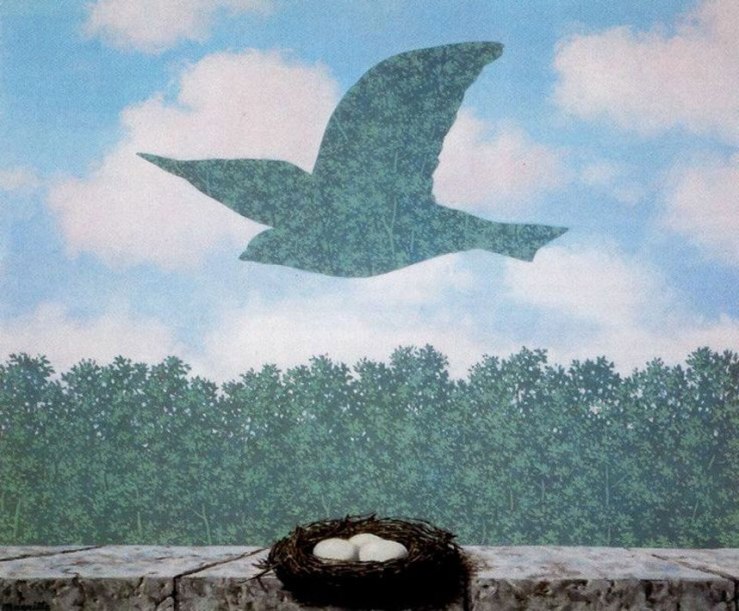
Spring, 1965 by Rene Magritte
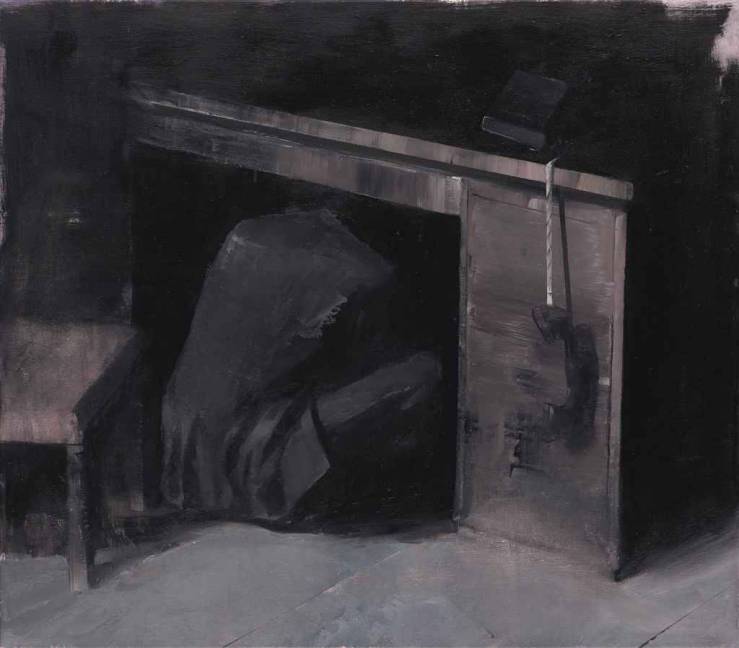
Crawl under your desktop, out of line of windows to avoid heat flash Burns, falling plaster, 2007, by Adrian Ghenie (b. 1977)
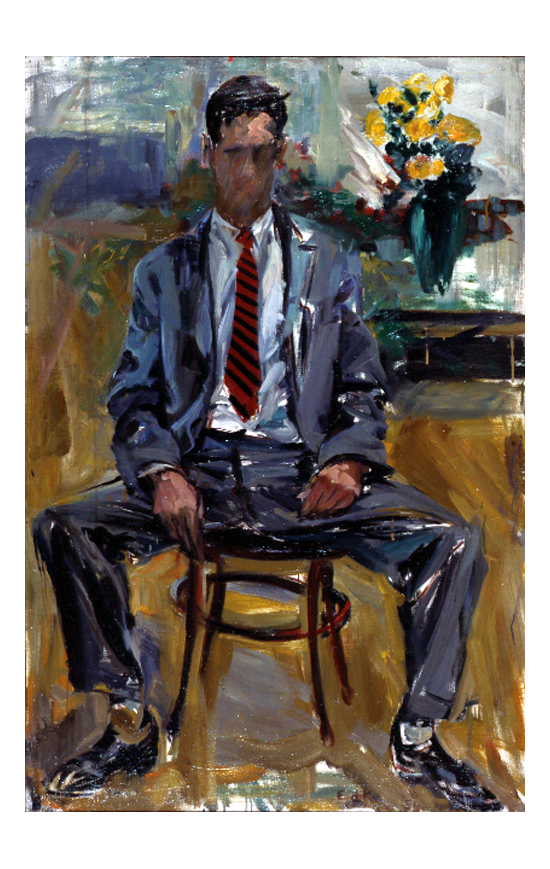
Fairfield Porter #1, 1954 by Elaine de Kooning (1918-1989)
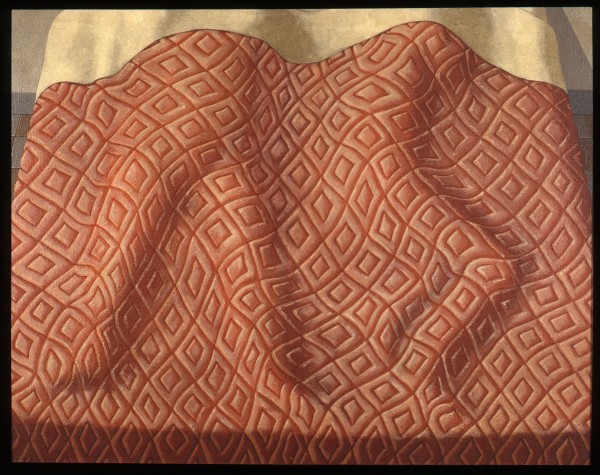
Due Dormienti, 1966 by Domenico Gnoli (1933-1970)
On pages 611-613 of James Joyce’s Finnegans Wake, St. Patrick meets the archdruid Balkelly:
Tunc. Bymeby, bullocky vampas tappany bobs topside joss pidgin fella Balkelly, archdruid of islish chinchinjoss in the his heptachromatic sevenhued septicoloured roranyellgreenlindigan mantle finish he show along the his mister guest Patholic with alb belongahim the whose throat hum with of sametime all the his cassock groaner fellas of greysfriaryfamily he fast all time what time all him monkafellas with Same Patholic, quoniam, speeching, yeh not speeching noh man liberty is, he drink up words, scilicet, tomorrow till recover will not, all too many much illusiones through photoprismic velamina of hueful panepiphanal world spectacurum of Lord Joss, the of which zoantholitic furniture, from mineral through vegetal to animal, not appear to full up to-gether fallen man than under but one photoreflection of the several iridals gradationes of solar light, that one which that part of it (furnit of heupanepi world) had shown itself (part of fur of huepanwor) unable to absorbere, whereas for numpa one pura —— duxed seer in seventh degree of wisdom of Entis–Onton he savvy inside true inwardness of reality, the Ding hvad in idself id est, all objects (of panepiwor) allside showed themselves in trues coloribus resplendent with sextuple gloria of light actually re-tained, untisintus, inside them (obs of epiwo). Rumnant Patholic, stareotypopticus, no catch all that preachybook, utpiam, tomorrow recover thing even is not, bymeby vampsybobsy tap — panasbullocks topside joss pidginfella Bilkilly–Belkelly say pat — fella, ontesantes, twotime hemhaltshealing, with other words verbigratiagrading from murmurulentous till stridulocelerious in a hunghoranghoangoly tsinglontseng while his comprehen-durient, with diminishing claractinism, augumentationed himself in caloripeia to vision so throughsighty, you anxioust melan-cholic, High Thats Hight Uberking Leary his fiery grassbelong- head all show colour of sorrelwood herbgreen, again, nigger- blonker, of the his essixcoloured holmgrewnworsteds costume the his fellow saffron pettikilt look same hue of boiled spinasses,other thing, voluntary mutismuser, he not compyhandy the his golden twobreasttorc look justsamelike curlicabbis, moreafter, to pace negativisticists, verdant readyrainroof belongahim Exuber High Ober King Leary very dead, what he wish to say, spit of superexuberabundancy plenty laurel leaves, after that com-mander bulopent eyes of Most Highest Ardreetsar King same thing like thyme choppy upon parsley, alongsidethat, if please-sir, nos displace tauttung, sowlofabishospastored, enamel Indian gem in maledictive fingerfondler of High High Siresultan Em-peror all same like one fellow olive lentil, onthelongsidethat, by undesendas, kirikirikiring, violaceous warwon contusiones of facebuts of Highup Big Cockywocky Sublissimime Autocrat, for that with pure hueglut intensely saturated one, tinged uniformly, allaroundside upinandoutdown, very like you seecut chowchow of plentymuch sennacassia Hump cumps Ebblybally! Sukkot?
Punc. Bigseer, refrects the petty padre, whackling it out, a tumble to take, tripeness to call thing and to call if say is good while, you pore shiroskuro blackinwhitepaddynger, by thiswis aposterioprismically apatstrophied and paralogically periparo-lysed, celestial from principalest of Iro’s Irismans ruinboon pot before, (for beingtime monkblinkers timeblinged completamen-tarily murkblankered in their neutrolysis between the possible viriditude of the sager and the probable eruberuption of the saint), as My tappropinquish to Me wipenmeselps gnosegates a handcaughtscheaf of synthetic shammyrag to hims hers, seeming-such four three two agreement cause heart to be might, saving to Balenoarch (he kneeleths), to Great Balenoarch (he kneeleths down) to Greatest Great Balenoarch (he kneeleths down quite-somely), the sound salse sympol in a weedwayedwold of the firethere the sun in his halo cast. Onmen.
That was thing, bygotter, the thing, bogcotton, the very thing, begad! Even to uptoputty Bilkilly–Belkelly-Balkally. Who was for shouting down the shatton on the lamp of Jeeshees. Sweating on to stonker and throw his seven. As he shuck his thumping fore features apt the hoyhop of His Ards.
Thud.
Good safe firelamp! hailed the heliots. Goldselforelump! Halled they. Awed. Where thereon the skyfold high, trampa-trampatramp. Adie. Per ye comdoom doominoom noonstroom. Yeasome priestomes. Fullyhum toowhoom.

Woman with a Guitar, 1920 by Suzanne Valadon (1865–1938)
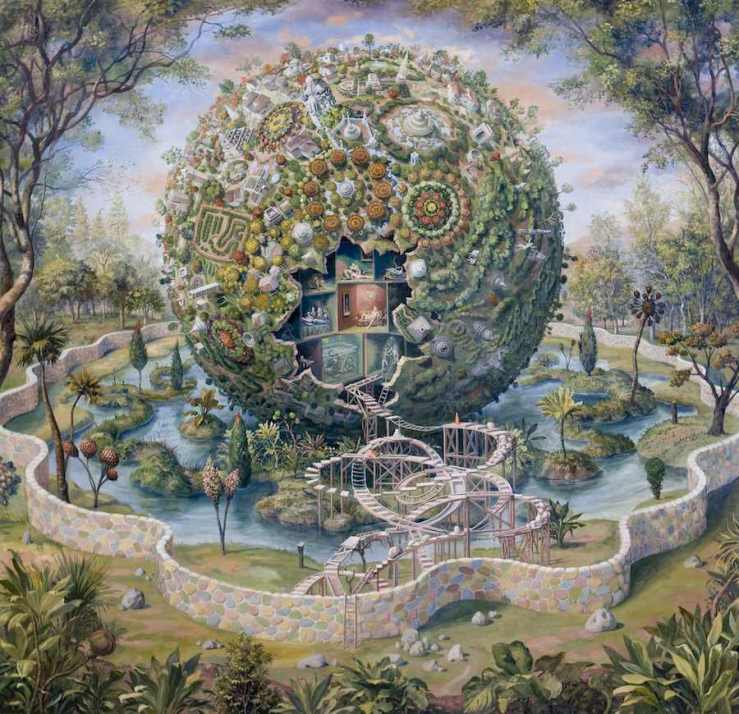
Self Portrait as Big Head, 2008 by Julie Heffernan (b. 1956)
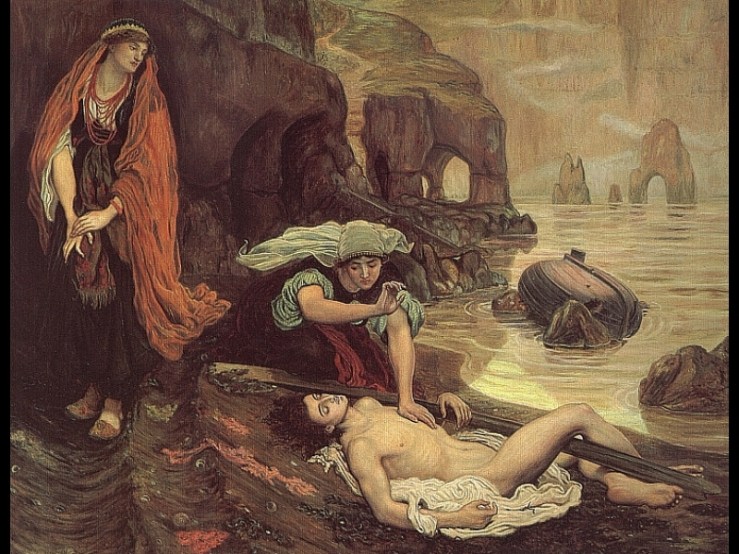
The Finding of Don Juan by Haidee, 1869 by Ford Madox Brown (1821-1893)
From Canto II of Lord Byron’s Don Juan:
He had an only daughter, call’d Haidee,
The greatest heiress of the Eastern Isles;
Besides, so very beautiful was she,
Her dowry was as nothing to her smiles:
Still in her teens, and like a lovely tree
She grew to womanhood, and between whiles
Rejected several suitors, just to learn
How to accept a better in his turn.And walking out upon the beach, below
The cliff, towards sunset, on that day she found,
Insensible,—not dead, but nearly so,—
Don Juan, almost famish’d, and half drown’d;
But being naked, she was shock’d, you know,
Yet deem’d herself in common pity bound,
As far as in her lay, ‘to take him in,
A stranger’ dying, with so white a skin.
 Biblioklept