Iris, Dust — Maya Kulenovic

kulenovic_iris_dust_1

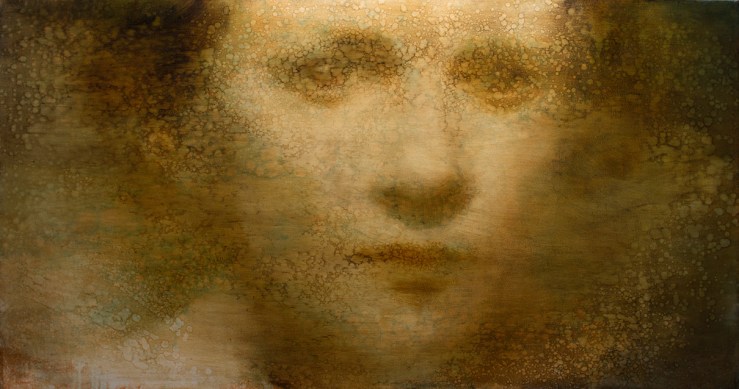
Iris, Dust, 2016 by Maya Kulenovic (b. 1975)

Air travel reminds us who we are. It’s the means by which we recognize ourselves as modern (Don DeLillo)

In this vast space, which seems like nothing so much as a container for emptiness, we sit with our documents always ready, wondering if someone will appear and demand to know who we are, someone in authority, and to be unprepared is to risk serious things.

The terminal at each end is full of categories of inspection to which we must submit, impelling us toward a sense of inwardness, a sense of smallness, a self-exposure we are never prepared for no matter how often we take this journey, the buried journey through categories and definitions and foreign languages, not the other, the sunlit trip to the east which we thought we’d decided to make. The decision we’d unwittingly arrived at is the one that brings us through passport control, through the security check and customs, the one that presents to us the magnetic metal detector, the baggage x-ray machine, the currency declaration, the customs declaration, the cards for embarkation and disembarkation, the flight number, the seat number, the times of departure and arrival.

It does no good to say, as I’ve done a hundred times, it’s just another plane trip, I’ve made a hundred. It’s just another terminal, another country, the same floating seats, the documents of admission, the proofs and identifications.

Air travel reminds us who we are. It’s the means by which we recognize ourselves as modern. The process removes us from the world and sets us apart from each other. We wander in the ambient noise, checking one more time for the flight coupon, the boarding pass, the visa. The process convinces us that at any moment we may have to submit to the force that is implied in all this, the unknown authority behind it, behind the categories, the languages we don’t understand. This vast terminal has been erected to examine souls.

It is not surprising, therefore, to see men with submachine guns, to see vultures squatting on the baggage vehicles set at the end of the tarmac in the airport in Bombay when one arrives after a night flight from Athens.

All of this we choose to forget. We devise a counter-system of elaborate forgetfulness. We agree on this together. And out in the street we see how easy it is, once we’re immersed in the thick crowded paint of things, the bright clothes and massed brown faces. But the experience is no less deep because we’ve agreed to forget it.

From Don DeLillo’s novel The Names.

The Mothers — Jenny Saville

cd7645e5bf9925dca7f0174bc9125b19

The Mothers, 2011 by Jenny Saville (b. 1970)

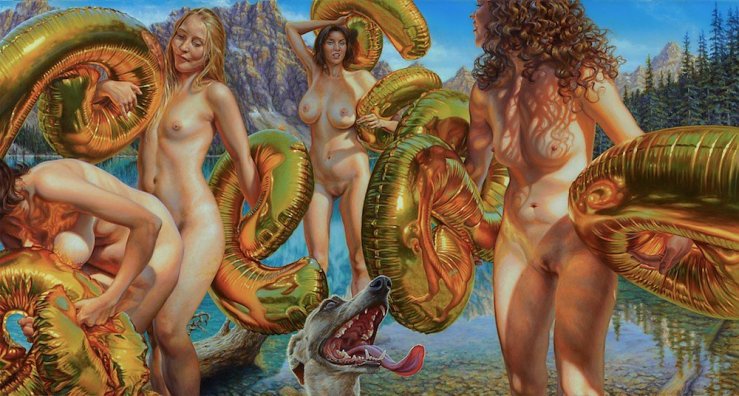
Helium — Susannah Martin

susannah-martin-helium80x150-better-color-kopie-2large-1517607914

Helium, 2017 by Susannah Martin (b. 1964)

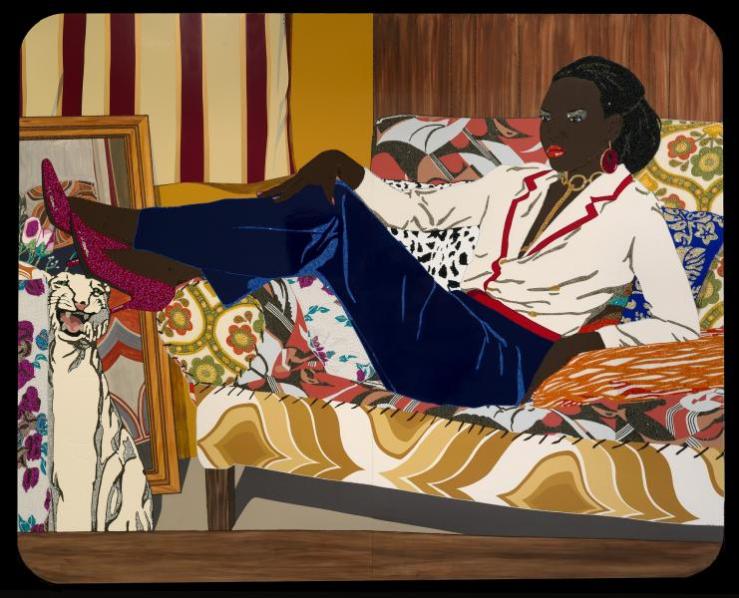
Portrait of Mnonja — Mickalene Thomas

saam-2011-16_1

Portrait of Mnonja, 2010 by Mickalene Thomas (b. 1971)

Girl with Blonde Hair — Helene Schjerfbeck

009L15102_8FFNL_Web

Girl with Blonde Hair, 1916 by Helene Schjerfbeck (1862-1946)

If a thing can be filmed, film is implied in the thing itself (Don DeLillo)

“Film is more than the twentieth century art. It’s another part of the twentieth-century mind. It’s the world seen from inside. We’ve come to a certain point in the history of film. If a thing can be filmed, film is implied in the thing itself. This is where we are. The twentieth century is on film. It’s the filmed century. You have to ask yourself if there’s anything about us more important than the fact that we’re constantly on film, constantly watching ourselves. The whole world is on film, all the time. Spy satellites, microscopic scanners, pictures of the uterus, embryos, sex, war, assassinations, everything.”

From Don DeLillo’s novel The Names.

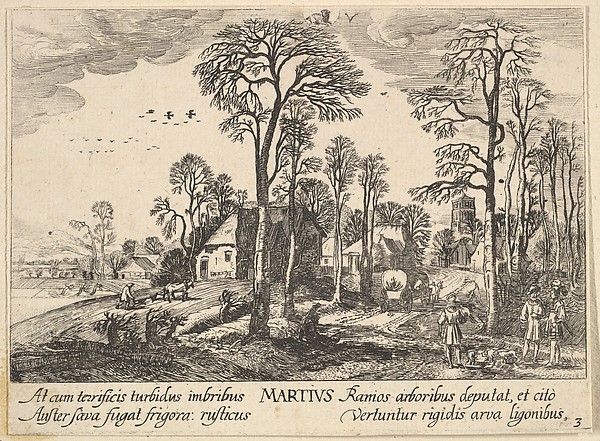
March — Wenceslaus Hollar

dp822990

March, 1629 by Wenceslaus Hollar (1607–1677) (After Jan van de Velde II, ca. 1593–1641)

Portrait of Kerry James Marshall, La Lectura — Kehinde Wiley

kw-pa-17-016_portrait-of-kerry-james-marshall_la-lectura_2017-1024x768

Portrait of Kerry James Marshall, La Lectura, 2017 by Kehinde Wiley (b. 1977)

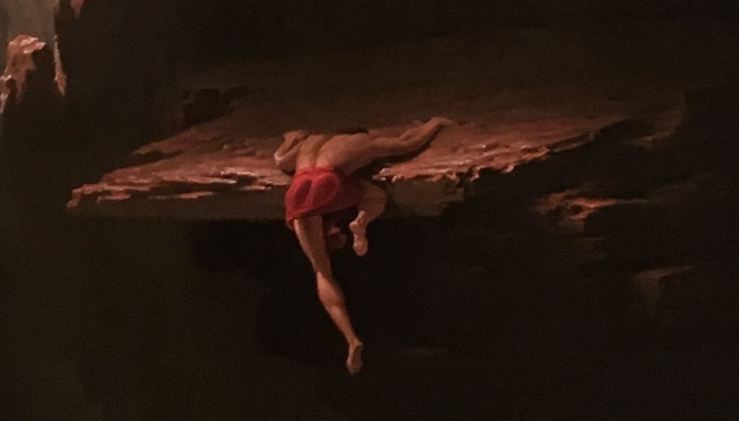
Sadak in Search of the Waters of Oblivion — John Martin

sadak_in_search_of_the_waters_of_oblivion

Capture

Sadak in Search of the Waters of Oblivion, 1812 by John Martin (1789-1854)


Still Life with Watermelon, Carrots, and Flowers — Kateryna Bilokur

c2abd090d180d0b1d183d0b7d0bcd0bed180d0bad0bed0b2d18cd186d0b2d0b5d182d18bc2bb1951

Still Life with Watermelon, Carrots, and Flowers, 1951 by Kateryna Bilokur (1900-1961)

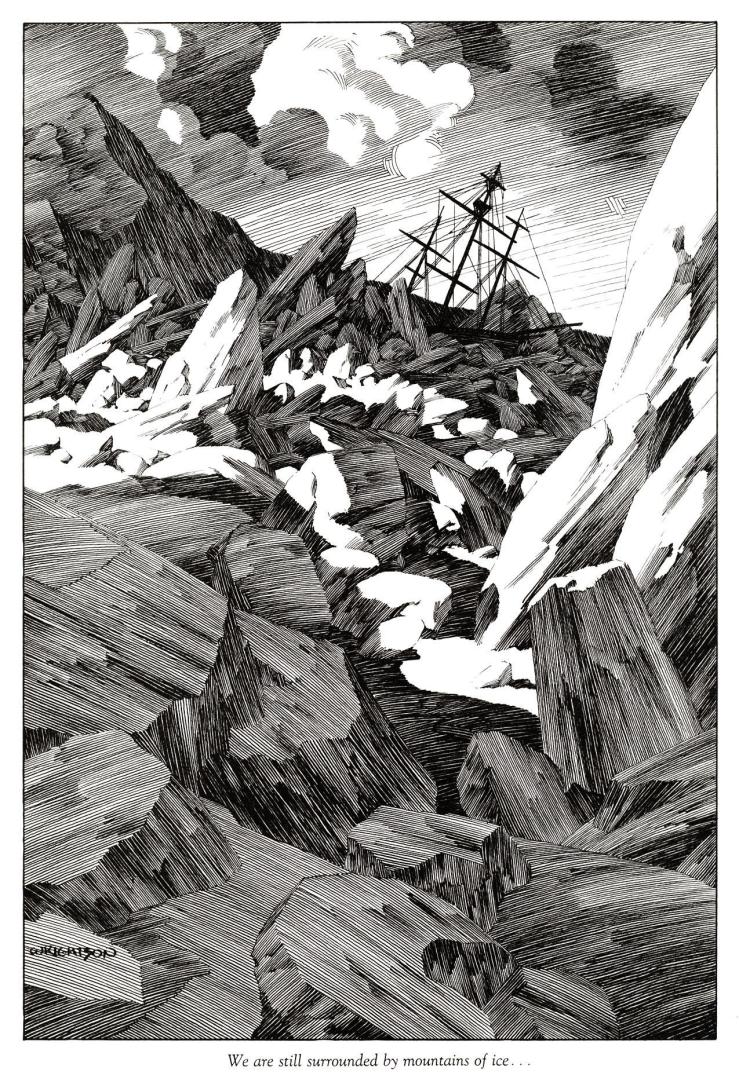
“We are still surrounded by mountains of ice” | Frankenstein illustration by Bernie Wrightson

wrightson

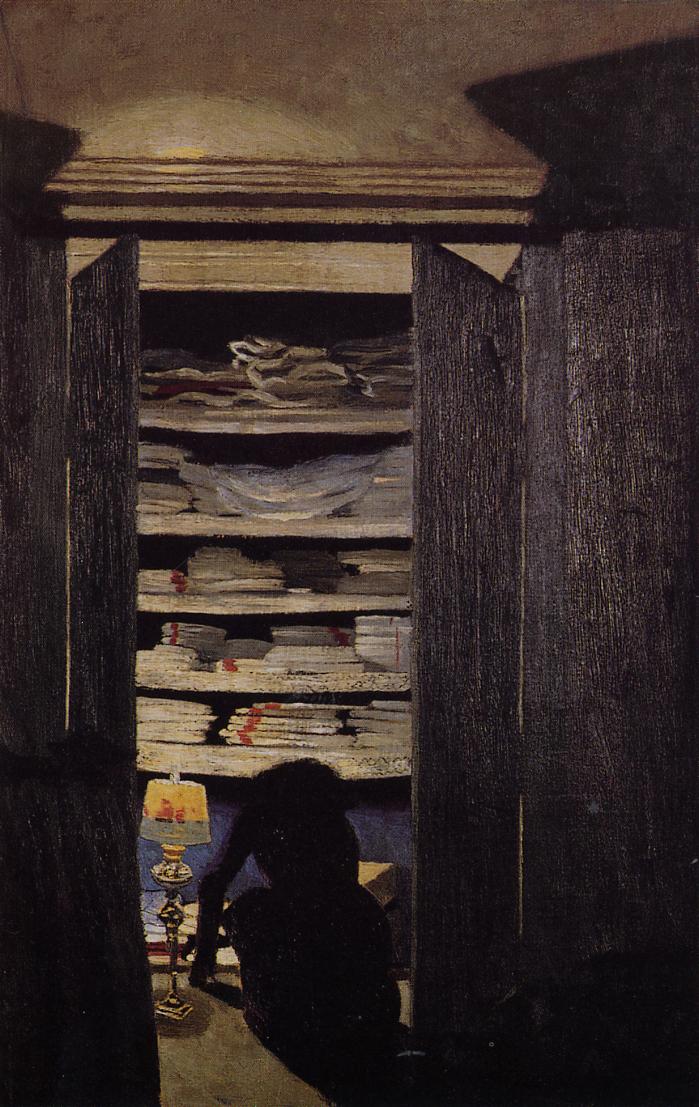
Woman Searching through a Cupboard — Felix Vallotton

woman-searching-through-a-cupboard-1901

Woman Searching through a Cupboard, 1901 by Felix Vallotton (1865-1925)

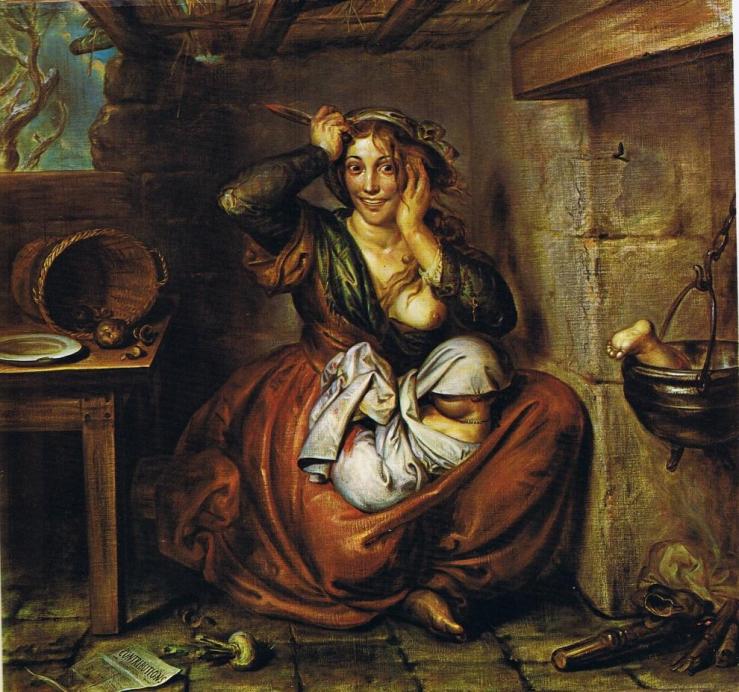
Hunger, Madness, Crime — Antoine Wiertz

antoine_wiertz_-_faim2c_folie_et_crime

Hunger, Madness, Crime, 1851 by Antoine Wiertz (1806 – 1865)

Some pleasures overflow the conditions attending them (Don DeLillo)

He had bitten into a peach and was smelling the pit-streaked flesh. I think I smiled, recognizing my own mannerism. These peaches were a baffling delight, certain ones, producing the kind of sense pleasure that’s so unexpectedly deep it seems to need another context. Ordinary things aren’t supposed to be this gratifying. Nothing about the exterior of the peach tells you it will be so lush, moist and aromatic, juices running along your gums, or so subtly colored inside, a pink-veined golden bloom. I tried to discuss this with the faces across the table.

“But I think pleasure is not easy to repeat,” Eliades said. “Tomorrow you will eat a peach from the same basket and be disappointed. Then you will wonder if you were mistaken. A peach, a cigarette. I enjoy one cigarette out of a thousand. Still I keep smoking. I think pleasure is in the moment more than in the thing. I keep smoking to find this moment. Maybe I will die trying.”

Possibly it was his appearance that gave these remarks the importance of a world view. His wild beard covered most of his face. It started just below the eyes. He seemed to be bleeding this coarse black hair. His shoulders curved forward as he spoke and he rocked slightly at the front edge of the chair. He wore a tan suit and pastel tie, an outfit at odds with the large fierce head, the rough surface he carried.

I tried to pursue the notion that some pleasures overflow the conditions attending them. Maybe I was a little drunk.

From Don DeLillo’s novel The Names.

adriaen_coorte_-_three_peaches_on_a_stone_ledge_with_a_painted_lady_butterfly

Three Peaches on a Stone Ledge with a Painted Lady Butterfly, 1695 by Adriaen Coorte (ca. 1665–1707)

Black Pegasus — Tomohiro Takagi

016_Tomohiro-Takagi_Black-Pegasus

Black Pegasus, 2010 by Tomohiro Takagi (b. 1972)

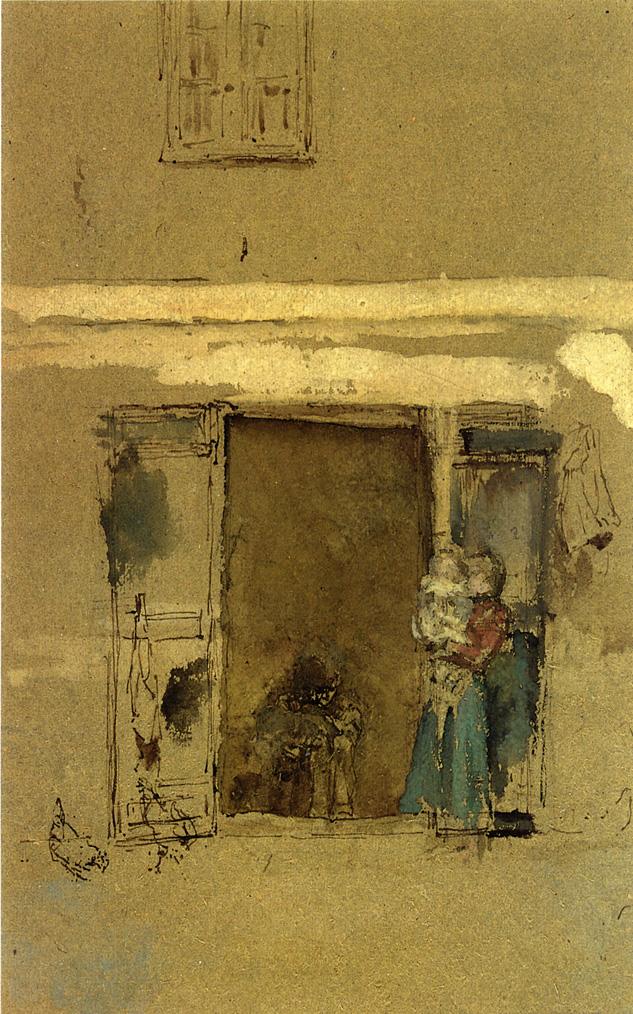
The Open Door — James McNeill Whistler

the-open-door

The Open Door, c. 1901 by James McNeill Whistler (1834-1903)