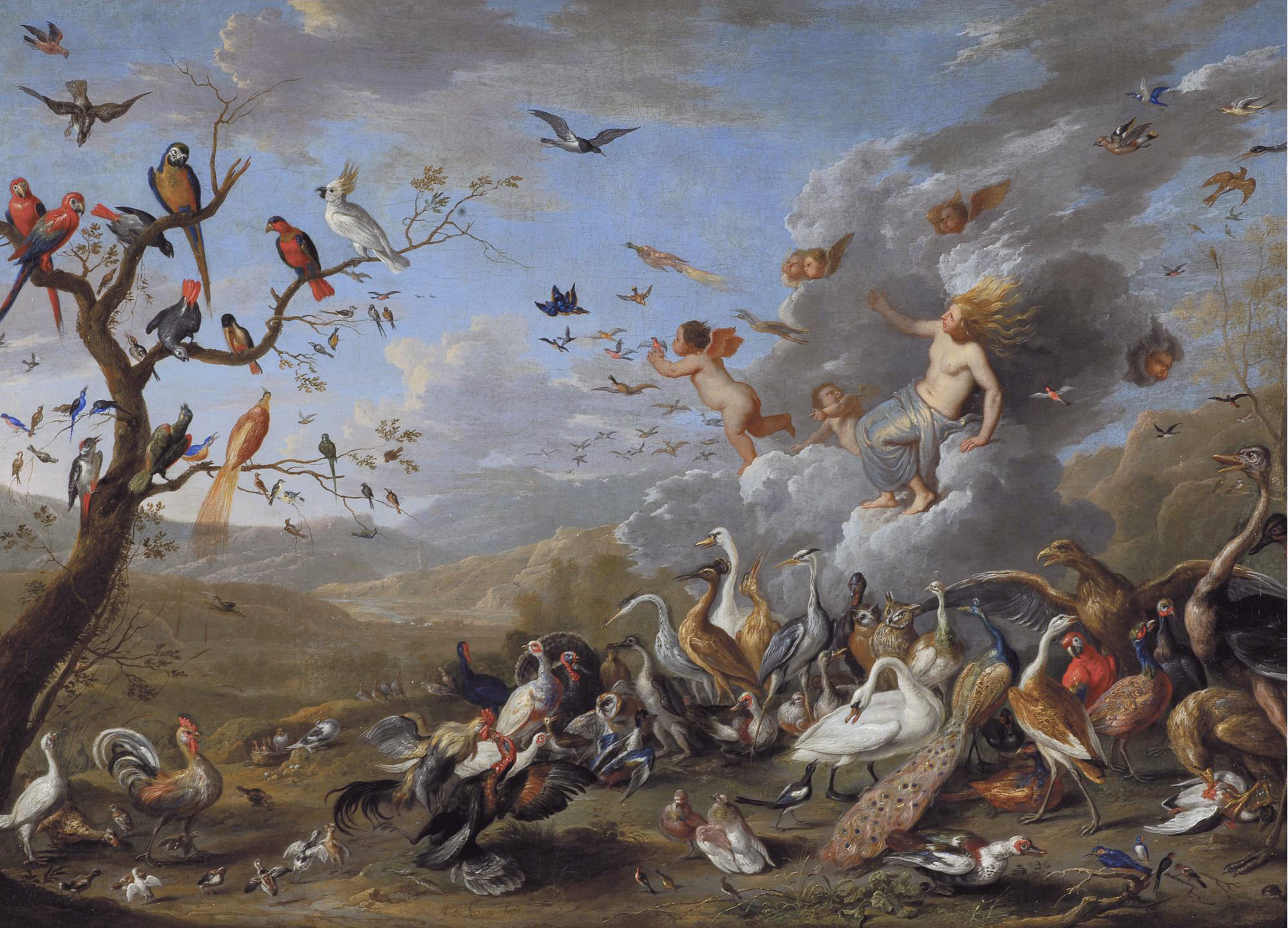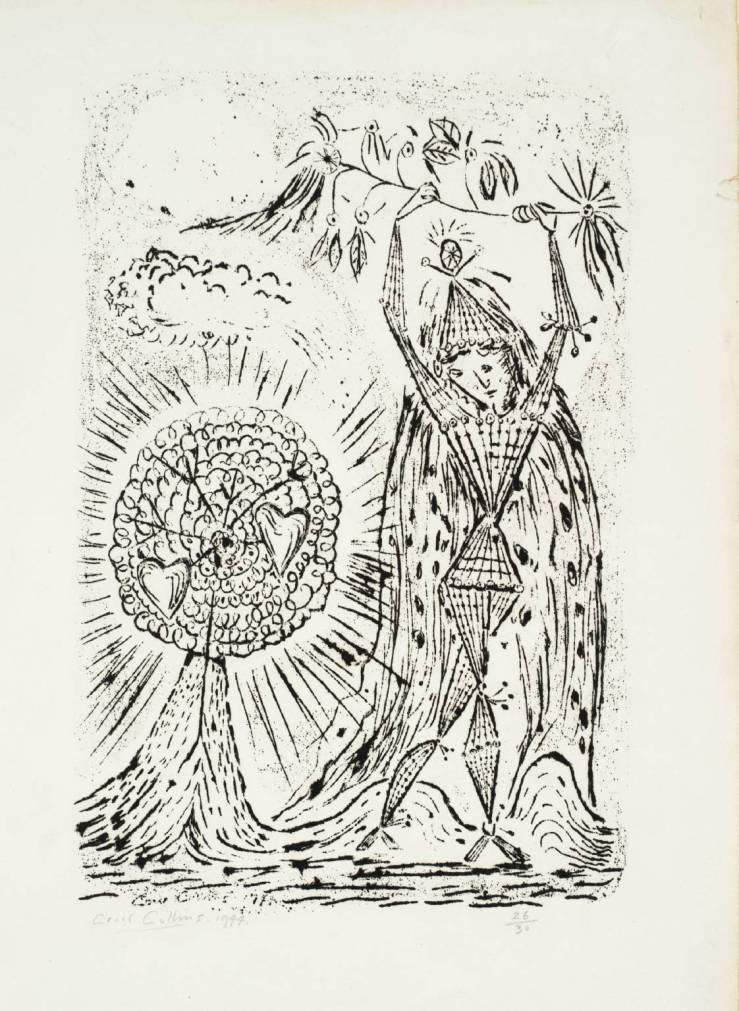
The Joy of the Fool, 1944 by Cecil Collins (1908-1989)
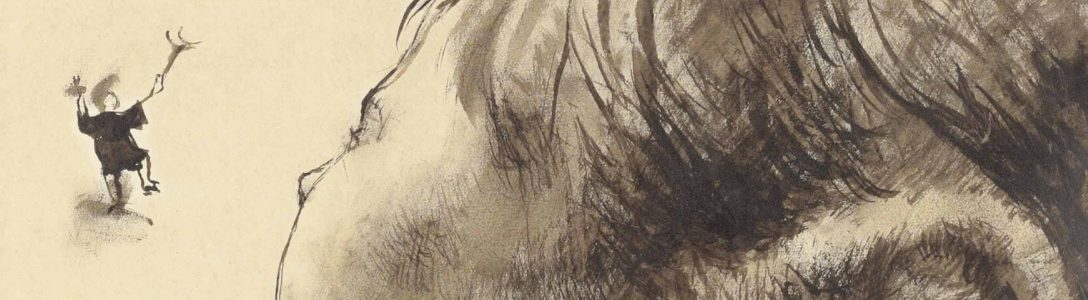
The Joy of the Fool, 1944 by Cecil Collins (1908-1989)
“Beware of Mara”
an excerpt from Thomas Pynchon’s novel V.
Then Mehemet told him of Mara.
“Another of your women.”
“Ha, ha. Indeed. Maltese for woman.”
“Of course.”
“She is—if you care for the word—a spirit, constrained to live in Xaghriet Mewwija. The inhabited plain; the peninsula whose tip is Valletta, her domain. She nursed the shipwrecked St. Paul—as Nausicaa and Odysseus—taught love to every invader from Phoenician to French. Perhaps even to the English, though the legend loses respectability after Napoleon. She was from all evidence a perfectly historical personage, like St. Agatha, another of the island’s minor saints.
“Now the Great Siege was after my time, but legend—one of them—says that she once had access to the entire island and the waters as far as the fishing banks off Lampedusa. The fishing fleets would always lie to there in the shape of a carob pod, her proper symbol. Early in your 1565, at any rate, two privateers, Giou and Romegas, captured a Turkish galleon belonging to the chief eunuch of the Imperial Seraglio. In retaliation Mara was taken prisoner on one of her jaunts to Lampedusa by the corsair Dragut, and brought back to Constantinople. Soon as the ship had passed the invisible circle centered at Xaghriet Mewwija with Lampedusa on the rim, she fell into a strange trance, from which neither caresses nor tortures could rouse her. At length, having lost their own figurehead in a collision with a Sicilian ragusy the week before, the Turks lashed Mara to the bowsprit and that was how she entered Constantinople: a living figurehead. On drawing near to that city, blinding yellow and dun under a clear sky, she was heard to awake and cry: ‘Lejl, hekk ikun.’ Night, so be it. The Turks thought she was raving. Or blind.
“They brought her to the serail, into the presence of the Sultan. Now she never was pictured as a raving beauty. She shows up as a number of goddesses, minor deities. Disguise is one of her attributes. But one curious thing about those images: jar ornaments, friezes, sculptures, no matter: she’s always tall, slim, small-breasted and bellied. No matter what the prevalent fashion in females, she remains constant. In her face is always a slight bow to the nose, a wide spacing of the eyes, which are small. No one you’d turn to watch on the street. But she was a teacher of love after all. Only pupils of love need be beautiful.
“She pleased the Sultan. Perhaps she made the effort. But was installed somehow as a concubine about the time La Vallette back on her island was blocking the creek between Senglea and St. Angelo with an iron chain and poisoning the springs in the Marsa plain with hemp and arsenic. Once in the seraglio she proceeded to raise hell. She’d always been attributed magical talents. Perhaps the carob pod—she’s often depicted holding one—had something to do with it. Wand, scepter. Perhaps too, some kind of fertility goddess—do I embarrass your Anglo-Saxon nerves?—though it is a quaint, hermaphrodite sort of deity.
“Soon—a matter of weeks—the Sultan noticed a certain coldness infecting each of his nightly companions; a reluctance, a lack of talent. Also a change in attitude among the eunuchs. Almost—how to say it—smug and keeping a bad secret of it. Nothing he could establish definitely; and so like most unreasonable men with suspicions he had certain girls and eunuchs tortured horribly. All protested innocence, showed honest fear to the last twist of the neck, the last upward thrust of the iron spike. And yet it progressed. Spies reported that shy concubines who had once paced with ladylike steps—limited by a slim chain between the ankles—and downcast eyes now smiled and flirted promiscuously with the eunuchs, and the eunuchs—horror!—flirted back. Girls left to themselves would suddenly leap on one another with fierce caresses; on occasion make loud abandoned love before the scandalized eyes of the Sultan’s agents.
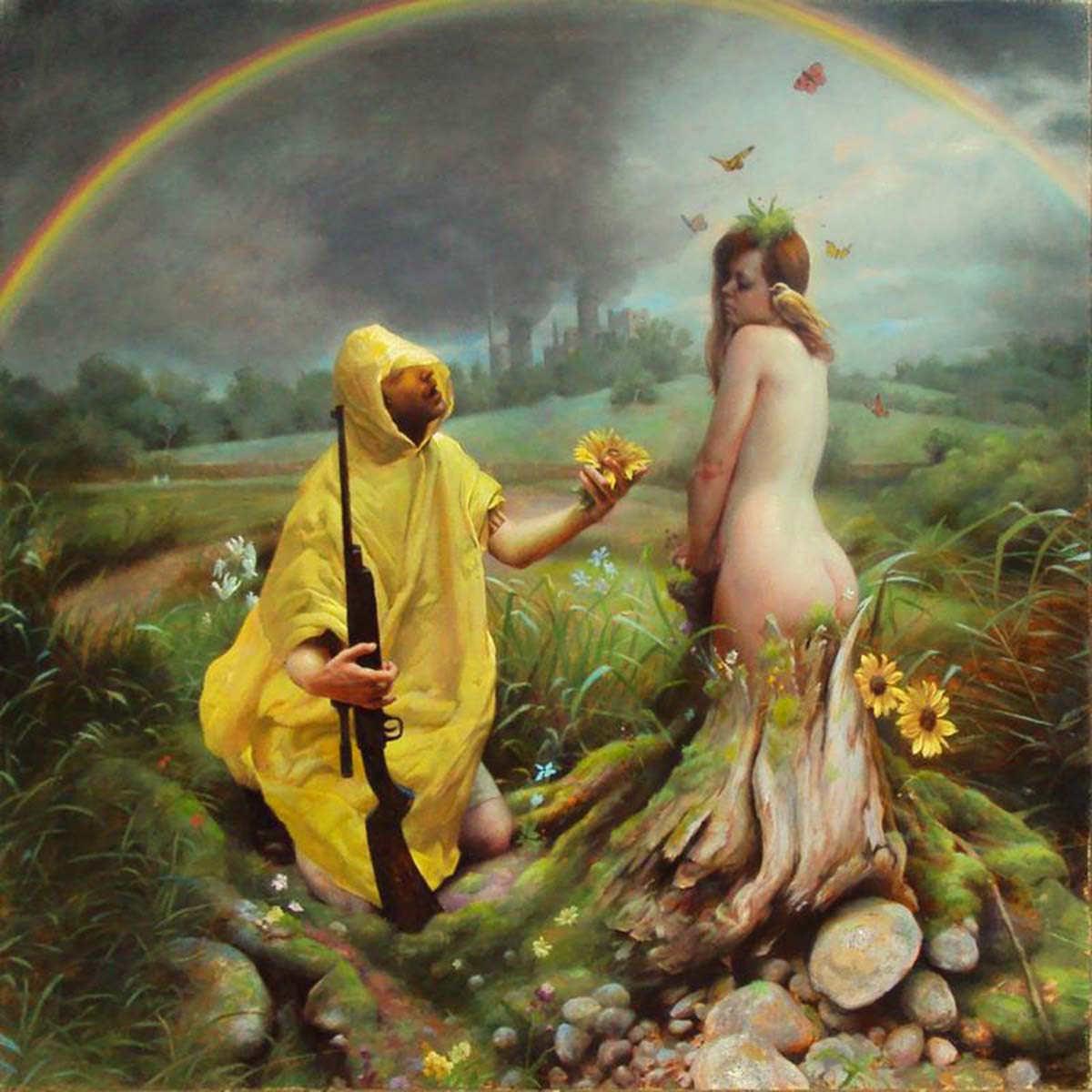
Into the Wild, 2013 by Adam Miller (b. 1979)
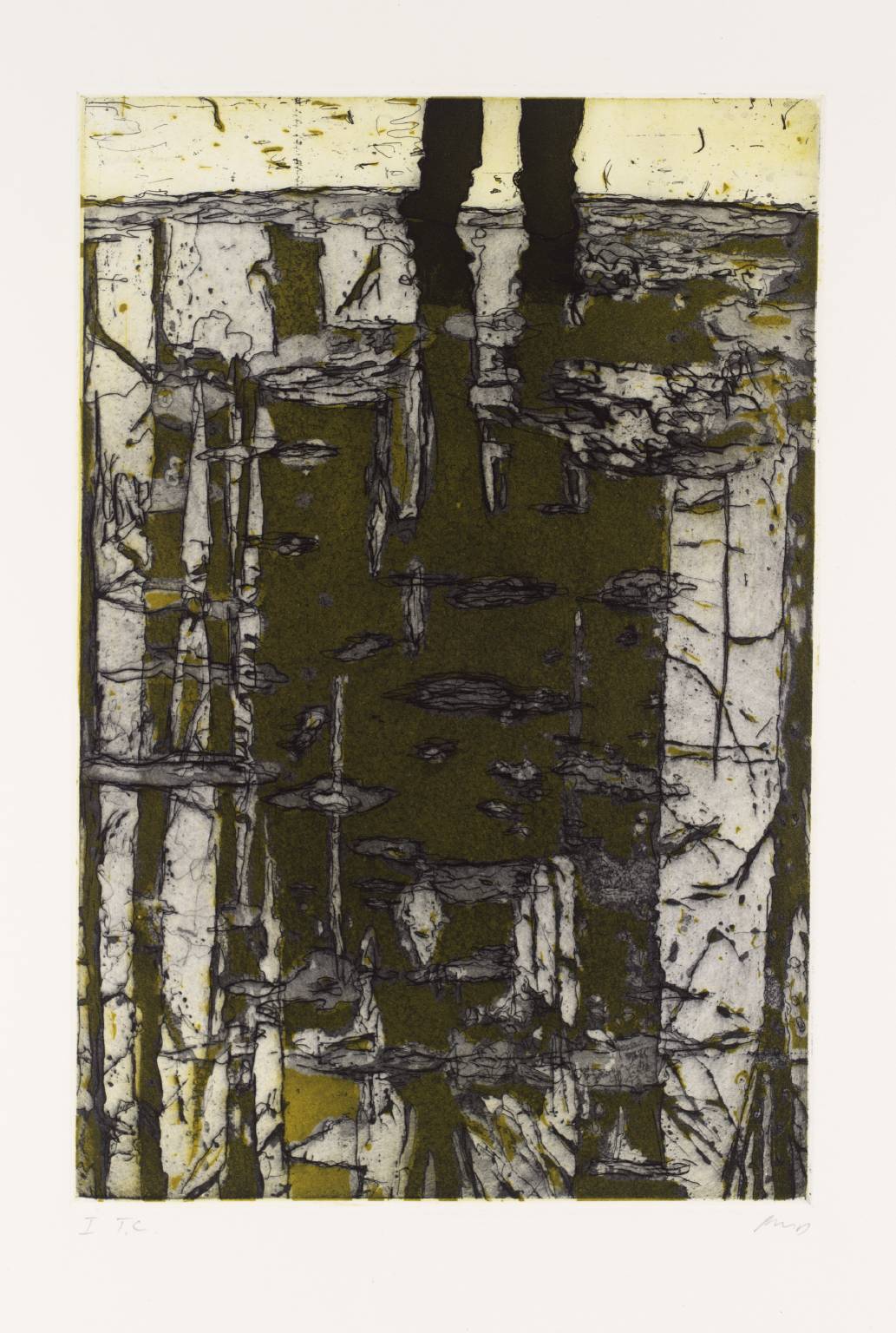
Reflection (What Does Your Soul Look Like?), 1997 by Peter Doig (b. 1959)
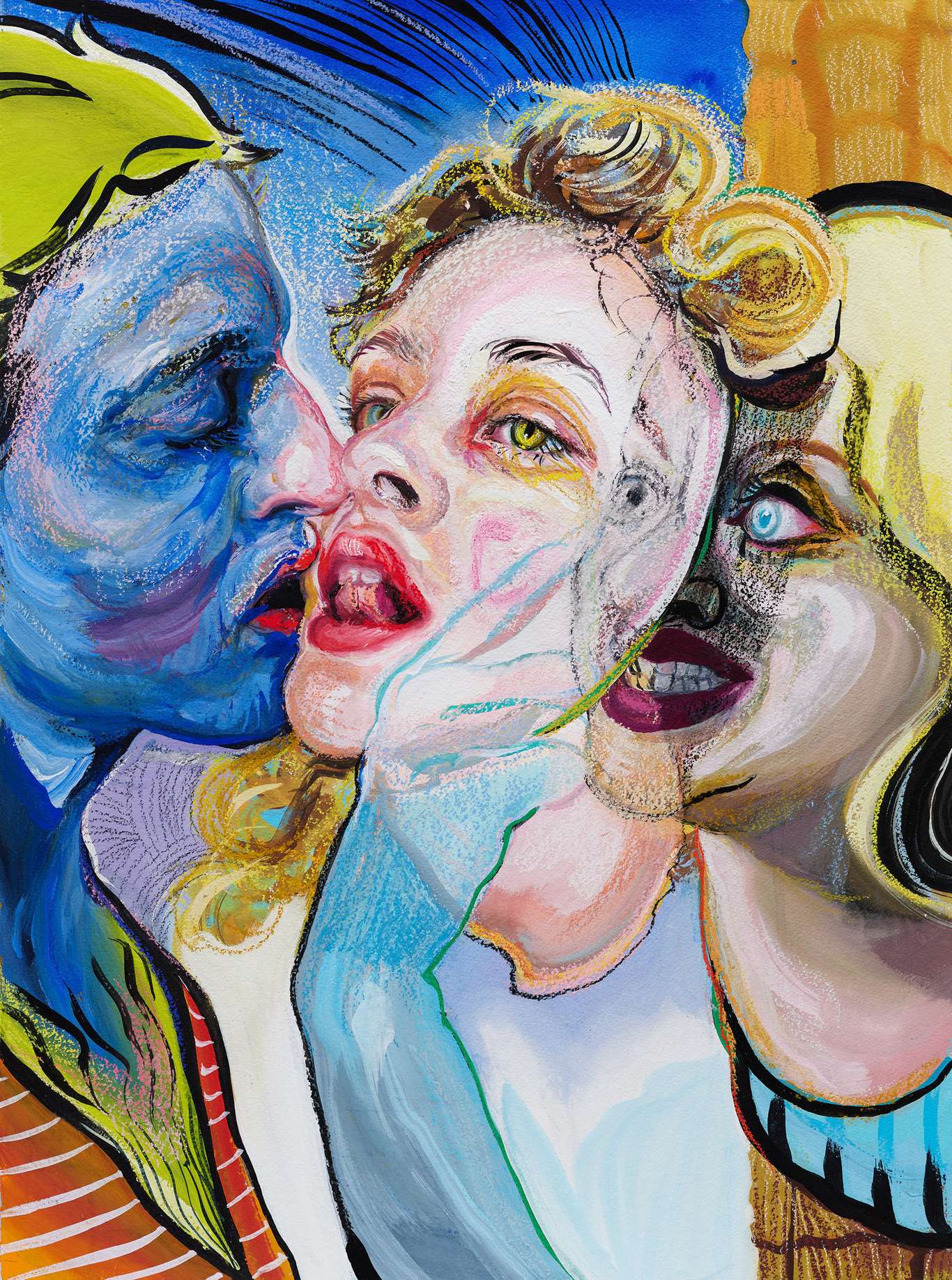
The Blue Bird I, 2019 by Natalie Frank (b. 1980)
“The Blue Bird”
by
Madame d’Aulnoy
Translated from the French by
Andrew Lang
Once upon a time there lived a King who was immensely rich. He had broad lands, and sacks overflowing with gold and silver; but he did not care a bit for all his riches, because the Queen, his wife, was dead. He shut himself up in a little room and knocked his head against the walls for grief, until his courtiers were really afraid that he would hurt himself. So they hung feather-beds between the tapestry and the walls, and then he could go on knocking his head as long as it was any consolation to him without coming to much harm. All his subjects came to see him, and said whatever they thought would comfort him: some were grave, even gloomy with him; and some agreeable, even gay; but not one could make the least impression upon him. Indeed, he hardly seemed to hear what they said. At last came a lady who was wrapped in a black mantle, and seemed to be in the deepest grief. She wept and sobbed until even the King’s attention was attracted; and when she said that, far from coming to try and diminish his grief, she, who had just lost a good husband, was come to add her tears to his, since she knew what he must be feeling, the King redoubled his lamentations. Then he told the sorrowful lady long stories about the good qualities of his departed Queen, and she in her turn recounted all the virtues of her departed husband; and this passed the time so agreeably that the King quite forgot to thump his head against the feather-beds, and the lady did not need to wipe the tears from her great blue eyes as often as before. By degrees they came to talking about other things in which the King took an interest, and in a wonderfully short time the whole kingdom was astonished by the news that the King was married again to the sorrowful lady. Continue reading “The Blue Bird I — Natalie Frank”
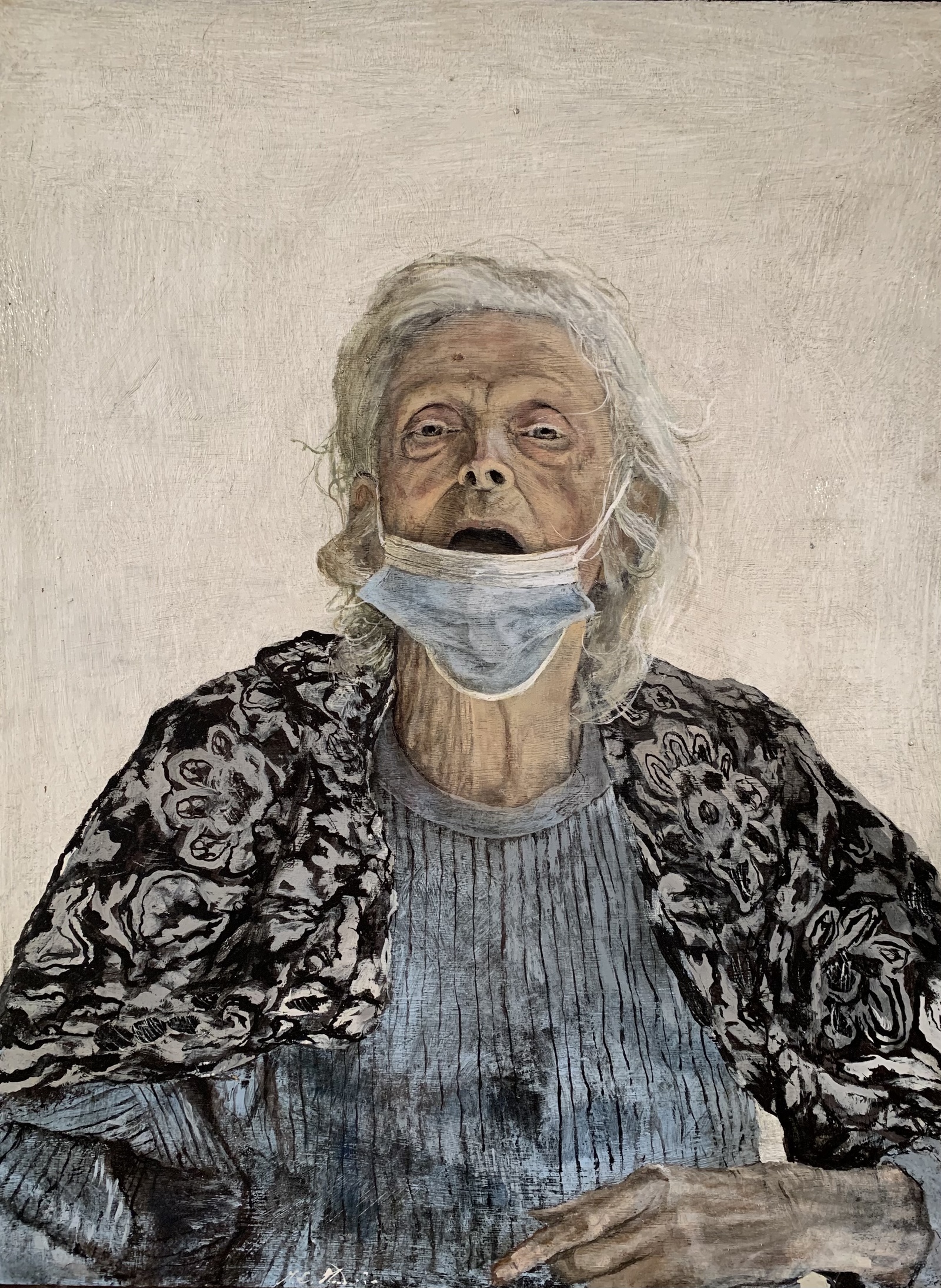
The Pandemic, 2021 by Miles Cleveland Goodwin (b. 1980)

Allegory of Air (detail), 1661 by Jan van Kessel the Elder (1626-1679)
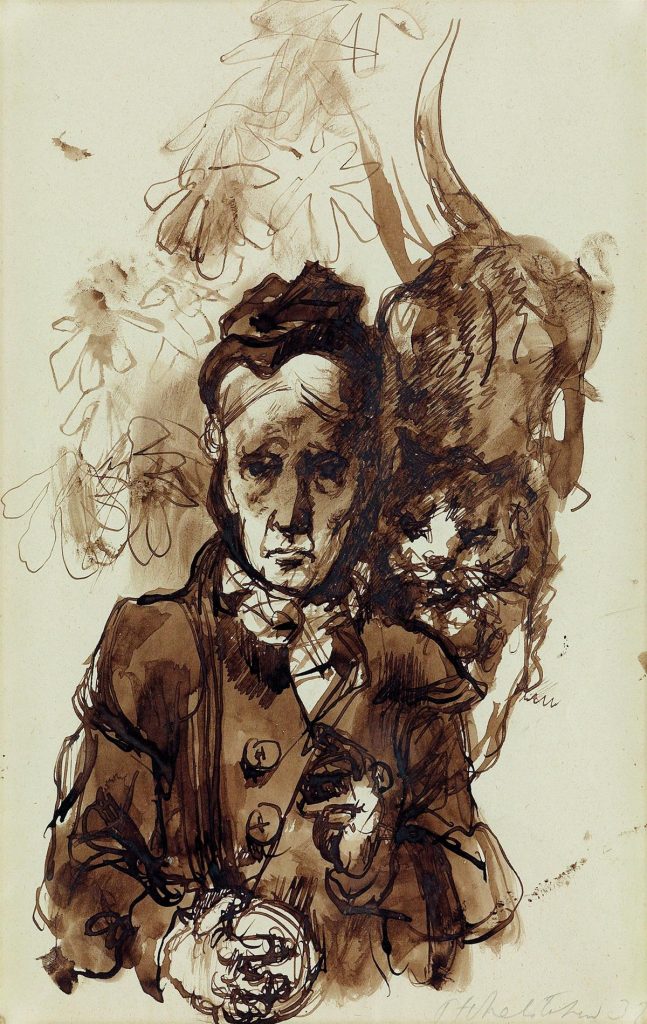
The Sorceress, 1932 by Pavel Tchelitchew (1898-1957)
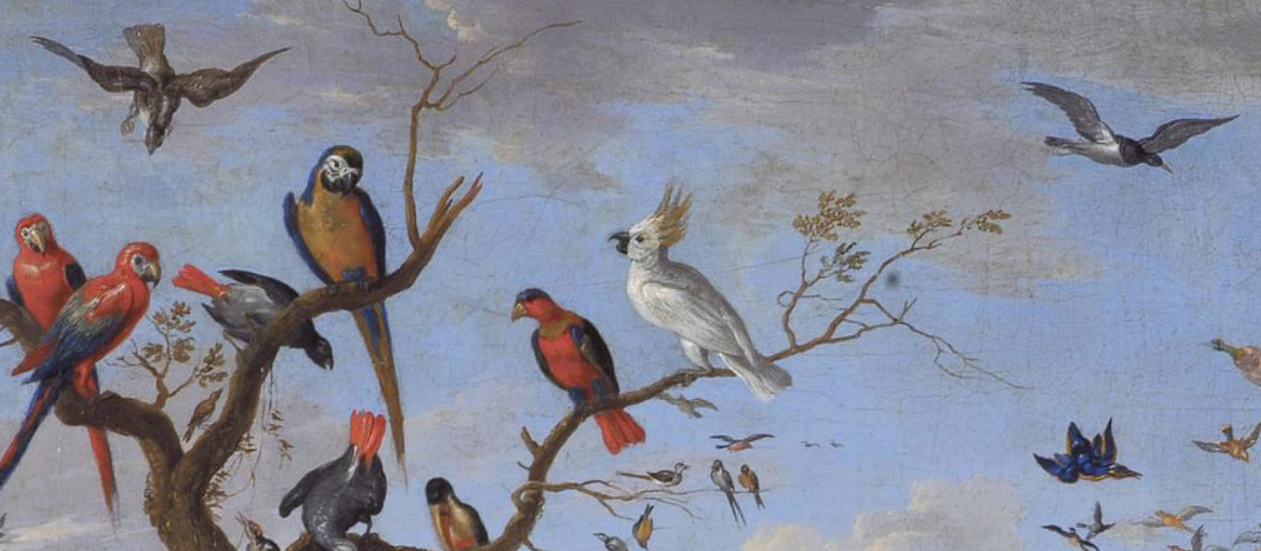
Allegory of Air (detail), 1661 by Jan van Kessel the Elder (1626-1679)
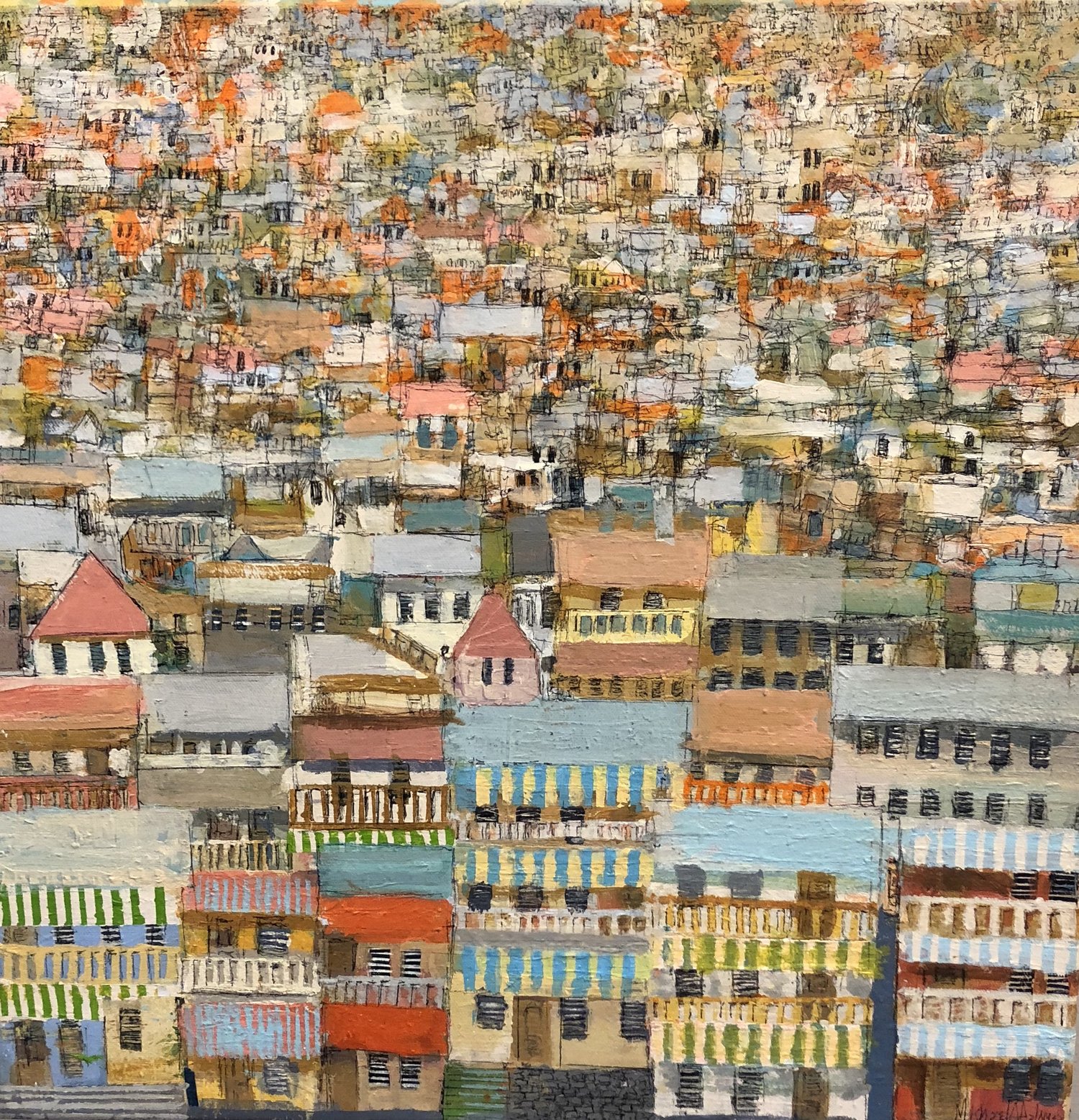
Chaos XLIX by Michael Palmer (b. 1942)

Wait, 1961 by Bridget Tichenor (1917-1990)
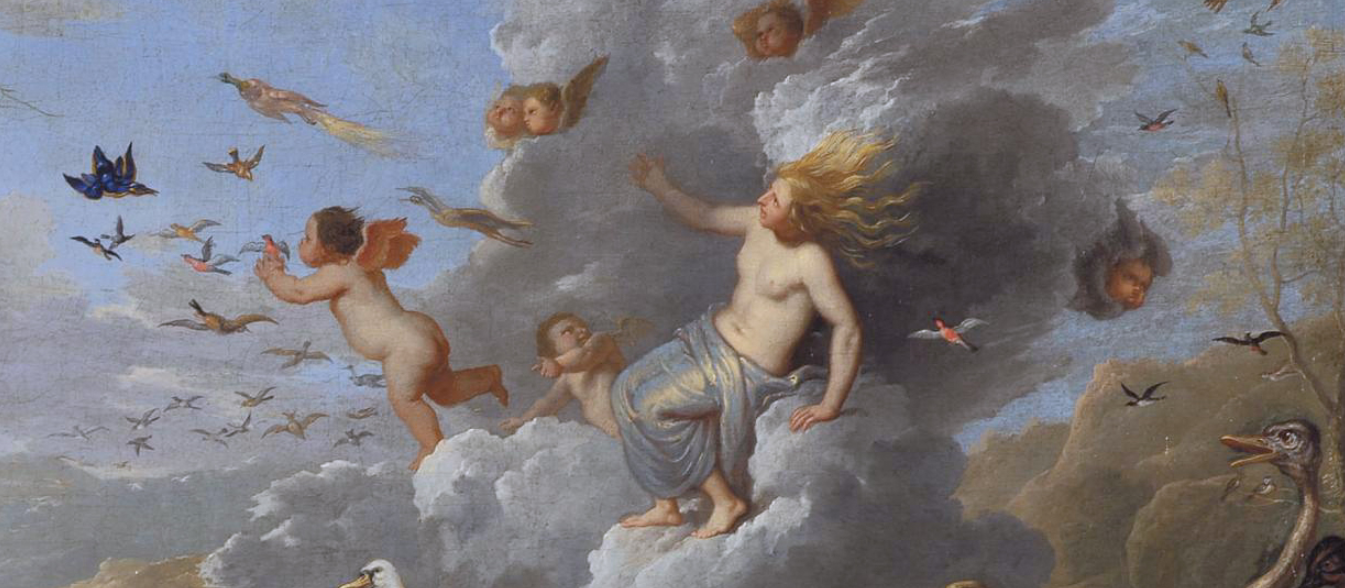
Allegory of Air (detail), 1661 by Jan van Kessel the Elder (1626-1679)
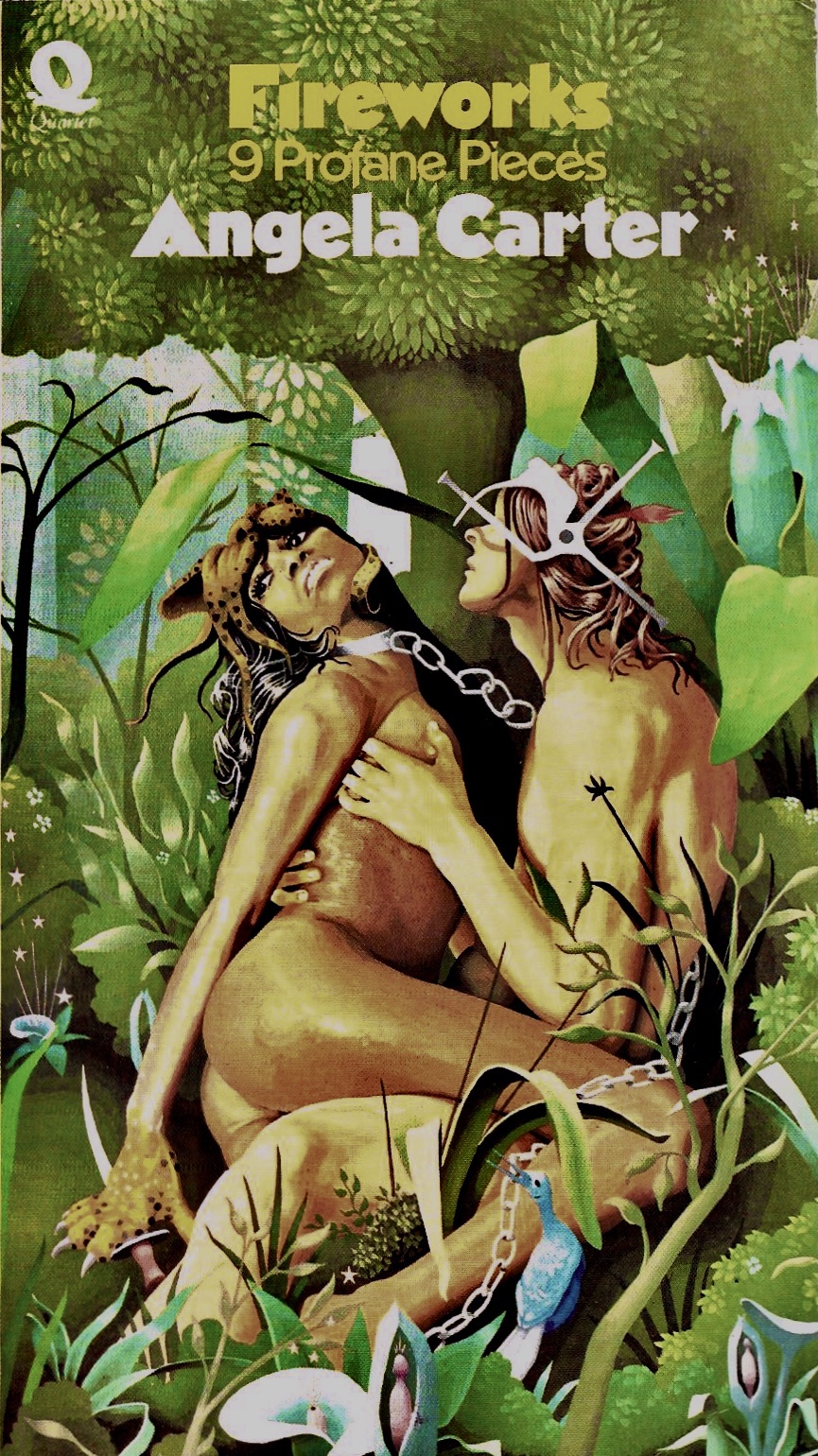
I came across this 1976 first edition paperback of Angela Carter’s collection Fireworks two weeks ago and couldn’t pass it up, even though all of Fireworks is collected in Burning Your Boats, which I already own. I love the hornyassed cover by Bob Foulke. I cannot find anything else by Foulke on the internet.
Here is the opening of “The Executioner’s Beautiful Daughter”:
Here, we are high in the uplands.
A baleful almost-music, that of the tuneless cadences of an untutored orchestra repercussing in an ecstatic agony of echoes against the sounding boards of the mountains, lured us into the village square where we discover them twanging, plucking and abusing with horsehair bows a wide variety of crude stringed instruments. Our feet crunch upon dryly whispering shifting sawdust freshly scattered over impacted surfaces of years of sawdust clotted, here and there, with blood shed so long ago it has, with age, acquired the colour and texture of rust . . . sad, ominous stains, a threat, a menace, memorials of pain.
There is no brightness in the air. Today the sun will not irradiate the heroes of the dark spectacle to which accident and disharmony combined to invite us. Here, where the air is choked all day with diffuse moisture tremulously, endlessly the point of becoming rain, light falls as if filtered through muslin so at all hours a crepuscular gloaming prevails; the sky looks as though it is about to weep and so, gloomily illuminated through unshed tears, the tableau vivant before us is suffused with the sepia tints of an old photograph and nothing within it moves. The intent immobility of the spectators, wholly absorbed as they are in the performance of their hieratic ritual, is scarcely that of living things and this tableau vivant might be better termed a nature morte for the mirthless carnival is a celebration of a death. Their eyes, the whites of which are yellowish, are all fixed, as if attached by taut, invisible strings upon a wooden block lacquered black with the spilt dews of a millennia of victims.
And now the rustic bandsmen suspend their unmclodious music. This death must be concluded in the most dramatic silence. The wild mountain-dwellers are gathered together to watch a public execution; that is the only entertainment the country offers.
Time, suspended like the rain, begins again in silence, slowly.
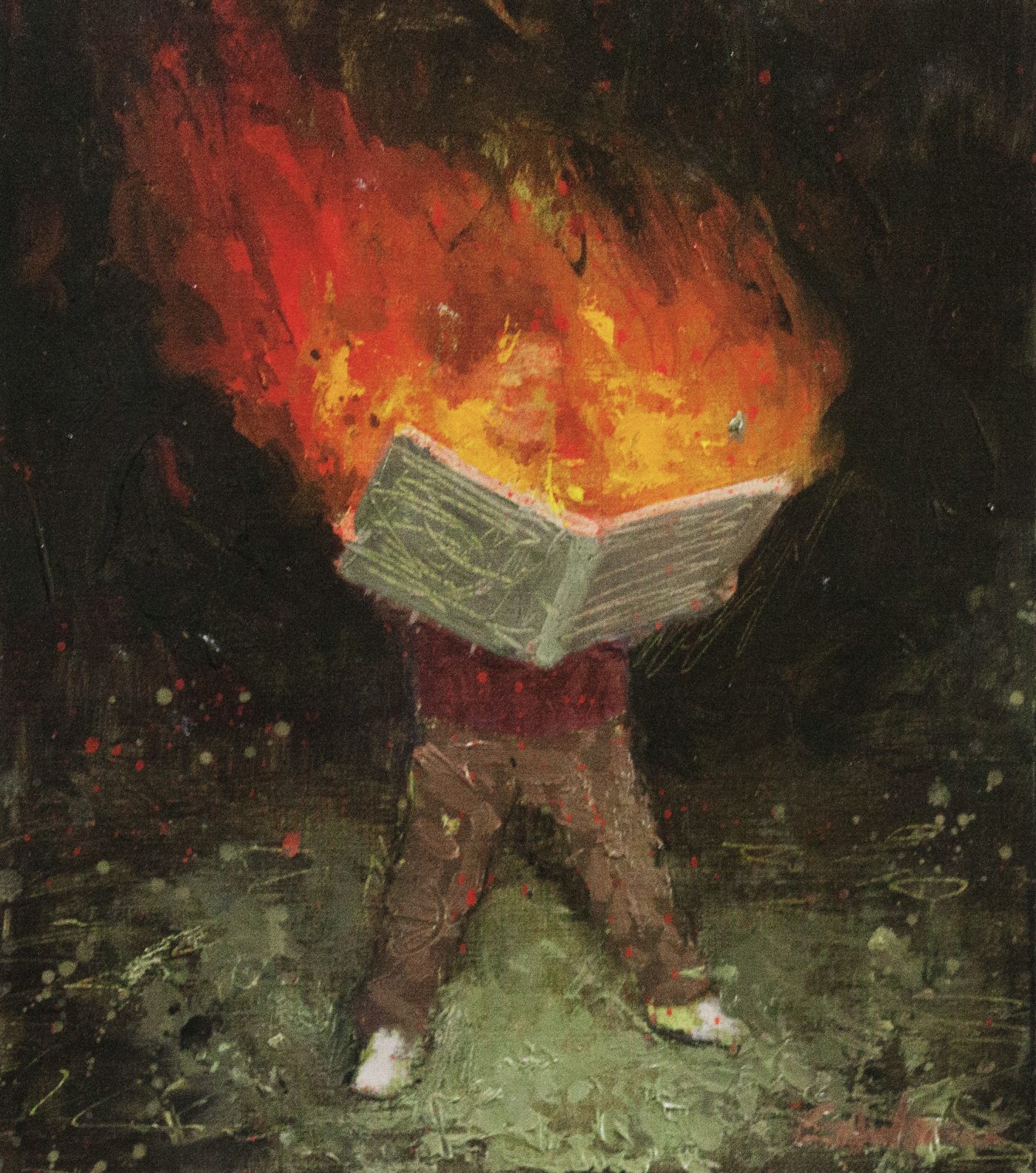
News or Something, 2017 by Pablo Martinez
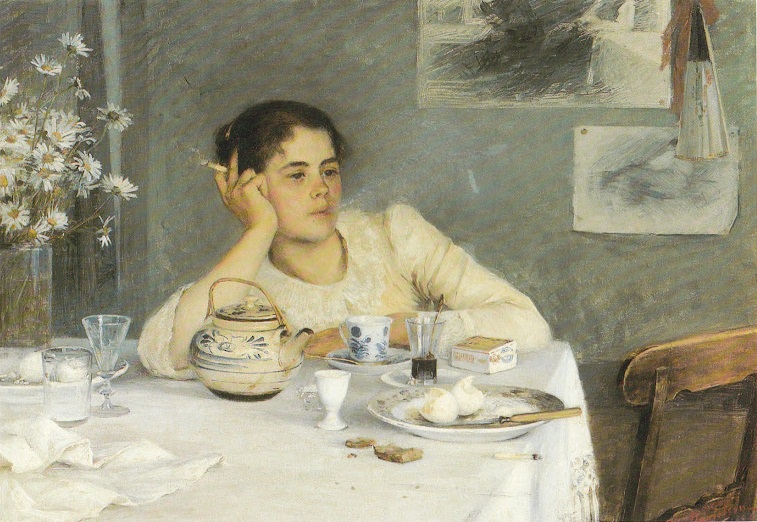
After Breakfast, 1890 by Elin Danielson-Gambogi (1861-1919)
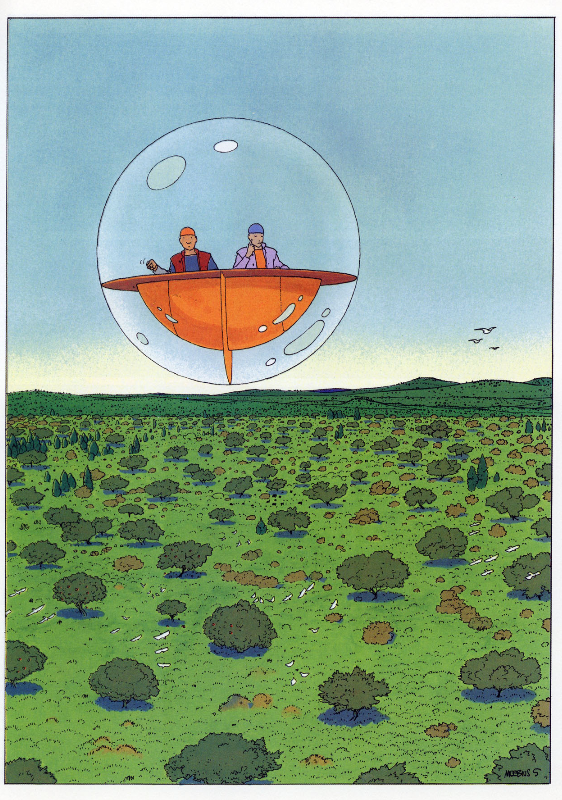
A page from The Gardens of Aedena by Moebius.
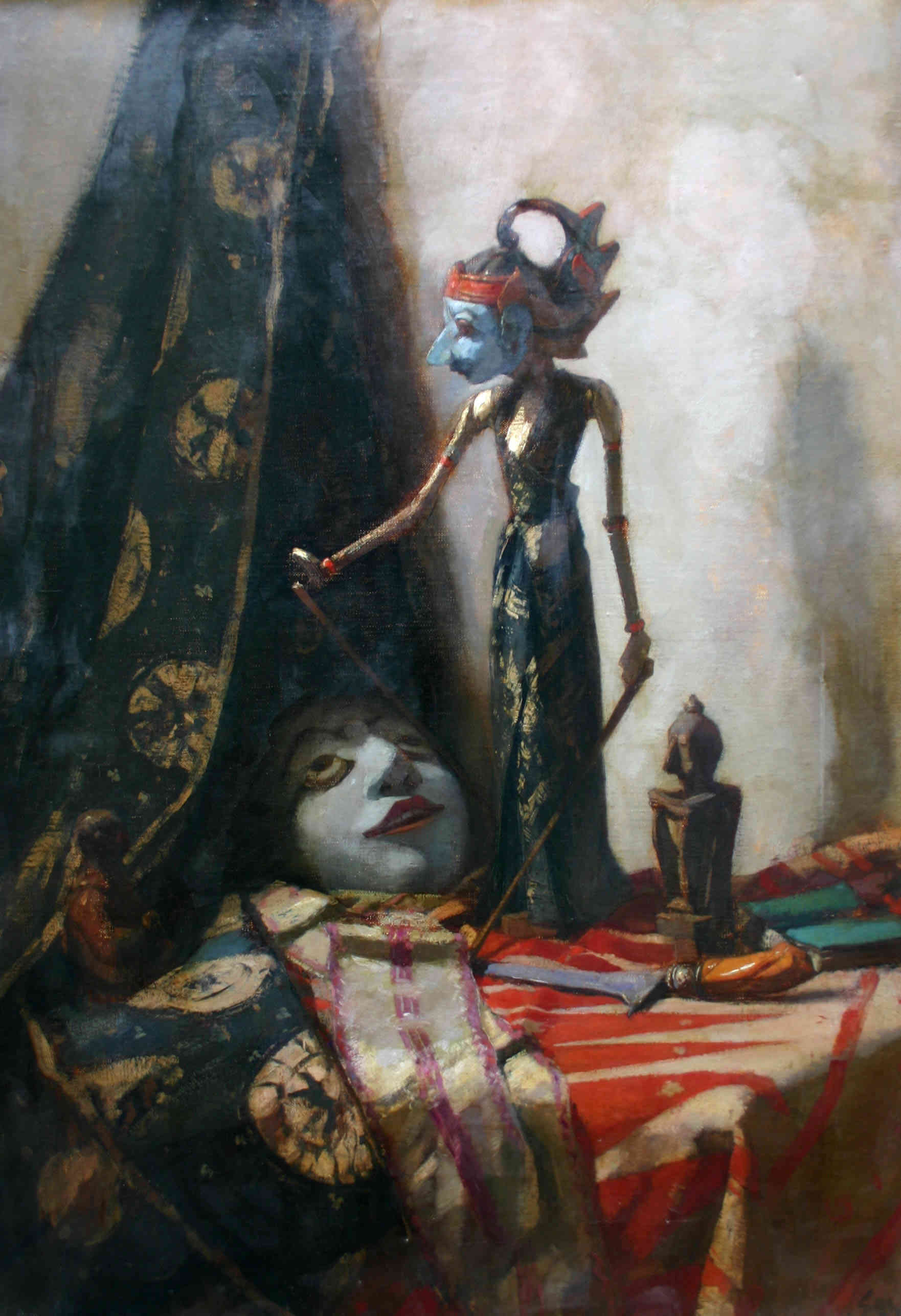
Still Life with Wajang by Salomon Garf (1873-1943)
 Biblioklept