
From The Masterpiece Part 4 – A Weekend In The Country, 2005 by Olivia Plender (b. 1977)
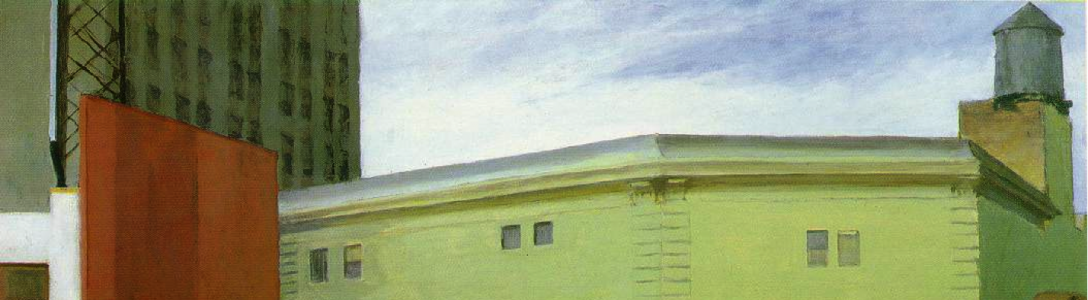
From The Masterpiece Part 4 – A Weekend In The Country, 2005 by Olivia Plender (b. 1977)
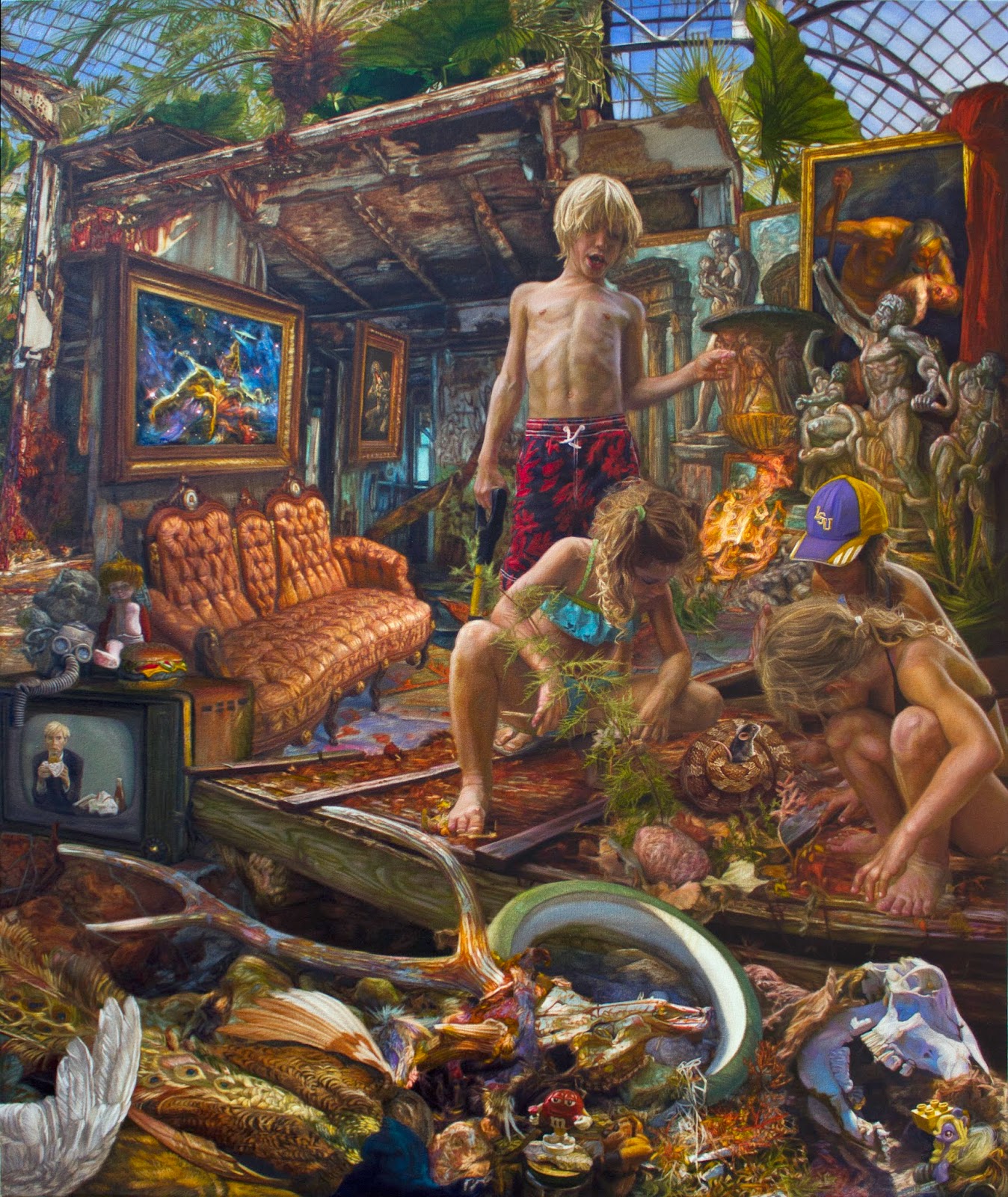 Spectacularly Dying, 2014 by Isaac McCaslin (b. 1989)

The Settlement, 2016 by Peter Martensen (b. 1953)
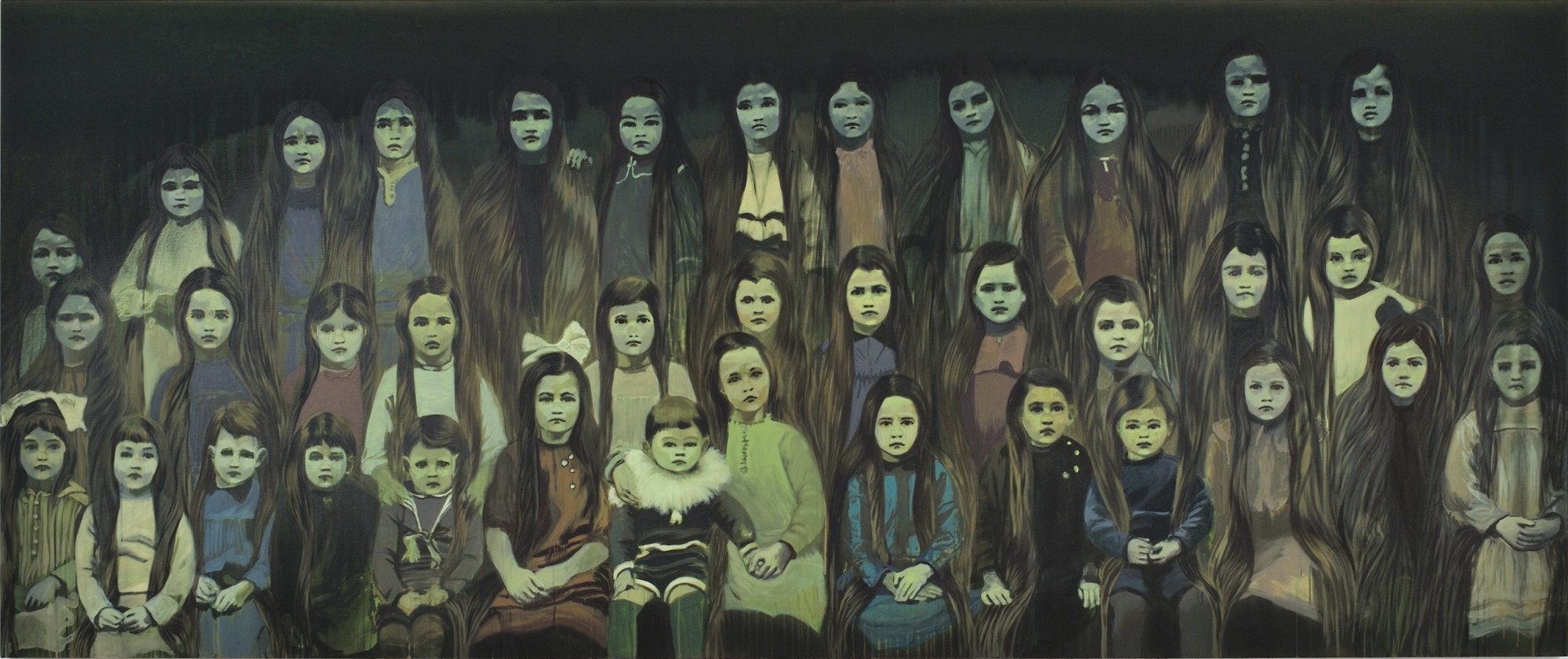
Les Sorcières (The Witches), 2013 by Claire Tabouret (b.1981)

I did not set out to write forty riffs on Herman Melville’s 1851 novel Moby-Dick but that’s where I ended up. I don’t think what I’ve done here is a resource of any worth, but I do hope to encourage people to read this funny, humane, poetic, and devastating novel.
Here are links by chapter to the riffs I riffed on Moby-Dick in 2021.
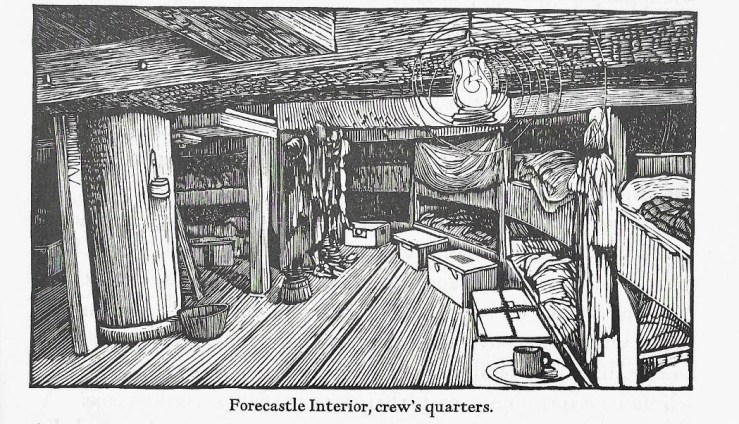
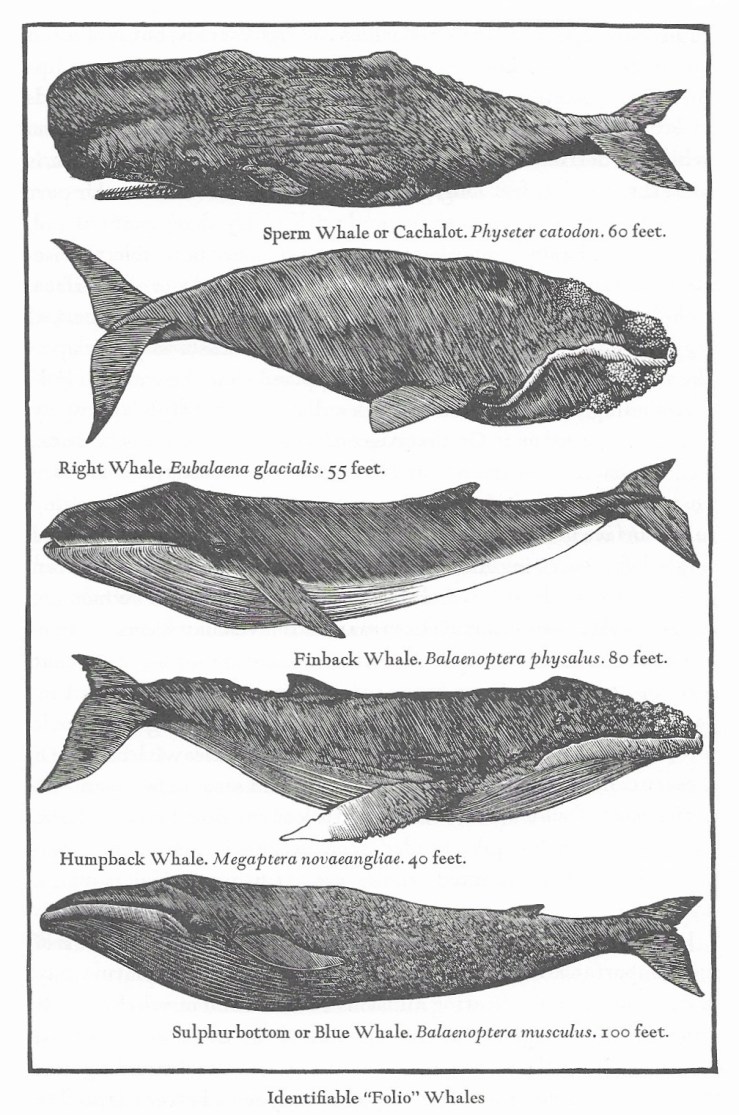
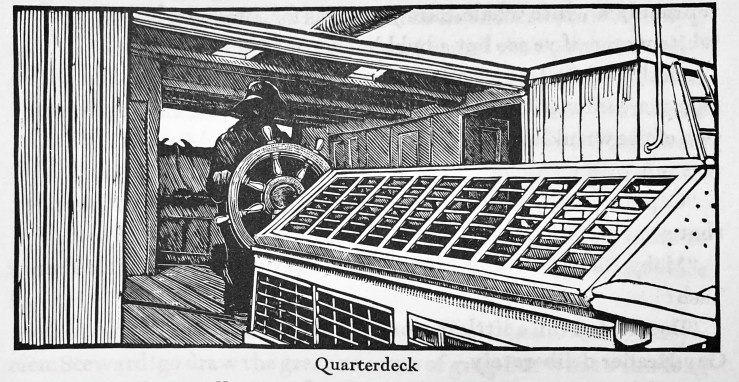
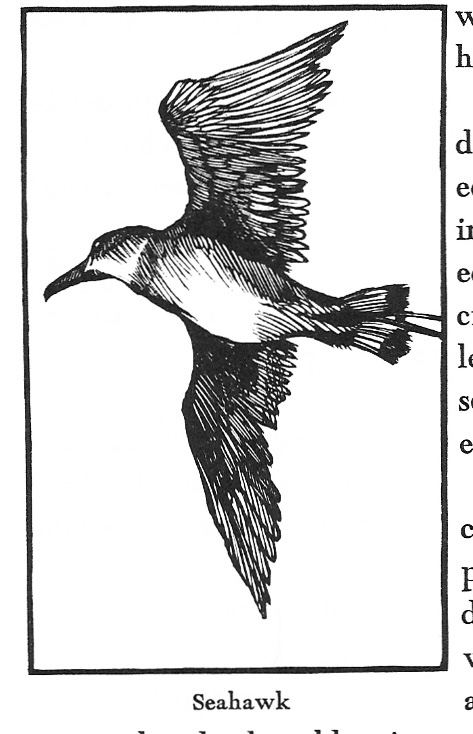
Illustrations in this post are by the American artist Barry Moser.
Ch. 1 (The great flood-gates of the wonder-world swung open)
Ch. 2-4 (Nameless, unimaginable, silent form or phantom)
Ch. 5-8 (All these things are not without their meanings)
Ch. 9-13 (No more my splintered heart and maddened hand were turned against the wolfish world)
Ch. 14-16 (Oblique hints)
Ch. 17-19 (Humbug or bugbear)
Ch. 20-22 (First kick)
Ch. 23-27 (Whaling may well be regarded as that Egyptian mother who bore offspring themselves pregnant from her womb)
Ch. 28-32 (God keep me from ever completing anything)
Ch. 33-35 (Your identity comes back in horror)
Ch. 36 (Talk not to me of blasphemy, man; I’d strike the sun if it insulted me)
Ch. 37-48 (And of all these things the Albino whale was the symbol. Wonder ye then at the fiery hunt?)
Ch. 49-54 (Certain queer times and occasions in this strange mixed affair we call life)
Ch. 55-57 (The great Leviathan is that one creature in the world which must remain unpainted to the last)
Ch. 58-60 (A certain wondrous, inverted visitation of one of those so called judgments of God which at times are said to overtake some men)
Ch. 61-73 (The mystic-marked whale remains undecipherable)

Ch. 74-75 (Why then do you try to “enlarge” your mind? Subtilize it.)
Ch. 76-80 (A very precious perishing)
Ch. 81-83 (There are some enterprises in which a careful disorderliness is the true method)
Ch. 84-86 (Doubts of all things earthly, and intuitions of some things heavenly)
Ch. 87 (There is no folly of the beasts of the earth which is not infinitely outdone by the madness of men)

Ch. 88-90 (Loose-fish/fast-fish)
Ch. 91-93 (The intense concentration of self in the middle of such a heartless immensity, my God! who can tell it?)
Ch. 94-98 (Let us squeeze ourselves universally into the very milk and sperm of kindness)
Ch. 99 (“I look, you look, he looks; we look, ye look, they look”)
Ch. 100 (Face set like a flint)
Ch. 101-05 (Horror-struck at this antemosaic, unsourced existence of the unspeakable terrors of the whale)
Ch. 106-08 (The ineffaceable, sad birth-mark in the brow of man, is but the stamp of sorrow in the signers)
Ch. 109-11 (Millions of mixed shades and shadows, drowned dreams, somnambulisms, reveries)
Ch. 112 (Death is only a launching into the region of the strange Untried)
Ch. 113-17 (Our souls are like those orphans whose unwedded mothers die in bearing them)
Ch. 118-19 (Thy incommunicable riddle, thy unparticipated grief)
Ch. 120-22 (All of us are Ahabs)
Ch. 123 (Wild nights)
Ch. 124-26 (Human sort of wail)
Ch. 127-29 (A life-buoy of a coffin! Does it go further?)
Ch. 130-32 (The least heedful eye seemed to see some sort of cunning meaning in almost every sight)
Ch. 133-34 (That wild simultaneousness of a thousand concreted perils)
Ch. 135-Epilogue (The drama’s done)
And because I landed (or drowned?) at forty, here’s Ahab, near the end of the novel, wailing on forty:
Oh, Starbuck! it is a mild, mild wind, and a mild looking sky. On such a day—very much such a sweetness as this—I struck my first whale—a boy-harpooneer of eighteen! Forty—forty—forty years ago!—ago! Forty years of continual whaling! forty years of privation, and peril, and storm-time! forty years on the pitiless sea! for forty years has Ahab forsaken the peaceful land, for forty years to make war on the horrors of the deep! Aye and yes, Starbuck, out of those forty years I have not spent three ashore. When I think of this life I have led; the desolation of solitude it has been; the masoned, walled-town of a Captain’s exclusiveness, which admits but small entrance to any sympathy from the green country without—oh, weariness! heaviness! Guinea-coast slavery of solitary command!—when I think of all this; only half-suspected, not so keenly known to me before—and how for forty years I have fed upon dry salted fare—fit emblem of the dry nourishment of my soil!—when the poorest landsman has had fresh fruit to his daily hand, and broken the world’s fresh bread to my mouldy crusts—away, whole oceans away, from that young girl-wife I wedded past fifty, and sailed for Cape Horn the next day, leaving but one dent in my marriage pillow—wife? wife?—rather a widow with her husband alive! Aye, I widowed that poor girl when I married her, Starbuck; and then, the madness, the frenzy, the boiling blood and the smoking brow, with which, for a thousand lowerings old Ahab has furiously, foamingly chased his prey—more a demon than a man!—aye, aye! what a forty years’ fool—fool—old fool, has old Ahab been! Why this strife of the chase? why weary, and palsy the arm at the oar, and the iron, and the lance? how the richer or better is Ahab now?
(I feel richer now after the re-read.)

Caught Fire and Fury, 2019 by Jesse Mockrin (b. 1981)
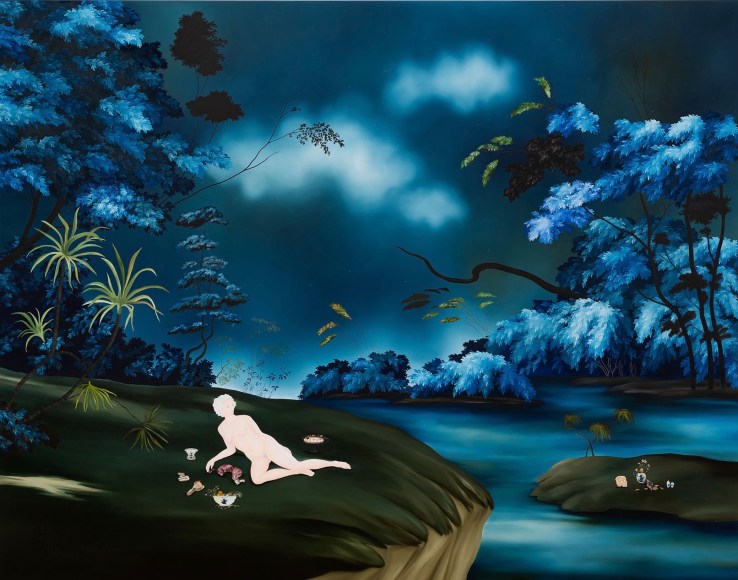
This Is the Beast with a Thousand Mouths That Must Be Fed Twice a Day, 2017 by Sanam Khatibi (b. 1979)

We Had Different Plans, 2020 by Gregory Ferrand (b. 1975)
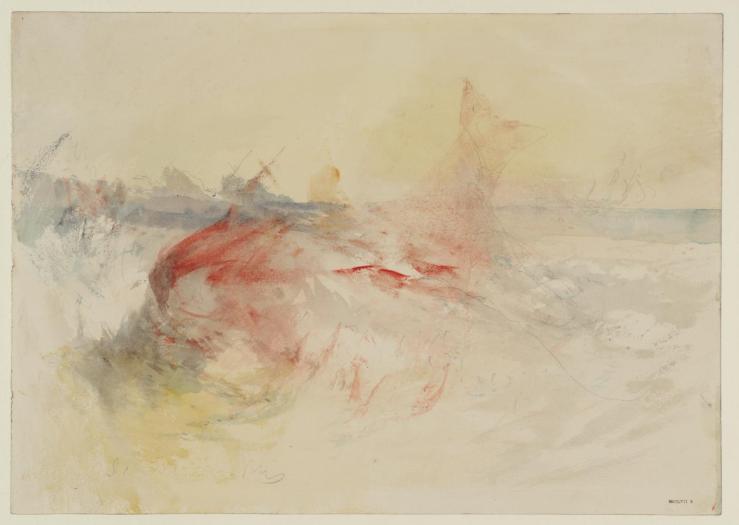
A Harpooned Whale, 1845 by Joseph Mallord William Turner (1775-1851)

Tea, 2020 by Salman Toor (b. 1983)
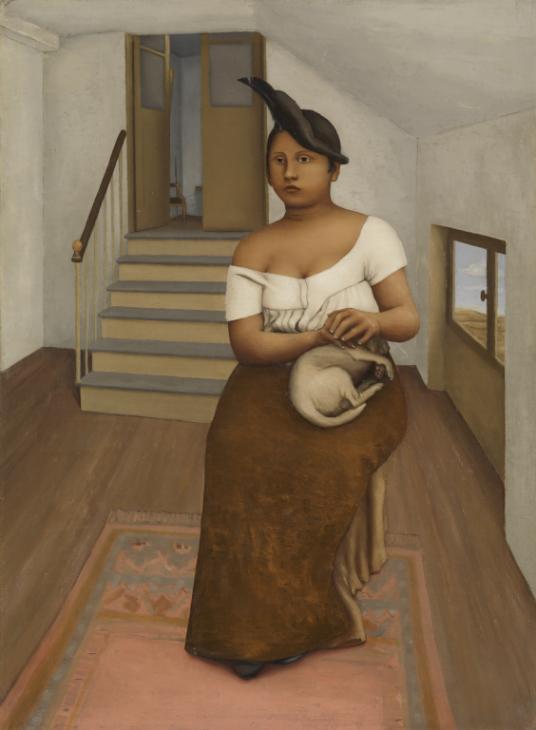
Seated Woman with Small Dog, c.1939 by Meraud Guevara (1904-1993)

I. In this riff, Chapters 133-134 of Moby-Dick.
II. Ch. 133, “The Chase—First Day.”
We finally get there.
Ahab has posed one question throughout the book: “Hast seen the White Whale?”
That is the only viewpoint that matters to him—a viewpoint that can point him toward vengeance.
He gets to answer his own question:
“There she blows!—there she blows! A hump like a snow-hill! It is Moby Dick!”
And then the chase begins.
III. Ahab demands of his lookouts whether or not they sighted Moby Dick first. Tashtego claims that he, “saw him almost that same instant, sir, that Captain Ahab did,” but Ahab denies this (much as Stubb takes credit for the first whale The Pequod sights much earlier in the novel).
Ahab is ever-dominant: “Not the same instant; not the same—no, the doubloon is mine, Fate reserved the doubloon for me. I only; none of ye could have raised the White Whale first.”
Ahab’s “I only” condenses his monomania to three syllables.
Ahab’s monomania turns his rhetoric into a series of repetitions through which he tunes himself to the rhythm of the whale:
“There she blows!—there she blows!—there she blows! There again!—there again!” he cried, in long-drawn, lingering, methodic tones, attuned to the gradual prolongings of the whale’s visible jets.
IV. Ahab and his mates set to their boats to chase the White Whale—only Starbuck remains, as previously commanded by Ahab. Omnipresent Ishmael, shows us Ahab seeing Moby Dick: “He saw the vast, involved wrinkles of the slightly projecting head beyond.” And then, in a remarkable passage, we get what I think is Ishmael seeing Moby Dick, or Ishmael seeing Moby Dick as he wished Ahab could see Moby Dick:
A gentle joyousness—a mighty mildness of repose in swiftness, invested the gliding whale. Not the white bull Jupiter swimming away with ravished Europa clinging to his graceful horns; his lovely, leering eyes sideways intent upon the maid; with smooth bewitching fleetness, rippling straight for the nuptial bower in Crete; not Jove, not that great majesty Supreme! did surpass the glorified White Whale as he so divinely swam.
The whale here is godlike. But remember that Ahab would strike the sun, would cast down the Titans.
V. Ahab and his men continue to hunt the godlike whale “through the serene tranquillities of the tropical sea”; Moby Dick ducks and dives, refusing them the sight of “the full terrors of his submerged trunk.”
Soon though, eagle-eyed Tashtego spies the sign of the whale’s re-emergence:
“The birds!—the birds!” cried Tashtego.
In long Indian file, as when herons take wing, the white birds were now all flying towards Ahab’s boat; and when within a few yards began fluttering over he water there, wheeling round and round, with joyous, expectant cries. Their vision was keener than man’s; Ahab could discover no sign in the sea.
Melville seems to underline a few points here—Tashtego raises a whale for the third time—here, by spying the herons, which our author notes travel in “Indian file” and by noting that this “Indian file” sounds the alarm for the whale. They can see more deeply than Ahab.
VI. But Ahab soon does see something, but only because it rises up to meet him from the ocean’s depths: “It was Moby Dick’s open mouth and scrolled jaw.”
But it’s just the first day of the chase in this novel of tripled trios. Ahab’s not done yet, even though “The glittering mouth yawned beneath the boat like an open-doored marble tomb.” There’s some foreshadowing for you!
VII. Ahab escapes on this first day, although his boat does not—Moby Dick chomps it to pieces. All sailors are saved too, although Ahab shows more concern for the harpoon he forged earlier aboard The Pequod (it’s saved too).
Moral Starbuck declares the business of the wrecked boat an ill omen, but Ahab won’t read the signs that way:
Omen? omen?—the dictionary! If the gods think to speak outright to man, they will honorably speak outright; not shake their heads, and give an old wives’ darkling hint.—Begone! Ye two are the opposite poles of one thing; Starbuck is Stubb reversed, and Stubb is Starbuck; and ye two are all mankind; and Ahab stands alone among the millions of the peopled earth, nor gods nor men his neighbors!
VIII. Ch. 134, “The Chase—Second Day.”
And so the second day.
It starts out with an enthusiastically-received mistake. The lookout calls out that he’s sighted Moby Dick, rousing the crew into a kind of mad fury; Ahab’s monomania inspirits them all:
The hand of Fate had snatched all their souls; and by the stirring perils of the previous day; the rack of the past night’s suspense; the fixed, unfearing, blind, reckless way in which their wild craft went plunging towards its flying mark; by all these things, their hearts were bowled along. The wind that made great bellies of their sails, and rushed the vessel on by arms invisible as irresistible; this seemed the symbol of that unseen agency which so enslaved them to the race.
“They were one man, not thirty,” notes Ishmael, in another satanic inversion of the earlier oversoul blending the men have experienced. We are now in the mode of blood, a reversal of “the very milk and sperm of kindness.”
IX. But Ahab chastises the men: “ye have been deceived; not Moby Dick casts one odd jet that way, and then disappears.” Ahab ascends the rigging himself, and quickly sights the White Whale again. “Aye, breach your last to the sun, Moby Dick!” he brags, setting out again in a restored boat (and again leaving Starbuck on The Pequod).
X. A complex battle ensues. All three harpooneers manage to lance Moby Dick, but “in his untraceable evolutions, the White Whale so crossed and recrossed, and in a thousand ways entangled the slack of the three lines now fast to him, that they foreshortened, and, of themselves, warped the devoted boats towards the planted irons in him.” The image evokes to me a kind of elegant wild writing. Moby Dick crossing and recrossing the lines, warping and weaving the material of which he is the unknowable center.
Moby Dick rewrites the violence Ahab seeks to wreak upon him. The men’s lances become “corkscrewed in the mazes of the line,” and Ahab’s only recourse is to edit. He takes a knife to the lines attached to his boat. But Ahab causes an unintended effect—although he’s freed from the whale, the other boats are not, and “the more involved boats of Stubb and Flask” are dashed…together like two rolling husks on a surf-beaten beach.”
XI. Moby Dick then destroys Ahab’s second boat. The particular paragraph is an astounding piece of rhetoric, a single sentence of 141 words, fourteen commas, seven em dashes, and four semicolons. And it begins with While—Melville tries to make his rhetoric do what film does, to situate his sentences as movement, sound, simultaneity. His goal is to set a scene impossible for an eye to take in and comprehend in a simple glance—the wreck of the boats, the struggle of Stubb, Flask, and their men—condensed perhaps most neatly in the phrase which occurs right in the middle of the paragraph—
—in that wild simultaneousness of a thousand concreted perils,—
(Those dashes do so much work, forcefully connecting and separating the elements of Melville’s tangled, disastrous paragraph of a sentence.)
XII. And well so what happened in that wild simultaneousness of a thousand concreted peril?
—Ahab’s yet unstricken boat seemed drawn up towards Heaven by invisible wires,—as, arrow-like, shooting perpendicularly from the sea, the White Whale dashed his broad forehead against its bottom, and sent it, turning over and over, into the air; till it fell again—gunwale downwards—and Ahab and his men struggled out from under it, like seals from a sea-side cave.
XIII. The men, including Ahab, are returned to The Pequod. But Ahab’s “ivory leg had been snapped off, leaving but one short sharp splinter.”
Ahab then musters the men and finds Fedallah missing; Stubb attests that the Parsee was dragged down in the tangles of Ahab’s lines. Ahab is the author of Fedallah’s death. He goes full King Lear:
My line! my line? Gone?—gone? What means that little word?—What death-knell rings in it, that old Ahab shakes as if he were the belfry. The harpoon, too!—toss over the litter there,—d’ye see it?—the forged iron, men, the white whale’s—no, no, no,—
(Etc.)
Ahab’s “line” here points in multiple directions—the concrete harpoon line, the genealogical futurity of his familial line; his “line” as an author.
XIV. Ahab’s mad monologue pushes Starbuck over the edge. “Great God! but for one single instant show thyself,” Starbuck implores, perhaps echoing Melville’s own metaphysical misgivings. “In Jesus’ name no more of this,” he implores, ending his own rejoining monologue by declaiming it, “Impiety and blasphemy to hunt him more!”
XV. Ahab’s ego overwhelms in the end though. He concedes that “of late” he’s felt “strangely moved” to Starbuck’s thinking, but then trips into his own fury:
Ahab is for ever Ahab, man. This whole act’s immutably decreed. ’Twas rehearsed by thee and me a billion years before this ocean rolled. Fool! I am the Fates’ lieutenant; I act under orders. Look thou, underling! that thou obeyest mine.—Stand round me, men. Ye see an old man cut down to the stump; leaning on a shivered lance; propped up on a lonely foot. ’Tis Ahab—his body’s part; but Ahab’s soul’s a centipede, that moves upon a hundred legs. I feel strained, half stranded, as ropes that tow dismasted frigates in a gale; and I may look so. But ere I break, ye’ll hear me crack; and till ye hear that, know that Ahab’s hawser tows his purpose yet. Believe ye, men, in the things called omens? Then laugh aloud, and cry encore! For ere they drown, drowning things will twice rise to the surface; then rise again, to sink for evermore. So with Moby Dick—two days he’s floated—tomorrow will be the third. Aye, men, he’ll rise once more,—but only to spout his last! D’ye feel brave men, brave?
So do you feel brave?

The Activist, 2018 by Julio Larraz (b. 1944)

Memory Hierarchy, 2020 by Rebecca Orcutt (b. 1992)
I. In this riff, Chapters 130-132 of Moby-Dick.
II. Ch. 130, “The Hat.”
In which Ahab’s hat is stolen by “one of those red-billed savage sea-hawks which so often fly incommodiously close round the manned mast-heads of whalemen in these latitudes,” and the crew reads it, almost to a man, as an ill omen.
At the chapter’s outset, our Ishmael is in a meta-textual mood, pushing the quest’s doom into the foreground. He tells us that “all other whaling waters [are] swept” — we are in the penultimate triplet chapters:
In this foreshadowing interval too, all humor, forced or natural, vanished. Stubb no more strove to raise a smile; Starbuck no more strove to check one. Alike, joy and sorrow, hope and fear, seemed ground to finest dust, and powdered, for the time, in the clamped mortar of Ahab’s iron soul.
III. Ahab and Fedallah (who has foretold the doom of the ship he crews on) both keep to the deck at all times. Ahab declares that he will take the nailed doubloon, omphalos of both ship and novel — “‘I will have the first sight of the whale myself,’—he said. ‘Aye! Ahab must have the doubloon.'” Fedallah is a silent impenetrable gaze: “his wan but wondrous eyes did plainly say—We two watchmen never rest.”
IV. Ahab, as I’ve contended so many times, is monocular reader. Our one-legged monomaniacal despot of a captain can only watch and read for his dread mission. Unlike diverse, large-hearted Ishmael, there is no diversity in Ahab’s gaze/reading. He reads for one purpose, and all signs are symbols portending the fulfillment of that purpose.
As the sea-hawk approaches, Ahab’s gaze is upon the sea, not heavenward. We learn that the sea-hawk,
darted a thousand feet straight up into the air; then spiralized downwards, and went eddying again round his head.
But with his gaze fixed upon the dim and distant horizon, Ahab seemed not to mark this wild bird; nor, indeed, would any one else have marked it much, it being no uncommon circumstance; only now almost the least heedful eye seemed to see some sort of cunning meaning in almost every sight.
The crew of The Pequod reads the event as the foreshadow of disaster, whether the spectacle is simply a dark omen—the leader’s crown revoked from upon high—or simply the physical reality of their captain losing his hat because his attention was focused in only one direction.
V. Ch. 131, “The Pequod Meets the Delight.”
In which The Pequod encounters its last meeting with another ship—and another Nantucket ship—a “most miserably misnamed” The Delight:
Upon the stranger’s shears were beheld the shattered, white ribs, and some few splintered planks, of what had once been a whale-boat; but you now saw through this wreck, as plainly as you see through the peeled, half-unhinged, and bleaching skeleton of a horse.
I mean, c’mon. White ribs, bleaching skeleton of a horse, etc. It’s really the seeing through in the previous paragraph I’m interested in. Our Ishmael attends the world with the perspective of a ghost who sees through the world’s wreck.
VI. Ahab repeats his famous question (for the last time):
“Hast seen the White Whale?”
“Look!” replied the hollow-cheeked captain from his taffrail; and with his trumpet he pointed to the wreck.
“Hast killed him?”
“The harpoon is not yet forged that ever will do that,” answered the other, sadly glancing upon a rounded hammock on the deck, whose gathered sides some noiseless sailors were busy in sewing together.
Ahab shows off the harpoon he forged with Perth but captain and crew of The Delight remain morosely unimpressed. They bury at sea the last of five sailors they lost in battle with Moby Dick—the other four bodies were lost in the fight.
Ahab turns away from the scene.
And yet—
As Ahab now glided from the dejected Delight, the strange life-buoy hanging at the Pequod’s stern came into conspicuous relief.
“Ha! yonder! look yonder, men!” cried a foreboding voice in her wake. “In vain, oh, ye strangers, ye fly our sad burial; ye but turn us your taffrail to show us your coffin!”
Again—it’s an overdetermined affair, this Moby-Dick.
Show us your coffin!
VII. Ch. 132, “The Symphony.”
The whole thing is about to collapse.
In which Starbuck almost convinces Ahab to change course and save the souls of The Pequod.
“The Symphony” is another sad, sad chapter. “It was a clear steel-blue day,” the chapter begins, and then unfolds in short descriptions of pacific beauty. We are reminded of the peaceful air about The Pequod—that the violent rage at the heart of the novel is carried there by men, by their chieftan Ahab. But the dumb world will not attend our own woes:
Oh, immortal infancy, and innocency of the azure! Invisible winged creatures that frolic all round us! Sweet childhood of air and sky! how oblivious were ye of old Ahab’s close-coiled woe!
Again, Ishmael portrays Ahab in a sympathetic cast.
VIII. Ahab monologues at Starbuck, a sympathetic ear. He laments the forty years he’s spent asea:
Oh, Starbuck! it is a mild, mild wind, and a mild looking sky. On such a day—very much such a sweetness as this—I struck my first whale—a boy-harpooneer of eighteen! Forty—forty—forty years ago!—ago! Forty years of continual whaling! forty years of privation, and peril, and storm-time! forty years on the pitiless sea! for forty years has Ahab forsaken the peaceful land, for forty years to make war on the horrors of the deep! Aye and yes, Starbuck, out of those forty years I have not spent three ashore.
Are these Ahab’s last rites? A sad confession before the crack of doom (with those mythic numbers foregrounded, forty and three)? I think so.
(And, as always—
How does Ishmael witness this dialogue?)
IX. But Ahab’s confession does not lead to redemption. Language carries him away, and as always the ineffable nearly overwhelms him—he contests the unnameable:
What is it, what nameless, inscrutable, unearthly thing is it; what cozening, hidden lord and master, and cruel, remorseless emperor commands me; that against all natural lovings and longings, I so keep pushing, and crowding, and jamming myself on all the time; recklessly making me ready to do what in my own proper, natural heart, I durst not so much as dare? Is Ahab, Ahab? Is it I, God, or who, that lifts this arm? But if the great sun move not of himself; but is as an errand-boy in heaven; nor one single star can revolve, but by some invisible power; how then can this one small heart beat; this one small brain think thoughts; unless God does that beating, does that thinking, does that living, and not I.
Ahab the philosopher is a thing of despair:
By heaven, man, we are turned round and round in this world, like yonder windlass, and Fate is the handspike. And all the time, lo! that smiling sky, and this unsounded sea!
Starbuck, “blanched to a corpse’s hue with despair,” steals away. But Fedallah remains at his unvacant post, eyes focused on the water.
I. In this riff, Chapters 127-129 of Moby-Dick.
II. Ch. 127, “The Deck.”
Another chapter composed as playwright’s drama—mostly dialogue, and a few spare stage directions.
The dialogue is between Ahab and the carpenter. The poor old man has been charged with the task of converting Queequeg’s coffin into a life-buoy (you will recall The Pequod lost both the life-buoy and the sailor it was thrown to save in the previous chapter).
Ahab’s back-and-forth with the carpenter highlight’s the captain’s careen into deeper madness. He’s alarmed by the carpenter’s ironic task:
Then tell me; art thou not an arrant, all-grasping, intermeddling, monopolising, heathenish old scamp, to be one day making legs, and the next day coffins to clap them in, and yet again life-buoys out of those same coffins? Thou art as unprincipled as the gods, and as much of a jack-of-all-trades.”
It’s another metatextual moment in Moby-Dick, where Ahab plays a critic, pointing out perhaps that Melville’s ironic foreshadowing here is overdetermined stuff. But the dialogue leads Ahab inward to monologue, and he tries to play out the greater meaning of the symbol, beyond plot-bound gimmickry. The phenomenal experience of hearing the carpenter’s work sends him into a philosophical reverie:
Rat-tat! So man’s seconds tick! Oh! how immaterial are all materials! What things real are there, but imponderable thoughts? Here now’s the very dreaded symbol of grim death, by a mere hap, made the expressive sign of the help and hope of most endangered life. A life-buoy of a coffin! Does it go further? Can it be that in some spiritual sense the coffin is, after all, but an immortality-preserver! I’ll think of that.
In the end though the coffin is a life-preserver—it saves Ishmael, and, in a sense, is an immortality-preserver, as it becomes the mechanism that sustains Ishmael’s infinite witnessing.
III. Ch. 128, “The Pequod Meets The Rachel.”
This is possibly the saddest chapter in Moby-Dick.
The Pequod meets The Rachel, also of Nantucket. It’s the penultimate ship they will meet in their soon-to-be-over voyage (the ironically named Delight is their last exchange).
The captain of The Rachel is able to affirm Ahab’s monomaniacal hailing, and then pose his own rejoinder:
“Hast seen the White Whale?”
“Aye, yesterday. Have ye seen a whale-boat adrift?”
The Rachel’s captain boards The Pequod. It turns out that one of the whaling boats of The Rachel set out after Moby Dick, yet never returned. We then learn his motivation for the curt gam:
The story told, the stranger Captain immediately went on to reveal his object in boarding the Pequod. He desired that ship to unite with his own in the search; by sailing over the sea some four or five miles apart, on parallel lines, and so sweeping a double horizon, as it were.
Callous Stubb suggests that the captain is anxious to get the boat’s crew back because “some one in that missing boat wore off that Captain’s best coat; mayhap, his watch.” Stubb shows a tenderer heart though when the truth is revealed: “My boy, my own boy is among them,” pleads the captain,” begging Ahab to charter The Pequod for two days.
Stubb—who I’ve thought in this reread the villain of the novel for his bullying humor—redeems himself here: “His son!” cried Stubb, “oh, it’s his son he’s lost! I take back the coat and watch—what says Ahab? We must save that boy.”
What says Ahab?
But first—what says the captain—referred to repeatedly as “the stranger” in this chapter:
“I will not go,” said the stranger, “till you say aye to me. Do to me as you would have me do to you in the like case.
We find here Melville reworking the Gospel of Matthew, 25:35-45.
The specific passages from Matthew’s Gospel repeatedly refer to the stranger—who is to be fed, clothed, visited, etc. — like, generally, done unto. (Melville would explore the concept in a leaner story with more depth in Bartleby.)
The Gospel’s injunction is straightforward. We must treat others—particularly strangers, those othered-others, “the least of these,” in the NIV translation—as we wish to be treated.
And so well,
What says Ahab?
“Avast,” cried Ahab—“touch not a rope-yarn”; then in a voice that prolongingly moulded every word—“Captain Gardiner, I will not do it. Even now I lose time. Good-bye, good-bye. God bless ye, man, and may I forgive myself, but I must go.
Ahab hopes he can forgive himself. But the end of Matthew Ch. 25 is pretty clear (KJV this time).: “Verily I say unto you, Inasmuch as ye did it not to one of the least of these, ye did it not to me. And these shall go away into everlasting punishment.”
IV. Ch. 129, “The Cabin.”
Another chapter composed as playwright’s drama—mostly dialogue, and a few spare stage directions—and, like Ch. 127, a chapter that ends in a crazed monologue.
The chapter starts with Ahab telling Pip way too late, “Lad, lad, I tell thee thou must not follow Ahab now. The hour is coming when Ahab would not scare thee from him, yet would not have thee by him.” Ahab tells Pip that Pip is the cure for his malady, but that his “malady becomes [his] most desired health.” It’s a strange moment between two cursed persons—Ahab recognizes here the injunction in the Gospel of Matthew that he’s failed to meet in the previous chapter (and hey, I even forgot to point out that the captain of The Rachel is not even a stranger to Ahab—our monomaniac calls the man by name!)—but where was I? I think it’s a weird tender moment. Ahab recognizes Pip as a kind of son, and tells him to stay safe in his cabin. But he also seems to know that the entire ship is headed toward some kind of Big Death.
Ahab departs; Pip fills the cabin — and the end of the “The Cabin” — with his crazed voice. He’s already the vacant post that Ishmael will evoke in the novel’s epilogue. So let him speak:
Here he this instant stood; I stand in his air,—but I’m alone. Now were even poor Pip here I could endure it, but he’s missing. Pip! Pip! Ding, dong, ding! Who’s seen Pip? He must be up here; let’s try the door. What? neither lock, nor bolt, nor bar; and yet there’s no opening it. It must be the spell; he told me to stay here: Aye, and told me this screwed chair was mine. Here, then, I’ll seat me, against the transom, in the ship’s full middle, all her keel and her three masts before me. Here, our old sailors say, in their black seventy-fours great admirals sometimes sit at table, and lord it over rows of captains and lieutenants. Ha! what’s this? epaulets! epaulets! the epaulets all come crowding! Pass round the decanters; glad to see ye; fill up, monsieurs! What an odd feeling, now, when a black boy’s host to white men with gold lace upon their coats!—Monsieurs, have ye seen one Pip?—a little negro lad, five feet high, hang-dog look, and cowardly! Jumped from a whale-boat once;—seen him? No! Well then, fill up again, captains, and let’s drink shame upon all cowards! I name no names. Shame upon them! Put one foot upon the table. Shame upon all cowards.—Hist! above there, I hear ivory—Oh, master! master! I am indeed down-hearted when you walk over me. But here I’ll stay, though this stern strikes rocks; and they bulge through; and oysters come to join me.

 Biblioklept