Here, we—and by which we, I guess I mean Ishmael’s consciousness–or maybe I just mean we—enter Starbuck’s consciousness.
Our good Christian co-commander stands outside crazy Captain Ahab’s quarters, wondering whether to tell his commander that The Pequod has escaped a typhoon–or to kill the tyrant.
II. Ch. 123 delivers the longest (I mean, I’m pretty sure it’s the longest) monologue we get from Starbuck in the novel, as he ponders the morality of assassinating his captain, Ahab. It begins:
“He would have shot me once,” he murmured, “yes, there’s the very musket that he pointed at me;—that one with the studded stock; let me touch it—lift it. Strange, that I, who have handled so many deadly lances, strange, that I should shake so now. Loaded? I must see. Aye, aye; and powder in the pan;—that’s not good. Best spill it?—wait. I’ll cure myself of this. I’ll hold the musket boldly while I think.
Starbuck’s monologue is riddled with the kind of dashes and question marks we might more readily identify with Poe’s bipolars or Dickinson’s Riddles. Madness infects, and Starbuck is touched.
III. “Has he not dashed his heavenly quadrant?” Starbuck dashingly muses, prefiguring, perhaps, Emily Dickinson’s lines, “Done with the Compass – / Done with the Chart!”
Wild nights indeed!
IV. Starbuck’s wild night again shifts into Poe territory. He’s got a touch of craze to his soul, but he’s still the Christian moral (a)center of Melville’s satanic novel. Here, he weighs the metaphysical against the physical:
But shall this crazed old man be tamely suffered to drag a whole ship’s company down to doom with him?—Yes, it would make him the wilful murderer of thirty men and more, if this ship come to any deadly harm; and come to deadly harm, my soul swears this ship will, if Ahab have his way. If, then, he were this instant—put aside, that crime would not be his. Ha! is he muttering in his sleep? Yes, just there,—in there, he’s sleeping. Sleeping? aye, but still alive, and soon awake again.
V. Starbuck understands that Ahab will wholly infect the crew of The Pequod, dooming them in his disease:
Not reasoning; not remonstrance; not entreaty wilt thou hearken to; all this thou scornest. Flat obedience to thy own flat commands, this is all thou breathest. Aye, and say’st the men have vow’d thy vow; say’st all of us are Ahabs.
VI. In the end though—well, in the end, Starbuck chickens out, as we knew he would. “Great God, where art Thou? Shall I? shall I?” he implores, but God does not answer in any language Starbuck is prepared to read. Instead, Ahab answers (and God through him?) — “Stern all! Oh Moby Dick, I clutch thy heart at last!” — another prefiguration of the demise of the crew Starbuck would save if he were made of sterner stuff.
VII. The episode ends with Starbuck retreating, telling Stubb to wake Ahab.
II. Ch. 120, “The Deck Towards the End of the First Night Watch.”
A very short chapter with a mediumish-length title
After the title, we have a stage direction: Ahab standing by the helm. Starbuck approaching him.
The rest is a brief exchange between Captain and First Mate, in which Starbuck is overwhelmed (again) by Ahab’s tyrannical force.
III. Ch. 121, “Midnight.—The Forecastle Bulwarks.”
We go from Ahab and Starbuck to “Stubb and Flask mounted on them [the forecastle bulwarks], and passing additional lashings over the anchors there hanging.”
After this stage direction, again—dialogue. I might summarize their brief conversation, which we audit unimpeded by authorial intrusions—but I’d rather point out the complete retreat of Ishmael. He is again a ghostly voyeur, here there and everywhere in the text, an open ear, unobtrusive, the ship’s silent spirit.
IV. Ch. 122, “Midnight Aloft.—Thunder and Lightning.”
Great little poem, this chapter. Look, here it is. Read it aloud, make it rhyme:
I. In this riff, Chapters 118 and 119 of Moby-Dick.
II. Ahab has already gone mad before The Pequod sets sail on this particular voyage, but Ch. 118, “The Quadrant,” feels like a tipping point where his madness spills a bit too outside of himself. Starbuck has already expressed his mortification for their revenge mission, but it’s not until the end of “The Quadrant” that he seems to fully comprehend the depth of Ahab’s madness:
“I have sat before the dense coal fire and watched it all aglow, full of its tormented flaming life; and I have seen it wane at last, down, down, to dumbest dust. Old man of oceans! of all this fiery life of thine, what will at length remain but one little heap of ashes!”
What prompts this strange, deathly, foreboding analogy? A monomaniacal monologue from Ahab, of course.
III. Starbuck—and physical foil to Starbuck’s metaphysical moralizing, Stubb—witness Ahab castigate his quadrant in a fury, trampling upon it “with his live and dead feet” alike.
Ahab’s anger comes down again to the limitations of reading, of knowing through the signs and symbols of the world. Gazing at “its numerous cabalistical contrivances,” he censures the device as a “Foolish toy! babies’ plaything of haughty Admirals, and Commodores, and Captains.”
For Ahab, this navigation tool does not measure up: “what after all canst thou do, but tell the poor, pitiful point, where thou thyself happenest to be on this wide planet, and the hand that holds thee: no! not one jot more!” He curses the “vain toy,” which can attest where he is, but cannot find him the object of his murderous desire, Moby Dick.
Moby-Dick illustration by Barry Moser
IV. Ch. 119, “The Candles.”
The titular candles here are the three masts of The Pequod, which, struck by lightning during a typhoon, catch on fire. Hence, Ahab’s ship doubles Ahab’s body, which has been afflicted with its own lightning scar.
The scene is bombastic, and Ahab attends it in a kind of prayer-like reverie. He delivers another monologue that indirectly echoes Starbuck’s undelivered admonition that Ahab might end “a heap of ashes”:
“Oh! thou clear spirit of clear fire, whom on these seas I as Persian once did worship, till in the sacramental act so burned by thee, that to this hour I bear the scar; I now know thee, thou clear spirit, and I now know that thy right worship is defiance. … In the midst of the personified impersonal, a personality stands here…Oh, thou clear spirit, of thy fire thou madest me, and like a true child of fire, I breathe it back to thee.”
Here, Melville—or is it Ishmael?—delivers stage directions:
[Sudden, repeated flashes of lightning; the nine flames leap lengthwise to thrice their previous height; Ahab, with the rest, closes his eyes, his right hand pressed hard upon them.]
V. Ahab at this point is full-on crazy. He directly addresses the lightning and fire, in which he finds a kind of power unconstrained by maps and charts, a force that no quadrant might locate. He vows to read the lightning, to find meaning by groping in blindness, a thing of ashes:
“I own thy speechless, placeless power; said I not so? Nor was it wrung from me; nor do I now drop these links. Thou canst blind; but I can then grope. Thou canst consume; but I can then be ashes. Take the homage of these poor eyes, and shutter-hands. I would not take it. The lightning flashes through my skull; mine eye-balls ache and ache; my whole beaten brain seems as beheaded, and rolling on some stunning ground.
Ahab continues to read the lightning with his eyes closed. He claims that he is darkness, the dark that affords the light its position through opposition, and goes so far as to claim the lightning as his father:
Oh, oh! Yet blindfold, yet will I talk to thee. Light though thou be, thou leapest out of darkness; but I am darkness leaping out of light, leaping out of thee! The javelins cease; open eyes; see, or not? There burn the flames! Oh, thou magnanimous! now I do glory in my genealogy. But thou art but my fiery father; my sweet mother, I know not.
But mother? Sweet mother, I know not: “Oh, cruel! what hast thou done with her?”
Again—Moby-Dick is a novel of orphans wailing.
And fathers? Well, they’re out there, in the natural phenomena, I guess—symbols are all Ahab needs to father him.
VI. Ahab’s series of satanic inversions continues. He envies the lightning’s “unbegotten…unbegun” singularity. He also evokes in his anti-prayer the “unsuffusing thing beyond thee, thou clear spirit, to whom all thy eternity is but time.” Ahab tries to read god through this “clear spirit”: “Through thee, thy flaming self, my scorched eyes do dimly see it” — but dimly here does so much work. Ahab is a failed transcendentalist.
VII. He reads in the fire another orphan, another outcast figuration of himself (and Ishmael, and the others who crew The Pequod):
Oh, thou foundling fire, thou hermit immemorial, thou too hast thy incommunicable riddle, thy unparticipated grief. Here again with haughty agony, I read my sire. Leap! leap up, and lick the sky! I leap with thee; I burn with thee; would fain be welded with thee; defyingly I worship thee!”
Ahab now dominates not just The Pequod, but the voice of the novel itself. He reads the lightning, worships the fire, and finds not solace but the confirmation of his vengeance in its clarifying spirit.
This trio of chapters introduces the carpenter, who proves a strange foil to Ahab.
Moby-Dick illustration by Barry Moser
II. Ch. 106, “Ahab’s Leg.”
Moby-Dick is a phallic novel, full of thrusts, jabs, ejaculations, and sperm sperm sperm. “Ahab’s Leg” reinforces this theme through negation. Melville (or is it Ishmael?) underscores here the notion that Ahab has been symbolically castrated by Moby Dick; this symbolic castration leads to Ahab’s revenge quest—the monomaniacal captain seeks to reassert his power through domination. (It’s all a dick swingin’ contest.)
III. The symbolic castration repeats when Ahab quits The Samuel Enderby, and endures “some small violence to his own person.” We learn that in the jostling of the boat, “his ivory leg had received a half-splintering shock.” This second figurative castration actually follows a near-literal one though:
For it had not been very long prior to the Pequod’s sailing from Nantucket, that he had been found one night lying prone upon the ground, and insensible; by some unknown, and seemingly inexplicable, unimaginable casualty, his ivory limb having been so violently displaced, that it had stake-wise smitten, and all but pierced his groin; nor was it without extreme difficulty that the agonizing wound was entirely cured.
And yet it’s clear that the wound is still not entirely cured. Ahab seeks to repair his phallic wound by way of a phallic spearing of the White Whale.
IV. The chapter continues down a stranger path. Ishmael, with his all-access pass to consciousness, relates that Ahab, reflecting on his woes, decries that, “all miserable events do naturally beget their like.” The text continues, dwelling on sodomy, hell, and the perpetuation of grief:
Yea, more than equally, thought Ahab; since both the ancestry and posterity of Grief go further than the ancestry and posterity of Joy. For, not to hint of this: that it is an inference from certain canonic teachings, that while some natural enjoyments here shall have no children born to them for the other world, but, on the contrary, shall be followed by the joy-childlessness of all hell’s despair; whereas, some guilty mortal miseries shall still fertilely beget to themselves an eternally progressive progeny of griefs beyond the grave; not at all to hint of this, there still seems an inequality in the deeper analysis of the thing. For, thought Ahab, while even the highest earthly felicities ever have a certain unsignifying pettiness lurking in them, but, at bottom, all heartwoes, a mystic significance, and, in some men, an archangelic grandeur; so do their diligent tracings-out not belie the obvious deduction. To trail the genealogies of these high mortal miseries, carries us at last among the sourceless primogenitures of the gods; so that, in the face of all the glad, hay-making suns, and soft cymballing, round harvest-moons, we must needs give in to this: that the gods themselves are not for ever glad. The ineffaceable, sad birth-mark in the brow of man, is but the stamp of sorrow in the signers.
The depressive, fatalistic tone here is pure Ahab–if Ishmael’s expansive over-soul touches the paragraph, it does so in opposition. (What an amazing passage.)
V. Ch. 107, “The Carpenter.”
A nice little chapter describing the ship’s carpenter, who is a sort of Swiss army knife of a man:
He was like one of those unreasoning but still highly useful, multum in parvo, Sheffield contrivances, assuming the exterior—though a little swelled—of a common pocket knife; but containing, not only blades of various sizes, but also screw-drivers, cork-screws, tweezers, awls, pens, rulers, nail-filers, countersinkers. So, if his superiors wanted to use the carpenter for a screw-driver, all they had to do was to open that part of him, and the screw was fast: or if for tweezers, take him up by the legs, and there they were.
He sets about crafting Ahab a new leg.
VI. Ch. 108, “Ahab and the Carpenter.”
Melville (Ishmael?) again turns his novel into a Shakespearian play, complete with stage directions. The carpenter files away at the ivory leg-to-be, while the blacksmith bangs about in the background. He sneezes as he files away at the crutch he creates.
Ahab enters, invoking the carpenter as a Promethean figure:
“Well, manmaker!”
The carpenter then sets about to measure for Ahab’s leg. Ahab sticks his stump into a vice (an implicitly sexual image). The carpenter warns him about the vice’s grip, but Ahab is malevolently jocular. He then directly invokes Prometheus;
No fear; I like a good grip; I like to feel something in this slippery world that can hold, man. What’s Prometheus about there?—the blacksmith, I mean—what’s he about?
V. Ahab essentially ignores the carpenter’s plain answers, and instead begins soliloquizing. Again, he’s monovocal in stereophonic world:
I do deem it now a most meaning thing, that that old Greek, Prometheus, who made men, they say, should have been a blacksmith, and animated them with fire; for what’s made in fire must properly belong to fire; and so hell’s probable.
VI. Ahab’s monomania crests: He sets about to become the Prometheus in the scene—but a commander Prometheus, an artistic director. His idealized “complete man” reveals more of Ahab’s singular vision—a vision that precludes all other perspectives. He conjures a heartless giant–an intellectual giant:
Hold; while Prometheus is about it, I’ll order a complete man after a desirable pattern. Imprimis, fifty feet high in his socks; then, chest modelled after the Thames Tunnel; then, legs with roots to ’em, to stay in one place; then, arms three feet through the wrist; no heart at all, brass forehead, and about a quarter of an acre of fine brains; and let me see—shall I order eyes to see outwards? No, but put a sky-light on top of his head to illuminate inwards. There, take the order, and away.
Ahab’s ideal man has no outward-seeing eyes–there is no perspective at all here except that which will “illuminate inwards.” He mentions no mouth.
VII. Ahab finally quits the carpenter’s shop, and the poor old man begins his own monologue. He repeats the key word queer ten times over in his evocation of Ahab:
Well, well, well! Stubb knows him best of all, and Stubb always says he’s queer; says nothing but that one sufficient little word queer; he’s queer, says Stubb; he’s queer—queer, queer; and keeps dinning it into Mr. Starbuck all the time—queer—sir—queer, queer, very queer.
And who is queer Ahab’s bedfellow?
Yes, now that I think of it, here’s his bedfellow! has a stick of whale’s jaw-bone for a wife!
Ishmael praises the “famous whaling house of Enderby & Sons; a house which in my poor whaleman’s opinion, comes not far behind the united royal houses of the Tudors and Bourbons, in point of real historical interest.” He claims that, years after sailing on The Pequod, he enjoyed a “fine gam” with the crew of The Samuel Enderby. The claim interests me, as it seems like pretty clear evidence that Ishmael is not a ghost, which is an idea (namely, Ishmael is a ghost) that I’ve been playing with in these riffs. However, I mean—he could be the ghost at that feast though, right? Maybe?
Anyway.
“The Decanter” is another one of those “transition” chapters in Moby-Dick, where Ishmael subtly shifts from the events of the narrative proper into some other story, only to go back to his quest to measure the whale. Which brings us to—
III. Ch. 102, “A Bower in the Arsacides.”
Ishmael tells us that “it behooves me now to unbutton [the whale] still further.” He will dissect the beast to get to its “unconditional skeleton.”
The word dissect in the previous sentence is not merely metaphorical:
I confess, that since Jonah, few whalemen have penetrated very far beneath the skin of the adult whale; nevertheless, I have been blessed with an opportunity to dissect him in miniature. In a ship I belonged to, a small cub Sperm Whale was once bodily hoisted to the deck for his poke or bag, to make sheaths for the barbs of the harpoons, and for the heads of the lances. Think you I let that chance go, without using my boat-hatchet and jack-knife, and breaking the seal and reading all the contents of that young cub?
Reading all the contents of that young cub—again, Moby-Dick is not about whales; it is a book about reading the phenomenal world (with the aid of the whale as a major, slippery, impregnable metaphor).
IV. How does Ishmael know the measurements of adult whales?
And as for my exact knowledge of the bones of the leviathan in their gigantic, full grown development, for that rare knowledge I am indebted to my late royal friend Tranquo, king of Tranque, one of the Arsacides.
In his “Arsacidean holidays with the lord of Tranquo,” Ishmael is able to take the measure of a sperm whale skeleton which washed up dead on the beach after a storm. The skeleton is a kind of religious relic, surrounded by “a grand temple of lordly palms [which] now sheltered it.”
Ishmael extends the image for us:
The ribs were hung with trophies; the vertebræ were carved with Arsacidean annals, in strange hieroglyphics; in the skull, the priests kept up an unextinguished aromatic flame, so that the mystic head again sent forth its vapory spout; while, suspended from a bough, the terrific lower jaw vibrated over all the devotees, like the hair-hung sword that so affrighted Damocles.
It was a wondrous sight. The wood was green as mosses of the Icy Glen; the trees stood high and haughty, feeling their living sap; the industrious earth beneath was as a weaver’s loom, with a gorgeous carpet on it, whereof the ground-vine tendrils formed the warp and woof, and the living flowers the figures. All the trees, with all their laden branches; all the shrubs, and ferns, and grasses; the message-carrying air; all these unceasingly were active. Through the lacings of the leaves, the great sun seemed a flying shuttle weaving the unwearied verdure.
Ishmael then makes the leap from the physical to the metaphysical world. He addresses god the weaver:
Speak, weaver!—stay thy hand!—but one single word with thee! Nay—the shuttle flies—the figures float from forth the loom; the freshet-rushing carpet for ever slides away. The weaver-god, he weaves; and by that weaving is he deafened, that he hears no mortal voice; and by that humming, we, too, who look on the loom are deafened; and only when we escape it shall we hear the thousand voices that speak through it.
Ishmael ends the paragraph by invoking “great world’s loom,” recalling the title of Moby-Dick’s famous opening chapter “Loomings,” and points back And he ends the novel by escaping—alone—from the wreck of The Pequod, and returns to us to bear witness to and channel the “voices that speak” through the world’s looming.
V. Ch. 102 concludes as a kind of prequel to the next chapter:
The skeleton dimensions I shall now proceed to set down are copied verbatim from my right arm, where I had them tattooed; as in my wild wanderings at that period, there was no other secure way of preserving such valuable statistics.
Ishmael attests that he didn’t record the inches though—he was saving room for a poem on his skin: “I did not trouble myself with the odd inches; nor, indeed, should inches at all enter into a congenial admeasurement of the whale.”
The note is interesting—up until now we did not know that Ish was tattooed, like his brethren Queequeg. His tattoos are again a form of writing about the whale’s body, and this writing is inscribed on his own body. It’s doubly body writing.
VI. Ch. 103, “Measurement of the Whale’s Skeleton.”
I’ve tried to point out in these riffs (and even in this riff) that Moby-Dick constantly moves between the physical and the metaphysical in its attempt to read the whale, by which I mean read the world of observable phenomena. Ch. 103, as its title suggests, is a very physical, numerical chapter, and I will not remark on it at any length, except to suggest that there is something of a parable in its last paragraph:
There are forty and odd vertebræ in all, which in the skeleton are not locked together. They mostly lie like the great knobbed blocks on a Gothic spire, forming solid courses of heavy masonry. The largest, a middle one, is in width something less than three feet, and in depth more than four. The smallest, where the spine tapers away into the tail, is only two inches in width, and looks something like a white billiard-ball. I was told that there were still smaller ones, but they had been lost by some little cannibal urchins, the priest’s children, who had stolen them to play marbles with. Thus we see how that the spine of even the hugest of living things tapers off at last into simple child’s play.
Lovely.
VII. Ch. 104, “The Fossil Whale.”
“To produce a mighty book, you must choose a mighty theme,” Ishmael declares in this gigantifying chapter about old whale bones. Ish moves from the physical/empirical to the historical (and historical adjacent); the chapter’s gigantism extends to a kind of kitchen-sinkism. Ishmael declares himself a geologist (he tells us he’s been “a great digger of ditches, canals and wells, wine-vaults, cellars, and cisterns of all sorts.”)
Ultimately, the whale remains a god to Ishmael, a metaphysical physical god that prefigures and postdates humankind:
Who can show a pedigree like Leviathan? Ahab’s harpoon had shed older blood than the Pharaoh’s. Methuselah seems a school-boy. I look round to shake hands with Shem. I am horror-struck at this antemosaic, unsourced existence of the unspeakable terrors of the whale, which, having been before all time, must needs exist after all humane ages are over.
He leaves us to worship in the “Afric Temple of the Whale.”
VIII. Ch. 105, “Does the Whale’s Magnitude Diminish?—Will He Perish?”
What a title on this one—and what a chapter ironized by the next century’s endangering of the species Ishmael attests “must needs exist after all humane ages are over.”
Perhaps the chapter’s final paragraph points to the landlubber’s peril of rising oceans and rising temperatures though:
…we account the whale immortal in his species, however perishable in his individuality. He swam the seas before the continents broke water; he once swam over the site of the Tuileries, and Windsor Castle, and the Kremlin. In Noah’s flood he despised Noah’s Ark; and if ever the world is to be again flooded, like the Netherlands, to kill off its rats, then the eternal whale will still survive, and rearing upon the topmost crest of the equatorial flood, spout his frothed defiance to the skies.
I hope we might all, we living things, physical things, spout some defiance, frothed or otherwise.
I. In this riff, Chapter 100 of Moby-Dick — “Leg and Arm • The Pequod, of Nantucket, meets the Samuel Enderby, of London.”
II. I probably should’ve rolled this chapter into my last riff.Chapter 100 serves again to underscore Ahab’s monomaniacal monologuing, his inability to read the world through any lens but his singular quest to destroy the White Whale—and it does so by employing one of the novel’s thematic devices, negation. Here, Ahab (the absent, negative leg) meets Captain Boomer (the absent, negative arm). Both captains have lost their limbs to Moby Dick. However, their dispositions could not be more different. After losing his arm while attempting to harpoon Moby Dick, Captain Boomer of the Samuel Enderby runs into the whale two more times, but does not attempt to capture it, to Ahab’s disbelief. Why? Boomer answers jocularly, “ain’t one limb enough?
III. Indeed, the very spirit of “Leg and Arm” is the opposing attitudes of Ahab and Boomer. Ahab is all monomaniacal vengeance, but Boomer is more practical. Ahab is sundered from connection to his fellow man—even his mates limit their discourse with him—while Boomer is a genial and hearty joker. Much of “Leg and Arm” contrasts Ahab’s one-track mind with Boomer’s expansive loquaciousness. Ahab initiates the discourse with the Enderby with his regular hailing: “Hast seen the white whale?” — and the rest of his interrogation focuses solely on this end. He is not interested in conversing with Boomer, nor with Boomer’s first mate and surgeon, who attend their meeting.
The officers of the Enderby are a lively fraternity though, telling their tale with a chummy joy. Consider this exchange between Boomer and his surgeon Bunger:
“It was a shocking bad wound,” began the whale-surgeon; “and, taking my advice, Captain Boomer here, stood our old Sammy—”
“Samuel Enderby is the name of my ship,” interrupted the one-armed captain, addressing Ahab; “go on, boy.”
“Stood our old Sammy off to the northward, to get out of the blazing hot weather there on the Line. But it was no use—I did all I could; sat up with him nights; was very severe with him in the matter of diet—”
“Oh, very severe!” chimed in the patient himself; then suddenly altering his voice, “Drinking hot rum toddies with me every night, till he couldn’t see to put on the bandages; and sending me to bed, half seas over, about three o’clock in the morning. Oh, ye stars! he sat up with me indeed, and was very severe in my diet. Oh! a great watcher, and very dietetically severe, is Dr. Bunger. (Bunger, you dog, laugh out! why don’t ye? You know you’re a precious jolly rascal.) But, heave ahead, boy, I’d rather be killed by you than kept alive by any other man.”
“My captain, you must have ere this perceived, respected sir”—said the imperturbable godly-looking Bunger, slightly bowing to Ahab—“is apt to be facetious at times; he spins us many clever things of that sort. But I may as well say—en passant, as the French remark—that I myself—that is to say, Jack Bunger, late of the reverend clergy—am a strict total abstinence man; I never drink—”
“Water!” cried the captain; “he never drinks it; it’s a sort of fits to him; fresh water throws him into the hydrophobia; but go on—go on with the arm story.”
The scene’s quick-witted bonhomie stands in stark contrast to Ahab’s dour and fear-riddled relation with his own crew and mates.
IV. The episode concludes with Ahab finally snapping—he’s had enough of the Englishmen yapping away—enough of their conviviality. He demands to know which direction they last saw Moby Dick heading. Dr. Bunger tries to intervene, offering Ahab a medical examination, which is swiftly rejected. Ahab gets his answer and departs without a shred of civility:
“Bless my soul, and curse the foul fiend’s,” cried Bunger, stoopingly walking round Ahab, and like a dog, strangely snuffing; “this man’s blood—bring the thermometer!—it’s at the boiling point!—his pulse makes these planks beat!—sir!”—taking a lancet from his pocket, and drawing near to Ahab’s arm.
“Avast!” roared Ahab, dashing him against the bulwarks—“Man the boat! Which way heading?”
“Good God!” cried the English Captain, to whom the question was put. “What’s the matter? He was heading east, I think.—Is your Captain crazy?” whispering Fedallah.
But Fedallah, putting a finger on his lip, slid over the bulwarks to take the boat’s steering oar, and Ahab, swinging the cutting-tackle towards him, commanded the ship’s sailors to stand by to lower.
In a moment he was standing in the boat’s stern, and the Manilla men were springing to their oars. In vain the English Captain hailed him. With back to the stranger ship, and face set like a flint to his own, Ahab stood upright till alongside of the Pequod.
V. The final notation that “Ahab stood upright” is a significant detail. The Enderby is the only ship he meets with in person, and to board it, he must lower himself—quite literally. Ishmael devotes several paragraphs detailing how difficult it is for Ahab to board a ship from his boat. Indeed, the crew of The Enderby have to pull him up in a net. The whole process might be neatly summed up in the notation that, “Ahab now found himself abjectly reduced to a clumsy landsman again.” His abjection feeds his anger, but also shows that he’s willing to abase himself in his quest for the whale—but only for that quest. He will not lower himself to his fellow man’s warmth and empathy.
I. In this riff, Chapter 99 of Moby-Dick — “The Doubloon.”
II. Moby-Dick is a big big book stuffed with big big themes. One of those themes is perspective and interpretation, and Ch. 99, “The Doubloon,” showcases that theme, as various characters stop to inspect and reflect on the coin that Ahab hammered to the masthead back in Ch. 36, “The Quarter-Deck.” This gold piece is the prize for the first man to sight Moby Dick, and thus already symbolically overdetermined in the narrative. It becomes a thing that the sailors translate into ideas, for, as Ishmael points out (again prefiguring William Carlos Williams), “some certain significance lurks in all things, else all things are little worth, and the round world itself but an empty cipher, except to sell by the cartload.”
III. Here is Ishmael’s description (not interpretation) of the coin:
On its round border it bore the letters, REPUBLICA DEL ECUADOR: QUITO. So this bright coin came from a country planted in the middle of the world, and beneath the great equator, and named after it; and it had been cast midway up the Andes, in the unwaning clime that knows no autumn. Zoned by those letters you saw the likeness of three Andes’ summits; from one a flame; a tower on another; on the third a crowing cock; while arching over all was a segment of the partitioned zodiac, the signs all marked with their usual cabalistics, and the keystone sun entering the equinoctial point at Libra.
IV. Enter Ahab, pacing the quarter-deck, as he often does. On this particular morning, “turning to pass the doubloon, [Ahab] seemed to be newly attracted by the strange figures and inscriptions stamped on it, as though now for the first time beginning to interpret for himself in some monomaniac way whatever significance might lurk in them.”
V. Ishmael repeatedly describes Ahab as a “monomaniac.” The crippled captain focuses only on the hated whale. Ahab’s perspective is limited and constrained. Ahab sees and interprets in mono, unlike the whale, who, as Ishmael reminds us in Ch. 74, “The Sperm Whale’s Head—Contrasted View,” sees in stereo. The whale’s eyes are on either side of its head. Ish wonders if the whale “can at the same moment of time attentively examine two distinct prospects, one on one side of him, and the other in an exactly opposite direction.” The passage again recalls Keats’s notion of Negative Capability—to hold two possibly contrasting views in one’s consciousness “without any irritable reaching after fact and reason.”
VI. But Ahab holds only one vision, one mania. He interprets the doubloon (“not unobserved by others,” Ishmael double-negatively observedly informs us):
“There’s something ever egotistical in mountain-tops and towers, and all other grand and lofty things; look here,—three peaks as proud as Lucifer. The firm tower, that is Ahab; the volcano, that is Ahab; the courageous, the undaunted, and victorious fowl, that, too, is Ahab; all are Ahab; and this round gold is but the image of the rounder globe, which, like a magician’s glass, to each and every man in turn but mirrors back his own mysterious self.
In his monomania, Ahab sees himself in the coin. It’s a mirror for a man on a Luciferian quest.
VII. Perspective shifts then to Starbuck, who states, “He goes below; let me read,” as Ahab descends. Starbuck, the good Christian counterbalance to Ahab’s satanic awe—
VIII. —but look, wait. I think I have to stop here a moment and point out again, amid this riff on a chapter of perspective and seeing and being seen and interpreting and outright voyeurism—I feel the need to point out again that Our Dear Ishmael is an Omnipresent Voyeur, a first-person consciousness who attends and interprets the private thoughts of his fellows. How? How? But anyway—
IX. So perspective shifts then to Starbuck, who first interprets Ahab’s interpretation: “The old man seems to read Belshazzar’s awful writing.” Christian Starbuck here refers to Chapter Five of The Book of Daniel, the main message of which has come to us colloquially as The writing on the wall. But it’s really Starbuck who reads the impending doom—he reads Ahab reading the coin.
X. And Starbuck reading the coin:
A dark valley between three mighty, heaven-abiding peaks, that almost seem the Trinity, in some faint earthly symbol. So in this vale of Death, God girds us round; and over all our gloom, the sun of Righteousness still shines a beacon and a hope. If we bend down our eyes, the dark vale shows her mouldy soil; but if we lift them, the bright sun meets our glance half way, to cheer. Yet, oh, the great sun is no fixture; and if, at midnight, we would fain snatch some sweet solace from him, we gaze for him in vain! This coin speaks wisely, mildly, truly, but still sadly to me. I will quit it, lest Truth shake me falsely.
Again, he reads and interprets the sign through his own lens of wisdom, mildness, truth, and, ultimately, sadness. But he elects to “quit it” before he stares too long into its abyss.
XI. Cruel conniving sardonic Stubb then enters the scene, spying his captain and first mate. “I’d not look at it very long ere spending it,” he says of the doubloon, adding, “Humph! in my poor, insignificant opinion, I regard this as queer.” Stubb riffs a bit on the many gold coins he’s seen, complaining that it’s odd—queer—that anyone would take the time to inspect this one: “What then should there be in this doubloon of the Equator that is so killing wonderful?”
XII. Stubb decides to “read it once,” and immediately discerns, “signs and wonders truly.” He gives the following Zodiac reading, which I can’t help but share in full. In the reading, Stubb converts the ideas, the avatars, the signs, into things—people, places, events—life:
Look you, Doubloon, your zodiac here is the life of man in one round chapter; and now I’ll read it off, straight out of the book. Come, Almanack! To begin: there’s Aries, or the Ram—lecherous dog, he begets us; then, Taurus, or the Bull—he bumps us the first thing; then Gemini, or the Twins—that is, Virtue and Vice; we try to reach Virtue, when lo! comes Cancer the Crab, and drags us back; and here, going from Virtue, Leo, a roaring Lion, lies in the path—he gives a few fierce bites and surly dabs with his paw; we escape, and hail Virgo, the Virgin! that’s our first love; we marry and think to be happy for aye, when pop comes Libra, or the Scales—happiness weighed and found wanting; and while we are very sad about that, Lord! how we suddenly jump, as Scorpio, or the Scorpion, stings us in the rear; we are curing the wound, when whang come the arrows all round; Sagittarius, or the Archer, is amusing himself. As we pluck out the shafts, stand aside! here’s the battering-ram, Capricornus, or the Goat; full tilt, he comes rushing, and headlong we are tossed; when Aquarius, or the Water-bearer, pours out his whole deluge and drowns us; and to wind up with Pisces, or the Fishes, we sleep.
XIII. Stubb then plays stage manager, ushering in the next interpreter, Flask, and declares that he will hide behind the boilers to audit the scene unseen: “here comes little King-Post; dodge round the try-works, now, and let’s hear what he’ll have to say. There; he’s before it; he’ll out with something presently. So, so; he’s beginning.”
Flask’s interpretation of the thing is purely economic and transactional—or really, what I want to say, thing based: “I see nothing here, but a round thing made of gold, and whoever raises a certain whale, this round thing belongs to him.” He interprets its thingness in terms of other things: “It is worth sixteen dollars, that’s true; and at two cents the cigar, that’s nine hundred and sixty cigars.”
XIV. Melville-Ishmael-narrator-voyeur-Flask in this moment announces the next player: “But, avast; here comes our old Manxman.” The old Manxman (a “hearse-driver, he must have been, that is, before he took to the sea,” ominously foreshadows Flask) reads the doubloon: “If the White Whale be raised, it must be in a month and a day, when the sun stands in some one of these signs. I’ve studied signs, and know their marks.”
The Manxman underscores the chapter’s theme of textual interpretation: “There’s another rendering now; but still one text. All sorts of men in one kind of world, you see.”
XV. Stubb then announces the next interpreter: “Dodge again! here comes Queequeg—all tattooing—looks like the signs of the Zodiac himself. What says the Cannibal?”
Here, the narrative voyeurism remains at a distance—we do not get into Queeg’s consciousness. Instead, whiteman Stubb reports the scenario: “As I live he’s comparing notes; looking at his thigh bone; thinks the sun is in the thigh, or in the calf, or in the bowels, I suppose, as the old women talk Surgeon’s Astronomy in the back country. And by Jove, he’s found something there in the vicinity of his thigh—I guess it’s Sagittarius, or the Archer.”
The I guess there is key—Melville gives us Ishmael giving us Stubb eading the inscrutable zodiac-tattooed other, Queequeg, reading the doubloon, the central sign of the chapter, nailed to the phallic mast.
XVI. Stubb also delivers his interpretation of the otherly-othered Fedallah’s inspection of the coin: “But, aside again! here comes that ghost-devil, Fedallah; tail coiled out of sight as usual, oakum in the toes of his pumps as usual. What does he say, with that look of his? Ah, only makes a sign to the sign and bows himself; there is a sun on the coin—fire worshipper, depend upon it.”
He cannot read Fedallah, who “only makes a sign to the sign” — but that in itself is a reading.
XVII. And then:
Ho! more and more. This way comes Pip—poor boy! would he had died, or I; he’s half horrible to me. He too has been watching all of these interpreters—myself included—and look now, he comes to read, with that unearthly idiot face. Stand away again and hear him. Hark!
Recall now that Stubb is the author, or at least co-author, of Pip’s “idiot face.” He’s “half horrible” to Stubb because Stubb abandoned him.
And mad sane wonderful abject Pip delivers a grammar of interpretation:
“I look, you look, he looks; we look, ye look, they look.”
Pip traces the mantra three times—this is interpretation, this is reading:
“I look, you look, he looks; we look, ye look, they look.”
This is what Melville nails to the mast in this chapter (the nail is a ghost nail)—perspective, perspective, perspective.
In these chapters, Ishmael (again) describes the business of rendering oil and etcetera from a whale’s corpse. The chapters show again Ishmael’s push-pull narration style, vacillating between the physical/commercial and the metaphysical/philosophical.
Look—I’m gonna quote the hell out of this chapter. Ish and his fellows set to a big ole tub of sperm, by which he means, of course, spermaceti, the vital stuff found in an organ in the sperm whale’s head; the vital stuff that energizes and lights Ishmael’s world. On that self-same sperm:
It had cooled and crystallized to such a degree, that when, with several others, I sat down before a large Constantine’s bath of it, I found it strangely concreted into lumps, here and there rolling about in the liquid part. It was our business to squeeze these lumps back into fluid. A sweet and unctuous duty! No wonder that in old times this sperm was such a favourite cosmetic. Such a clearer! such a sweetener! such a softener! such a delicious molifier! After having my hands in it for only a few minutes, my fingers felt like eels, and began, as it were, to serpentine and spiralise.
The next sentence—a full paragraph—is something else:
As I sat there at my ease, cross-legged on the deck; after the bitter exertion at the windlass; under a blue tranquil sky; the ship under indolent sail, and gliding so serenely along; as I bathed my hands among those soft, gentle globules of infiltrated tissues, woven almost within the hour; as they richly broke to my fingers, and discharged all their opulence, like fully ripe grapes their wine; as I snuffed up that uncontaminated aroma,—literally and truly, like the smell of spring violets; I declare to you, that for the time I lived as in a musky meadow; I forgot all about our horrible oath; in that inexpressible sperm, I washed my hands and my heart of it; I almost began to credit the old Paracelsan superstition that sperm is of rare virtue in allaying the heat of anger; while bathing in that bath, I felt divinely free from all ill-will, or petulance, or malice, of any sort whatsoever.
The sentence above: 161 words, eleven semicolons, fourteen commas, one dash, and of course, one final period. In these words and characters—halts and stops, connections and jumps—Ishmael converts his pain, his “horrible oath,” his drastic hypos, his desire to go about knocking the hats off men, his general misanthropy—he converts all of this into a moment of transcendence.
The moment of transcendence extends into a kind of spermy mindmeld:
Squeeze! squeeze! squeeze! all the morning long; I squeezed that sperm till I myself almost melted into it; I squeezed that sperm till a strange sort of insanity came over me; and I found myself unwittingly squeezing my co-laborers’ hands in it, mistaking their hands for the gentle globules. Such an abounding, affectionate, friendly, loving feeling did this avocation beget; that at last I was continually squeezing their hands, and looking up into their eyes sentimentally; as much as to say,—Oh! my dear fellow beings, why should we longer cherish any social acerbities, or know the slightest ill-humor or envy! Come; let us squeeze hands all round; nay, let us all squeeze ourselves into each other; let us squeeze ourselves universally into the very milk and sperm of kindness.
Here, I think is the the grand thesis of Moby-Dick.
III. But no. That’s not the thesis. That’s the grand ecstatic epiphany of joy, which Ishmael deflates in the next paragraph:
Would that I could keep squeezing that sperm for ever! For now, since by many prolonged, repeated experiences, I have perceived that in all cases man must eventually lower, or at least shift, his conceit of attainable felicity; not placing it anywhere in the intellect or the fancy; but in the wife, the heart, the bed, the table, the saddle, the fireside, the country; now that I have perceived all this, I am ready to squeeze case eternally. In thoughts of the visions of the night, I saw long rows of angels in paradise, each with his hands in a jar of spermaceti.
Locate the epiphany elsewhere than the intellect or the fancy then: wife, bed, saddle, etc.
—Say it, no ideas but in things—, wrote William Carlos Williams not quite a century later.
IV. Ishmael turns from ideas to things. He lists some of the other magic potions in the sperm whale’s body: white-horse, plum pudding, slobgollion, gurry, and nippers.
The chapter ends with Ish describing the process by which a spademan and gaffman cut the whale into pieces. It’s a mechanical, thingy business, one that points back to the reason for Ahab’s revenge quest:
This spade is sharp as hone can make it; the spademan’s feet are shoeless; the thing he stands on will sometimes irresistibly slide away from him, like a sledge. If he cuts off one of his own toes, or one of his assistants’, would you be very much astonished? Toes are scarce among veteran blubber-room men.
Toes are scarce, but perhaps not as vital as legs.
V. Ch. 95, “The Cassock.”
Another short chapter on a long subject. Ishmael describes-but-not-defines “a very strange, enigmatical object . . . lying along lengthwise in the lee scuppers.” His description is an accumulation of negations:
Not the wondrous cistern in the whale’s huge head; not the prodigy of his unhinged lower jaw; not the miracle of his symmetrical tail; none of these would so surprise you, as half a glimpse of that unaccountable cone,—longer than a Kentuckian is tall, nigh a foot in diameter at the base, and jet-black as Yojo, the ebony idol of Queequeg.
And what is that enormous jet black cone? A “grandissimus, as the mariners call it.”
It’s the whale’s dick, natch.
Moby-Dick illustration by Barry Moser
Ishmael compares it to the idol “found in the secret groves of Queen Maachah in Judea” — the Asherah pole — and points out that “King Asa, her son, did depose her, and destroyed the idol, and burnt it for an abomination.”
This is a phallic book full of castrations, cuttings off both figurative and literal.
VI. Ch. 96, “The Try-Works”
Another chapter initially focused on the practical business of whaling. In this case, we learn about the try-works, where blubber is cooked down to oil. I’ll let Moser’s illustration stand in here:
Moby-Dick illustration by Barry Moser
And here:
The chapter ends though in a great metaphysical rush, as Ish goes from things back to ideas:
The truest of all men was the Man of Sorrows, and the truest of all books is Solomon’s, and Ecclesiastes is the fine hammered steel of woe. “All is vanity.” ALL. This wilful world hath not got hold of unchristian Solomon’s wisdom yet. But he who dodges hospitals and jails, and walks fast crossing graveyards, and would rather talk of operas than hell; calls Cowper, Young, Pascal, Rousseau, poor devils all of sick men; and throughout a care-free lifetime swears by Rabelais as passing wise, and therefore jolly;—not that man is fitted to sit down on tomb-stones, and break the green damp mould with unfathomably wondrous Solomon.
The chapter concludes with a puzzling set of metaphors:
There is a wisdom that is woe; but there is a woe that is madness. And there is a Catskill eagle in some souls that can alike dive down into the blackest gorges, and soar out of them again and become invisible in the sunny spaces. And even if he for ever flies within the gorge, that gorge is in the mountains; so that even in his lowest swoop the mountain eagle is still higher than other birds upon the plain, even though they soar.
VII. Ch. 97, “The Lamp.”
In this very short (three-paragraph) chapter, Ishmael notes that whalemen light their lamps from the oil of the animals they hunt.
VIII. Ch. 98, “Stowing Down and Clearing Up.”
A chapter about cleaning up. Ish declares that, “were it not for the tell-tale boats and try-works, you would all but swear you trod some silent merchant vessel, with a most scrupulously neat commander. The unmanufactured sperm oil possesses a singularly cleansing virtue.” In other words, despite all the butchery, blood, and bits involved, there’s something in the whale itself that purifies the decks after a good scrub down.
The chapter ends with Ishmael recognizing the mechanical repetition of his business though—no wonder the Modernists revived Moby-Dick!
Yet this is life. For hardly have we mortals by long toilings extracted from this world’s vast bulk its small but valuable sperm; and then, with weary patience, cleansed ourselves from its defilements, and learned to live here in clean tabernacles of the soul; hardly is this done, when—There she blows!—the ghost is spouted up, and away we sail to fight some other world, and go through young life’s old routine again.
Oh! the metempsychosis! Oh! Pythagoras, that in bright Greece, two thousand years ago, did die, so good, so wise, so mild; I sailed with thee along the Peruvian coast last voyage—and, foolish as I am, taught thee, a green simple boy, how to splice a rope!
I. In this riff, Chapters 91, 92, and 93 of Moby-Dick.
II. Ch. 91, “The Pequod Meets The Rose-bud.”
Stubb stars in this humorous chapter in which The Pequod encounters a French vessel which is towing a pair of “what the fishermen call a blasted whale, that is, a whale that has died unmolested on the sea, and so floated an unappropriated corpse.” The smell from these two dead whales is awful. (Ish claims the odor is “worse than an Assyrian city in the plague, when the living are incompetent to bury the departed.”)
We soon learn the French ship bears an ironic name: “Bouton de Rose,”—Rose-button, or Rose-bud; and…this was the romantic name of this aromatic ship.”
Stubb hails the ship to ask Ahab’s famous question to all the ships The Pequod encounter, but the The Rose-bud has not seen the White Whale. Ahab leaves off, letting Stubb take over the chapter with his cruel comedy:
He now perceived that the Guernsey-man, who had just got into the chains, and was using a cutting-spade, had slung his nose in a sort of bag.
“What’s the matter with your nose, there?” said Stubb. “Broke it?”
“I wish it was broken, or that I didn’t have any nose at all!” answered the Guernsey-man, who did not seem to relish the job he was at very much. “But what are you holding yours for?”
“Oh, nothing! It’s a wax nose; I have to hold it on. Fine day, ain’t it? Air rather gardenny, I should say; throw us a bunch of posies, will ye, Bouton-de-Rose?”
“What in the devil’s name do you want here?” roared the Guernsey-man, flying into a sudden passion.
The Guernsey-man is irritated because his captain knows nothing of whales and refuses to discard the rotten animals, which his crew understand to be worthless. Stubb, however, thinks that one of the whales might be full of ambergris, a valuable substance, and he hatches a cunning plan to get the whale for himself. Stubb enlists the Gurnsey-man’s help in his plan: Stubb will appear as an expert witness on whales to The Rose-bud’s captain (ironically, a former perfumier)–only the captain speaks no English—so the Gurnsey-man will translate. However, the Gurnsey-man will simply say whatever he wants (namely, that they should cut the whales loose).
The scene plays out in comedy that I think still holds up today:
“What shall I say to him first?” said he.
“Why,” said Stubb, eyeing the velvet vest and the watch and seals, “you may as well begin by telling him that he looks a sort of babyish to me, though I don’t pretend to be a judge.”
“He says, Monsieur,” said the Guernsey-man, in French, turning to his captain, “that only yesterday his ship spoke a vessel, whose captain and chief-mate, with six sailors, had all died of a fever caught from a blasted whale they had brought alongside.”
Upon this the captain started, and eagerly desired to know more.
“What now?” said the Guernsey-man to Stubb.
“Why, since he takes it so easy, tell him that now I have eyed him carefully, I’m quite certain that he’s no more fit to command a whale-ship than a St. Jago monkey. In fact, tell him from me he’s a baboon.”
The scene continues in this line, with Stubb repeatedly insulting the captain who remains unaware of his abuse. When the captain offers Stubb a glass of wine to thank him for his advice, he replies thus:
“Thank him heartily; but tell him it’s against my principles to drink with the man I’ve diddled. In fact, tell him I must go.”
“He says, Monsieur, that his principles won’t admit of his drinking; but that if Monsieur wants to live another day to drink, then Monsieur had best drop all four boats, and pull the ship away from these whales, for it’s so calm they won’t drift.”
Stubb makes off with the whale and digs into it with his spade. He hits gold:
“I have it, I have it,” cried Stubb, with delight, striking something in the subterranean regions, “a purse! a purse!”
Dropping his spade, he thrust both hands in, and drew out handfuls of something that looked like ripe Windsor soap, or rich mottled old cheese; very unctuous and savory withal. You might easily dent it with your thumb; it is of a hue between yellow and ash colour. And this, good friends, is ambergris, worth a gold guinea an ounce to any druggist.
III. Stubb is the star of “The Pequod Meets The Rose-bud.” The chapter showcases his wit, and affords him all the best lines—lines a far cry from Ahab’s Shakespearean mode.
But this particular chapter also underlines my suspicion that Stubb is the villain of Moby-Dick. He’s cruel and greedy, duplicitous and hardhearted. He’s the opposite of largehearted Ishmael. Stubb has shown his double-edged comic cruelty earlier in the novel—most notably in the way he bullies his boat’s crew with sweethearted insults, but also in Ch. 64, “Stubb’s Supper,” when he plays cruel fun on Fleece, the Black cook of The Pequod. Stubb’s cruel avarice comes to a head in Ch. 93, “The Castaway.” But let’s first attend to Ch. 92, “Ambergris.”
IV. Ch. 92, “Ambergris.”
“Who would think, then, that such fine ladies and gentlemen should regale themselves with an essence found in the inglorious bowels of a sick whale!” Ishmael ponders near the beginning of this short chapter, which again riffs on a major theme of Moby-Dick; namely, how every thing earthly (and unearthly) finds its definition in its opposition.
V. Ch. 93, “The Castaway.”
Right.
So. Anyway. Per point III—I think I was arguing that Stubb is something of an asshole. He’s a bully, a bad boss, and despite the genial empathy in Ishmael’s voice (Melville’s voice?) that extends to all the horribles of The Pequod, he does not acquit himself well in “The Castaway.”
Ish sets the tragic scene from the outset:
It was but some few days after encountering the Frenchman, that a most significant event befell the most insignificant of the Pequod’s crew; an event most lamentable; and which ended in providing the sometimes madly merry and predestinated craft with a living and ever accompanying prophecy of whatever shattered sequel might prove her own.
In other words: The fate of poor Pip, the Black cabin boy, prefigures the fate of all the crew of the damned Pequod—-
and—
VI. (And, parenthetically—
I’ve been falling asleep to an audiobook of Cormac McCarthy’s novel Blood Meridian, which many many many folks have pointed out follows Moby-Dick, both rhetorically and thematically
(I mean hey, consider those opening lines:
“Call me Ishmael”
“See the child.
)
And anyway, I sort of dip into Blood Meridian in random places, finding concurrent moments, motifs, intersections—
And in the Tarot scene of Blood Meridian, the Judge tells the Black Jackson that “In your fortune lie our fortunes all” — an echo here of the fate of poor Pip.
)
VII. And anyway,
—So, “in the ambergris affair Stubb’s after-oarsman chanced so to sprain his hand, as for a time to become quite maimed; and, temporarily, Pip was put into his place.”
Pip was put into his place.
Pip freaks out and jumps from the boat his first time, a jump that results in the loss of a whale. Sadistic Stubb is stern (and more than racist) in his rebuke:
“Stick to the boat, Pip, or by the Lord, I won’t pick you up if you jump; mind that. We can’t afford to lose whales by the likes of you; a whale would sell for thirty times what you would, Pip, in Alabama. Bear that in mind, and don’t jump any more.” Hereby perhaps Stubb indirectly hinted, that though man loved his fellow, yet man is a money-making animal, which propensity too often interferes with his benevolence.
(Old Ishmael (and Old Melville) — what’s with the verb hinted there?)
And so and well—
But we are all in the hands of the Gods; and Pip jumped again. It was under very similar circumstances to the first performance; but this time he did not breast out the line; and hence, when the whale started to run, Pip was left behind on the sea, like a hurried traveller’s trunk. Alas! Stubb was but too true to his word. It was a beautiful, bounteous, blue day; the spangled sea calm and cool, and flatly stretching away, all round, to the horizon, like gold-beater’s skin hammered out to the extremest. Bobbing up and down in that sea, Pip’s ebon head showed like a head of cloves. No boat-knife was lifted when he fell so rapidly astern. Stubb’s inexorable back was turned upon him; and the whale was winged. In three minutes, a whole mile of shoreless ocean was between Pip and Stubb. Out from the centre of the sea, poor Pip turned his crisp, curling, black head to the sun, another lonely castaway, though the loftiest and the brightest.
Ishmael understands the incredible existential loss of being castaway in the wide waste of the sea:
…the awful lonesomeness is intolerable. The intense concentration of self in the middle of such a heartless immensity, my God! who can tell it?
Poor Pip goes mad. His fate will be the fate of the company proper.
And if Ishmael’s sympathy sympathizes the victim, so too does it sympathize the villain—-
For the rest, blame not Stubb too hardly. The thing is common in that fishery; and in the sequel of the narrative, it will then be seen what like abandonment befell myself.
—and yet that sympathy is an empathetic prefiguring gust of our narrator Ish’s ultimate fate.
Detail from a Barry Moser illustration to Moby-Dick
I. In this riff: Chapters 88-90 of Moby-Dick.
II. Ch. 88, “Schools and Schoolmasters.”
In this chapter, Ishmael distinguishes between the two types of “schools” of whales—the harem schools, which are comprised of all adult females and one male (Ish calls the harem-lord the “Grand Turk”), and the all-male schools. Ish points out that these Grand Turks aren’t great dads:
…like certain other omnivorous roving lovers that might be named, my Lord Whale has no taste for the nursery, however much for the bower; and so, being a great traveller, he leaves his anonymous babies all over the world; every baby an exotic.
Ish points out that the all-male schools are far more aggressive than the harem schools. Too, the young males are quick to abandon their wounded fellows:
Another point of difference between the male and female schools is still more characteristic of the sexes. Say you strike a Forty-barrel-bull—poor devil! all his comrades quit him. But strike a member of the harem school, and her companions swim around her with every token of concern, sometimes lingering so near her and so long, as themselves to fall a prey.
III. Ch. 89, “Fast-Fish and Loose-Fish.”
In this marvelous chapter, Ishmael begins in a legal mode and ends in a philosophical one. He gives us the (unofficial but self-legislated) code of all whalers:
I. A Fast-Fish belongs to the party fast to it.
II. A Loose-Fish is fair game for anybody who can soonest catch it.
This doctrine we all may know from our playground days, when it took this form: “Finders keepers, Losers weepers.”
Ever the expansive expander, Ish suggests that “these two laws touching Fast-Fish and Loose-Fish, I say, will, on reflection, be found the fundamentals of all human jurisprudence . . . Is it not a saying in every one’s mouth, Possession is half of the law: that is, regardless of how the thing came into possession?”
He then pivots, sympathetically pointing out that for all of “fundamentals of human jurisprudence,” property and the power over property comes down to coercive force:
But often possession is the whole of the law. What are the sinews and souls of Russian serfs and Republican slaves but Fast-Fish, whereof possession is the whole of the law? What to the rapacious landlord is the widow’s last mite but a Fast-Fish? What is yonder undetected villain’s marble mansion with a door-plate for a waif; what is that but a Fast-Fish? What is the ruinous discount which Mordecai, the broker, gets from poor Woebegone, the bankrupt, on a loan to keep Woebegone’s family from starvation; what is that ruinous discount but a Fast-Fish? What is the Archbishop of Savesoul’s income of £100,000 seized from the scant bread and cheese of hundreds of thousands of broken-backed laborers (all sure of heaven without any of Savesoul’s help) what is that globular £100,000 but a Fast-Fish? What are the Duke of Dunder’s hereditary towns and hamlets but Fast-Fish? What to that redoubted harpooneer, John Bull, is poor Ireland, but a Fast-Fish? What to that apostolic lancer, Brother Jonathan, is Texas but a Fast-Fish? And concerning all these, is not Possession the whole of the law?
Laws and mores are but window dressing, pasteboard masks veiling the brutally true untrue truth that Might makes right.
But Ish isn’t done. He points out that, “if the doctrine of Fast-Fish be pretty generally applicable, the kindred doctrine of Loose-Fish is still more widely so,” and then underlines his application with examples of conquest and imperialism:
What was America in 1492 but a Loose-Fish, in which Columbus struck the Spanish standard by way of waifing it for his royal master and mistress? What was Poland to the Czar? What Greece to the Turk? What India to England? What at last will Mexico be to the United States? All Loose-Fish.
Swept away in his oversoul passions, Ishmael moves from historical and political examples to metaphysical territory, eventually suggesting (in another of the novel’s many metatextual moves) that the relationship between reader and author is but another application of the loose-fish/fast-fish doctrine:
What are the Rights of Man and the Liberties of the World but Loose-Fish? What all men’s minds and opinions but Loose-Fish? What is the principle of religious belief in them but a Loose-Fish? What to the ostentatious smuggling verbalists are the thoughts of thinkers but Loose-Fish? What is the great globe itself but a Loose-Fish? And what are you, reader, but a Loose-Fish and a Fast-Fish, too?
IV. Ch. 90, “Heads or Tails.”
Ish begins with what he claims is a order “from the books of the Laws of England: “De balena vero sufficit, si rex habeat caput, et regina caudam.” Bracton, l. 3, c. 3.” He proceeds to tell us that this law stipulates that
…of all whales captured by anybody on the coast of that land, the King, as Honorary Grand Harpooneer, must have the head, and the Queen be respectfully presented with the tail. A division which, in the whale, is much like halving an apple; there is no intermediate remainder.”
I love that last bit in which we are reminded that power will grab all parts of a substance leaving no intermediate remainder for the powerless.
I. In this riff: Chapters 58, 59, and 60 of Moby-Dick.
II. Ch. 58, “Brit.”
With all of Ishmael’s metaphysical flights into philosophy, as well as the intrigue of Ahab’s revenge quest, it can be easy to lose track of just where in the watery world the Pequod is. Ishmael gives us our bearings again in the opening of “Brit”:
Steering north-eastward from the Crozetts, we fell in with vast meadows of brit, the minute, yellow substance, upon which the Right Whale largely feeds. For leagues and leagues it undulated round us, so that we seemed to be sailing through boundless fields of ripe and golden wheat.
The image of “boundless fields of ripe and golden wheat” seems out of place in these antarctic climes. It ties the sea back to the land—ever a concern of Ishmael, who posits his reader as the “landsman” afloat with him in alien waters.
III. And yet Ishmael, despite his sympathies, occasionally condescends landlubbers. He suggest that “to landsmen in general, the native inhabitants of the seas have ever been regarded with emotions unspeakably unsocial and repelling,” which may be more or less true. Ish continues:
…we know the sea to be an everlasting terra incognita, so that Columbus sailed over numberless unknown worlds to discover his one superficial western one; though, by vast odds, the most terrific of all mortal disasters have immemorially and indiscriminately befallen tens and hundreds of thousands of those who have gone upon the waters; though but a moment’s consideration will teach, that however baby man may brag of his science and skill, and however much, in a flattering future, that science and skill may augment; yet for ever and for ever, to the crack of doom, the sea will insult and murder him, and pulverize the stateliest, stiffest frigate he can make; nevertheless, by the continual repetition of these very impressions, man has lost that sense of the full awfulness of the sea which aboriginally belongs to it.
Moby-Dick illustration by Barry Moser
III. Ishmael then evokes the infinite apocalypse of the seventh chapter of Genesis:
Yea, foolish mortals, Noah’s flood is not yet subsided; two thirds of the fair world it yet covers.
IV. Ch. 59, “Squid.”
Ishmael again situates us geographically. The Pequod is now near Java. There, they behold “The great live squid, which, they say, few whale-ships ever beheld, and returned to their ports to tell of it.” At first though, the crew believes that the “great white mass” is Moby Dick. Starbuck mutters that he would have preferred to meet and battle the White Whale than glimpse the giant squid, which is an ill omen to him.
Ishmael retreats from superstition and heads instead into scientific speculation:
Whatever superstitions the sperm whalemen in general have connected with the sight of this object, certain it is, that a glimpse of it being so very unusual, that circumstance has gone far to invest it with portentousness. So rarely is it beheld, that though one and all of them declare it to be the largest animated thing in the ocean, yet very few of them have any but the most vague ideas concerning its true nature and form; notwithstanding, they believe it to furnish to the sperm whale his only food. For though other species of whales find their food above water, and may be seen by man in the act of feeding, the spermaceti whale obtains his whole food in unknown zones below the surface; and only by inference is it that any one can tell of what, precisely, that food consists. At times, when closely pursued, he will disgorge what are supposed to be the detached arms of the squid; some of them thus exhibited exceeding twenty and thirty feet in length. They fancy that the monster to which these arms belonged ordinarily clings by them to the bed of the ocean; and that the sperm whale, unlike other species, is supplied with teeth in order to attack and tear it.
V. Ch. 60, “The Line.”
“The Line might be a good example of what turns many readers off in Moby-Dick. Ishmael riffs for a few pages on rope. Like, the qualities, textures, durability of different types of rope.
At the end though, our Ishmael turns the rope into a metaphor:
All men live enveloped in whale-lines. All are born with halters round their necks; but it is only when caught in the swift, sudden turn of death, that mortals realize the silent, subtle, ever-present perils of life. And if you be a philosopher, though seated in the whale-boat, you would not at heart feel one whit more of terror, than though seated before your evening fire with a poker, and not a harpoon, by your side.
Each of these chapters concerns graphic—artistic and scientific—depictions of whales. Ishmael dwells mostly upon the failure of artists to truthfully represent the whale, but also concedes that the task is near impossible. Nevertheless, Ish attests that he “shall ere long paint to you as well as one can without canvas, something like the true form of the whale as he actually appears to the eye of the whaleman…”
II. Ch. 55, “Of the Monstrous Pictures of Whales.”
Ishmael avers that erroneous depictions of whales are likely based in antiquity: “It may be that the primal source of all those pictorial delusions will be found among the oldest Hindoo, Egyptian, and Grecian sculptures.” He goes on,
Now, by all odds, the most ancient extant portrait anyways purporting to be the whale’s, is to be found in the famous cavern-pagoda of Elephanta, in India. …The Hindoo whale referred to, occurs in a separate department of the wall, depicting the incarnation of Vishnu in the form of leviathan, learnedly known as the Matse Avatar. But though this sculpture is half man and half whale, so as only to give the tail of the latter, yet that small section of him is all wrong. It looks more like the tapering tail of an anaconda, than the broad palms of the true whale’s majestic flukes.
III. (Barry Moser, who illustrated the edition of Moby-Dick I’m rereading, wisely stayed away from most of these “picture” episodes.)
IV. Let us continue:
It is Guido’s picture of Perseus rescuing Andromeda from the sea-monster or whale. Where did Guido get the model of such a strange creature as that?
–and–
Nor does Hogarth, in painting the same scene in his own “Perseus Descending,” make out one whit better.
–and–
Then, there are the Prodromus whales of old Scotch Sibbald
–and—
Jonah’s whale, as depicted in the prints of old Bibles and the cuts of old primers.
Jonah, 1585 by Antonius Wierix
–and–
In old Harris’s collection of voyages there are some plates of whales extracted from a Dutch book of voyages, A.D. 1671, entitled “A Whaling Voyage to Spitzbergen in the ship Jonas in the Whale, Peter Peterson of Friesland, master.” In one of those plates the whales, like great rafts of logs, are represented lying among ice-isles, with white bears running over their living backs. In another plate, the prodigious blunder is made of representing the whale with perpendicular flukes.
–and–
Then again, there is an imposing quarto, written by one Captain Colnett, a Post Captain in the English navy, entitled “A Voyage round Cape Horn into the South Seas, for the purpose of extending the Spermaceti Whale Fisheries.” In this book is an outline purporting to be a “Picture of a Physeter or Spermaceti whale, drawn by scale from one killed on the coast of Mexico, August, 1793, and hoisted on deck.”
–and–
Look at that popular work “Goldsmith’s Animated Nature.” In the abridged London edition of 1807, there are plates of an alleged “whale” and a “narwhale.” I do not wish to seem inelegant, but this unsightly whale looks much like an amputated sow; and, as for the narwhale, one glimpse at it is enough to amaze one, that in this nineteenth century such a hippogriff could be palmed for genuine upon any intelligent public of schoolboys.
–and–
Then, again, in 1825, Bernard Germain, Count de Lacépède, a great naturalist, published a scientific systemized whale book, wherein are several pictures of the different species of the Leviathan.
–and–
But the placing of the cap-sheaf to all this blundering business was reserved for the scientific Frederick Cuvier, brother to the famous Baron. In 1836, he published a Natural History of Whales, in which he gives what he calls a picture of the Sperm Whale. Before showing that picture to any Nantucketer, you had best provide for your summary retreat from Nantucket. In a word, Frederick Cuvier’s Sperm Whale is not a Sperm Whale, but a squash.
V. Ishmael then forgives these artists’ failures:
But these manifold mistakes in depicting the whale are not so very surprising after all. Consider! Most of the scientific drawings have been taken from the stranded fish; and these are about as correct as a drawing of a wrecked ship, with broken back, would correctly represent the noble animal itself in all its undashed pride of hull and spars. …The living whale, in his full majesty and significance, is only to be seen at sea in unfathomable waters; and afloat the vast bulk of him is out of sight…
VI. Ishmael then reminds us that the whale is a sort of metaphysical thing: “For it is one of the more curious things about this Leviathan, that his skeleton gives very little idea of his general shape,” unlike, say, Jeremy Bentham.
VII. Ishmael’s first pictorial chapter ends his chapter with a warning of sorts:
For all these reasons, then, any way you may look at it, you must needs conclude that the great Leviathan is that one creature in the world which must remain unpainted to the last. True, one portrait may hit the mark much nearer than another, but none can hit it with any very considerable degree of exactness. So there is no earthly way of finding out precisely what the whale really looks like. And the only mode in which you can derive even a tolerable idea of his living contour, is by going a whaling yourself; but by so doing, you run no small risk of being eternally stove and sunk by him. Wherefore, it seems to me you had best not be too fastidious in your curiosity touching this Leviathan.
Ishmael’s warning points—again—to The Pequod’s impending doom.
VIII. Ch. 56, “Of the Less Erroneous Pictures of Whales, and the True Pictures of Whaling Scenes.”
Ishmael:
I know of only four published outlines of the great Sperm Whale; Colnett’s, Huggins’s, Frederick Cuvier’s, and Beale’s. In the previous chapter Colnett and Cuvier have been referred to. Huggins’s is far better than theirs; but, by great odds, Beale’s is the best.
Here is a detail from W.J. Huggin’s South Sea Whale Fishery (1825):
Ishmael then mentions William Scoresby, whose disastrous depictions also likely helped inform the imagery at the climax of Moby-Dick:
Ishmael is also very fond of two engravings from Ambroise Lous Garneray, the second of which he describes thus—
In the second engraving, the boat is in the act of drawing alongside the barnacled flank of a large running Right Whale, that rolls his black weedy bulk in the sea like some mossy rock-slide from the Patagonian cliffs. His jets are erect, full, and black like soot; so that from so abounding a smoke in the chimney, you would think there must be a brave supper cooking in the great bowels below. Sea fowls are pecking at the small crabs, shell-fish, and other sea candies and maccaroni, which the Right Whale sometimes carries on his pestilent back. And all the while the thick-lipped leviathan is rushing through the deep, leaving tons of tumultuous white curds in his wake, and causing the slight boat to rock in the swells like a skiff caught nigh the paddle-wheels of an ocean steamer. Thus, the foreground is all raging commotion; but behind, in admirable artistic contrast, is the glassy level of a sea becalmed, the drooping unstarched sails of the powerless ship, and the inert mass of a dead whale, a conquered fortress, with the flag of capture lazily hanging from the whale-pole inserted into his spout-hole.
I think it must be this–
IX. Ch. 57, “Of Whales in Paint; in Teeth; in Wood; in Sheet-Iron; in Stone; in Mountains; in Stars.”
I wrote above that Barry Moser pretty much stays out of these pictorial chapters, but he does include this lovely little illustration in Ch. 57:
Moby-Dick illustration by Barry Moser
On scrimshaw:
Throughout the Pacific, and also in Nantucket, and New Bedford, and Sag Harbor, you will come across lively sketches of whales and whaling-scenes, graven by the fishermen themselves on Sperm Whale-teeth, or ladies’ busks wrought out of the Right Whale-bone, and other like skrimshander articles, as the whalemen call the numerous little ingenious contrivances they elaborately carve out of the rough material, in their hours of ocean leisure.
(So I just spent the last half hour looking for this tiny little scrimshaw pocket knife I bought when I was ten years old in Honolulu — it was the winter of 1989 and we were going home-not-really-home to Florida for Christmas from Dunedin, New Zealand. We got to spend a few days in Honolulu and I bought a “scrimshaw” knife in the market. “Like Moby-Dick,” my father said, or something like that. I know the knife is here somewhere, in some box or crate, squirreled away, more beautiful in my mind’s eye than an iPhone pic could capture.)
X. These three chapters end with Ishmael’s reaffirmation to go a’whaliln’ — to see for himself, and not through, to quote Walt Whitman, “take things at second or third hand, not look through the eyes of the dead, nor feed on the spectres in books.”
Our boy Ish ends the chapter horny for life:
With a frigate’s anchors for my bridle-bitts and fasces of harpoons for spurs, would I could mount that whale and leap the topmost skies, to see whether the fabled heavens with all their countless tents really lie encamped beyond my mortal sight!
II. Oof. Twelve chapters. Not sure how up to covering them I am, but let’s go—
III. Ch. 37, “Sunset.”
Ahab has just revealed that The Pequod’s true mission is vengeance on Moby Dick. “Sunset” is a short chapter and continues the Shakespearian mode initiated in Ch. 36, “The Quarter-Deck.” (It begins with the stage direction, “By the Mainmast; Starbuck leaning against it.”) We enter poor Starbuck’s inner monologue: “My soul is more than matched; she’s overmanned; and by a madman! Insufferable sting, that sanity should ground arms on such a field!”
This rhetorical conceit—a play on a stage with players—playfully plays out over the next few chapters, culminating in Ch. 40, “Midnight, Forecastle,” which reads like a playwright’s script. Ishmael is subsumed into this dramatic grammar, a bit player. Or perhaps he is the orchestrator of events. Or maybe just the recording witness. In any case, he arrives back to himself in—
IV. Ch. 41, “Moby Dick”—
Which begins,
I, Ishmael, was one of that crew; my shouts had gone up with the rest; my oath had been welded with theirs; and stronger I shouted, and more did I hammer and clinch my oath, because of the dread in my soul. A wild, mystical, sympathetical feeling was in me; Ahab’s quenchless feud seemed mine.
Ahab’s quenchless feud seemed mine: Ishmael’s first-person I returns, but he assumes a kind of vacant post—he’s been absorbed into the unity of the crew, a unity in turn subsumed into Ahab’s monomania. In “Moby Dick” Ishmael provides a working background summary of Moby Dick’s history, including his encounter with Ahab. At the same time, it seems Ishmael’s consciousness has somehow absorbed portions of Ahab’s:
But, as in his narrow-flowing monomania, not one jot of Ahab’s broad madness had been left behind; so in that broad madness, not one jot of his great natural intellect had perished. That before living agent, now became the living instrument. If such a furious trope may stand, his special lunacy stormed his general sanity, and carried it, and turned all its concentred cannon upon its own mad mark; so that far from having lost his strength, Ahab, to that one end, did now possess a thousand fold more potency than ever he had sanely brought to bear upon any one reasonable object.
But I skipped a few chapters. Where were we?
V. Ch. 39, “First Night-Watch.”
Another very short chapter, another interior monologue—this time, “(Stubb solus, and mending a brace.)” We mostly get a bit of character-building: “Well, Stubb, wise Stubb—that’s my title—well, Stubb, what of it, Stubb? Here’s a carcase. I know not all that may be coming, but be it what it will, I’ll go to it laughing.”
Go to it laughing: Moby-Dick is a tragedy, but it’s also a grand comedy.
VI. Ch. 40, “Midnight, Forecastle.”
The crew of The Pequod turns into a chorus. Chorus is not the right word: our boys are not on the same page (except that they literally are). A bit drunk from Ahab’s spirits, they indulge in songs. Melville marks most sailors not by name, but by origin: Dutch Sailor, China Sailor, Lascar Sailor, and so on. The final lines go to the cabin boy Pip though:
PIP (shrinking under the windlass). Jollies? Lord help such jollies! Crish, crash! there goes the jib-stay! Blang-whang! God! Duck lower, Pip, here comes the royal yard! It’s worse than being in the whirled woods, the last day of the year! Who’d go climbing after chestnuts now? But there they go, all cursing, and here I don’t. Fine prospects to ’em; they’re on the road to heaven. Hold on hard! Jimmini, what a squall! But those chaps there are worse yet—they are your white squalls, they. White squalls? white whale, shirr! shirr! Here have I heard all their chat just now, and the white whale—shirr! shirr!—but spoken of once! and only this evening—it makes me jingle all over like my tambourine—that anaconda of an old man swore ’em in to hunt him! Oh, thou big white God aloft there somewhere in yon darkness, have mercy on this small black boy down here; preserve him from all men that have no bowels to feel fear!
Poor Pip is already half mad on the road to ruin, his language jangled and his psyche scarred. It’ll get worse.
“The Whiteness of the Whale” is one of the better chapters of Moby-Dick.
“What the white whale was to Ahab, has been hinted; what, at times, he was to me, as yet remains unsaid,” starts Ishmael, and then precedes to say, say, say—-and yet he tiptoes around the calamity at the book’s climax. (This ghost will foreshadow but not spoil.)
The third paragraph of this chapter goes on for almost five hundred words. Here it is (skip it if you like):
Though in many natural objects, whiteness refiningly enhances beauty, as if imparting some special virtue of its own, as in marbles, japonicas, and pearls; and though various nations have in some way recognised a certain royal preeminence in this hue; even the barbaric, grand old kings of Pegu placing the title “Lord of the White Elephants” above all their other magniloquent ascriptions of dominion; and the modern kings of Siam unfurling the same snow-white quadruped in the royal standard; and the Hanoverian flag bearing the one figure of a snow-white charger; and the great Austrian Empire, Cæsarian, heir to overlording Rome, having for the imperial colour the same imperial hue; and though this pre-eminence in it applies to the human race itself, giving the white man ideal mastership over every dusky tribe; and though, besides, all this, whiteness has been even made significant of gladness, for among the Romans a white stone marked a joyful day; and though in other mortal sympathies and symbolizings, this same hue is made the emblem of many touching, noble things—the innocence of brides, the benignity of age; though among the Red Men of America the giving of the white belt of wampum was the deepest pledge of honor; though in many climes, whiteness typifies the majesty of Justice in the ermine of the Judge, and contributes to the daily state of kings and queens drawn by milk-white steeds; though even in the higher mysteries of the most august religions it has been made the symbol of the divine spotlessness and power; by the Persian fire worshippers, the white forked flame being held the holiest on the altar; and in the Greek mythologies, Great Jove himself being made incarnate in a snow-white bull; and though to the noble Iroquois, the midwinter sacrifice of the sacred White Dog was by far the holiest festival of their theology, that spotless, faithful creature being held the purest envoy they could send to the Great Spirit with the annual tidings of their own fidelity; and though directly from the Latin word for white, all Christian priests derive the name of one part of their sacred vesture, the alb or tunic, worn beneath the cassock; and though among the holy pomps of the Romish faith, white is specially employed in the celebration of the Passion of our Lord; though in the Vision of St. John, white robes are given to the redeemed, and the four-and-twenty elders stand clothed in white before the great white throne, and the Holy One that sitteth there white like wool; yet for all these accumulated associations, with whatever is sweet, and honorable, and sublime, there yet lurks an elusive something in the innermost idea of this hue, which strikes more of panic to the soul than that redness which affrights in blood.
(There are also a few really long footnotes in “The Whiteness of the Whale.”)
VIII. The last two sentences of “The Whiteness of the Whale” might serve as a tidy summary of Moby-Dick’s tropes and themes:
And of all these things the Albino whale was the symbol. Wonder ye then at the fiery hunt?
And so they hunt the object of their ideal, as if that would give life meaning and order.
IX. Ch. 43, “Hark!”
A short chapter composed almost entirely in dialogue, but without the markers of a drama. Instead, Melville puts his character’s lines in quotation marks and lets them go back and forth. The chapter basically is more foreshadowing for the eventual revelation of Fedallah and his hidden crew.
X. Ch. 44, “The Chart.”
More on Ahab’s mad questing. We learn his plans to intercept the white whale. As always, Ishmael is permitted into psychic environs that seem as if they should be verboten. He is somehow present in Ahab’s slumbering and waking:
Ah, God! what trances of torments does that man endure who is consumed with one unachieved revengeful desire. He sleeps with clenched hands; and wakes with his own bloody nails in his palms.
A self-crucifying-Christ?
Moby-Dick illustration by Barry Moser
XI. Ch. 45, “The Affidavit.”
Ishmael seeks to validate the veracity of his tale with us, his readers. He invokes several “factual” (non-fiction!) texts, including an account from a man he claims as an uncle.
A key idea:
So ignorant are most landsmen of some of the plainest and most palpable wonders of the world, that without some hints touching the plain facts, historical and otherwise, of the fishery, they might scout at Moby Dick as a monstrous fable, or still worse and more detestable, a hideous and intolerable allegory.
Ishmael tells us this is no allegory, perhaps signalling this is definitely an allegory—but a failed allegory, an ambiguous attempt at allegory, an allegory where object, symbol, and lesson will refuse to align neatly.
XII. Ch. 46, “Surmises.”
Moby-Dick is a novel of masters and commanders, and body and soul, themes I haven’t touched too much upon:
To accomplish his object Ahab must use tools; and of all tools used in the shadow of the moon, men are most apt to get out of order. He knew, for example, that however magnetic his ascendency in some respects was over Starbuck, yet that ascendency did not cover the complete spiritual man any more than mere corporeal superiority involves intellectual mastership; for to the purely spiritual, the intellectual but stand in a sort of corporeal relation.
XIII. Ch. 47, “The Mat-Maker.”
Does Melville love hyphens or what? Like so many of the chapters of Moby-Dick are hyphenated—and the title is hyphenated, even if the whale isn’t. Anyway. “The Mat-Maker” is a bit of stage business to remind us that Ish and Queeg are, like, working on a whale ship and are part of noble Starbuck’s crew. And then Tashtego calls out a whale. And then they lower boats.
XIV. Ch. 48, “The First Lowering.”
For all it’s philosophizin’, Moby-Dick is still an adventure story, and “The First Lowering” glows with vibrant action.
We are introduced to the secret phantoms that were stowed away beneath decks—Fedallah and his crew, Ahab’s secret assassins. While Ishmael is generally magnanimous and unbounded by prejudice, the novel gives way here to ugly racism:
The figure that now stood by its bows was tall and swart, with one white tooth evilly protruding from its steel-like lips. A rumpled Chinese jacket of black cotton funereally invested him, with wide black trowsers of the same dark stuff. But strangely crowning this ebonness was a glistening white plaited turban, the living hair braided and coiled round and round upon his head. Less swart in aspect, the companions of this figure were of that vivid, tiger-yellow complexion peculiar to some of the aboriginal natives of the Manillas;—a race notorious for a certain diabolism of subtilty, and by some honest white mariners supposed to be the paid spies and secret confidential agents on the water of the devil, their lord, whose counting-room they suppose to be elsewhere.
At an aesthetic level, Melville’s Ishmael is perhaps trying to work through an allegory of whiteness, using yellowness here in unkind and unwise methods—but I don’t think so. It’s just ugly.
XV. “The First Lowering” prefigures the disaster at the end of Moby-Dick. It’s a rough dress rehearsal for the outcome of Ahab’s mad quest, and it ends with Ish, Queeg, and Starbuck imperiled, “Wet, drenched through, and shivering cold, despairing of ship or boat”:
Floating on the waves we saw the abandoned boat, as for one instant it tossed and gaped beneath the ship’s bows like a chip at the base of a cataract; and then the vast hull rolled over it, and it was seen no more till it came up weltering astern. Again we swam for it, were dashed against it by the seas, and were at last taken up and safely landed on board. Ere the squall came close to, the other boats had cut loose from their fish and returned to the ship in good time. The ship had given us up, but was still cruising, if haply it might light upon some token of our perishing,—an oar or a lance pole.
XVI. Will Ish and Queeg survive? Has the ship given them up? Tune in next time, for Ch. 49 — “The Hyena”!
I. In this riff: Just one goddamn chapter, Ch. 36, “The Quarter-Deck.”
II. There’s too much in “The Quarter-Deck” — too many savory lines, too much foreshadowing, too much language language language — and by too much I mean Too much for me to parse here.
III. (I never intended for these riffs to provide insight into Moby-Dick, but I also was hoping that they wouldn’t just be a collection of greatest hits. Most of “The Quarter-Deck” is greatest hits material.)
IV. “The Quarter-Deck” begins in Melville’s Shakespearean mode:
“(Enter Ahab: Then, all.)”
Ahab takes the quarter-deck, the stage, the novel—his voice overwhelms.
V. The plot of this chapter is fairly simple: Ahab reveals to his crew that the true mission of The Pequod is not to hunt whales and harvest their oil, but rather to exact revenge on the great white whale Moby Dick, who took Ahab’s leg.
VI. Starbuck, first mate and second conscience (to Ishmael’s Captain Conscience—or maybe I mean Captain Consciousness)—Starbuck, the first mate of The Pequod is horrified:
“Vengeance on a dumb brute!” cried Starbuck, “that simply smote thee from blindest instinct! Madness! To be enraged with a dumb thing, Captain Ahab, seems blasphemous.”
VII. Ahab replies with some of the book’s greatest lines:
Hark ye yet again—the little lower layer. All visible objects, man, are but as pasteboard masks. But in each event—in the living act, the undoubted deed—there, some unknown but still reasoning thing puts forth the mouldings of its features from behind the unreasoning mask. If man will strike, strike through the mask!
Our half-mad captain wants pure contact with the ineffable, even if it means death.
He continues, delivering another classic zinger:
That inscrutable thing is chiefly what I hate; and be the white whale agent, or be the white whale principal, I will wreak that hate upon him. Talk not to me of blasphemy, man; I’d strike the sun if it insulted me.
And:
Who’s over me? Truth hath no confines.
VIII. Ahab worries that Starbuck’s conscience might override the crew. He calls for “the measure” of spirits to be poured, and passes a pewter chalice of alcohol around several times, having the steward refill it. He then supplies his own rhetorical intoxication, a performance that drives the crew into a frenzy that finds its dizzying fruition in Ch. 40, “Midnight, Forecastle.”
Ahab calls his three mates to him and they quail “before his strong, sustained, and mystic aspect.” He calls then his three harpooneers (twinning triplets) whom he commands to “draw the poles” — their lances, their phallic harpoons. He fills the “goblet end” of the harpoons with “the fiery waters from the pewter,” and has toasts the end of his Great Enemy—
Now, three to three, ye stand. Commend the murderous chalices! Bestow them, ye who are now made parties to this indissoluble league. Ha! Starbuck! but the deed is done! Yon ratifying sun now waits to sit upon it. Drink, ye harpooneers! drink and swear, ye men that man the deathful whaleboat’s bow—Death to Moby Dick! God hunt us all, if we do not hunt Moby Dick to his death!
II. (Re: Above—I just finished Ch. 36 of Moby-Dick, “The Quarter-Deck,” which is like, too good. Too loaded. Ahab erupts. Up until now I’d just been riffing on what I’d read, trying to keep it simple, but “The Quarter-Deck” needs its own riff.)
III. Ch. 33, “The Specksnyder.”
Specksnyder is a strange word. Ishmael tells us that, “Literally this word means Fat-Cutter; usage, however, in time made it equivalent to Chief Harpooneer.” Its provenance is anglicized Dutch—another splicing in a novel of splices.
IV. Ch. 33 follows a pattern (initiates a pattern?) common to Moby-Dick: Ishmael begins his chapter with some facts and descriptions specific to whaling (in this case, the business of the Specksnyder), only to zoom out (or is it zoom in?) to larger philosophical matters.
V. In this case, those larger philosophical matters concern the psychological temperament of those who would assume the mantle of leadership. Ishmael notes that moody Ahab eschews the “shallowest assumption” of “elated grandeur.” Our captain is no faker, fraud, humbug, or poseur — “the only homage he ever exacted, was implicit, instantaneous obedience.”
VI. But Ishmael, ever the hedger of bets, ever the ghost who trades in double negatives, warns us that despite his leadership qualities, “even Captain Ahab was by no means unobservant of the paramount forms and usages of the sea…that behind those forms and usages, as it were, he sometimes masked himself; incidentally making use of them for other and more private ends than they were legitimately intended to subserve.” Foreshadowing!
VII. Ch. 34, “The Cabin-Table.”
Another chapter that begins with ship’s business but expands toward grander abstractions. Those abstractions help to shade and characterize Ahab, who has yet to give his first grand speech (that’s in Ch. 36, “The Quarter-Deck”). The ship’s business also points again to obeisance and command. We learn who descends to eat first, a kind of alpha dog Darwinism reconfigured as sea law. Ahab and his three mates go to table in silence. Starbuck is next to go to dinner after his captain. Flask is last: “hilarious little Flask enters King Ahab’s presence, in the character of Abjectus, or the Slave.” Then the three harpooneers eat, noisy, ravenous.
The two most interesting things about this chapter for me on this reread:
a. It is composed in the present tense, beginning: “It is noon.” While Ishmael has shifted into the present tense many times before, unless I am mistaken, this particular whole-chapter shift is a first. And—
b. We have another moment in the narrative where Ishmael witnesses behaviors, viewpoints, events that he should not be able to see.In other words, Ishmael, a lowly seaman has no business at the cabin table.
“The Cabin-Table” is another early moment in M-D that calls into question Ishmael’s witnessing—is he a ghost survivor, a kind of time traveler of consciousnesses? A spy or voyeur, peeking through holes? Or is it just a book, and this is how books work?
IX. Again we have a chapter that starts with some description and history of whaling and ship business. Ishmael waxes at length about assuming watch at the top of the mast-head, making sure to bring up ancient Egypt (always!), the Tower of Babel, Louis Bonaparte, Childe Harold, George Washington (et al.).
X. But again, Ish moves from particulars to abstraction. “The Mast-Head” reads as both an endorsement of and a warning against romantic transcendentalism. (This is a tale of ambiguities, hedging, and double double double negatives.)
XI. Ish relates the reveries to be had atop the mast-head. A watcher on the watery world will quickly lose a sense of self. His ego will fold into something grander, yet grander without clear object. In short, transcendentally-overwhelmed by horizonless horizons, he will forget to sight the whales he hunts.
In such cases, a watcher might be remonstrated:
‘Why, thou monkey,’ said a harpooneer to one of these lads, ‘we’ve been cruising now hard upon three years, and thou hast not raised a whale yet. Whales are scarce as hen’s teeth whenever thou art up here.’
But we sense that Ishmael was the dreaming lad
Perhaps they were; or perhaps there might have been shoals of them in the far horizon; but lulled into such an opium-like listlessness of vacant, unconscious reverie is this absent-minded youth by the blending cadence of waves with thoughts, that at last he loses his identity; takes the mystic ocean at his feet for the visible image of that deep, blue, bottomless soul, pervading mankind and nature; and every strange, half-seen, gliding, beautiful thing that eludes him; every dimly-discovered, uprising fin of some undiscernible form, seems to him the embodiment of those elusive thoughts that only people the soul by continually flitting through it. In this enchanted mood, thy spirit ebbs away to whence it came; becomes diffused through time and space; like Wickliff’s sprinkled Pantheistic ashes, forming at last a part of every shore the round globe over.
What a sentence! I thought about getting in there for a minute, but hell…what a sentence.
XII. (The word “vacant” above points towards Moby-Dick’s devastating “Epilogue,” where survivor (?) Ishmael assumes the “vacant post” of bowsman.)
XIII. But back to the marvelous conclusion of Ch. 35. Ishmael describes a moment of transcendence, of ego-loss, even ego-death. And then what happens:
There is no life in thee, now, except that rocking life imparted by a gently rolling ship; by her, borrowed from the sea; by the sea, from the inscrutable tides of God. But while this sleep, this dream is on ye, move your foot or hand an inch; slip your hold at all; and your identity comes back in horror. Over Descartian vortices you hover. And perhaps, at mid-day, in the fairest weather, with one half-throttled shriek you drop through that transparent air into the summer sea, no more to rise for ever. Heed it well, ye Pantheists!
II. I just finished Ch. 32, “Cetology,” which ends with this marvelous sentiment:
God keep me from ever completing anything. This whole book is but a draught—nay, but the draught of a draught.
III. (Ishmael makes good here on one a sentiment he expresses at the chapter’s outset: “any human thing supposed to be complete, must for that very reason infallibly be fault.”)
IV. The notion of a “draught of a draught” again points to Moby-Dick’s emerging metatextuality, a conceit Ishmael (and, of course, Melville) initiates in Chs. 23 and 24.
V. “Cetology” is Ish’s attempt to “grope down into the bottom of the sea after them; to have one’s hands among the unspeakable foundations, ribs, and very pelvis of the world; this is a fearful thing” While the likely antecedent of the pronoun “them” in the above sentence is whales, one has to search the paragraph above to find it. I think Melville here opens his metaphor. To go a’whaling is to plumb depths.
VI. (“Cetology” is likely one of the chapters that turn a lot of readers off. It appears to be mostly whale facts, although it is not. It is Ishmael riffing on what he has seen of whales, porpoises, dolphins—which is really Melville riffing on what he has seen of these creatures.)
VII. (Parenthetically: Ishmael takes “the good old fashioned ground that the whale is a fish, and call[s] upon holy Jonah to back me.”)
VIII. But back to metatextuality—in “Cetology,’ Ish organizes his descriptions of whales in bookish terms:
I divide the whales into three primary BOOKS (subdivisible into CHAPTERS), and these shall comprehend them all, both small and large.
I. THE FOLIO WHALE; II. the OCTAVO WHALE; III. the DUODECIMO WHALE.
Ishmael seeks to read the natural world, but also to name and comprehend it in his own terms. He’s radically open to to encountering the deepest divers, but he’s beholden to romantically translating them into a literature of his own making.
IX. Ch. 28, “Ahab.”
Ahab, who has hitherto haunted Ishmael’s consciousness, finally appears. Rather than attempting to summarize, I’ll simply cite:
He looked like a man cut away from the stake, when the fire has overrunningly wasted all the limbs without consuming them, or taking away one particle from their compacted aged robustness. His whole high, broad form, seemed made of solid bronze, and shaped in an unalterable mould, like Cellini’s cast Perseus. Threading its way out from among his grey hairs, and continuing right down one side of his tawny scorched face and neck, till it disappeared in his clothing, you saw a slender rod-like mark, lividly whitish. It resembled that perpendicular seam sometimes made in the straight, lofty trunk of a great tree, when the upper lightning tearingly darts down it, and without wrenching a single twig, peels and grooves out the bark from top to bottom, ere running off into the soil, leaving the tree still greenly alive, but branded. Whether that mark was born with him, or whether it was the scar left by some desperate wound, no one could certainly say.
Ahab’s physical manifestation points toward the ambiguity at the heart of Moby-Dick: Is he hero or villain; is he marked by divine intervention or scarred by his own chosen battles?
X. (Either way, our boy Ishmael is smitten.)
XI. “Ahab” is, despite its reveal of a major character, a transitional chapter. The Pequod moves from the cold waters off New England into more tropical climes and “the warbling persuasiveness of the pleasant, holiday weather.”
How is dour Ahab affected?
More than once did he put forth the faint blossom of a look, which, in any other man, would have soon flowered out in a smile.
XII. (The would have there is everything. This is a novel of hints, double negatives, ambiguities.)
XIII. Ch. 29, “Enter Ahab; to Him, Stubb.”
Ch. 29 initiates Melville’s Shakespearean mode; Moby-Dick seems to turn into a stage drama, players staged in Ishmael’s consciousness. We learn of Ahab’s foul moods, and his tendency to clunk around with his ivory pegleg late at night above decks while his hardworking crew sleep below:
Old age is always wakeful; as if, the longer linked with life, the less man has to do with aught that looks like death. Among sea-commanders, the old greybeards will oftenest leave their berths to visit the night-cloaked deck.
Stubb makes the mistake of confronting Ahab and suggesting he apply “a globe of tow…to the ivory heel” to mute its cacophony. But Ahab will not be silenced. He rebukes Stubb in violent language: “…be called ten times a donkey, and a mule, and an ass, and begone, or I’ll clear the world of thee!”
XIV. The long final paragraph of Ch. 29, although set off in quotation marks, nevertheless reads like Stubb’s internal monologue. Other voices have taken over the narrative before now, most notably Father Mapple in Ch. 4—but Stubb’s aside marks a rhetorical move whereby Ish somehow witnesses voices that seem impossible to access—private thoughts, whispered asides.
XV. Ishmael’s ghostly powers present again in Ch. 30, “The Pipe.” He focuses in on Ahab enthroned:
In old Norse times, the thrones of the sea-loving Danish kings were fabricated, saith tradition, of the tusks of the narwhale. How could one look at Ahab then, seated on that tripod of bones, without bethinking him of the royalty it symbolized? For a Khan of the plank, and a king of the sea, and a great lord of Leviathans was Ahab.
Ishmael then somehow dips into Ahab’s soliloquy. Pipe smoke no longer soothes the tortured captain. He tosses his still-lit pipe into the ocean, a symbol of…something?
XVI. In Ch. 31, “Queen Mab,” Ishmael again breeches an impossible private space. This time it’s a conversation between Stubb and Flask. Conversation isn’t the right term, really — “Queen Mab” is essentially Stubb’s complaint about being slighted by Ahab, delivered in a monologue to Flask. He relates a dream, all about being kicked by the captain. The kick recalls a remembered moment earlier in the novel when Peter Coffin, proprietor of the Spouter-Inn, relates unwittingly kicking his young child Sam from the bed while the family sleeps together. The symbolic orphaning-expulsion repeats in Ch. 22, “Merry Christmas,” when Captain Peleg kicks Ishmael in the ass.
XVII. I started with Ch. 32, “Cetology.” Here are Barry Moser’s illustrations:
I. In this riff: Ch. 17, “The Ramadan,” Ch. 18, “His Mark,” and Ch. 19, “The Prophet.”
II. “The Ramadan” again underscores Moby-Dick’s theme of death and resurrection. In Ch. 16, “The Ship,” Queequeg shuts himself up in his room to undertake a “sort of Lent or Ramadan, or day of fasting, humiliation, and prayer.” This “Ramadan” extends much further than Ish imagined it would, and he soon grows concerned that Queequeg may have fallen into “apoplexy.” He communicates his concerns to the inn’s chambermaid, who loses her head and yells for the proprietor, Mrs. Hussey, who loses her head in turn:
‘He’s killed himself,’ she cried. ‘It’s unfort’nate Stiggs done over again—there goes another counterpane—God pity his poor mother!—it will be the ruin of my house. Has the poor lad a sister? Where’s that girl?—there, Betty, go to Snarles the Painter, and tell him to paint me a sign, with—“no suicides permitted here, and no smoking in the parlor;”—might as well kill both birds at once. Kill? The Lord be merciful to his ghost!’
The scene plays comically—Queeg is perfectly fine—but the comedy is an ironic prefiguration of Queequeg’s fate in Moby-Dick’s strange, tragic climax.
III. At the beginning of “The Ramadan,” Ishmael claims a largehearted, ecumenical open-mindedness towards “everybody’s religious obligations, never mind how comical. Ishmael sings a very different tune at the end of the chapter, however:
I labored to show Queequeg that all these Lents, Ramadans, and prolonged ham-squattings in cold, cheerless rooms were stark nonsense; bad for the health; useless for the soul; opposed, in short, to the obvious laws of Hygiene and common sense. I told him, too, that he being in other things such an extremely sensible and sagacious savage, it pained me, very badly pained me, to see him now so deplorably foolish about this ridiculous Ramadan of his. Besides, argued I, fasting makes the body cave in; hence the spirit caves in; and all thoughts born of a fast must necessarily be half-starved. This is the reason why most dyspeptic religionists cherish such melancholy notions about their hereafters. In one word, Queequeg, said I, rather digressively; hell is an idea first born on an undigested apple-dumpling; and since then perpetuated through the hereditary dyspepsias nurtured by Ramadans.
Is Ishmael’s viewpoint Melville’s authorial position? Or is Ishmael missing something in Queequeg’s mute devotions that Melville is asking us to pick up on?
IV. In “His Mark,” Ishmael introduces Queequeg to the Quaker captains Bildad and Peleg. Alarmed at his “savage” appearance, Peleg presses the pair for Queeg’s “papers” — for documentation that he’s converted to Christianity. Ish quickly supplies a lie, claiming that Queeg is “a member of the first Congregational Church,” but when pressed harder, turns his lie into a kind of truth of Emersonian over-soulism:
‘I mean, sir, the same ancient Catholic Church to which you and I, and Captain Peleg there, and Queequeg here, and all of us, and every mother’s son and soul of us belong; the great and everlasting First Congregation of this whole worshipping world; we all belong to that; only some of us cherish some queer crotchets no ways touching the grand belief; in that we all join hands.’
V. While the Quaker captains are impressed by Ishmael’s spiritual oratory, it’s Queequeg’s skill with the harpoon that earns the islander a place on The Pequod. After he demonstrates his acumen by harpooning a speck of tar floating on the water’s surface, Peleg offers him a job:
‘We must have Hedgehog there, I mean Quohog, in one of our boats. Look ye, Quohog, we’ll give ye the ninetieth lay, and that’s more than ever was given a harpooneer yet out of Nantucket.’
The chapter’s comic tone culminates in Queequeg signing his mark to a misappellation:
VI. As is so often the case in Moby-Dick, comedy shifts into more serious matters. Dour Bildad asks his comrade how he could not think of death and eternity in times of peril:
‘Tell me, when this same Pequod here had her three masts overboard in that typhoon on Japan, that same voyage when thou went mate with Captain Ahab, did’st thou not think of Death and the Judgment then?’
Peleg contrasts Bildad’s morose death-obsession with a drive to survive, to live:
‘Death and the Judgment then? What? With all three masts making such an everlasting thundering against the side; and every sea breaking over us, fore and aft. Think of Death and the Judgment then? No! no time to think about Death then. Life was what Captain Ahab and I was thinking of; and how to save all hands—how to rig jury-masts—how to get into the nearest port; that was what I was thinking of.’
VII. The next chapter is “The Prophet,” where leaving the Quaker captains, Ish and Queeg are immediately accosted by a severe-looking stranger:
He was but shabbily apparelled in faded jacket and patched trowsers; a rag of a black handkerchief investing his neck. A confluent small-pox had in all directions flowed over his face, and left it like the complicated ribbed bed of a torrent, when the rushing waters have been dried up.
He asks if they’ve signed onto The Pequod, and tells them that they should worry about losing their souls, before mumbling that maybe a chap’s better off without one: “A soul’s a sort of a fifth wheel to a wagon.”
The stranger then warns them about Captain Ahab, who lost “his leg last voyage, according to the prophecy.” The stranger concedes that Ahab has enough soul “to make up for all deficiencies of that sort in other chaps.”
Ishmael is not too alarmed by the man and asks for his name: Elijah. Named for the prophet who resisted evil Baal, Elijah is an ambiguous figure. Is he truly a prophet whose heedings should be followed, or simply a madman. Ishmael chooses to read him thus: “he was nothing but a humbug, trying to be a bugbear”; in other words, he was nothing but a hoaxer, trying to be a monster.
And yet the words Ishmael chooses phonetically splice into each other—humbugbear—pointing towards the novel’s shifting tones and ambiguous symbols. Elijah’s warnings have a strange effect on Ishmael:
…his ambiguous, half-hinting, half-revealing, shrouded sort of talk, now begat in me all kinds of vague wonderments and half-apprehensions, and all connected with the Pequod; and Captain Ahab; and the leg he had lost…and the voyage we had bound ourselves to sail; and a hundred other shadowy things.

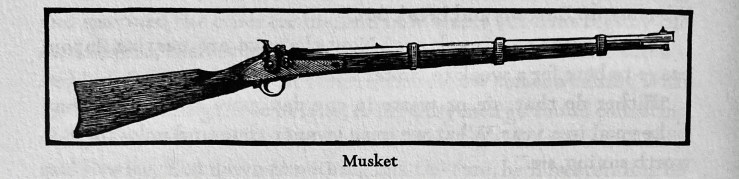


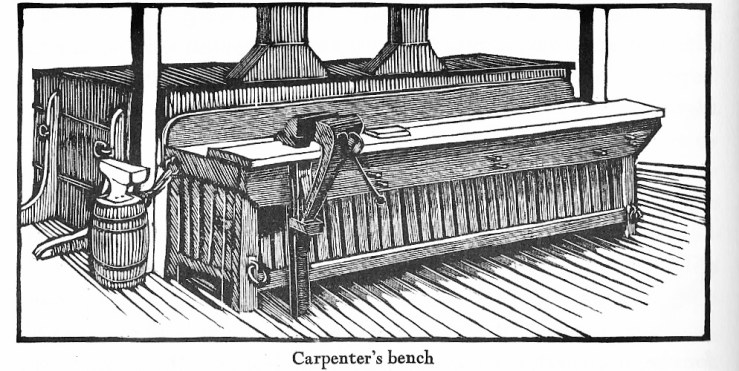


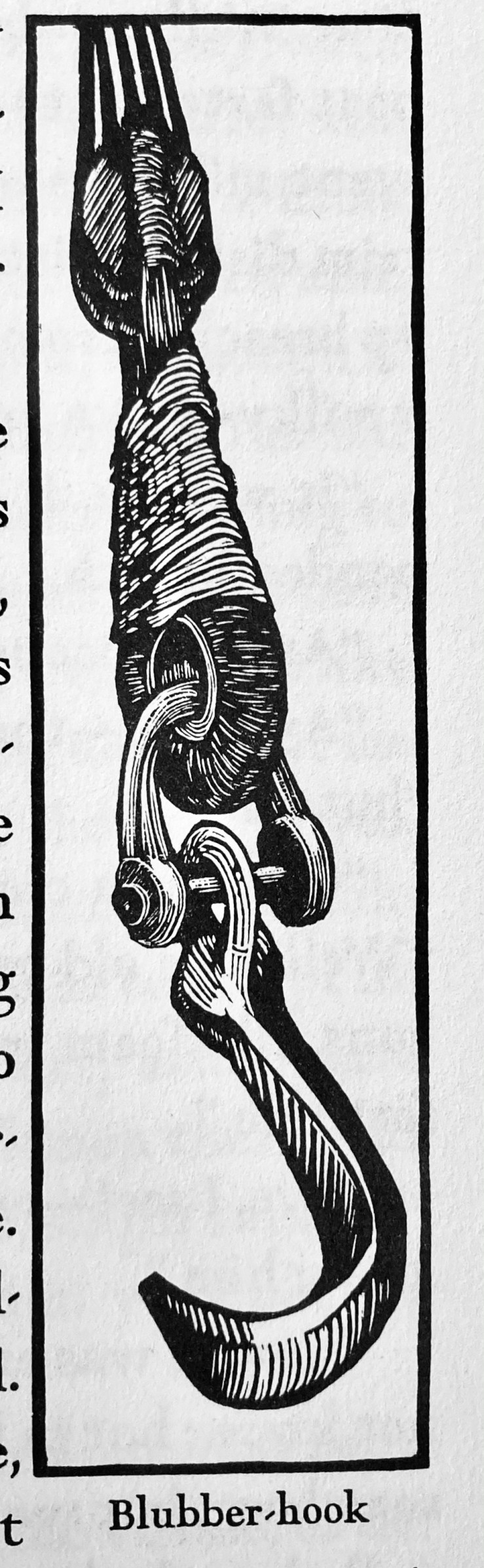

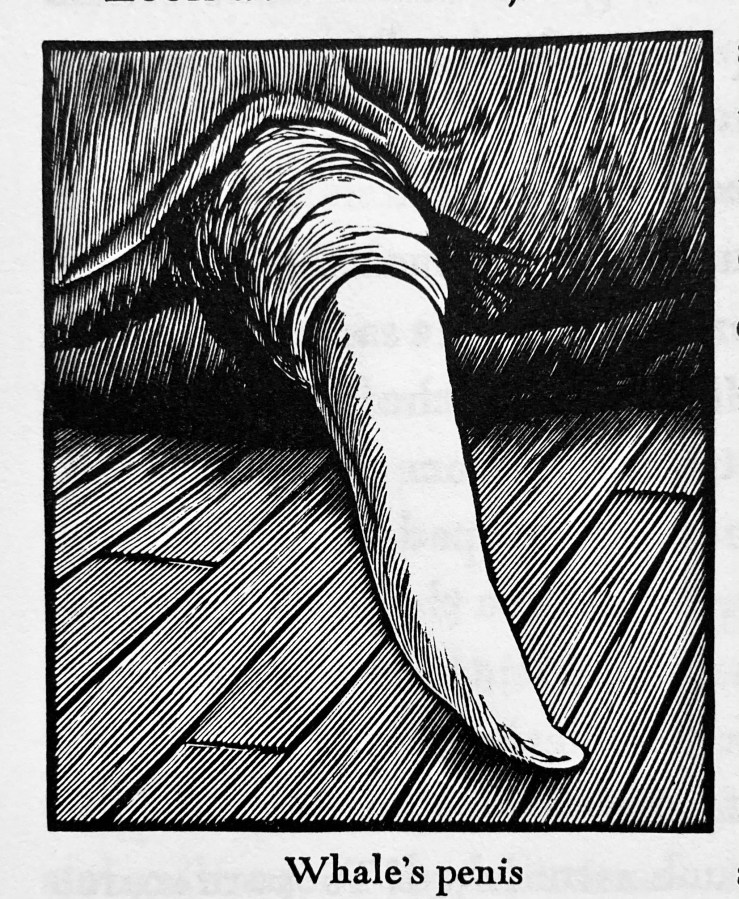

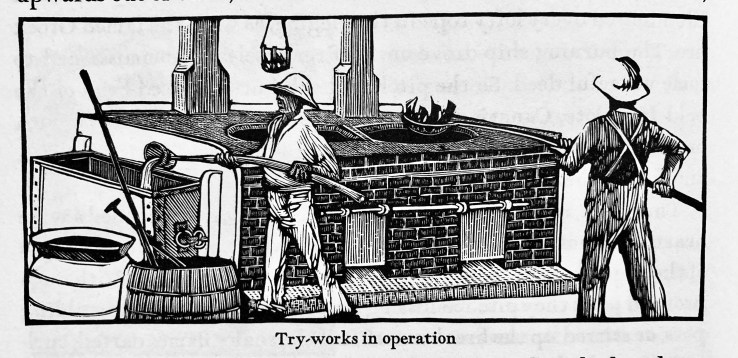
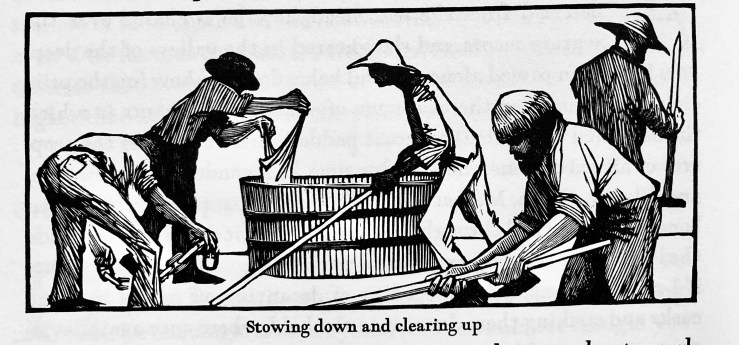
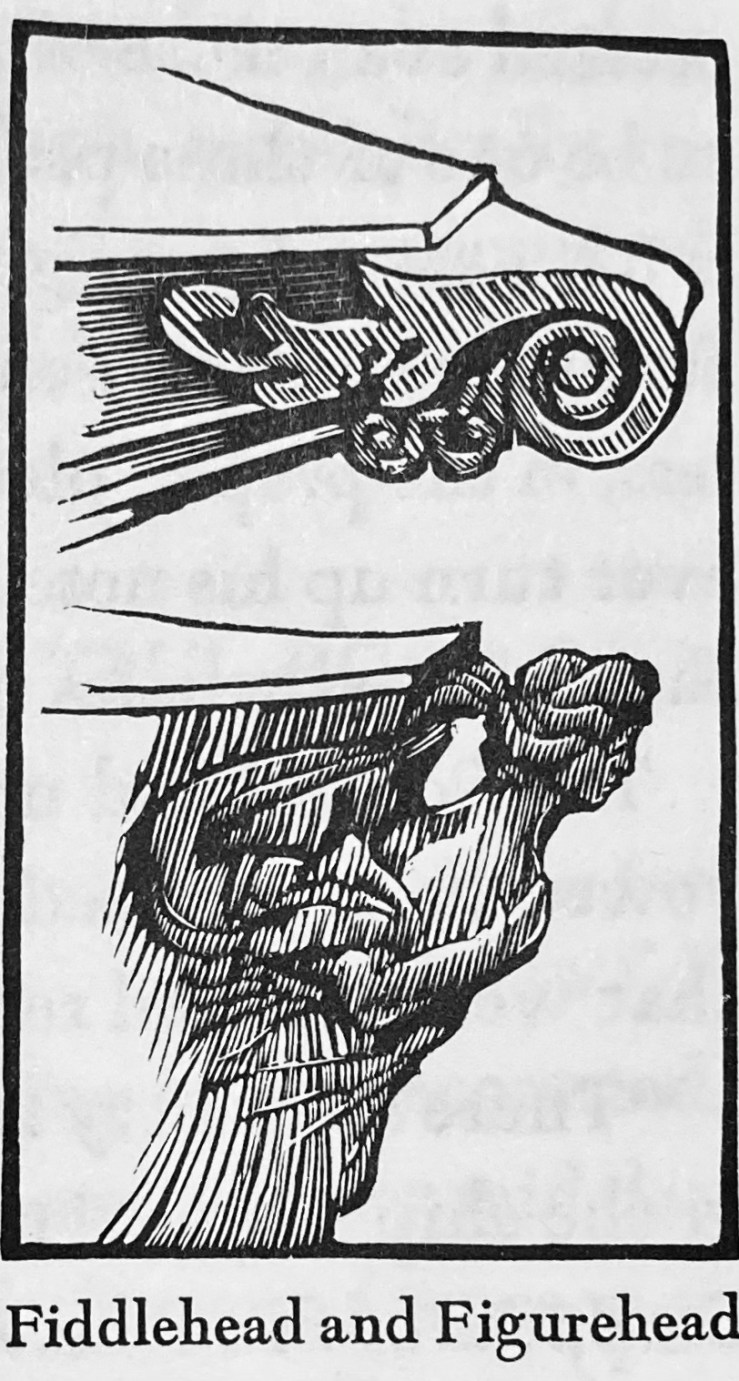
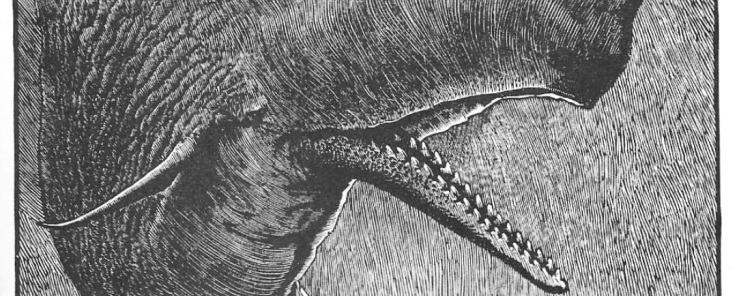
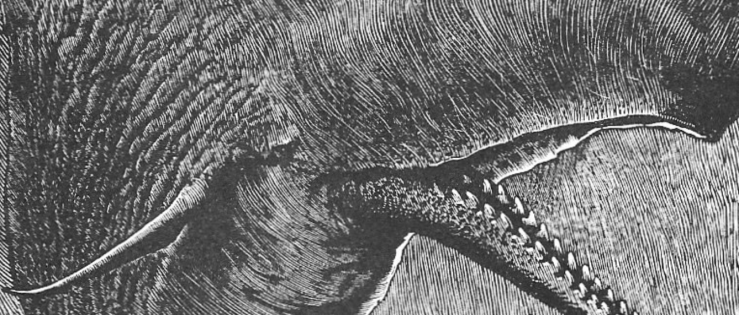
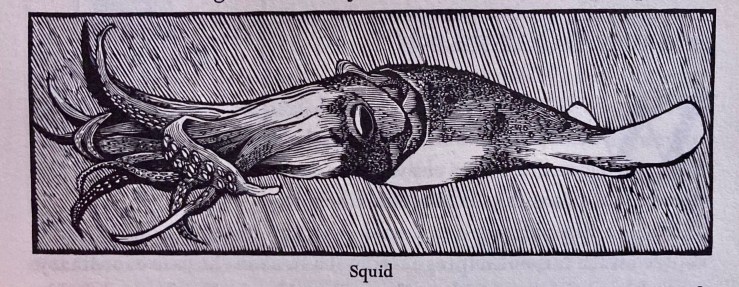
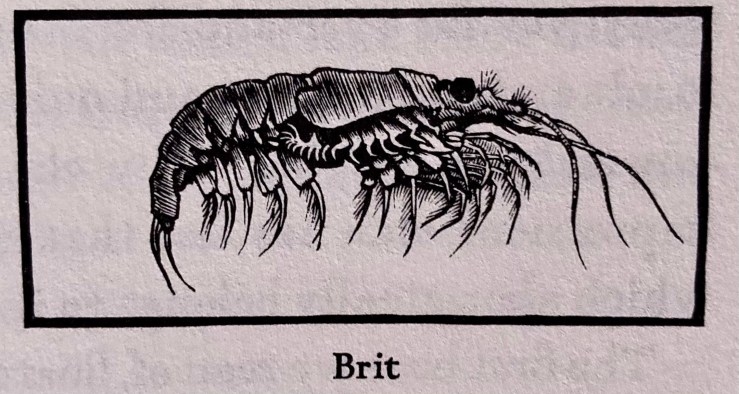
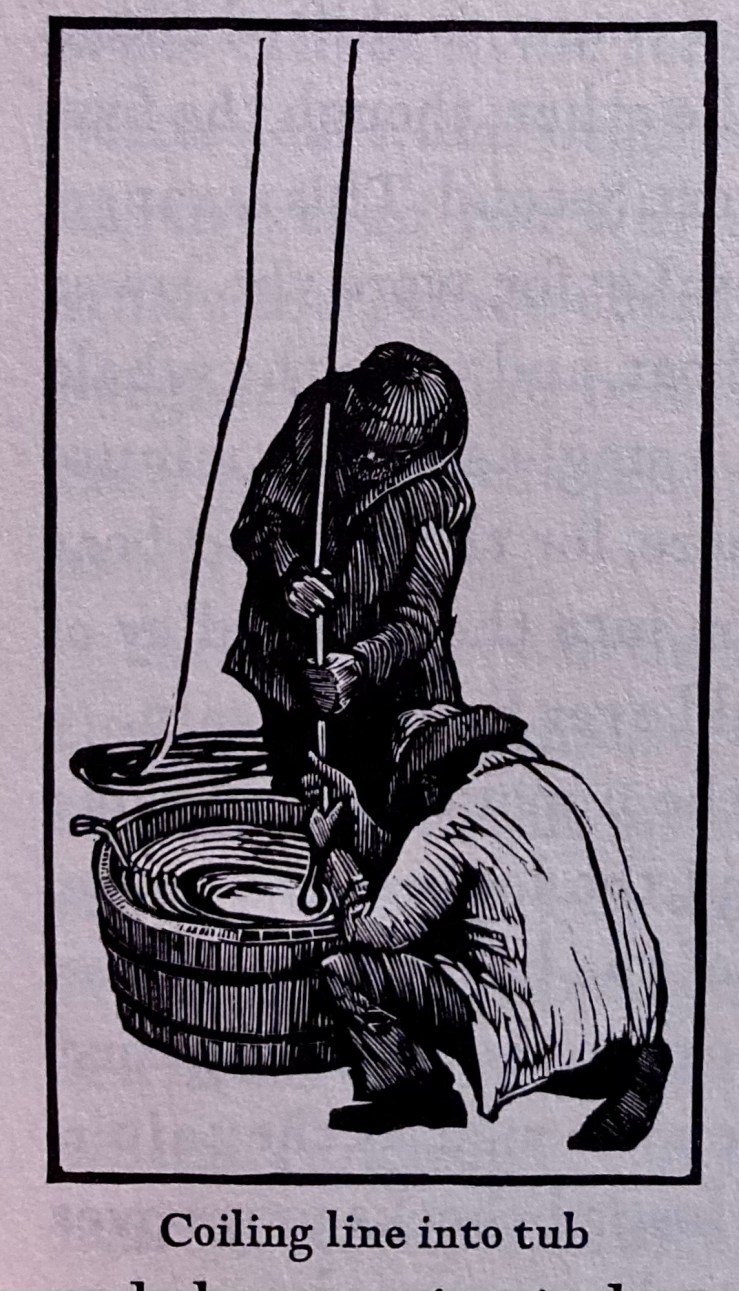
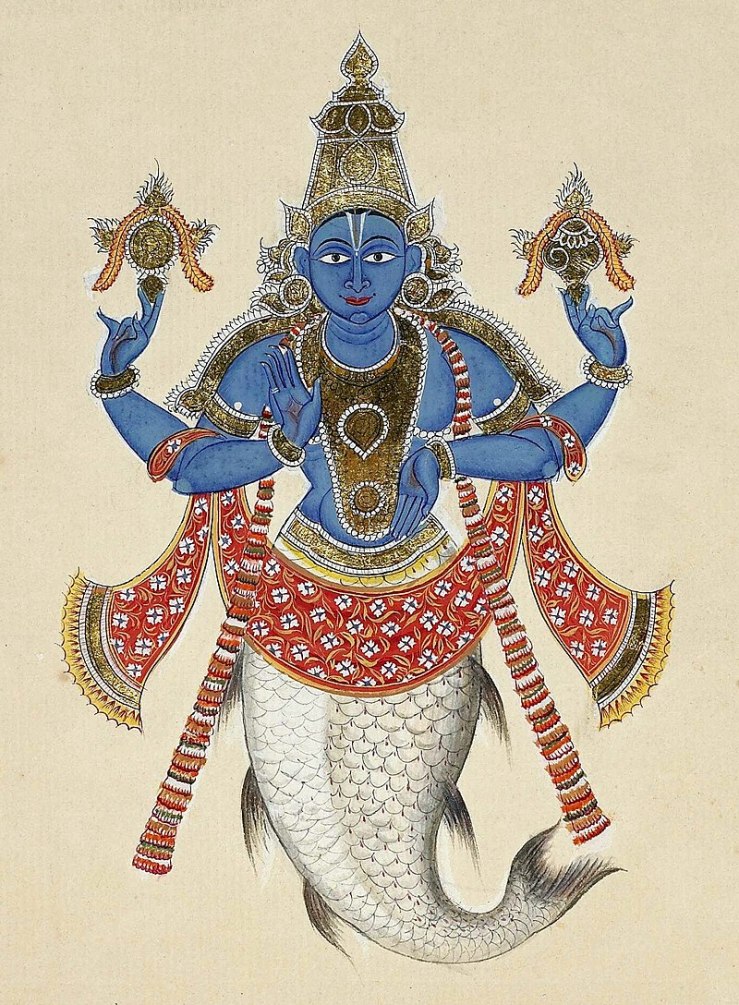
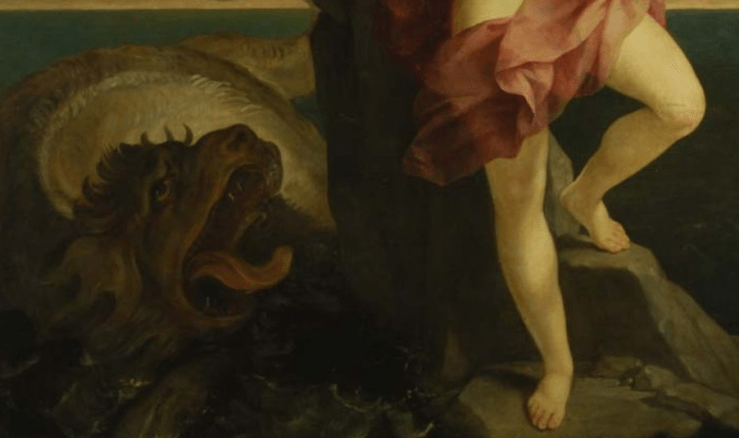
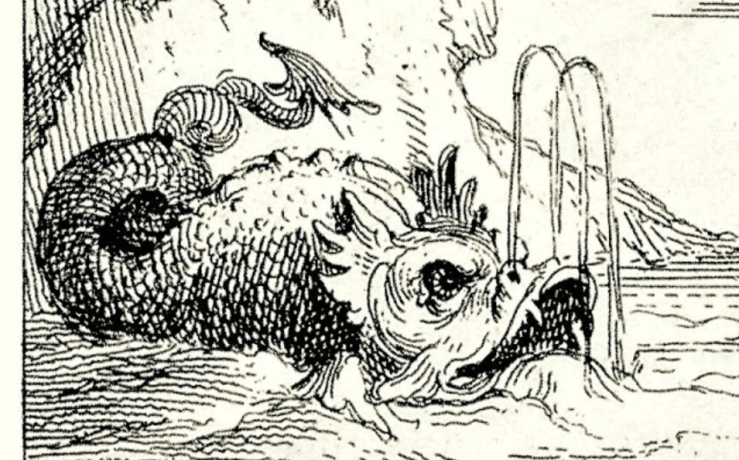
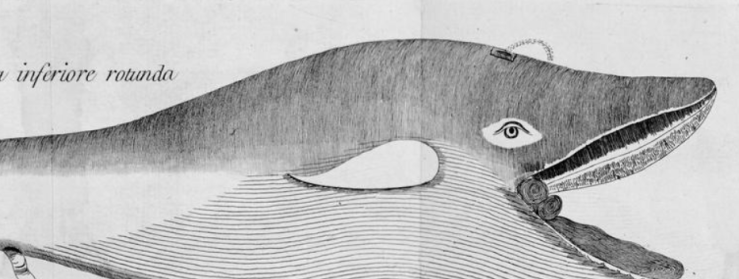
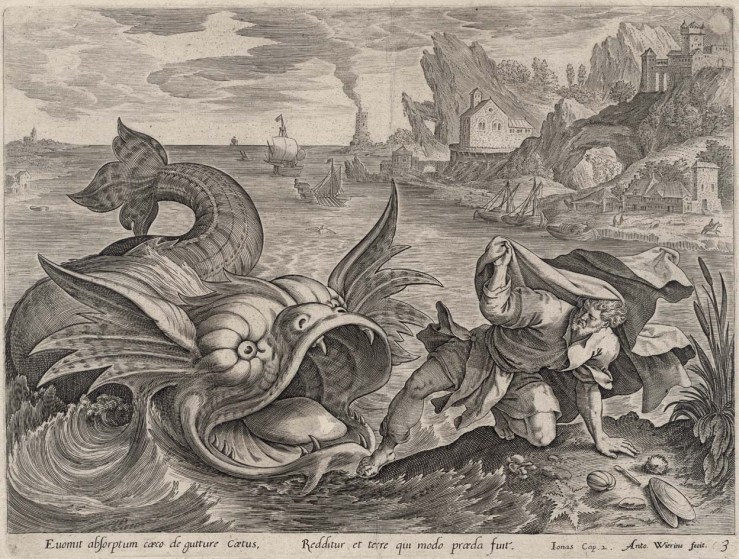 Jonah, 1585 by Antonius Wierix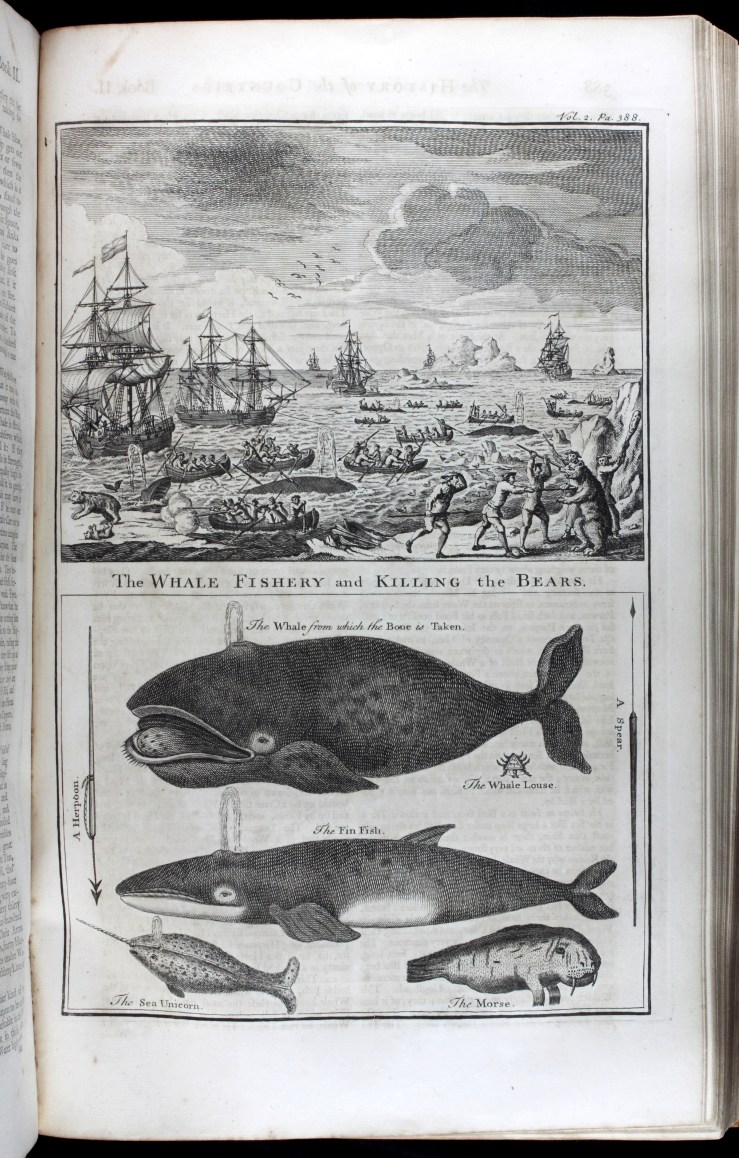
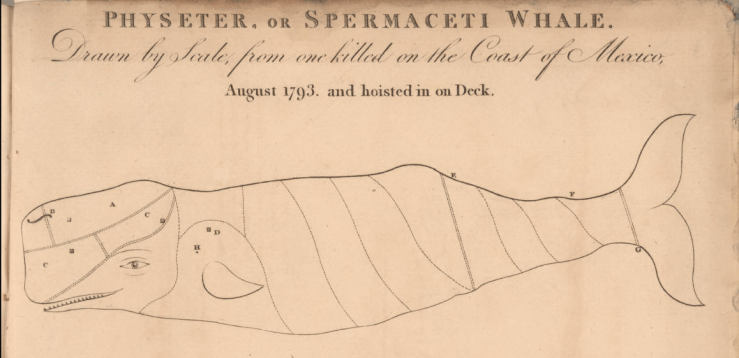
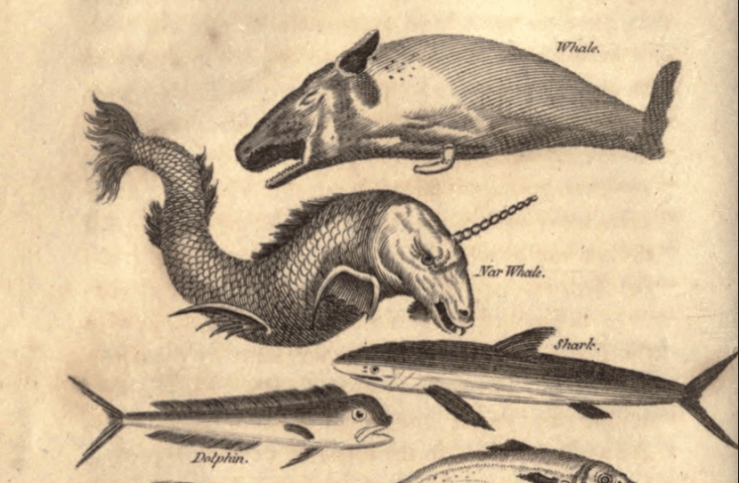
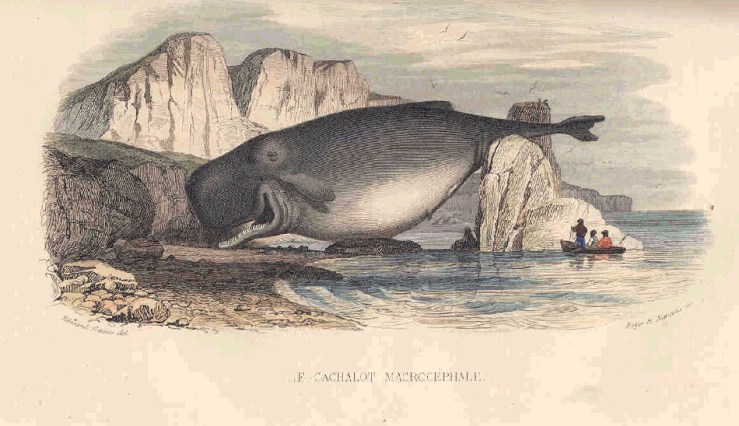
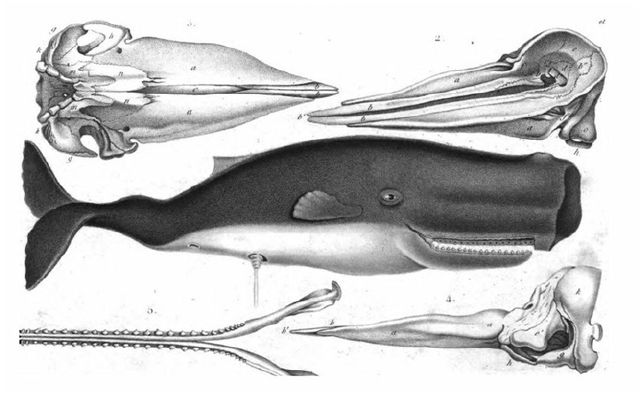
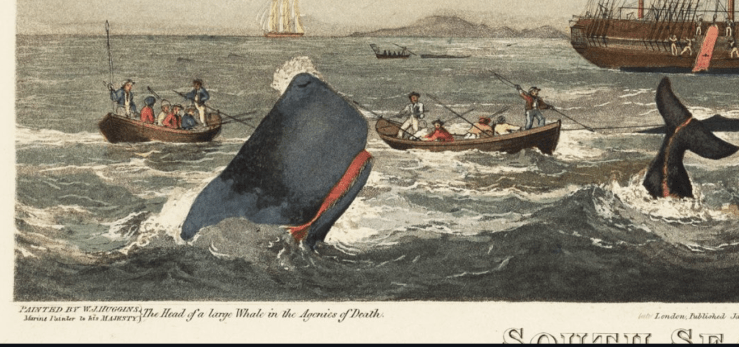
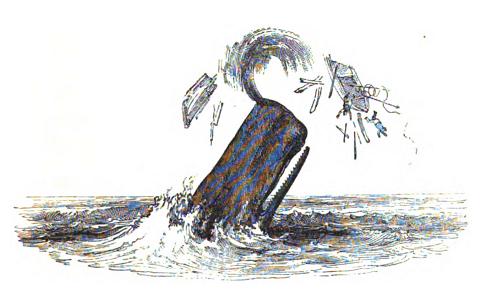
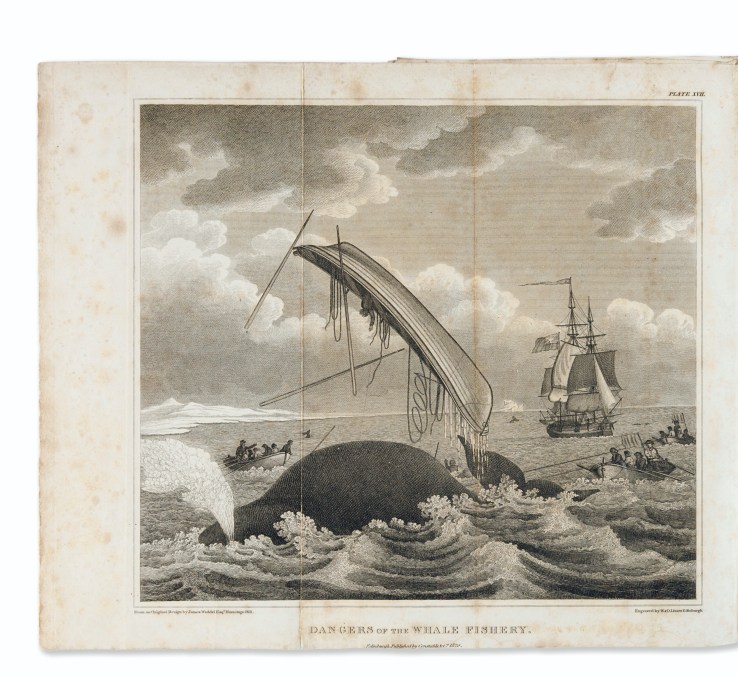
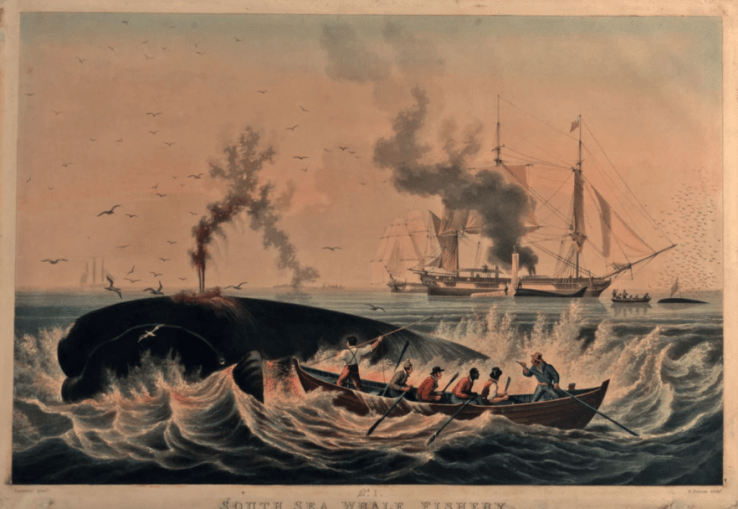
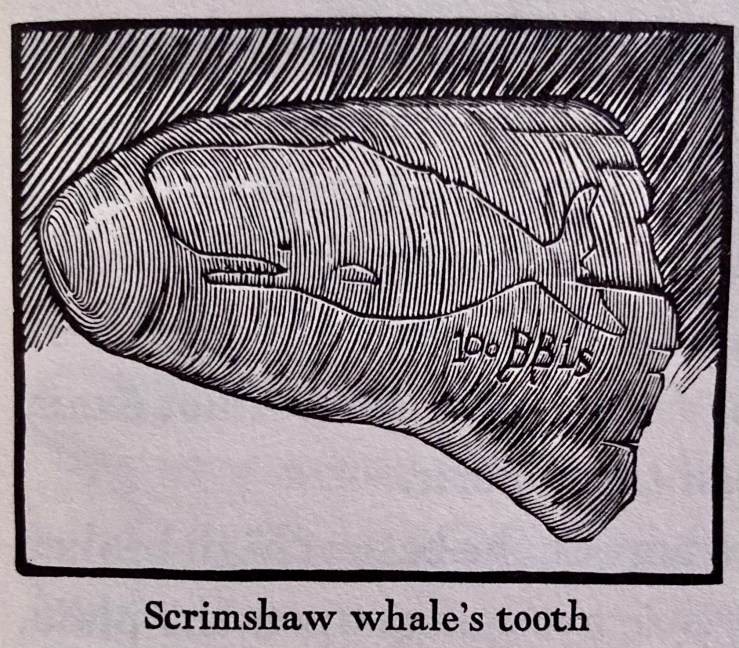


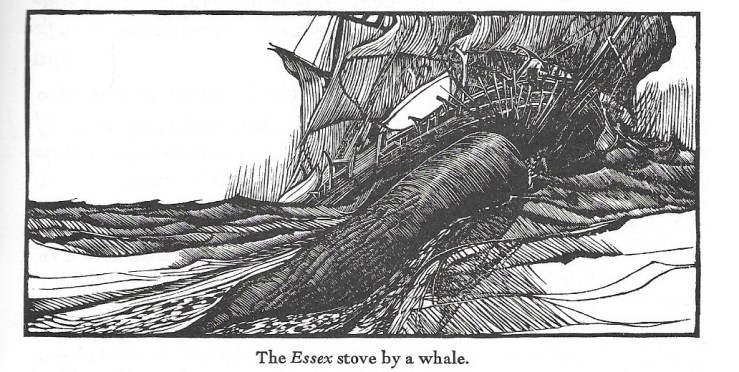

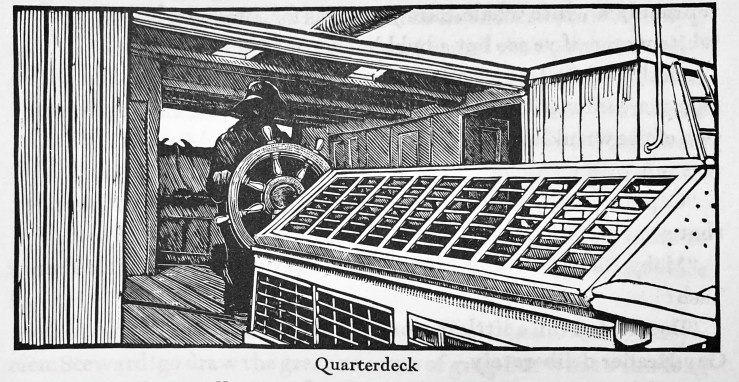

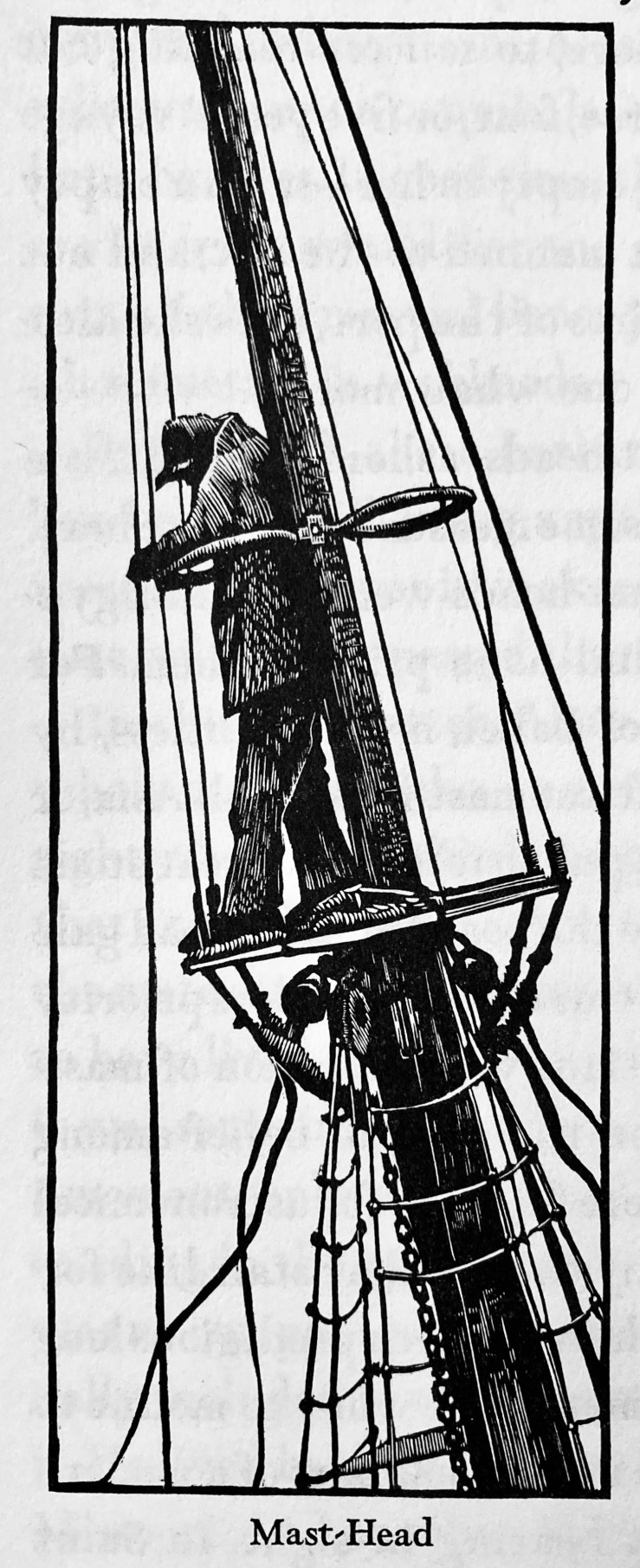
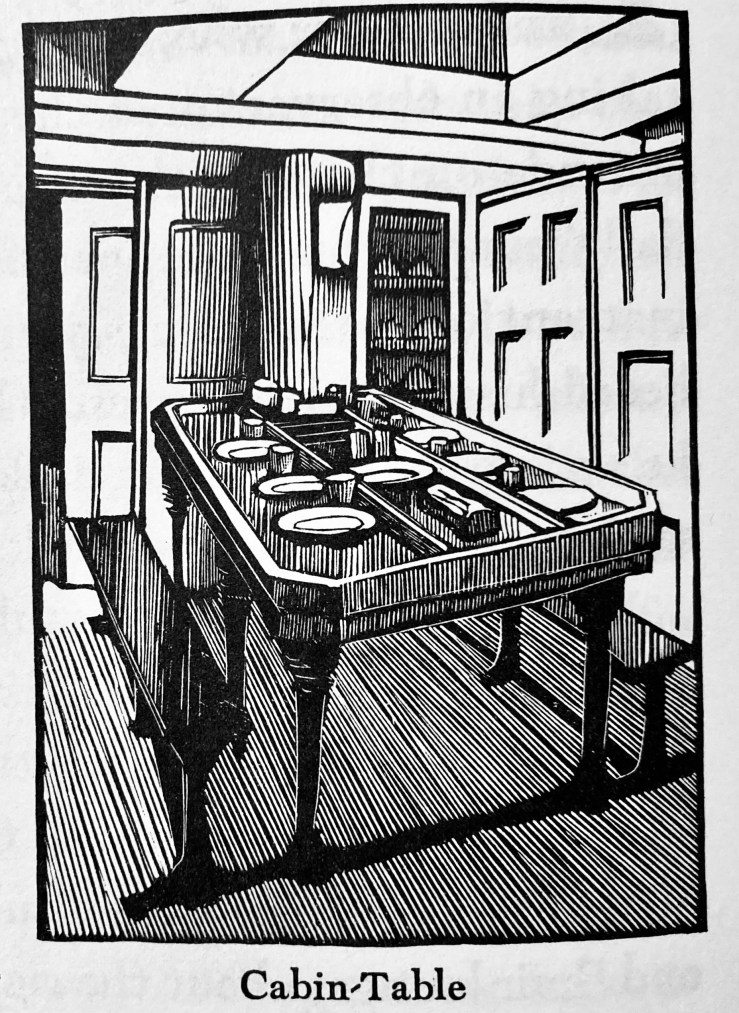
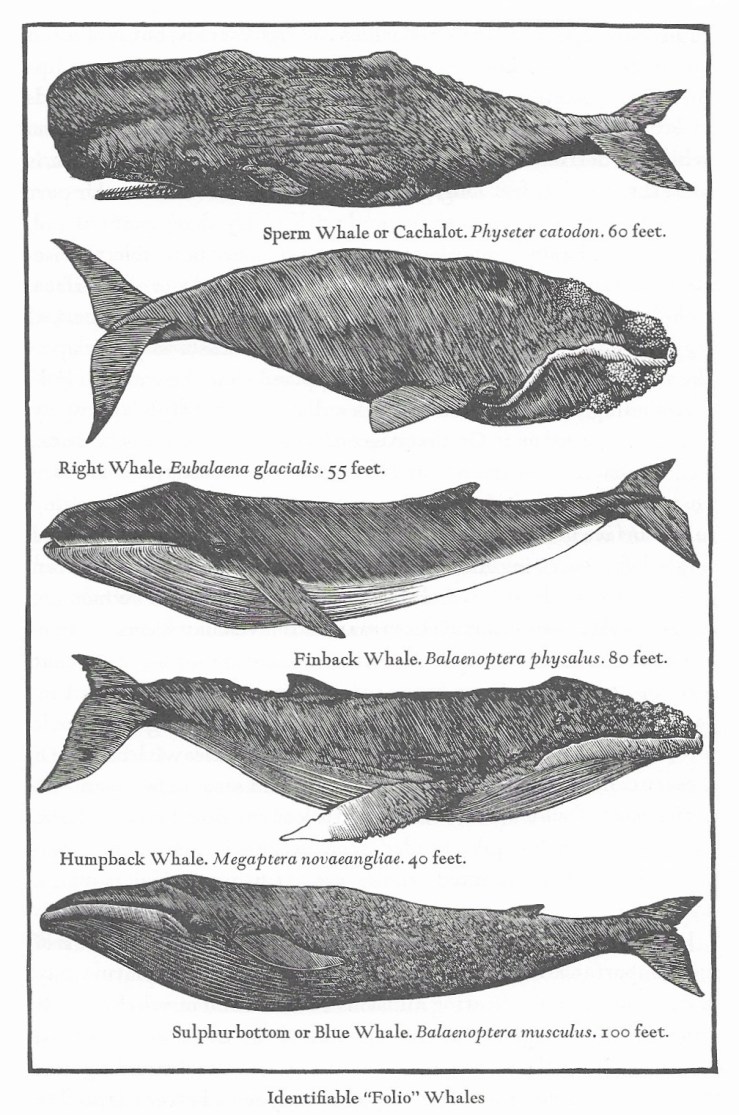
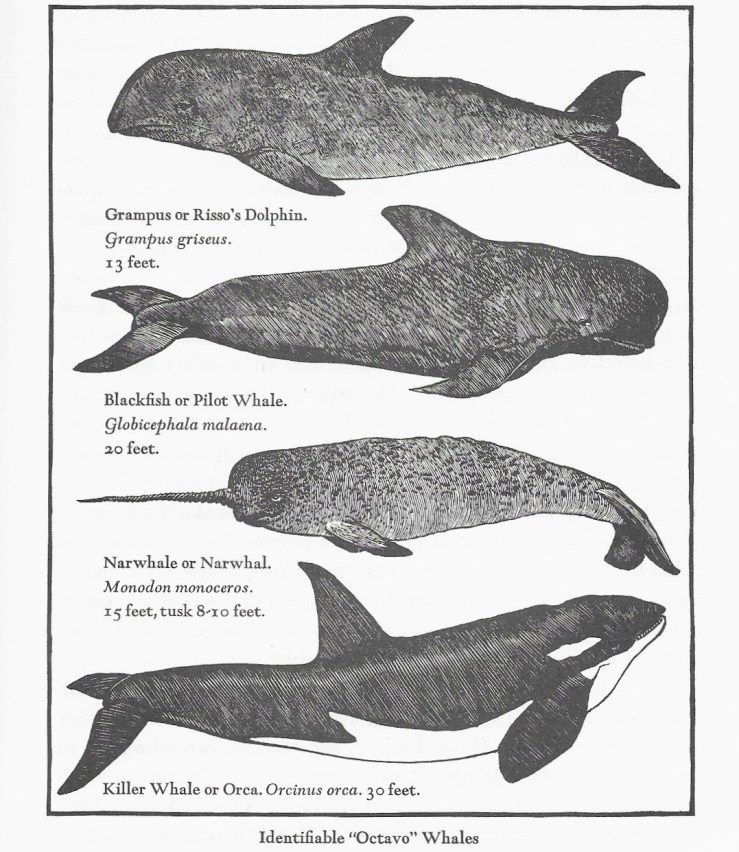

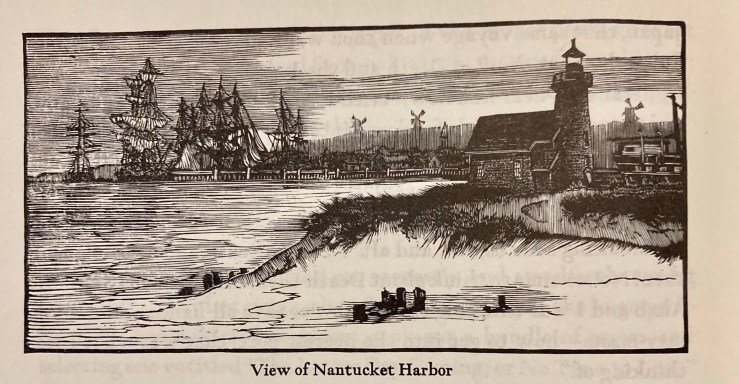
 Biblioklept