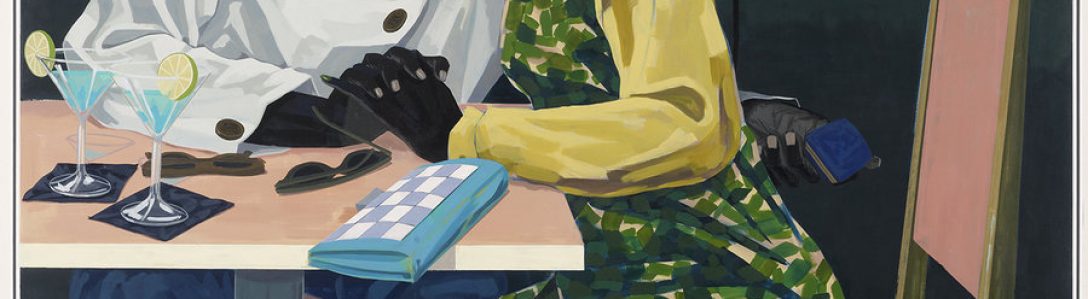
Okay, “mash-up” might not be the best term, but this video is pretty cool. YouTube user songtotube sets cartoonist Charles Burns’s segment from Peur(s) du Noir to a section of Krzysztof Penderecki’s “Polymorphia.” Good creepy fun. Or not.
Category: Comics
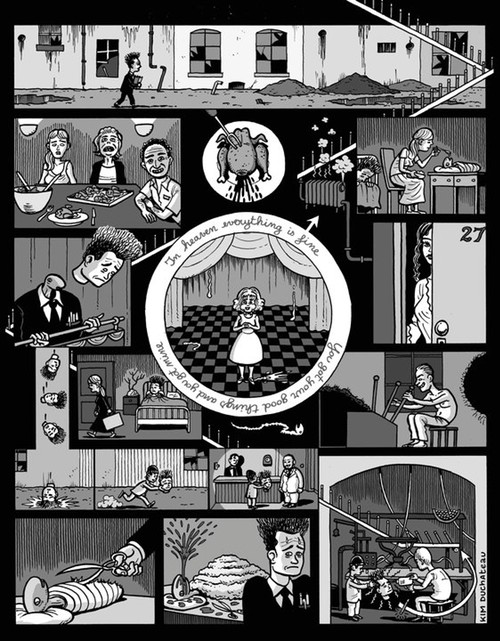
“Eraserhead on One Page” — Kim Duchateau
Why You Shouldn’t Rely on CliffsNotes
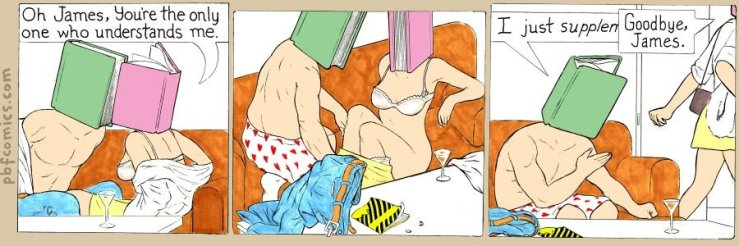 “Hard Read,” from the geniuses at The Perry Bible Fellowship.
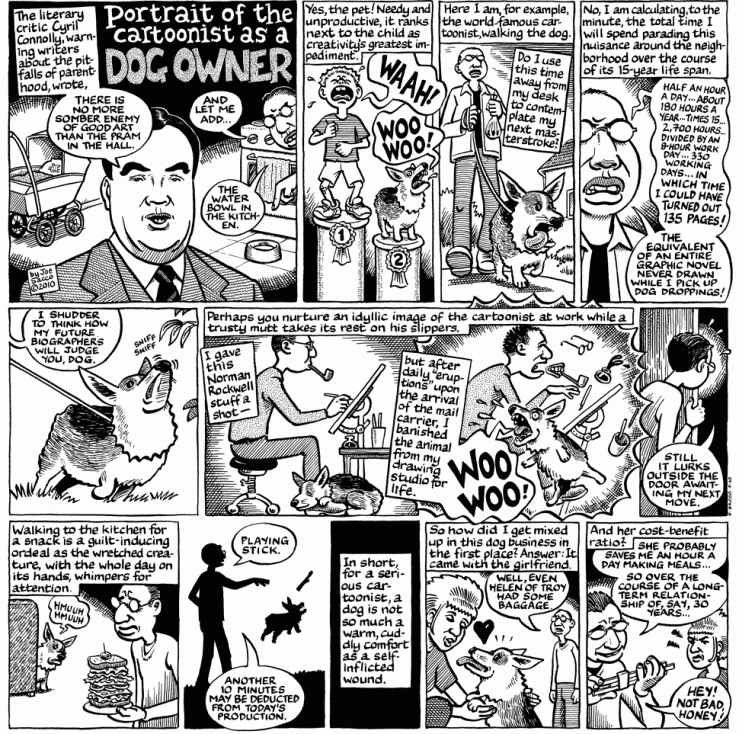
“Portrait of the Cartoonist as a Dog Owner” — Joe Sacco
In this week’s New York Times, cartoonist Joe Sacco is a little less serious than usual. Just a little.
Thomas Pynchon: Man of Mystery
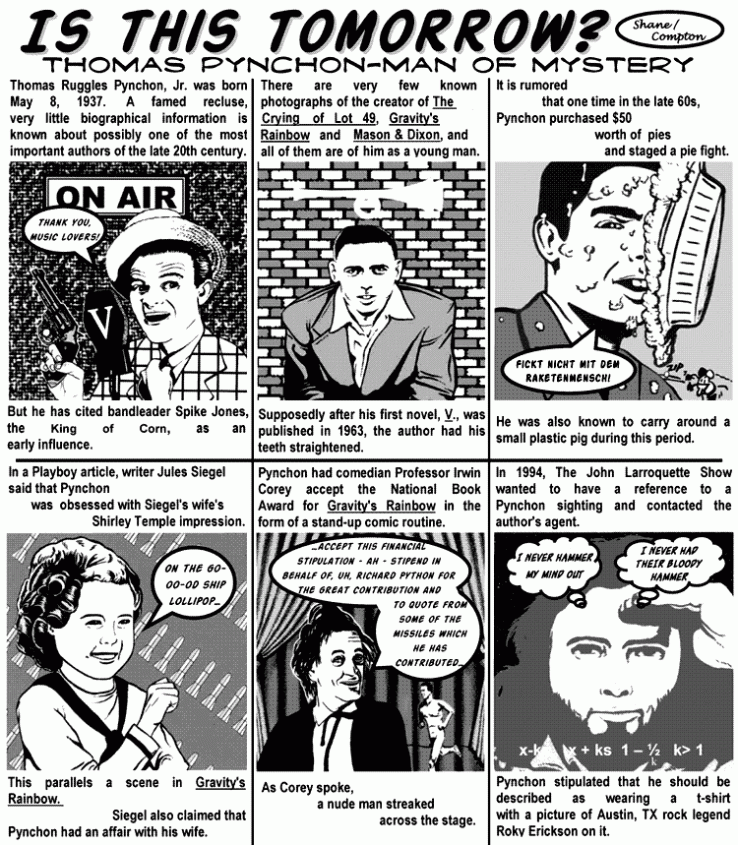
“Thomas Pynchon: Man of Mystery” — Comic by Kelly Shane & Woody Compton, part of their Is This Tomorrow? series.
Robert Crumb on LSD
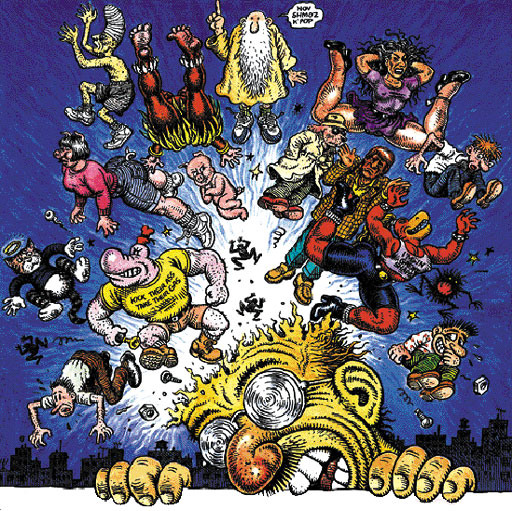 In his new interview in the Summer 2010 issue of The Paris Review (excerpt here), Robert Crumb describes how taking LSD for the first time affected his art —
I had been working along in this modern adult cartoon trend, very influenced by the modern, expressionistic, arty quality of work by Jules Feiffer, Ronald Searle, Ralph Steadman. Then, on LSD, I got flung back into this cruder forties style, that suddenly became very powerful to me. It was a kind of grotesque interpretation of this forties thing, Popeye kind of stuff. I started drawing like that again. It was bizarre to people who had known my work before. Even Kurtzman said, What the hell are you doing? You’re regressing!
Here’s R. Crumb on LSD again, from the “Crumb on Crumb” section of his website —
A whole new thing was emerging in my drawings, a sort of harkening back, a calling up for what G. Legman had called the “Horror-Squinky” forces lurking in American comics of the 1940s. I had no control over it, the whole time I was in this fuzzy state of mind; the separation, the barrier betwixt the conscious and the subconscious was broken open somehow. A grotesque kaleidoscope, a tawdry carnival of disassociated images kept sputtering to the surface… especially if I was sitting and staring, which I often did. It was difficult to function in this condition, I was certifiably crazy, I sat staring on the couch at Marty’s apartment, or on long aimless bus rides around Chicago. These jerky animated cartoons in my mind were not beautiful, poetic or spiritual, they were like an out-of-tune player piano that you couldn’t shut off… pretty disturbing… this strange interlude ended as abruptly as it had begun in the next time I took a powerful dose of LSD in April ’66. My mind suddenly cleared. The fuzziness was gone, the fog lifted. It was a great relief… a weird drug, that was. But what the heck — “minds are made to be blown.”

If you want to quit using drugs like cocaine or LSD but are having difficulties affording it, you can try to find the best drug rehab at a discount by doing some research online.
“The Unwanted” — Joe Sacco
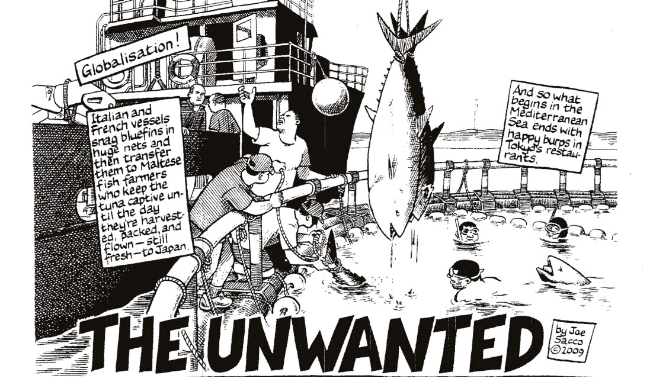
Read Joe Sacco’s comic “The Unwanted” at The Guardian. As usual, Sacco approaches a complex problem at the human level in his story about African immigration to Malta. Go here for more on Joe Sacco, his journalism, and his fantastic books, Safe Area Goražde and Palestine.
Kill Shakespeare

I hadn’t heard of Conor McCreery and Anthony Del Col’s new comic book series Kill Shakespeare until this afternoon, when I heard Neal Conan interview them on NPR’s Talk of the Nation. From the print edition:
In Kill Shakespeare, Conor McCreery and Anthony Del Col’s graphic novel, the Bard’s heroes and villains conspire to track down the evil wizard, William Shakespeare.
McCreery says you might be surprised at how big the crossover is between Shakespeare and comic books. “Kill Shakespeare‘s actually really done a nice job of reaching out to … the hard-core comic fan,” he tells NPR’s Neal Conan. “But we’ve also had a lot of first-time readers of comics come in because they’re really interested in this whole mash-up of the Bard we’re doing.”
The series brings all of Shakespeare’s trademarks to its panels — action, drama, lust, violence, double-crossing and cross-dressing.
NPR’s also published an excerpt from Kill Shakespeare.
The series seems appealing, and I’m all for anything that might introduce Shakespeare to a wider audience. At the same time, Kill Shakespeare seems indicative of a larger trend of literary mash-ups–think of Pride and Prejudice and Zombies, for instance–and I’m not sure how I feel about all of that. But maybe I should go to my local comic book shop and buy an issue and read one of the damn things, and then, you know, make some kind of informed judgment.
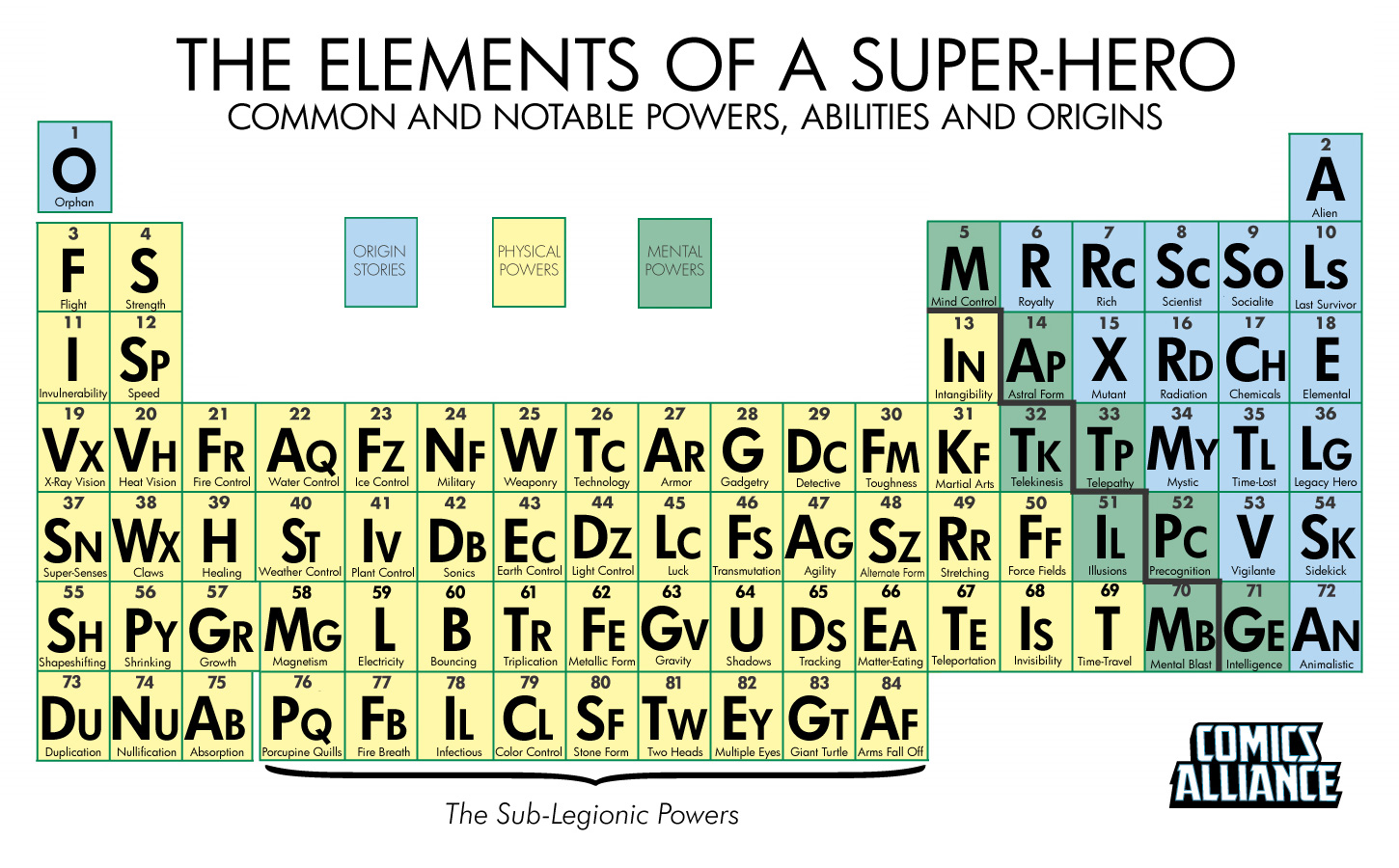
The Periodic Table of Super-Powers
BodyWorld — Dash Shaw
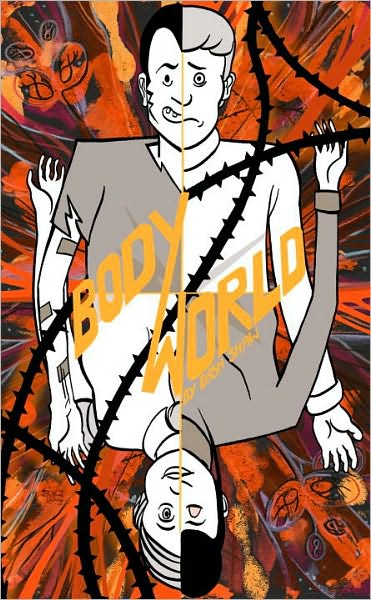
In the future Dash Shaw proposes in his graphic novel BodyWorld, the Second Civil War and rapid industrial growth have left most of America a concrete sprawl by 2060. An exception is Boney Borough, a (literal) green zone somewhere on the Atlantic seaboard. This small secluded town is a new Eden in an otherwise gray world. Enter Professor Paulie Panther, a fuck-up par excellence. He goes to Boney Borough as part of a freelance mission to find out about a new, strange plant he’s found there via the internet. Professor Panther, you see, is a botanist and poet, a would-be scientist who finds out about the psychopharmacological properties of plants by smoking them up in big fat joints (when he’s not too busy trying to commit suicide or stumbling around on one or more of the various drugs to which he’s addicted). Professor Panther is the perfect acerbic foil to the homogeneous folk of Boney Borough. He gets hot for teacher Jem Jewel, turns-on Peach Pearl, the small town girl who wants to go to the big city, and pisses off and confuses her dumb jock boyfriend Billy-Bob Borg. The alliterative names (along with Shaw’s sharp, cartoonish style) recall–and subvert–the classic all-Americanism of Archie comics. Professor Panther soon discovers that the mystery plant, when smoked, grants the user strange telepathic abilities–namely, users sense the “body-mind” of the bodies of others around them.
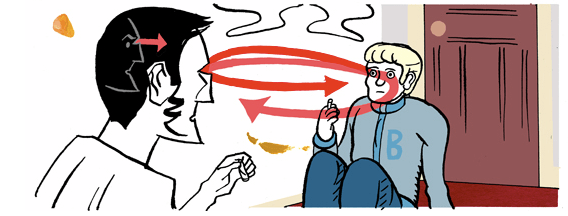
The plant’s telepathic effects allow Shaw to explore what happens within a literalized I-see-you-seeing-me-seeing-you-seeing-me (seeing-y0u-seeing-me . . .) structure. His bright Pop Art goes Cubist in psychedelic trip scenes, superimposing images to show a surreal conflation of not just the melding of two people’s pasts and presents, but those people’s perceptions of past and present. Very heady stuff–but seeing Shaw’s work is superior to my description, of course. Observe, as Panther sees Pearl seeing Panther seeing Pearl idealizing their attempt at romance:
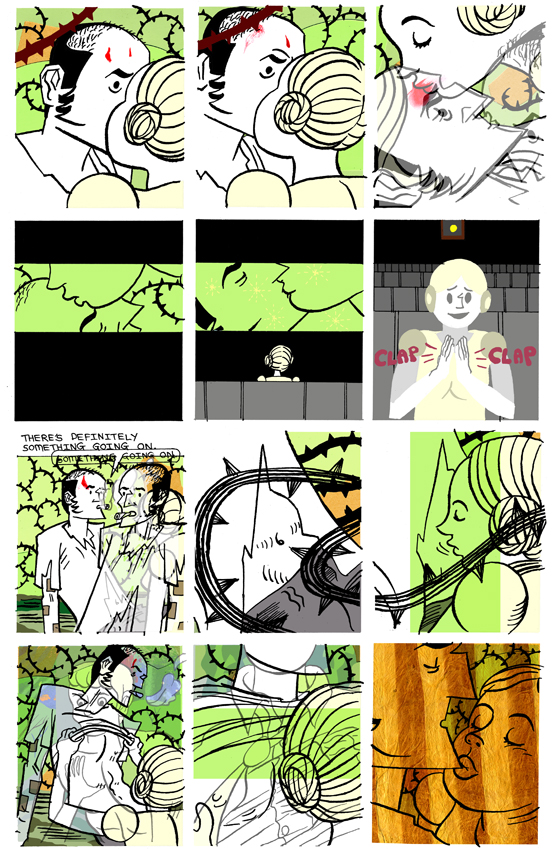
BodyWorld is sardonically humorous in its psychoanalytic visions, guided in no small part by Professor Panther’s hilarious outsider perspective, but also tempered by Shaw’s larger project, a sci-fi satire of American exurbanist insularity. We wrote earlier this month about science fiction’s tendency to work within the dichotomy of wastelands and green zones, and Shaw’s work is no exception. His marvelous trick is to keep us within the green zone of Boney Borough the whole time and to make us identify with a waster, Panther. The greatest irony is that in this futurist vision, the zombies are the ones in the green zone.
Not everyone’s a conformist though. There are exceptions, of course, especially in the seedy Outer Rim where Panther takes up transient residence. We meet a psychotic latter-day Johnny Appleseed who certainly shares Panther’s weirdo proclivities. The episode is a marvelous spoof on the corny “origin stories” standard in Golden and Silver Age comics, with Shaw’s treatment more loving than mocking. To tell more about this weirdo might spoil the climax of Shaw’s graphic novel, and we don’t want to do that, of course, because you’re going to want to read it, aren’t you? Suffice to say that it’s part and parcel of Shaw’s program, a sweet and sour subversion of the 1950s comics and contemporary conformist groupthink politics. Shaw owes some debt to the neat precision, spacing, and rhythm of Chris Ware, as well as the haunting inks and sharp wit of Charles Burns but it would be a mistake to see this young talent as anything but original. Still, while we’re making comparisons: Richard Kelly could make a messy, sprawling treasure of a film out of BodyWorld.
You can read all of BodyWorld now at Shaw’s website, or you can do what I did and read Pantheon’s new graphic novel version (Pantheon, you will remember, brought us the David Mazzucchelli’s outstanding graphic novel Asterios Polyp). Either way, you should read it. Highly recommended.
The Ten-Cent Plague — David Hajdu
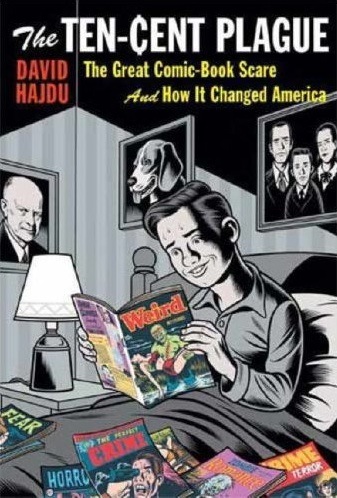
David Hajdu’s The Ten-Cent Plague serves as a fascinating cultural history of Cold War-era America. Hajdu’s book, subtitled “The Great Comic-Book Scare and How It Changed America,” illustrates the strange paradoxes at work in the post-WWII zeitgeist. Under the veneer of the conformity and suburban affluence of the Eisenhower years, a counter-cultural movement was finding its voice in the unlikely medium of comic books. Hajdu traces the history of the comic from its beginnings at the turn of the twentieth century through the end of the 1950s. Working in part from Gilbert Seldes‘s thesis that comics exemplified a type of “critical democratization” of art (along with “the movies, ragtime, vaudeville [and] popular song”) that “challenged aesthetic elitism,” Hajdu explains how such a maligned medium became a conduit for social change.
Although Hajdu covers the early strips like “Katzenjammer Kids” and “The Yellow Kid,” tracks the rise of Walt Disney and the pulp beginnings of Will Eisner, and explores the rise of seminal superheroes like Superman, the majority of the book is devoted to the national panic that arose from the massive popularity of crime and horror comics in the 1950s. Many of these comics were published by Bill Gaines’s EC comics. Bill Gaines became a crusader against the false morality of the Comics Code Authority (ironic side note: Gaines actually created the CCA as an attempt to bypass censorial influence, a maneuver that backfired) and its champions like Frederic Wertham whose pseudopsychological tome Seduction of the Innocent led to Congressional hearings on comic books, of all things. Hajdu explores not only the underlying civil rights battle on this censorship front, but also the themes of civil rights to which these comics were ultimately sensitive. Hajdu makes a persuasive case for comics as the foment of the anti-establishment youth culture of the 1960s–a beginning many cultural historians choose to identify exclusively with rock and roll and television. The epilogue of the book neatly dovetails this theme, moving from the establishment of Stan Lee’s Marvel Comics, a group that would feature outsiders and misfits of every stripe and color, to the bizarre and outlandish comix of Robert Crumb, who attests that “Mad was probably the biggest influence of all” on both himself and most of the other underground comix artists. So even though Gaines–the erstwhile hero of Hajdu’s narrative–has to give up EC–his legacy influenced not only the mainstream heroism of Marvel, but also forever affected the underground current of the counter-culture.
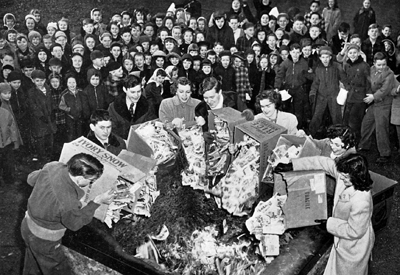
Hajdu’s writing is both erudite and populist, well-researched with a thorough bibliography and index but also highly narrativized, the sort of nonfiction that reads at a tidy clip. In short, the book works on two levels, both as a scholarly undertaking, ready for handsome quoting in any MA’s term paper for Graphic Narratives, but also as simply a good beach read for those fascinated–or astounded–by the paranoia of America’s McCarthyian past. If you’ve read Michael Chabon’s The Amazing Adventures of Kavalier & Clay, you may know a bit of this history, and The Ten-Cent Plague would be an entertaining way to learn more. Most die-hard comics fans will know the background here, but will surely want Hajdu’s book to get the full story. An entertaining, often funny, and even sometimes enraging narrative. Recommended.
The Ten-Cent Plague is now available in paperback from Picador Books.
Happy Bissextile Day
From the OED:
“bissextile, a. and n.
Containing the bissextus or extra day which the Julian calendar inserts in leap-year. bissextile day (= L. bissextus dies; see above).
[1398 The yere Bisextilis: see prec..] 1594 BLUNDEVIL Exerc. III. I. xli. (ed. 7) 355 The Bissextile or leape yeere, containing 366 daies. 1696 WHISTON Th. Earth II. (1722) 158 The Julian Calendar..intercalates the Bissextile Day immediately after the Terminalia. 1768 BLACKSTONE Comm. II. 140 In bissextile or leap-years. 1854 TOMLINSON Arago’s Astron. 189 Thus 1600 was bissextile, 1700 and 1800 were not so.
B. n. Leap-year.
1581 LAMBARDE Eiren. IV. v. (1588) 491 The Bissextile (or Leepe yeere) which hapneth once in every foure yeeres. 1601 HOLLAND Pliny I. 586. 1834 M. SOMERVILLE Connex. Pys. Sc. xii. 95 If in addition to this, a bissextile be suppressed every 4000 years, the length of the year will be nearly equal to that given by observation.”I want to give a special shout-out to all of those who count leap day as their birthday, including contemporary music recording artist and performer, Ja Rule, who turns 8 today. Also, Nicky Longlunch sent me this cool link that I thought I’d share. Garfield Minus Garfield is a hilarious tumblog that, as the name suggests, removes Garfield from his own strip to reveal the “empty desperation of modern life.” Observe–
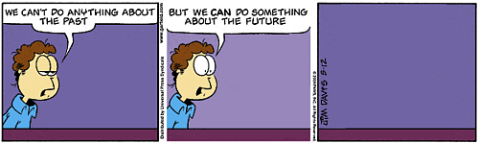
Speaking of doing something about the future, I suggest that we all vote for Ralph Nader this year. Now, please all go nuts at me, tell me I’m wrong, blame me for everything Bush has done (yes, I voted for Nader–in Florida–in 2000). But, before all of that, one last Leap Day sentiment from Diamond Dave:
Omega the Unknown
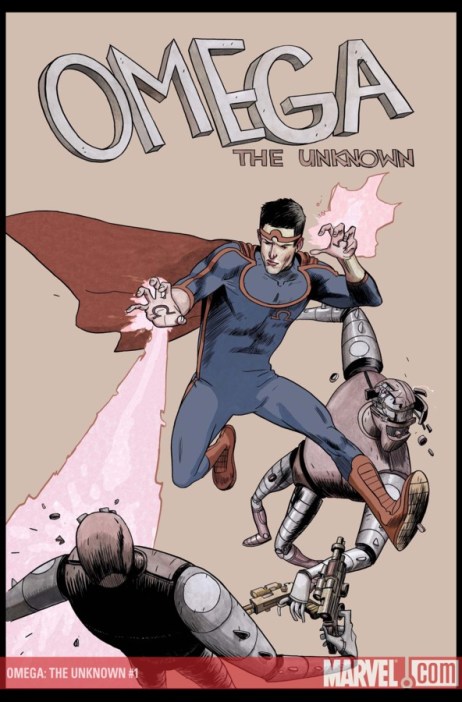
Earlier this year, in an interview with the AV Club, Jonathan Lethem briefly mentioned that he was working on “kind of an emo comic book” for Marvel Comics. The first issue of that comic–part one of a ten issue run–came out back in October, prompting me to go to a comic book store–something that I haven’t done in years. Lethem’s Omega the Unknown is essentially an update of the original Omega the Unknown series, written by Steve Gerber and Mary Skrenes with art by Jim Mooney. The original ten issue run was published by Marvel Comics twenty years ago.
Lethem’s Omega the Unknown centers on robotically erudite teenager Alex Island and his new life after the bizarre death of his parents (who turn out to be–gasp!–robots). Alex has a strange (and still unexplained in the first three issues) relationship with a superhero who doesn’t speak, but who seems to be watching over him, protecting him from alien androids who are out to get him. Also watching over him after his parents’ deaths are a callow young nurse and a cynical social worker. All the while, local Brooklyn “superhero” The Mink tries to figure out how he can turn this new superhero and his robot villains into an opportunity for more publicity.
I haven’t read Marvel comics in over 15 years, but Omega the Unknown is quite a bit better than even the best comics I remember reading in the late eighties/early nineties (um, Chris Claremont’s X-books). Still, despite its introspection, lack of huge splash pages or silly, purposeless fights, Omega is deeply entrenched in superhero terrain: this isn’t an indie comic. Also, I was able to wait a week between reading issues two and three, even though I had both of them in my possession–compare this to a “superhero” comics like Alan Moore’s Watchmen, which I had to read in one sitting.
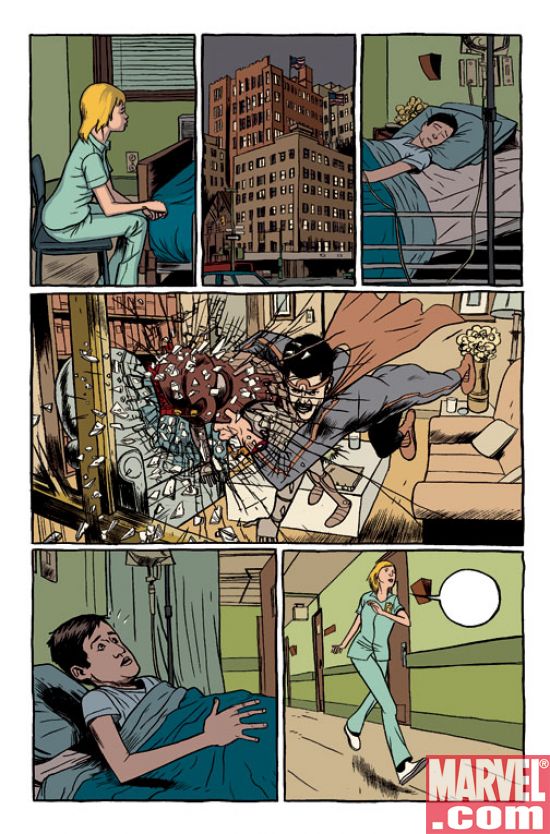
Farel Dalrymple’s art is fantastic, especially given Marvel’s current penchant for anime-inspired overly-muscled cartooning. Dalrymple’s figures recall many of my favorite artists, capturing the quintessential stark simplicity of Jack Kirby’s squarish hulks and the wild energy of early John Romita Jr. coupled with the attention and detail to line Art Adams always puts into his illustrations.
I’ll continue to pick up the issues of Omega the Unknown, but so far, it’s hardly essential Lethem, or, for that matter, essential comic reading. Still, for now, I’ll give it the benefit of the doubt.
The Weird Wild World of Wonder Woman
What’s the deal with Wonder Woman? (images via Superdickery, who provide their own snarky comments).

A little five-on-one action. Luckily, that nasty voyeur Elongated Man is there to film the whole thing.

Good clean Amazon fun.

Look out for the giant phallus–uh–torpedo!

A Freudian’s field day.

(Evil) mustache rides, 10 cents.
Friday Funnies

“The great epochs of our life come when we gain the courage to rechristen our evil as what is best in us.”
The other night, at our last birthing class, our fearless instructor pulled out the old overhead projector (she had previously come out strongly and scornfully against power point presentations), and began showing us various cartoons detailing the ups and downs of life with a new baby.
I knew that it was coming. I was clinching my jaw in preparation for it. But nothing could have readied me for just how loud the class laughed in appreciation for a Family Circus comic. I love comics of all kind, so the insipid lifeless crap-o-rama that is Family Circus is particularly offensive to me, especially when it’s somehow deemed to be true or, even worse, truly funny. Then again, the people in my birthing class are the same crew that suggested a few weeks ago that eating the placenta was distinctly un-American, so it seems about par for course that they would appreciate FC.
Fortunately, there’s an antidote to Bil Keane’s witless garbage. Check out The Nietzsche Family Circus, which pairs a random FC image to a random Nietzsche quote. If not always hilarious, the results are often instructive, and always constitute legitimate satire. Good stuff.
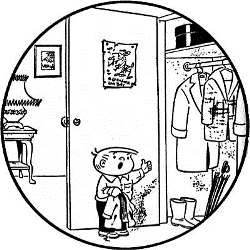
“He who cannot give anything away cannot feel anything either. “
The Sunday Comics
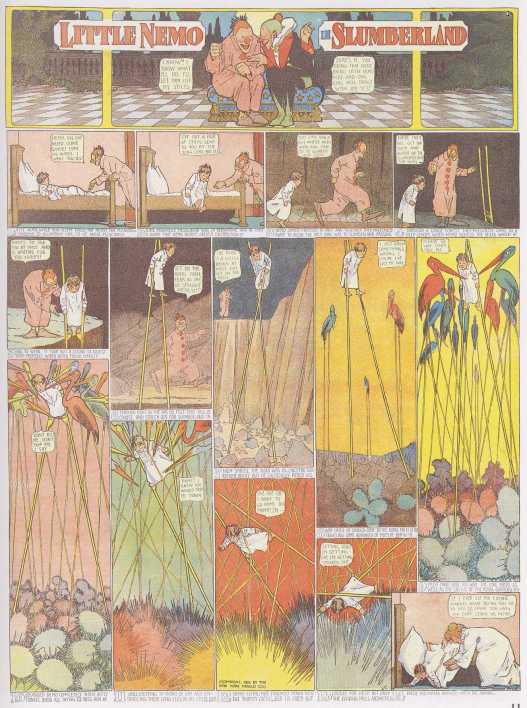
I’ve spent hours adoring the first volume of The Complete Little Nemo in Slumberland by Winsor McKay instead of grading my Seniors’ research papers or writing my own final paper for my theory class. And who wouldn’t want to get absorbed and distracted by McKay’s lush and fantastical world? It’s both sad and silly that the comics page nowadays has been compressed into a minute fraction of the massive broadsides that used to grace each Sunday edition of the paper. Calvin & Hobbes creator Bill Watterson has lamented the incredible shrinking comics page in the introductions to several of the C & H collections, and Art Spiegelman paid tribute to the glory days of the broadside in In the Shadow of No Towers. Still, even as comics creators draw attention to this downsizing, it seems that the trend in newspapers will be to continue to dwarf creativity, to literally minimize (pop) art. This marks a serious social regression over the past century. But why? If I knew that something on the scale of the broadside below–both in terms of physical size and imagination–was waiting for me each Sunday, I’d be excited to get a subscription to the local rag. For now, enjoy this episode of Little Nemo (image links to a full page, but you still might need to use the magnifying glass!)–
In the Shadow of No Towers–Art Spiegelman
Art Spiegelman’s Maus, released as a graphic novel over twenty years ago, did more to legitimize the comic as an art form than any other work I can think of. It won a Pullitzer Prize Special Award in 1992 (the Pullitzer committee found it hard to classify…perhaps they didn’t want to admit that they were giving a prestigious award to a comic book!), and today Maus is a standard on many college English syllabi.
After Maus, Spiegelman worked for The New Yorker for over ten years, quitting in early 2002 after the September 11th attacks to work on a series of broadsheets entitled In the Shadow of No Towers. These broadsheets were collected in 2004 in an unwieldy 15″ x 10″ book.
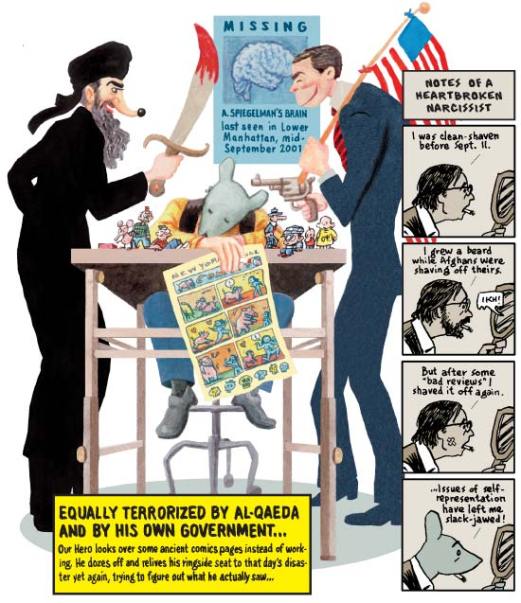
Spiegelman lived in downtown Manhattan, right by the towers; his daughter attended school a few blocks away. He saw the towers collapse in person, fleeing for his life with his family. Spiegelman attempts to capture this raw, unmediated, and very personal experience in In the Shadow of No Towers (Sonic Youth’s 2002 album Murray Street works to the same end–only much more abstractly): the narrative is discontiguous, fluctuating from bitter satire to earnest inquiry. Spiegelman’s choice of the broadsheet as his medium (the broadsheets were published monthly by different newspapers as Spiegelman produced them) is tremendously affective: just like the 9/11 attacks, the broadsheets are larger than life, hard to grasp, hyperbolically resisting easy, singular readings. Spiegelman balances bitter attacks against the conformist mentality spurred by the Bush administration with pathos and humor; In the Shadow of No Towers recalls the good-natured satire of broadsheet comics from a hundred years ago, bittersweetening the content. The 2004 collection wisely contextualizes Spiegelman’s work by reprinting broadsheets of “The Yellow Kid” and “The Katzenjammer Kids.”
Like Maus, In the Shadow of No Towers is a fascinating exploration of how disaster confronts and transforms identity. And reflecting its heinous subject, In the Shadow of No Towers ends without concluding: as the foolish Iraq war begins, Spiegelman can no longer shape any meaning or sense from his work. This isn’t a graphic novel–don’t look for a cohesive narrative structure here; instead, In the Shadow of No Towers explores the loose ends, the detritus, the psychic remnants of disaster.
 Biblioklept