Danny Rolling: From Hell–Part II

 While I took an afternoon nap, serial killer Danny Rolling was killed by the State of Florida. Sixteen years ago in Gainesville, FL, Rolling went on a killing spree, murdering and mutilating five college students.

I graduated from the University of Florida in 2001. A decade after the murders, you would meet someone–a grad student, a law student, a native–who had a story about that weekend. They made it sound scary as hell.

Anyone who’s lived in Gainesville or even spent some time there will be familiar with the 34th Street mural wall. One panel of the wall is dedicated to the victims of the slaying: Sonja Larson, Christina Powell, Christa Hoyt, Tracy Paules, and Manuel Taboada. The panel seems to be repainted annually; sometimes due to vandalism.

Go here for a detailed chronological account of the murders

These murders were horrific, terrible crimes; random and indeterminate, but premeditated nonetheless. Rolling mutilated the corpses, beheading one of them; he also took body parts from the victims. There is no doubt in my mind that this man was a monster, a killer out of the woods like Grendel. And he got exactly what he wanted: fame and infamy and attention. He channeled hell and brought it to earth; I’m sure that hell still exists for some of his victim’s families to this day. Pragmatically, it is right and proper that Rolling be executed.

I still find myself opposed to the death penalty. I don’t pity Rolling and I don’t aim to add to his fame–but he has bought his fame by personifying abject horror, and this is Halloween horror-time. And as just and right as it seems that Rolling die, I still believe that it is wrong for our state government to kill him. I am not arguing that the death penalty is not a deterrent, or that the appeals process death row inmates go through is just as costly as life imprisonment; my argument is simple: murdering people is wrong. It is wrong and therefore against the law, so we (the “we” of community and society who consent to just government) do not kill. If we kill each other we cannot thrive. Rolling’s crime illustrates the human and social disruption of murder. These killings, these gruesome hyperboles of annihilation, show exactly why it is so important that government discontinue use of the death penalty.

Many, many times I have thought: “That person should be killed. That person should be shot.” I have had these murderous thoughts about awful psychopaths and child molesters and about people I am in strong disagreement with and people who have cut me off in traffic. I have had them in brief passing and I have concentrated on them with intensity, giving them much of my time. However, I know that these feelings are rooted in revenge fantasy and rotten wish-fulfillment. I think that when we buy into the death penalty as a punishment, we validate murder. We endorse a moral paradox: killing is wrong, so we will kill you. This type of social paradox becomes a vicious circle. The revenge cycle is metonymized so perfectly in everything from gang warfare to the Israeli–Palestinian conflict. Confronted with the sheer evidence of such futility and emptiness in violence, I think it only sensical and right that we choose to end capital punishment. Otherwise we only help to maintain the hell that Rolling has channelled, a hell we choose to keep.

From Hell: Scary Books–Part II

 Alan Moore (writer), Eddie Campbell (artist).

Alan Moore’s well-researched, 500+ page graphic novel theorizes that the Jack the Ripper murders were in fact a conspiracy to get rid of a royal’s illegitimate child who posed a threat to the Victorian lineage. I can’t say enough good things about this book. I am a huge fan of graphic novels, and this is one of the best, right up there with Art Spiegelman’s Maus, Dave Sim’s Cerebus and Joe Sacco’s Palestine. The intricate plot involves Masonic conspiracy, Victorian sexual mores, 19th century surgery, insanity, and a blood ritual resulting in transcendental time travel. Eddie Campbell’s art does a wonderful tight-rope act in putting order to chaos. His scratchy inks burst with emotion–I can’t imagine a better artist for this story. I actually wonder if some of Moore’s other work (V for Vendetta, Watchmen) would resonate deeper with me had an artist of Campbell’s caliber (Bill Sienkiewicz or Mike Mignola, possibly) worked on those books. I doubt it though. I always recommend this book to persons who don’t think graphic novels are literary. I won’t loan it out though. I don’t want it to go MIA.

(By the way, the Hughes brothers-directed movie adaptation of this novel, starring Johnny Depp, IS NOT the same story at all. I know, hard to believe that Hollywood could screw up great source material, but nonetheless true).

Scary Books–Part I

I love Halloween.

Some favorite scary books:

The monster’s point of view.

One of my classes is reading this version of Macbeth right now. I know–the cover sucks (the cauldron look’s like a latte), but I think it makes a fantastic introduction to Shakespeare; great for highschool students.

 We’re also watching Roman Polanski’s 1971 film version.

macbeth1.jpg

 And who can deny this old chestnut?

Fun links, methinks

Ricotta Park is stealing my gig. Fair enough, considering my gig is stealing. RP does a few mini book reviews today, including a review of The Psychic Soviet by ex-Nation of Uylsses frontman Ian Svenonious. Some consider Ulysses by James Joyce to be the best book ever written in English. Not me though! (It’s Moby Dick, hands down).

Go hit up Troglogyte Mignon to see some art (you need it kid!) Her watercolors are humorous and often affecting. A sample below (reproduced with permission of the artist).

smitten-b.jpg smitten panty lovers unite troglodyte mignon art


I found BibliOdyssey when looking for other “biblio” blogs. I was crushed, green to the gills with envy. This blog is fantastic! Go get some knowledge.

Shelfari is MySpace for book nerds. Go set up a shelf and meet some people. Argue about books. Posit Hemmingway as way overrated, or find that certain somebody who also trucked their way through Celine’s Journey to the End of the Night.

If you live in Jacksonville, no doubt you already travel daily to The Urban Core and Urban Jacksonville. What’s that you say? You haven’t visited yet? Go get some awareness (local, son!) Urban Jax has a great post today on artist Dan May. Urban Core was kind enough to include this blog in his write-up of Top 10 Jacksonville Blogs (the ‘klept came in lucky number 7! woo!) Urban Core was voted the best blog in Jacksonville by local indie paper Folio Weekly.

More fun links and hi-jinks next week.

Abominable Fallout by Dan May. Copyright Dan May, 2006.

The Shins — Wincing The Night Away

AUDIOKLEPT (SPECIAL EDITION)

Not a book, but nonetheless obtained by extra-legal means. Piracy baby!

SubPop is set to drop The Shins’ third album Wincing The Night Away in January of 2007, but the thing leaked like a sieve this weekend. Similarly, Of Montreal’s album Hissing Fauna, Are You The Destroyer?, set for a January release, leaked over the last two weeks. I don’t understand why these labels delay releases so long after the record’s been mastered. It’s almost impossible these days to keep a record from leaking–although Thom Yorke managed to keep his solo record The Eraser from leaking right up until it was released.

On paper, The Shins are the type of band I would love to hate. They write tight pop songs with keen melodies and spare harmonies with frequent nods to classic 60s acts like The Kinks, The Beatles, The Zombies and The Beach Boys (unlike every other indie band made up of four white guys). They are name-dropped in the epitome of bad indie films, Zach Braff’s Garden State (Natalie Portman’s character declares them “life-changing”). They appeared in an episode of The Gilmore Girls as a band playing to a club full of improbably ecstatic springbreakers in Ft. Lauderdale.

Despite all of this, I like them quite a bit. Their songs are catchy in a good way. They certainly aren’t re-inventing the wheel, but if you’re going to listen to an indie rock band, you might as well listen to The Shins. All that said, I like their new album a lot, much better than their last Chutes Too Narrow actually, which I thought was too airy. Wincing evinces some growth in songwriting and arrangements, and on the whole the production is much fuller than the past two albums. Wincing features a more prominent use of atmospheric sounds. Synthesizers are utilized to greater advantage advantage with respect to both melodies and atmosphere, and the band even brings in what I believe to be a small string section one one song. They even play with vocal loops on this record.

I don’t know if this band will ever top their first record Oh, Inverted World, a record that somehow was simultaneously breezy and profound, and produced at least four songs that can never go wrong on a mixtape. I’ve listened to it a few times, but there doesn’t seem to be a “New Slang” or “Know Your Onion” on this album. Wincing however seems to work better as a whole album than The Shins’ previous efforts, and the stronger production and fuller arrangements will probably earn the group a broader fanbase.


Graham Greene and Donnie Darko

The Portable Graham Greene, ed. Philip Stratford. I haven’t read a single story in this beautiful Viking Portable Library edition, save “The Destructors,” (full text here) (sorry, the page is no longer up [3/07]. Ed.) which I only read because it was referenced in one of my favorite movies, Donnie Darko.

I found this one in another teacher’s classroom. My uncle Lee had just given me a copy of Greene’s The Quiet American, which I finished in a weekend; it’s a slim, spare novel, and I enjoyed it quite a bit, despite the fact that Brendan Fraser was on the cover (the book was re-released to coincide with a film adaptation that I never saw). Anyway, I’d just read TQA, and I saw this beautiful Viking Portable Library edition (I’m a big fan of VPL), so I surreptitiously absconded with it only to never read it. A meaningless theft?

Anyway, last year a new director’s cut of Donnie Darko came out; the wife and I saw it at the San Marco Theater, I was reminded of the book, and read “The Destructors.” “The Destructors” is a simple story about a teenage gang that destroys a beautiful old house from the inside to the outside. “The Destructors” functions as an abyss structure or reading rule that informs the text-proper of Donnie Darko (it’s assigned reading from an English teacher). If you’re a fan of this movie (and if you’re not, why not?!) check out this story; it’s short and to the point. Flipping through it again, I realize that I should probably put The Portable Graham Greene back on the “To Read” stack.

If you haven’t seen Donnie Darko, enjoy the following review courtesy The Comic Critic.

Riddley Walker–Russell Hoban

I never gave Riddley Walker back to Patrick Tilford (aka TLFRD). A few years ago I loaned it to a student who never returned it. Said student never returned Dune, or The Left Hand of Darkness, or several Jules Verne novels either. Doesn’t matter, I know that he read them.

This book is a favorite. Russell Hoban’s coming-of-age story takes place in a future that has regressed to the iron age due to a catastrophic war. Hoban writes in his own language, a mutated English, full of fragments of the 20th century.

I couldn’t find an image of the edition I stole/lost. This edtion from 2000 features an introduction by Will Self, whose latest book, The Book of Dave, apparently was directly influenced by Riddley Walker. Will Self’s book Great Apes deeply, deeply disturbed me. Nothing repulses me more than images of chimpanzees dressed as humans; Great Apes is the literary equivalent.

Great Apes was an airport bookstore buy; I suppose at some point on this blog I will address the “airport bookstore buy.”

Microserfs

Microserfs, Douglas Coupland; loaned out, never to be returned. I remember this book as being relatively entertaining. I mostly recall the design of the book–very cool, playful, and ahead of its time. This book will be more interesting in twenty or twenty-five years. Coupland’s site: beautiful. 

http://www.coupland.com/

The Unknown

The Unknown is a sprawling hypertext novel. It’s basically a postmodern choose your own adventure written in a ludic, recursive style. It’s a jumble of ideas, authors (their faves–The Unknown are a collective of sorts–include Thomas Pynchon, Wm Burroughs and Michel Foucault), and half-cooked philosophies. 

Choose Your Own Adventure

I loved these things growing up. Images lead to fun links (or grisly death!)


The Crucible/Bohemian Grove

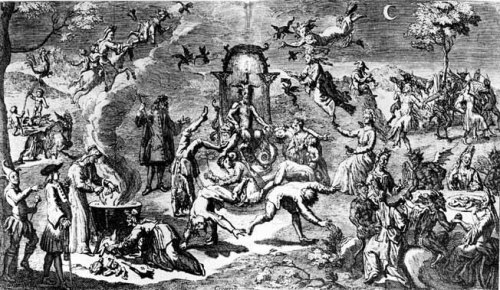
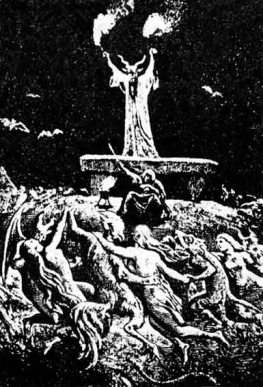
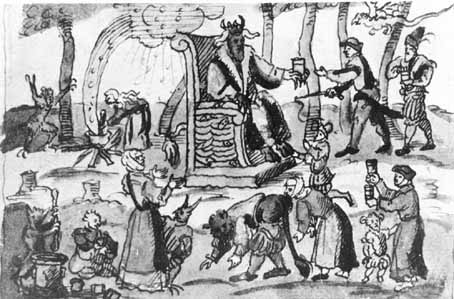
My 11th graders just finished The Crucible. Here are a few images that we looked at in class.

sabbath-12.jpg

sabbath-16.jpg

sabbath-11.jpg

These images remind me of a video I saw a couple of years ago, Inside the Bohemian Grove. This video claims to expose the bizarre rituals of the Bohemian Club, a secret society of world leaders, industrialists, and so on. The important people. To get a relatively mainstream take on the Bohemian Grove meetings go here; of course the internet hordes an abundance of (mis?)information on the BG. Just google it. File under Illuminati/conspiracy/paranoia.

 Here’s an image of a Bohemian Grove ritual from a 1915 issue of National Geographic.


Philip K. Dick Cover Art Gallery


Via an excellent and fun blog, robertmonroe.org, a gallery of PKD covers. Check out the gallery here.

Guns and Roses to Play Jacksonville Florida on Halloween Night

Absolutely nothing to do with books, but hey whatever. Guns and Roses have rescheduled their October 20th concert in sweet home Jacksonville FL for Halloween Night. Will Axl show? Will mayhem ensue? Will there be disappointment? Apathy?

And the Gators lost?! And that brawl in Miami?!

Console yourself with this Axl Rose fan art:


Bob Dylan


Anthony Scaduto’s Bob Dylan:A Biography (1972?); another one from my cousin’s closet, part of the same cache that included Fear and Loathing. This would have been in the very early 1990s. I had always loved Bob Dylan, always–one of the earliest songs I remember taping off of the radio was “Like a Rolling Stone.” I had to call in to request it. I recorded it at the end of my first (and only, at the time) cassette tape–a copy of Dire Strait’s Brothers in Arms that my dad had taped from his vinyl for me. By the time I got a hold of Anthony Scaduto’s fantastic bio, I knew a bit about Dylan. I already had a couple of Dylan albums, including one of the first CDs I ever bought, The Freewheelin’ Bob Dylan (still my favorite). Like Fear and Loathing, this book was a door-opener to me. Interestingly, I was mostly enchanted by Dylan’s voice and wordplay before I read this book; that is to say his cult of personality hadn’t really effected me yet. This book changed that.


(I took the edition on the left. The one on the right you can buy online or in your favorite bookstore)

Any true Dylan fan has probably already read this book, but if you consider yourself one (a true fan, that is), and you haven’t read it, make amends. You won’t be disappointed. The book is particularly good if you bookend it with viewings of DA Pennebaker’s extraordinary documentary Don’t Look Back.

 Dylan in his later years (i.e. nowadays) is as perplexing as ever. He’s made three of the best albums of his post-60s career, making up for some questionable output. He’s slowed down on the touring quite a bit (saw him about 10 years ago and he blew my mind — who knew what an accomplished guitar player he was?), and made those weird Victoria’s Secret commercials a few years ago. Recently, he made a ruckus when he attacked modern recording techniques in a Rolling Stone interview with one of my favorite authors, Jonathan Lethem

One of the best things Dylan has done lately is his “Theme Time Radio Hour” on XM satellite radio. The show is thematic; Dylan riffs on the bible, coffee, the weather, all sorts of stuff. His musical taste is fantastic (saying Bob Dylan has good musical taste is sort of like saying water is wet), but it’s really his voice that mesmerizes. It’s a gleeful mix of the sinister with the playful. He actually kind of sounds like the late comedian Mitch Hedberg, especially in a comment from a recent show on the bible: “Nine out of ten Americans have at least one bible in their home. What’s up with the other guy?” Doesn’t look funny in print, but his delivery is unexpectedly hilarious.

If, like me, you can’t afford to subscribe to fancy satellite stations but still want to hear the word of Dylan, never fear! Check out White Man Stew for free downloadable mp3s of complete Dylan shows. You can get the shows as  zip files full of divided mp3s, or as one long mp3.

Fear and Loathing in Las Vegas


I procured this from my cousin’s closet. My cousin Tripp is ten years older than me; he was in college at the time and I was staying with my aunt and uncle over the summer, in his old bedroom. I’m pretty sure both he and my uncle recommended that I read Fear and Loathing in Las Vegas. The edition (not pictured above–I couldn’t find the one I snagged, but it had a similar cover–more on the cover below) could have belonged to Tripp, but it may have belonged to my uncle.  

Reading Fear and Loathing was an initiation into some kind of new literature for me. It opened the way to authors like Vonnegut, Wm Burroughs, Herman Hesse, JD Salinger (admittedly, I read some Tom Robbins in this period as well. Ugh). Before HST I was reading lots and lots of science fiction and fantasy books, both classic and trash. I had also read lots of the “adventure classics,” stuff like Robinson Crusoe and Dracula and Great Expectations and the Tarzan novels. And comic books. Always comic books. But Fear and Loathing was something new for me; it combined the fantasy and adventure and weirdness I’d been reading with a political ethos and a sense of social-reality-via-unreality. Surreality. Fear and Loathing contained a whole new set of reading rules for me, chief among them: irony and paradox. All of a sudden, the verity of all past narrators was cast into doubt. I was savvy now. I was ironized. I was, y’know, hip to what may be under a text now, whereas before I was just scanning the text. Or at least it seemed that way. Looking back, I don’t know for sure. 

Of course I lent this book out to anyone who seemed vaguely interested. I did this for years, and amazingly, the book kept coming back to me. Must be some mystical sign when I think about it. Who returns books? I loaned it out all the way through college before it finally escaped me for ever. I’m not sure who has it now. At the point this particular edition left me forever, it had a duck-tape cover with title and author in Sharpie-font, courtesy of one innovative reader. I like to think others were initiated by it, but I know that most of the readers I lent it to had already read their revelation-text, whether it was that Kerouac book or Slaughterhouse Five or Kafka’s The Metamorphosis. And I haven’t read this book in years, although I’m a big fan of Terry Gilliam’s movie. Still, it’ll always have a special place in my trunk full of drugs–er, heart.

Moby Dick

Another one courtesy of the Andrew Jackson High School Library. Not really a straight up theft; it was a remainder that the librarian gave to me.

This is one of the best books I’ve ever read, right up there with Infinite Jest, King Lear, and The Fortress of Solitude. Everyone should read this book before they die.

Blue (Moby Dick), Jackson Pollock. 1943.

Tim Hecker — Harmony in Ultraviolet

Yes yes yes. I know I know I know. It’s not a book. It’s an album of music. But see now so and yes–it’s just so beautiful. It’s the best “reading music” I’ve come across in a long time. And, in keeping with the theme of this blog, I did obtain it by extra-legal means (it comes out Oct 16, so go buy it from your local record store!)

KR102

Harmony in Ultraviolet is Hecker’s third or fourth album, depending on how you want to count his EPs and sundries. This music might be described as “ambient,” although I’m not sure I like that term. Harmony‘s tracks seem to contain impossible oppositions; they hover and sink, they pulsate but are static, they are digital-ice and analog-heat, they express the abstract in a concrete mode. Why write about it here? Well, really, I just love an album that lends itself to reading, and Hecker’s new disc is fantastic to read to.