A Couple on the Floor of a Forgotten Church — Ilya Milstein

A Couple on the Floor of a Forgotten Church, 2018 by Ilya Milstein

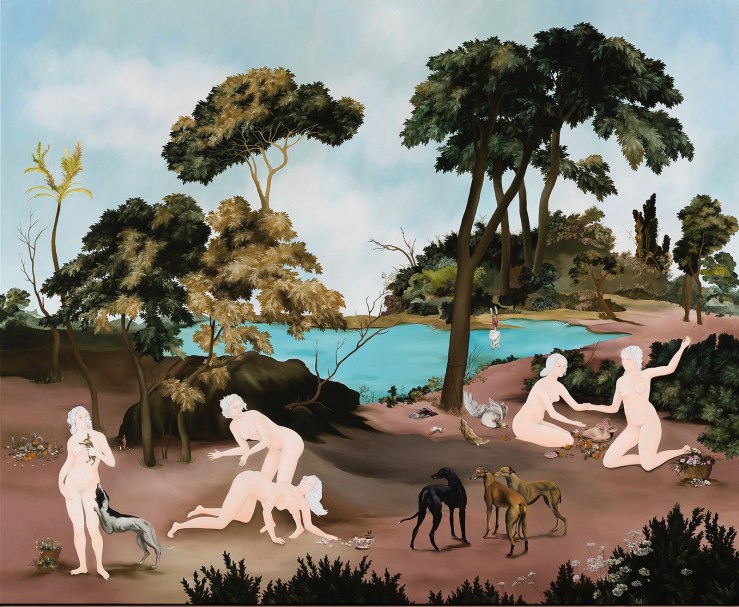
Huddled on the Verge of a Wilderness — Sanam Khatibi 

Huddled on the Verge of a Wilderness, 2018 by Sanam Khatibi (b. 1979)

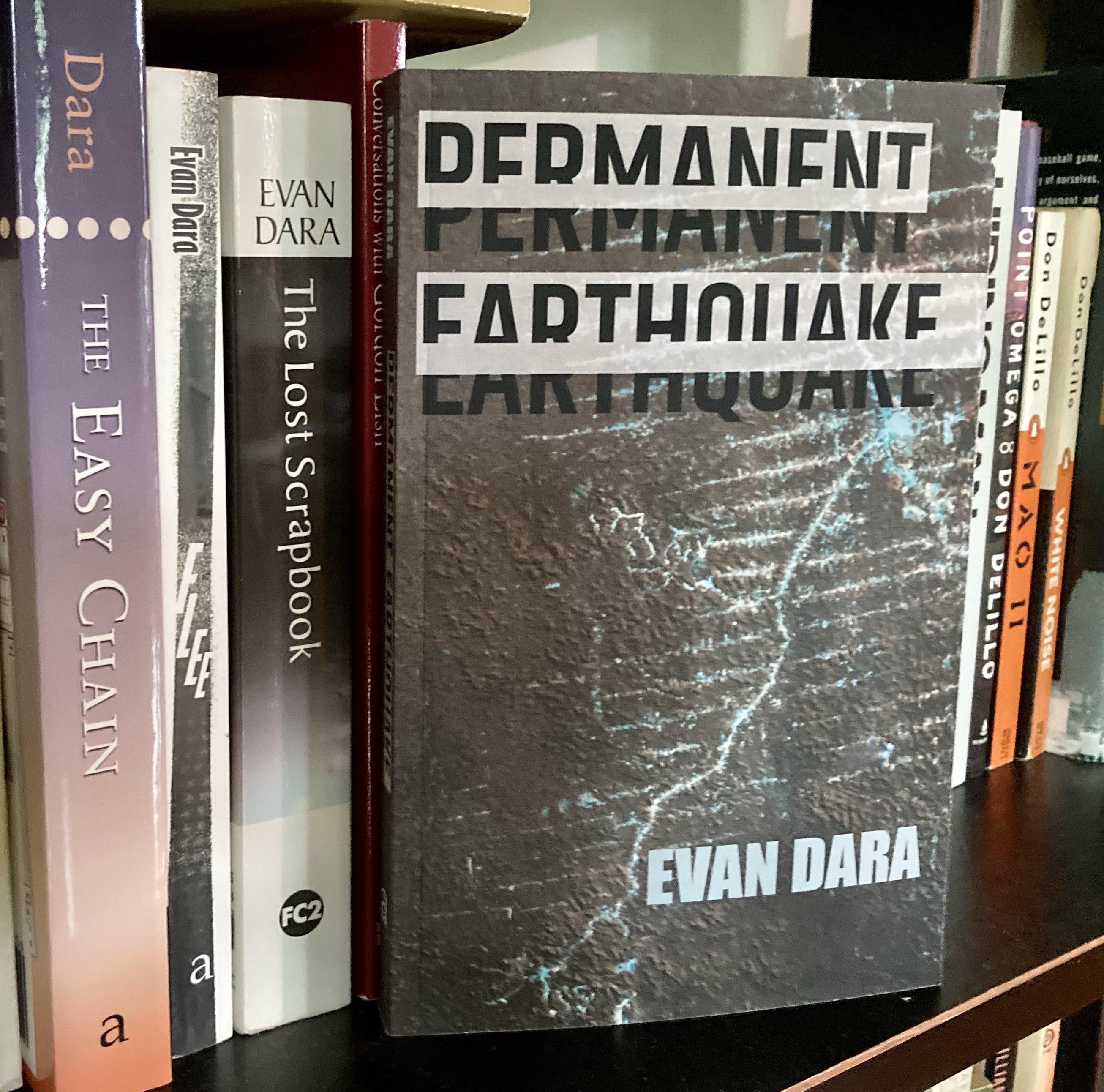
Evan Dara’s Permanent Earthquake (Book acquired, 7 June 2021)

So I got Evan Dara’s fourth novel, Permanent Earthquake. There’s no summary blurb for it, but it seems to concern, like, an earthquake that is ongoing, or, if you will, permanent. The first 25 pages are written in the first-person; the novel then gives way to a third-person “he.” More thoughts to come. More on Dara:

My review of Dara’s last publication, the play Provisional Biography of Mose Eakins.

Daniel Green on Dara’s youngish oeuvre.

Ryan Chang and I riff on Dara’s last novel, Flee.

And I’ll close by saying that Dara’s first novel The Lost Scrapbook is an overlooked classic of late American postmodernism.

“No Complaints” — Nikki Giovanni

“No Complaints”

by

Nikki Giovanni

(For Gwendolyn Brooks, 1917—2001)

maybe there is something about the seventh of June: Gwen,
Prince and me . . . or maybe people just have to be born at some
time . . . and there are only three hundred sixty-five days or three
sixty-six every four years or so . . . meaning that some things
happen at the same time in the same rising sign . . . and the same
houses in Gemini . . . but some of us might also consider the
possibility of reincarnating revolving restructuring that spirit . . .
reshaping that spirit . . . releasing that spirit . . . tucking the use-
less inside and when the useless pushes out again we restructure
again and poetry and song and praisesong go on  . . . because it is
the right thing to do

we always will cry when a great heart . . . a good soul . . . one of
the premier poets of her age restructures . . . reincarnates  . . .
revolves into a resolve that we now carry in our hearts . . . as all
great women and men are alive . . . not by biology but remem-
brance . . . and that’s all right . . . as the old folk say . . . because as
long as they stay on the lips . . . they nestle in our hearts and those
souls which are planted . . . continue growing . . . until generations
not knowing their touch . . . their voice . . . or even the fact
that some Chicago poets are terrible cooks . . . but always fun
to eat with . . . will tell tales of having met someone who knew
someone who once watched a basketball game . . . in which some
Chicago poet cheered for Seattle at the request of some Virginia
poet who wanted more games . . . while Mr. Blakely was amazed
that a Chicago poet was even watching a game . . . and didn’t
we miss him as he slipped away watching baseball . . . and what
a way to go . . . though we then did sort of know . . . that once
gone . . . he would call the woman he loved

and so we come to no more phone calls at six a.m. to chat …
and no more Benihana when we are all in New York . . . and no
more gossiping and questioning and trying to make sense of a
senseless world . . . no more face-to-face . . . only the poetry which
is a great monument from this Topeka daughter to the world . . .
and yet . . . there can be no complaints in this passing . . . no
sorrow songs . . . no if onlys . . . it is all here: the work the love:
the woman: who gave and gave and gave . . . no complaints of too
long or too hard . . . no injustice of accident or misunderstanding
of disease . . . just one great woman moving to the next phase . . .
and us on the ground . . . giving Alleluias

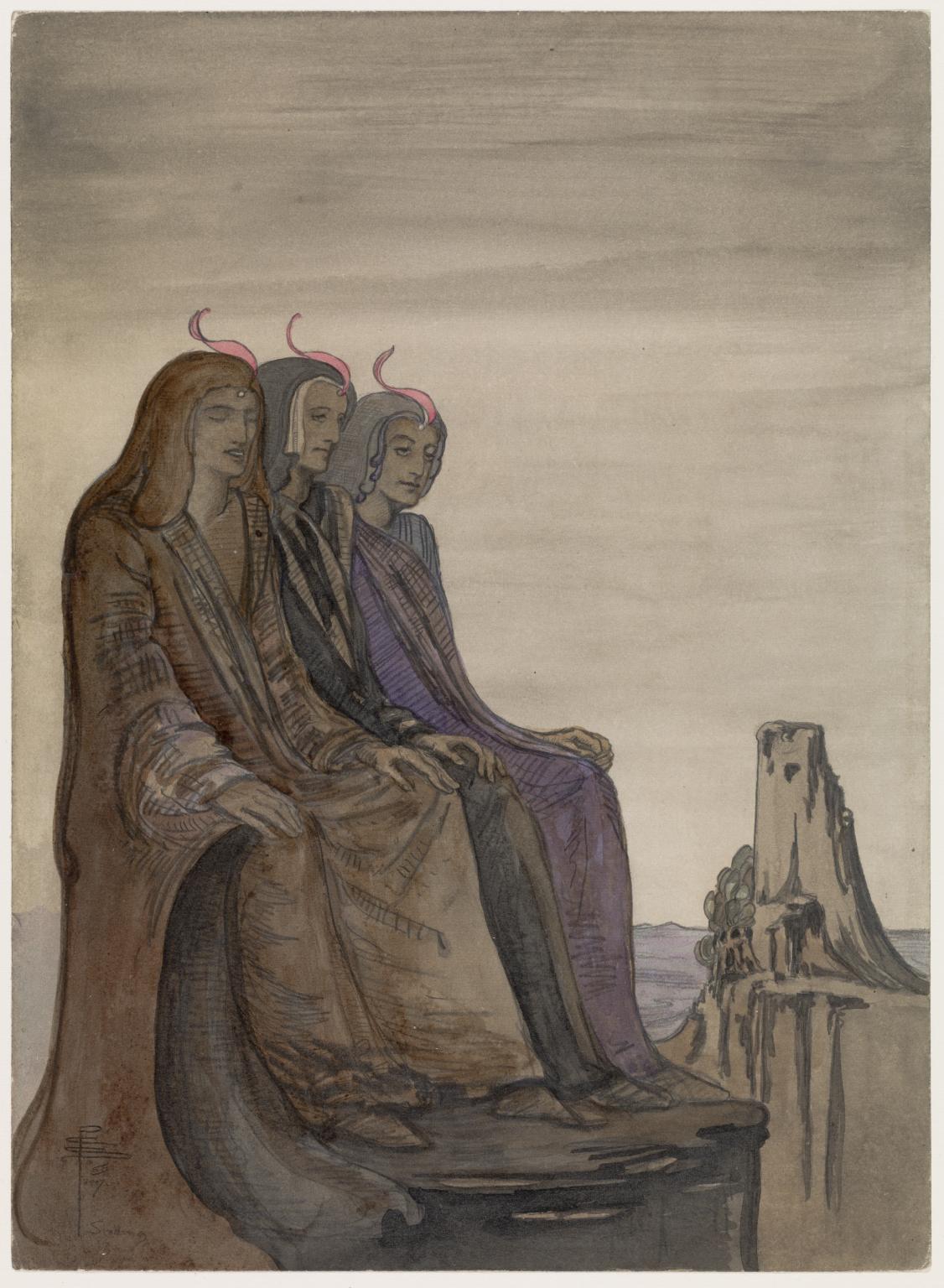
‘Impromptu’ Sinding — Pamela Colman Smith

‘Impromptu’ Sinding, 1907 by Pamela Colman Smith (1878 – 1951)

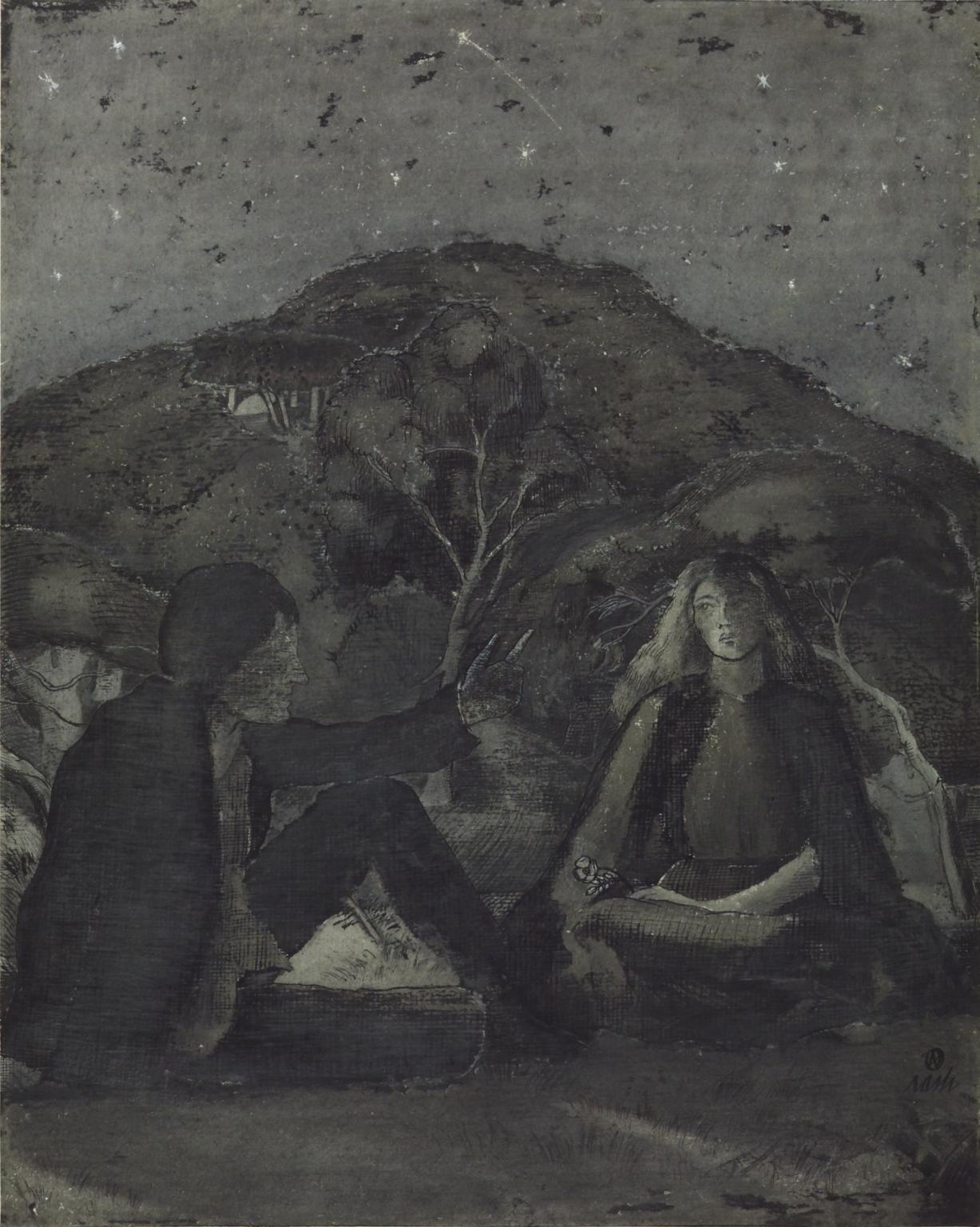
Lavengro and Isopel in the Dingle — Paul Nash

Lavengro and Isopel in the Dingle, 1912-13 by Paul Nash (1889-1946)

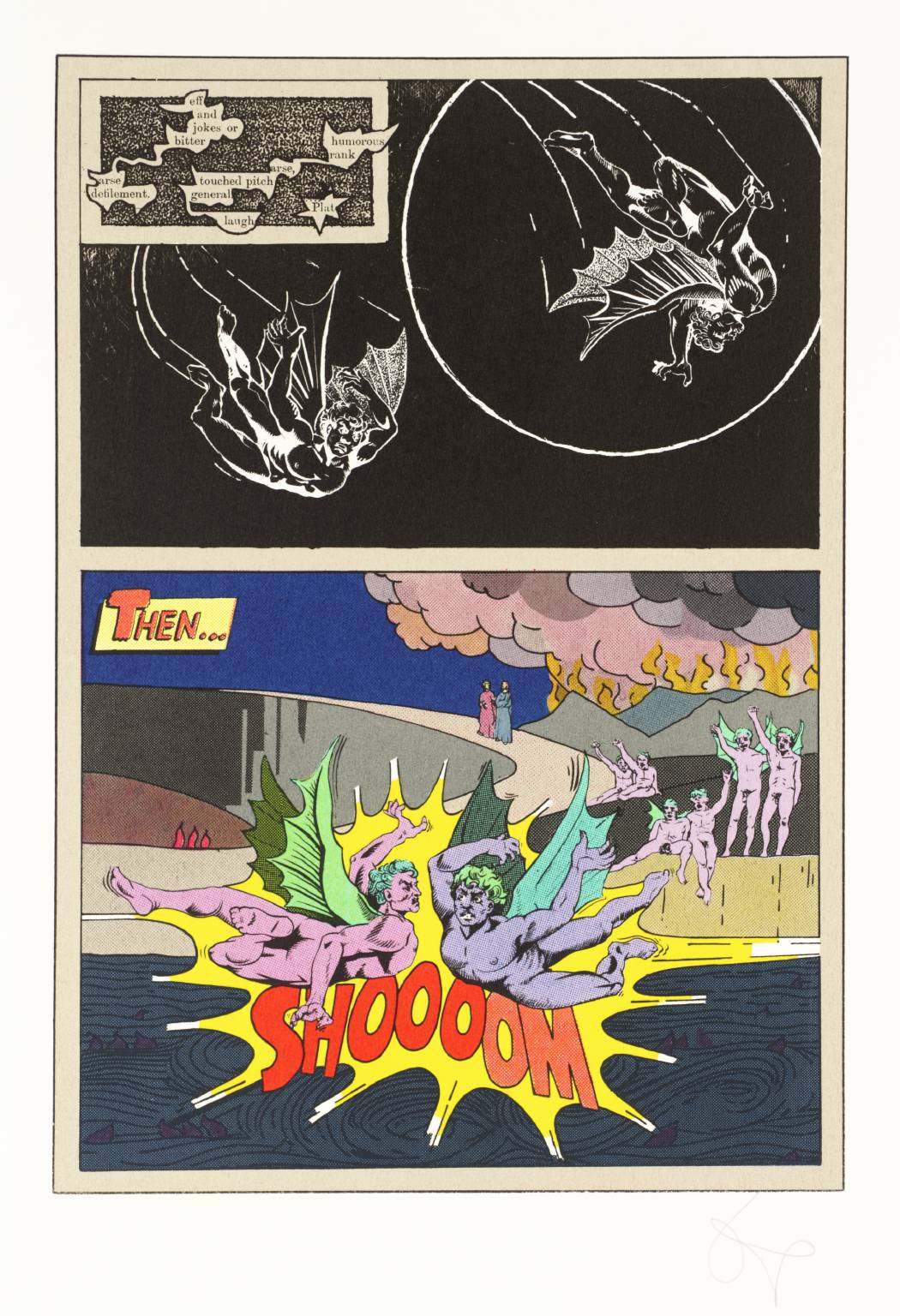
Canto XXII — Tom Phillips

Canto XXII, 1982 by Tom Phillips (b. 1937). From the Dante’s Inferno series.

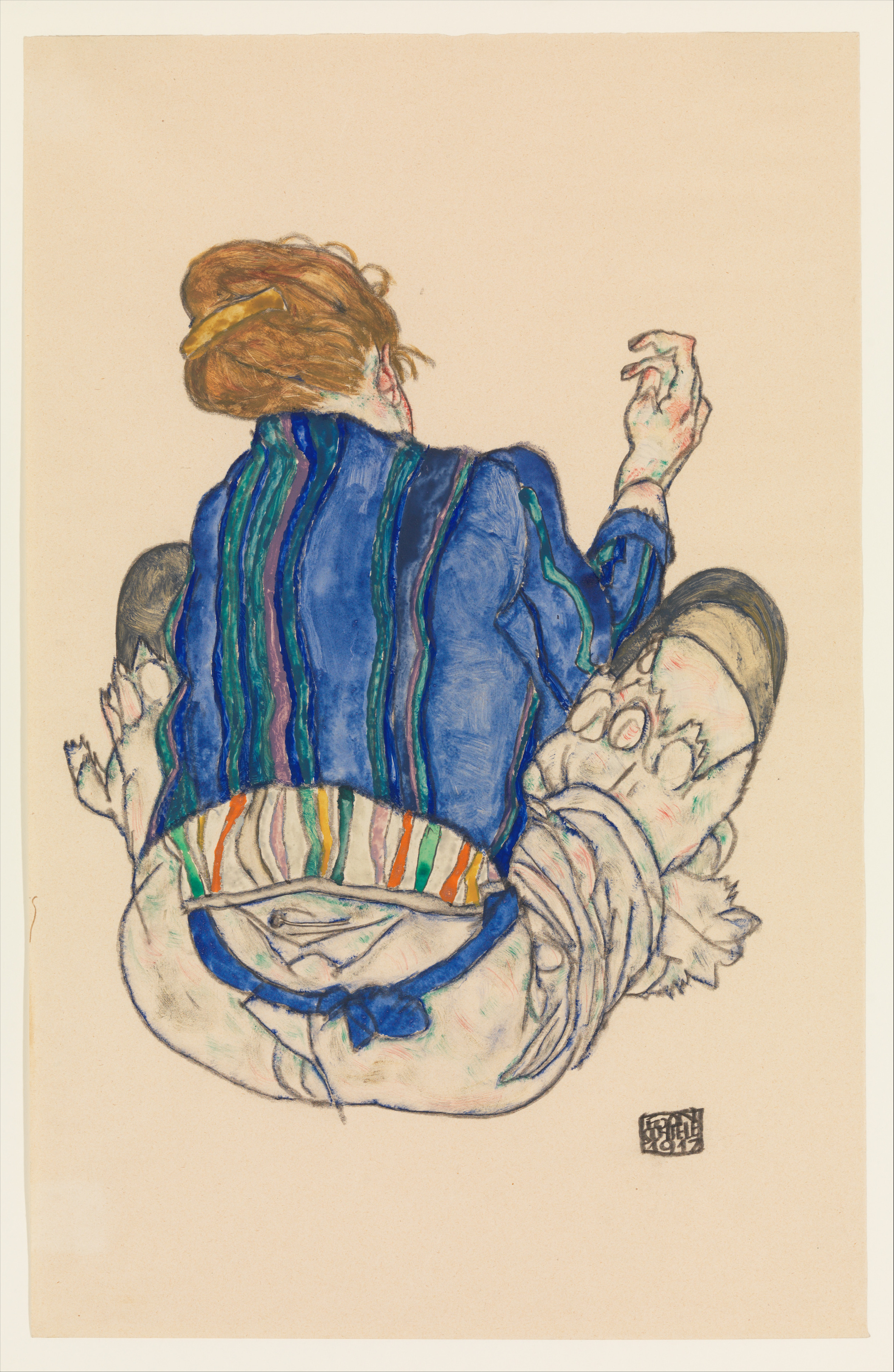
Seated Woman, Back View — Egon Schiele

Seated Woman, Back View, 1917 by Egon Schiele (1890–1918)

B.S. Johnson’s The Unfortunates (Book (in a box) acquired 2 June 2021)

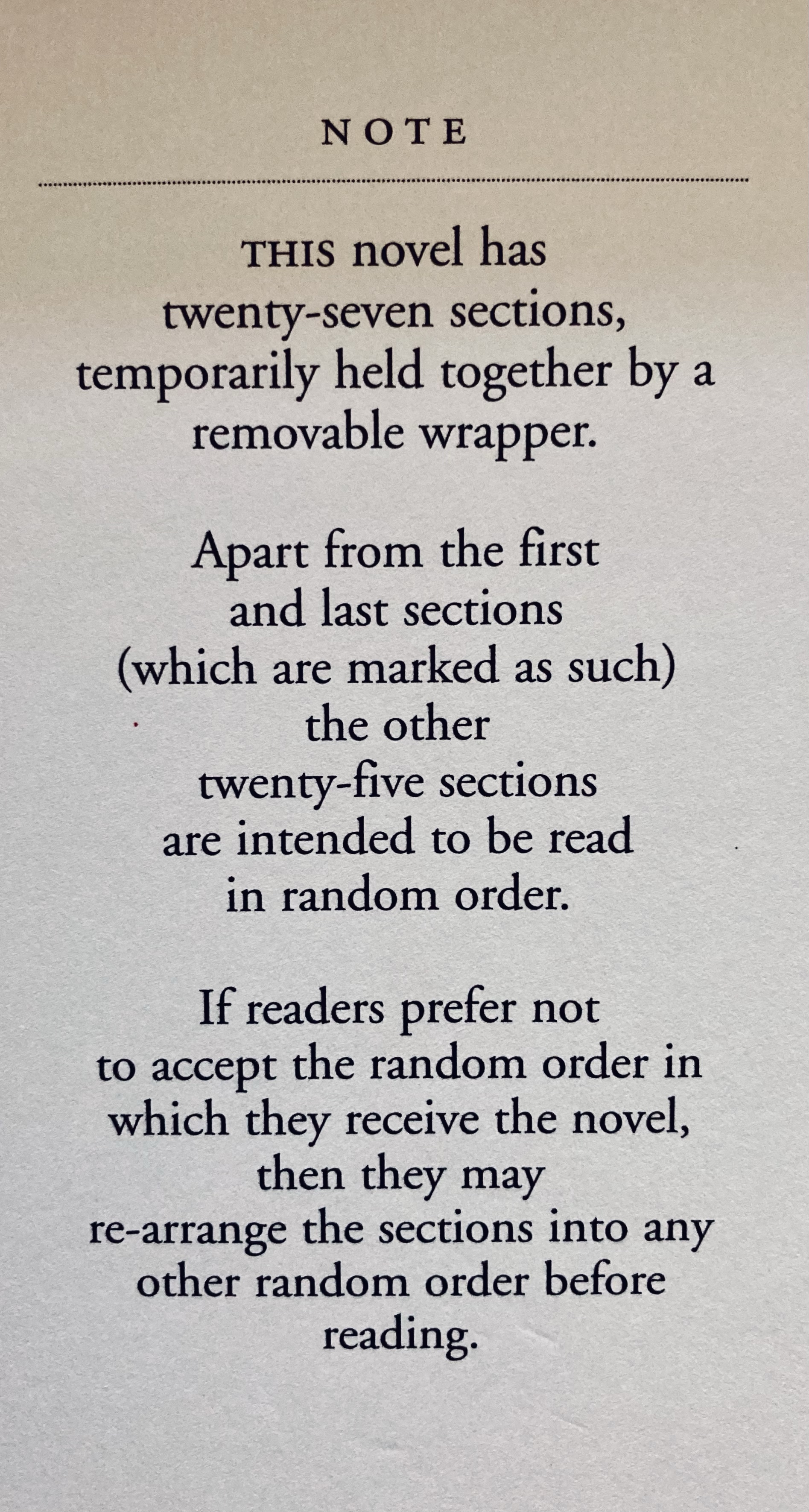
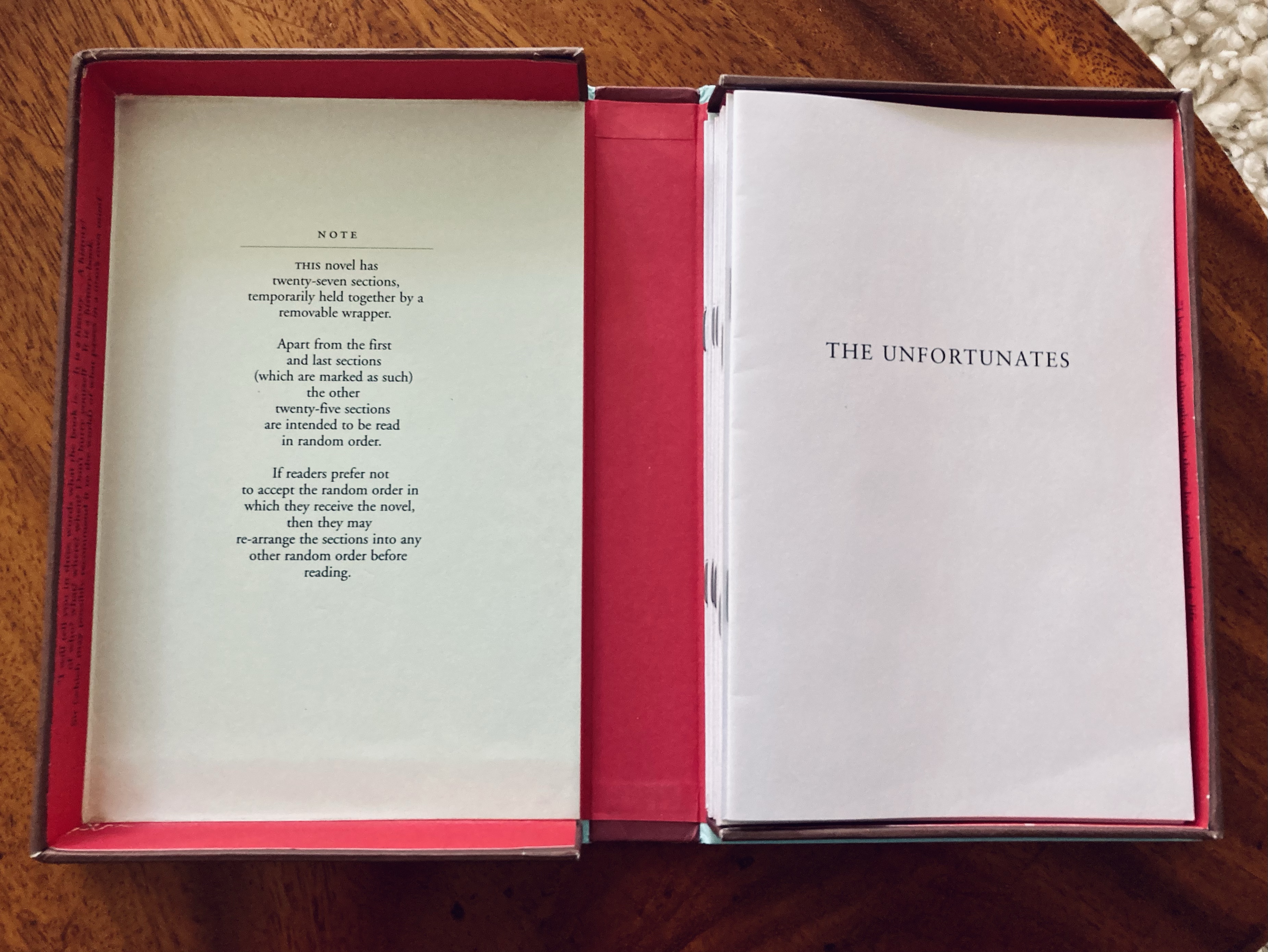
I went on a B.S. Johnson tear last month. Ordered his (infamous?) “book in a box,” The Unfortunates (1969). There are 27 unbound (but somewhat bound) sections to the novel; two are labeled FIRST/LAST, but the rest are meant to be read randomly. The New Directions edition I ordered includes some directions:

I never made it through any iteration of Julio Cortázar’s Hopscotch, so we’ll see how I do.

Here’s a sense of what the book looks like (the initial booklet is an introduction by Johnson’s biographer Jonathan Coe):


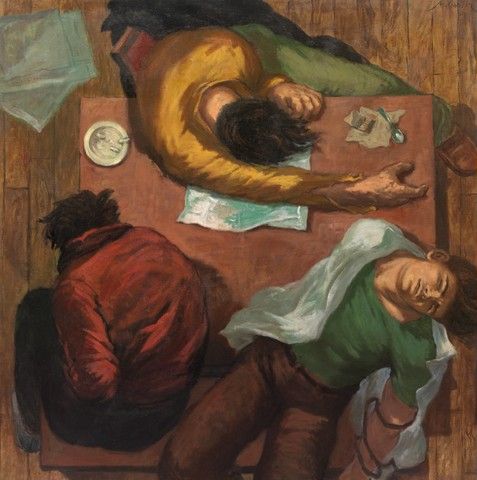
Private Worlds — Edward Melcarth

Private Worlds, 1961 by Edward Melcarth (1914–1973)

June — Alex Colville

june-1979.jpg!Large

June, 1979 by Alex Colville (1920-2013)

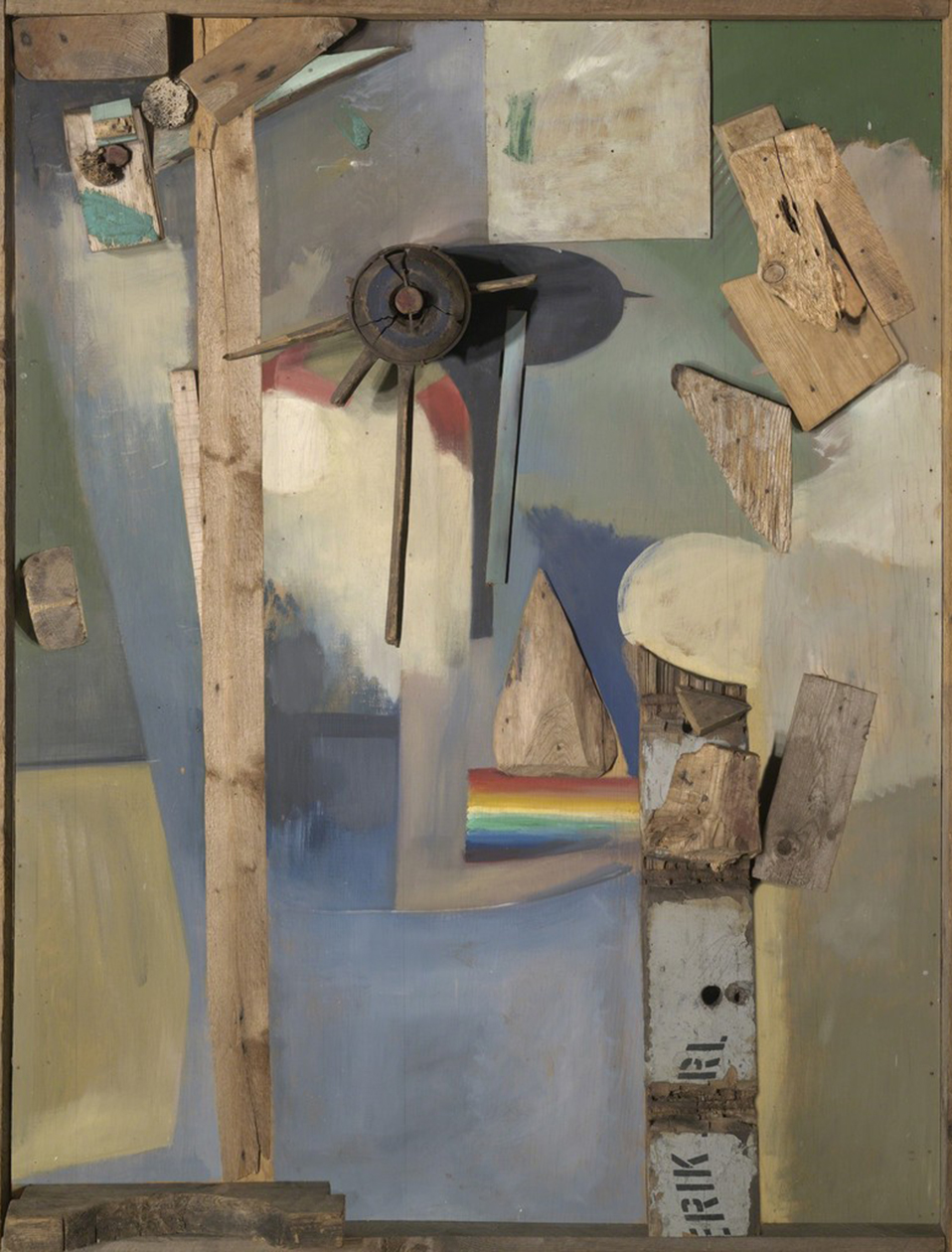
 Merz Picture with Rainbow — Kurt Schwitters

Merz Picture with Rainbow, 1920–39, by Kurt Schwitters (1887–1948)

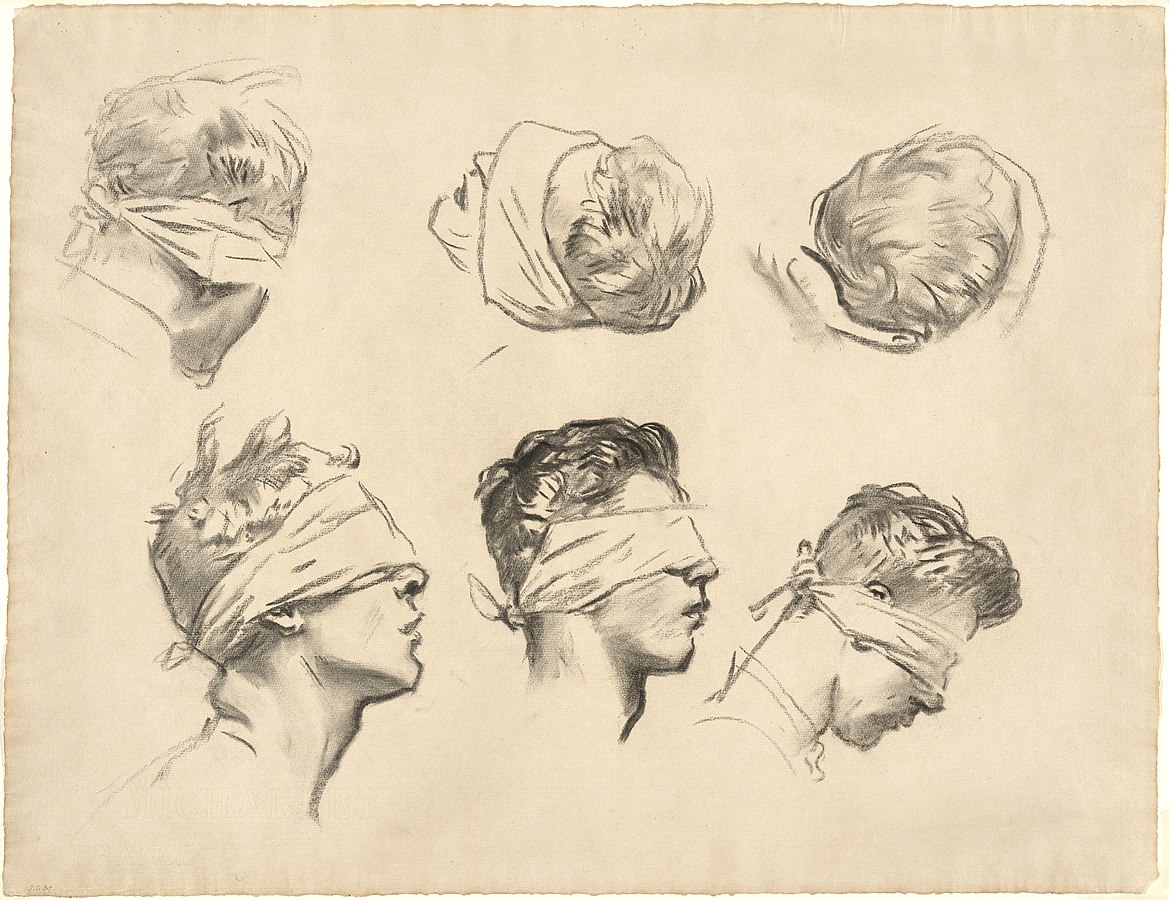
Six Studies for Gassed — John Singer

Six studies for Gassed, 1919 by John Singer Sargent (1856-1925)

John Barth’s brief description of Donald Barthelme’s so-called postmodernist dinners

1fa8c7cbf8dc977653f7750905725da4
Photograph from “The Postmodernists Dinner,” 1983 by Jill Krementz (b. 1940)

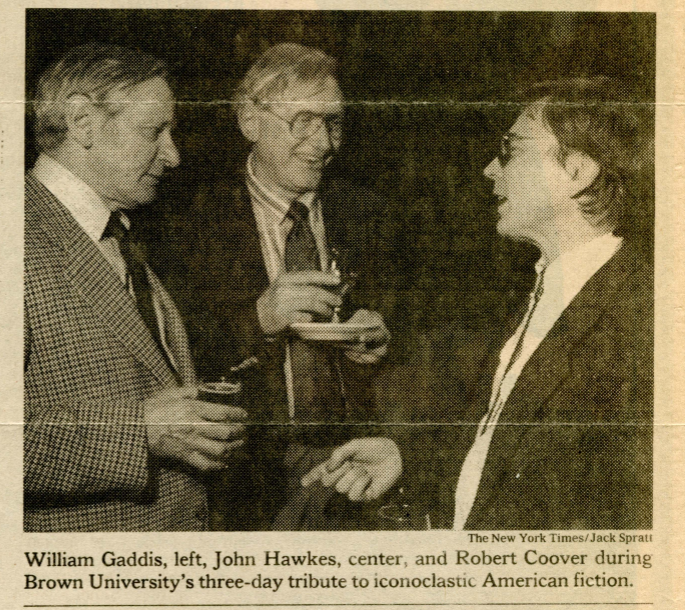
In John Barth’s 1989 New York Times eulogy for Donald Barthelme, Barth gives a brief description of two so-called postmodernist dinners, both of which I’ve written on this blog before.

…though [Barthelme] tsked at the critical tendency to group certain writers against certain others ”as if we were football teams” – praising these as the true ”post-contemporaries” or whatever, and consigning those to some outer darkness of the passe – he freely acknowledged his admiration for such of his ”teammates,” in those critics’ view, as Robert Coover, Stanley Elkin, William Gaddis, William Gass, John Hawkes, Thomas Pynchon and Kurt Vonnegut, among others. A few springs ago, he and his wife, Marion, presided over a memorable Greenwich Village dinner party for most of these and their companions (together with his agent, Lynn Nesbit, whom Donald called ”the mother of postmodernism”). In 1988, on the occasion of John Hawkes’s academic retirement, Robert Coover impresarioed a more formal reunion of that team, complete with readings and symposia, at Brown University. Donald’s throat cancer had by then already announced itself – another, elsewhere, would be the death of him – but he gave one more of his perfectly antitheatrical virtuoso readings.

More on the first dinner here.

More on the second dinner here.

George Milburn’s odd novel Catalogue (Book acquired, 28 May 2021)

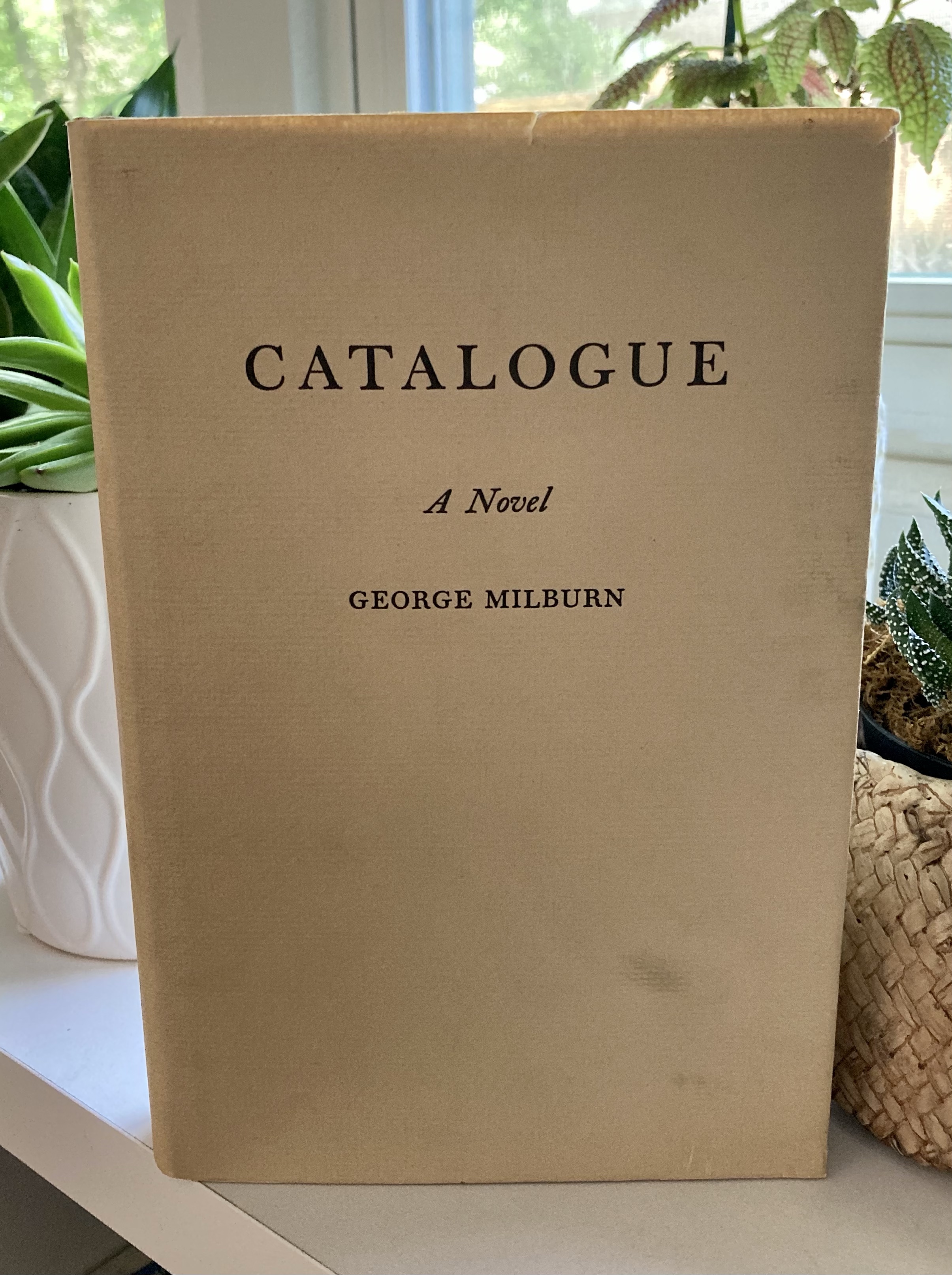
The beige spine of Davenport’s 1987 reprint of George Milburn’s 1936 novel Catalogue was so wonderfully-nondescript that I picked it up yesterday and flicked through it some. The novel is about the events that happen in a small Oklahoma town after the arrival of two catalogs on the same summer day: Montgomery Ward and Sears Roebuck. The novel’s short chapters are written around catalog entries (e.g., “33F8244 RUBBER COLLARS,” “281D820 SEPTIC TANK,” “33D340 FANCY SHIRT”), and something about its energy, form, and blurb (“More than 70 characters are portrayed in this work which is considered to be the best of the three novels by Milburn”) made me think of William Gaddis’s novel J R.

“Mutations,” a very short tale from Jorge Luis Borges

“Mutations”

by

Jorge Luis Borges

Translated by Andrew Hurley


In a hallway I saw a sign with an arrow pointing the way, and I was struck by the thought that that inoffensive symbol had once been a thing of iron, an inexorable, mortal projectile that had penetrated the flesh of men and lions and clouded the sun of Thermopylae and bequeathed to Harald Sigurdson, for all time, six feet of English earth.

Several days later, someone showed me a photograph of a Magyar horseman; a coil of rope hung about his mount’s chest. I learned that the rope, which had once flown through the air and lassoed bulls in the pasture, was now just an insolent decoration on a rider’s Sunday riding gear.

In the cemetery on the Westside I saw a runic cross carved out of red marble; its arms splayed and widened toward the ends and it was bounded by a circle. That circumscribed and limited cross was a figure of the cross with unbound arms that is in turn the symbol of the gallows on which a god was tortured—that “vile machine” decried by Lucían of Samosata.

Cross, rope, and arrow: ancient implements of mankind, today reduced, or elevated, to symbols. I do not know why I marvel at them so, when there is nothing on earth that forgetfulness does not fade, memory alter, and when no one knows what sort of image the future may translate it into.