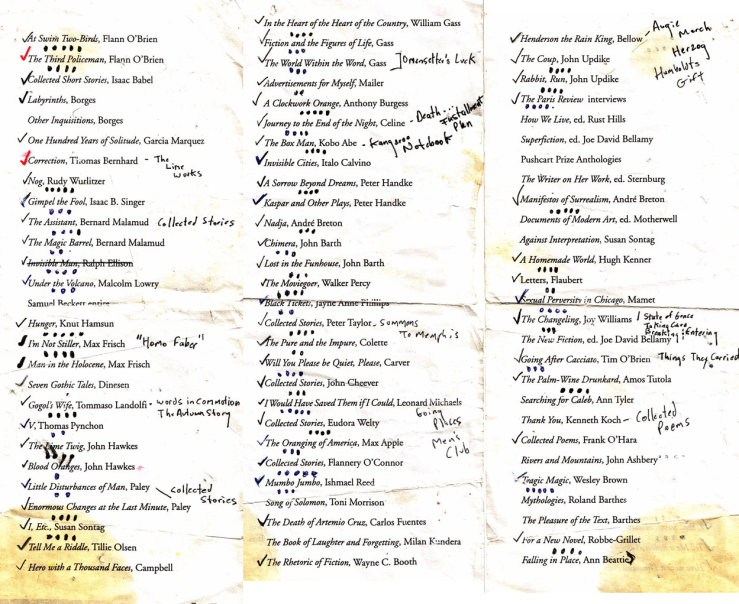
I have heard Donald referred to as essentially a writer of the American 1960’s. It may be true that his alloy of irrealism and its opposite is more evocative of that fermentatious decade, when European formalism had its belated flowering in North American writing, than of the relatively conservative decades since. But his literary precursors antedate the century, not to mention its 60’s, and are mostly non-American. ”How come you write the way you do?” a Johns Hopkins apprentice writer once asked him. ”Because Samuel Beckett already wrote the way he did,” Barthelme replied. He then produced for the seminar his ”short list”: five books he recommended to the attention of aspiring American fiction writers. No doubt the list changed from time to time; just then it consisted of Rabelais’s ”Gargantua and Pantagruel,” Laurence Sterne’s ”Tristram Shandy,” the stories of Heinrich von Kleist, Flaubert’s ”Bouvard and Pecuchet” and Flann O’Brien’s ”At Swim-Two-Birds” – a fair sample of the kind of nonlinear narration, sportive form and cohabitation of radical fantasy with quotidian detail that mark his own fiction. He readily admired other, more ”traditional” writers, but it is from the likes of these that he felt his genealogical descent.
My friend texted me yesterday to tell me that Dawnie Walton was on the NPR program Fresh Air. Walton was two years ahead of us in high school, and although I missed the interview, I was psyched when I read the description of her new novel The Final Revival of Opal & Nev. I picked up a copy today and read the first fifty pages.
Walton’s debut novel takes the form of an oral history of the titular fictional interracial 1970s psych duo. The controlling voice is the editor of the oral history, “S. Sunny Shelton” (a pseudonym). She’s the daughter of the duo’s deceased drummer—murdered by a “racist gang”—who was also carrying on an affair with Opal (these facts are laid out in the novel’s opening paragraph, so this isn’t a spoiler–I’m guessing that the climax of the novel (or conclusion?) gets to the murder).
I’m digging The Final Revival of Opal & Nev so far. It has a buzzy, propulsive style—genial and largehearted, even as its episodes deliver a chilling shorthand pop history of the Civil Rights Movement. The non-narrator S. Sunny Shelton is the most intriguing aspect here—what is she emphasizing or omitting in her assemblage of “facts”? (I’m reminded of Todd Haynes’ Velvet Goldmine just a bit.)
Here’s publisher Simon & Schuster’s blurb:
Opal is a fiercely independent young woman pushing against the grain in her style and attitude, Afro-punk before that term existed. Coming of age in Detroit, she can’t imagine settling for a 9-to-5 job—despite her unusual looks, Opal believes she can be a star. So when the aspiring British singer/songwriter Neville Charles discovers her at a bar’s amateur night, she takes him up on his offer to make rock music together for the fledgling Rivington Records.
In early seventies New York City, just as she’s finding her niche as part of a flamboyant and funky creative scene, a rival band signed to her label brandishes a Confederate flag at a promotional concert. Opal’s bold protest and the violence that ensues set off a chain of events that will not only change the lives of those she loves, but also be a deadly reminder that repercussions are always harsher for women, especially black women, who dare to speak their truth.
Decades later, as Opal considers a 2016 reunion with Nev, music journalist S. Sunny Shelton seizes the chance to curate an oral history about her idols. Sunny thought she knew most of the stories leading up to the cult duo’s most politicized chapter. But as her interviews dig deeper, a nasty new allegation from an unexpected source threatens to blow up everything.
Provocative and chilling, The Final Revival of Opal & Nev features a backup chorus of unforgettable voices, a heroine the likes of which we’ve not seen in storytelling, and a daring structure, and introduces a bold new voice in contemporary fiction.
NYRB have a collection of Anna Seghers’s short stories coming out next month. The Dead Girls’ Class Trip is both translated and edited by Margot Bettauer Dembo and includes an introduction by German author Ingo Schulze. There are sixteen stories in the collection, some quite long and others quite short. Many have ominous titles, like “Jan Is Going to Die,” “Shelter,” “The End,” “A Man Becomes a Nazi,” and the title story, of course. I read a shorter tale the other day, “The Square,” and it was a depressing little ominous microfiction. I also read “The Three Trees,” three micros arboreally bound. The first piece, “The Knight’s Tree,” condenses history, humor, and despair into a few sentences:
Best known for the anti-fascist novel The Seventh Cross and the existential thriller Transit, Anna Seghers was also a gifted writer of short fiction. The stories she wrote throughout her life reflect her political activism as well as her deep engagement with myth; they are also some of her most formally experimental work. This selection of Seghers’s best stories, written between 1925 and 1965, displays the range of her creativity over the years. It includes her most famous short fiction, such as the autobiographical “The Dead Girls’ Class Trip,” and others, like “Jans Is Going to Die,” that have been translated into English here for the first time. There are psychologically penetrating stories about young men corrupted by desperation and women bound by circumstance, as well as enigmatic tales of bewilderment and enchantment based on myths and legends, like “The Best Tales of Woynok, the Thief,” “The Three Trees,” and “Tales of Artemis.” In her stories, Seghers used the German language in especially unconventional and challenging ways, and Margot Bettauer Dembo’s sensitive and skilled translation preserves this distinction.
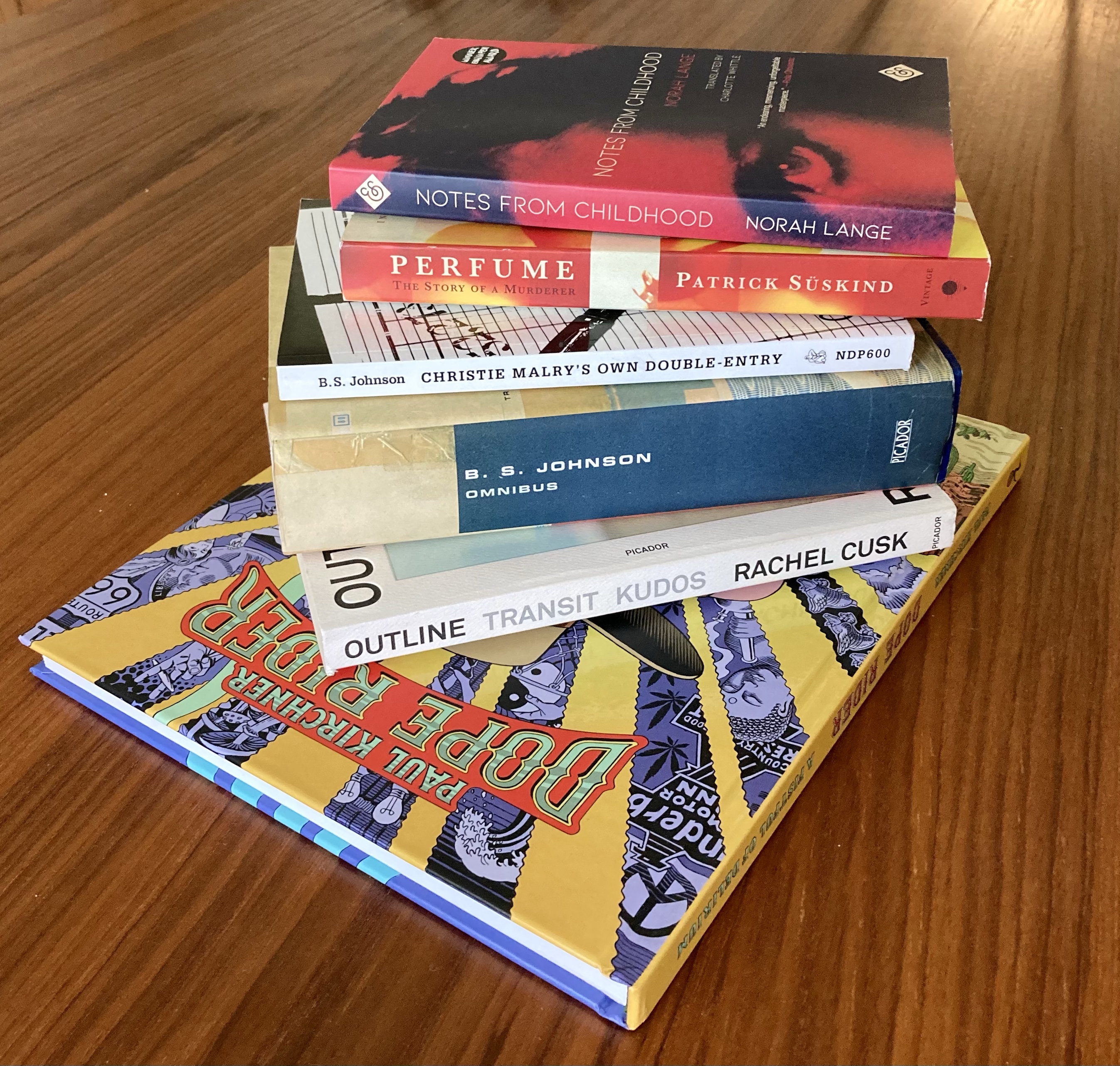
The last little bit of Spring trickles away here in North Florida, where beautiful days with highs of 82℉ promise to turn into burning sweaty hell in the next week or two. The Spring 2021 semester is behind me, and I’ve found a lot more time to read. So, re: pic, bottom to top:
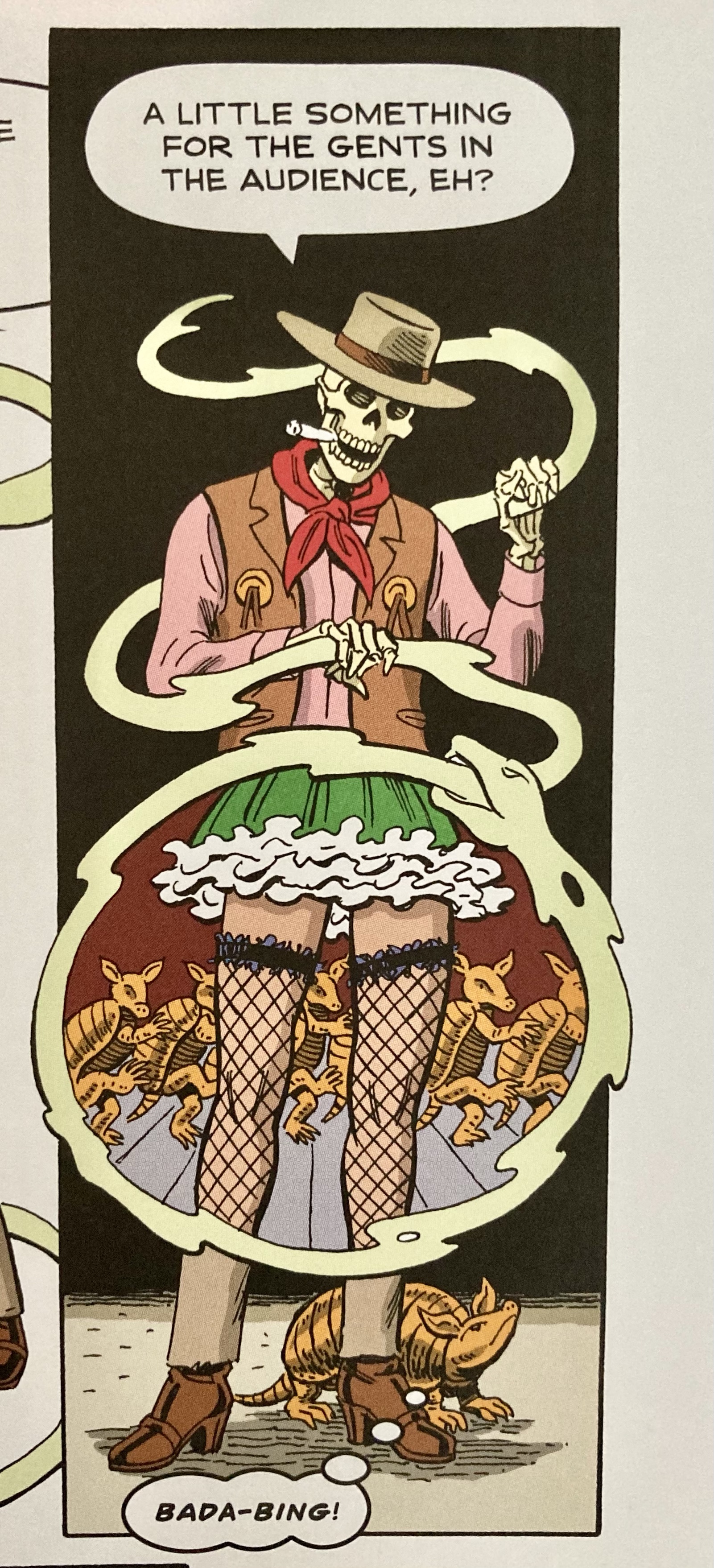
Paul Kirchner’s latest collection Dope Rider: A Fistful of Delerium is dope goofy gorgeousness. I’ve been taking it a page a day or so and am about to run out of the stash. I hope to have a review of it soon (maybe in The Comics Journal, where I reviewed Kirchner’s last collection, Hieronymus & Bosch).
Paul Kirchner
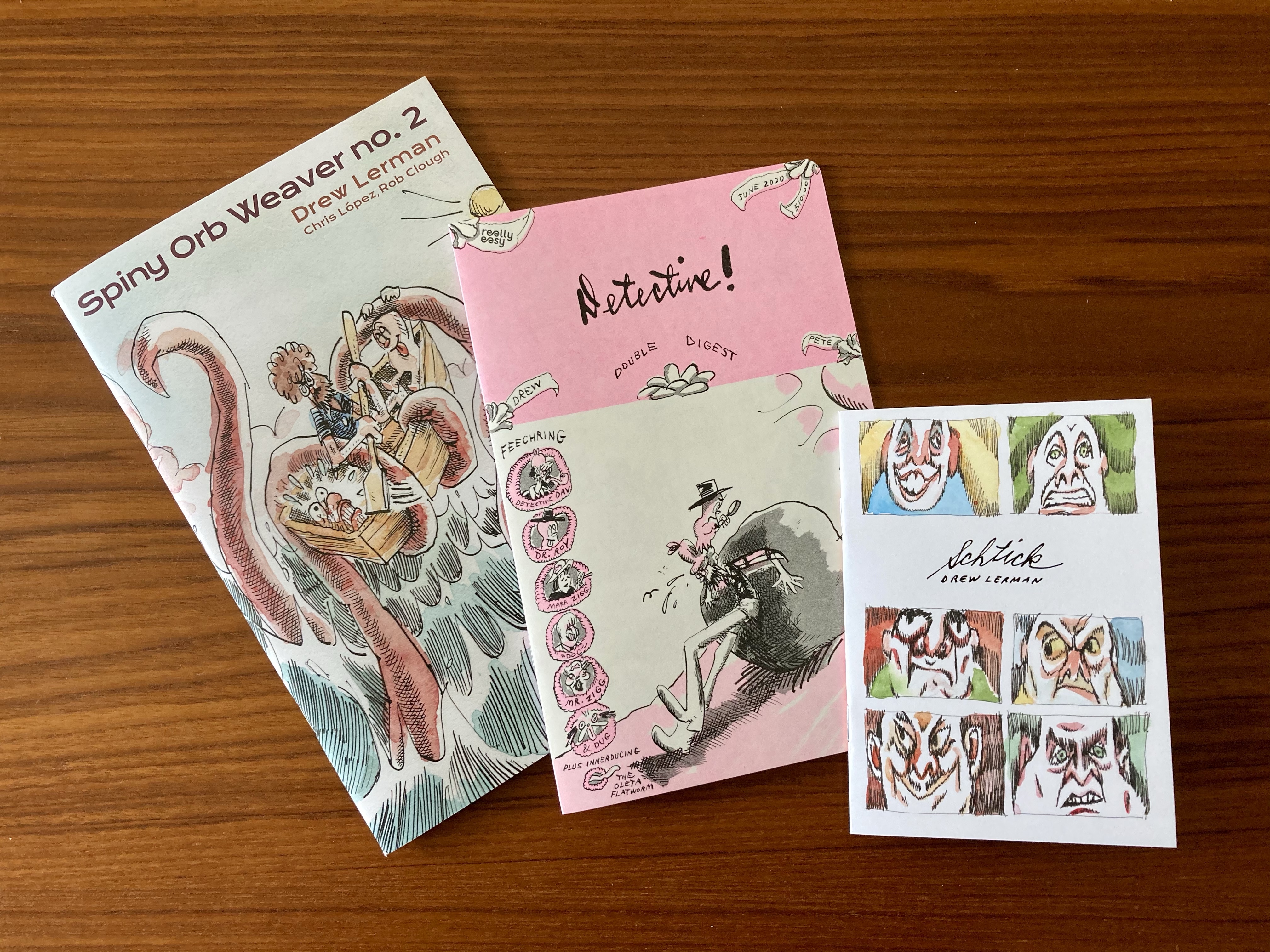
I also read some comix by Drew Lerman, and wrote about them here.
Drew Lerman
I picked up Rachel Cusk’s much-lauded novel Outline a few weeks ago at a Friends of the Library Sale. It was not for me. The flat, “tell-don’t-show” style didn’t bother me—indeed the prose is very “readable” (whatever that means)—but I found myself rolling my eyes a lot. A lot of smart people like this novel (and the trilogy it initiates), so maybe I fundamentally misread it. And in fairness, the whole contemporary autoficiton thing has left me cold, with the possible exception of Elena Ferrante’s so-called Neopolitan Novels, which I loved.
I read four B.S. Johnson novels in something of a blur. Johnson was an English avant-gardiste writing primarily in the 1960s. I wrote a bit about some of the novels here. Christie Malry’s Own Double-Entry ended up being my favorite, with Albert Angelo a close second. I thought Trawl was extremely tedious. I broke down and ordered a copy of his “novel in a box,” The Unfortunates—maybe I’ll muster the energy for something bigger on Johnson.
I’m a little over half way through Patrick Suskind’s Perfume (trans. by John E. Woods), and I really dig it—it feels like a long time since I’ve read a good ole fashioned historical novel told in the third-person omniscient/free indirect style. Set in France in the mid-1700’s, Perfume is the story of Jean-Baptiste Grenouille, a perfume genius, a freak, a murderer. I’d seen Tom Twyker’s film adaptation years ago, but the novel is richer, taking us deeper into Grenouille’s strange mind. Great stuff.
I recently finished Norah Lange’s fragmentary memoir, Notes from Childhood (trans. by Charlotte Whittle). It’s a propulsive and rich read, a loving but unsentimental, magical without a trace of whimsy. I wrote about it a bit here.
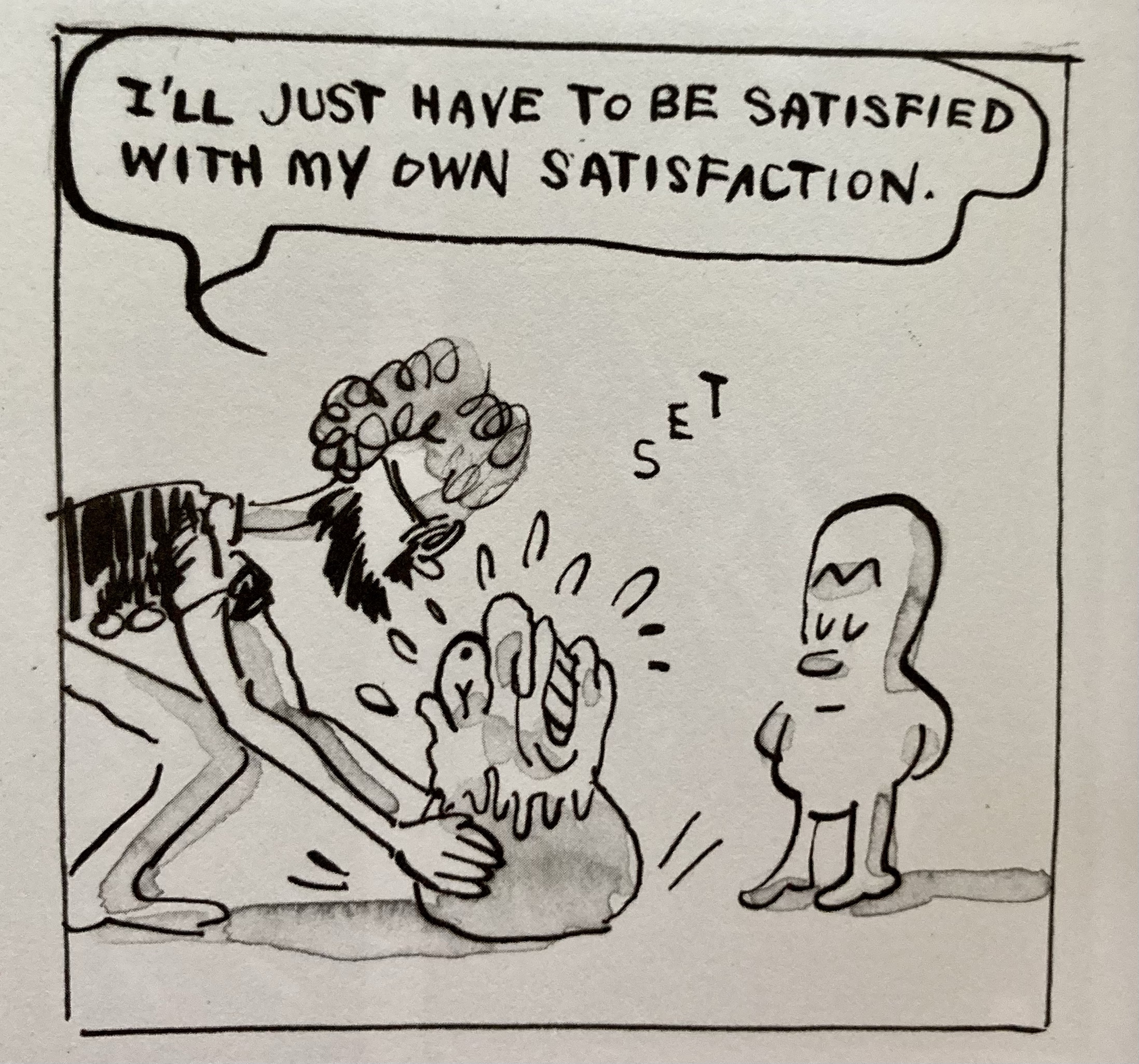
I’ve been a fan of Drew Lerman’s strip Snake Creek for a few years now. Reviewing Lerman’s first collection (simply titled Snake Creek) in The Comics Journal, Brian Nicholson wrote that,
Looking at these strips, you’re looking at something that recalls George Herriman, Harvey Kurtzman, Robert Crumb, Daniel Clowes, Matt Groening, but also thinking: What if Stanley Elkin drew a comic strip?
What if Elkin drew a comic strip indeed?
Like Elkin, Lerman plays with a variety of voices and rhythms in his work. There’s a zaniness to the Snake Creek world, but also an almost-melancholy seriousness to it as well. His main characters are Dav and Roy. Roy is something of a would-be tortured artist; Roy his familiar/foil, a spritely interlocutor to bounce ideas off of. Like the swamp-dwellers of Walt Kelly’s seminal strip Pogo, there’s a real affection between the two characters that anchors the surreal plasticity of Lerman’s work in genuine emotion.
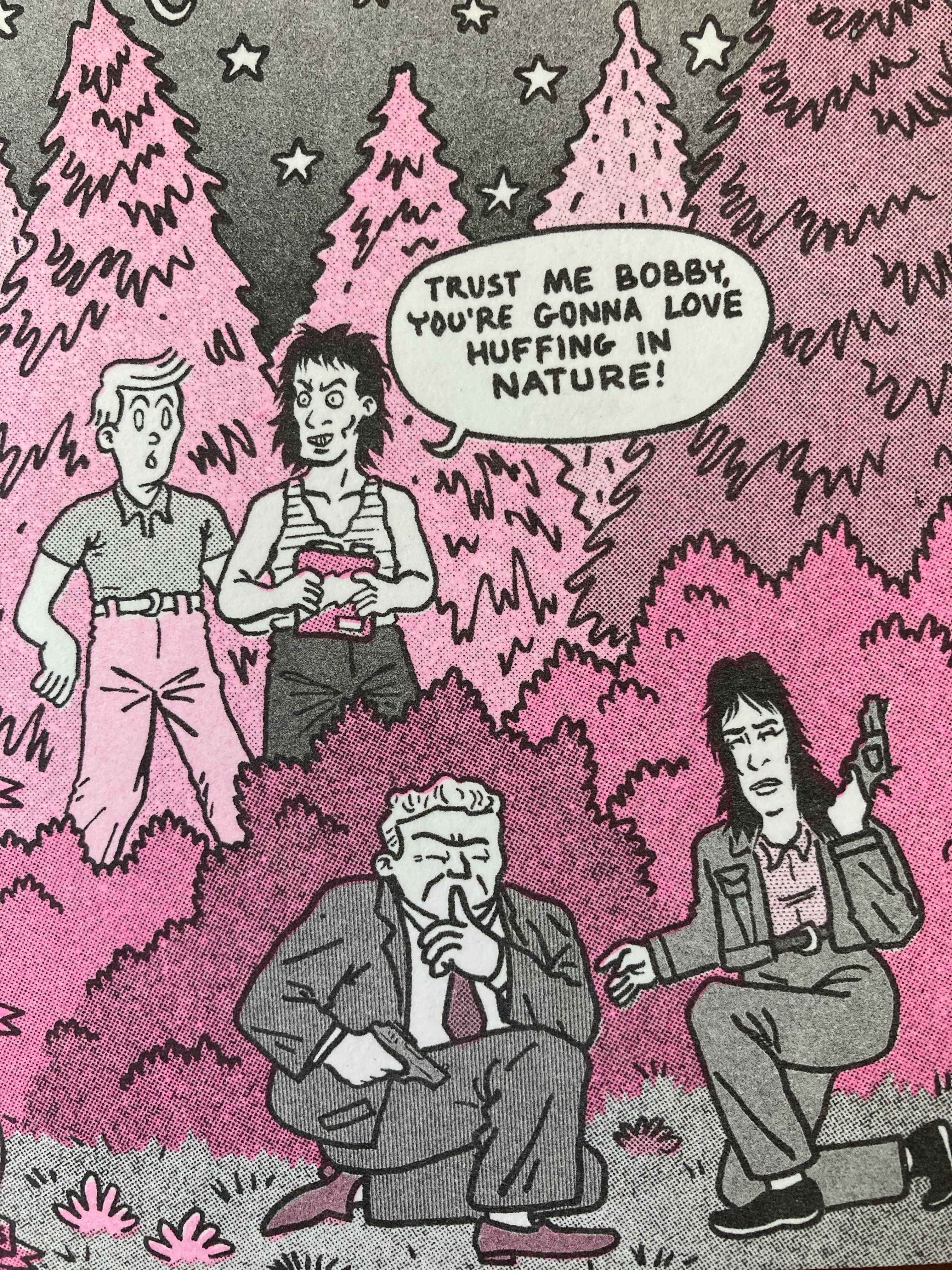
I got three Snake Creek comix last week and tried not to read them too quickly on Sunday afternoon. I needed to get the bad taste of a Serious Contemporary Novel out of my brain, and Detective! Double Digest did the trick. There are two stories here: Lerman’s “Cryonic Pain: A Snake Creek Mystery” and on the literal flipside, Pete Faecke’s “The Big Love Triangle” (which has a scuzzy punk noir vibe).
From Pete Faecke’s “The Big Love Triangle.”
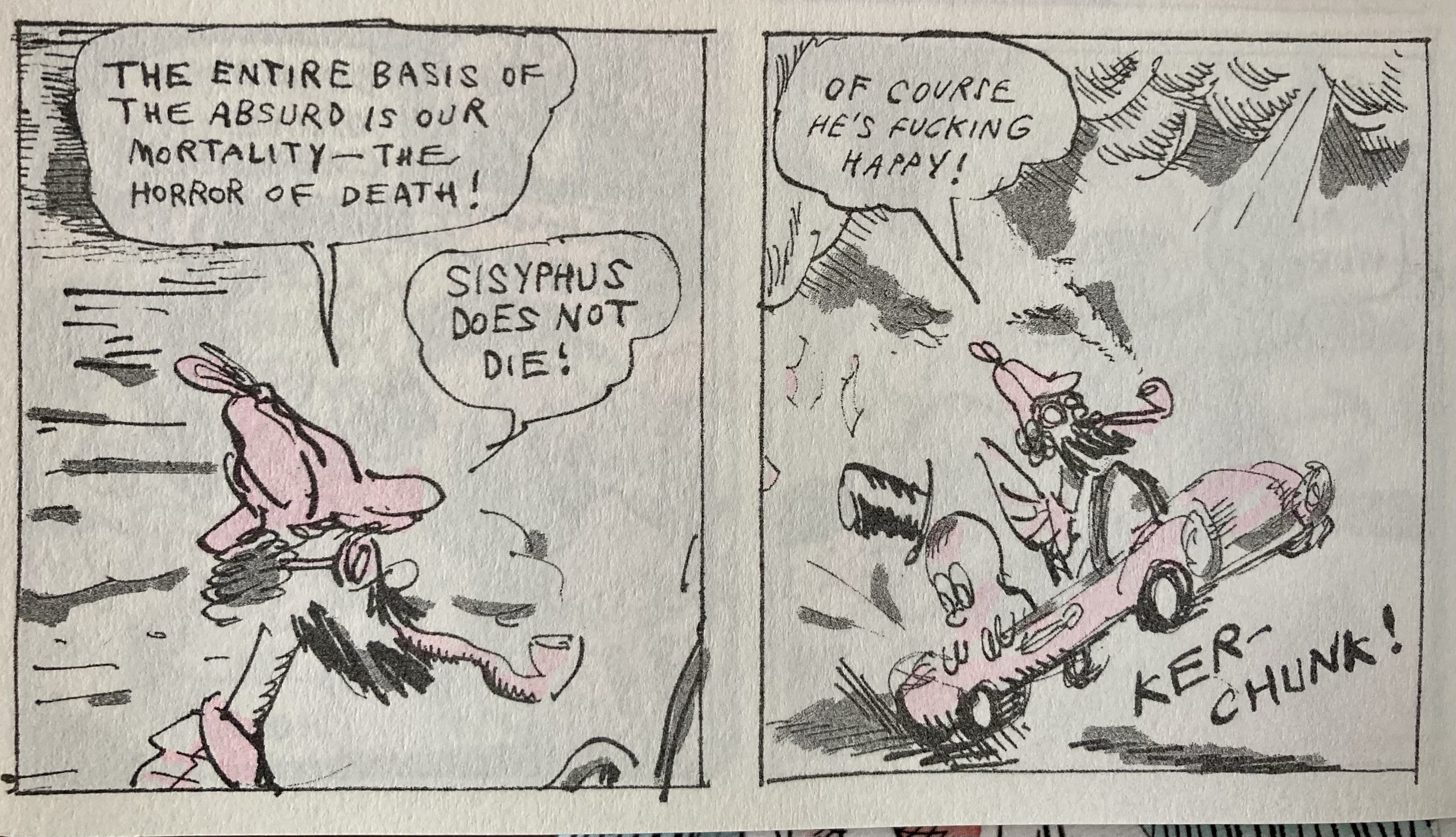
Lerman’s detective story is an existentialist affair—a goofing riff on the myth of Sisyphus and the burden of a consciousness constrained by mortality and time. It’s also full of verbal slapstick and surreal shenanigans.
From Drew Lerman’s “Cryonic Pain.”
Back cover of Drew Lerman’s Schtick
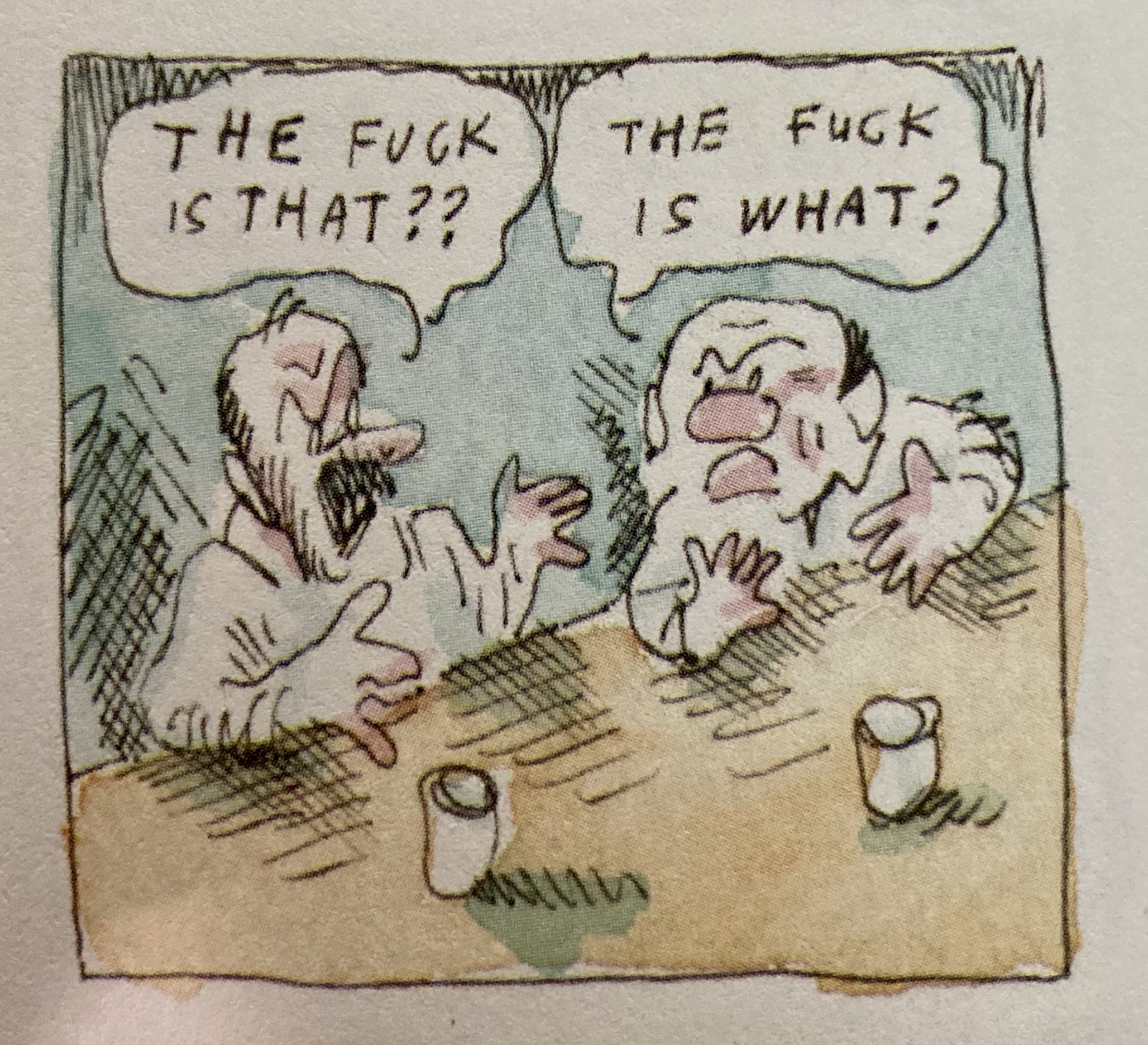
Schtick is a mini-comic in full color compromised of five vignettes, each one a riff or routine rooted in vaudevillian humor and composed in an original vernacular. The longest of the pieces, “Herbit and Sheiler,” is an extended play on linguistic misunderstandings—good stuff.
From Drew Lerman’s strip “Levi & Cohn,” Schtick
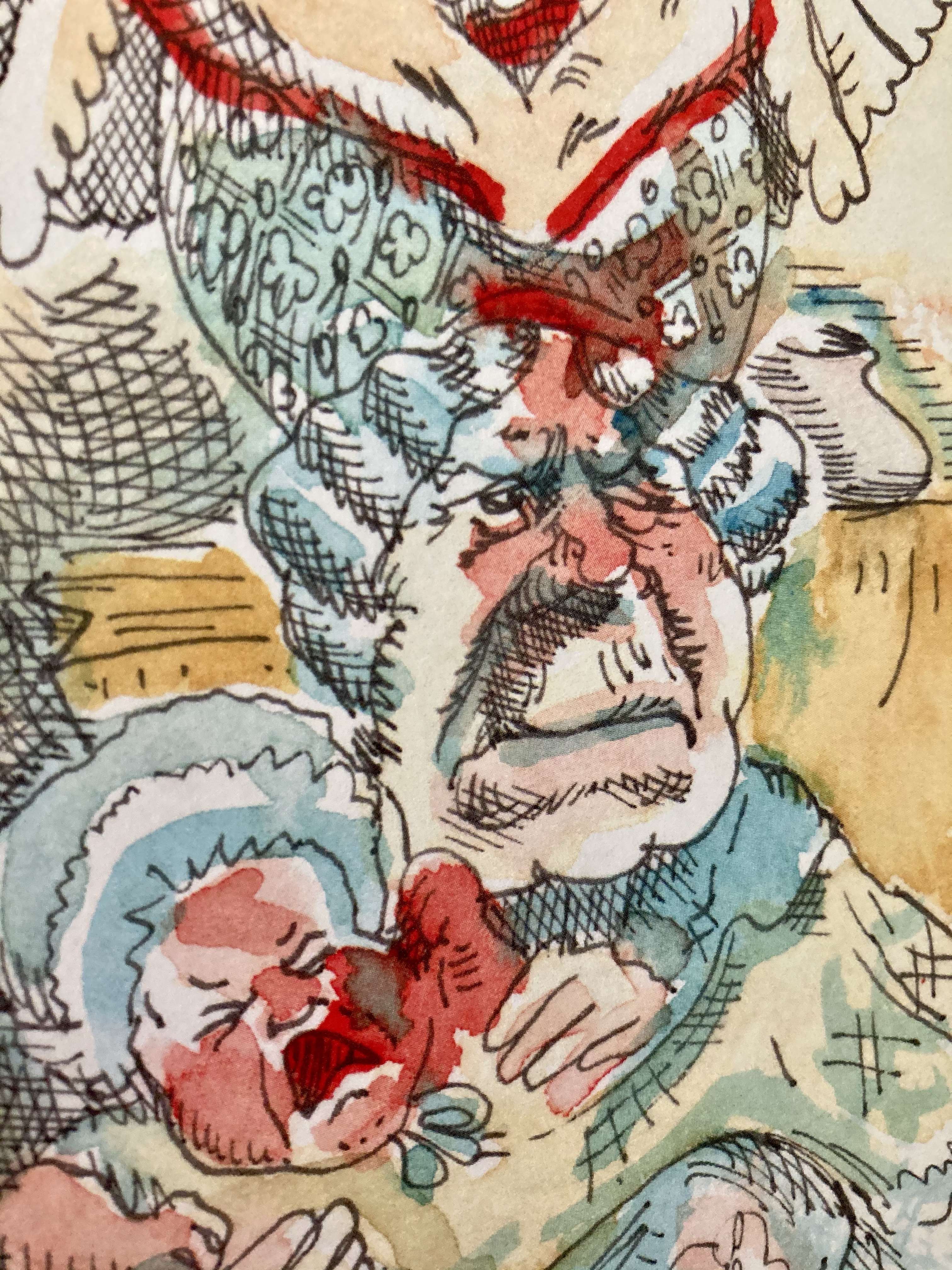
My favorite of the three comix is the most recent, “Head Trip,” the cover feature for the latest issue of the Miami-based comics journal Spiny Orb Weaver. (The issue also features an essay by comics critic Rob Clough, an autobiographical comic by Chris López, and a lengthy interview with Lerman, conducted by SOW editor Neil Brideau.)
Detail from Drew Lerman’s cover for Spiny Orb Weaver no. 2
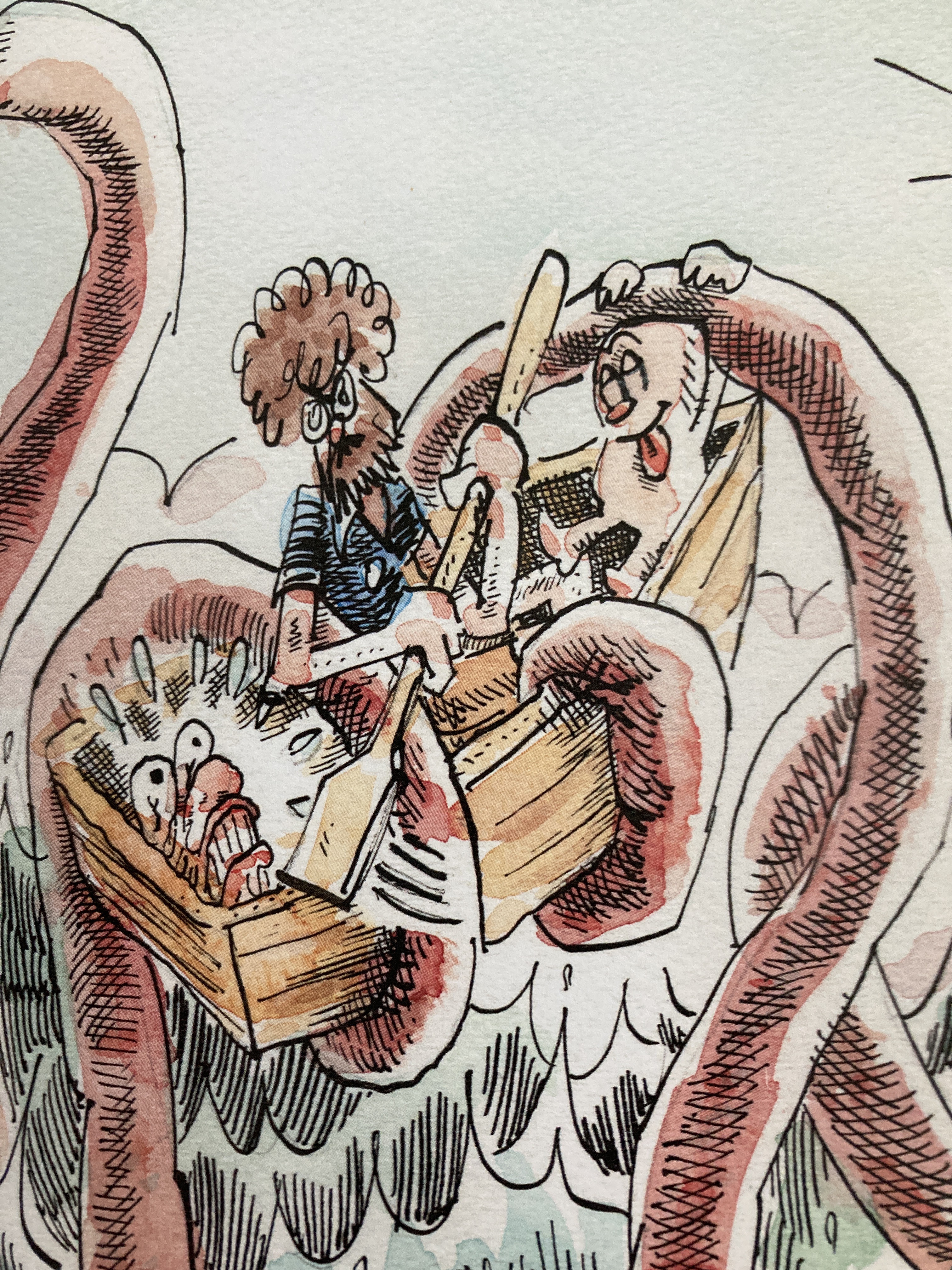
“Head Trip” sees Dav and Roy trying to take Snake Creek’s most anguished character, Head on a Stone, on an adventure he can remember. Unable to move or communicate, but nevertheless burdened by consciousness, Head on a Stone is a tragic figure, a “pulsing node of dread,” as Dav puts it. Dav and Roy decide, in their wisely wisdom, to take the large rock seafaring. What follows is an ironic series of tragic-comic-tragic-etc. reversals of fortune (as well as some of Lerman’s most lyrical work to date with his strip). “Head Trip” is as linguistically loose and visually goofy as we might expect from anything set in the Snake Creek universe, and also achieves a level of poignancy we might not expect. Great stuff.
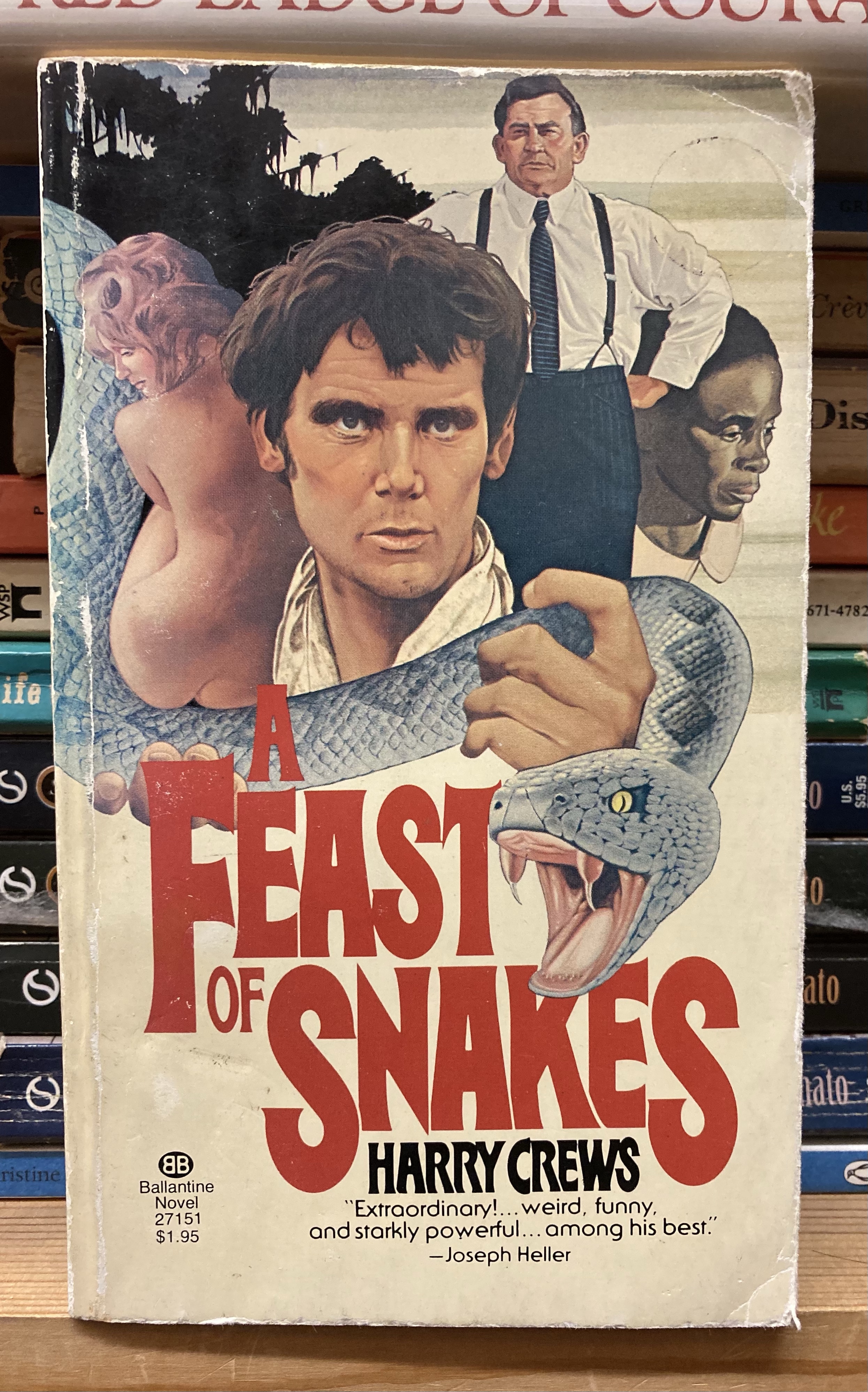
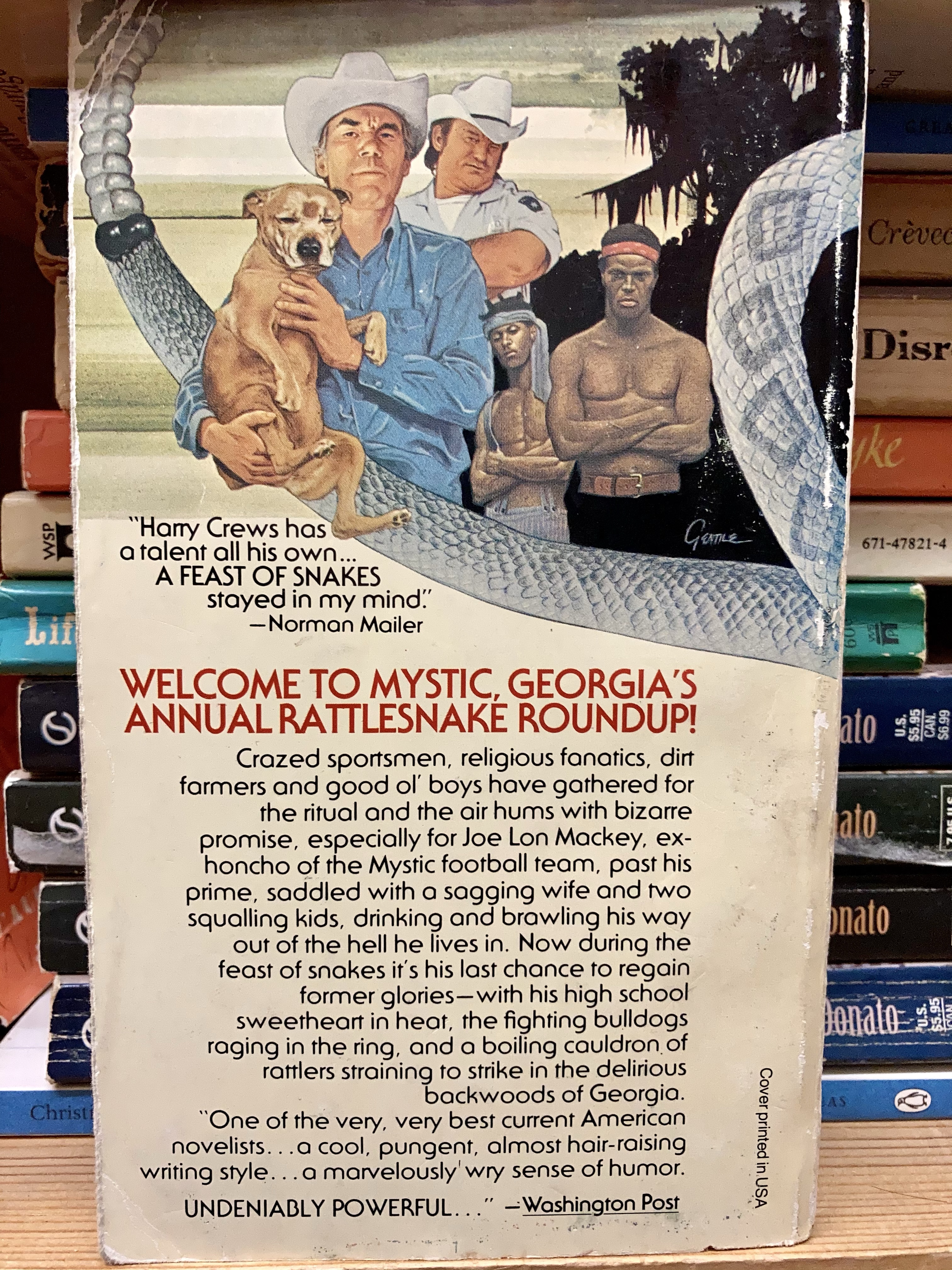
I love to browse my local used bookstore of a Friday afternoon. This afternoon I came across a copy of my favorite Harry Crews novel, A Feast of Snakes. It’s a 1978 massmarket edition from Ballantine. The lurid cover captures the novel’s lurid spirit. It wraps around; here’s the back (I’d scan the whole thing flat but I don’t think the book’s spine would survive):
The art seems to be signed with the (last I’m guessing?) name “Gentile.” If anyone can confirm I’d appreciate it.
The cover captures the sweaty abjection of A Feast of Snakes—it’s a nasty, gnarly novel that pushes the so-called “Southern Grotesque” style into new, gross, territory. If you haven’t read Crews, it’s a perfect starting point (although I’m sure that the novel is like, problematic or whatever in many, many ways). I love the cover, as I’ve said–it fits the novel wonderfully, unlike the more “respectable” cover for my 1998 edition (which I’ll be trading in now):
From the novel: not quite a recipe for snakes:
When they got to his purple double-wide, Joe Lon skinned snakes in a frenzy. He picked up the snakes by the tails as he dipped them out of the metal drums and swung them around and around his head and then popped them like a cowwhip, which caused their heads to explode. Then he nailed them up on a board in the pen and skinned them out with a pair of wire pliers. Elfie was standing in the door of the trailer behind them with a baby on her hip. Full of beer and fascinated with what Joe Lon could feel—or thought he could—the weight of her gaze on his back while he popped and skinned the snakes. He finally turned and looked at her, pulling his lips back from his teeth in a smile that only shamed him.
He called across the yard to her. “Thought we’d cook up some snake and stuff, darlin, have ourselves a feast.”
Her face brightened in the door and she said: “Course we can, Joe Lon, honey.”
Elfie brought him a pan and Joe Lon cut the snakes into half-inch steaks. Duffy turned to Elfie and said: “My name is Duffy Deeter and this is something fine. Want to tell me how you cook up snakes?”
Elfie smiled, trying not to show her teeth. “It’s lots of ways. Way I do mostly is I soak’m in vinegar about ten minutes, drain’m off good, and sprinkle me a little Looseanner redhot on’m, roll’m in flour, and fry’m is the way I mostly do.”







 Biblioklept