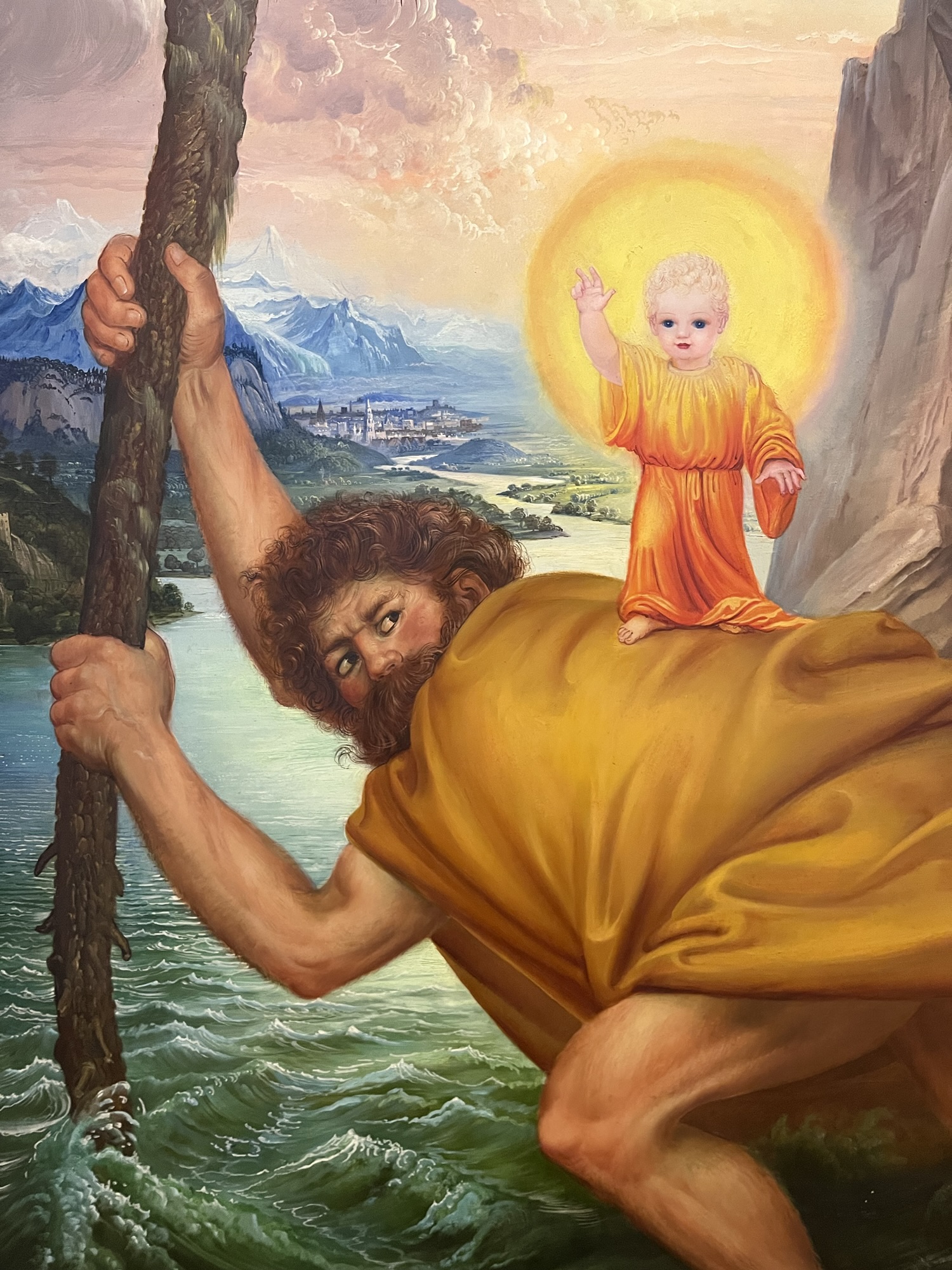
A Scene on Mont Salève, Switzerland, after a Drinking Session — Jens Juel

A Scene on Mont Salève, Switzerland, after a Drinking Session, 1778 by Jens Juel (1745–1802)

Laura Vazquez’s novel The Endless Week (Book acquired, 24 May 2025)

Laura Vazquez’s novel The Endless Week is forthcoming this Fall in the US in English translation by Alex Niemi from publisher Dorothy. The Dorothy Project’s (enticing) description:

From the 2023 winner of the Prix Goncourt for poetry comes a debut novel unlike any other, a lyrical anti-epic about the beauty, violence, trauma, and absurdity of the internet age.

Like Beckett’s novels or Kafka’s stranger tales, The Endless Week is a work outside of time, as if novels had never existed and Laura Vazquez has suddenly invented one. And yet it could not be more contemporary, as startling and constantly new as the scrolling hyper-mediated reality it chronicles. Its characters are Salim, a young poet, and his sister Sara, who rarely leave home except virtually; their father, who is falling apart; and their grandmother, who is dying. To save their grandmother, Salim and Sara set out in search of their long-lost mother, accompanied by Salim’s online friend Jonathan, though their real quest is through the landscape of language and suffering that saturates both the real world and the virtual. The Endless Week is sharp and ever-shifting, at turns hilarious, tender, satirical, and terrifying. Not much happens, yet every moment is compulsively engaging. It is a major work by one of the most fearlessly original writers of our time.

“Not much happens, yet every moment is compulsively engaging” — I am the kind of sicko who will lap that up, maybe. I’ve had almost entirely hits with everything Dorothy has put out; even the misses were a thousand percent more interesting than most of the midlist stuff that comes through the house. Anyway.

Mass-market Monday | Muriel Spark’s Memento Mori

Memento Mori, 1954, Muriel Spark. Avon Bard (1978). No cover artist or designer credited. 191 pages.

From David Lodge’s 2010 reappraisal of the novel in The Guardian:

The fiction of the 50s was dominated by a new wave of social realism, represented by novels such as Lucky JimSaturday Night and Sunday Morning, and Room at the Top, whose originality lay in tone and attitude rather than technique. Typically they were narrated in the first person or in free indirect style, articulating the consciousness of a single character, usually a young man, whose rather ordinary but well observed life revealed new tensions and fault-lines in postwar British society. An unsympathetic character in Memento Mori called Eric has evidently written two dispiriting works of this kind. Memento Mori itself was an utterly different and virtually unprecedented kind of novel. It is a short book, but it has a huge cast of characters, to nearly all of whose minds the reader is given access. The speed and abruptness with which the narrative switches from one point of view to another, managed and commented on by an impersonal but intrusive narrator, is a distinguishing feature of nearly all Spark’s fiction, and it violated the aesthetic rules not only of the neorealist novel, but also of the modernist novel from Henry James to Virginia Woolf. Spark was a postmodernist writer before that term was known to literary criticism. She took the convention of the omniscient author familiar in classic 19th-century novels and applied it in a new, speeded-up, throwaway style to a complex plot of a kind excluded from modern literary fiction – in this case involving blackmail and intrigues over wills, multiple deaths and discoveries of secret scandals, almost a parodic update of a Victorian sensation novel. And she added to the mix an element of the uncanny, through which the existence of a transcendent, eternal and immaterial reality impinges on the lives of her ageing characters, reminding them of their mortality.

Sunday Comix

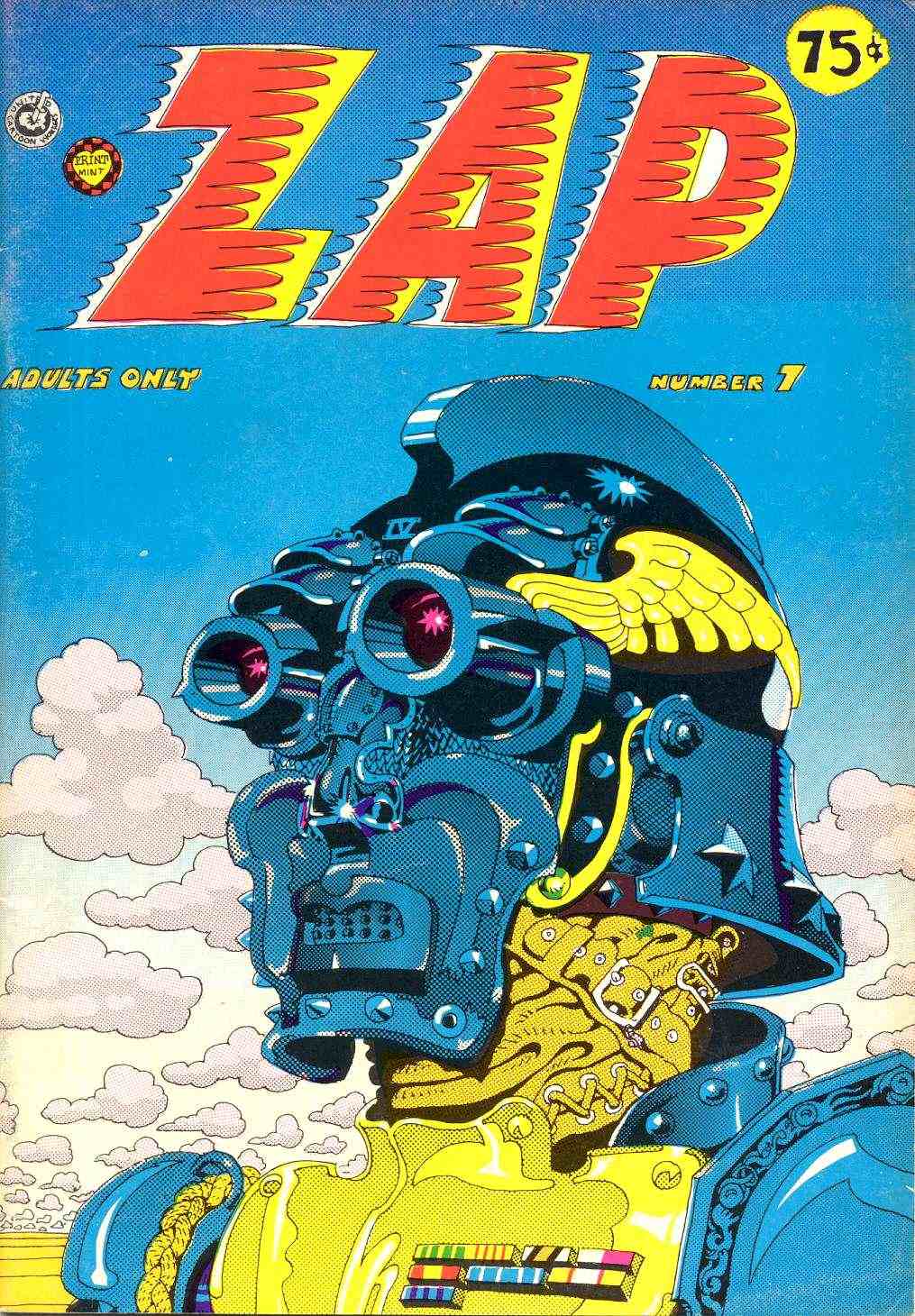
From “Mister Machine” by Jack Kirby, 2001: A Space Odyssey #10, 1977.

Untitled — Rita Kernn-Larsen

Untitled, c. 1930s by Rita Kernn-Larsen (1904–1998)

Benito Pérez Galdós’ Miaow (Book acquired, mid May 2025)

Benito Pérez Galdós’ 1888 novel Miaow is forthcoming in English translation this summer by Margaret Jull Costa, via NYRB. Their blurb:

Ramón Villaamil has been a loyal civil servant his whole life, but a change in government leaves him out of a job and still two months short of qualifying for his pension. Initially optimistic that he’ll be able to find work and pull his family out of their financial straits, he spends his days visiting the administration, pestering his ex-colleagues to put in a good word for him, and begging his friends in high places for money. At home, Villaamil’s wife, daughter, and sister-in-law—whose feline appearances earn them the nickname “the Miaows”—are unimpressed by Villaamil’s failures, and the only joy left in Villaamil’s life is his young grandson Luis. When Luis’s disgraced father, the handsome and dastardly Víctor Cadalso, reappears in their lives with promises of easing their financial burdens, Villaamil has no choice but to allow him back into their midst, even as he knows there is nothing pure about Víctor’s intentions and his return might spell their ruin.

Benito Pérez Galdós’s satire of middle-class life bears comparison with the novels of Charles Dickens and Honoré de Balzac, serving up a scathing critique of the hypocrisy and corruption of nineteenth-century Spanish society and the dehumanizing rituals of work. Margaret Jull Costa’s new translation brings out the tragedy, the comedy, and the vitality of Pérez Galdós’s prose.

“Dogleg” — Kay Ryan

“Dogleg”

by

Kay Ryan


Birds' legs
do of course
all dogleg
giving them
that bounce.
But these are
not normal odds
around the house.
Only two of 
the dog's legs
dogleg and 
two of the cat's.
Fifty-fifty: that's
as bad as it 
gets usually,
despite the 
fear you feel
when life has
angled brutally.

The Death of the Poacher — Xiao Guo Hui

The Death of the Poacher, 2023 by Xiao Guo Hui (b. 1969)

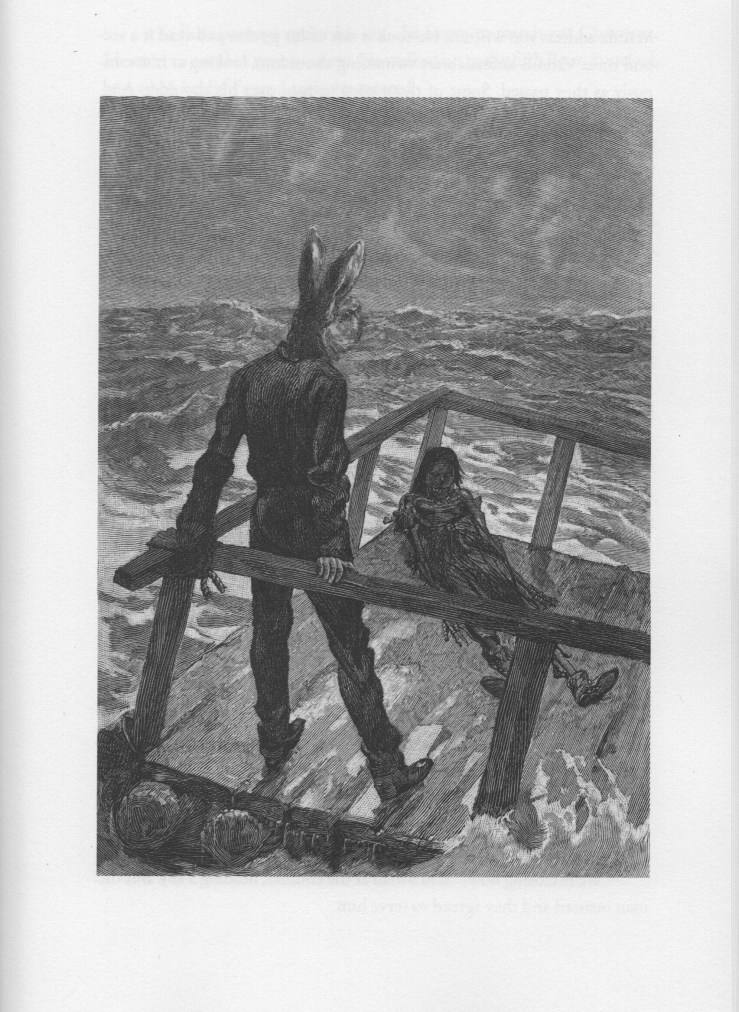
And another Moby-Dick

Herman Melville’s 1851 novel Moby-Dick is probably my favorite book.

***

Years ago at an awful dinner party a man I didn’t know asked me What do you do?, by which he meant how I made money to live, or, maybe charitably, if I had a specific profession. When I told him it had something to do with literature and college students he followed up with a question no stranger should aim at another stranger-

-So what’s your favorite book then?

-Moby-Dick is my favorite book, I offered, this being my somewhat standard answer then.

-Oh no, I mean, what’s your real favorite booknot just the one you say to impress people?

Okay Gravity’s Rainbow is my favorite book.

-I haven’t read that one yet but I like Tom Clancy too. 

***

A dear friend at our house this weekend, under truly awful circumstances, circumstances that have no bearing on this riff, claimed to have counted “eighteen copies” of Moby-Dick around the house. As far as I could tell, there are only about thirteen, including a children’s pop up version and three comic book adaptations (I don’t know how he would’ve found the comic adaptations, as they are slim and I think in drawer or box). He asked for one; I offered him the UC Press edition illustrated by Barry Moser, the one I’d used the last time I reread Moby-Dick. He opted instead for the most recent Norton Critical Edition, which a rep sent me a few years ago.

***

The last time I reread Moby-Dick I used the UC Press edition illustrated by Barry Moser. This was in 2021. I ended up writing forty riffs on the novel, likely trying the patience of any regular readers of this blog.

***

If you’re not up for forty riffs, I wrote a very short riff on this very long book back in 2013.

***

The two preceding notes are my way of saying: Moby-Dick is probably my favorite novel; it’s fantastic and I’ve written about it in both short and long form, and I think anyone can read it and should–it’s funny, sad, thrilling, captivating, meditative, beguiling, baffling–a thing larger than its own frame, certainly larger than its author and his era. And so now–

***

I have another Moby-Dick. This one is designed and illustrated by Dmitry Samarov. It’s about 650 pages, and is a pleasing, squarish shape that rests easy in the hands (a contrast to the coffin-shaped Norton Critical Editions). The pages are not too bright (I hate bright white pages) nor too crisp; the spine is not so rigid that one seeks to break it before setting about the business of checking into the Spouter Inn. It is a very readable copy — relaxed, not too heavy and not too cramped, no precious footnotes. And there are Samarov’s sketches.

***

***

Rifling (or is it riffling? I can never remember) through this edition today, reading a few passages aloud even, just to feel myself go a little crazy and then get a small relief from that craze, the dominant sense I got from Samarov’s accompanying sketches is something like this: Someone riffing along to Ishmael’s ghost-voice, not competing with it nor trying to turn the mechanics of its verbs and nouns and adjectives into a mimetic representation of action or thought. I think the drawings, as a body, rather approximate something like an aesthetic ear tuned to Ishmael’s wail: scratchy ink lines tangle into and out of shapes in a discourse with the narrative. Others tuned to the voice might on any given page jot down a note or circle a phrase or even, dare, dream of a crowded footnote; Samarov offers a sketch. His love for the novel comes through.

***

If you haven’t read Moby-Dick, you should. Samarov’s edition is a worthy entry into the fold. Check it out.


Summer reading list for 2025

Whether you’re longing by the pool of despair, rending your garments on satanic shores or enjoying the longer daylight hours in your favorite reading spite, eh, spot, these 15 titles—new and old—threaten to deliver the perfect summer escape.

Photo by Bethany Laird on Unsplash; fuck AI forever

“Tidewater Tales by Night” by Roberto Barth – The beloved Chilean-American returns with a multigenerational saga set in coastal Maryland where magical realism meets environmental activism. Barth’s first climate fiction novel explores how one family confronts rising sea levels while uncovering long-buried secrets–and bodies.

“The Last Orgasm of BetaBlocker 9” by Philip K. Roth – Following his success with “The Martian’s Mistress” and “Project Heil Marty,” PKR delivers another paranoid science-noir-thriller-cum-horny-shenanigans. This time, the story follows programmer Dick Gentle, who discovers that an AI system has developed consciousness—and has been secretly influencing global events for years. Or is Gentle simply another shadow on the wall of cyber-Plato’s cave?

“Hurricane Season 2” by Fernanda Melchor – Melchor, who captivated readers with “Hurricane Season,” powerfully explores family bonds tested by natural disasters. When a Cat 5 hurricane forces incestuous siblings to shelter together in their childhood home, long-suppressed tensions emerge alongside unexpected reconciliations. There is also a witch.

“The Coroner’s Apparatus” by Curly Dick Jenkins– Jenkins spins a haunting, genre-blending tale that follows a disbanded 1970s rock group reuniting for one final Southwest tour—only to be lured into a nightmarish canyon town where ancient cannibalistic rituals and unspeakable violence await beneath the stage lights.

“Nightshade Market” by Mingy Bull Lee – The author of “Pacman Out/Er/Zone” delivers a feverish, cut-up chronicle of a washed-up rock junkie’s descent into a hallucinatory desert underworld, where cryptic transmissions, reanimated flesh, and a chrome-plated dildo left behind by a vanished medic blur the line between performance and ritual dismemberment. It’s the feel-good hit of the summer!

“Fur and Longing and Lost Wages” by Rum Anne Direy – In this scorched-earth fever dream, a narcotized travel writer stumbles into a solstice rave at a crumbling Nevada timeshare, where a kangaroo in mirrored shades deals mescaline, the pool is full of lizards, and no one’s allowed to leave until the missing dildo turns up or the moon explodes.

“Moby-Dick” by Herman Melville – Mostly whale facts.

“My Gyrations” by Knut Hamsun – In this baffling late-period novel, the Nobel laureate behind Hunger blends climate grief with domestic farce, as a brooding wildlife photographer obsessed with a possibly extinct bird returns home to his bustling Nordic household—where his jazz-loving wife, precocious children, and an endless stream of sentient gyres threaten to derail his quest for ecological and emotional clarity.

“The Rainmaker” by Percival Everett – Everett’s satirical genius turns to a novelization of the 1997 American legal drama film “The Rainmaker” written and directed by Francis Ford Coppola, based on John Grisham’s 1995 novel of the same name, and starring Matt Damon, Claire Danes, Jon Voight, Mary Kay Place, Mickey Rourke, Danny DeVito, Danny Glover, Roy Scheider, Virginia Madsen, and Teresa Wright (in her final film role).

“Salt and Honey” by Delia Owens – A humble badger monk discovers he is the reincarnation of a forgotten war-god, destined to wield the ancient Spoon of Light against the armies of Moldor the Vile.

“Tres Leches” by Françoise Sagan – This slim 1954 novel, written when Sagan was just 18, captures the drama of preheating the oven to 350°F, oiling and flouring a 13×9-inch metal pan and setting it aside, whisking together cake flour, baking powder, and salt in a medium bowl and setting it aside, placing the butter into the bowl of a stand mixer, beating on medium speed with the paddle attachment until fluffy, about one minute, reducing the speed to low and gradually adding the sugar, mixing for another minute, scraping down the sides of the bowl as needed, adding eggs one at a time, mixing well after each addition, stirring in vanilla extract, gradually adding the flour mixture in three batches, mixing until just combined, transferring the batter to the prepared pan and spreading it evenly, baking for 20-25 minutes, or until lightly golden and the cake reaches an internal temperature of 200°F, cooling the cake for 30 minutes on a cooling rack, once cooled, poking the top with a skewer or fork and allowing it to cool completely before preparing the glaze, whisking together evaporated milk, sweetened condensed milk, and half-and-half in a measuring cup, then pouring the glaze over the cake, refrigerating overnight, whipping heavy cream, sugar, and vanilla in a stand mixer on low until stiff peaks form, increasing the speed to medium and whipping until thick, spreading the topping over the cake and refrigerating until ready to serve.

“Gravity’s Rainbow” by Thomas Pynchon – Mostly dicks and rockets.

“Dannellon’s Whine” by Roy Bradboy – Dannellon is new in town and wants to party–but will anyone want to party with her? Bradboy’s spiritual sequel to “Portnoy’s Complaint” addresses female sexual frustration in the nascent twenty-first century in a way that nobody, I mean fucking nobody, not even you, you sicko, would want to read.

“Call Me By Your Name, Ishmael” by André AcimanAciman’s slim and thoroughly unnecessary and decidedly undelightful retelling of “Moby-Dick” focuses on drawing out Chapter 94, “A Squeeze of the Hand” for like 140 pages. 

“Atonement” by Ian McEwan – The metafictional twist at the end is a cheap parlor trick. But hey, it’s a real novel.

Not really a blog about books acquired, May 2025

The afternoon my best friend died, three review titles arrived at Biblioklept World Headquarters. That was the first Monday in May 2025.

The next day, the first Tuesday in May 2025, a lovely new copy of Moby-Dick arrived, designed and illustrated by my old internet friend Dmitry Samarov. I was regularly breaking down into a kind of horrified shaking disbelief throughout this day. My best friend read Moby-Dick before I did. He told me it was funny and that I could read it, “No problem man.” He loaned me his copy of Pierre when I had to read it in grad school. I never gave it back.

On Wednesday–do I need to clue you in that this was the first Wednesday of May 2025? I seem to have lost my sense of time and scale this month, untethered from the Spring semester, which ended right as May began, unencumbered from any normalizing duty other than fatherhood and husbandry and just generally trying to be a good citizen–also generally numb in my nascent grief to the daily horrors of the what we call news or current events or what-have-you–but, yeah, I seem to have lost some days here… (maybe they’ve been colonized by the “Asiatick Pygmies” of Thomas Pynchon’s Against the Day, who colonized the “eleven missing days” of September 1752)… So well anyway on this first Wednesday of May 2025 the growing book pile took a silly turn, with the arrival of a massive book and a not-so-massive book, both by Henrik Pontoppidan. Other books arrived too. It’s the Spring catalog, or maybe the Summer catalog, I guess.

I managed to write something about my friend on Wednesday. I simply had to.

Thursday was the second Thursday of May, 2025, making it 8 May 2025, the 88th birthday of Thomas Pynchon. For over a decade now, I’ve celebrate my favorite author’s birthday on this blog as part of the Pynchon in Public “tradition,” but I couldn’t muster what I had planned (a riff on the forthcoming Vineland adaptation and the new novel, Shadow Ticket). The notes I sketched in late April for the piece strike me as silly, glib even.

That Thursday afternoon my friend’s wife (widow? fuck!) called me to ask me to deliver the eulogy at his “Celebration of Life Ceremony” at the beach the following Thursday. I started working on it. It was painful but somehow easy to write. It was very, very difficult to edit.

On Friday, Jon Lackman and Zack Pinson’s biography The Woman with Fifty Faces: Maria Lani and the Greatest Art Heist That Never Was arrived at Biblioklept World Headquarters. My daughter had seven girls over to make their own pizzas that night. I read The Woman with Fifty Faces in one sitting; it was wonderful. It was the first thing I’d read that was not in some way connected to my friend’s death. I loved the experience of reading it. It offered relief.

This Friday, the second one of May, 2025 was the first day I hadn’t broken down at some point. I was absorbed in a study of grief. I was trying to shape my memories into something tangible, or at least something having a form, which is to say, something formal. I was googling things like, how long should eulogy be words. I was on the phone with old friends, replying to emails and messages from old friends. I was also contending with acquaintances I barely recalled, and none too fondly, who luridly “reached out” wanting details under the guise of “offering condolences.” I was amassing words.

More review copies on Saturday. Friends from out of town came over and we all drank far too much. There was another grief to attend to, a dead father, a man we had all adored, a fantastic storyteller, a raconteur even, if we’re feeling grand with our words, and I miss him too. My dead friend was a huge fan.

Sunday was Mother’s Day and I had forgotten about it. My own mother and father were both suffering from acute bronchitis, and I had held off on delivering the news of my friend, worried that they would worry for me and his family and his young young children. Sorrow is bad for health. But when family members reached out to me with sincere concern, prompted by the trickle of news on social media about the upcoming Celebration of Life — forgive me, I’m just gonna call it a funeral, it was a funeral, no matter what we want to say — anyway, the trickle turned into a stream, and then I called my mom with the news. I don’t have any physical proof like a recording, but her wailing immediate refusing disbelieving repeated NO sounded exactly like my own. But from a chronological position, it seems that I must have inherited that cry from her, no?

The next day she called me to tell me a story I’d never heard from either her or my friend — years ago, when I was living in Tokyo and he was still in Jacksonville, he stopped by my parents house, unannounced, simply because he was driving by and wanted to share some of my latest emailed updates with my parents and hoped that they would share some too. “We had spaghetti dinner together. It was so nice,” my mother said. My bones turned into jelly and my eyes took to sweating.

This next day was of course the second Monday of May, 2025, the one week mark. The document I’d titled “eulogy” was a massive incoherent patchwork of memories, good times, riffs, and material cribbed from friends, including an entire email so beautifully-written from a friend that I thought about just passing it off as my own. The document also included five Langston Hughes poems, several lines from Moby-Dick, two longish quotes from Emerson (neither of which I understood or understand), a chapter on mourning rites from an early-twentieth century anthropology book, numerous David Berman and David Bowie lyrics, and the entirety of Elizabeth Bishop’s “One Art.” It was at least 9,000 words longer than it should be.

I don’t remember anything about that Tuesday or Wednesday. Two or three books came in the mail, I think, and I finally drove in a car, I think. I think I remembered to attend the houseplants. I must have actually written the eulogy those days. What I remember mostly is sweating from the back of my legs, stripping away all the ornament and artifice I’d borrowed from literature and poetry and philosophy. I practiced reading it a few times. Some of my oldest, dearest, bestest friends arrived from the other side of the country that night.

On Thursday those friends came over. My wife would drive us all out to the beach for the funeral. We started in on a few cheap watery domestics, maybe a little too early. The drive seemed interminable. I can’t really capture the vibe in the pavilion—and while I’m here not capturing things, I apologize if you’ve made it this far–I suppose this post is a bait-and-switch, what with the picture of a stack of books, right? The “Not really” in the blog’s title should really not be there at all, right? But the thing is, I need to get this all out, just like the thing I needed to write two weeks ago. If I don’t write it here I feel like I’ll never write anything here again. This is ostensibly a blog dedicated to art and literature, but it’s really more like a pastebook, a form of emotional and aesthetic recordkeeping that I’ve kept up for almost two decades now. The books in the picture above didn’t pile up as neatly as the photo suggests, but they did pile like that, causing me anxiety all month, reminding me that my attention was too thinned out. I was not as attentive to my children as I should have been in those weeks. My houseplants suffered. But so I have to let all that anxiety out here, and I’m sorry if it’s alienating to a potential audience, and I’m sorry to write that I am really writing this for me, for writing that If I don’t get these words out of my body I will not be able to write other words on this blog ever again

—but the vibe in the pavilion. Very strange, moving from hysterical laughing to crying. Lots of great stories. The mic or PA went out in the middle of my eulogy so I ended up delivering it in the loudest voice I could muster. The pavilion was crammed, literally standing room only, such that the fire marshal or the marshal’s deputy or the person nominally in charge of these duties decreed that the doors be opened and about half of the people should mill about. The Atlantic breeze was lovely, even if it was in the high eighties. I saw and spoke to people I hadn’t seen in fifteen years, twenty years, thirty years. I was struck by how fucking old we all looked. My best friend’s brother looked exactly the same as their father had looked when we were thirteen, fourteen. I have felt iterations of oldtiredadult in my life; I’ve even felt mature and occasionally even wise (knowing that any trickle of wisdom I purchased through mistake and incaution). But I have never really felt grown up until last Thursday. I don’t really know what any of those words mean. We tossed flowers into the Atlantic’s chill waves.

I knew I’d have sand in my loafers all night. About a dozen of us went to a dive bar a mile away and got plastered. I had forgotten that there were still bars that people smoked in. A musician played four Seger covers in a row, keeping the beat with his prosthetic leg. The bar’s owner had a school desk set up right by the stage, where he was apparently attending to the bookkeeping, a pen in one hand, a menthol in the other. A vendor in a special vest kept trying to give us vape products. An older woman showed up after midnight and established an ad hoc outdoor kitchen where she fried lumpia, which we ate in large quantities. She told us several dirty jokes where the punchlines were, without variation, oral sex. We missed our friend; he would’ve had a great time that night.

My sweet wife, designated driver, got me and the boys over the river and back home, putting up with our arguing over Zappa. She fell into our mistake back at home though, committing herself to vodka while we polished off a bottle of bourbon.

Friday was an agony overcome in small measures by barbecue and beers, a slow stretching anti-wake of sorts where folks drifted in and out of our house. It was a strange party, but also so wonderful, so full of love and support and all things corny, I suppose. I gave away a copy of Moby-Dick (a Norton Crit) and my backup copy of Gravity’s Rainbow. I foisted a redundant Barry Hannah novel on a friend. Folks drifted off in lacy jags, or at least that’s how I’ll choose to characterize it here. A few stayed the night, sleeping on couches in a half-remembered skill perfected and then promptly abandoned over twenty years ago.

I didn’t really sleep, again. I had only really slept one night out of the past lost eleven days, and then I suppose on the point of exhaustion. I had not eaten healthily and over three days and nights had overindulged in alcohol in a way I had not in years. I drove my friend to the airport so he could return to his family in Portland, got out of my car around 11am on Saturday, aiming myself for my bed. I was having difficulty breathing, or not so much difficulty breathing, as sharp pain when breathing. This pain was enormously exacerbated when I lay down and relieved somewhat when I stood. The pain intensified throughout the day; it was something new. I weird dull pain in my neck and the back of my throat. Not esophageal, exactly. By three it was almost impossible to breathe anything but the most shallow breaths without intense pain; I could not lie down because of the pain, despite being exhausted. My wife insisted we visit an urgent care clinic in a CVS; the nice doctor there insisted with caring urgency that I go to the closest emergency room. Six hours and lots of tests later I was back at home in even worse pain but with a diagnosis of pericarditis, likely brought on from stress, and a prescription for prednisone.

On the third Sunday of March, 2025, I was finally able to truly fall asleep for the first time in weeks. I felt a bit better on Monday, although the steroids have made me feel a little loco I’ll admit. Today was the first day I’ve felt anything close to normal in a while–I mowed the lawn, which had gotten a bit wild, and attended many of my poor neglected houseplants. And then I exorcised the stack of books that had stackingly stacked up, a pillar of publishers’ good will that radiated anxiety-inducing waves. Let this post be a totem against that. I look forward to peeking in to some and reading others in full and maybe even ignoring one or two (not yours if somehow yours is included in the stack; not yours). And all my apologies again.

I feel better now. Just different.


Watermelon — Jansson Stegner

Watermelon, 2021 by Jansson Stegner (b. 1972)

“One Art” — Elizabeth Bishop

“One Art”

by

Elizabeth Bishop


The art of losing isn’t hard to master;
so many things seem filled with the intent
to be lost that their loss is no disaster.

Lose something every day. Accept the fluster
of lost door keys, the hour badly spent.
The art of losing isn’t hard to master.

Then practice losing farther, losing faster:
places, and names, and where it was you meant
to travel. None of these will bring disaster.

I lost my mother’s watch. And look! my last, or
next-to-last, of three loved houses went.
The art of losing isn’t hard to master.

I lost two cities, lovely ones. And, vaster,
some realms I owned, two rivers, a continent.
I miss them, but it wasn’t a disaster.

—Even losing you (the joking voice, a gesture
I love) I shan’t have lied. It’s evident
the art of losing’s not too hard to master
though it may look like (Write it!) like disaster.

Mass-market Monday | Arkady and Boris Strugatsky’s Prisoners of Power

Prisoners of Power, 1971, Arkady and Boris Strugatsky. Translation by Helen Salz Jacobson. Collier Books (1978). No cover artist or designer credited. 286 pages.

The uncredited cover art is by the prolific Richard M. Powers.

Here is T. J. Lewis’s review of the novel in World Literature Today, Vol. 53, No. 2:

Prisoners of Power recounts the adventures of an earthman who finds himself stranded on a planet that is beset with nuclear war, pollution of several kinds, totalitarianism and the genetic degeneration of its humanoid population. The earthman, Maxim, undergoes at least four cycles of acceptance, enthusiastic support, disenchantment and overt opposition in his relations with different sectors of this troubled world. By the end of the novel, when Maxim believes that he has finally succeeded in discovering the sources of worldwide misery and has managed to set about destroying them, he learns that one principal source of the misery is a fellow earthman whose mission on the planet has been to save it from itself. Maxim’s unwitting but often effective interference, however, has prevented this worthy aim from being accomplished.

Prisoners of Power dramatizes a number of questions that bear no necessary relation to the science-fiction setting: can a society which does not want to be controlled be led to some end against its will; can a single individual, no matter how great an advantage he possesses over others, make any truly significant changes in the social order; can totalitarianism be eradicated by any but totalitarian methods? These are sociopolitical concerns that admit no easy solution. And the Strugatskys, rather than proposing answers, have chosen instead to depict in detail the all-too-human frustration and chaos that result from attempts to force an easy solution upon an intractable problem, a problem that may in fact not be a problem at all but a condition endemic to humankind.


Posted in Art

Sunday Comix

From “The Electronic Concert” by Fred Schrier, Meef Comix #2, 1973.

Portrait of Colette Clark — Robin Ironside

Portrait of Colette Clark, c. 1958 by Robin Ironside (1912-1965)

“The Meaning of Mourning” – – Sabine Baring-Gould

“The Meaning of Mourning”

by

Sabine Baring-Gould

from Curiousities of Olden Times, 1896 


A strip of black cloth an inch and a half in width stitched round the sleeve—that is the final, or perhaps penultimate expression (for it may dwindle further to a black thread) of the usage of wearing mourning on the decease of a relative.

The usage is one that commends itself to us as an outward and visible sign of the inward sentiment of bereavement, and not one in ten thousand who adopt mourning has any idea that it ever possessed a signification of another sort. And yet the correlations of general custom—of mourning fashions, lead us to the inexorable conclusion that in its inception the practice had quite a different signification from that now attributed to it, nay more, that it is solely because its primitive meaning has been absolutely forgotten, and an entirely novel significance given to it, that mourning is still employed after a death.

Look back through the telescope of anthropology at our primitive ancestors in their naked savagery, and we see them daub themselves with soot mingled with tallow. When the savage assumed clothes and became a civilised man, he replaced the fat and lampblack with black cloth, and this black cloth has descended to us in the nineteenth century as the customary and intelligible trappings of woe.

The Chinaman when in a condition of bereavement assumes white garments, and we may be pretty certain that his barbarous ancestor, like the Andaman Islander of the present day, pipeclayed his naked body after the decease and funeral of a relative. In Egypt yellow was the symbol of sorrow for a death, and that points back to the ancestral nude Egyptian having smeared himself with yellow ochre.

Black was not the universal hue of mourning in Europe. In Castile white obtained on the death of its princes. Herrera states that the last time white was thus employed was in 1498, on the death of Prince John. This use of white in Castile indicates chalk or pipeclay as the daub affected by the ancestors of the house of Castile in primeval time as a badge of bereavement. Continue reading ““The Meaning of Mourning” – – Sabine Baring-Gould”