“Sophocles” — Gordon Lish

“Sophocles”

by

Gordon Lish

from Self-Imitation of Myself  (1997)


Take egg. Boil until hard-cooked. Crack shell. Hold under running water. Remove shell. Set shell aside. Peel away white. Set white aside. Use heel of spoon to mash yolk in midsize mixing bowl. Add one teaspoon heavy cream, one tablespoon granulated sugar, one teaspoon confectioners’ sugar, three teaspoons almond extract, dash salt. Blend until blended consistency has been achieved. Set mixture aside. Take half cup shortening, two cups sifted flour, one teaspoon salt, four tablespoons ice water. Press with fork. Melt two sticks unsalted butter and fold in. Add two teaspoons vanilla extract. Shake in ground cinnamon and nutmeg to taste. Cover with dampened towel and set aside in warm, dry place. Core eight apples. Cream three bananas. Take one cup sour cream, half cup sweet cream, quarter cup molasses. Blend three tablespoons dark brown sugar with quarter cup unsalted butter. Add half teaspoon baking powder. Turn when bubbles appear. Set mixture aside. Heat bacon drippings, peanut oil, and corn oil in shallow frypan. Drain excess onto brown paper bag. Pour remainder into buttered casserole. Sprinkle with paprika. Pat dry. Remove from pan. Allow milk to “billow.” Cut in four servings of finely chopped cabbage. Put seven egg yolks, two pints buttermilk into large mixing bowl. Beat until ingredients are thoroughly moistened. Resolve butter while gradually adding sugar. Add egg mixture to hot milk in saucepan. Set aside and take two tablespoons strained orange juice and eight-ounce jar apricot preserves. Cut pecans coarsely. Pour and spoon into prepared pan. Add half cup condensed milk, half cup evaporated milk, whole cup skim milk. Cook until substance has clarified. Let cool before refrigerating. Then bring gently to boil. Stir in apples and “shave” top with well-chilled knife. Beat vigorously until thick. Set this aside. Crush four vanilla beans with curd mallet. Divide with scissors into one-inch pieces. Transfer mixture to baking tin. Core more apples. Fold in eggs. Fold in pecans. Beat until stiff. Where’s your cooked egg white? Don’t forget your cooked egg white! Cut shortening into safflower oil. Remove cabbage from double boiler. Steam and then spread until surface is crumbly. Beat with whisk. Set aside. To begin sauce, take one quart okra, two pints tomatoes, two chopped onions, salt and pepper to taste. Take off skin and slice thin. Shake until greens are engulfed. Combine and keep beating. Prepare greased sheet. Allow contents to regroup. Dice and remove grated walnuts. Mixture is “ready” when peaks appear. Set aside and boil without stirring. Is it brittle? Discard and start again if brittle. What happened to vanilla beans? Crush more vanilla beans. Take creamed bananas. Pat dry. Remove from bowl. Lift gently. Combine. Fold back towel. You dampened it, didn’t you? Didn’t you dampen it? You didn’t, you didn’t, you didn’t dampen it! You took this for a joke and didn’t fucking dampen it, did you? See the brittleness? Weren’t you warned? You were warned, weren’t you?

Take egg.

No, forget it — don’t take egg.

Go get eight pounds stewing meat.

Hack away gristle.

Hack away suet.

Rip out bone.
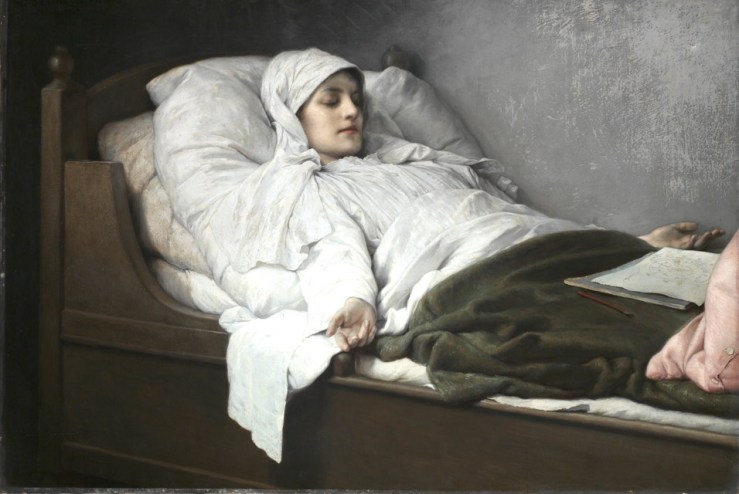
The Seeress of Prevorst — Gabriel von Max

gabriel_von_max_-_the_seeress_of_prevorst

The Seeress of Prevorst, 1892 by Gabriel von Max (1840-1915)

“My Days Are Numbered” — Rick Moranis

“My Days Are Numbered”

by

Rick Moranis

Published in The New York Times, 22 Nov. 2006


The average American home now has more television sets than people … according to Nielsen Media Research. There are 2.73 TV sets in the typical home and 2.55 people, the researchers said.

— The Associated Press, Sept. 21.

I have two kids. Both are away at college.

I have five television sets. (I like to think of them as a set of five televisions.) I have two DVR boxes, three DVD players, two VHS machines and four stereos.

I have nineteen remote controls, mostly in one drawer.

I have three computers, four printers and two non-working faxes.

I have three phone lines, three cell phones and two answering machines.

I have no messages.

I have forty-six cookbooks.

I have sixty-eight takeout menus from four restaurants.

I have one hundred and sixteen soy sauce packets.

I have three hundred and eighty-two dishes, bowls, cups, saucers, mugs and glasses.

I eat over the sink.

I have five sinks, two with a view.

I try to keep a positive view.

I have two refrigerators.

It’s very hard to count ice cubes.

I have thirty-nine pairs of golf, tennis, squash, running, walking, hiking, casual and formal shoes, ice skates and rollerblades.

I’m wearing slippers.

I have forty-one 37-cent stamps.

I have no 2-cent stamps.

I read three dailies, four weeklies, five monthlies and no annual reports.

I have five hundred and six CD, cassette, vinyl and eight-track recordings.

I listen to the same radio station all day.

I have twenty-six sets of linen for four regular, three foldout and two inflatable beds.

I don’t like having houseguests.

I have one hundred and eighty-four thousand frequent flier miles on six airlines, three of which no longer exist.

I have 101 Dalmatians on tape.

I have fourteen digital clocks flashing relatively similar times.

I have twenty-two minutes to listen to the news.

I have nine armchairs from which I can be critical.

I have a laundry list of things that need cleaning.

I have lost more than one thousand golf balls.

I am missing thirty-seven umbrellas.

I have over four hundred yards of dental floss.

I have a lot of time on my hands.

I have two kids coming home for Thanksgiving.

Screenshot 2020-02-12 at 7.55.04 PM

Annunciation — Gely Korzhev

geliy-korzhev-the-painting-of-the-annunciation

Annunciation, 1997 by Gely Korzhev (1925-2012)

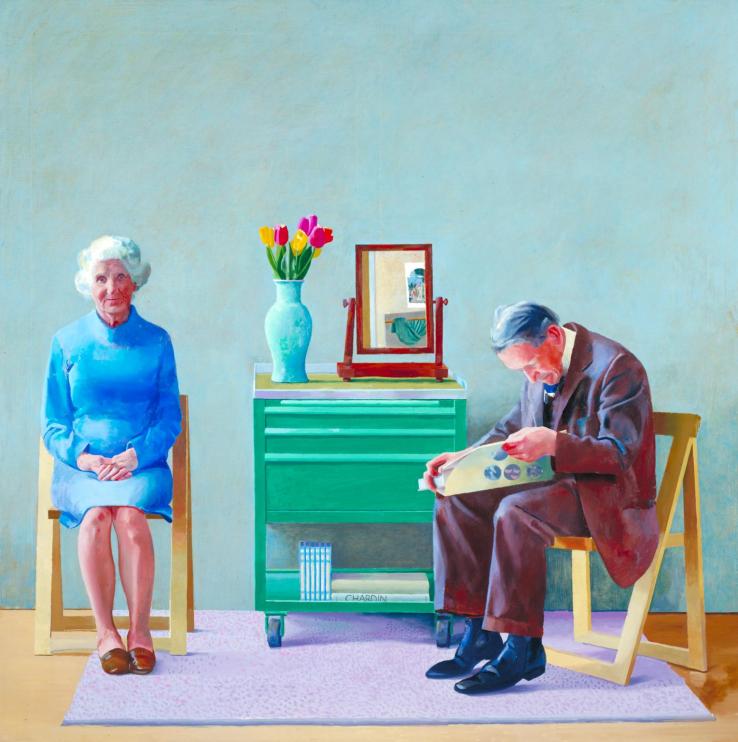
My Parents — David Hockney

My Parents 1977 by David Hockney born 1937

My Parents, 1977 by David Hockney (b. 1937)

And I blessed it, because it was the signal of my release | Nathaniel Hawthorne’s journal entry for February 11th, 1840

February 11th.–I have been measuring coal all day, on board of a black little British schooner, in a dismal dock at the north end of the city. Most of the time I paced the deck to keep myself warm; for the wind (northeast, I believe) blew up through the dock, as if it had been the pipe of a pair of bellows. The vessel lying deep between two wharves, there was no more delightful prospect, on the right hand and on the left, than the posts and timbers, half immersed in the water, and covered with ice, which the rising and falling of successive tides had left upon them, so that they looked like immense icicles. Across the water,however, not more than half a mile off, appeared the Bunker Hill Monument; and, what interested me considerably more, a church-steeple, with the dial of a clock upon it, whereby I was enabled to measure the march of the weary hours. Sometimes I descended into the dirty little cabin of the schooner, and warmed myself by a red-hot stove, among biscuit-barrels, pots and kettles, sea-chests, and innumerable lumber of all sorts,–my olfactories, meanwhile, being greatly refreshed by the odor of a pipe, which the captain, or some one of his crew, was smoking. But at last came the sunset, with delicate clouds, and a purple light upon the islands; and I blessed it, because it was the signal of my release.

Nathaniel Hawthorne’s journal entry for February 11th, 1840. From Passages from the American Note-Books.

Prospectors — Nigel Cooke

nigelcooke-748-w1500-h1200

Prospectors, 2013 by Nigel Cooke (b. 1973)

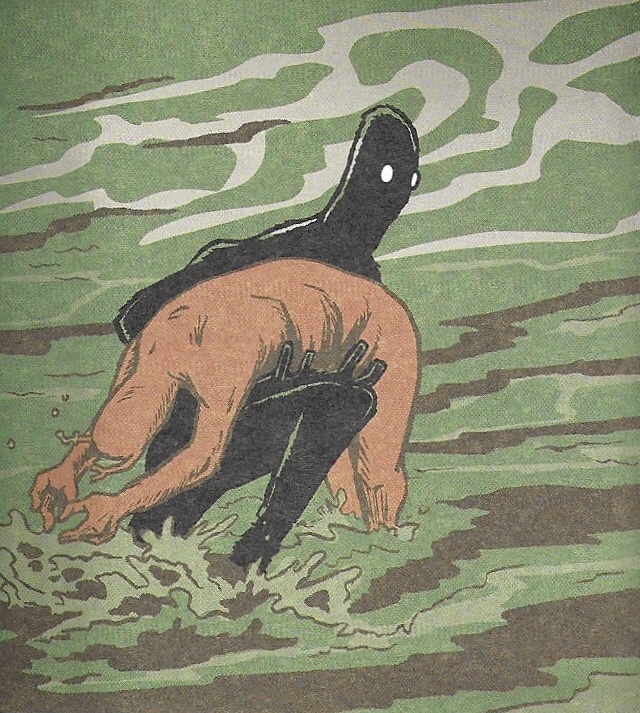
Anasazi (Beautiful and bewildering graphic novel told in its own glyphic language, acquired 6 Feb. 2020)

2020-02-10_164045_2

A week or so ago, Mike McCubbins offered me a review copy of Anasazi, the graphic novel that he made with Matt Bryan. He sent a link to the Anasazi’s Kickstarter page. I skimmed over the art, was impressed and immediately interested, and then read their blurb:

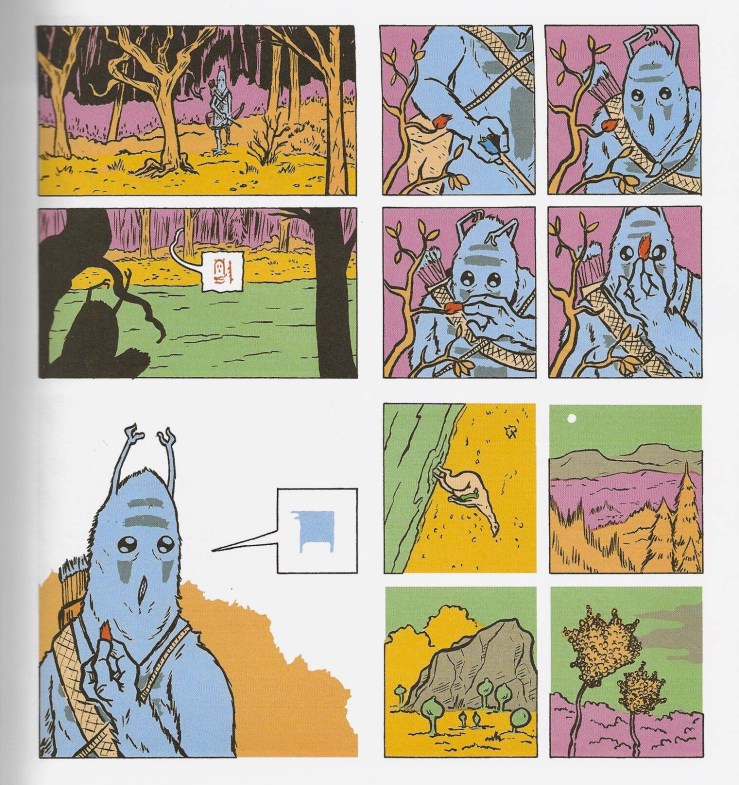
Anasazi is a nearly wordless 212 page, 8″ x 8.5″ full-color cloth-bound graphic novel. Its a story of war, assimilation, and cultural divisions on a colorful alien planet that combines elements of science fiction, fantasy, mythology, world history, and horror.

…16 chapters. 16 words.  There is no English dialogue or exposition in Anasazi. Instead each chapter heading contains an alien language glyph along with a non-English word or phrase meaning and its literal English translation. These glyphs then appear as dialogue throughout the story.

2020-02-10_164045

The art, overview, and the concept of a story told in glyphs intrigued me, and I trusted my intuition not to read the brief “What’s the story?” section of Anasazi until after I’d read the novel. I read it twice; once the night it showed up, and then again the next morning. The story synopsis (three short sentences) hardly spoils the narrative, but it offers enough context for anyone wholly lost to find their footing.

2020-02-10_164045_1

The joy of Anasazi is sinking into its rich, alien world, sussing out meaning from image, color, and glyphs. The novel has its own grammar. Bryan and McCubbins conjure a world reminiscent of Edgar Rice Burroughs’ Martian novels, Charles Burns’ Last Look trilogy, Kipling’s Mowgli stories, as well as the fantasies of Jean Giraud.

The sixteen English words in Anasazi are all chapter names, and all are loan words, as the novel’s title suggests. Some (“M’Aidez,” “Sheol,” “Melaina Chole”) were more familiar to me than others (“Zinduka,” “Gweilo,” “Shuv”), and all take on a strange tone in the novel, as if the glyphs the characters speak are rough transliterations of something far more refined than our alien ears could comprehend.

I really enjoyed Anasazi, and I aim to have a full review soon. But I plan to read it a few more times first.


Burial — Eduardo Berliner

5ecb765e5c48d952a9f14a448f853554

Burial, 2009 by Eduardo Berliner (b. 1978)

I am on kind of a Borges kick (Thomas Pynchon)

sq69phy

g7cznmh

More Thomas Pynchon letters here. Via Reddit user Forest Limit.

Conversation — Tim Eitel

69926.width-2000

Conversation, 2018 by Tim Eitel (b. 1971)

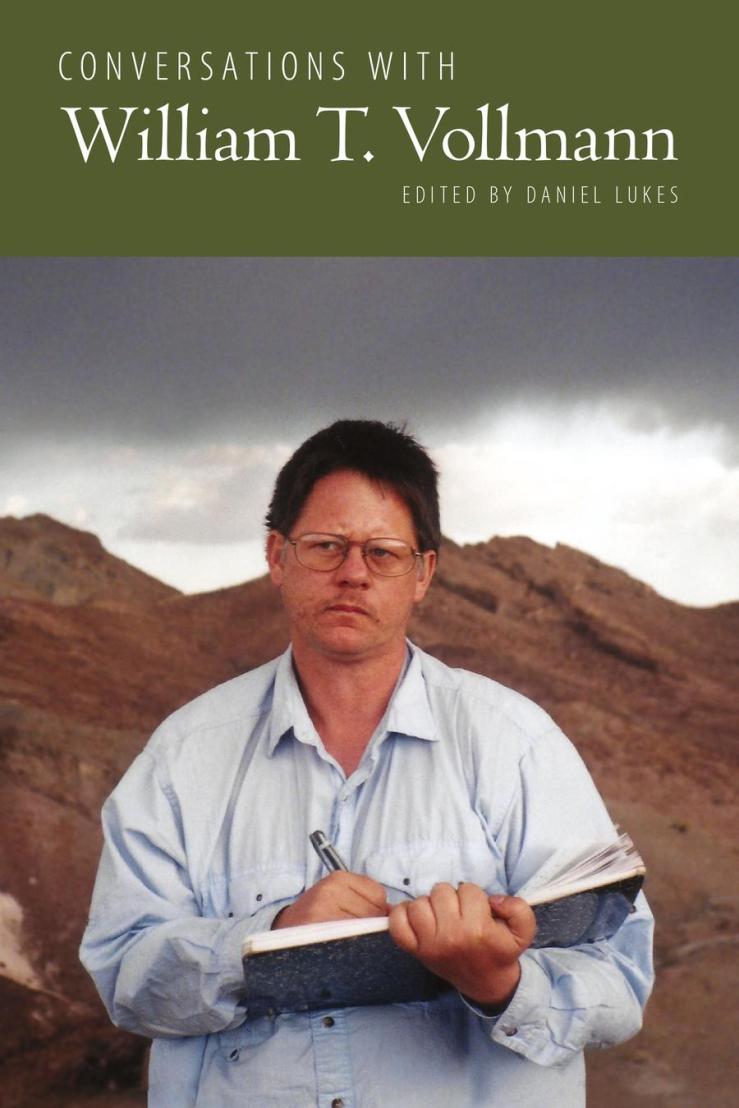
This is the meat locker, where Dolores’s parts are | From Conversations with William T. Vollmann

What’s in here?

This is the meat locker, where Dolores’s parts are. When the electrician wired it up, he asked, “What do you use this for?” I said, “Oh, that’s just where I keep my victims.” There was a long silence….She’s got her dresses here and I have my bulletproof helmet and various stuff from my journalism in there.

Have you taken many reporting trips recently?

No, that seems to being drying up. It seems that the magazines have less and less money. They’re mostly interested in domestic stuff. I don’t know whether it’s to save costs or if they really think Americans are only interested in America. I get sort of sick of it. So there are the wig heads. Whatever woman comes in here, I always say, “Now, those are your rivals.” They kind of freak out.

Do you have many visitors or is this mostly a solitary space?

I have the occasional visitor, yeah. And then let’s see. [Opens the door to the bathrooms.] I figure the men’s room and the women’s room ought to connect.

Why is that?

Well, you know male and female should always get together wherever possible. The men’s room is the toilet. The women’s room is the shower. They didn’t used to connect. It was really, really gross when I bought the place. This old restaurant—everything was all rotted out with pee.

[Bill takes me into another small room.] And then this is the books and bullets room. I put my phone in the closet most of the time, so I never have to hear it. I got all the extra copies of my books and all the bullets I’ll need for my various pistols.

Read the rest of Stephen Heyman’s 2013 interview with William Vollmann at 3:AM Magazine.

The interview is one of 29 that comprise Conversations with William T. Vollmann, a new collection edited by Daniel Lukes.

If you’re able, check out the book launch for Conversations with William T. Vollmann tonight (8 Feb. 2020) at 6:00pm at Unnameable Books, 600 Vanderbilt Ave., Brooklyn, NY 11238. 

image-front-cover_rb_modalcover

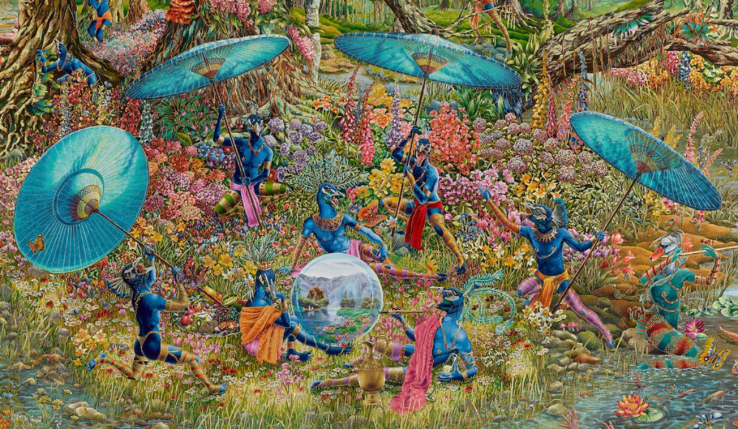
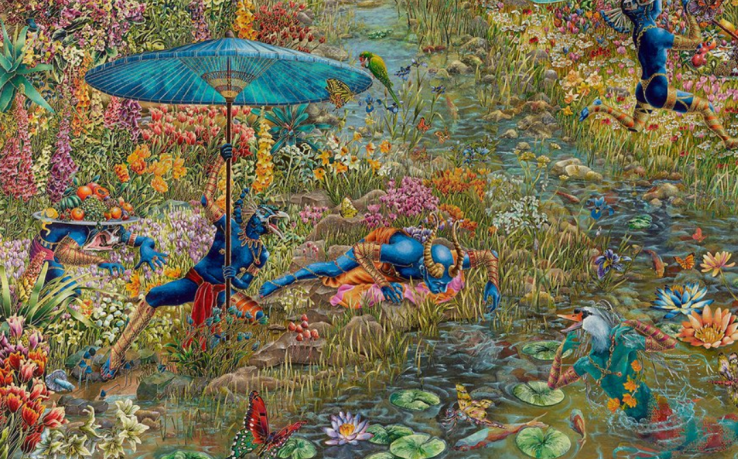
From Narcissus to Icarus (After Déjeuner sur l’herbe) — Raqib Shaw

69815_j7in5kz.max-1800x1800-1

abcd

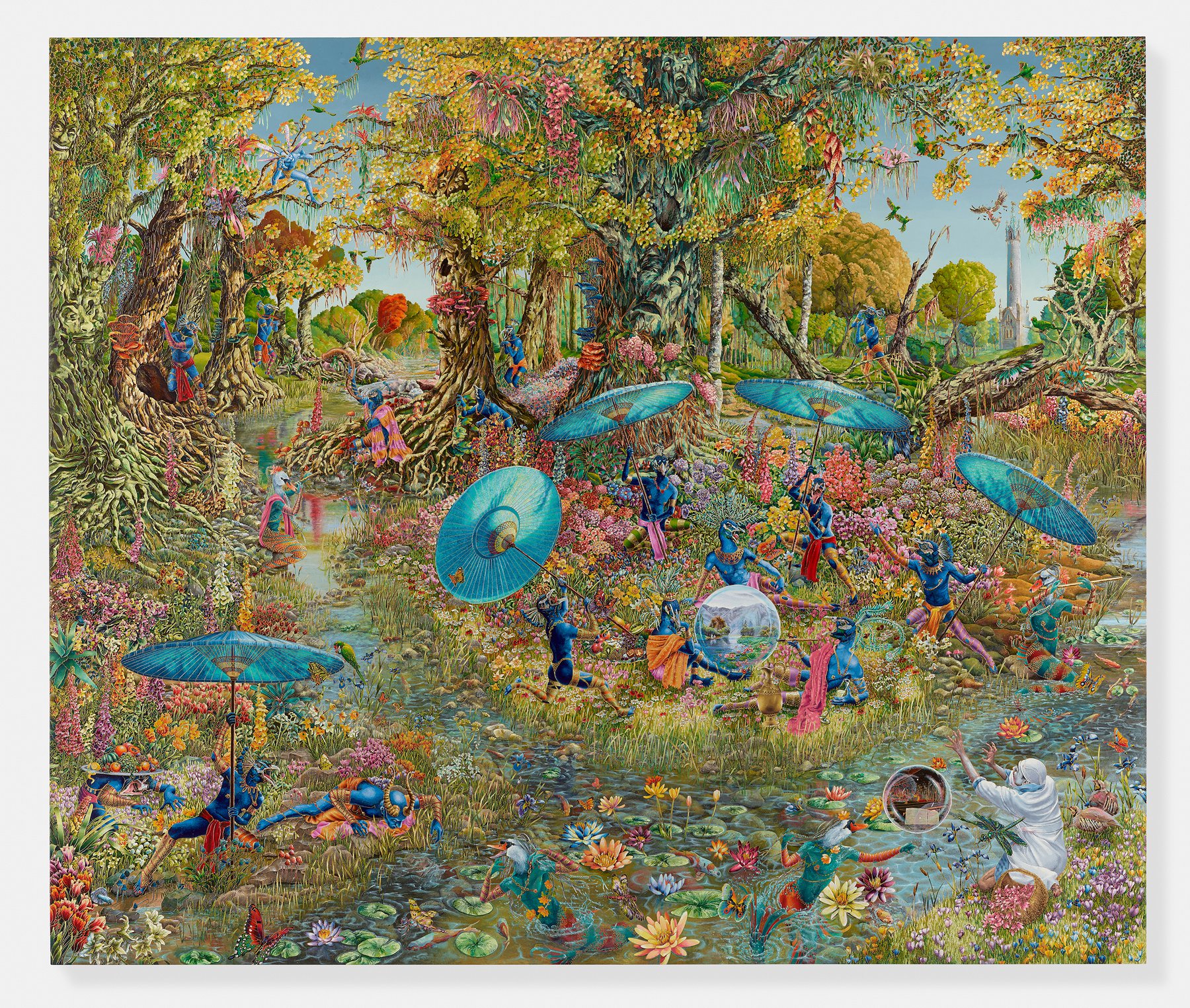
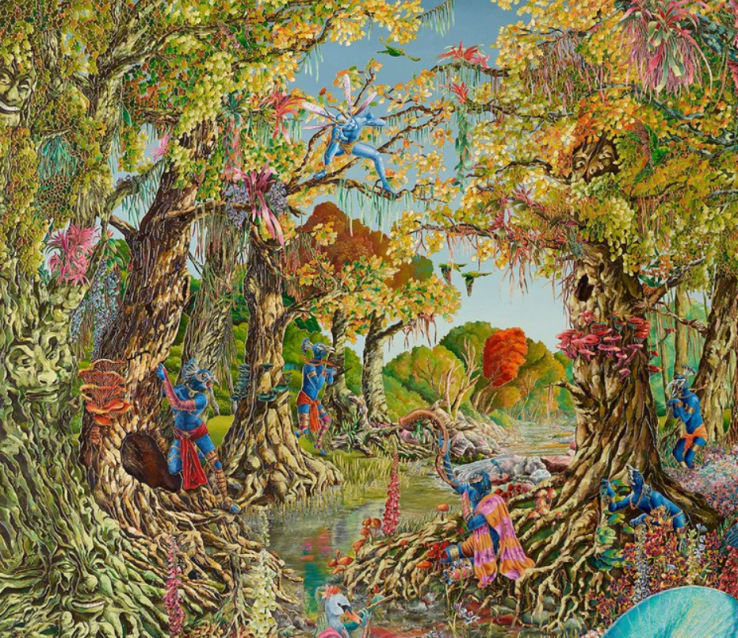
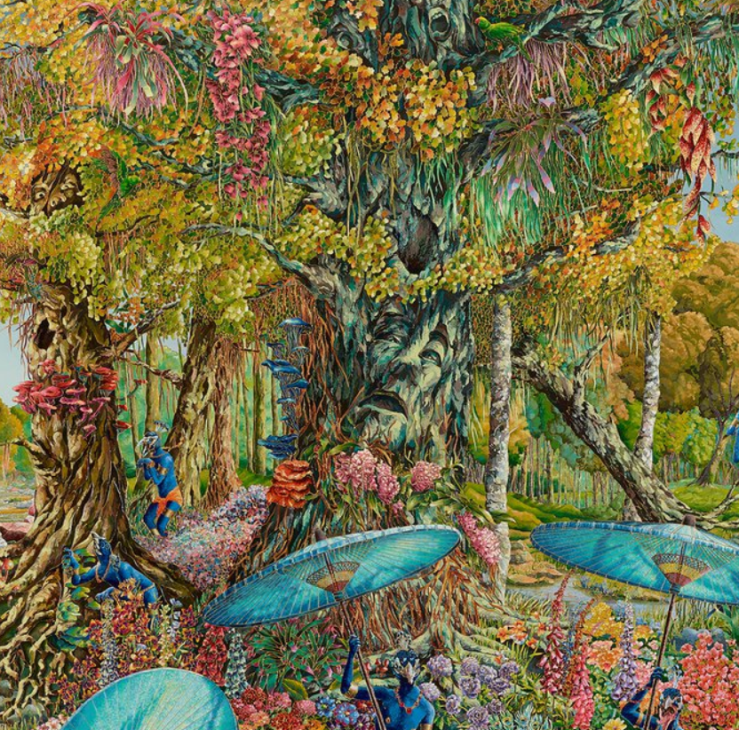
From Narcissus to Icarus (After Déjeuner sur l’herbe), 2019 by Raqib Shaw (b. 1974)

Buggin — Michaël Borremans

mb2017_20

Buggin, 2017 by Michaël Borremans (b. 1963)

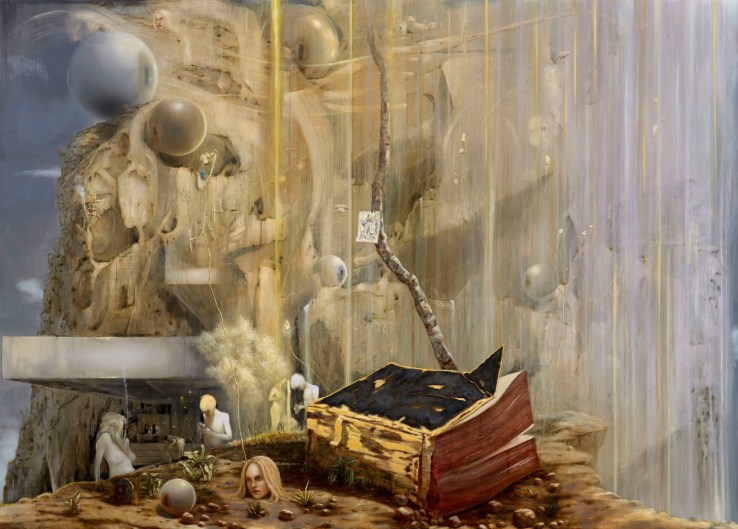
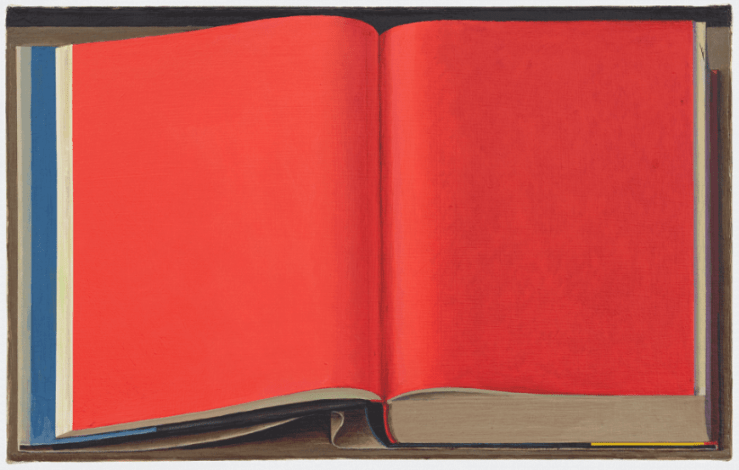
Book Painting No. 6 — Liu Ye

Screenshot 2020-02-05 at 8.56.14 PM

Book Painting No. 6, 2015 by Liu Ye (b. 1964)

One hot night a leopard came into my room and lay down on the bed beside me (Anna Kavan)

One hot night a leopard came into my room and lay down on the bed beside me. I was half asleep and did not realize at first that it was a leopard. I seemed to be dreaming the sound of some large, soft-footed creature padding quietly through the house, the doors of which were wide open because of the intense heat. It was almost too dark to see the lithe, muscular shape coming into my room, treading softly on velvet paws, coming straight to bed without hesitation, as if perfectly familiar with its position. A light spring, then warm breath on my arm, on my neck and shoulder, as the visitor sniffed me before lying down. It was not until later, when moonlight entering through the window revealed an abstract spotted design, that I recognized the form of an unusually large, handsome leopard stretched out beside me.

The first paragraph of “A Visit” by Anna Kavan. Originally published in Julia and the Bazooka (1970); reprinted in Machines in the Head: Selected Stories of Anna Kavan, forthcoming from NYRB.

She Has Funny Cars — Tomasz Kowalski

file

She Has Funny Cars, 2018 by Tomasz Kowalski (b. 1984)