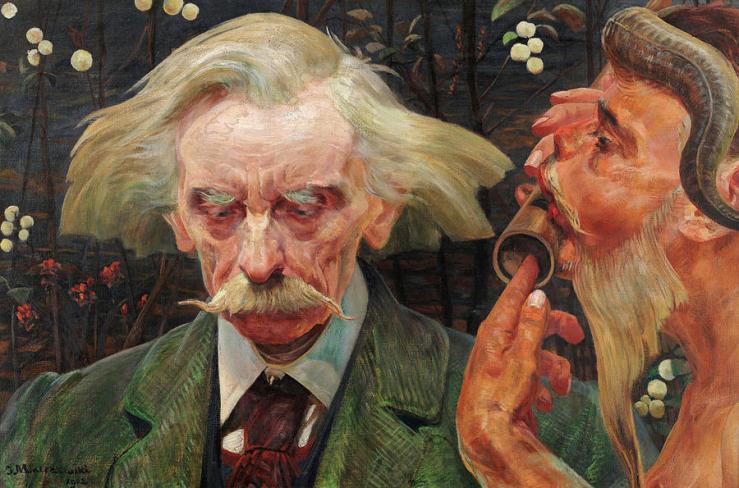
The Unknown Note — Jacek Malczewski

the-unknown-note-1902-jacek-malczewski

The Unknown Note, 1902 by Jacek Malczewski (1854-1929)

Saltwood Window — Robin Ironside

75_bg

Saltwood Window, c. 1955 by Robin Ironside (1912-1965)

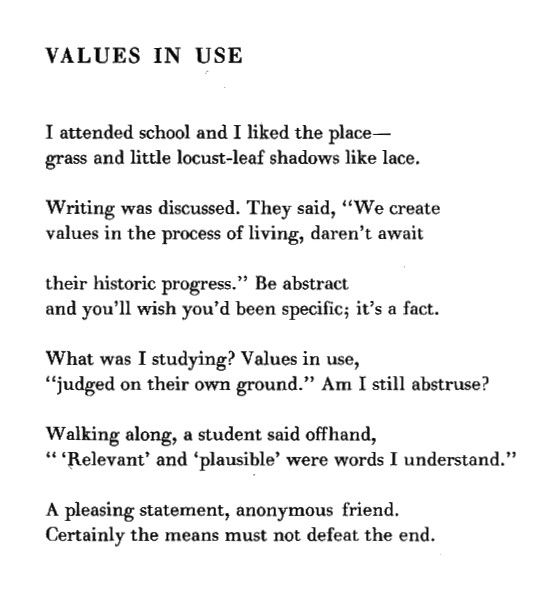
“Values in Use” — Marianne Moore

values in use

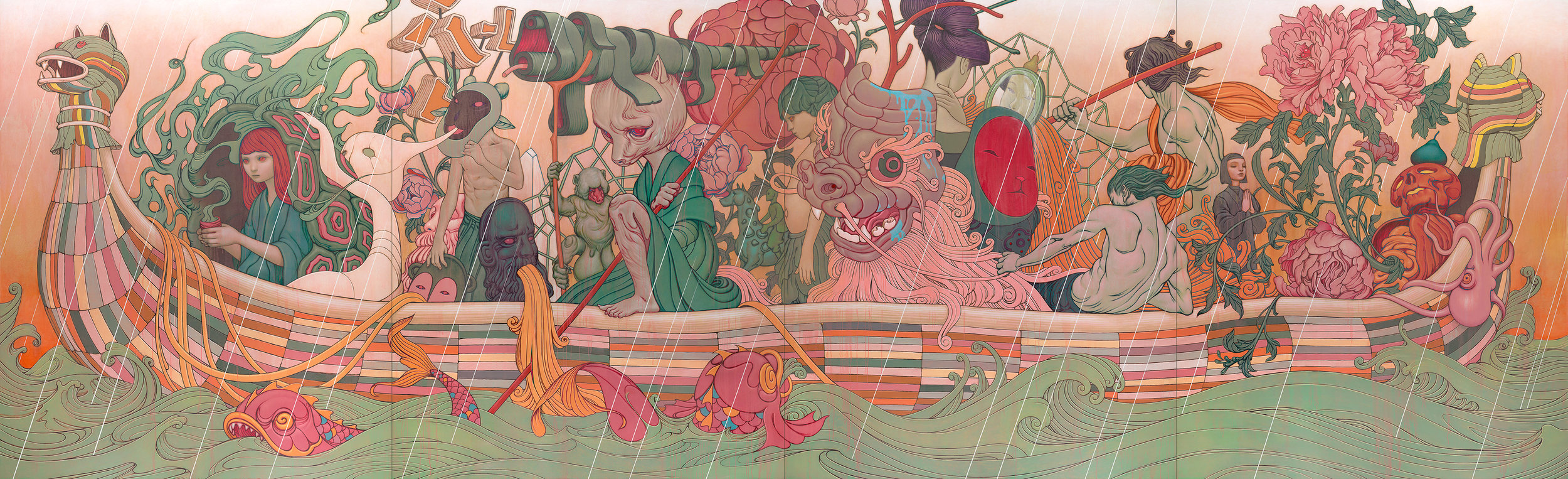
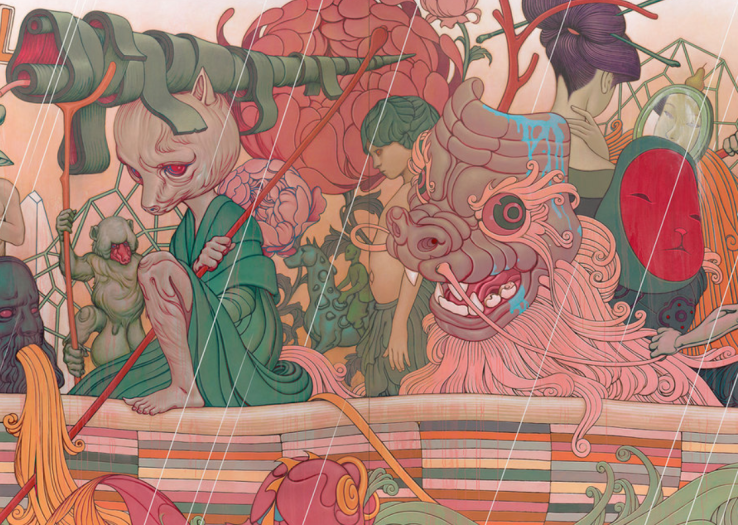
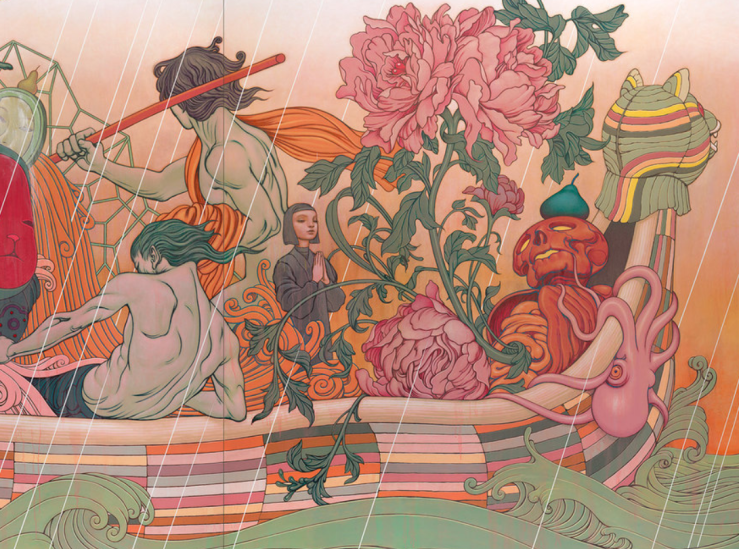
Passage — James Jean

passage-web-lores

abc

Passage, 2019 by James Jean (b. 1979)

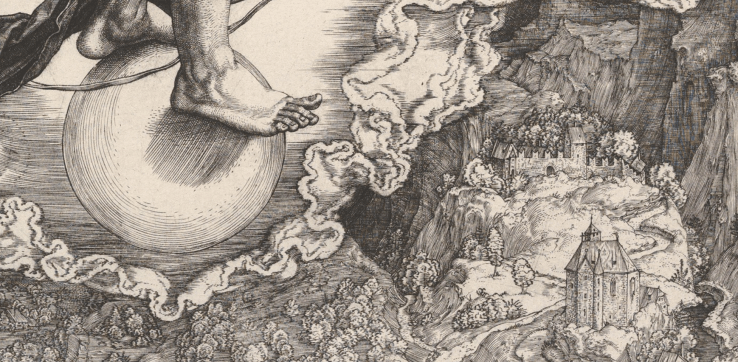
Nemesis (Detail) — Albrecht Durer

nemesis

Nemesis (Detail), 1503 by Albrecht Durer (1471-1528)

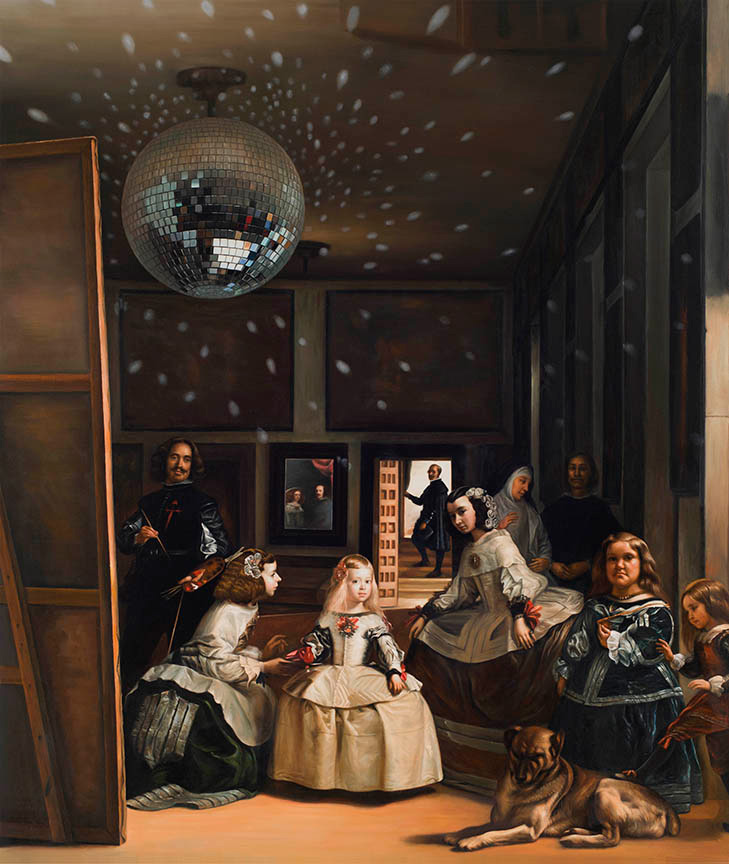
Rock Star — Marc Dennis

marc-dennis_rock-star_2015_oil-on-linen_70x60inches

Rock Star, 2015 by Marc Dennis (b. 1971)

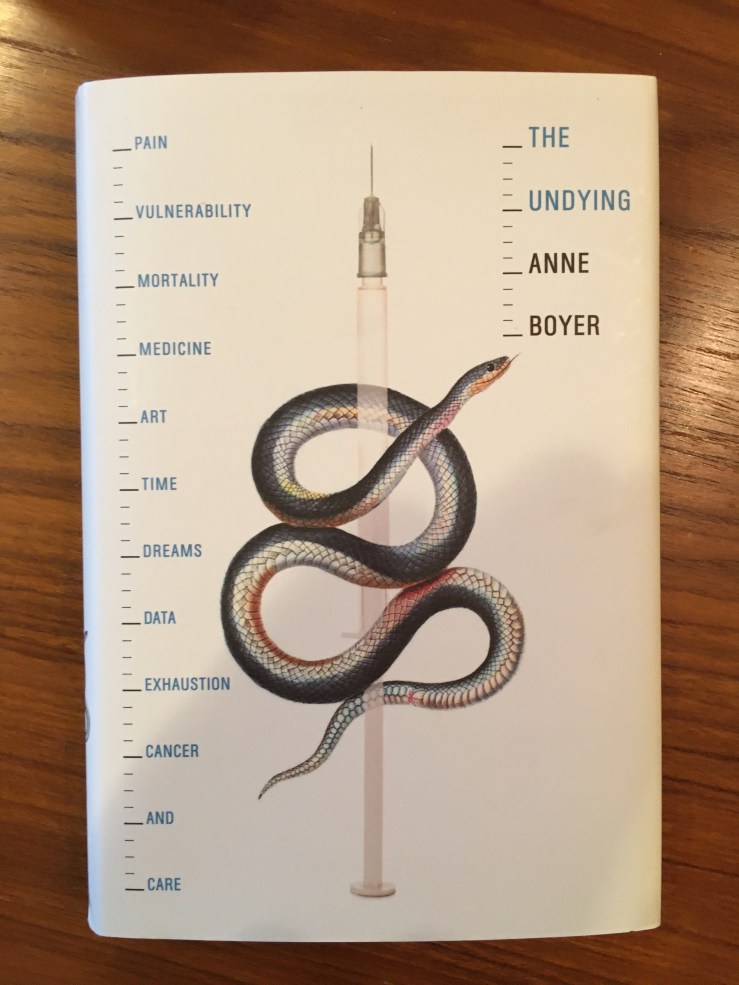
Anne Boyer’s The Undying (Book acquired 12 Nov. 2019)

img_4281

Huge thanks to BLCKDGRD for sending me Anne Boyer’s aphoristic, poetic memoir-essay The Undying. I guess he read that I went to my bookstore to buy it a few weeks ago and came home not empty handed but nevertheless Undyingless. I wanted to read Boyer’s book after reading her essay collection (“essay” isn’t really the right word, but)  A Handbook of Disappointed Fate this summer—-also sent to me by generous Mr. BLCKDGRD

I’m about 100 pages away from finishing The Undying, a book that doesn’t so much chronicle Boyer’s 2014 diagnoses and treatment of breast cancer as it explores and explodes what cancer—a “twentieth-century disease” that we still treat with “twentieth-century” methods, in Boyer’s words—means and is and does in our neoliberal late-capitalist early twenty-first century. Boyer writes,

To become a cancer patient is to become a system-containing object inside another system that only partially allows the recognition of the rest of the systems in which one is a node and also almost wholly obscures the heaviest system of the arrangement of the world as it is, which hangs around, too, in the object that contains a system (by which I mean “me”) as part of the problem in the first place, requiring our latent unhealth just as it profits from our active one.

Later, again addressing that “latent unhealth” which is part and parcel of the system, Boyer declares: “I would rather write nothing at all than propagandize the world as is.” This is a wonderfully angry book.

This is a wonderfully angry, discursive, recursive book: literary biography, literary criticism, art history, art criticism, Foucault, John Donne, Susan Sontag, Lucretius, Virginia Woolf; a howl at the hoaxers, frauds, self-helperists and their pinkwashed platitudes. And lots of pain, expressed with sentiment that bears no trace of sentimentality.

Boyer’s aphoristic style is engrossing. Her paragraphs and one-liners bear a ludic stamp seemingly at odds with her subject matter. The work of the writing, the heavy burden of smithing those sentences is all but elided—instead we get the clarity of a focused mind drawing together seemingly-disparate threads into a cohesive and compelling memoir that transcends the personal without necessarily meaning to.

Showing is a betrayal of the real, which you can never quite know with your eyes in the first place, and if you are trying to survive for the purpose of literature, showing and not telling is reason enough to endure the disabling processes required for staying alive.

Everything here feels and reads True. 
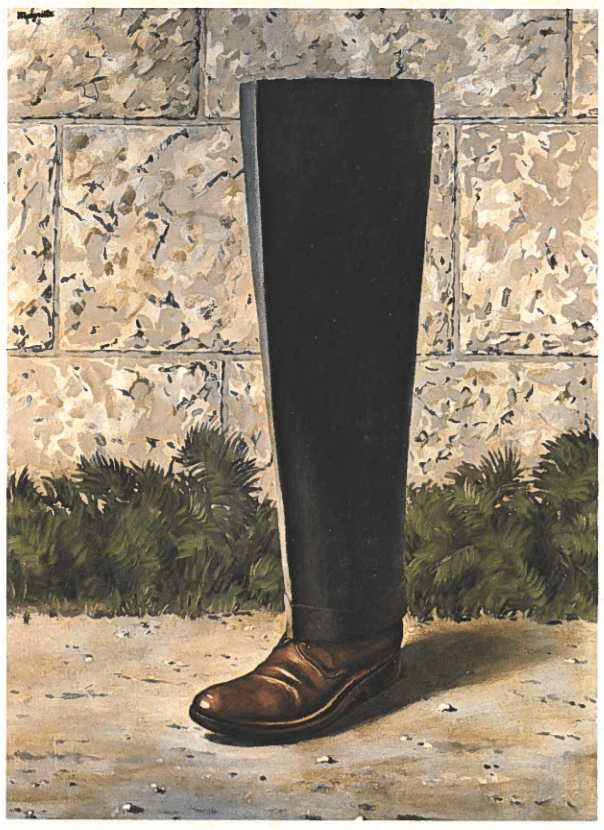
The Well of Truth — René Magritte

welloftruth

The Well of Truth, 1963 by René Magritte (1898-1967)

A review of Chris Ware’s new novel Rusty Brown, a sprawling story about memory and perception

q

My review of Chris Ware’s Rusty Brown—one of the best novels I’ve read this year—is up now at The Comics Journal.

From the review:

Rusty Brown, Ware’s latest novel (or, more precisely, novel-in-progress) strengthens the argument that Ware is a Serious American Novelist, one who deserves a large crossover audience. Like Jimmy Corrigan and Building StoriesRusty Brown has a central primary setting, a small private school in Nebraska. And like those novels, Rusty Brown comprises material (lightly reworked) from Ware’s Acme Novelty Library series (issues 16, 17, 19, and 20, specifically). The cast here is much larger and the themes are arguably more ambitious though.

Rusty Brown is a sprawling story about memory and perception, about minor triumphs and chronic failures, about how our inner monologues might not match up to the reality around us. In Ware’s world, life can be blurry, spotty, fragmented. His characters are so bound up in their own consciousnesses that they cannot see the bigger picture that frames them.


Posted in Art

Escaping the Candy Jail with My Good Eye Closed 1 — Drew Simpson

untitled-2-1024x819

Escaping the Candy Jail with My Good Eye Closed 1, 2016 by Drew Simpson

Three Baskets — Stephen McKenna

Three Baskets 1995 by Stephen McKenna born 1939

Three Baskets, 1995 by Stephen McKenna (1939–2017)

Jason — JMW Turner

Jason exhibited 1802 by Joseph Mallord William Turner 1775-1851

Jason, 1802 by Joseph Mallord William Turner (1775–1851)

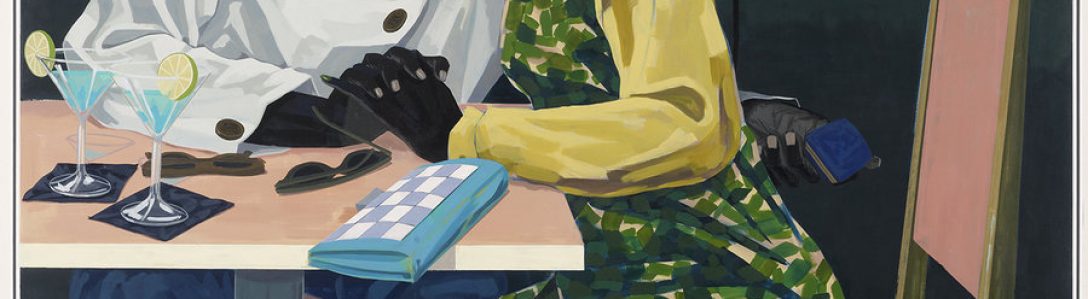
Living Room — Zoey Frank 

frank-living-room

Living Room, 2018 by Zoey Frank (b. 1987)

Oriana — Frederick Sandys

Oriana 1861 by Frederick Sandys 1829-1904

Oriana, 1861 by Frederick Sandys (1829–1904)


“Ballad of Oriana”

by

Alfred Tennyson


She stood upon the castle wall, Oriana:
She watch’d my crest among them all, Oriana:
She saw me fight, she heard me call,
When forth there stept a foeman tall, Oriana,
Atween me and the castle wall, Oriana.

The bitter arrow went aside, Oriana:
The false, false arrow went aside, Oriana:
The damned arrow glanced aside,
And pierced thy heart, my love, my bride, Oriana!
Thy heart, my life, my love, my bride,Oriana!

Oh! narrow, narrow was the space, Oriana.
Loud, loud rung out the bugle’s brays, Oriana.
Oh! deathful stabs were dealt apace,
The battle deepen’d in its place, Oriana;
But I was down upon my face, Oriana.
They should have stabb’d me where I lay, Oriana!
How could I rise and come away, Oriana?
How could I look upon the day?
They should have stabb’d me where I lay, Oriana
They should have trod me into clay,Oriana.
O breaking heart that will not break, Oriana!

My history of muscadines | An unearthed interview with the late great Barry Hannah

Screenshot 2019-11-14 at 4.27.30 PM

There’s a “new” video interview with Barry Hannah and his wife Susan at Southwest Review. The interview was conducted by Southwest Review editor-in-chief Greg Brownderville some time in “the late aughts” in Hannah’s back yard, under his muscadine arbor. Brownderville and his friend Luke Duncan (both grad students at Ole Miss at the time) were trying to put together a film about muscadine grapes, and interviewed the Hannahs about the project. Hannah’s extemporaneous responses veer all over the place though, using muscadines as kind of kernels of memories from which to riff on: dead pets, boyhood oyster shell fights, and “the wonderful time my dad and I had at Arkansas drinking wine and watching the University of Arkansas, who was number one in the nation, whoop Texas, both of us high on wine from Altus.” The whole interview approaches something close to one of Hannah’s looser short stories, and is definitely worth the 20 minutes. 

(Thanks to Patrick for sending me the link.)

(Tangential note: My wife’s grandmother makes her own muscadine wine. We get a bottle of it for Christmas every now and then. It’s pretty sweet stuff.)

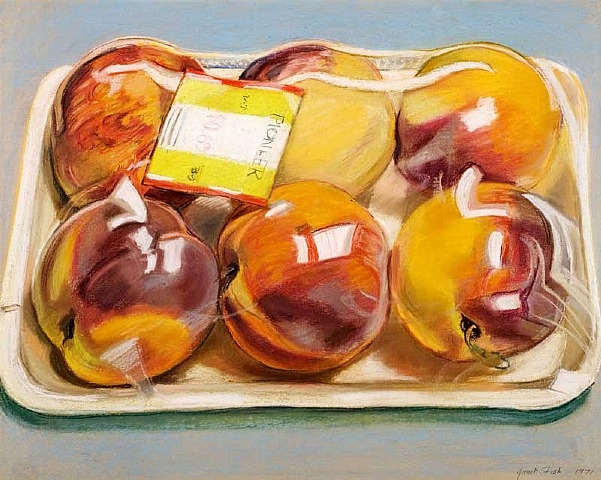
Peaches — Janet Fish

peaches-1971

Peaches, 1971 by Janet Fish (b. 1938)

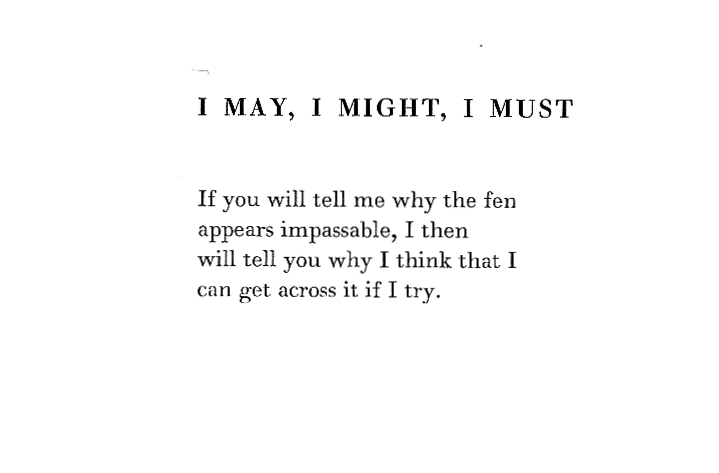
“I May, I Might, I Must” — Marianne Moore

mm (1)