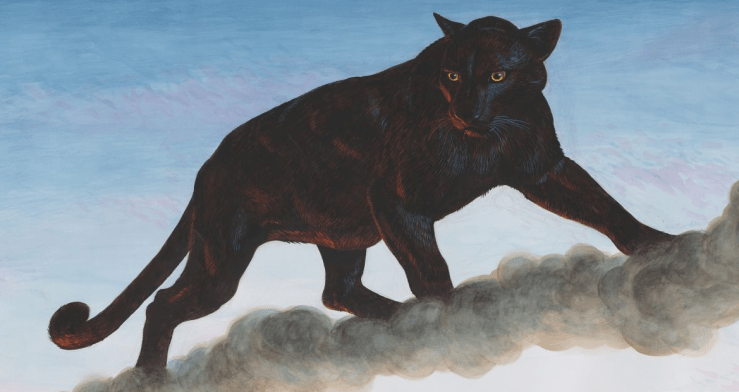
The Reader — Eglon van der Neer

dp146484Screenshot 2018-08-09 at 10.58.11 AMScreenshot 2018-08-09 at 10.57.51 AM

The Reader, c. 1660s by Eglon van der Neer (1635/36-1703)

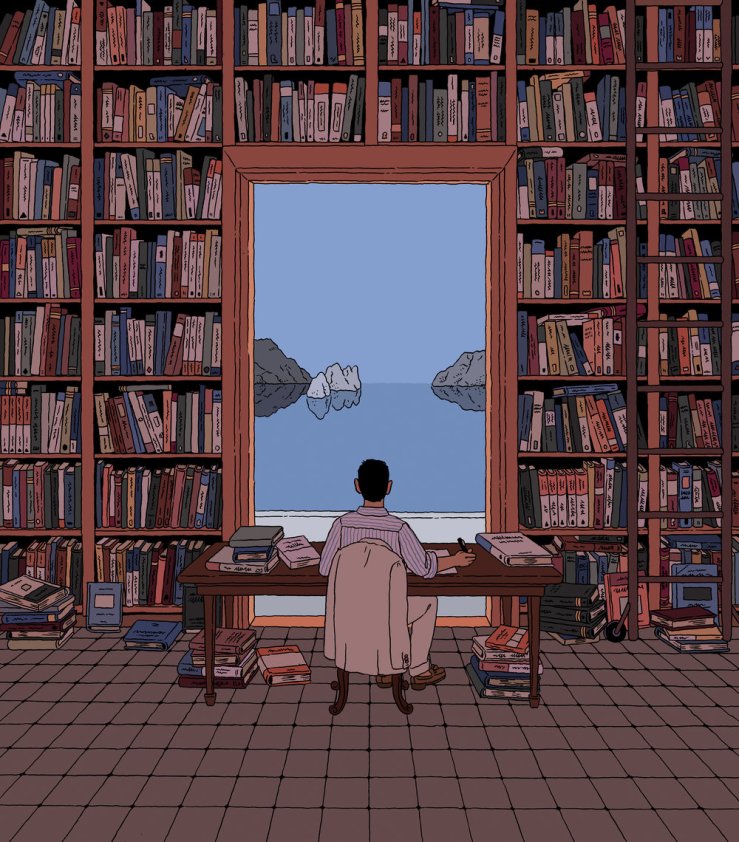
A Library by the Tyrrhenian Sea — Ilya Milstein

finalcopy

A Library by the Tyrrhenian Sea, 2018 by Ilya Milstein

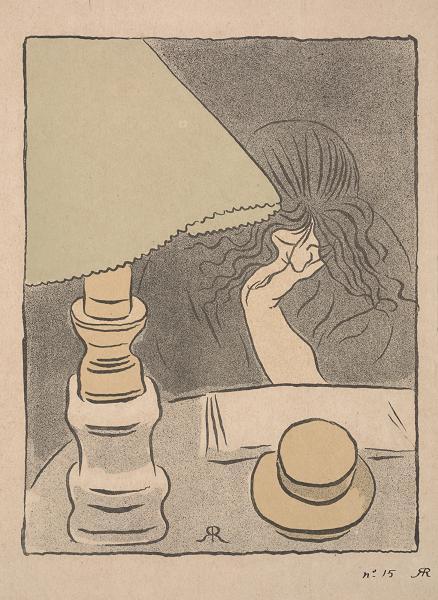
Reader with a Lamp — Jozsef Rippl-Ronai

jc3b3zsef_ripp-rc3b3nai_la_liseuse_avec_lampe

Reader with a Lamp, 1895 by Jozsef Rippl-Ronai (1861-1927)

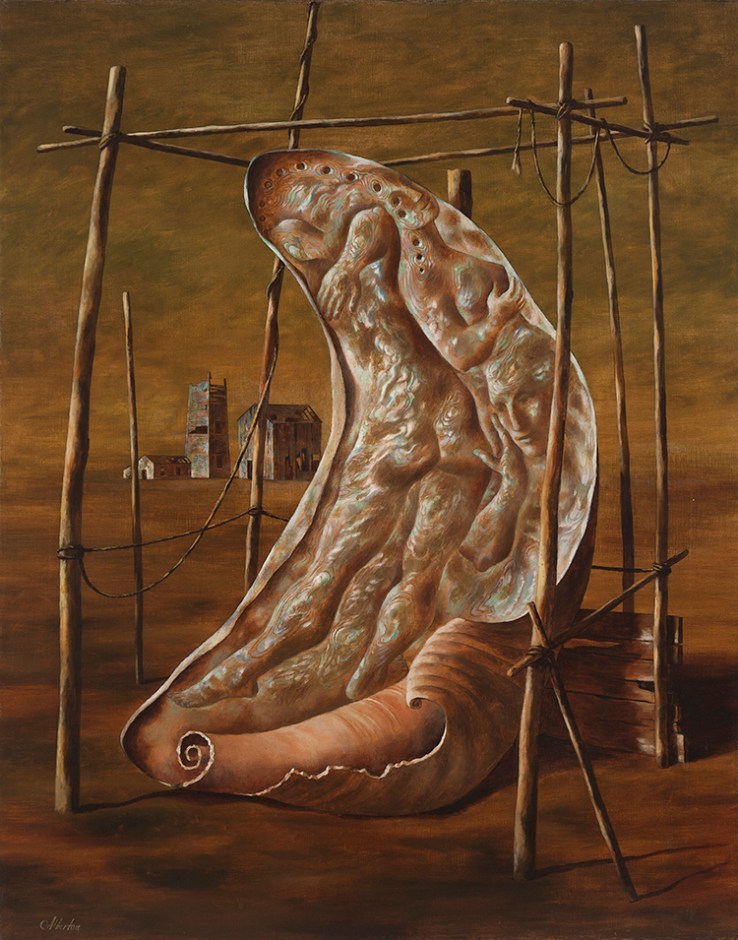
Shell (Surrealist Landscape) — John Atherton

atherton_shell_150dpi

Shell (Surrealist Landscape), c. 1942 by John Atherton (1900-1952)

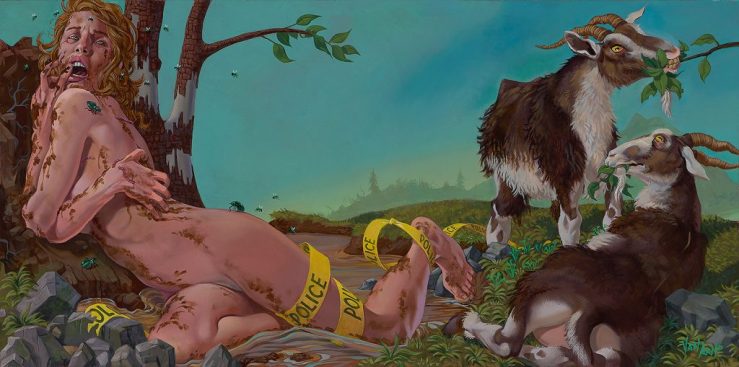
Susanna and the Elders — Van Arno

vanarno01_sussanna_md-1024x509

Susanna and the Elders, 2016 by Van Arno

Seven (Long) Books I’ll Read Again

img_0775

Life is too short not to reread. Chosen somewhat randomly but also sincerely, seven books I’d love to read again sometime soon:

Mason & Dixon by Thomas Pynchon

I read Mason & Dixon a few years back and then started to immediately reread it before getting sidetracked with something else. Unlike Gravity’s Rainbow, I think that M&D coheres on a first read, but it’s so rich and full and crammed with life that it deserves another go through. In my completely subjective and thoroughly unnecessary ranking of Pynchon’s novels, I wrote,

Pynchon’s zany/sinister tonal axis, comic bravado, and genre-shifting modes rarely result in what folks narrowly think of as literary realism. His characters can be elastic, cartoonish even—allegorical sometimes (and even grotesque). Mason & Dixon takes two historically real (and historically famous) characters as its subject, and, in a wonderfully hyperbolic 18th-century style, takes the duo on a fantastic journey to measure the world. How does one measure the world though? Pynchon takes on seemingly every subject under the sun in Mason & Dixon, and the novel is very much about the problems and limitations of measuring (and describing, and knowing) itself. But what comes through most strongly in all of Pynchon’s fantasia is the weight of Mason and Dixon’s friendship. It’s the most real thing in a wonderfully unreal novel.

The Complete Stories by Flannery O’Connor

A bit of a cheat maybe to put short stories on this list, but I’d love to set aside time to go through all of them at once.

Middlemarch by George Eliot

I finished Middlemarch last month. Eliot’s novel captures consciousness in action in a remarkably deft, often ironic, but also very sweet way—particularly the consciousness of her hero Dorothea Brooke, who is one of my favorite characters in literature. I wrote about Dorothea in a post earlier this year:

So far, my favorite character in Middlemarch is Dorothea Brooke. In part my allegiance to her is simply a matter of the fact that she initially appears to be the novel’s central character—until Eliot swerves into new narratives near the end of Book I (Book I of VIII, by the way). But beyond traditional formal sympathies, it’s the way that Eliot harnesses Dorothea’s consciousness that I find so appealing. Eliot gives us in Dorothea an incredibly intelligent yet palpably naive young woman who feels the world around her a smidge too intensely. Dorothea is brilliant but a bit blind, and so far Middlemarch most interests me in the way that Eliot evokes this heroine’s life as a series of intellectual, emotional, and aesthetic revelations. We see Dorothea seeing—and then, most remarkably, we see Dorothea seeing what she could not previously see.

The Lost Scrapbook by Evan Dara

I read Dara’s cult debut in a dizzy rush about five years ago, and have meant to reread it again since then. Like Middlemarch, Dara’s novel is very much about consciousness and how consciousness operates. From a blog post a few years back:

I am really loving this book so far, this novel that moves through consciousnesses in a (yes, I’ll use that cliché that book reviewers so often grab for) dazzling performance, shifting through minds, monologues, dialogues, always a few steps (or more) ahead of its reader, beckoning though, inviting, calling its reader to participate in discussions (or performances) of art, science, politics, psychology, education, loneliness, ecology, family, fireflies, radio plays, alienation, voting trends, Chomskyian linguistics, Eisensteinian montage, theft, Walkman Personal Stereos, semiotics, one-man shows, drum sets, being ventriloquized—a novel that takes ventriloquism as not just a theme (as we can see in the citation above) but also as a rhetorical device, a novel that ventriloquizes its reader, throws its reader into a metaphorical deep end and then dramatically shifts the currents as soon as the reader has learned to swim, a novel of othernesses, a novel that offers content through conduits, patterns that coalesce through waves, a novel composed in transfer points, each transfer point announcing the limitations of first-person perspective, the perspective that the reader is logically and spiritually and psychologically beholden to—and then, perhaps, transcending (or at least producing the affective illusion of transcendence of) first-person perspective, and this (illusion of) transcendence, oh my, what a gift, what a gift . . .

The Recognitions by William Gaddis

I had a false start with The Recognitions maybe 10 years ago, and then made it through a few years after that. I’ve since read Gaddis’s novel J R twice, and I think it’s the superior novel—but I’d like to revisit The Recognitions to see how accurate that assessment is. In my review I wrote:

The Recognitions is the work of a young man (“I think first it was that towering kind of confidence of being quite young, that one can do anything,” Gaddis says in his Paris Review interview), and often the novel reveals a cockiness, a self-assurance that tips over into didactic essaying or a sharpness toward its subjects that neglects to account for any kind of humanity behind what Gaddis attacks. The Recognitions likes to remind you that its erudition is likely beyond yours, that it’s smarter than you, even as it scathingly satirizes this position.

I think that JR, a more mature work, does a finer job in its critique of contemporary America, or at least in its characterization of contemporary Americans (I find more spirit or authentic humanity in Bast and Gibbs and JR than in Otto or Wyatt or Stanley). This is not meant to be a knock on The Recognitions; I just found JR more balanced and less showy; it seems to me to be the work of an author at the height of his powers, if you’ll forgive the cliché.

2666 by Roberto Bolaño

Bolaño’s opus is the kind of literary masterpiece that survives they hype that surrounds it. I’ve read it straight through three times and will read it through three more given the chance. I’ve written at least seven “reviews” of 2666 on this site, but this one on the novel’s intertextual structure is probably my best effort.

Moby-Dick by Herman Melville

Moby-Dick forever!
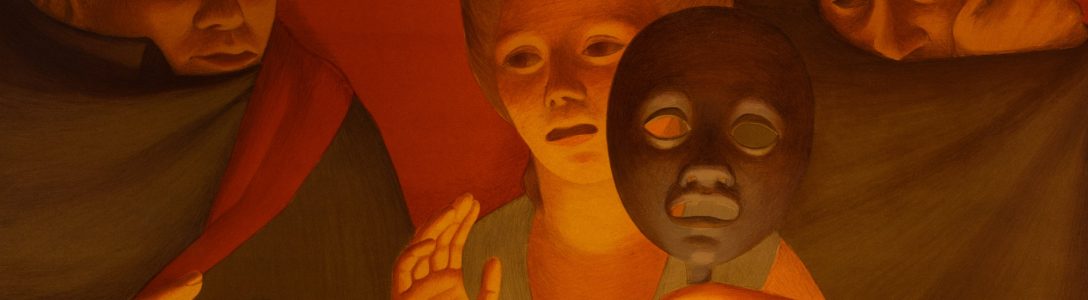
Seven Books I’ll Never Read

  1. A General History of Labyrinths by Silas Haslam
  2. Things That Can Happen In European Politics by Ernest Pudding
  3. The Leather Mask by Benno von Archimboldi
  4. The Grasshopper Lies Heavy by Hawthorne Abendsen
  5. Old Custer by Eli Cash
  6. Outside the Town of Malbork by Tazio Bazakbal
  7. Encounter with the Infanta by Bogdan Tarassiev

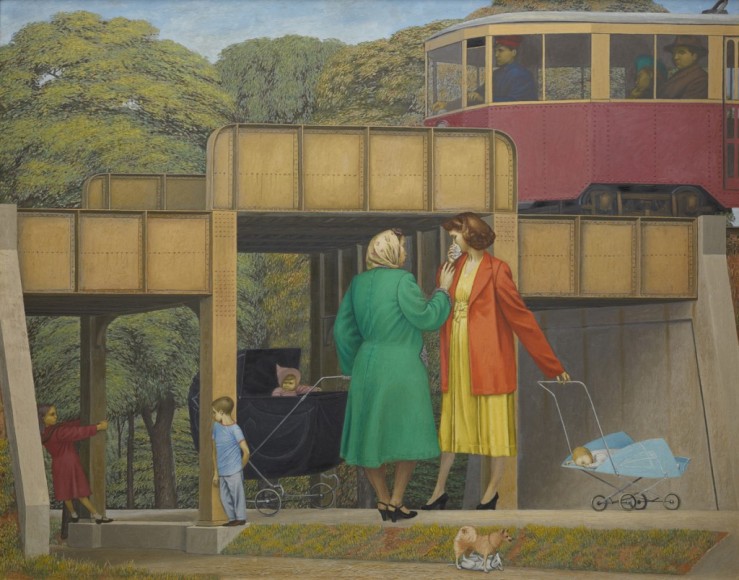
Under the Overpass — Henry Koerner

52-1024x804

Under the Overpass, 1949 by Henry Koerner (1915-1991)

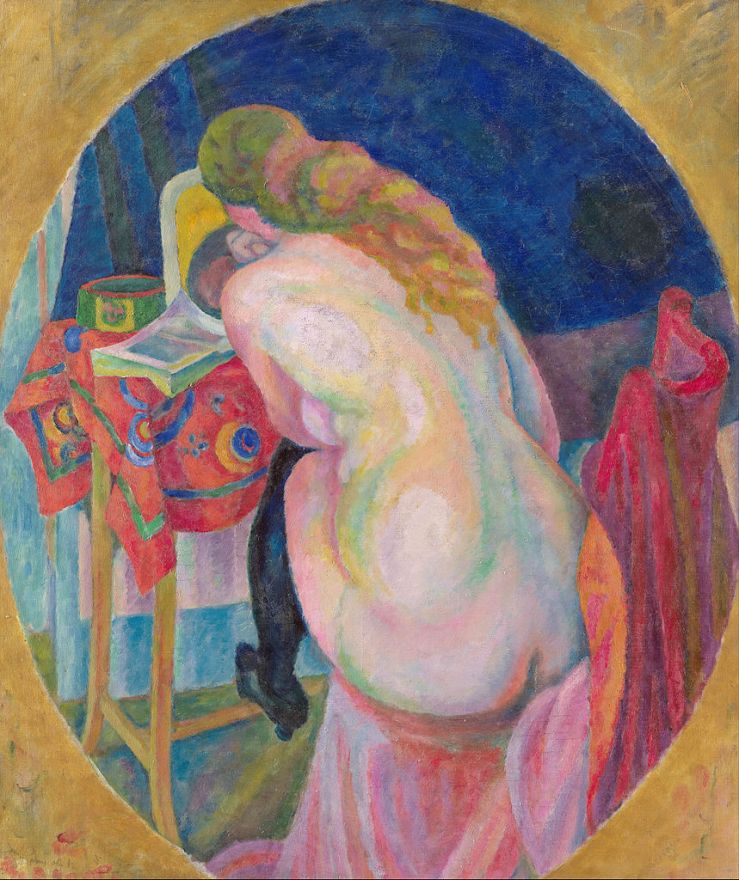
Nude Reading — Robert Delaunay

859px-robert_delaunay_-_nude_woman_reading_-_google_art_project

Nude Reading, 1915 by Robert Delaunay (1885-1941)

Among the productions of the river’s margin | Nathaniel Hawthorne’s journal entry for August 6th, 1842

After breakfast I took my fishing-rod, and went down through our orchard to the river-side; but as three or four boys were already in possession of the best spots along the shore, I did not fish. This river of ours is the most sluggish stream that I ever was acquainted with. I had spent three weeks by its side, and swam across it every day, before I could determine which way its current ran; and then I was compelled to decide the question by the testimony of others, and not by my own observation. Owing to this torpor of the stream, it has nowhere a bright, pebbly shore, nor is there so much as a narrow strip of glistening sand in any part of its course; but it slumbers along between broad meadows, or kisses the tangled grass of mowing-fields and pastures, or bathes the overhanging boughs of elder-bushes and other water-loving plants. Flags and rushes grow along its shallow margin. The yellow water-lily spreads its broad flat leaves upon its surface; and the fragrant white pond-lily occurs in many favored spots,–generally selecting a situation just so far from the river’s brink that it cannot be grasped except at the hazardof plunging in. But thanks be to the beautiful flower for growing at any rate. It is a marvel whence it derives its loveliness and perfume, sprouting as it does from the black mud over which the river sleeps, and from which the yellow lily likewise draws its unclean life and noisome odor. So it is with many people in this world; the same soil and circumstances may produce the good and beautiful, and the wicked and ugly. Some have the faculty of assimilating to themselves only what is evil, and so they become as noisome as the yellow water-lily. Some assimilate none but good influences, and their emblem is the fragrant and spotless pond-lily, whose very breath is a blessing to all the region round about. . . . Among the productions of the river’s margin, I must not forget the pickerel-weed, which grows just on the edge of the water, and shoots up a long stalk crowned with a blue spire, from among large green leaves. Both the flower and the leaves look well in a vase with pond-lilies, and relieve the unvaried whiteness of the latter; and, being all alike children of the waters, they are perfectly in keeping with one another. . . .

From Nathaniel Hawthorne’s journal entry for August 6th, 1842. From Passages from the American Note-Books.

Girl Reading — Edmund Charles Tarbell

sc12556

Girl Reading, 1909 by Edmund Charles Tarbell (1862-1938)

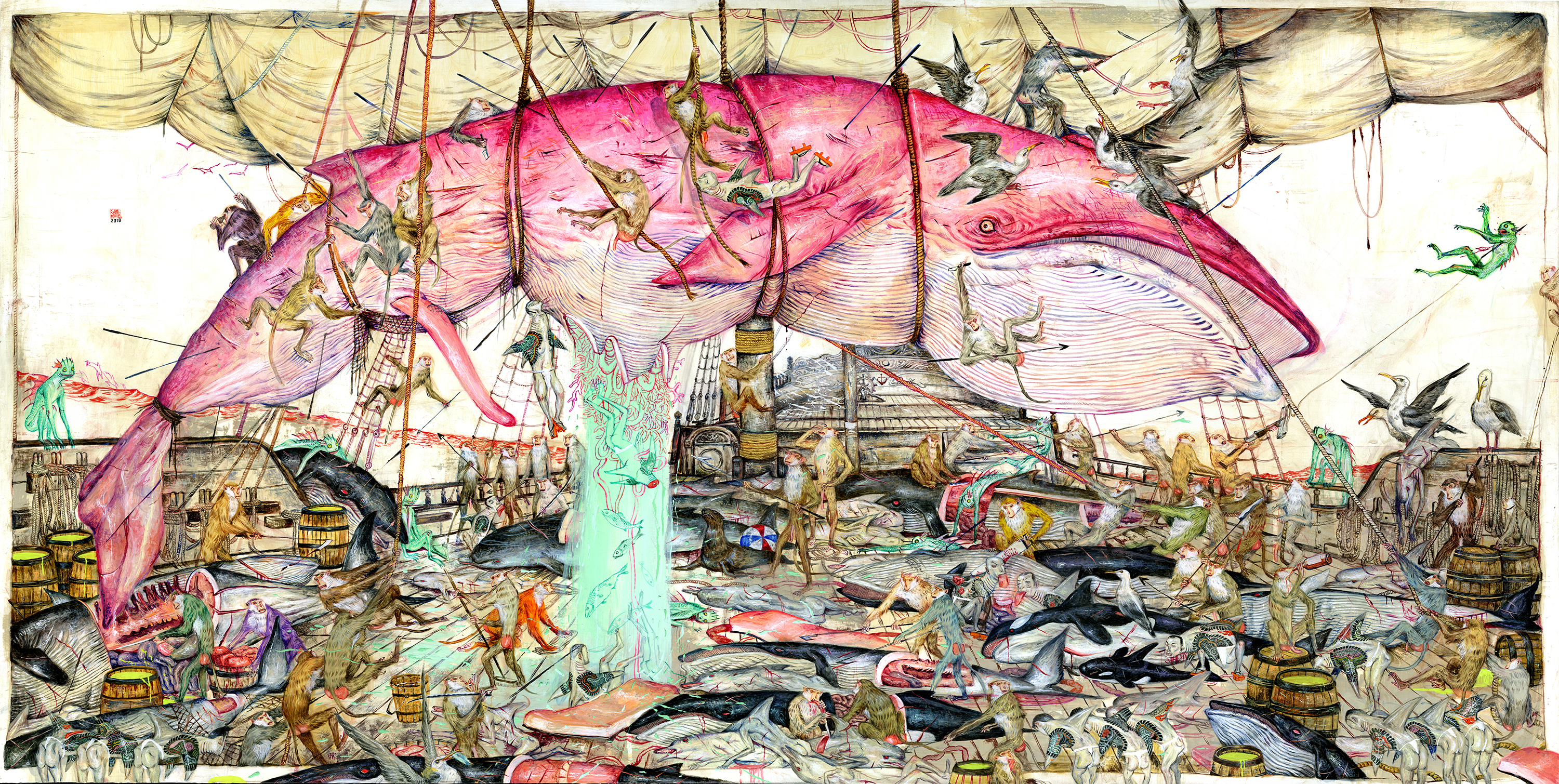
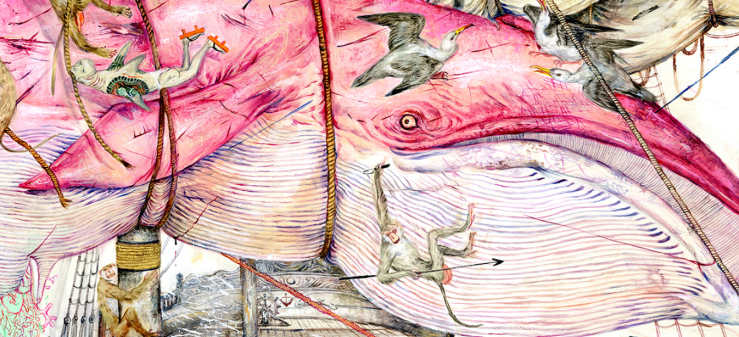
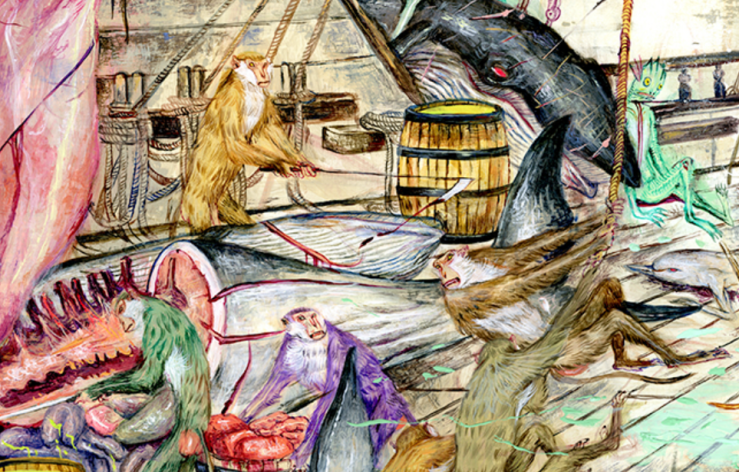
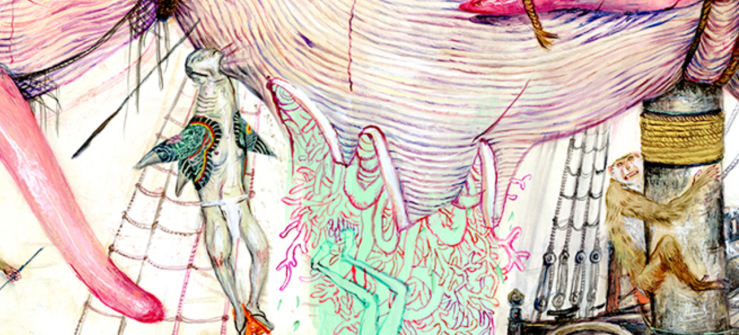
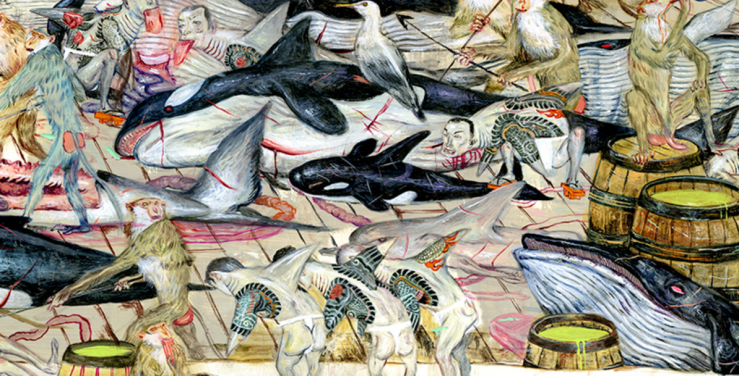
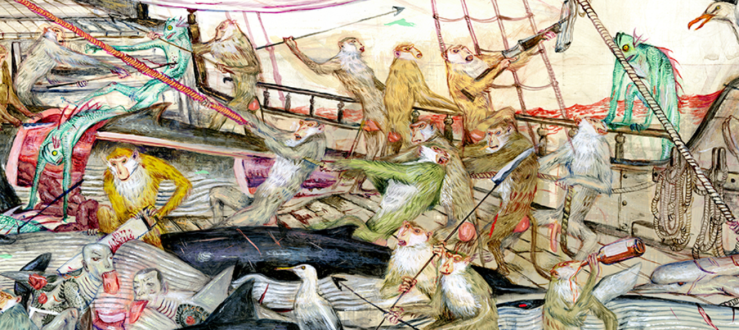
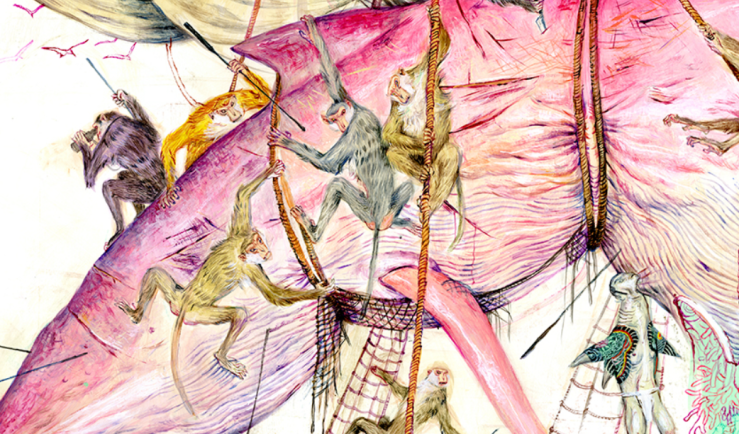
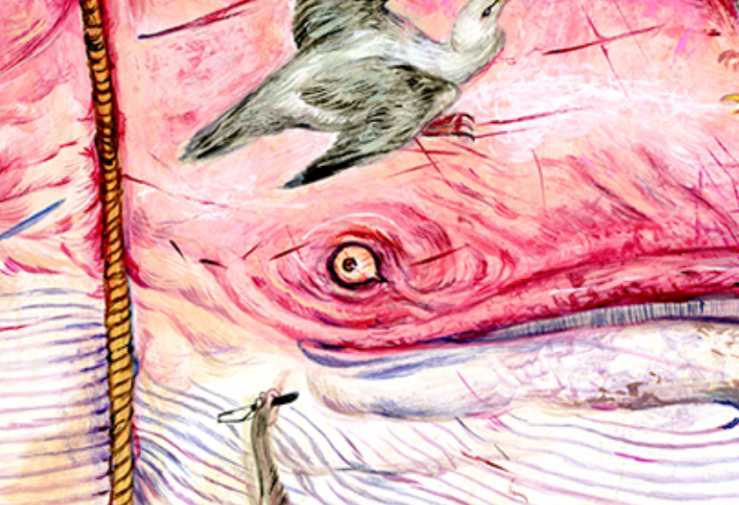
Moby — Mu Pan

moby_3000

Moby, 2018 by Mu Pan (b. 1976)

Screenshot 2018-08-05 at 5.33.05 PMScreenshot 2018-08-05 at 5.33.47 PMScreenshot 2018-08-05 at 5.34.45 PMScreenshot 2018-08-05 at 5.34.19 PMScreenshot 2018-08-05 at 5.34.03 PMScreenshot 2018-08-05 at 5.33.26 PMScreenshot 2018-08-05 at 5.36.04 PM

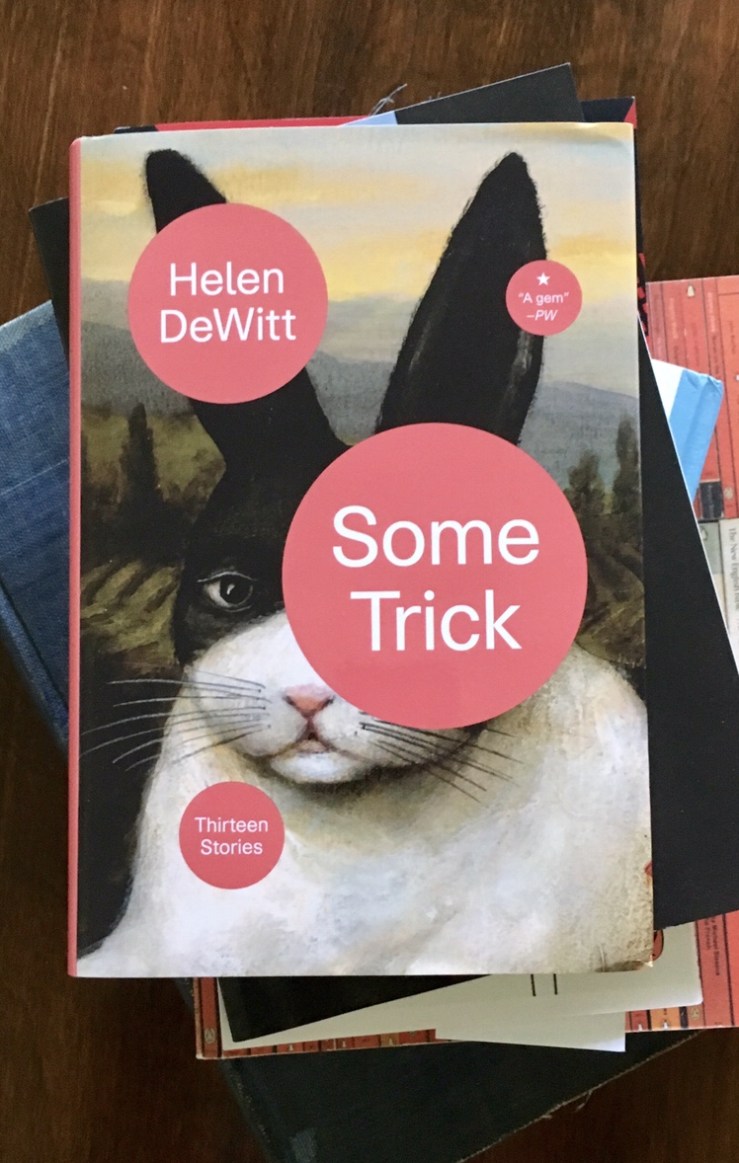
Helen DeWitt’s Some Trick (Book acquired 27 July 2018)

img_0767

I spent a week in Charleston, SC at the end of July. The city’s veneer of “historical charm” doesn’t quite cover over a past that it recognizes but seems not wholly reconciled to, but the grits were very good.

img_0503-1

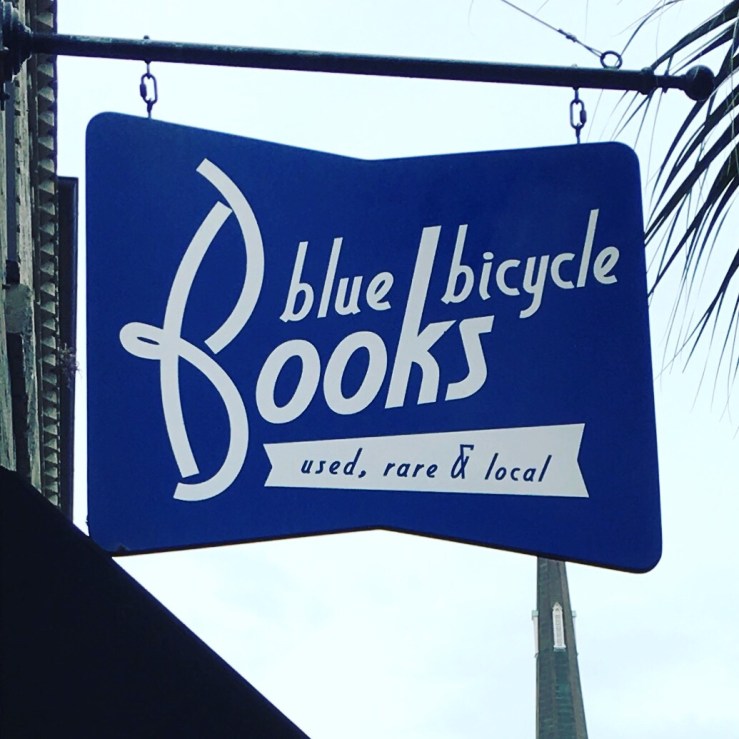
I visited Blue Bicycle Books while I was there, where I was allowed to fondle a signed Faulkner with my unwashed hands. I picked up Helen DeWitt’s Some Trick in hardback there, despite not really liking Lightning Rods. I would’ve picked up her cult novel The Last Samurai instead, but they didn’t have it—and anyway, I’ve been reading mostly short stories and short novels (Murnane, Volodine, Melville) since getting through Eliot’s big fat novel Middlemarch last month.

Here’s publisher New Direction’s blurb—

For sheer unpredictable brilliance, Gogol may come to mind, but no author alive today takes a reader as far as Helen DeWitt into the funniest, most yonder dimensions of possibility. Her jumping-off points might be statistics, romance, the art world’s piranha tank, games of chance and games of skill, the travails of publishing, or success. “Look,” a character begins to explain, laying out some gambit reasonably enough, even if facing a world of boomeranging counterfactuals, situations spinning out to their utmost logical extremes, and Rube Goldberg-like moving parts, where things prove “more complicated than they had first appeared” and “at 3 a.m. the circumstances seem to attenuate.” In various ways, each tale carries DeWitt’s signature poker-face lament regarding the near-impossibility of the life of the mind when one is made to pay to have the time for it, in a world so sadly “taken up with all sorts of paraphernalia superfluous, not to say impedimental, to ratiocination.”

The Tenant — Paul Fenniak

opt_the_tenant

The Tenant, 2004 by Paul Fenniak (b. 1965)

Flucht — Walton Ford

41bd6b57772c92139a04b87c06050b7d

Flucht (Flight), 2018 by Walton Ford (b. 1960)

Screenshot 2018-07-31 at 8.17.30 PM

The Misfortunes of Silenus (Detail) — Pierro di Cosimo

Screenshot 2018-07-05 at 8.50.44 PM

The Misfortunes of Silenus (detail), c. 1500 by Pierro di Cosimo (1462-1522)

Biblioklept on Instagram

I made an Instagram account for Biblioklept. (The handle is @bibliokleptogram — somebody already snagged “Biblioklept”).

The content for Biblokleptogram is not the same as the blog’s content (although the feed is integrated into the blog—it’s down on the bottom right).

Most of the time I’ll post photographs of book covers, poems, prose, etc. My only “rule” is that I’ll only post photographs I’ve taken myself. I don’t plan on using Instagram to write.

This is the first post from the account, a poem by Roberto Bolaño:

View this post on Instagram

Nothing can happen here and yet here I am.

A post shared by biblioklept (@bibliokleptogram) on

And here is a post from yesterday, which happened to be Herman Melville’s 199th birthday: