“Sugar” — Gertrude Stein

SUGAR.

by Gertrude Stein

(From Tender Buttons).

A violent luck and a whole sample and even then quiet.

Water is squeezing, water is almost squeezing on lard. Water, water is a mountain and it is selected and it is so practical that there is no use in money. A mind under is exact and so it is necessary to have a mouth and eye glasses.

A question of sudden rises and more time than awfulness is so easy and shady. There is precisely that noise.

A peck a small piece not privately overseen, not at all not a slice, not at all crestfallen and open, not at all mounting and chaining and evenly surpassing, all the bidding comes to tea.

A separation is not tightly in worsted and sauce, it is so kept well and sectionally.

Put it in the stew, put it to shame. A little slight shadow and a solid fine furnace.

The teasing is tender and trying and thoughtful.

The line which sets sprinkling to be a remedy is beside the best cold.

A puzzle, a monster puzzle, a heavy choking, a neglected Tuesday.

Wet crossing and a likeness, any likeness, a likeness has blisters, it has that and teeth, it has the staggering blindly and a little green, any little green is ordinary.

One, two and one, two, nine, second and five and that.

A blaze, a search in between, a cow, only any wet place, only this tune.

Cut a gas jet uglier and then pierce pierce in between the next and negligence. Choose the rate to pay and pet pet very much. A collection of all around, a signal poison, a lack of languor and more hurts at ease.

A white bird, a colored mine, a mixed orange, a dog.

Cuddling comes in continuing a change.

A piece of separate outstanding rushing is so blind with open delicacy.

A canoe is orderly. A period is solemn. A cow is accepted.

A nice old chain is widening, it is absent, it is laid by.

Rachel (Blade Runner) — Ilya Kuvshinov

blade_runner_rachel_by_kr0npr1nz-d74o5qk

Plastics and paranoia (Harold Bloom on Thomas Pynchon)

For Pynchon, ours is the age of plastics and paranoia, dominated by the System. No one is going to dispute such a conviction; reading the New York Times first thing every morning is sufficient to convince one that not even Pynchon’s imagination can match journalistic irreality. What is more startling about Pynchon is that he has found ways of representing the impulse to defy the System, even though both impulse and its representations always are defeated. In the Zone (which is our cosmos as the Gnostics saw it, the kenoma or Great Emptiness) the force of the System, of They (whom the Gnostics called Archons), is in some sense irresistible, as all overdetermination must be irresistible. Yet there is a Counterforce, hardly distinguished in its efficacy, but it never does (or can) give up. Unfortunately, its hero is the extraordinarily ordinary Tyrone Slothrop, who is a perpetual disaster, and whose ultimate fate, being “scattered” (rather in biblical sense), is accomplished by Pynchon with dismaying literalness. And yet—Slothrop, who has not inspired much affection even in Pynchon’s best critics, remains more Pynchon himself.

From Harold Bloom’s introduction to Bloom’s Critical Modern Views: Thomas Pynchon.

Philip Seymour Hoffman as Dean Trumbell the Mattress Man in an outtake from Punch-Drunk Love

The Task — Remedios Varo

Love Liza (Full Film)

Jonas Karlsson’s The Room (Book acquired some time last week)

IMG_4955

Jonas Karlsson’s novel The Room comes out later this month from Random House. Their blurb:

Funny, clever, surreal, and thought-provoking, this Kafkaesque masterpiece introduces the unforgettable Bjorn, an exceptionally meticulous office worker striving to live life on his own terms.
 
Bjorn is a compulsive, meticulous bureaucrat who discovers a secret room at the government office where he works–a secret room that no one else in his office will acknowledge. When Bjorn is in his room, what his co-workers see is him standing by the wall and staring off into space looking dazed, relaxed, and decidedly creepy. Bjorn’s bizarre behavior eventually leads his co-workers to try and have him fired, but Bjorn will turn the tables on them with help from his secret room.
Debut author Jonas Karlsson doesn’t leave a word out of place in this brilliant, bizarre, delightful take on how far we will go–in a world ruled by conformity–to live an individual and examined life.

Hawk — Katsushika Hokusai

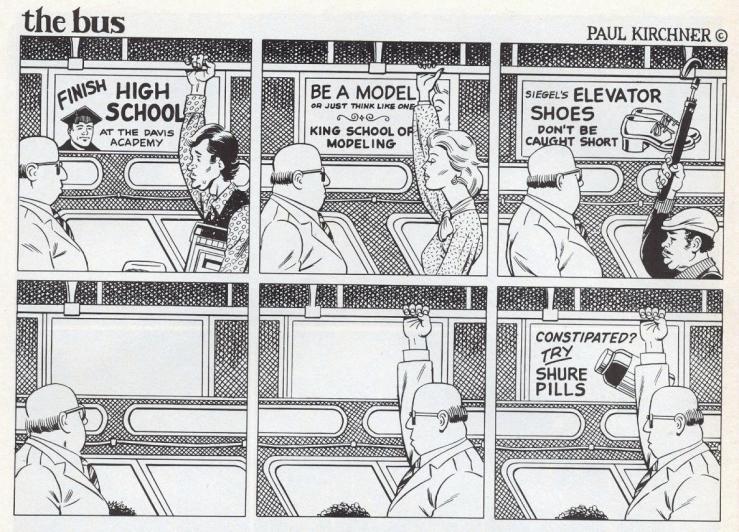
The Bus — Paul Kirchner

TPEkngx

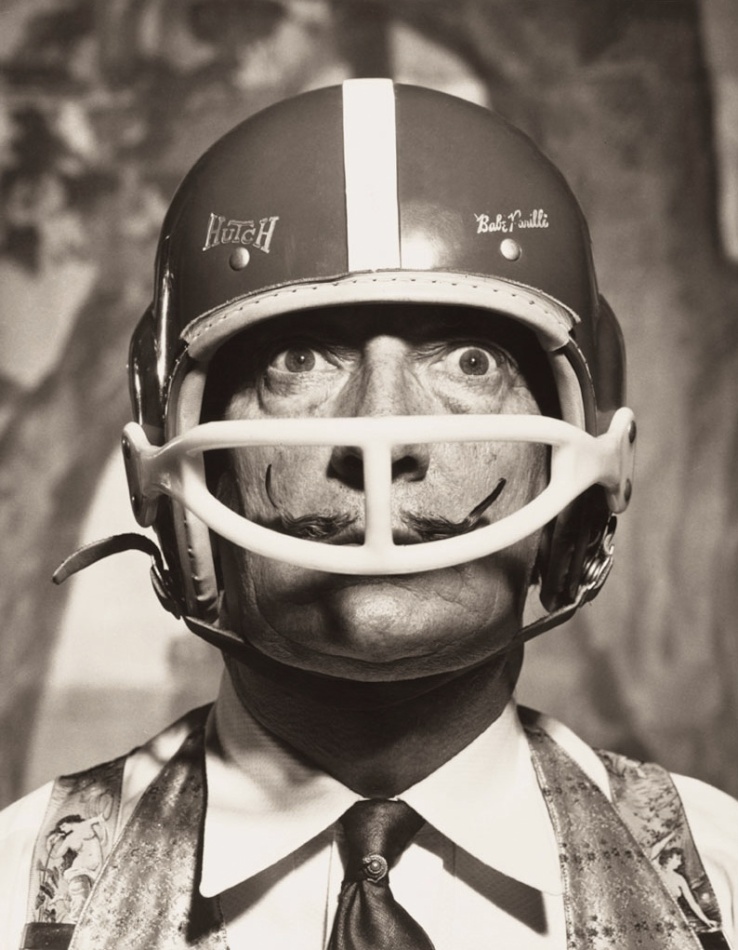
Salvador Dali sporting a football helmet

17_portrait_de_salvador_dal__avec_casque_de_footballeur_am_ricain__1964-web

(Via).

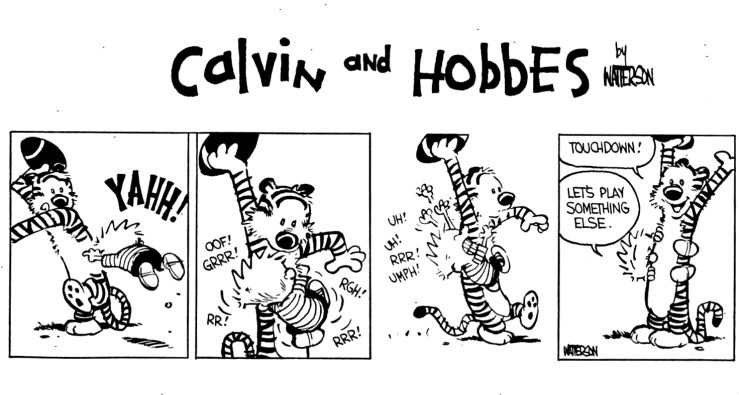
Calvin & Hobbes play football

Capture

“For the portrait of an African boy after the manner of Gauguin” — Langston Hughes

Capture

February — Michael Sowa

february

One reads for oneself and for strangers (Harold Bloom)

The terms “power” and “authority” have pragmatically opposed meanings in the realms of politics and what we still ought to call “imaginative literature.” If we have difficulty in seeing the opposition, it may be because of the intermediate realm that calls itself “spiritual.” Spiritual power and spiritual authority notoriously shade over into both politics and poetry. Thus we must distinguish the aesthetic power and authority of the Western Canon from whatever spiritual, political, or even moral consequences it may have fostered. Although reading, writing, and teaching are necessarily social acts, even teaching has its solitary aspect, a solitude only the two could share, in Wallace Stevens’s language. Gertrude Stein maintained that one wrote for oneself and for strangers, a superb recognition that I would extend into a parallel apothegm: one reads for oneself and for strangers. The Western Canon does not exist in order to augment preexisting societal elites. It is there to be read by you and by strangers, so that you and those you will never meet can encounter authentic aesthetic power and the authority of what Baudelaire (and Erich Auerbach after him) called “aesthetic dignity.” One of the ineluctable stigmata of the canonical is aesthetic dignity, which is not to be hired.

From The Western Canon by Harold Bloom.

The Pagans — Oskar Kokoschka

Avant-gardes are fragile affairs (William H. Gass)

Avant-gardes are fragile affairs. The moment they become established, they cease to be – success as well as failure finishes them off. Their unity depends upon a common “no,” not on some “yes” that is jointly loved. And insofar as the movement moves at all, it requires the shoulders of many others at its wheels, support which most of the artists suspect is actually their exploitation. Poems must be written, paintings must be painted, but mere coffeehouse talk is not irrelevant to the success of the cause, nor are letters, broadsides, feuilletons, essays, reviews, catalogue copy, the quarrels of the cafés and the slanders of the salons; nor are tumults in the stalls, outrages of public decency, arrests, or other excursions and alarms.


Every effort to prolong an avant-garde beyond a certain point becomes of doubtful value, because an avant-garde can have but a mayfly’s life: the artists have only their negations to chorus; both their attitudes and their art will alter as they age; society’s methods of co-optation and disarmament will, in general, be effective; their anger will be softened by success and their aims divided, their attention distracted; the institutions set up by most Establishments, even if assaulted, will take longer dying than most avant-gardes can expect to live; while the strength of the support groups, so necessary to the energy of any movement, are even more fragile and momentary, depending, as they do, on the loyalty of a publisher, the generosity of a patron, the length of a love life, the cuisine of a café.

From William H. Gass’s essay “The Vicissitudes of the Avant-Garde.”

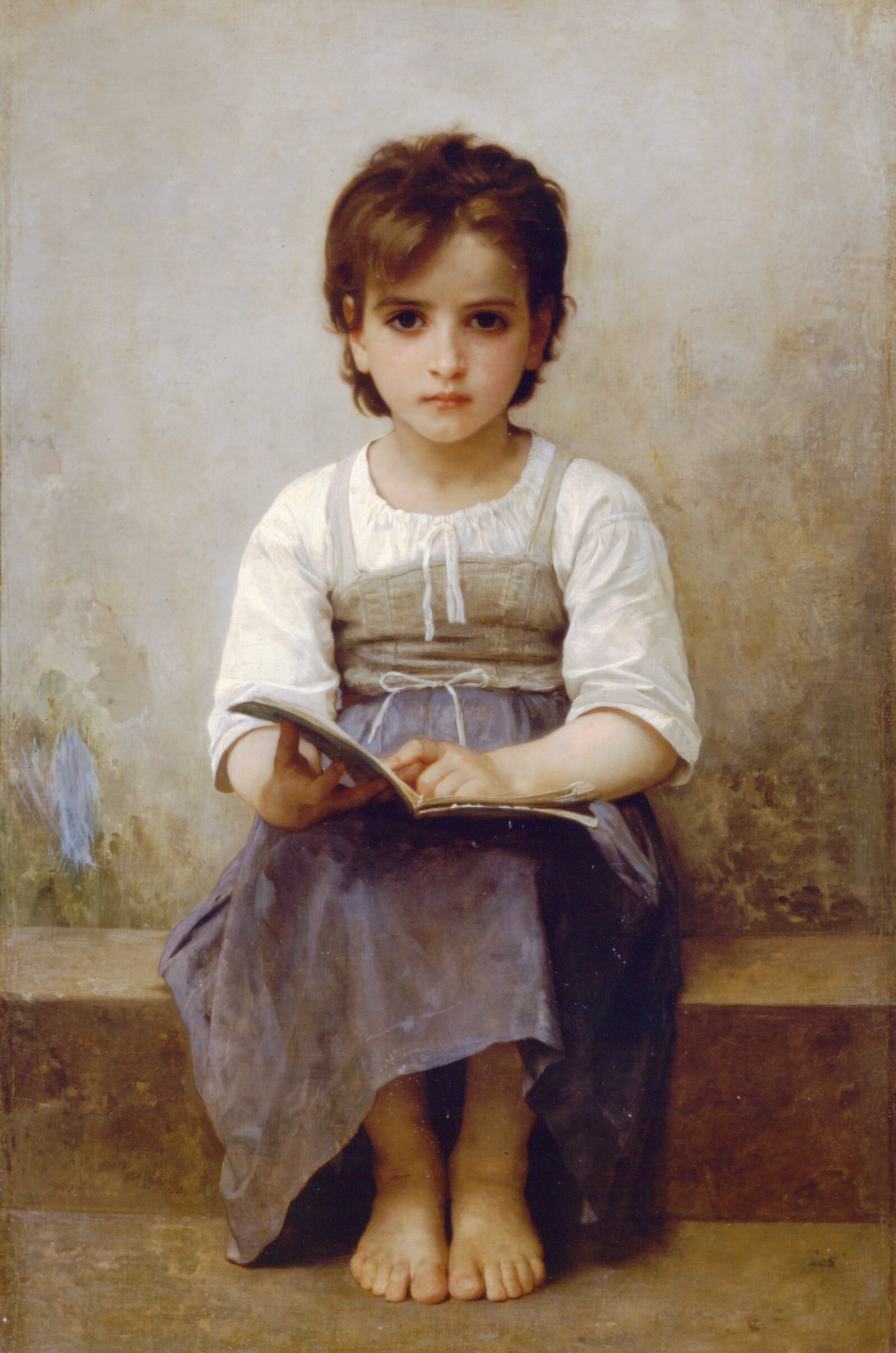
The Hard Lesson — William-Adolphe Bouguereau

IMG_4969