A review of Stone Junction, Jim Dodge’s alchemical pot-boiler

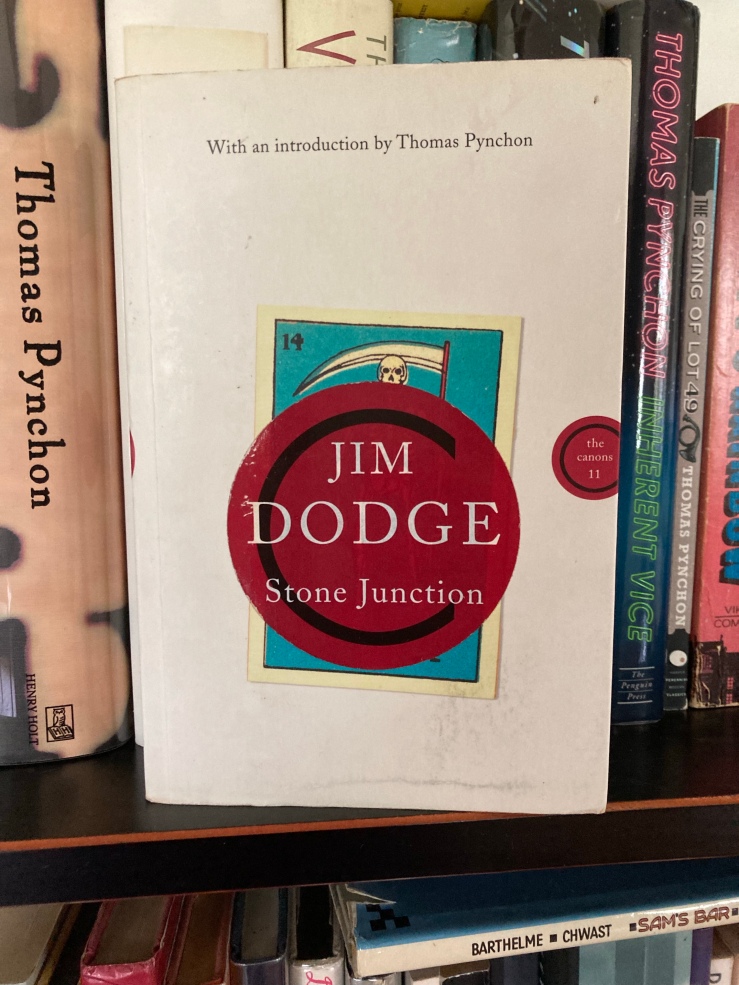
Jim Dodge’s 1990 novel Stone Junction tells the life story of Daniel Pearse, a young man of preternatural talents and sharp intelligence who trains under various tutors in a secret society, steals an enormous diamond, and eventually attains enlightened apotheosis. A lot of other stuff happens too.

Dodge subtitled his novel An Alchemical Pot-Boiler, a description that punctures any premature accusations of pretension, yet also calls attention to the novel’s arcane subject matter. The subtitle’s also a joke, of course—Dodge invites us to read his 500-pager as a kind of alchemist’s cauldron, a kitchen sink overloaded with spies and thieves, gamblers and quick change artists, holy fools and madmen. 

And Dodge, as promised, keeps his pot boiling. Stone Junction is a propulsive and engaging read largely because of the world he imagines for Daniel to grow up in. Stone Junction isn’t a magical realism act, but magic exists here. From a very young age, Daniel is initiated into a clandestine organization called AMO. Said aloud, as a young Daniel points out, the name “AMO” is suggestive of both “ammo” and the Latin verb amo, it’s really an acronym:

AMO is the acronym for Alliance of Magicians and Outlaws – or, as some members claim, Alchemists, Magicians, and Outlaws, which they contend was the original name. Another faction, small but vocal, insists AMO has always stood for Artists, Myth-singers, and Outriders. As you might sense, there is constant and long-standing contention about AMO’s origins and development

…AMO is a secret society – though more on the order of an open secret, in fact. Basically, AMO is a historical alliance of the mildly felonious, misfits, anarchists, shamans, earth mystics, gypsies, magicians, mad scientists, dreamers, and other socially marginal souls.

After the violent and mysterious death of his mother (and his own near-death), Daniel comes under the tutelage of those dreamers and socially-marginal souls. Extended episodes of Daniel’s working and growing under a new teacher make up the bulk of Stone Junction; these inventive and enjoyable sections are the finest parts of the book. Thomas Pynchon offers a nice catalog of Daniel’s various mentors in his introduction to the 1997 reprint of Stone Junction:

Wild Bill Weber teaches meditation, fishing, waiting. Mott Stocker teaches Dope, its production and enjoyment. Ace safecracker Willie Clinton (yep) instructs the boy in how to get past all kinds of locks and alarms, rendering him thus semi-permeable to certain protected parts of the world, setting him on his path to total dematerialization. For a while Daniel teams up with poker wizard Bad Bobby Sloane, roving the American highways in search of opportunities to risk capital in ways that cannot be officially controlled… The shape-shifting genius Jean Bluer teaches Daniel the arts of disguise… At last Daniel comes circling back to Volta…who teaches him the final secret of Invisibility. None of your secular Wellsian tricks with refractive indices and blood pigmentation here, but rather the time-honored arts of ceasing to be material.

It makes sense that Pynchon (who praises Stone Junction as “an outlaw epic for our own late era of corrupted romance and defective honor”) would stick on that big “I” Invisibility, always a byword in his own novels.

Dodge’s byword in Stone Junction is another i-word: imagination. Especially in its final third, Dodge’s novel, and its characters, repeat the importance of imaginative possibility, of imagining new realities, new states of being.

Volta is the dark sage magician guiding Daniel on his quest toward imagination. Or, rather, his quest to steal an enormous, perfectly-circular diamond from the U.S. government. He might throw Daniel into a den of lions, but our boy’s an escape artist. His last name, Pearse, among other transmutations (pierce, purse, pairs), suggests Percival, one of Arthur’s Knights of the Round Table. (Like Percival, Daniel is raised alone in hermetic seclusion by his solo mother.) The diamond is Daniel’s grail.

In her contemporary New York Times review of Stone Junction, Michele Slung pointed out the novel’s debt to Arthurian legends, among other sources, calling it “a post-psychedelic coming-of-age fable that’s part Thomas Pynchon, part Tolkien, part Richard Brautigan, a story that owes as much to The Once and Future King as it does to Huckleberry Finn.” Like Huck FinnStone Junction has a ramshackle, picaresque energy, but it nevertheless adheres to a plot, with the mystical diamond a MacGuffin for Daniel (among other thieves and spies) to quest after—once he’s matured and advanced in his outlaw skills, of course.

As I stated above, the strongest elements of Stone Junction revolve around Daniel’s adventures and training. (His time on the poker circuit with Bad Bobby Sloane is a particular highlight.) Dodge transmogrifies the raw material of American Weirdo Mythos into new inventions, zany recapitulations of occult outlaw fables.

Dodge’s prose style, while effective in its descriptions of characters, cannot quite approach the register of his imaginative inventory. The novel relies heavily on exposition, and while major characters like Volta and Bad Bobby Sloane speak with authentic and differentiated voices, a monolingual sameiness pervades too much of the prose. In its strongest moments, Stone Junction reads like a YA Pynchon novel; in its weakest moments, it reminded me of Tom Robbins.

The stronger moments prevail, however—Stone Junction is a fun, flighty, and at times unexpectedly heavy summer read. The novel might also be read in (stoned) conjunction with Pynchon’s 1990 twin Vineland. Both novels diagnose the fallout of the 1960s counterculture wave crashing against the Reagan eighties; both seem attempts to, at least in the world of letters, check the burgeoning nostalgic romanticization of that turbulent decade. Pynchon’s is the more flawed, sillier, and better-written effort; Dodge’s is likely his magnum opus.

If I’ve namechecked Pynchon too much in my review, forgive me: His name is on the cover of Jim Dodge’s novel, and his own (far more-detailed, far better-written) review precedes Jim Dodge’s novel, and his endorsement is frankly the reason I sought it out to begin with. I called Stone Junction “YA Pynchon” above, but I didn’t mean it as an insult—it’s YA in an older sense, in the sense of the novels handed me when I was young, hardly adult, novels that etched their own versions of reality onto our own banal reality; realities more real: Adventures of Huckleberry FinnThe OutsidersThe Once and Future KingThe Lord of the RingsHatchet… Stone Junction is about youth, but it’s also about maturation, and the ache and melancholy of aging out of the game, personified in the semi-tragic figure of Daniel’s would-be mentor, Volta.

I don’t think I would’ve appreciated the depth of Volta’s melancholy as a much younger person, which is the time I wished I had first read Stone Junction. I should’ve found the novel almost 30 years ago—let’s say the summer I stayed in my cousin’s old bedroom. I was fifteen or sixteen, and he, a decade older than me, was doing Adult Things. I listened to the tapes and records he had left in his high school bedroom, taking a few with me at the end of the summer. (Tripp, if you’re reading, I still have your cassette of New Order’s Low-Life in a box somewhere. Drive up sometime and we can search it out together.) I read almost all of his cheap paperbacks, and took as many as I thought I could reasonably get away with with me: Fear and Loathing, Cat’s CradleEven Cowgirls Get the Blues, both Miller Tropic novels, The Electric Kool-Aid Acid TestThe Dharma BumsDelta of VenusThe Beautiful and the Damned. That would’ve been the perfect summer for me to first read Stone Junction, but I didn’t read it then. I read it now. Let a younger person in your life steal it from you, sooner rather than later.
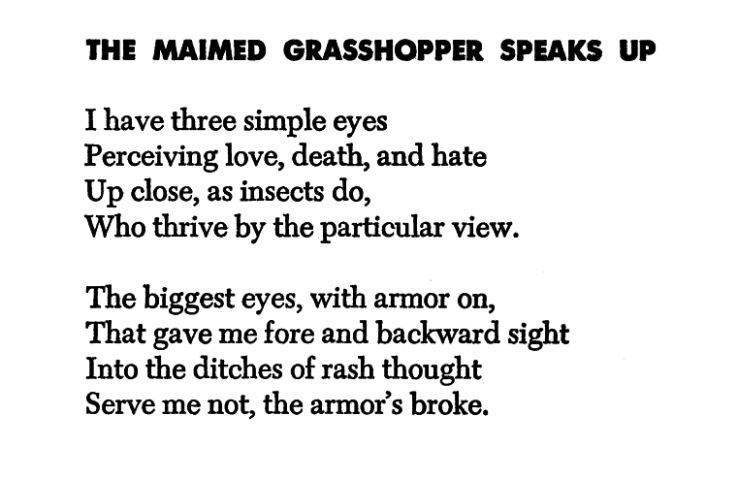
“The Maimed Grasshopper Speaks Up” — Jean Garrigue

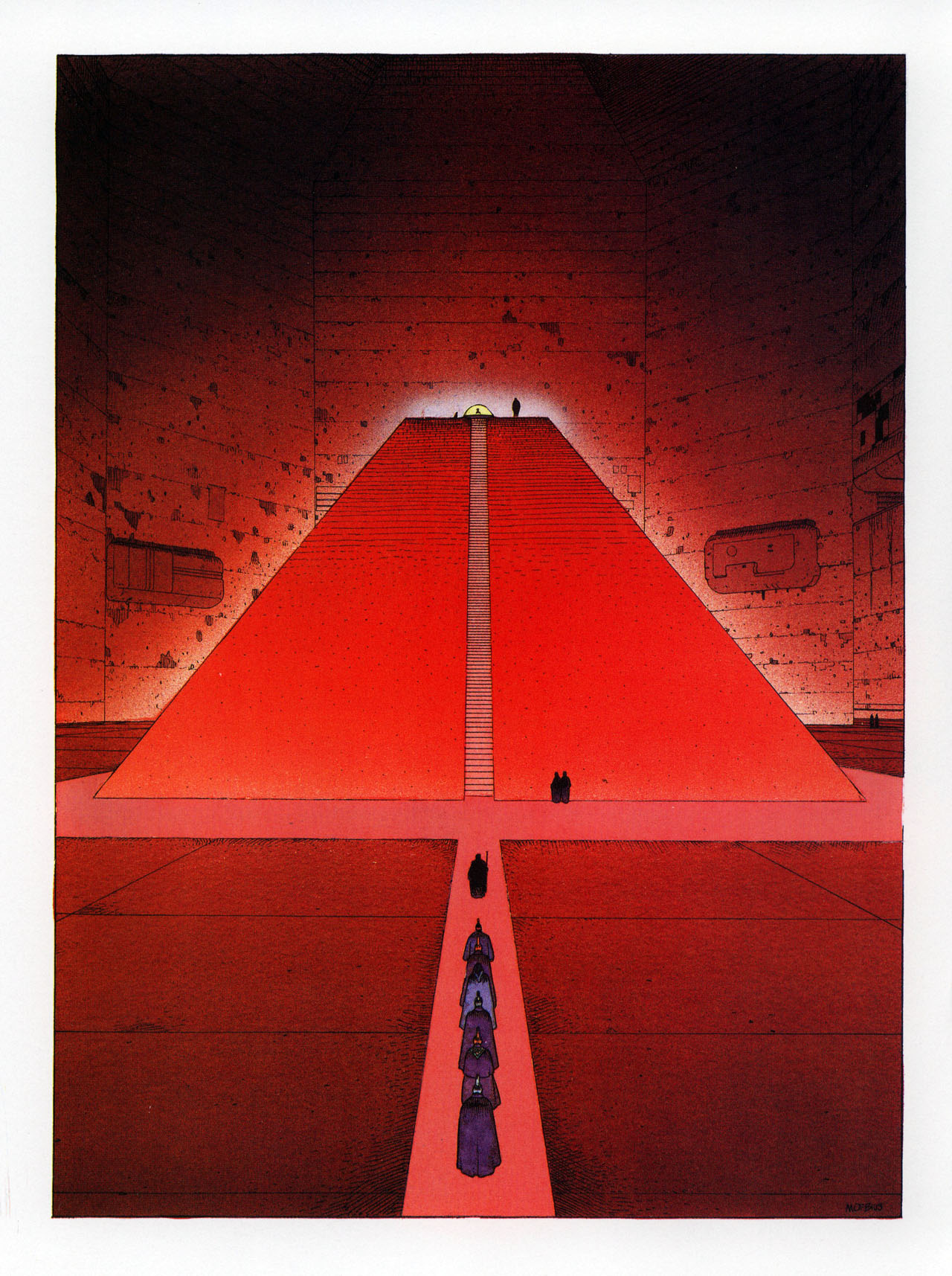
Untitled (Approaching the Paternum) — Moebius

Page from The Goddess, 1990 by Moebius (Jean Giraud, 1938–2012)

“The Wayfarer” — Robert Coover

“The Wayfarer”

by

Robert Coover


I came upon him on the road. I pulled over, stepped out, walked directly over to him where he sat. On an old milestone. His long tangled beard was a yellowish gray, his eyes dull with the dust of the road. His clothes were all of a color and smelled of mildew. He was not a sympathetic figure, but what could I do?

I stood for a while in front of him, hands on hips, but he paid me no heed. I thought: at least he will stand. He did not. I scuffed up a little dust between us with the toe of my boot. The dust settled or disappeared into his collection of it. But still, he stared obliviously. Vacantly. Perhaps (I thought): mindlessly. Yet I could be sure he was alive, for he sighed deeply from time to time, He is afraid to acknowledge me, I reasoned. It may or may not have been the case, but it served, for the time being, as a useful premise. The sun was hot, the air dry. It was silent, except for the traffic.

I cleared my throat, shifted my feet, made a large business of extracting my memo-book from my breast pocket, tapped my pencil on it loudly. I was determined to perform my function in the matter, without regard to how disagreeable it might prove to be. Others passed on the road. They proffered smiles of commiseration, which I returned with a pleasant nod. The wayfarer wore a floppy black hat. Tufts of yellow-gray hair poked out of the holes in it like dead wheat. No doubt, it swarmed. Still, he would not look at me.

Finally, I squatted and interposed my face in the path of his stare. Slowly—painfully, it would seem—his eyes focused on mine. They seemed to brighten momentarily, but I am not sure why. It could have been joy as easily as rage, or it could have been fear. Only that: his eyes brightened; his face remained slack and inexpressive. And it was not a glow, nothing that could be graphed, it was just a briefest spark, a glimmer. Then dull again. Filmy as though with a kind of mucus smeared over. And he lost the focus. I don’t know whether or not in that instant of perception he noticed my badge. I wished at the time that he would, then there could be no further ambiguities. But I frankly doubted that he did. He has traveled far, I thought. Continue reading ““The Wayfarer” — Robert Coover”

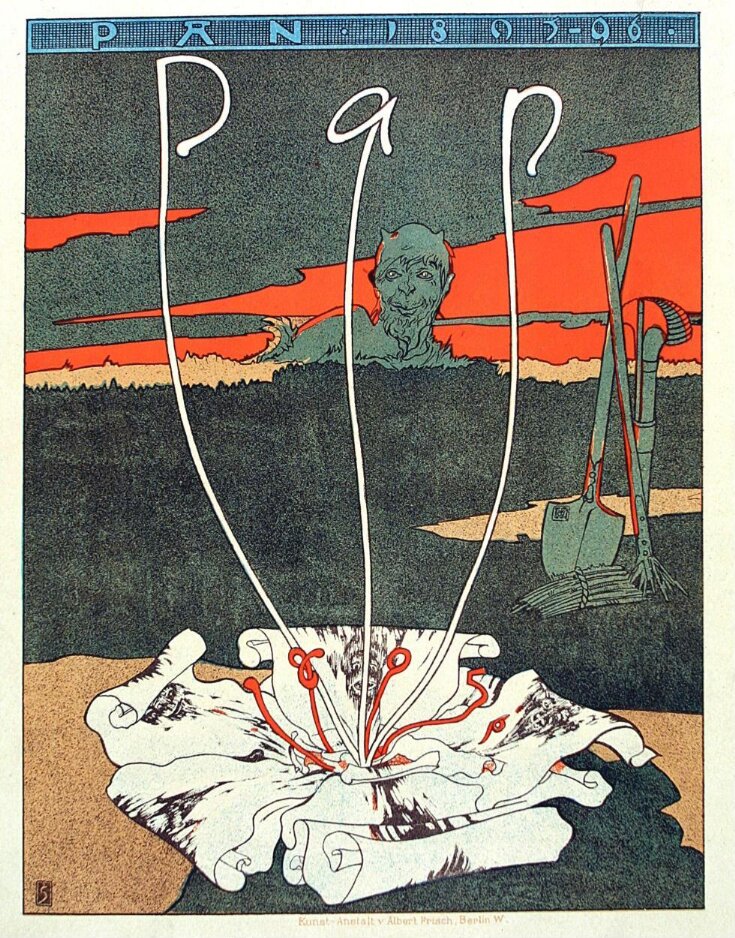
Pan — Joseph Sattler

Pan, 1895 by Joseph Sattler (1867-1931)

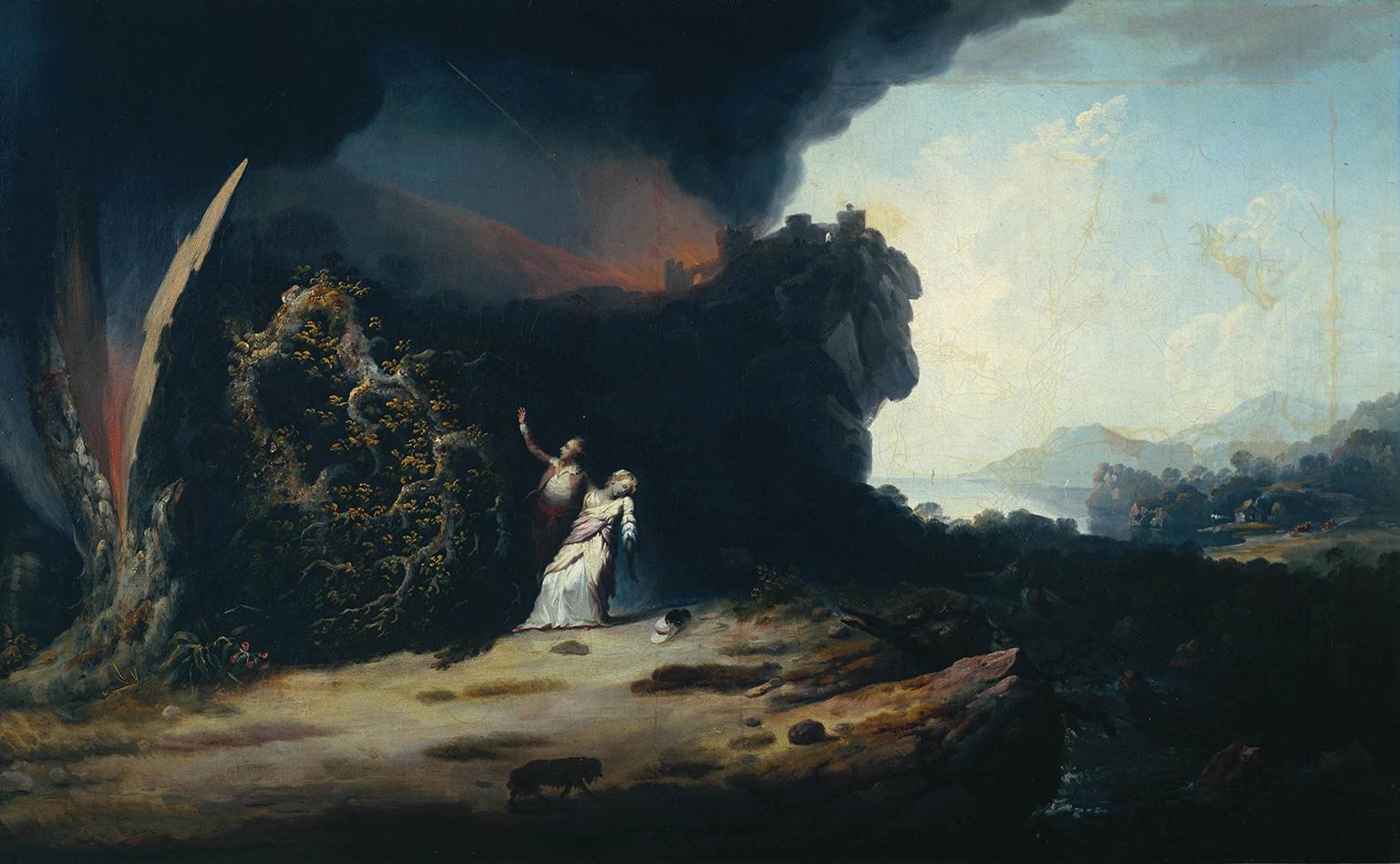
Thunderstorm with the Death of Amelia — William Williams

Thunderstorm with the Death of Amelia, 1784 by William Williams (active 1758-1797)

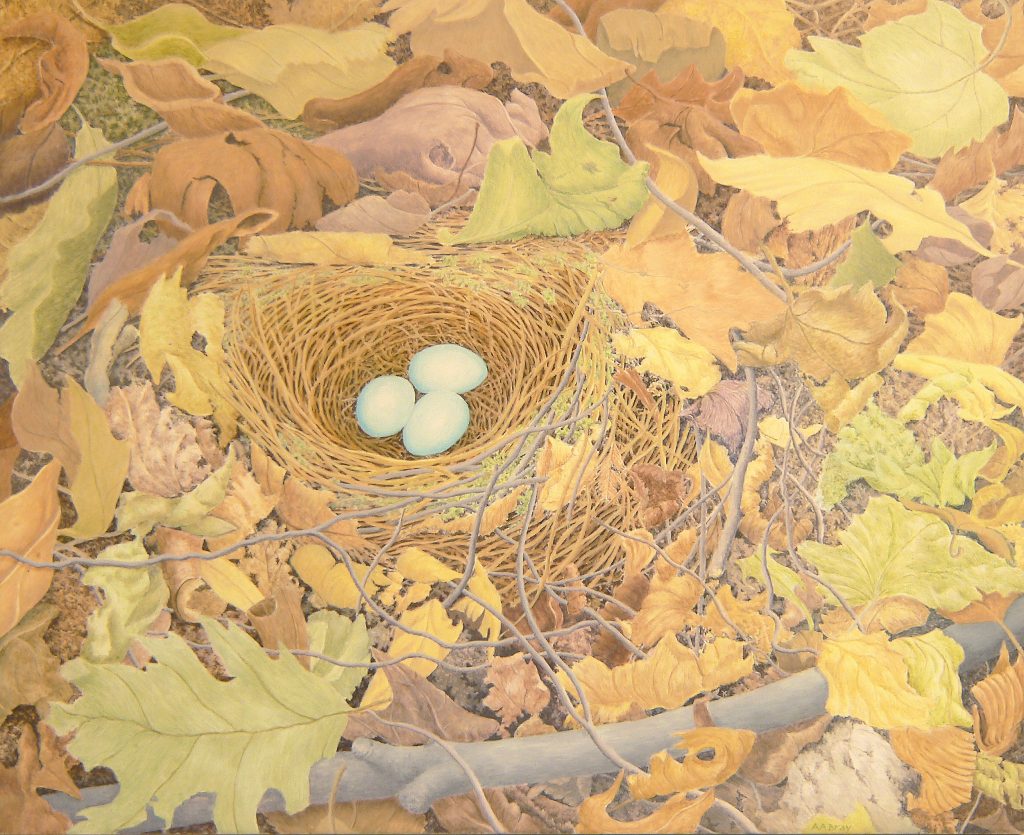
Hermit Thrush — Alan Bray

Hermit Thrush, 2022 by Alan Bray (b. 1946)

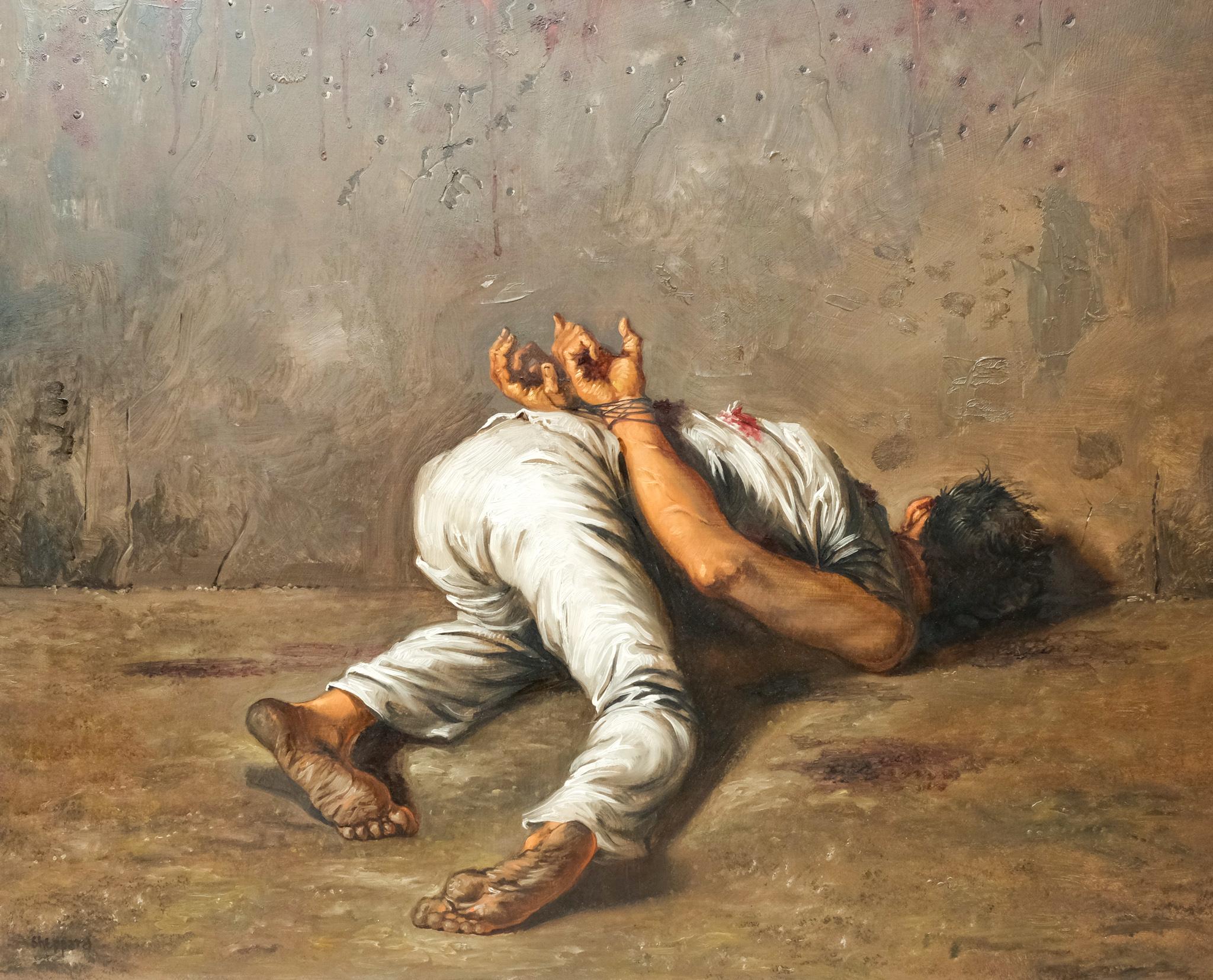
A Bloody End — Joseph Sherly Sheppard

A Bloody End, Joseph Sherly Sheppard (b. 1930)

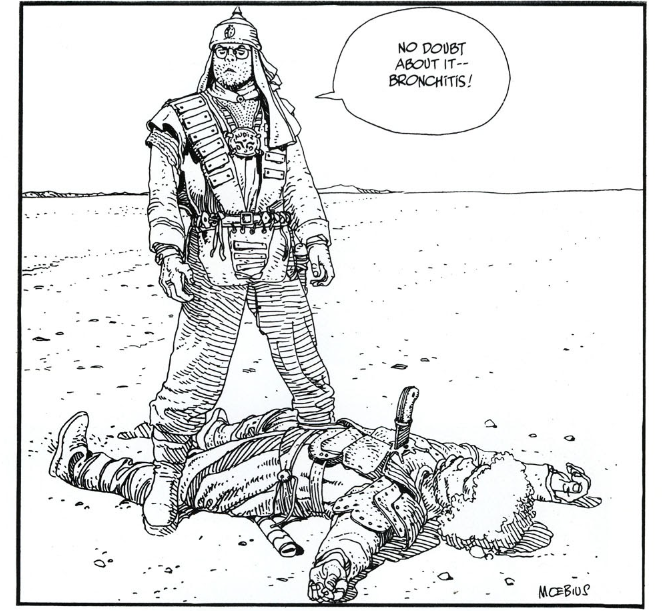
Diagnosis (Moebius)

Writing? (George Herriman’s Krazy Kat)

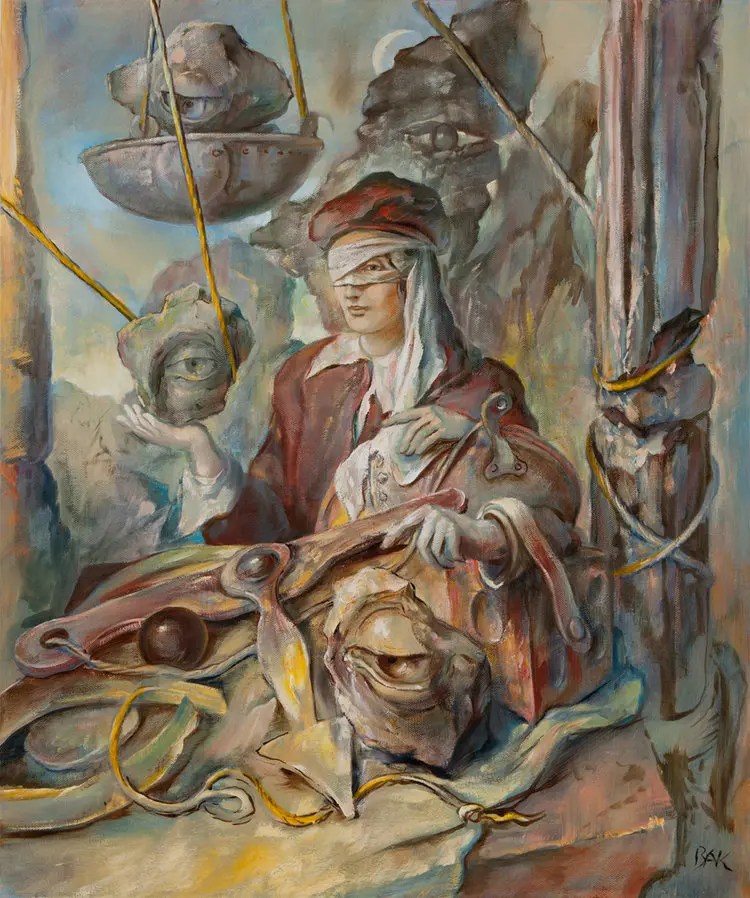
In Search of a Portrait B — Samuel Bak

In Search of a Portrait B, 1974 by Samuel Bak (b. 1933)

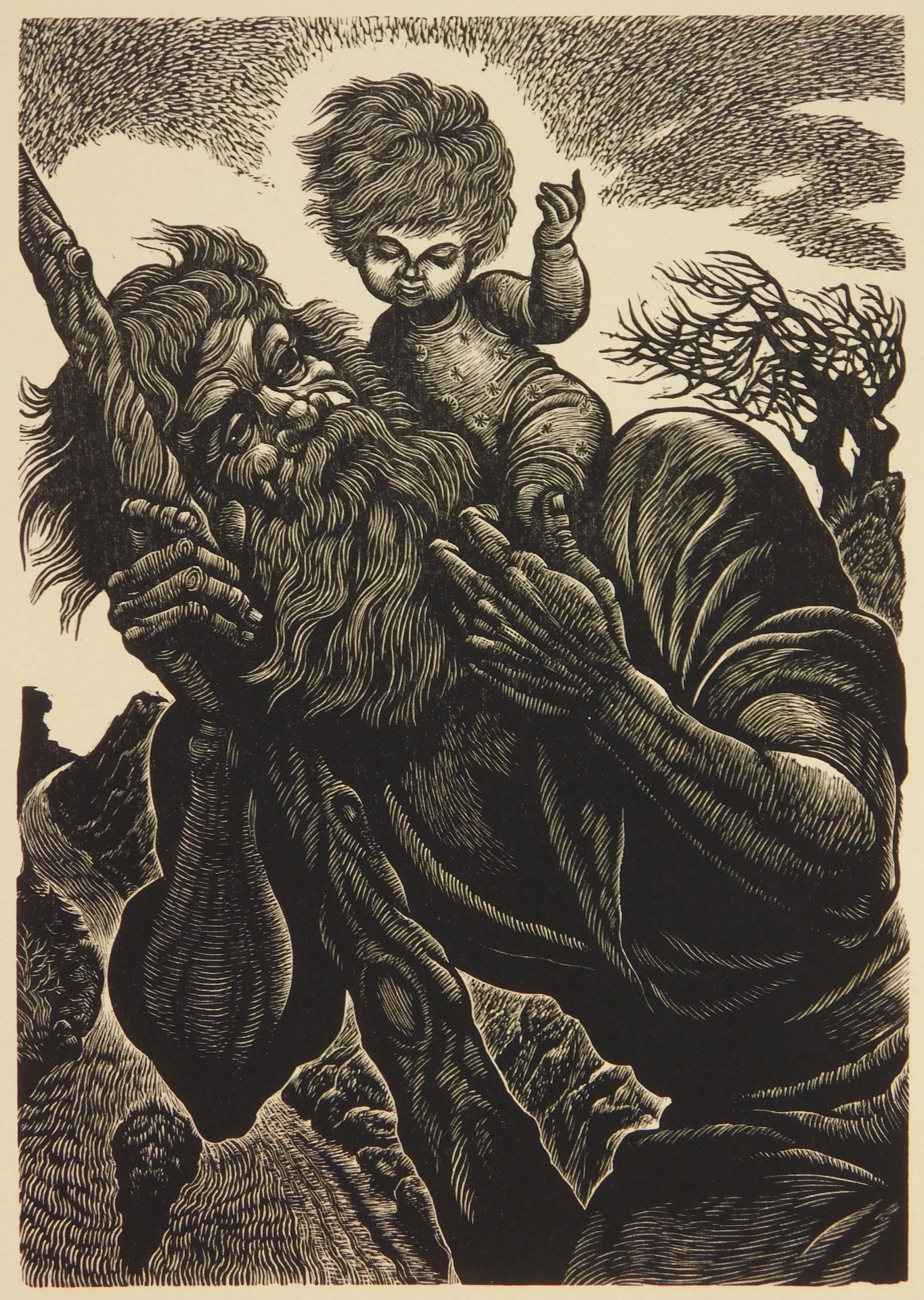
St. Christopher — Fritz Eichenberg

St. Christopher, 1949 by Fritz Eichenberg (1901-1990)

Chariot — John Jacobsmeyer 

Chariot, 2018 by John Jacobsmeyer (b. 1964)

“Chairs” — Stanley Elkin

Compared to many forms that lend themselves to art or craft—drama, the novel, painting, the composition of music, even the interpretation of music, like, oh, say, singing the national anthem before the game, infinite other forms that seem to thrive, almost to wallow, in permutation, assuming new content, a mother lode of fresh ideas and differentiated styles as they’re taken up by one artist after another—it’s extraordinary how furniture is like most other furniture, as if furniture, alone among crafts, not only lived along the perimeters of some platonic ideal but had somehow actually managed to colonize it: an imperialism of the conventional. Except for a detail here, a detail there, inlay, marquetry, the pile-on of money, of pharaohs’ or aristocracy’s royal dispensations, a couch is a couch, an escritoire an escritoire. Beds resemble beds, tables and chairs are like tables and chairs. In domestic arrangements, form, bound to the custom cloth of human shape, really does follow function. The height of a table has to do with average lap tolerances. Chairs and beds are the hard aura of a strictly skeletal repose. Even so, something’s busted, I think, in the imagination of the furniture designers—I except the art directors of certain major motion pictures set in Manhattan apartments; talkin’ environment, the ecology of “life-style,” of plot and character, what the principals look like against the bookcase, propped among the furnishings; one must learn the script of one’s life and be able to afford it; because only in movies does furniture play well—all lamps and appointments, all cunning, edge-of-the-field doodad and inspired house-dower; one has at least the illusion one could live with this stuff, that it won’t vanish in a season like a Nehru shirt—something stuck in the vision, some sorcerer’s-apprentice effect, which permits to keep on coming and keep on coming with minimal variation, if any, what has come before. It isn’t anything elegant as highest math happening here, just lump-sum arrangement, ball-park figure, bottom line. It’s the fallacy of the assembly line, the notion that only costs get cut in such a wide sweep of swath. No, but really. Isn’t it astonishing that personality, surely as real as the width of one’s shoulders or the breadth of one’s beam, should be so infinite but attention to body so meager and hand-to-mouth that—chairs, say chairs, I know about chairs—there’s been less progress in the design of chairs than in the design of luggage. (I speak as a cripple full-fledged—chairs are a hangup with me—but set that aside.) It’s as if clothing came in a single size, pants like tube socks, every dress like a muumuu. And a rule of the chair seems to be that if it’s beautiful it’s rarely comfortable, if comfortable it rarely makes the cut to beauty.

Indeed, there are so few contemporary “museum-quality” chairs one can almost list them—Marcel Breuer’s side chairs, his “Wassily” chair like a leather-and-steel cat’s cradle; Jacobsen’s “Egg” chair; Thonet’s bentwood rockers; Mies Van Der Rohe’s “Barcelona”; Saarinen’s molded plastic chairs on their round bases and tapered stems like cross sections of parfaits; all Eames’s ubiquitous plastic like stackable poker chips or the pounded, hollowed-out centers of catchers’ mitts, and as locked into a vision of the fifties as pole lamps, his famous lounge chair and ottoman that, like the Nehru shirt, have become a cliché. A spectrum of vernacular chairs—soda-fountain chairs, directors’ chairs, black canvas camp chairs, those crushed—almost imploded—white or charcoal leather pillow chairs like soft fortresses or marshmallow thrones; some of the new ergonomic chairs that sit on you as much as you ever manage to sit on them.

So I know about chairs and still have my eye out, never mind I’m sixty if I’m a day, for that evasive, lost-chord masterpiece of the genre, which, like love, I’ll know when I see like a sort of fate.

Though maybe not. Not because I haven’t the imagination to cut my losses, or even the courage to finesse my life and choose to sit out the close of my days in desuetudinous splendor, but because it may not exist. The chair, my gorgeous prosthetic of choice, may not have been fashioned yet. Because oddly, strangely, ultimately, chairs are all attitude, molds of the supine or up on pointe, aggressive or submissive as sexual position. Occupied or unoccupied either, they are shadows, ghosts, signs of the been-and-gone, some pipe-and-slippers choreography of spiritual disposition, how one chooses to acquit oneself, highly personalized as an arrangement of flowers, and oh, oh, if one but had the body for it one would live out one’s days in Van Gogh’s room at Arles, eating up comfort and beauty and having it, too, there in one last fell binge of boyhood in the cane and wood along those powder-blue walls of the utile, of basin and pitcher, of military brush and drinking glass, of apothecary bottles clear as gin on a crowded corner of the nightstand, to be there on the feather bed, on the oilcloth-looking floor amid one’s things. All, as I say, you have to know is the script of your life.

From Stanley Elkin’s 1991 essay “Some Overrated Masterpieces.” Collected in Pieces of Soap.

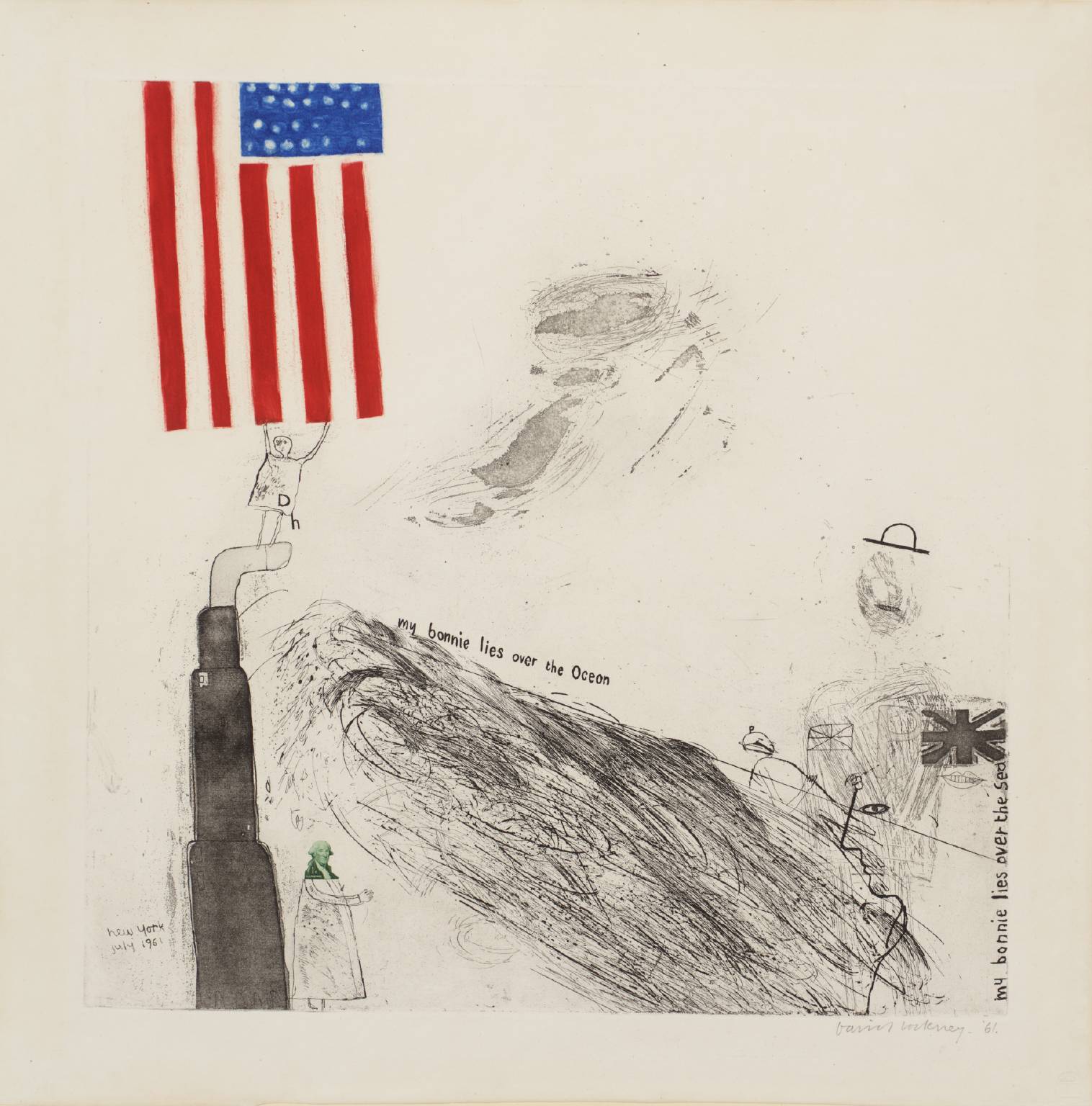
My Bonnie Lies Over the Ocean — David Hockney

My Bonnie Lies Over the Ocean, 1962 by David Hockney (b. 1937)

“Neglect” — Joy Williams

“Neglect”

by

Joy Williams

from 99 Stories of God


The Lord was asked if He believed in reincarnation.

I do, He said. It explains so much.

What does it explain, Sir? someone asked.

On your last Fourth of July festivities, I was invited to observe an annual hot-dog-eating contest, the Lord said, and it was the stupidest thing I’ve ever witnessed.

NEGLECT

The Signing of the Declaration of Independence — Sandow Birk 

The Signing of the Declaration of Independence, 2022 by Sandow Birk (b. 1962)