
John Hawkes/Javier Marías/Beautiful Moth on Basil (Books Acquired, 9.14.2012)

20120914-170840.jpg

John Hawkes and Javier Marías. Was looking for something else, spotted the ND spine (Hawkes) and The Believer Books aesthetic (Marías).

From the back of the Hawkes:

No synopsis conveys the quality of this now famous novel about an hallucinated Germany in collapse after World War II. John Hawkes, in his search for a means to transcend outworn modes of fictional realism, has discovered a highly original technique for objectifying the perennial degradation of mankind within a context of fantasy… Nowhere has the nightmare of human terror and the deracinated sensibility been more concisely analyzed than in The Cannibal. Yet one is aware throughout that such analysis proceeds only in terms of a resolutely committed humanism.   (Hayden Carruth)
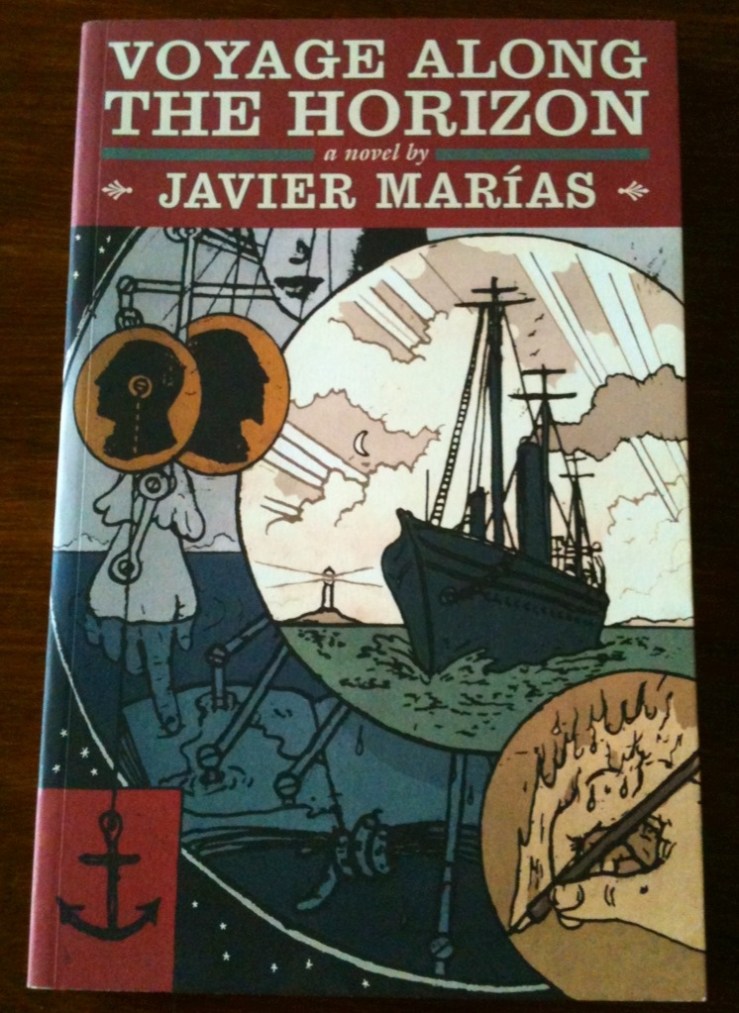
20120914-170848.jpg

Here’s a description, sort of, of a 2006 review of Voyage Along the Horizon (from the NYT):

To judge the Spanish novelist and essayist Javier Marías solely on the basis of “Voyage Along the Horizon” would be akin to imagining Flaubert only from “Salammbô” or Nabokov from “Transparent Things.” Though these works aren’t insignificant in their own right, to read them without recourse to their authors’ larger bodies of work is to comprehend a complex organism only from its vestigial limbs.

Here is a picture of a colorful moth doing something to a basil plant in my back yard:

20120914-171200.jpg

Lady Reading in a Wooded Park — George Stubbs

Hunt — Franz Stuck

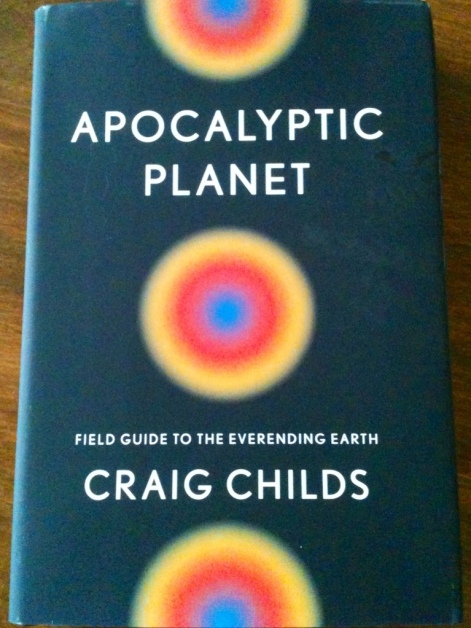
Apocalyptic Planet/The Book of Job: When Bad Things Happened to a Good Person (Books Acquired, 9.14.2012)

20120914-170929.jpg

Two new review copies from the good people at Pantheon.

First, Apocalyptic Planet, which looks pretty cool. Pub copy:

The earth has died many times, and it always comes back looking different. In an exhilarating, surprising exploration of our planet, Craig Childs takes readers on a firsthand journey through apocalypse, touching the truth behind the speculation.Apocalyptic Planet is a combination of science and adventure that reveals the ways in which our world is constantly moving toward its end and how we can change our place within the cycles and episodes that rule it.

In this riveting narrative, Childs makes clear that ours is not a stable planet, that it is prone to sudden, violent natural disasters and extremes of climate. Alternate futures, many not so pretty, are constantly waiting in the wings. Childs refutes the idea of an apocalyptic end to the earth and finds clues to its more inevitable end in some of the most physically challenging places on the globe. He travels from the deserts of Chile, the driest in the world, to the genetic wasteland of central Iowa to the site of the drowned land bridge of the Bering Sea, uncovering the micro-cataclysms that predict the macro: forthcoming ice ages, super-volcanoes, and the conclusion of planetary life cycles. Childs delivers a sensual feast in his descriptions of the natural world and a bounty of unequivocal science that provides us with an unprecedented understanding of our future.

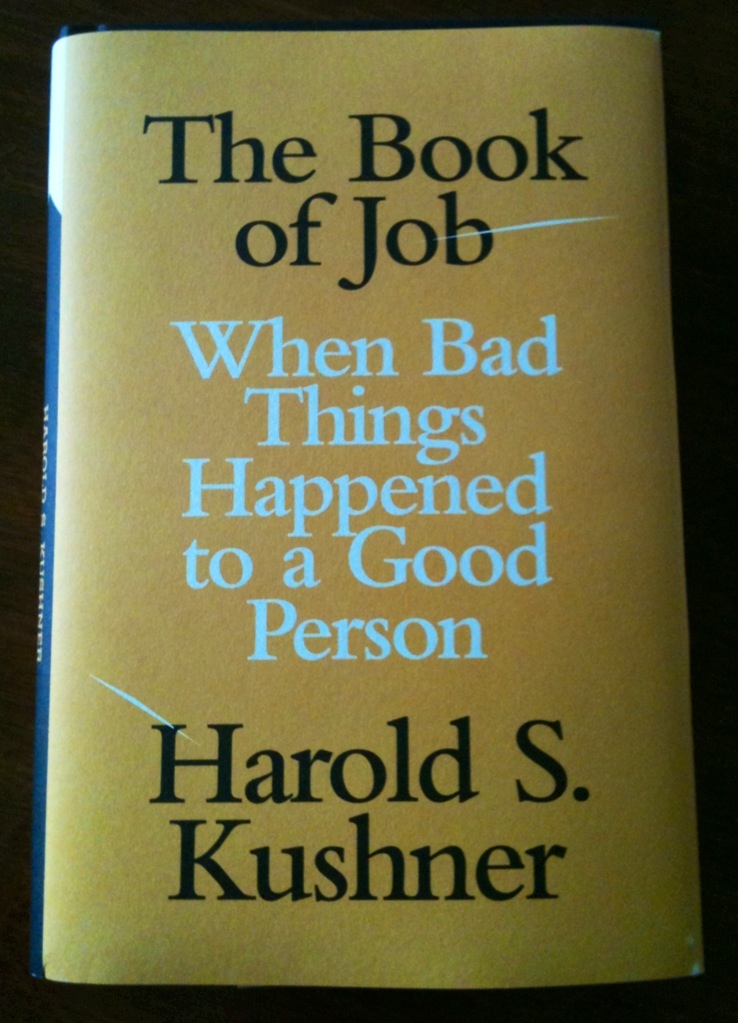
I suppose I’m less enthusiastic about Harold Kushner’s take on The Book of Job—

20120914-170918.jpg

Here’s the pub copy:

From one of our most trusted spiritual advisers, a thoughtful, illuminating guide to that most fascinating of biblical texts, the book of Job, and what it can teach us about living in a troubled world.

The story of Job is one of unjust things happening to a good man. Yet after losing everything, Job—though confused, angry, and questioning God—refuses to reject his faith, although he challenges some central aspects of it. Rabbi Harold S. Kushner examines the questions raised by Job’s experience, questions that have challenged wisdom seekers and worshippers for centuries. What kind of God permits such bad things to happen to good people? Why does God test loyal followers? Can a truly good God be all-powerful?

Rooted in the text, the critical tradition that surrounds it, and the author’s own profoundly moral thinking, Kushner’s study gives us the book of Job as a touchstone for our time. Taking lessons from historical and personal tragedy, Kushner teaches us about what can and cannot be controlled, about the power of faith when all seems dark, and about our ability to find God.

Rigorous and insightful yet deeply affecting, The Book of Job is balm for a distressed age—and Rabbi Kushner’s most important book since When Bad Things Happen to Good People.

Woman in Blue Reading a Letter — Johannes Vermeer

See Chronos, a Beautiful Abstract Documentary by Ron Fricke

Young Girl Reading — Pierre-Auguste Renoir

Death — Jacek Malczewski

The Temptation of St. Anthony — Matthias Grünewald

“Little Is Known of the Life of Matthias Grünewald of Aschaffenburg” — W.G. Sebald

Little is known of the life of

Matthias Grünewald of Aschaffenburg.

The first account of the painter

In Joachim von Sandrart’s German Academy

of the year 1675 begins with the notice

that the author knows not one person living

who could provide a written or oral

testimony of that praiseworthy hand.

We may trust the report by Sandrart,

for a portrait in Würzburg museum

has preserved him, aged eighty-two,

wide awake and with eyes uncommonly clear.

Lightly in grey and black,

he writes, Mattheus had painted the outer

wings of an altarpiece made by Dürer

of Mary’s ascension in the

Preachers’ convent in Frankfurt and

thus had lived at around 1505.

Exceedingly strange was the transfiguration

of Christ on Mount Tabor

limned in watercolours, especially

one cloud of wondrous beauty, wherein

above the Apostles convulsed

with awe, Moses and Elijah appear,

a marvel surpassed.

Then in the Mainz cathedral

there had been three altar panels

with facing fronts and reverse

sides painted, one of them

showing a blind hermit who, as he crosses

the frozen Rhine river with a boy

to guide him, is assaulted by two murderers

and beaten to death. Anno 1631 or ’32,

this panel in the wild war of that era

had been taken away and sent off to Sweden

but by shipwreck beside many other

such pieces of art had perished

in the depths of the sea.

At Isenheim, Sandrart had not been,

but had heard of the altar-work there,

which, he writes, was so fashioned that

real life could scarce have been other

and where, it was said, a St. Anthony with

demons meticulously drawn was to be seen.

Except for a St. John with hands clasped

of which he, Sandrart, when at one time in Rome

he was counterfeiting the pope, had caught sight,

with certainty this was all that was not lost

of the work of Aschaffenburg

painter of whom, besides, he knew only

that most of the time he had

resided in Mainz, led a reclusive

melancholy life and been ill-married.

—W.G. Sebald. Chapter II of “…As Snow on the Alps.” From After Nature.

Portrait of Natasha Nesterova (On a Garden Bench) — Mikhail Nesterov

Musashi on the Back of a Whale — Utagawa Kuniyoshi

A Philosopher by Lamp Light — Joseph Wright

Great Scene of Agony — Max Beckmann

List of Artworks Destroyed in the 9/11 World Trade Center Attack


Works destroyed in the September 11 attacks

Many works of art were destroyed in the September 11, 2001 attacks when the World Trade Center buildings collapsed.

Countless other works of art and valuable artifacts, found in safe deposit boxes located throughout the towers, were also destroyed.

Two other sculptures were damaged, but not destroyed by the attacks. These are Red Cube by Isamu Noguchi and Joie de Vivre by Mark di Suvero, located down the street from the World Trade Center. They were repaired and still stand today.

Via Wikipedia.


Letter from Overseas — Thomas Hart Benton

Young Woman Playing a Guitar — Johannes Vermeer