Yesterday we griped about dustjackets and praised books bold enough to go nude. To see some really gorgeous bookbinding, check out this recent gallery from BibliOdyssey. Sample:
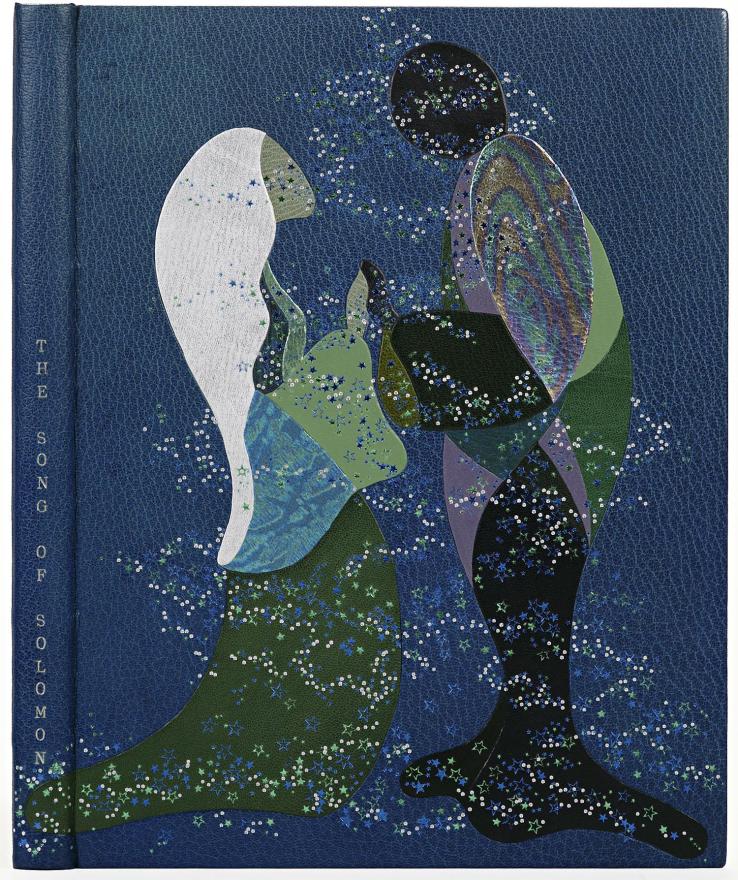

Yesterday we griped about dustjackets and praised books bold enough to go nude. To see some really gorgeous bookbinding, check out this recent gallery from BibliOdyssey. Sample:
A kindly dude by the name of Ryan Walsh has launched a site called The David Foster Wallace Archive. The site collects in one place the loose mp3s that’ve been floating around the web, and includes the Brief Interviews with Hideous Men audiobook in its entirety. There are also interviews, profiles, eulogies, and more. A good starting place: an (as-yet) unpublished piece about a do-gooding boy detested by all. It’s hilarious.
So. It’s kinda sorta Book Covers Week at Biblioklept, and, in keeping with that theme, check out this new cover for Wallace’s debut novel, The Broom of the System. The edition is part of the forthcoming Penguin Ink series and should be available this summer. Art by Duke Riley. We love it.

I’m lazy. I let other people do good reporting and then hijack their work. Here’s Dennis Johnson at MobyLives citing a recent Guardian story:
What, exactly, is the point of a dustjacket, asks Peter Robins in this Guardian story. “The clue can’t be in the name: on the shelf, the most dust-prone part of a book is the top, which a jacket doesn’t cover … the jacket remains an unnecessary and vulnerable encumbrance.” And now, he says, “some in the book trade appear to be reaching the same conclusion.”
The Guardian article cites a number of recent books (including Zadie Smith’s latest, Changing My Mind) that forgo jackets in favor of art printed directly on the cover. I wish this trend would normalize in publishing. Dustjackets are annoying. They are ineffective as bookmarks, they tear and curl easily, and they tend to slip off of the book. They make grasping books difficult, especially larger volumes, and I always find myself removing them to read. Because I don’t want to throw away the “cover” of the book, the jacket has hence to languish in some weird droopy unstackable blip in a random corner of my house or office. Again, annoying. I can think immediately of three recentish books which are far more lovable aesthetic objects; all eschew dustjackets.

David Byrne’s Bicycle Diaries is a beautiful cloth-bound volume; the biker-icon, title, and author appear to be embossed but are actually slight depressions. A simple sticker on the back of the book displays retail cost and isbn info. The inside front cover and first page display the blurb and author info that one would usually find on a wrap-around. There’s something wonderfully tactile, warm, and pleasing about the book. It’s also a really good read.
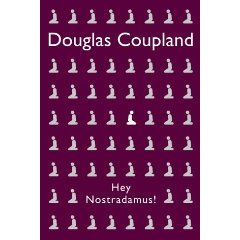
I bought Douglas Coupland’s novel Hey Nostradamus! despite its silly name because I was enamored of its lovely embossed cover. There’s a smooth elegance to the design. The back cover repeats the kneeling figure, leaving room for embossed blurbs. I should really get around to reading it.

McSweeney’s hardcover edition of Chris Adrian’s The Children’s Hospital doesn’t feature anything as fancy as cloth or embossing. No, it’s just a plain old image–a good design, to be sure–but nothing that you wouldn’t expect on a dustjacket. Only there’s no cumbersome dustjacket. McSweeney’s issued the book with a slight wrap-around–more like a bookbelt than a dustjacket–displaying isbn and other info. The peripheral bookbelt was easy to throw away. McSweeney’s has released plenty of beautiful jacketless books, but they also know how to do a jacket right. Several hardback editions of McSweeney’s Quarterly (numbers 13 and 23, for instance) feature “dustjackets” that unfold to reveal short short stories, comics, and paintings. If you’re going to do a dustjacket, make it an aesthetic object worth keeping.
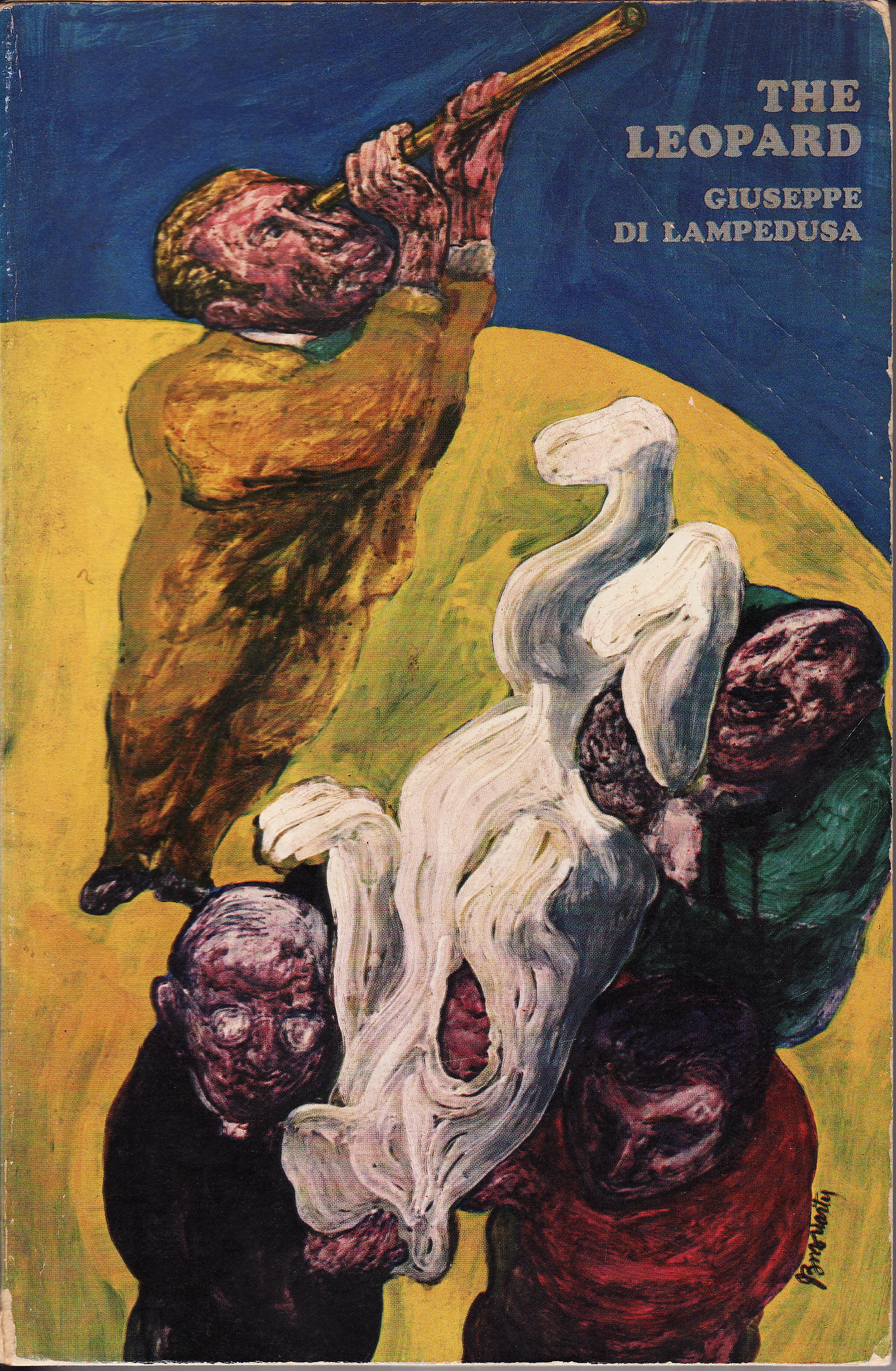
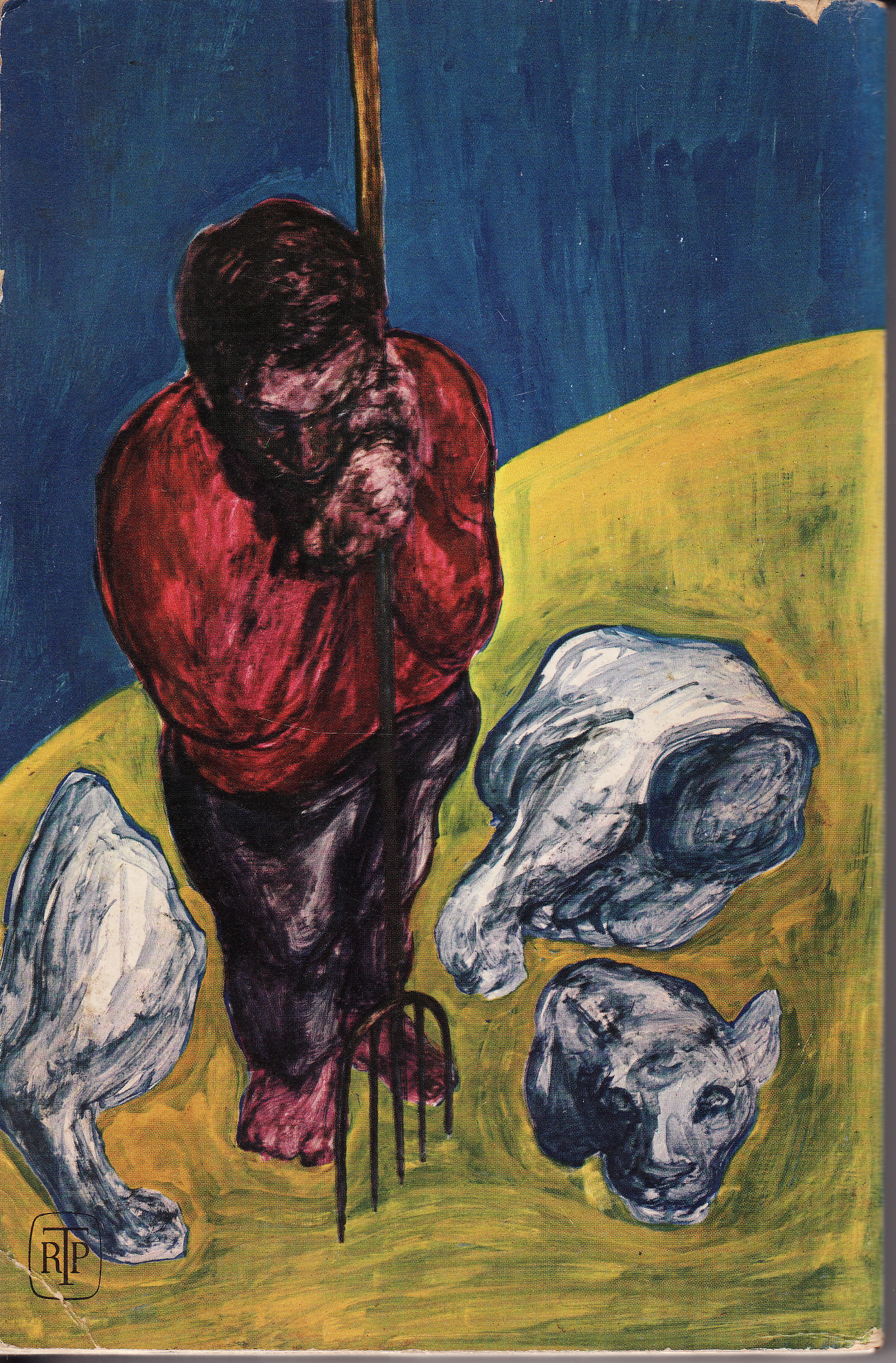
Cover design for Giuseppe di Lampedusa’s The Leopard by Jerome Moriarty, 1966 Time Reading Program edition.
Halloween fun time:
Excellent gallery of Alexander Alexeiff’s aquatint illustrations for Edgar Allan Poe’s short story, “The Fall of the House of Usher” via A Journey Round My Skull (what a fantastic site).
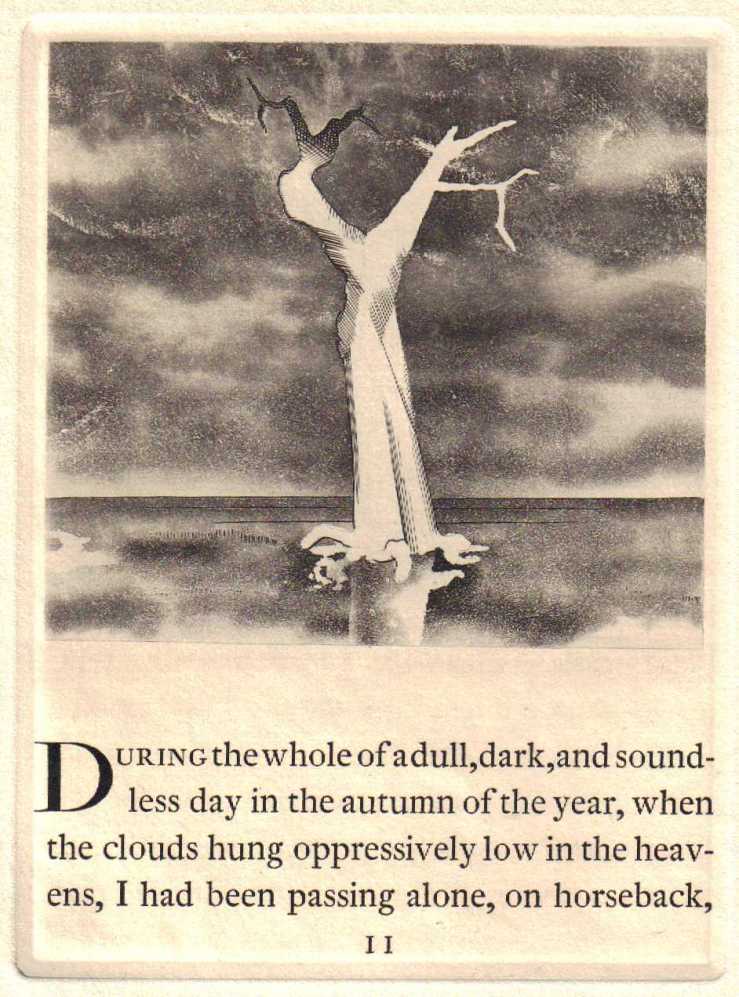
Alexeieff’s moody tints and stark designs beautifully match Poe’s gloomy tale. (We just love the lyrical and melancholy opening paragraph–all those thudding ds, low, somber o’s, and lilting ls). His rendering of Usher’s maniac composition is particularly ethereal:
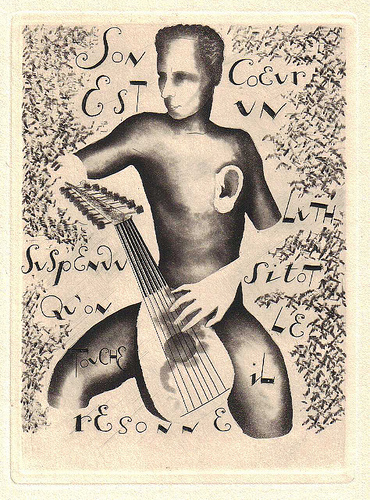
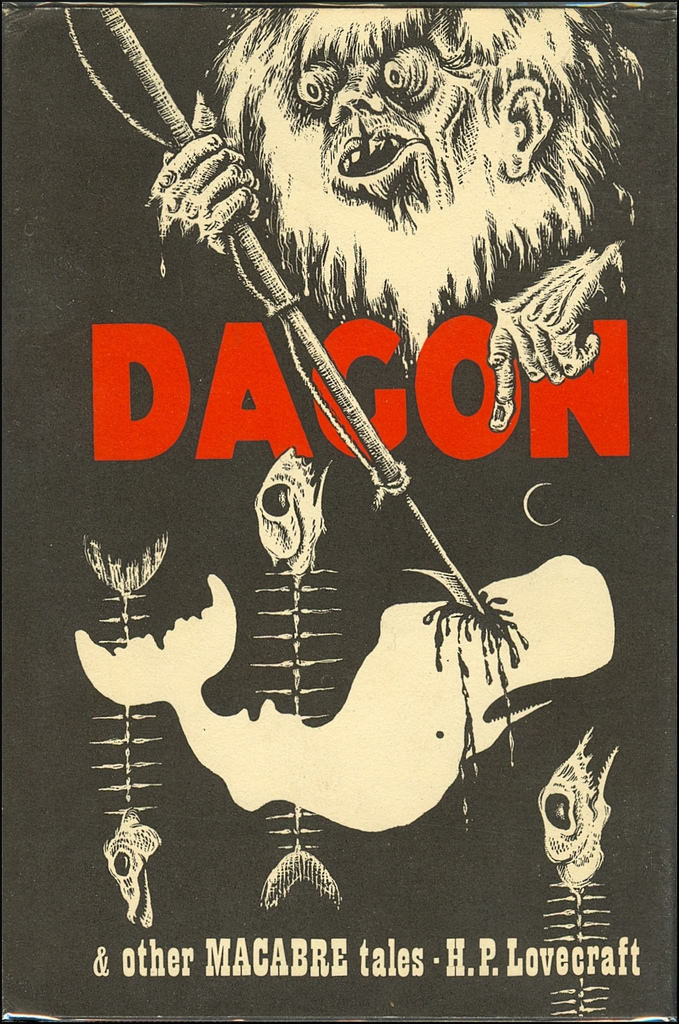
For more Halloween fun, check out this gallery of HP Lovecraft covers via Fantasy Ink. Spooky (and, alternately goofy) designs. We like this jam:
If you like your pictures moving and with sound yet still highly-stylized, check out Jim Henson’s “The Monster Maker,” from Henson’s short-lived but well-beloved series The Jim Henson Hour.

Not sure if anything can top the subtle pain and alienation this original edition. Still, it doesn’t really translate any of the humor in Kafka’s masterpiece. More after the jump.

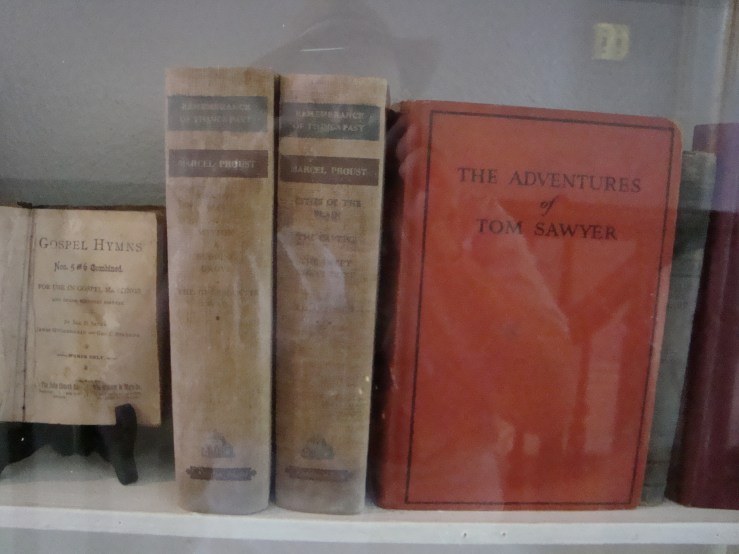
We spent a long July 4th weekend in beautiful Key West, celebrating freedom via endless barhopping and overeating. Somehow, between the Key lime margaritas, street beers, and moonlight reggaeton, we managed to stumble into Hemingway House (officially named The Ernest Hemingway Home & Museum), the house where Hemingway lived for most of the 1930s, and the place where he wrote some of his best stuff. I had been to Hemingway house almost two decades ago, when I was about twelve or thirteen. I was obsessed with Hemingway then, so I took the tour. This time, however, it was too hot. My wife works for a museum, so we got in free, which also affects how one values/reviews a place of interest, so bear that in mind when I say that, unless you’re a literary nut, go ahead and skip Hemingway House and head to Kelly’s for a drink or six. Still, the house is beautiful, outfitted with plenty of artifacts related to Papa, including some books from his personal library that I photographed and included below. (I was the only nerd photographing the books; everyone seemed far more interested in the ancestors of Hemingway’s freakish cats).Here are the books (more after the jump):
Some of our favorite Ballard covers:
 Nice gear shift…
 Love the enthusiasm there…


My buddy Tilford lent me his RESearch edition of The Atrocity Exhibition (I didn’t steal it and that makes me a moral being). I think it’s probably the definitive edition. I wish I had it (maybe I should’ve stolen it…).

Pulp fiction.

Why is “Ballard” in katakana?

This one is sorta Magritte by way of Calvino (if that makes any sense).
For lots more covers and lots more Ballard check out JG Ballard and Ballardian.
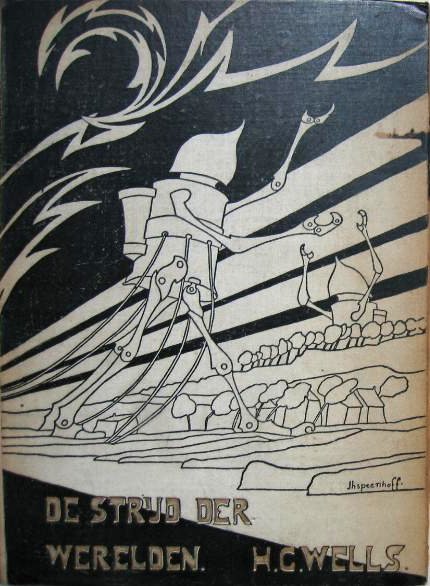
Chez Zeus has a very thorough and thoroughly fun cover gallery for H.G. Wells’s sci-fi classic The War of the Worlds. We’ve picked a few of our favorite covers here, but the full collection is great. For full artist credits and dates, check out Zeus’s complete gallery.
 Biblioklept