“Columbus in Chains” — Jamaica Kincaid

“Columbus in Chains”

by

Jamaica Kincaid


Outside, as usual, the sun shone, the trade winds blew; on her way to put some starched clothes on the line, my mother shooed some hens out of her garden; Miss Dewberry baked the buns, some of which my mother would buy for my father and me to eat with our afternoon tea; Miss Henry brought the milk, a glass of which I would drink with my lunch, and another glass of which I would drink with the bun from Miss Dewberry; my mother prepared our lunch; my father noted some perfectly idiotic thing his partner in housebuilding, Mr. Oatie, had done, so that over lunch he and my mother could have a good laugh.

The Anglican church bell struck eleven o’clock—one hour to go before lunch. I was then sitting at my desk in my classroom. We were having a history lesson—the last lesson of the morning. For taking first place over all the other girls, I had been given a prize, a copy of a book called Roman Britain, and I was made prefect of my class. What a mistake the prefect part had been, for I was among the worst-behaved in my class and did not at all believe in setting myself up as a good example, the way a prefect was supposed to do. Now I had to sit in the prefect’s seat—the first seat in the front row, the seat from which I could stand up and survey quite easily my classmates. From where I sat I could see out the window. Sometimes when I looked out, I could see the sexton going over to the minister’s house. The sexton’s daughter, Hilarene, a disgusting model of good behavior and keen attention to scholarship, sat next to me, since she took second place. The minister’s daughter, Ruth, sat in the last row, the row reserved for all the dunce girls. Hilarene, of course, I could not stand. A girl that good would never do for me. I would probably not have cared so much for first place if I could be sure it would not go to her. Ruth I liked, because she was such a dunce and came from England and had yellow hair. When I first met her, I used to walk her home and sing bad songs to her just to see her turn pink, as if I had spilled hot water all over her.

Our books, A History of the West Indies, were open in front of us. Our day had begun with morning prayers, then a geometry lesson, then it was over to the science building for a lesson in “Introductory Physics” (not a subject we cared much for), taught by the most dingy-toothed Mr. Slacks, a teacher from Canada, then precious recess, and now this, our history lesson. Recess had the usual drama: this time, I coaxed Gwen out of her disappointment at not being allowed to join the junior choir. Her father—how many times had I wished he would become a leper and so be banished to a leper colony for the rest of my long and happy life with Gwen—had forbidden it, giving as his reason that she lived too far away from church, where choir rehearsals were conducted, and that it would be dangerous for her, a young girl, to walk home alone at night in the dark. Of course, all the streets had lamplight, but it was useless to point that out to him. Oh, how it would have pleased us to press and rub our knees together as we sat in our pew while pretending to pay close attention to Mr. Simmons, our choirmaster, as he waved his baton up and down and across, and how it would have pleased us even more to walk home together, alone in the “early dusk” (the way Gwen had phrased it, a ready phrase always on her tongue), stopping, if there was a full moon, to lie down in a pasture and expose our bosoms in the moonlight. We had heard that full moonlight would make our breasts grow to a size we would like. Poor Gwen! When I first heard from her that she was one of ten children, right on the spot I told her that I would love only her, since her mother already had so many other people to love.

Our teacher, Miss Edward, paced up and down in front of the class in her usual way. In front of her desk stood a small table, and on it stood the dunce cap. The dunce cap was in the shape of a coronet, with an adjustable opening in the back, so that it could fit any head. It was made of cardboard with a shiny gold paper covering and the word “DUNCE” in shiny red paper on the front. When the sun shone on it, the dunce cap was all aglitter, almost as if you were being tricked into thinking it a desirable thing to wear. As Miss Edward paced up and down, she would pass between us and the dunce cap like an eclipse. Each Friday morning, we were given a small test to see how well we had learned the things taught to us all week. The girl who scored lowest was made to wear the dunce cap all day the following Monday. On many Mondays, Ruth wore it—only, with her short yellow hair, when the dunce cap was sitting on her head she looked like a girl attending a birthday party in The Schoolgirl’s Own Annual.

It was Miss Edward’s way to ask one of us a question the answer to which she was sure the girl would not know and then put the same question to another girl who she was sure would know the answer. The girl who did not answer correctly would then have to repeat the correct answer in the exact words of the other girl. Many times, I had heard my exact words repeated over and over again, and I liked it especially when the girl doing the repeating was one I didn’t care about very much. Pointing a finger at Ruth, Miss Edward asked a question the answer to which was “On the third of November 1493, a Sunday morning, Christopher Columbus discovered Dominica.” Ruth, of course, did not know the answer, as she did not know the answer to many questions about the West Indies. I could hardly blame her. Ruth had come all the way from England. Perhaps she did not want to be in the West Indies at all. Perhaps she wanted to be in England, where no one would remind her constantly of the terrible things her ancestors had done; perhaps she had felt even worse when her father was a missionary in Africa. I could see how Ruth felt from looking at her face. Her ancestors had been the masters, while ours had been the slaves. She had such a lot to be ashamed of, and by being with us every day she was always being reminded. We could look everybody in the eye, for our ancestors had done nothing wrong except just sit somewhere, defenseless. Of course, sometimes, what with our teachers and our books, it was hard for us to tell on which side we really now belonged—with the masters or the slaves—for it was all history, it was all in the past, and everybody behaved differently now; all of us celebrated Queen Victoria’s birthday, even though she had been dead a long time. But we, the descendants of the slaves, knew quite well what had really happened, and I was sure that if the tables had been turned we would have acted differently; I was sure that if our ancestors had gone from Africa to Europe and come upon the people living there, they would have taken a proper interest in the Europeans on first seeing them, and said, “How nice,” and then gone home to tell their friends about it. Continue reading ““Columbus in Chains” — Jamaica Kincaid”
“Columbus in Chains” — Jamaica Kincaid

“Columbus in Chains”

by

Jamaica Kincaid


Outside, as usual, the sun shone, the trade winds blew; on her way to put some starched clothes on the line, my mother shooed some hens out of her garden; Miss Dewberry baked the buns, some of which my mother would buy for my father and me to eat with our afternoon tea; Miss Henry brought the milk, a glass of which I would drink with my lunch, and another glass of which I would drink with the bun from Miss Dewberry; my mother prepared our lunch; my father noted some perfectly idiotic thing his partner in housebuilding, Mr. Oatie, had done, so that over lunch he and my mother could have a good laugh.

The Anglican church bell struck eleven o’clock—one hour to go before lunch. I was then sitting at my desk in my classroom. We were having a history lesson—the last lesson of the morning. For taking first place over all the other girls, I had been given a prize, a copy of a book called Roman Britain, and I was made prefect of my class. What a mistake the prefect part had been, for I was among the worst-behaved in my class and did not at all believe in setting myself up as a good example, the way a prefect was supposed to do. Now I had to sit in the prefect’s seat—the first seat in the front row, the seat from which I could stand up and survey quite easily my classmates. From where I sat I could see out the window. Sometimes when I looked out, I could see the sexton going over to the minister’s house. The sexton’s daughter, Hilarene, a disgusting model of good behavior and keen attention to scholarship, sat next to me, since she took second place. The minister’s daughter, Ruth, sat in the last row, the row reserved for all the dunce girls. Hilarene, of course, I could not stand. A girl that good would never do for me. I would probably not have cared so much for first place if I could be sure it would not go to her. Ruth I liked, because she was such a dunce and came from England and had yellow hair. When I first met her, I used to walk her home and sing bad songs to her just to see her turn pink, as if I had spilled hot water all over her.

Our books, A History of the West Indies, were open in front of us. Our day had begun with morning prayers, then a geometry lesson, then it was over to the science building for a lesson in “Introductory Physics” (not a subject we cared much for), taught by the most dingy-toothed Mr. Slacks, a teacher from Canada, then precious recess, and now this, our history lesson. Recess had the usual drama: this time, I coaxed Gwen out of her disappointment at not being allowed to join the junior choir. Her father—how many times had I wished he would become a leper and so be banished to a leper colony for the rest of my long and happy life with Gwen—had forbidden it, giving as his reason that she lived too far away from church, where choir rehearsals were conducted, and that it would be dangerous for her, a young girl, to walk home alone at night in the dark. Of course, all the streets had lamplight, but it was useless to point that out to him. Oh, how it would have pleased us to press and rub our knees together as we sat in our pew while pretending to pay close attention to Mr. Simmons, our choirmaster, as he waved his baton up and down and across, and how it would have pleased us even more to walk home together, alone in the “early dusk” (the way Gwen had phrased it, a ready phrase always on her tongue), stopping, if there was a full moon, to lie down in a pasture and expose our bosoms in the moonlight. We had heard that full moonlight would make our breasts grow to a size we would like. Poor Gwen! When I first heard from her that she was one of ten children, right on the spot I told her that I would love only her, since her mother already had so many other people to love.

Our teacher, Miss Edward, paced up and down in front of the class in her usual way. In front of her desk stood a small table, and on it stood the dunce cap. The dunce cap was in the shape of a coronet, with an adjustable opening in the back, so that it could fit any head. It was made of cardboard with a shiny gold paper covering and the word “DUNCE” in shiny red paper on the front. When the sun shone on it, the dunce cap was all aglitter, almost as if you were being tricked into thinking it a desirable thing to wear. As Miss Edward paced up and down, she would pass between us and the dunce cap like an eclipse. Each Friday morning, we were given a small test to see how well we had learned the things taught to us all week. The girl who scored lowest was made to wear the dunce cap all day the following Monday. On many Mondays, Ruth wore it—only, with her short yellow hair, when the dunce cap was sitting on her head she looked like a girl attending a birthday party in The Schoolgirl’s Own Annual.

It was Miss Edward’s way to ask one of us a question the answer to which she was sure the girl would not know and then put the same question to another girl who she was sure would know the answer. The girl who did not answer correctly would then have to repeat the correct answer in the exact words of the other girl. Many times, I had heard my exact words repeated over and over again, and I liked it especially when the girl doing the repeating was one I didn’t care about very much. Pointing a finger at Ruth, Miss Edward asked a question the answer to which was “On the third of November 1493, a Sunday morning, Christopher Columbus discovered Dominica.” Ruth, of course, did not know the answer, as she did not know the answer to many questions about the West Indies. I could hardly blame her. Ruth had come all the way from England. Perhaps she did not want to be in the West Indies at all. Perhaps she wanted to be in England, where no one would remind her constantly of the terrible things her ancestors had done; perhaps she had felt even worse when her father was a missionary in Africa. I could see how Ruth felt from looking at her face. Her ancestors had been the masters, while ours had been the slaves. She had such a lot to be ashamed of, and by being with us every day she was always being reminded. We could look everybody in the eye, for our ancestors had done nothing wrong except just sit somewhere, defenseless. Of course, sometimes, what with our teachers and our books, it was hard for us to tell on which side we really now belonged—with the masters or the slaves—for it was all history, it was all in the past, and everybody behaved differently now; all of us celebrated Queen Victoria’s birthday, even though she had been dead a long time. But we, the descendants of the slaves, knew quite well what had really happened, and I was sure that if the tables had been turned we would have acted differently; I was sure that if our ancestors had gone from Africa to Europe and come upon the people living there, they would have taken a proper interest in the Europeans on first seeing them, and said, “How nice,” and then gone home to tell their friends about it. Continue reading ““Columbus in Chains” — Jamaica Kincaid”

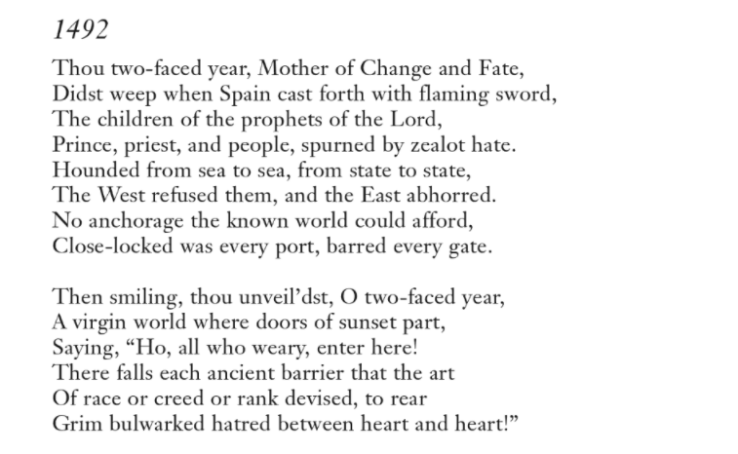
“1492” — Emma Lazarus

Christopher Columbus in Prison — Thomas Eakins

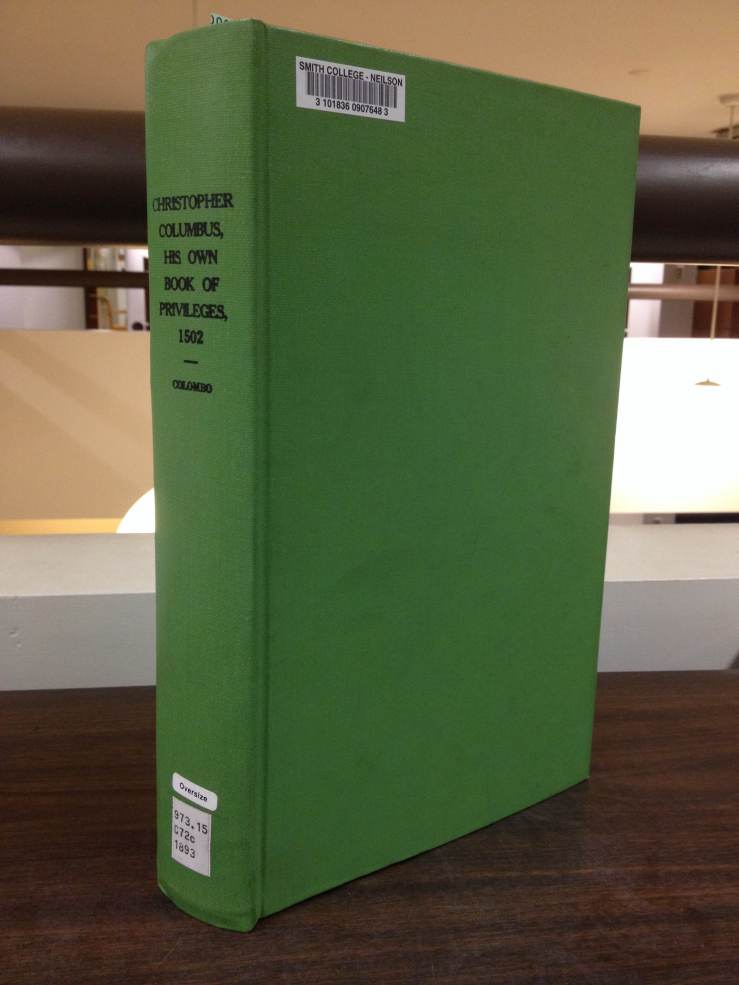
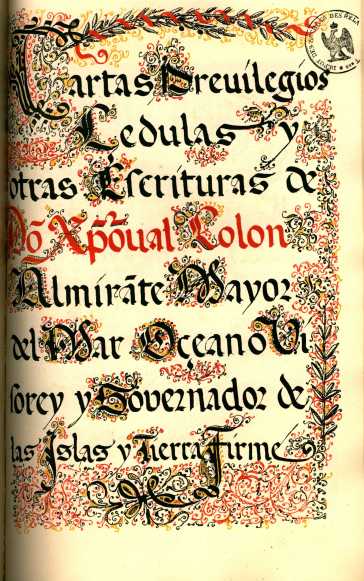
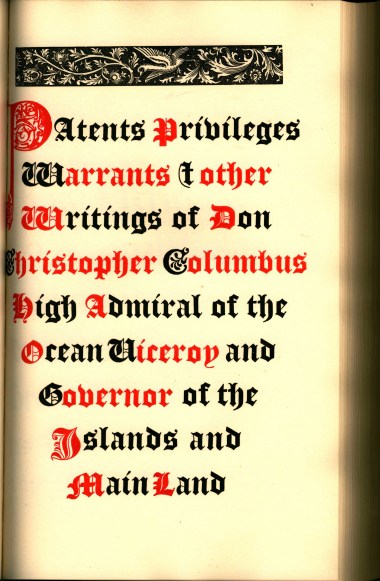
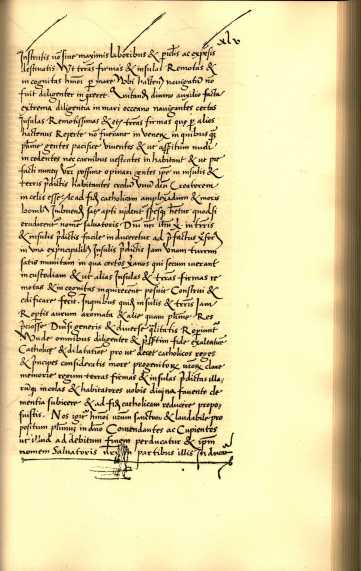
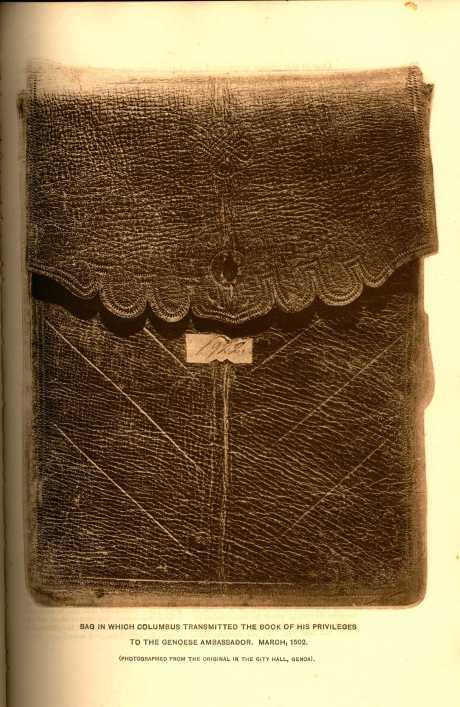
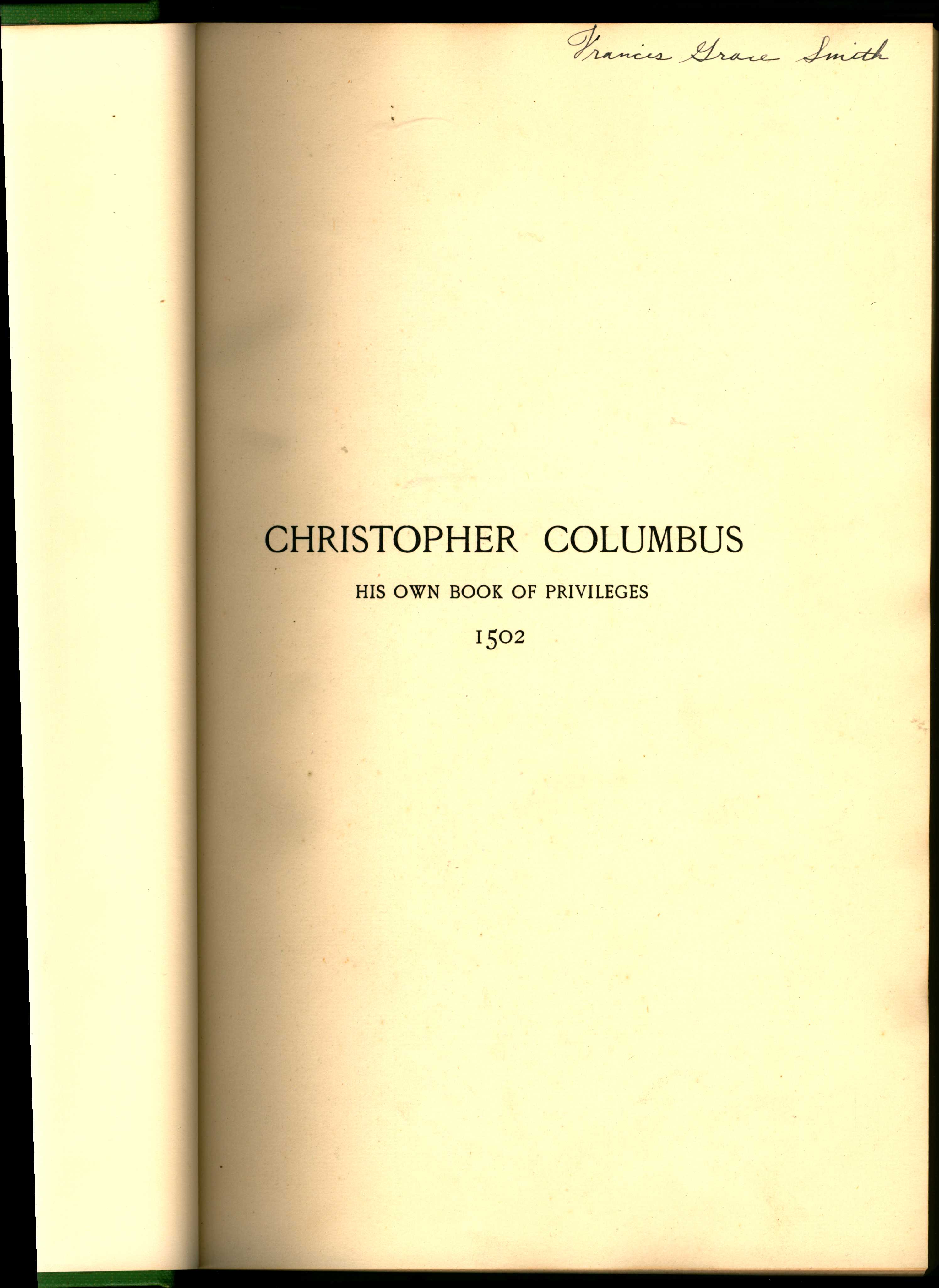
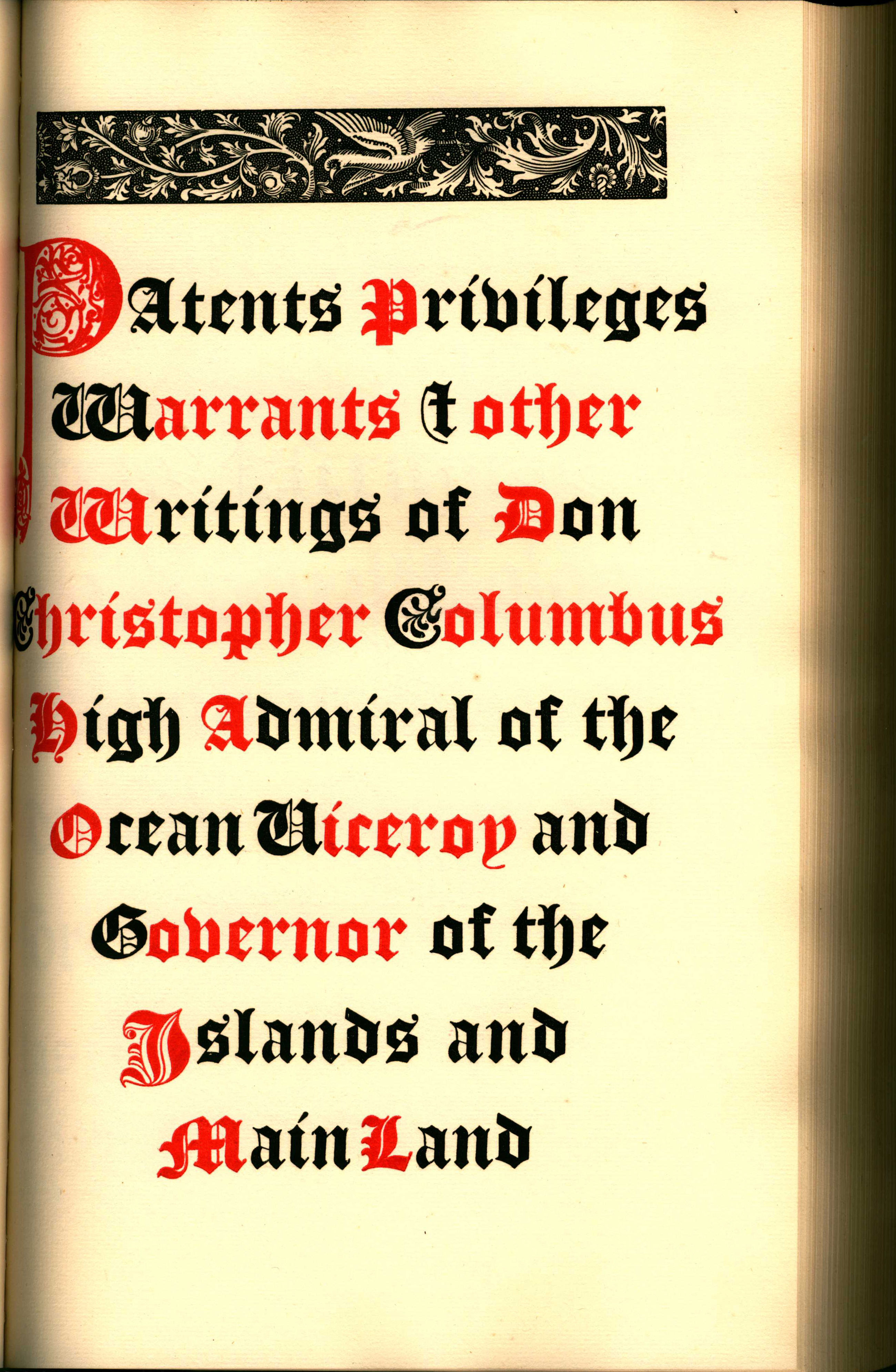
Christopher Columbus, His Own (Oversize) Book of Privileges, 1502

BookOfPrivileges

columbus7

Columbus2

columbus3columbus6

Papal decree granting Castile sovereignty over the Indies
Rome, June 1493
Translated by Helen Nader, 1996. Alternative translations [in brackets] by George F. Barwick, 1893.

(1) In the name of God, amen. This is a transcript well and faithfully copied from a document written on parchment [written on parchment of skin] in the Latin language, embossed with a red [coloured] wax seal, placed in a wooden box, tied with a green silk ribbon, and apparently certified and signed by a certain papal notary, the content of which, word for word, is as follows.

(5) Among other works well pleasing to the Divine Majesty and dear to [desired of] our heart, this assuredly ranks highest, that in our times especially the Catholic faith and the Christian religion be exalted and everywhere increased and spread, that the health of souls be cared for, and that barbarous nations be overthrown [subdued] and brought to the true faith. Since we have been called to this holy chair of Peter by the favor of divine clemency, although of unequal merits, recognize that, as true Catholic kings and princes, such as we have known you always to be, and as your illustrious deeds now known to nearly the whole world declare, you not only eagerly desire but with every effort, zeal, and diligence are laboring to that same end, disregarding hardship, expense, danger, and even the shedding of your blood… We therefore are rightly persuaded and consider it our duty, of our own accord and applauded by others, to grant you those things by which, with daily effort, you may be more heartily enabled to carry forward your holy and praiseworthy purpose pleasing to immortal God, for the honor of God himself and the spread of the Christian rule.

(6) You chose our beloved son, Christopher Columbus, a man assuredly worthy and of the highest recommendations and qualified [well suited] for so great an undertaking.

(7) Columbus and his men, with divine aid and with the utmost diligence sailing in the sea, discovered certain very remote islands and even continents that hitherto had not been discovered by others. A great many peoples reside there, living in peace, and, it is reported, going unclothed, and not eating meat [going naked, and not feeding upon flesh]. Moreover, as your envoys think that these same peoples living on those islands and mainland believe there to be one God, the Creator in heaven, and seem sufficiently disposed to embrace the Catholic faith and be trained in good morals, it is hoped that, were they instructed, the name of the Savior, our Lord Jesus Christ, would easily be introduced to these continents and islands.

(8) To that end, on one of the principal islands, Christopher has already caused a well equipped fortress [tower] to be established and built.


BookScanCenter (6)columbus4

(11) We command you, in virtue of holy obedience, to employ all due diligence, just as we also promise. We do not doubt that for the sake of your utmost devotion and royal greatness of soul you will appoint worthy, God-fearing, learned, skilled, and experienced men to these continents and islands to instruct their inhabitants and residents [natives] in the Catholic faith and train them in [imbue them with] good morals [using all due diligence in the premises].

(13) Let no man infringe or with rash boldness contravene this our commendation, exhortation, requisition, gift [donation], grant [concession], assignation, ordinance [constitution], deputation, decree, mandate, prohibition [inhibition], and will. Should anyone presume to attempt this, he is informed that he will incur the wrath of Almighty God and of his blessed apostles Peter and Paul.

(14) Given at Rome, at St. Peter’s, in the year of the incarnation of our Lord one thousand four hundred and ninety-three on the fourth of May in the first year of our pontificate.

(15) Gratis by order of our Most Holy Lord, the Pope.

(17) We have ordered these letters be copied, transcribed, and rendered public, deciding and wishing [decreeing and willing] that thereafter full credence be shown to this public transcript or copy in each and all places opportune [shall henceforth obtain full credence everywhere, in all and singular places, in which it shall be required], and that this transcript itself engender confidence and be explained as if the original letters themselves were to appear, be brought forth, and presented.

columbusbook
Note on the translation
by Helen Nader
“I confronted what at first seemed insoluble problems of legal prose style and vocabulary. Help came from the guidelines of the legal profession itself. Most of the documents in this volume were written in the jargon-laden and repetitive prose of any legislation or executive orders drafted by bureaucrats. Little would have been gained by transforming such Spanish into the equally tortured English prose of modern lawyers … In trying to find modern vocabulary of archaic expressions without going to the other extreme of erasing their legal implications, I have been guided by modern Spanish-English legal dictionaries.”

Columbus1

The Sopranos Debate Christopher Columbus’s Cultural Legacy (NSFW)

Also, Howard Zinn on Columbus Day.

[Editorial note: Yeah. I know. I post this like every Columbus Day. I still like it though].

Columbus in Prison — Thomas Eakins

The Sopranos Debate Christopher Columbus’s Cultural Legacy (NSFW)

Also, Howard Zinn on Columbus Day.

[Editorial note: Yeah. We know we posted this last year. We still like it though].

The Sopranos Debate Christopher Columbus’s Cultural Legacy (NSFW)

Also, Howard Zinn on Columbus Day.

Anthems in New Tongues I Hear Saluting Me

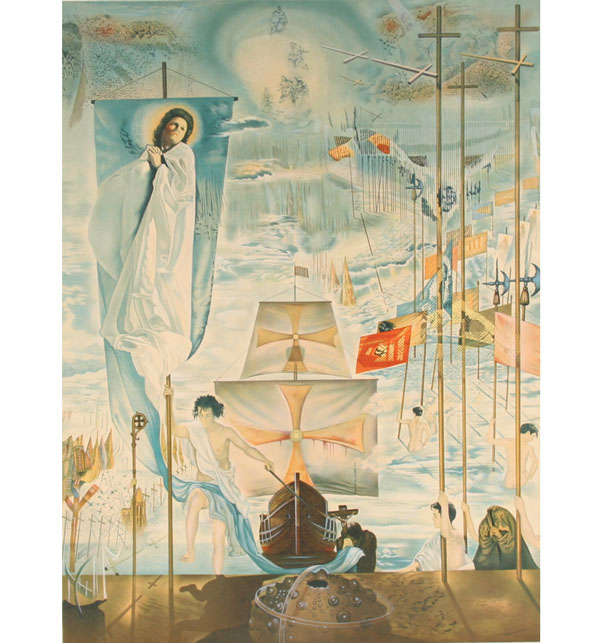
Salvador Dali Museum.
Salvador Dalí, The Discovery of America by Christopher Columbus, 1959, oil on canvas, 410 x 284 cm, St. Petersburg, Florida: Salvador Dalí Museum.

“Prayer of Columbus” by Walt Whitman

A batter’d, wreck’d old man,
Thrown on this savage shore, far, far from home,
Pent by the sea and dark rebellious brows, twelve dreary months,
Sore, stiff with many toils, sicken’d and nigh to death,
I take my way along the island’s edge,
Venting a heavy heart.
I am too full of woe!
Haply I may not live another day;
I cannot rest O God, I cannot eat or drink or sleep,
Till I put forth myself, my prayer, once more to Thee,
Breathe, bathe myself once more in Thee, commune with Thee,
Report myself once more to Thee.
Thou knowest my years entire, my life,
My long and crowded life of active work, not adoration merely;
Thou knowest the prayers and vigils of my youth,
Thou knowest my manhood’s solemn and visionary meditations,
Thou knowest how before I commenced I devoted all to come to Thee,
Thou knowest I have in age ratified all those vows and strictly kept them,
Thou knowest I have not once lost nor faith nor ecstasy in Thee,
In shackles, prison’d, in disgrace, repining not,
Accepting all from Thee, as duly come from Thee.
All my emprises have been fill’d with Thee,
My speculations, plans, begun and carried on in thoughts of Thee,
Sailing the deep or journeying the land for Thee;
Intentions, purports, aspirations mine, leaving results to Thee.
O I am sure they really came from Thee,
The urge, the ardor, the unconquerable will,

The potent, felt, interior command, stronger than words,

A message from the Heavens whispering to me even in sleep,
These sped me on.
By me and these the work so far accomplish’d,
By me earth’s elder cloy’d and stifled lands uncloy’d, unloos’d,
By me the hemispheres rounded and tied, the unknown to the known.
The end I know not, it is all in Thee,
Or small or great I know not–haply what broad fields, what lands,
Haply the brutish measureless human undergrowth I know,
Transplanted there may rise to stature, knowledge worthy Thee,
Haply the swords I know may there indeed be turn’d to reaping-tools,
Haply the lifeless cross I know, Europe’s dead cross, may bud and
blossom there.
One effort more, my altar this bleak sand;
That Thou O God my life hast lighted,
With ray of light, steady, ineffable, vouchsafed of Thee,
Light rare untellable, lighting the very light,
Beyond all signs, descriptions, languages;
For that O God, be it my latest word, here on my knees,
Old, poor, and paralyzed, I thank Thee.
My terminus near,
The clouds already closing in upon me,
The voyage balk’d, the course disputed, lost,
I yield my ships to Thee.
My hands, my limbs grow nerveless,
My brain feels rack’d, bewilder’d,
Let the old timbers part, I will not part,
I will cling fast to Thee, O God, though the waves buffet me,
Thee, Thee at least I know.
Is it the prophet’s thought I speak, or am I raving?
What do I know of life? what of myself?
I know not even my own work past or present,
Dim ever-shifting guesses of it spread before me,
Of newer better worlds, their mighty parturition,
Mocking, perplexing me.
And these things I see suddenly, what mean they?
As if some miracle, some hand divine unseal’d my eyes,
Shadowy vast shapes smile through the air and sky,
And on the distant waves sail countless ships,
And anthems in new tongues I hear saluting me.