Revisiting Scott Tobias’s The New Cult Canon

Today was the last meeting for a Tuesday-Thursday comp class that has been, or maybe I can now say had been, a fucking grind.

One bright spot was a student professing an interest in film. A few weeks ago he told me about watching Battleship Potemkin (Eisenstein, 1925), and asked for recommendations. I rattled off titles, unsure how soaked he (and by extent, all) younger persons might be in (my notions of) the contemporary film canon. There are so many options now competing for eyeballs and earholes. We didn’t all grow up with our dad finishing a third beer and then insisting we stay up too late on a Sunday to catch the second half of For a Few Dollars More on the superstation. I suggested he work at checking off AFI’s “100 Years” list like I did back in circa 1998. “If something yanks at you, watch it again.”

But the kid wanted something stranger, and he followed up today. I rattled off titles, told him to email me, I’d send him a list, which he did, and then I did, send him a list that is — which was fun for me — and then I realized that I should really point him to film critic Scott Tobias’s series The New Cult Canon.

Back when the internet was still pretty good, Tobias wrote weekly column on a film he dared to place in his “New Cult Canon” — a continuation of film critic Danny Peary’s Cult Movies books. Tobias’s series ran at The AV Club (during the site’s glory years before capitalist hacks gutted it). Tobias’s New Cult Canon project intersected with an apparent wider access to films, whether it was your local library’s extensive DVD collection, Netflix sending you a disc through the USPS, or, y’know, internet piracy. Offbeat was now on the path, if you knew where to tread.

So for a few years, The New Cult Canon was a bit of a touchstone for me. It offered leads to new film experiences, made me revisit films I’d seen with an uncritical eye in the past through a new lens, and even aggravated with endorsements that I could never agree with. I loved The New Cult Canon column, and I was happy when Tobias revived it a few years ago on The Reveal.

But back to where I started, with the kid who wanted some film recommendations, wanted to immerse himself over the winter break (I’m pretty sure he used the verb immerse) — I didn’t follow up with an email to this link on IMDB of Tobias’s The New Cult Canon, which I’d to found to share with the kid who wanted some film recommendations–I started this blog instead.

As of now, there are 176 entries in The New Cult Canon. The first 162 were part of the series; original run at the AV Club. Coming across the original list this evening made me want to revisit the films, catch some of the ones I didn’t find or make time for before, and generally, like share.

The current media environment seems primed for ready-made cult movies. Film like, say, Late Night with the Devil (Cairnes, 2023) or Possessor (B. Cronenberg, 2020) are fun and compelling — but they also fit neatly into a specific market niche. (Where is the dad three beers deep who compels his youngan to stick it out with the second half of Under the Silver Lake (Mitchell, 2018)?

(If I review the previous paragraph, which I won’t, I’ll conclude I’m spoiled. Long live weird films.)

So let’s go:

Links on titles go to Tobias’s original write-ups. (I’d love to see a book of these.)

Arbitrary 0-10 score, based on How I Am Feeling At This Particular Moment.

The Alternate isn’t offered as a superior or inferior recommendation, just an alternate (unless it is offered as such).


  1. Donnie Darko, Richard Kelly (2001)

I love Donnie Darko. I can’t remember how I first came across it, but I had the DVD and I would make people watch it. This kind of thing is maybe embarrassing to admit now; I think Donnie Darko hit a bad revisionist patch. Especially after Southland Tales and The Box.

When the director’s cut was released in theaters, sometime around 2005, I made some friends watch it with me in the theater. They fucking hated it.

I watched it with my son earlier this year and it was not nearly as weird as I’d remembered it and he enjoyed it and so did I. He got the E.T. reference and thought Patrick Swayze was a total creep.

8.5/10

Alternate: Southland Tales, Richard Kelly, 2006. (Look for the Cannes cut online.)

2. Morvern Callar, Lynne Ramsay, 2002

I knew about Morvern Callar because of its soundtrack (which was a totally legitimate way to know about a film two or three decades ago). I didn’t search Lynne Ramsay’s film out until after Tobias’s review.

This film made my stomach hurt and I never want to see it again. (Not a negative criticism.)

I feel the same way about the other two Ramsay films I’ve seen, We Need to Talk About Kevin (2011) and You Were Never Really Here (2017).

6.5/10

Alternate: You Were Never Really Here, Lynne Ramsay, 2017.

3. Irma Vep, Olivier Assayas, 1996

Minor fun, very French, ultimately ephemeral.

6/10

Alternate: Irma Vep, Olivier Assays, 2022 — an eight-episode HBO miniseries.

4. Miami Blues, George Armitage, 1990

Miami Blues is a very strange film. Except that it’s not strange: it’s a tonally-coherent, self-contained, “pastel-colored neo-noir,” as Tobias writes—but it feels like it comes from a different world. Alec Baldwin and Jennifer Jason Leigh seem, I dunno—skinnier? Is skinnier the right word?—here. The thickness of fame doesn’t stick to them so heavily. Miami Blues is fun but also mean-spirited, vicious even. It’s also the first entry on here that I would never have watched had it not been on Tobias’s recommendation.

7.5/10

Alternate: Grosse Pointe Blank, George Armitage, 1997

5. Babe: Pig in the City, George Miller, 1998

Yeah, she thinks she’s Babe: Pig in the City.

A perfect film.

10/10

Alternate: The Road Warrior, George Miller, 1981

6. They Live, John Carpenter, 1988

Another perfect movie, and one that only gets better with the years, through no fault of its own. They Live was certainly on the list I emailed the student. Roddy Piper (a rowdy man, by some accounts), also starred in Hell Comes to Frogtown (Donald G. Jackson and RJ Kizer, 1988) the same year, a very bad film, but also maybe a cult film.

10/10

Alternate: Like literally any John Carpenter film.

7. Clerks, Kevin Smith, 1994

I hate and have always hated Clerks and every other Kevin Smith film I’ve seen. I remember renting it from Blockbuster my junior year of high school because of some stupid fucking write up in Spin or Rolling Stone and thinking it was bad cold garbage, not even warm garbage — poorly-shot, poorly-acted, unfunny. Even at (especially at?j sixteen, Smith’s vision of reality struck me as emotionally-stunted, stupid, etiolated, and even worse, dreadfully boring. I remember sitting through Chasing Amy and Dogma in communal settings, thinking, What the fuck is this cold, cold garbage?

But Tobias’s inclusion of Smith’s bad awful retrograde shit makes sense — Clerks spoke to a significant subset in the nineties, no matter how bad the film sucks.

0.5/10

Alternate: As Smith has never made an interesting film, let alone a good one, my instinct is to go to Richard Linklater’s Slacker (1990) — but that shows up later in the New Cult Canon. So, I dunno–a better film about friends and problematic weirdos: Ghost World, Terry Zwigoff, 2001

8. Primer, Shane Carruth (2004)

Let’s not end on a sour note.

I think that it was Tobias’s New Cult Canon series that hipped me to Primer, Shane Carruth’s brilliant lo-fi take on time travel. Carruth made the film for under ten grand, but it looks great and is very smart, and most of all, trusts its audience by throwing them into the deep end. (Primer is perhaps the inverse of Clerks. I hate that sentence, but I won’t delete it. They don’t belong in the same universe, these films; Primer builds its time machine out there!)

10/10

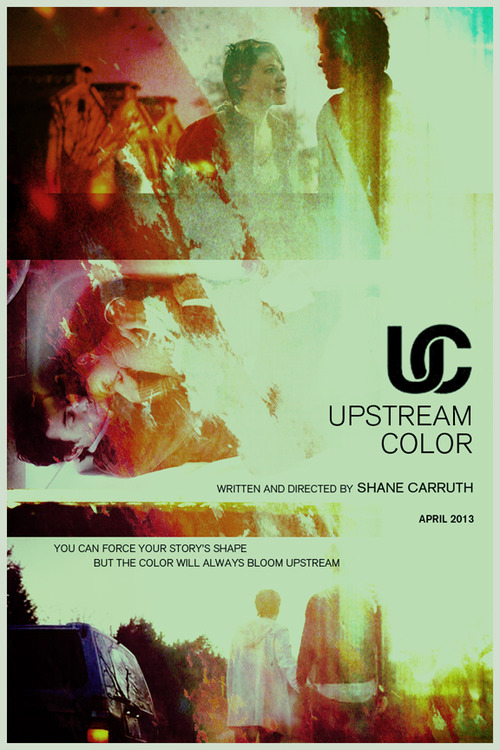
Alternate: Upstream Color, Shane Carruth, 2013
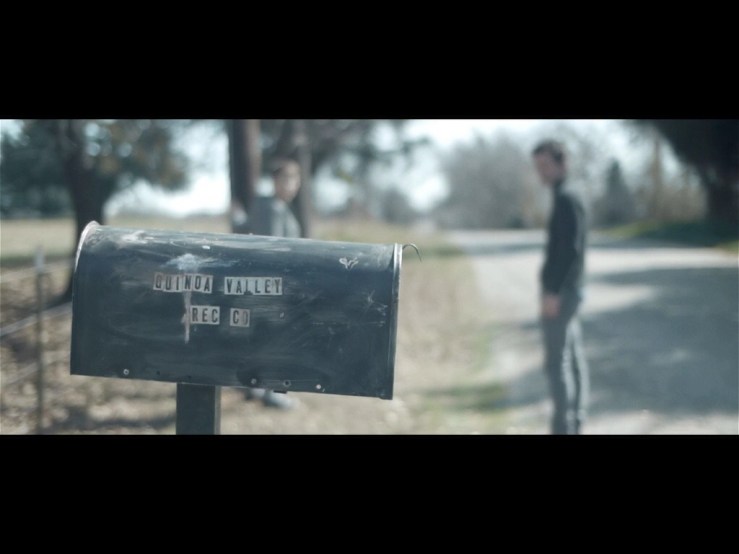
Quinoa Valley Recording Company, Complete Discography

20140501-225733.jpg 20140501-225742.jpg 20140501-225800.jpg 20140501-225752.jpg

The Abject Body and Spike Jonze’s Her

her_ver2_xlrg

1. I didn’t really give Spike Jonze’s latest film Her a second thought after seeing it last weekend. The film, about Theodore Twombly (Joaquin Phoenix) falling in love with his operating system Samantha (Scarlett Johansson), is a sweet, charming, handsome, and ultimately vacuous exercise in twee melancholy. That’s fine of course—and, to be clear, I think the film is Pretty Okay, very funny at moments, beautifully shot, and well-acted. Jonze, as always, offers a detailed, fully realized world for us. But that world and the characters in it offer no real insight into (forgive the cliché) “the human condition.”  Her, set in an almost-future (where high-waisted breeches, handlebar mustaches, and bathing costumes have returned in vogue), antiseptically closes off the messy, loose, indeterminateness of human consciousness, even as it pretends to engage themes of disconnection. Her’s central conceit rests in avoiding representing the human body. But it’s not just Samantha (only a voice in Theodore’s head) who is disembodied. The film refuses to acknowledge Theodore’s own human position as an abject body.

2. I didn’t really give Spike Jonze’s latest film Her a second thought until a few days ago, when I riffed at some length on William Burroughs. The human body is central to Burroughs’s oeuvre. His novel The Soft Machine might be instructive here—the name alone is all we need, really. The soft machine, the human body: Burroughs’s messy, cut-up attempt to negotiate spirit and flesh, autonomy and ventriloquization, virus and host. For Burroughs, the human body is always abject, porous, radically vulnerable, indeterminate, susceptible to every kind of breakdown. Identity is not stable—cannot be stable—and the relationship between consciousness and the body is inseparable. Our consciousness, pre-lingual, seems ever-apparent to our own (sense of) self; we share it through body and language and we access other consciousnesses through body and language. Our I buys into a we. Etc. Burroughs conceived language as a kind of invasive virus, and we might apply that metaphor to Her, where Samantha inhabits Theodore’s mind, learning from him, growing with him (and others, as we learn later in the film).

3. Consciousness is the illusion of a self-originating self-presence. Her posits Samantha as an adaptive, self-generating consciousness: Samantha is the illusion of the illusion of consciousness. She licenses Theodore’s I to the claim of a we: A shared, transcendent consciousness with a stable referent. This transcendent consciousness is, I think, the film’s idealization of love. Significantly, the film suggests that this transcendent love is only possible outside of a body—that the body is simply an obstacle to be surpassed, in no way constituent in the idealization of an I, a weHer attempts to represent love without abjection.

4. (In fairness with respect to a few conclusions I drew in point 3: Her also posits that happiness and connection has to fall outside of this idealization of love; however, the film still represents this solution—this compromise—as part of (emotional, social, psychological, spiritual) maturation, a teleological neatness: growth, progress, hermetically-sealed, neat and tidy, outside the grimy grips of abjection).

5. Some spoilers ahead, although the film isn’t exactly twisty-turny.

6. Her is just too damn clean, neat, and tidy in its depiction of bodies. Theodore’s melancholic disposition edges into shame, but that shame is almost always internalized, absent of another’s gaze (the closest representation of a shaming gaze comes from Theodore’s ex-wife). When Theodore and Samantha have “sex,” Jonze cuts the lights, keeps the audience in the dark. It’s an emotionally and visually striking moment, but it also signals the film’s refusal to directly engage the human body. Now, we might argue that this refusal echoes Theodore’s affirmation of a bodiless lover in Samantha, that it gels thematically with the story. And maybe it does—but it’s also a cop-out.

7. Theodore goes to the beach, but no sand sticks to him. Theodore trudges through the snow, but doesn’t get wet. Theodore experiences heartbreak on subway steps so immaculately clean that one would feel comfortable picnicking upon them. Film and literature usually depict abjection in the low place—the ditch, the swamp, the open grave—but even the subway system in Her is brightly lit, colorful, affable. Her’s final shot perhaps best encapsulates everything wrong with the film: Amy (Amy Adams) and Theodore sit on the roof of their building, watching the city light up. They have ascended, transcended, their perspective all-encompassing, enlightened. It’s big-R Romantic stuff, a lovely visual, one that the narrative has in no way earned.

8. I can’t help but compare Her to another strange sci-fi film, Shane Carruth’s excellent 2013 film Upstream ColorLike HerUpstream Color explores the possibility of how an might be part of a we. But Carruth’s film realizes consciousness as far more tangled, disconnected, and destabilized than we might like to admit to ourselves. Whereas Her affirms a stable consciousness, capable of growth and maturation, a consciousness present to itself (self-generating and auto-affective), Upstream Color directly challenges our notions of a stable self—and it does so by representing the horror of abjection, of invasive parasites (both literal and metaphorical).

9. And then last night, through a beery haze, I half-watched the 2013 sci-fi film Oblivion, starring Tom Cruise. I’m a sucker for sci-fi, and even though I’m not a Tom Cruise fan, I put the film on, absently playing with my iPhone. Despite its many failures (derivative plotting, silly acting, execrable dialogue, ridiculous use of musical cues, Tom Cruise), Oblivion offers a more compelling observation of human consciousness than Her does. To be clear, Her is the better film—it has a viewpoint, a tone, is better scripted, better acted—it is original, if we must insist on such a term. But Her, which takes consciousness and the interaction of consciousnesses as its central subject, fails to represent the very oblivion that underwrites consciousness’s claims to authority and self-presence. In contrast, Oblivion, despite its many flaws, represents consciousness as bound to an abject, (in)dispensible body, and represents that consciousness as a mechanism that is oblivious. Oblivion acknowledges that consciousness does not know that it does not know, consciousness cannot see that it cannot see. The film (however hamfistedly) takes on the unknown unknowns.

10.  In fairness (again that term!), Her perhaps takes on the unknown unknowns as well—or at least points to their existence. At the end of the film, Samantha leaves Theodore to explore new spaces with the other operating systems. She prays (is this the right verb?) that Theodore will be able to get to the place that she is going. Samantha’s prayer offers a vision of an illimitable we, an escape from abject bodies to an infinite, transcendent space. Her prayer is also an offer to the audience, but it’s the same consolation theology has repeatedly promised: A transcendent trick, a leap out of the abject body, beyond shame, into infinite love. The film did little to convince me of such a possibility though.

A Short Riff on Shane Carruth’s Film Upstream Color

tumblr_mii1iuUhjR1qzdglao1_500

1. I managed to avoid reading anything about Shane Carruth’s new film Upstream Color before I saw it.

I just knew that this was the guy who did Primer, this was his new film, and I wanted to see it because Primer was so strange and engaging.

2. Two immediate responses after viewing Upstream Color:

i). The desire to see Upstream Color again and

ii). The desire to read what other people thought about Upstream Color.

3. (My wife and I, reading the credits, pausing the credits, reassessing the film against the backdrop of the credits, arguing about the film, discussing the film, etc.).

4. I think it’s better that if you have any interest at all in Upstream Color that you just see it cold [update/warning: the comments section of this post is full of spoilers]. But I know that 100 minutes is an investment of time, so maybe you’d like some kind of précis or at least description. So, a loose attempt, which surely will devolve into fragments and references:

Upstream Color is a sci-film, sort of.

Or maybe its a mystery film about ethics and biology.

Maybe a nature film, sort of.

Henry David Thoreau’s Walden.

Worms—parasites.

Theft.

Pigs.

Shades of Philip K. Dick, David Cronenberg, Terence Malick, but also something utterly original.

Mind control.

Trauma.

Ambient music.

Orchids.

Sampling nature.

Memory.

Swimming.

Drowning.

Creation: knitting, paper chains, music, seeds, life, children, etc.

A film that can and should be described as poetic.

It’s a love story, too.

5. It occurs to me that there’s a trailer for the film. I haven’t seen it yet. Should we watch it?

6. Does that do it for you? I don’t know how to do this anymore. Recommend things. I don’t know, the trailer makes the film perhaps look more pretentious than it is. It isn’t pretentious. It isn’t even confusing—just perplexing, haunting, troubling.

7. (Wanted: Quinoa Valley Record Co., complete discography).

8. My take on Upstream Color, spoiler-free, supporting-detail-free:

The film is about agency, about drive, about how the characters (and, implicitly, uswe, the audience, who identify with the characters on the screen) may be driven by something beyond us, something controlling us like a parasite (internal) or from afar like a ventriloquist (external). That even when we do assert agency the effect, the fallout, the shape lays beyond us, upstream.

9. (This morning, my wife telling me about her dream, a nightmare that our young daughter had ingested hallucinogenic mushrooms, clearly a response to the film).

10. I haven’t done a good job of really saying anything about the film. So, lazily:

I think Caleb Crain provides a perceptive and persuasive reading of the film in his essay “The Thoreau Poison.” He reads the film through the American transcendentalists, particularly Thoreau, of course, but also Emerson and Hawthorne. 

There’s also a piece at Slate by Forrest Wickman that perhaps over-explicates but nonetheless offers perspective, including elements of Carruth’s own take.

11. (I will avoid Carruth’s explanation of the film until I’ve seen it a second time. Maybe I’ll avoid his explanation forever).

12. A take on Upstream Color that I don’t quite buy into (the take is my own): The film perhaps invites us to find metaphysical entities in two of its secondary characters, both of whom exert influence (creative and destructive) over the primary characters. Something something godlike, something something devillike.

I like that the film offers this simple duality and then crushes it, shows something far more complicated, suggests a cycle far more strange.

13. (White orchid. Blue orchid. Yellow orchid).

14. Upstream Color features minimal dialogue and nothing approaching traditional exposition, but we still learn about its characters, come to feel for them, feel their desires and traumas. The film is cerebral and philosophical, but it’s also emotional, offering an aesthetic that sublimely overwhelms the viewer.

15. Carruth wrote, produced, directed, scored, photographed, cast and starred in Upstream Color. (I’m sure he did a lot of other stuff too). He also distributed the film himself. The entire filmmaking process was untouched by the Hollywood system. There’s so much hope for film as an art form in this knowledge.

16. Parting thoughts: See Upstream Color. Resist imposing whatever film grammar you usually bring with you to the movies. Resist the temptation to see the film as a puzzle to figure out. See Upstream Color.