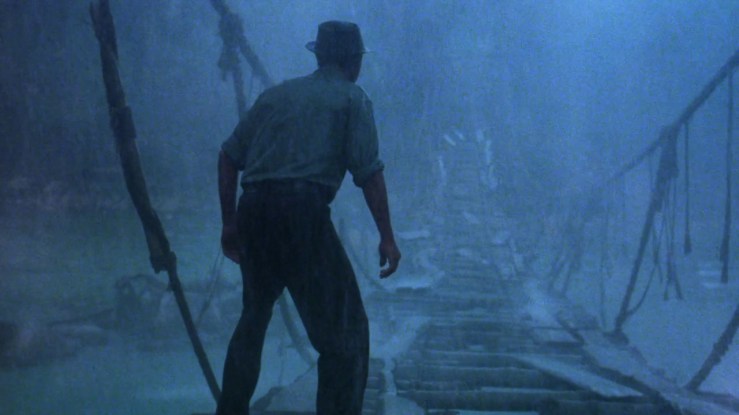
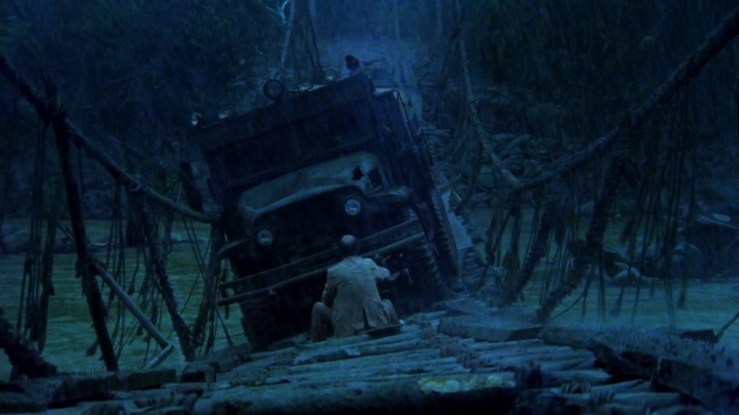
The most important scene in the film and the most difficult I’ve ever attempted is the bridge-crossing sequence, wherein the two trucks have to separately cross an old wooden suspension bridge that appears completely unstable. The bridge was anchored by crossbeams at each end, and the ropes suspending it were frayed, the wooden planks rotted and in some places absent. The crossing takes place over a rushing river during a blinding rainstorm. John Box designed the bridge so that it was controlled by a concealed hydraulic system with metallic supports. Each truck, as it crossed, was attached invisibly to the bridge so that it would sway but not capsize. That was the theory. Built at a cost of a million dollars, the bridge took three months to complete and was totally realistic, but it was a mad enterprise and definitely life-threatening.
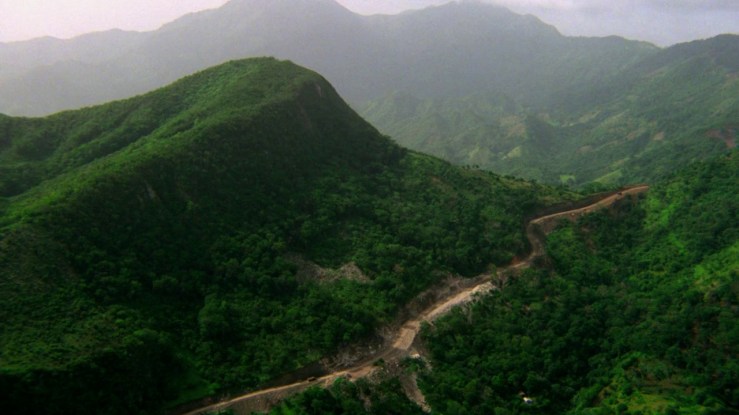
We found the perfect river over which to build it, with a strong current and a depth of twelve feet. The river was more than two hundred feet wide, so that dictated the length of the bridge. Thick forest flanked it at each end.
As the weeks unfolded, there was little rainfall, and the river was diminishing. How could this be? Local experts and army engineers assured us that the river had never gone down. But slowly, agonizingly, it was doing just that. From twelve feet, the water level dropped down to ten, then eight, then five. By the time the bridge was finished, there was a little over a foot of water; and then the river dried up entirely! We had constructed a bridge over nothing. This was becoming a cursed project. With costs escalating and so many on the crew lost to illness and burnout, the sensible thing to do was to come up with a simpler sequence. That was the advice of all the executives, but I had become like Fitzcarraldo, the man who built an opera house in the Brazilian jungle. When I saw the finished bridge, I believed that if I could film the scene as I conceived it, it would be one of the greatest in film history. My obsession was out of control, and if I hadn’t been so successful over the past few years, I would have been ordered to stop. The two studios bet on me against their better judgment, because they thought I still had the mojo; maybe I was so in tune with audience tastes that costs wouldn’t matter. No one in his right mind would have continued on this course, but no one was in his right mind. I had the confidence, the energy, and the drive of an Olympic downhill skier, and those who stayed with me—the camera crew, the grips, electric, props, John Box, Roy Walker, my assistant director, Newt Arnold, and Bud Smith—all shared my passion. So we dispatched scouts to Mexico, to the Papaloapan River outside the town of Tuxtepec, where we had been told there were rushing waters in similar terrain that had never dropped in level, “the memory of man runneth not to the contrary.” John Box went to Mexico and came back with photos that matched our Dominican location perfectly. We dismantled the bridge and left the Dominican Republic with only two scenes left to shoot. We had to shut down while holding on to our four principal actors and key crew.
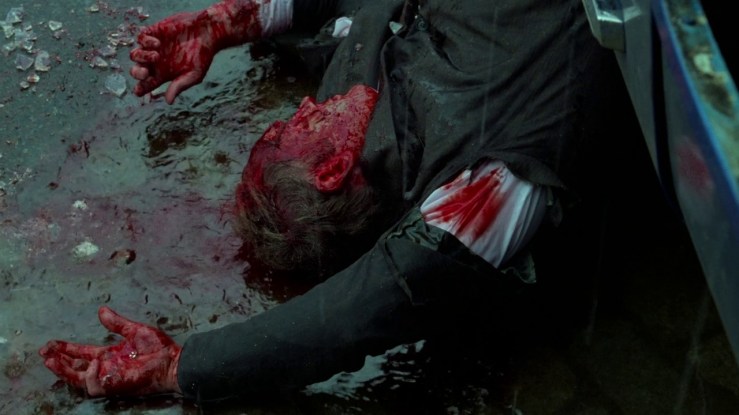
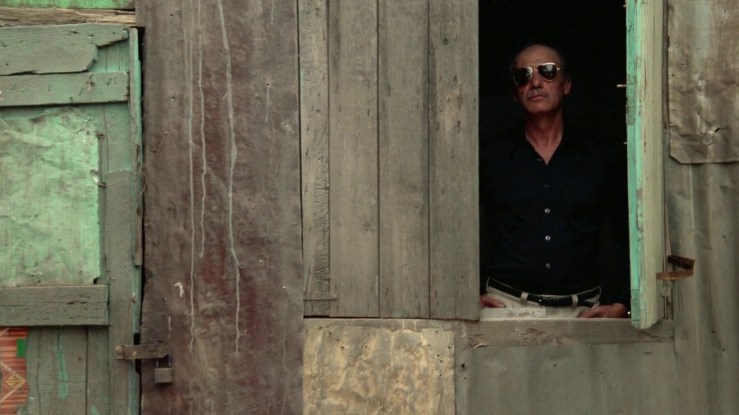
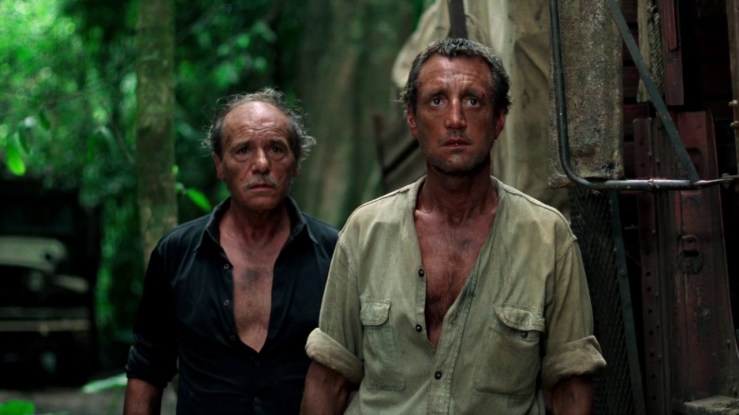
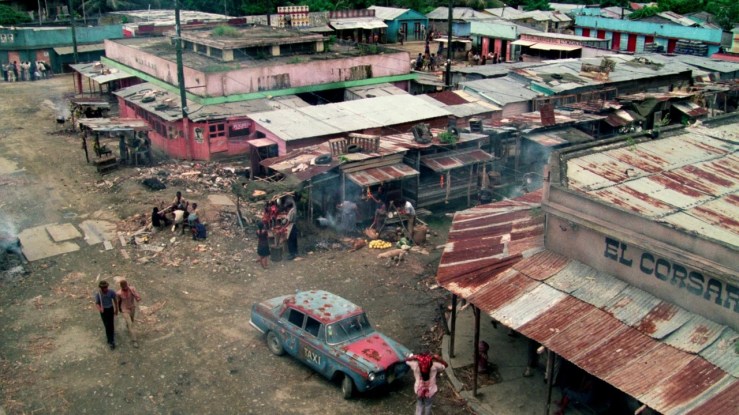
We flew to Vera Cruz, a shadowy seaport on Mexico’s Gulf Coast, which would be our base for three days, while John organized the precise location to rebuild the bridge. I discovered a small hotel in Plaza de las Armas, the main square. The tree-lined square was filled with mariachi bands and old men playing dominoes, smoking cigars, and drinking locally grown coffee. We filmed a prologue for Paco Rabal’s character Nilo, who kills a man execution-style in a room at the hotel overlooking the peaceful plaza below.
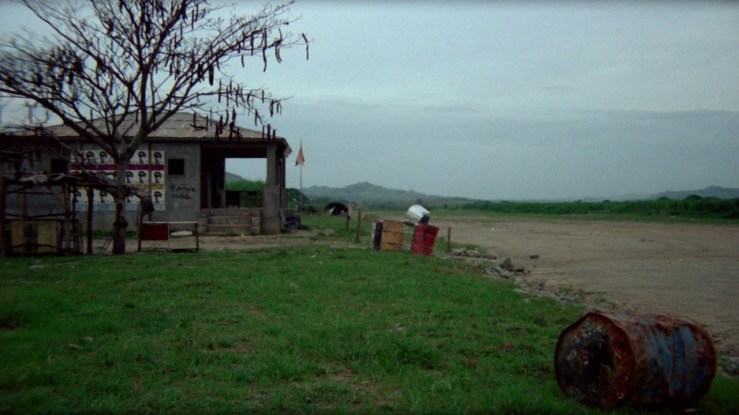
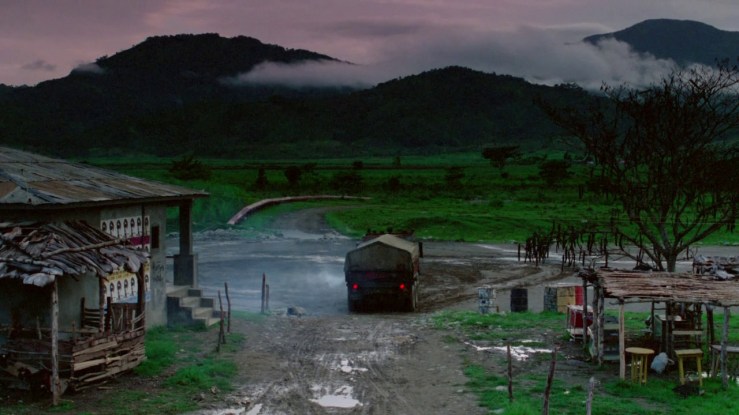
Our next stop was Tuxtepec in Oaxaca Province, one hundred miles to the south and east of Vera Cruz. From here we pushed farther south into the jungle surrounding the Papaloapan, to what had been an ancient Aztec village, with a small peasant population. The weather was humid, and thick, lush vegetation surrounded the fifteen-foot-deep branch of the swiftly rushing river. The bridge was already designed and built, so now it was a matter of reassembling and anchoring it. The shutdown of production lasted a month while we regrouped, at great expense to management. When we arrived at the Aztec village, I noticed what appeared to be a mass exodus of the local population. One of the authorities told me it was because of word of my arrival. They were a deeply religious people, and the man who made The Exorcist was coming to their village: bad karma. But a few of the locals and people from surrounding villages stayed and worked with us to put up the bridge.
I know this is hard to believe, but again the river level began to drop, at the rate of six inches or more a day. We had been told it rained often in this area, but we weren’t told that rain occurred only in the summer season. It was now the fall. I could see where this was going, but there was no turning back.
I became friendly with the local laborers. I used to share cervezas with them after a day’s work. One evening a man named Luis, who helped to organize the local crew, knocked on the door of my cabin. We all stayed in small wooden cabins in the jungle, the size of prison cells, with only an army cot, a chair, and a single hanging lightbulb. Luis asked if he might have a word with me. I was exhausted, but he was a good man who worked hard with a pick and shovel all day. I invited him in, and he handed me a beer and had one himself. We sat down and exchanged small talk for a few minutes; then he reached into his shirt pocket and pulled out what looked like an identity card but was on closer examination a badge. His look turned serious and sad. “Si, Señor Bill, I am Federales.” He was a federal agent assigned to work undercover on our set. “I have to inform you of an unfortunate situation,” he said. “There are members of your crew who are using drugs. This is a serious problem in my country.”
Was this a shakedown? “In a normal situation,” he continued, “I would be obliged to arrest them, and they would go to prison. Because I like you, I will not arrest them.” I was shocked; I wasn’t aware of who was using, or what. I thanked him and promised to make sure this activity stopped. “But they have to leave the country. Tomorrow,” he added. “Tomorrow?” “Sí.”
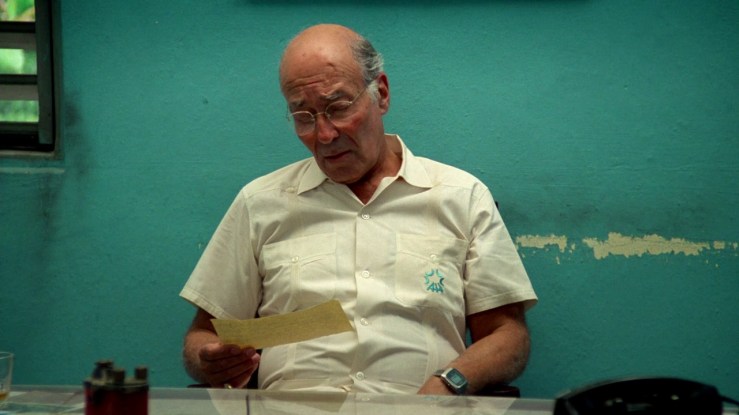
He gave me a dozen names, handwritten on a scrap of paper. They included members of the grip crew, some of the stuntmen, and the makeup artist. I told him this would seriously damage my ability to finish the film. “I am sorry,” he said quietly. “I’m sure you don’t want them to go to prison, and it is within my authority to arrest or send you all home, even those who are not using drugs. This is the best I can do; these people have to leave Mexico tomorrow.”
And so they did. It took two weeks to replace key people who had been with the film from the beginning, while the river continued to decline to a height of just under three feet, then became a stagnant pool. I called a meeting of the crew and explained the situation without inquiring who else was using. It was clear that anyone using would be caught and arrested. There were no more “unfortunate situations,” and thankfully the actors weren’t at risk, or we’d have been forced to shut the picture down.
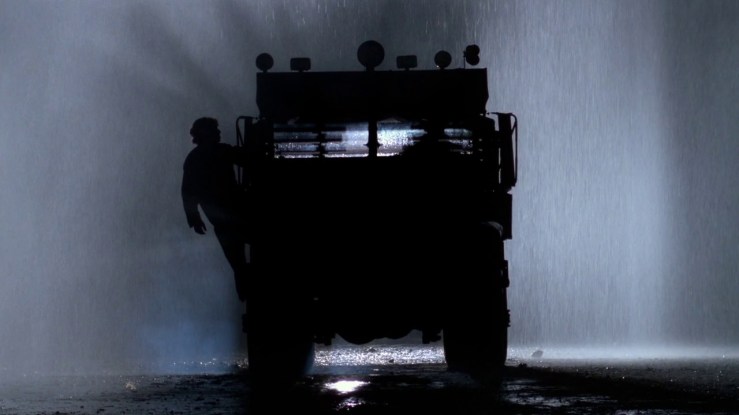
We were able to divert sections of the river to our location using large pipes and pumping equipment, and I decided to shoot the scene in rain, manmade rain, so we brought in half a dozen large sprinklers that drew water from upriver. The sky was cloudy from morning until noon, then bright sun appeared and we had to shut down and go to our cabins until five o’clock, when the clouds rolled in again and we could resume shooting in matching light. The scene runs twelve minutes, roughly 10 percent of the final cut, but it took months to complete and cost more than $3 million, most of it not budgeted. The only thing that could save me was a hit picture. I had no doubt it would be. The performances were terrific, and the action scenes were original and believable.
Though the bridge scene was carefully prepared, the trucks would occasionally fall to one side. No one was hurt or injured, and none of the actors took the fall, only the stuntmen, who were heavily padded with flotation gear. I ran three cameras at different angles, but with the split shooting days it seemed as though we’d never be able to complete the scene. By the time it was over, a month later, I was exhausted and stressed but relieved, proud of the film but anxious to get home.
From William Friedkin’s memoir The Friedkin Connection.
 Biblioklept