Revisiting Scott Tobias’s The New Cult Canon

Today was the last meeting for a Tuesday-Thursday comp class that has been, or maybe I can now say had been, a fucking grind.

One bright spot was a student professing an interest in film. A few weeks ago he told me about watching Battleship Potemkin (Eisenstein, 1925), and asked for recommendations. I rattled off titles, unsure how soaked he (and by extent, all) younger persons might be in (my notions of) the contemporary film canon. There are so many options now competing for eyeballs and earholes. We didn’t all grow up with our dad finishing a third beer and then insisting we stay up too late on a Sunday to catch the second half of For a Few Dollars More on the superstation. I suggested he work at checking off AFI’s “100 Years” list like I did back in circa 1998. “If something yanks at you, watch it again.”

But the kid wanted something stranger, and he followed up today. I rattled off titles, told him to email me, I’d send him a list, which he did, and then I did, send him a list that is — which was fun for me — and then I realized that I should really point him to film critic Scott Tobias’s series The New Cult Canon.

Back when the internet was still pretty good, Tobias wrote weekly column on a film he dared to place in his “New Cult Canon” — a continuation of film critic Danny Peary’s Cult Movies books. Tobias’s series ran at The AV Club (during the site’s glory years before capitalist hacks gutted it). Tobias’s New Cult Canon project intersected with an apparent wider access to films, whether it was your local library’s extensive DVD collection, Netflix sending you a disc through the USPS, or, y’know, internet piracy. Offbeat was now on the path, if you knew where to tread.

So for a few years, The New Cult Canon was a bit of a touchstone for me. It offered leads to new film experiences, made me revisit films I’d seen with an uncritical eye in the past through a new lens, and even aggravated with endorsements that I could never agree with. I loved The New Cult Canon column, and I was happy when Tobias revived it a few years ago on The Reveal.

But back to where I started, with the kid who wanted some film recommendations, wanted to immerse himself over the winter break (I’m pretty sure he used the verb immerse) — I didn’t follow up with an email to this link on IMDB of Tobias’s The New Cult Canon, which I’d to found to share with the kid who wanted some film recommendations–I started this blog instead.

As of now, there are 176 entries in The New Cult Canon. The first 162 were part of the series; original run at the AV Club. Coming across the original list this evening made me want to revisit the films, catch some of the ones I didn’t find or make time for before, and generally, like share.

The current media environment seems primed for ready-made cult movies. Film like, say, Late Night with the Devil (Cairnes, 2023) or Possessor (B. Cronenberg, 2020) are fun and compelling — but they also fit neatly into a specific market niche. (Where is the dad three beers deep who compels his youngan to stick it out with the second half of Under the Silver Lake (Mitchell, 2018)?

(If I review the previous paragraph, which I won’t, I’ll conclude I’m spoiled. Long live weird films.)

So let’s go:

Links on titles go to Tobias’s original write-ups. (I’d love to see a book of these.)

Arbitrary 0-10 score, based on How I Am Feeling At This Particular Moment.

The Alternate isn’t offered as a superior or inferior recommendation, just an alternate (unless it is offered as such).


  1. Donnie Darko, Richard Kelly (2001)

I love Donnie Darko. I can’t remember how I first came across it, but I had the DVD and I would make people watch it. This kind of thing is maybe embarrassing to admit now; I think Donnie Darko hit a bad revisionist patch. Especially after Southland Tales and The Box.

When the director’s cut was released in theaters, sometime around 2005, I made some friends watch it with me in the theater. They fucking hated it.

I watched it with my son earlier this year and it was not nearly as weird as I’d remembered it and he enjoyed it and so did I. He got the E.T. reference and thought Patrick Swayze was a total creep.

8.5/10

Alternate: Southland Tales, Richard Kelly, 2006. (Look for the Cannes cut online.)

2. Morvern Callar, Lynne Ramsay, 2002

I knew about Morvern Callar because of its soundtrack (which was a totally legitimate way to know about a film two or three decades ago). I didn’t search Lynne Ramsay’s film out until after Tobias’s review.

This film made my stomach hurt and I never want to see it again. (Not a negative criticism.)

I feel the same way about the other two Ramsay films I’ve seen, We Need to Talk About Kevin (2011) and You Were Never Really Here (2017).

6.5/10

Alternate: You Were Never Really Here, Lynne Ramsay, 2017.

3. Irma Vep, Olivier Assayas, 1996

Minor fun, very French, ultimately ephemeral.

6/10

Alternate: Irma Vep, Olivier Assays, 2022 — an eight-episode HBO miniseries.
4. Miami Blues, George Armitage, 1990

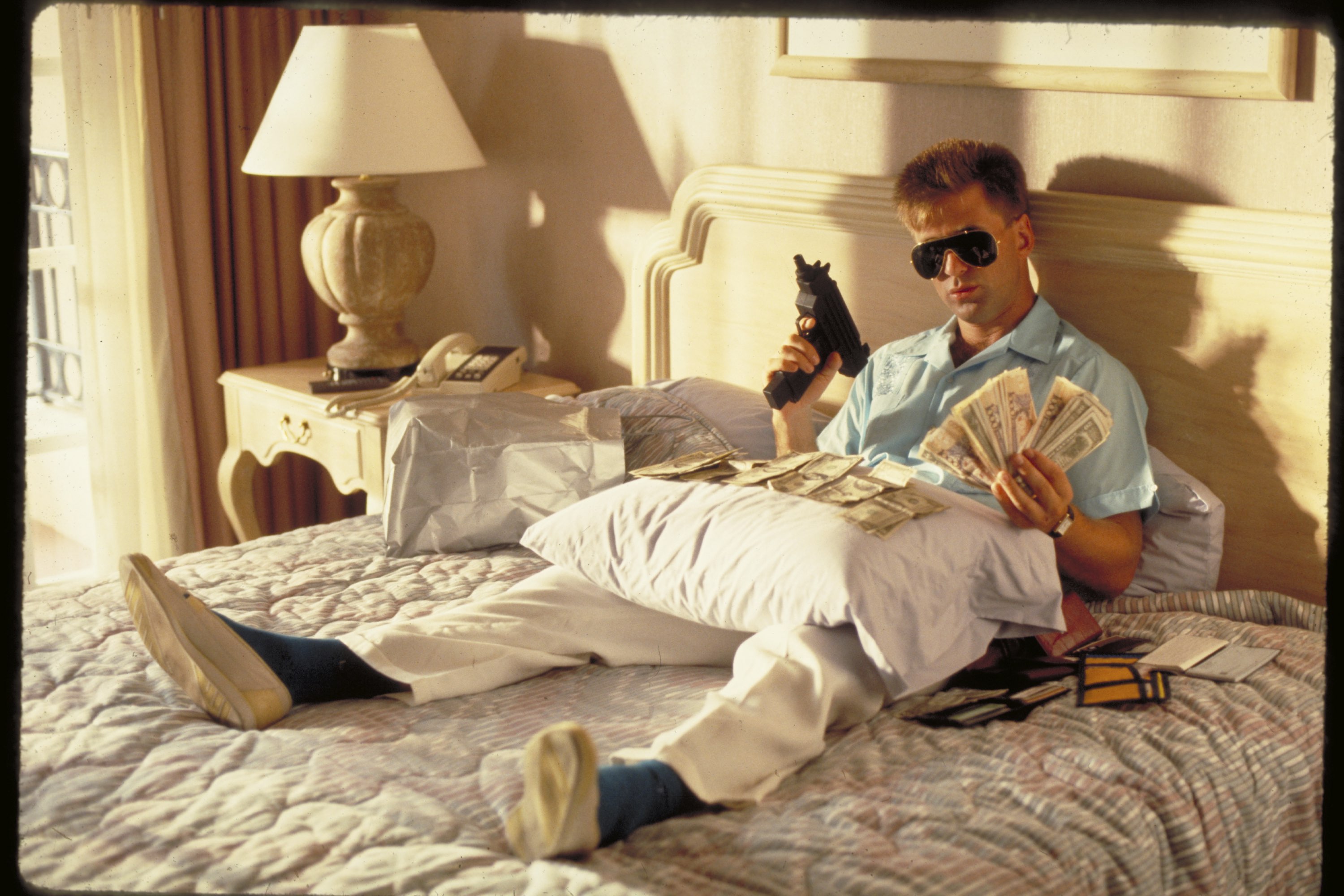
Miami Blues is a very strange film. Except that it’s not strange: it’s a tonally-coherent, self-contained, “pastel-colored neo-noir,” as Tobias writes—but it feels like it comes from a different world. Alec Baldwin and Jennifer Jason Leigh seem, I dunno—skinnier? Is skinnier the right word?—here. The thickness of fame doesn’t stick to them so heavily. Miami Blues is fun but also mean-spirited, vicious even. It’s also the first entry on here that I would never have watched had it not been on Tobias’s recommendation.

7.5/10

Alternate: Grosse Pointe Blank, George Armitage, 1997

5. Babe: Pig in the City, George Miller, 1998

Yeah, she thinks she’s Babe: Pig in the City.

A perfect film.

10/10

Alternate: The Road Warrior, George Miller, 1981

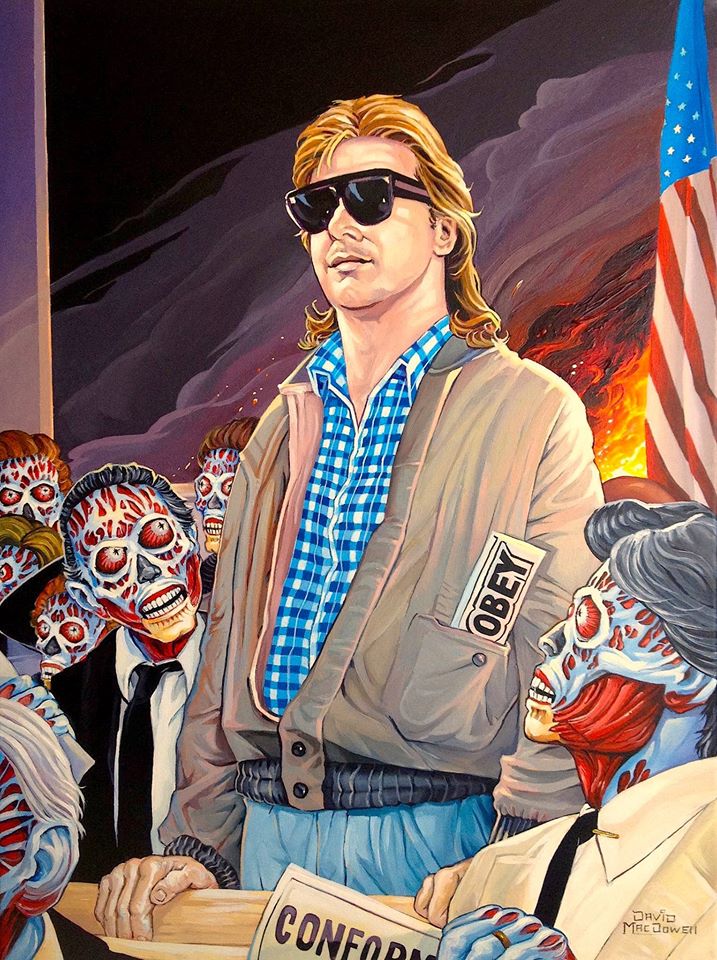
6. They Live, John Carpenter, 1988

Another perfect movie, and one that only gets better with the years, through no fault of its own. They Live was certainly on the list I emailed the student. Roddy Piper (a rowdy man, by some accounts), also starred in Hell Comes to Frogtown (Donald G. Jackson and RJ Kizer, 1988) the same year, a very bad film, but also maybe a cult film.

10/10

Alternate: Like literally any John Carpenter film.

7. Clerks, Kevin Smith, 1994

I hate and have always hated Clerks and every other Kevin Smith film I’ve seen. I remember renting it from Blockbuster my junior year of high school because of some stupid fucking write up in Spin or Rolling Stone and thinking it was bad cold garbage, not even warm garbage — poorly-shot, poorly-acted, unfunny. Even at (especially at?j sixteen, Smith’s vision of reality struck me as emotionally-stunted, stupid, etiolated, and even worse, dreadfully boring. I remember sitting through Chasing Amy and Dogma in communal settings, thinking, What the fuck is this cold, cold garbage?

But Tobias’s inclusion of Smith’s bad awful retrograde shit makes sense — Clerks spoke to a significant subset in the nineties, no matter how bad the film sucks.

0.5/10

Alternate: As Smith has never made an interesting film, let alone a good one, my instinct is to go to Richard Linklater’s Slacker (1990) — but that shows up later in the New Cult Canon. So, I dunno–a better film about friends and problematic weirdos: Ghost World, Terry Zwigoff, 2001

8. Primer, Shane Carruth (2004)

Let’s not end on a sour note.

I think that it was Tobias’s New Cult Canon series that hipped me to Primer, Shane Carruth’s brilliant lo-fi take on time travel. Carruth made the film for under ten grand, but it looks great and is very smart, and most of all, trusts its audience by throwing them into the deep end. (Primer is perhaps the inverse of Clerks. I hate that sentence, but I won’t delete it. They don’t belong in the same universe, these films; Primer builds its time machine out there!)

10/10

Alternate: Upstream Color, Shane Carruth, 2013
The Complete Short Stories of J.G. Ballard (Fifth Riff: “The Subliminal Man”)

[Ed. note: Biblioklept originally ran a series of posts on The Complete Short Stories of J.G. Ballard between October 2013 and March 2014.]

Today is Black Friday in America. I don’t think it’s necessary to remark at length on the bizarre disjunction between this exercise in consumerism-as-culture and the intended spirit of the Thanksgiving holiday that precedes it. Indeed, I think that the cognitive dissonance that underwrites Black Friday—the compulsion to suffer (and cause suffering), both physically and mentally,  to “save” money on “consumer goods” (sorry for all the scare quotes, but these terms are euphemisms and must be placed under suspicion)—I think that this cognitive dissonance is nakedly apparent to all who choose to (or are forced to) actively engage in Black Friday. The name itself is dark, ominous, wonderfully satanic.

Rereading “The Subliminal Man,” I was struck by how presciently J.G. Ballard anticipated not only the contours of consumerist culture—urban sprawl, a debt-based economy, the mechanization of leisure, the illusion of freedom of choice—but also how closely he intuited the human, psychological responses to the consumerist society he saw on the horizon. Half a century after its publication, “The Subliminal Man” seems more relevant than ever.

The premise of the tale is fairly straightforward and fits neatly with the schema of many other early Ballard stories: Franklin, an overworked doctor, is approached by Hathaway, a “crazy beatnik,” who refuses to take part in the non-stop consumerism of contemporary society. Hathaway can “see” the subliminal messages sent through advertising. He asks for Franklin’s help in stopping the spread of these messages. Hathaway reasons that the messages are intended to enforce consumerist society:

Ultimately we’ll all be working and spending twenty–four hours a day, seven days a week. No one will dare refuse. Think what a slump would mean – millions of lay–offs, people with time on their hands and nothing to spend it on. Real leisure, not just time spent buying things . . .

The fear of a slump. You know the new economic dogmas. Unless output rises by a steady inflationary five per cent the economy is stagnating. Ten years ago increased efficiency alone would raise output, but the advantages there are minimal now and only one thing is left. More work. Subliminal advertising will provide the spur.

Franklin is unconvinced, even though he is already working Saturdays and Sunday mornings to payoff TVs, radios, and other electronic goods that he and his wife replace every few months. Soon, however, he realizes that something is wrong:

He began his inventory after hearing the newscast, and discovered that in the previous fortnight he and Judith had traded in their Car (previous model 2 months old) 2 TV sets (4 months) Power mower (7 months) Electric cooker (5 months) Hair dryer (4 months) Refrigerator (3 months) 2 radios (7 months) Record player (5 months) Cocktail bar (8 months)

Franklin finally sees the truth, but only after Hathaway takes to blowing up signs’ switch boxes (the word “terrorism” is of course not used in the text, although it surely would be today):

Then the flicker of lights cleared and steadied, blazing out continuously, and together the crowd looked up at the decks of brilliant letters. The phrases, and every combination of them possible, were entirely familiar, and Franklin knew that he had been reading them for weeks as he passed up and down the expressway.

BUY NOW BUY NOW BUY NOW BUY NOW BUY NEW CAR NOW NEW CAR NOW NEW CAR NOW

YES YES YES YES YES YES YES YES YES YES

Like many Ballard stories, “The Subliminal Man” ends on a pessimistic note, with Franklin choosing to ignore his brief enlightenment and give in. Ballard drives his criticism home in the final image of the story, with Franklin and his wife heading out to shop:

They walked out into the trim drive, the shadows of the signs swinging across the quiet neighbourhood as the day progressed, sweeping over the heads of the people on their way to the supermarket like the blades of enormous scythes.

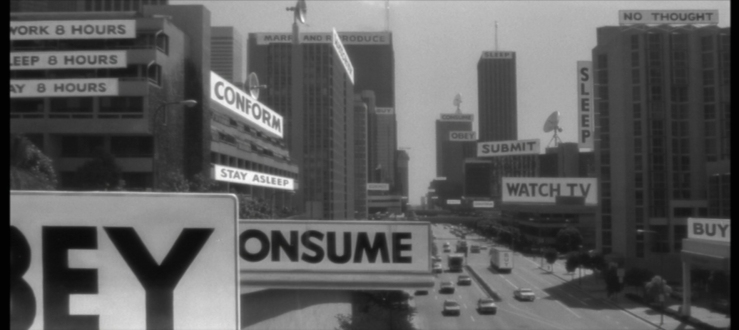
“The Subliminal Man” offers a critique of consumerism that John Carpenter would make with more humor, violence, and force in his 1988 film They Live. In Carpenter’s film, the hero John Nada (played by Roddy Piper) finds a pair of sunglasses that allow him to see through the ads, billboards, and other commercials he’s exposed. What’s underneath? Naked consumerism:

they-live-billboard

The images here recall the opening lines of “The Subliminal Man”: ‘The signs, Doctor! Have you seen the signs?’ Like Ballard’s story, Carpenter’s film is about waking up, to seeing the controlling messages under the surface.

In his film The Pervert’s Guide to Ideology, Slavoj Žižek offers a compelling critique of just how painful it is to wake up to these messages:


It’s worth pointing out that Carpenter offers a far more optimistic vision than Ballard. Ballard’s hero gives in—goes back to sleep, shuts his eyes. Carpenter’s hero Nada resists the subliminal messages—he actually takes up arms against them. This active resistance is possible because Carpenter allows his narrative an existential escape hatch: In They Live, there are real, genuine bad guys, body-snatching ugly-assed aliens—others that have imposed consumerism on humanity to enslave them. That’s the big trick to They Live: It’s not us, it’s them.

Ballard understands that there is no them; indeed, even as the story skirts around the idea of a conspiracy to dupe consumers into cycles of nonstop buying, working, and disposing, it never pins that conspiracy on any individual or group. There’s no attack on corporations or government—there’s not even a nebulous “them” or “they” that appears to have controlling agency in “The Subliminal Man.” Rather, Ballard’s story posits ideology as the controlling force, with the only escape a kind of forced suicide.

I don’t think that those who engage in consumerism-as-sport, in shopping-as-a-feeling are as blind as Ballard or Carpenter represent. I think they are aware. Hell, they enjoy it. What I think Ballard and Carpenter (and others, of course) really point to is the deep dissatisfaction that many of us feel with this dominant mode of life. For Ballard, we have resistance in the form of the beatnik Hathaway, an artist, a creator, a person who can perceive what real leisure would mean. For Carpenter, Nada is the resister—an outsider, a loner, a weirdo too. It’s somehow far more satisfying to believe that those who engage in spectacle consumerism are brainwashed by aliens than it is to have to come to terms with the notion that these people are acting through their own agency, of their own will and volition. Happy shopping everyone!


J.G. Ballard’s “The Subliminal Man,” John Carpenter’s They Live, and Black Friday

Today is Black Friday in America. I don’t think it’s necessary to remark at length on the bizarre disjunction between this exercise in consumerism-as-culture and the intended spirit of the Thanksgiving holiday that precedes it. Indeed, I think that the cognitive dissonance that underwrites Black Friday—the compulsion to suffer (and cause suffering), both physically and mentally,  to “save” money on “consumer goods” (sorry for all the scare quotes, but these terms are euphemisms and must be placed under suspicion)—I think that this cognitive dissonance is nakedly apparent to all who choose to (or are forced to) actively engage in Black Friday. The name itself is dark, ominous, wonderfully satanic.

Rereading “The Subliminal Man,” I was struck by how presciently J.G. Ballard anticipated not only the contours of consumerist culture—urban sprawl, a debt-based economy, the mechanization of leisure, the illusion of freedom of choice—but also how closely he intuited the human, psychological responses to the consumerist society he saw on the horizon. Half a century after its publication, “The Subliminal Man” seems more relevant than ever.

The premise of the tale is fairly straightforward and fits neatly with the schema of many other early Ballard stories: Franklin, an overworked doctor, is approached by Hathaway, a “crazy beatnik,” who refuses to take part in the non-stop consumerism of contemporary society. Hathaway can “see” the subliminal messages sent through advertising. He asks for Franklin’s help in stopping the spread of these messages. Hathaway reasons that the messages are intended to enforce consumerist society:

Ultimately we’ll all be working and spending twenty–four hours a day, seven days a week. No one will dare refuse. Think what a slump would mean – millions of lay–offs, people with time on their hands and nothing to spend it on. Real leisure, not just time spent buying things . . .

The fear of a slump. You know the new economic dogmas. Unless output rises by a steady inflationary five per cent the economy is stagnating. Ten years ago increased efficiency alone would raise output, but the advantages there are minimal now and only one thing is left. More work. Subliminal advertising will provide the spur.

Franklin is unconvinced, even though he is already working Saturdays and Sunday mornings to payoff TVs, radios, and other electronic goods that he and his wife replace every few months. Soon, however, he realizes that something is wrong:

He began his inventory after hearing the newscast, and discovered that in the previous fortnight he and Judith had traded in their Car (previous model 2 months old) 2 TV sets (4 months) Power mower (7 months) Electric cooker (5 months) Hair dryer (4 months) Refrigerator (3 months) 2 radios (7 months) Record player (5 months) Cocktail bar (8 months)

Franklin finally sees the truth, but only after Hathaway takes to blowing up signs’ switch boxes (the word “terrorism” is of course not used in the text, although it surely would be today):

Then the flicker of lights cleared and steadied, blazing out continuously, and together the crowd looked up at the decks of brilliant letters. The phrases, and every combination of them possible, were entirely familiar, and Franklin knew that he had been reading them for weeks as he passed up and down the expressway.

BUY NOW BUY NOW BUY NOW BUY NOW BUY NEW CAR NOW NEW CAR NOW NEW CAR NOW

YES YES YES YES YES YES YES YES YES YES

Like many Ballard stories, “The Subliminal Man” ends on a pessimistic note, with Franklin choosing to ignore his brief enlightenment and give in. Ballard drives his criticism home in the final image of the story, with Franklin and his wife heading out to shop:

They walked out into the trim drive, the shadows of the signs swinging across the quiet neighbourhood as the day progressed, sweeping over the heads of the people on their way to the supermarket like the blades of enormous scythes.

“The Subliminal Man” offers a critique of consumerism that John Carpenter would make with more humor, violence, and force in his 1988 film They Live. In Carpenter’s film, the hero John Nada (played by Roddy Piper) finds a pair of sunglasses that allow him to see through the ads, billboards, and other commercials he’s exposed. What’s underneath? Naked consumerism:

they-live-billboard

The images here recall the opening lines of “The Subliminal Man”: ‘The signs, Doctor! Have you seen the signs?’ Like Ballard’s story, Carpenter’s film is about waking up, to seeing the controlling messages under the surface.

In his film The Pervert’s Guide to Ideology, Slavoj Žižek offers a compelling critique of just how painful it is to wake up to these messages:

It’s worth pointing out that Carpenter offers a far more optimistic vision than Ballard. Ballard’s hero gives in—goes back to sleep, shuts his eyes. Carpenter’s hero Nada resists the subliminal messages—he actually takes up arms against them. This active resistance is possible because Carpenter allows his narrative an existential escape hatch: In They Live, there are real, genuine bad guys, body-snatching ugly-assed aliens—others that have imposed consumerism on humanity to enslave them. That’s the big trick to They Live: It’s not us, it’s them.

Ballard understands that there is no them; indeed, even as the story skirts around the idea of a conspiracy to dupe consumers into cycles of nonstop buying, working, and disposing, it never pins that conspiracy on any individual or group. There’s no attack on corporations or government—there’s not even a nebulous “them” or “they” that appears to have controlling agency in “The Subliminal Man.” Rather, Ballard’s story posits ideology as the controlling force, with the only escape a kind of forced suicide.

I don’t think that those who engage in consumerism-as-sport, in shopping-as-a-feeling are as blind as Ballard or Carpenter represent. I think they are aware. Hell, they enjoy it. What I think Ballard and Carpenter (and others, of course) really point to is the deep dissatisfaction that many of us feel with this dominant mode of life. For Ballard, we have resistance in the form of the beatnik Hathaway, an artist, a creator, a person who can perceive what real leisure would mean. For Carpenter, Nada is the resister—an outsider, a loner, a weirdo too. It’s somehow far more satisfying to believe that those who engage in spectacle consumerism are brainwashed by aliens than it is to have to come to terms with the notion that these people are acting through their own agency, of their own will and volition. Happy shopping everyone!

Ed. note: Biblioklept published a version of this post a few years ago. It is offered again now in the spirit of Thanksgiving leftovers.

J.G. Ballard’s “The Subliminal Man,” John Carpenter’s They Live, and Black Friday

Today is Black Friday in America. I don’t think it’s necessary to remark at length on the bizarre disjunction between this exercise in consumerism-as-culture and the intended spirit of the Thanksgiving holiday that precedes it. Indeed, I think that the cognitive dissonance that underwrites Black Friday—the compulsion to suffer (and cause suffering), both physically and mentally,  to “save” money on “consumer goods” (sorry for all the scare quotes, but these terms are euphemisms and must be placed under suspicion)—I think that this cognitive dissonance is nakedly apparent to all who choose to (or are forced to) actively engage in Black Friday. The name itself is dark, ominous, wonderfully satanic.

Rereading “The Subliminal Man,” I was struck by how presciently J.G. Ballard anticipated not only the contours of consumerist culture—urban sprawl, a debt-based economy, the mechanization of leisure, the illusion of freedom of choice—but also how closely he intuited the human, psychological responses to the consumerist society he saw on the horizon. Half a century after its publication, “The Subliminal Man” seems more relevant than ever.

The premise of the tale is fairly straightforward and fits neatly with the schema of many other early Ballard stories: Franklin, an overworked doctor, is approached by Hathaway, a “crazy beatnik,” who refuses to take part in the non-stop consumerism of contemporary society. Hathaway can “see” the subliminal messages sent through advertising. He asks for Franklin’s help in stopping the spread of these messages. Hathaway reasons that the messages are intended to enforce consumerist society:

Ultimately we’ll all be working and spending twenty–four hours a day, seven days a week. No one will dare refuse. Think what a slump would mean – millions of lay–offs, people with time on their hands and nothing to spend it on. Real leisure, not just time spent buying things . . .

The fear of a slump. You know the new economic dogmas. Unless output rises by a steady inflationary five per cent the economy is stagnating. Ten years ago increased efficiency alone would raise output, but the advantages there are minimal now and only one thing is left. More work. Subliminal advertising will provide the spur.

Franklin is unconvinced, even though he is already working Saturdays and Sunday mornings to payoff TVs, radios, and other electronic goods that he and his wife replace every few months. Soon, however, he realizes that something is wrong:

He began his inventory after hearing the newscast, and discovered that in the previous fortnight he and Judith had traded in their Car (previous model 2 months old) 2 TV sets (4 months) Power mower (7 months) Electric cooker (5 months) Hair dryer (4 months) Refrigerator (3 months) 2 radios (7 months) Record player (5 months) Cocktail bar (8 months)

Franklin finally sees the truth, but only after Hathaway takes to blowing up signs’ switch boxes (the word “terrorism” is of course not used in the text, although it surely would be today):

Then the flicker of lights cleared and steadied, blazing out continuously, and together the crowd looked up at the decks of brilliant letters. The phrases, and every combination of them possible, were entirely familiar, and Franklin knew that he had been reading them for weeks as he passed up and down the expressway.

BUY NOW BUY NOW BUY NOW BUY NOW BUY NEW CAR NOW NEW CAR NOW NEW CAR NOW

YES YES YES YES YES YES YES YES YES YES

Like many Ballard stories, “The Subliminal Man” ends on a pessimistic note, with Franklin choosing to ignore his brief enlightenment and give in. Ballard drives his criticism home in the final image of the story, with Franklin and his wife heading out to shop:

They walked out into the trim drive, the shadows of the signs swinging across the quiet neighbourhood as the day progressed, sweeping over the heads of the people on their way to the supermarket like the blades of enormous scythes.

“The Subliminal Man” offers a critique of consumerism that John Carpenter would make with more humor, violence, and force in his 1988 film They Live. In Carpenter’s film, the hero John Nada (played by Roddy Piper) finds a pair of sunglasses that allow him to see through the ads, billboards, and other commercials he’s exposed. What’s underneath? Naked consumerism:

they-live-billboard

The images here recall the opening lines of “The Subliminal Man”: ‘The signs, Doctor! Have you seen the signs?’ Like Ballard’s story, Carpenter’s film is about waking up, to seeing the controlling messages under the surface.

In his film The Pervert’s Guide to Ideology, Slavoj Žižek offers a compelling critique of just how painful it is to wake up to these messages:

It’s worth pointing out that Carpenter offers a far more optimistic vision than Ballard. Ballard’s hero gives in—goes back to sleep, shuts his eyes. Carpenter’s hero Nada resists the subliminal messages—he actually takes up arms against them. This active resistance is possible because Carpenter allows his narrative an existential escape hatch: In They Live, there are real, genuine bad guys, body-snatching ugly-assed aliens—others that have imposed consumerism on humanity to enslave them. That’s the big trick to They Live: It’s not us, it’s them.

Ballard understands that there is no them; indeed, even as the story skirts around the idea of a conspiracy to dupe consumers into cycles of nonstop buying, working, and disposing, it never pins that conspiracy on any individual or group. There’s no attack on corporations or government—there’s not even a nebulous “them” or “they” that appears to have controlling agency in “The Subliminal Man.” Rather, Ballard’s story posits ideology as the controlling force, with the only escape a kind of forced suicide.

I don’t think that those who engage in consumerism-as-sport, in shopping-as-a-feeling are as blind as Ballard or Carpenter represent. I think they are aware. Hell, they enjoy it. What I think Ballard and Carpenter (and others, of course) really point to is the deep dissatisfaction that many of us feel with this dominant mode of life. For Ballard, we have resistance in the form of the beatnik Hathaway, an artist, a creator, a person who can perceive what real leisure would mean. For Carpenter, Nada is the resister—an outsider, a loner, a weirdo too. It’s somehow far more satisfying to believe that those who engage in spectacle consumerism are brainwashed by aliens than it is to have to come to terms with the notion that these people are acting through their own agency, of their own will and volition. Happy shopping everyone!

Ed. note: Biblioklept published a version of this post a few years ago. It is offered again now in the spirit of Thanksgiving leftovers.

Freedom of Speech — Dave MacDowell

jsbAWBQ

They Live — Jason Edmiston

They-Live-final

J.G. Ballard’s “The Subliminal Man,” John Carpenter’s They Live, and Black Friday

Today is Black Friday in America. I don’t think it’s necessary to remark at length on the bizarre disjunction between this exercise in consumerism-as-culture and the intended spirit of the Thanksgiving holiday that precedes it. Indeed, I think that the cognitive dissonance that underwrites Black Friday—the compulsion to suffer (and cause suffering), both physically and mentally,  to “save” money on “consumer goods” (sorry for all the scare quotes, but these terms are euphemisms and must be placed under suspicion)—I think that this cognitive dissonance is nakedly apparent to all who choose to (or are forced to) actively engage in Black Friday. The name itself is dark, ominous, wonderfully satanic.

Rereading “The Subliminal Man,” I was struck by how presciently J.G. Ballard anticipated not only the contours of consumerist culture—urban sprawl, a debt-based economy, the mechanization of leisure, the illusion of freedom of choice—but also how closely he intuited the human, psychological responses to the consumerist society he saw on the horizon. Half a century after its publication, “The Subliminal Man” seems more relevant than ever.

The premise of the tale is fairly straightforward and fits neatly with the schema of many other early Ballard stories: Franklin, an overworked doctor, is approached by Hathaway, a “crazy beatnik,” who refuses to take part in the non-stop consumerism of contemporary society. Hathaway can “see” the subliminal messages sent through advertising. He asks for Franklin’s help in stopping the spread of these messages. Hathaway reasons that the messages are intended to enforce consumerist society:

Ultimately we’ll all be working and spending twenty–four hours a day, seven days a week. No one will dare refuse. Think what a slump would mean – millions of lay–offs, people with time on their hands and nothing to spend it on. Real leisure, not just time spent buying things . . .

The fear of a slump. You know the new economic dogmas. Unless output rises by a steady inflationary five per cent the economy is stagnating. Ten years ago increased efficiency alone would raise output, but the advantages there are minimal now and only one thing is left. More work. Subliminal advertising will provide the spur.

Franklin is unconvinced, even though he is already working Saturdays and Sunday mornings to payoff TVs, radios, and other electronic goods that he and his wife replace every few months. Soon, however, he realizes that something is wrong:

He began his inventory after hearing the newscast, and discovered that in the previous fortnight he and Judith had traded in their Car (previous model 2 months old) 2 TV sets (4 months) Power mower (7 months) Electric cooker (5 months) Hair dryer (4 months) Refrigerator (3 months) 2 radios (7 months) Record player (5 months) Cocktail bar (8 months)

Franklin finally sees the truth, but only after Hathaway takes to blowing up signs’ switch boxes (the word “terrorism” is of course not used in the text, although it surely would be today):

Then the flicker of lights cleared and steadied, blazing out continuously, and together the crowd looked up at the decks of brilliant letters. The phrases, and every combination of them possible, were entirely familiar, and Franklin knew that he had been reading them for weeks as he passed up and down the expressway.

BUY NOW BUY NOW BUY NOW BUY NOW BUY NEW CAR NOW NEW CAR NOW NEW CAR NOW

YES YES YES YES YES YES YES YES YES YES

Like many Ballard stories, “The Subliminal Man” ends on a pessimistic note, with Franklin choosing to ignore his brief enlightenment and give in. Ballard drives his criticism home in the final image of the story, with Franklin and his wife heading out to shop:

They walked out into the trim drive, the shadows of the signs swinging across the quiet neighbourhood as the day progressed, sweeping over the heads of the people on their way to the supermarket like the blades of enormous scythes.

“The Subliminal Man” offers a critique of consumerism that John Carpenter would make with more humor, violence, and force in his 1988 film They Live. In Carpenter’s film, the hero John Nada (played by Roddy Piper) finds a pair of sunglasses that allow him to see through the ads, billboards, and other commercials he’s exposed. What’s underneath? Naked consumerism:

they-live-billboard

The images here recall the opening lines of “The Subliminal Man”: ‘The signs, Doctor! Have you seen the signs?’ Like Ballard’s story, Carpenter’s film is about waking up, to seeing the controlling messages under the surface.

In his film The Pervert’s Guide to Ideology, Slavoj Žižek offers a compelling critique of just how painful it is to wake up to these messages:


It’s worth pointing out that Carpenter offers a far more optimistic vision than Ballard. Ballard’s hero gives in—goes back to sleep, shuts his eyes. Carpenter’s hero Nada resists the subliminal messages—he actually takes up arms against them. This active resistance is possible because Carpenter allows his narrative an existential escape hatch: In They Live, there are real, genuine bad guys, body-snatching ugly-assed aliens—others that have imposed consumerism on humanity to enslave them. That’s the big trick to They Live: It’s not us, it’s them.

Ballard understands that there is no them; indeed, even as the story skirts around the idea of a conspiracy to dupe consumers into cycles of nonstop buying, working, and disposing, it never pins that conspiracy on any individual or group. There’s no attack on corporations or government—there’s not even a nebulous “them” or “they” that appears to have controlling agency in “The Subliminal Man.” Rather, Ballard’s story posits ideology as the controlling force, with the only escape a kind of forced suicide.

I don’t think that those who engage in consumerism-as-sport, in shopping-as-a-feeling are as blind as Ballard or Carpenter represent. I think they are aware. Hell, they enjoy it. What I think Ballard and Carpenter (and others, of course) really point to is the deep dissatisfaction that many of us feel with this dominant mode of life. For Ballard, we have resistance in the form of the beatnik Hathaway, an artist, a creator, a person who can perceive what real leisure would mean. For Carpenter, Nada is the resister—an outsider, a loner, a weirdo too. It’s somehow far more satisfying to believe that those who engage in spectacle consumerism are brainwashed by aliens than it is to have to come to terms with the notion that these people are acting through their own agency, of their own will and volition. Happy shopping everyone!

Ed. note: Biblioklept published a version of this post last year. It is offered again now in the spirit of Thanksgiving leftovers.

Portrait of John Nada — Mike Mitchell

22_nada-70

The Complete Short Stories of J.G. Ballard (Fifth Riff: “The Subliminal Man”)

jgb_complete_ss4003

PREVIOUSLY:

Introductions + stories 1956-1959

Stories of 1960

Stories of 1961

Stories of 1962

IN THIS RIFF:

“The Subliminal Man” (1963)

1. Today is Black Friday in America. I don’t think it’s necessary to remark at length on the bizarre disjunction between this exercise in consumerism-as-culture and the intended spirit of the Thanksgiving holiday that precedes it. Indeed, I think that the cognitive dissonance that underwrites Black Friday—the compulsion to suffer (and cause suffering), both physically and mentally,  to “save” money on “consumer goods” (sorry for all the scare quotes, but these terms are euphemisms and must be placed under suspicion)—I think that this cognitive dissonance is nakedly apparent to all who choose to (or are forced to) actively engage in Black Friday. The name itself is dark, ominous, wonderfully satanic.

2. Rereading “The Subliminal Man” for this project, I was struck by how presciently Ballard anticipated not only the contours of consumerist culture—urban sprawl, a debt-based economy, the mechanization of leisure, the illusion of freedom of choice—but also how closely he intuited the human, psychological responses to the consumerist society he saw on the horizon. On the fiftieth anniversary of its publication, “The Subliminal Man” seems more relevant than ever.

3. The premise of the tale is fairly straightforward and fits neatly with the schema of many other early Ballard stories: Franklin, an overworked doctor, is approached by Hathaway, a “crazy beatnik,” who refuses to take part in the non-stop consumerism of contemporary society. Hathaway can “see” the subliminal messages sent through advertising; these messages, and he asks for Franklin’s help in stopping the spread of these messages. Hathaway reasons that the messages are intended to enforce consumerist society:

Ultimately we’ll all be working and spending twenty–four hours a day, seven days a week. No one will dare refuse. Think what a slump would mean – millions of lay–offs, people with time on their hands and nothing to spend it on. Real leisure, not just time spent buying things . . .

The fear of a slump. You know the new economic dogmas. Unless output rises by a steady inflationary five per cent the economy is stagnating. Ten years ago increased efficiency alone would raise output, but the advantages there are minimal now and only one thing is left. More work. Subliminal advertising will provide the spur.

Franklin is unconvinced, even though he is already working Saturdays and Sunday mornings to payoff TVs, radios, and other electronic goods that he and his wife replace every few months. Soon, however, he realizes that something is wrong:

He began his inventory after hearing the newscast, and discovered that in the previous fortnight he and Judith had traded in their Car (previous model 2 months old) 2 TV sets (4 months) Power mower (7 months) Electric cooker (5 months) Hair dryer (4 months) Refrigerator (3 months) 2 radios (7 months) Record player (5 months) Cocktail bar (8 months)

Franklin finally sees the truth, but only after Hathaway takes to blowing up signs’ switch boxes (the word “terrorism” is of course not used in the text, although it surely would be today):

Then the flicker of lights cleared and steadied, blazing out continuously, and together the crowd looked up at the decks of brilliant letters. The phrases, and every combination of them possible, were entirely familiar, and Franklin knew that he had been reading them for weeks as he passed up and down the expressway.

BUY NOW BUY NOW BUY NOW BUY NOW BUY NEW CAR NOW NEW CAR NOW NEW CAR NOW

YES YES YES YES YES YES YES YES YES YES

Like most of these stories, “The Subliminal Man” ends on a pessimistic note, with Franklin choosing to ignore his brief enlightenment and give in. Ballard drives his criticism home in the final image of the story, with Franklin and his wife heading out to shop:

They walked out into the trim drive, the shadows of the signs swinging across the quiet neighbourhood as the day progressed, sweeping over the heads of the people on their way to the supermarket like the blades of enormous scythes.

4. “The Subliminal Man” offers a critique of consumerism that John Carpenter would make with more humor, violence, and force in his 1988 film They Live (watch it online here). In Carpenter’s film, the hero John Nada (played by Roddy Piper) finds a pair of sunglasses that allow him to see through the ads, billboards, and other commercials he’s exposed. What’s underneath? Naked consumerism:

they-live-billboard

The images here recall the opening lines of “The Subliminal Man”: ‘The signs, Doctor! Have you seen the signs?’ Like Ballard’s story, Carpenter’s film is about waking up, to seeing the controlling messages under the surface.

In his film The Pervert’s Guide to Ideology, Slavoj Žižek offers a compelling critique of just how painful it is to wake up to these messages:

It’s worth pointing out that Carpenter offers a far more optimistic vision than Ballard. Ballard’s hero gives in—goes back to sleep, shuts his eyes. Carpenter’s hero Nada resists the subliminal messages—he actually takes up arms against them. This active resistance is possible because Carpenter allows his narrative an existential escape hatch: In They Live, there are real, genuine bad guys, body-snatching ugly-assed aliens—others that have imposed consumerism on humanity to enslave them. That’s the big trick to They Live: It’s not us, it’s them.

Ballard understands that there is no them; indeed, even as the story skirts around the idea of a conspiracy to dupe consumers into cycles of nonstop buying, working, and disposing, it never pins that conspiracy on any individual or group. There’s no attack on corporations or government—there’s not even a nebulous “them” or “they” that appears to have controlling agency in “The Subliminal Man.” Rather, Ballard’s story posits ideology as the controlling force, with the only escape a kind of forced suicide.

5. By way of concluding—and, before I forget, obviously this story merits inclusion in the ideal collection I’ve been imagining, The Essential Short Stories of J.G. Ballard—by way of concluding I would return to my earlier point: I don’t think that those who engage in consumerism-as-sport, in shopping-as-a-feeling are quite as blind as Ballard or Carpenter represent. I think they are aware. Hell, they enjoy it. What I think Ballard and Carpenter (and others, of course) really point to is the deep dissatisfaction that many of us feel with this dominant mode of life. For Ballard, we have resistance in the form of the beatnik Hathaway, an artist, a creator, a person who can perceive what real leisure would mean. For Carpenter, Nada is the resister—an outsider, a loner, a weirdo too. It’s somehow far more satisfying to believe that those who engage in spectacle consumerism are brainwashed by aliens than it is to have to come to terms with the notion that these people are acting through their own agency, of their own will and volition. Happy shopping everyone!

Alley Brawl, They Live