Exterminate All Rational Thought: Burroughs at the Movies

naked-lunch1.jpg

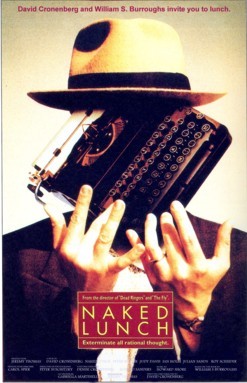
I love Naked Lunch. I love David Cronenberg. Theoretically, I should love David Cronenberg’s film adaptation of William Burrough’s psychosurreal classic. But hey, that’s rational thought for you, right? I didn’t love it in ’93 or ’94, the first time I saw it. Maybe I was too young. Maybe I just didn’t get it (but if that was the case then why did I love the book so much..?) So I watched it again as an undergrad; this was maybe ’99 or ’00. Nope. In fact, I remember thinking “Wow. This is actually pretty bad.” At that point, I was a big Cronenberg fan too. eXistenZ had just come out. eXistenZ is easily my favorite Cronenberg film, and a favorite film in general, and Naked Lunch didn’t hold up well against it or my re-reading of the Burrough’s book. But yet and still, ever the glutton for disappointment, I gave the Naked Lunch movie another shot this weekend, as part of the Biblioklept Summer of Cronenberg Film Festival. Guess what? It’s not a very good movie.

The fault of Cronenberg’s movie is not in failing to adapt the content of Burrough’s book, which is pretty much untranslatable as a narrative movie. Instead, Cronenberg attempts to weld some of the images of Naked Lunch–along with elements of other Burroughs novels such as Nova Express, The Soft Machine, and The Ticket that Exploded–into a cohesive thread using Burroughs’s biography as the overarching frame story. Burroughs’s life story is fascinating–the guy shot his wife in the head, for chrissakes–and lit junkies will love to see characters based on Kerouac and Ginsberg and Paul Bowles–but the end results simply don’t achieve or reflect the spirit of the novel. The bitter, caustic satire of Naked Lunch is almost wholly absent, replaced by wry one-liners from Peter Weller (who woodenly portrays Burroughs’s alter-ego, William Lee (an alter-ego who doesn’t appear in the novel of Naked Lunch at all, incidentally)). Cronenberg seems to underestimate his audience’s capacity for a nonlinear story, taking the loose collection of riffs, routines, and episodes that comprise Naked Lunch, and turning them into a pretty dull meditation on the nature of creativity and the suffering and alienation of the outsider-artist. Worst of all, the audience is asked to identify and sympathize with William Lee–again, this seems to be a negation of the original text.
naked_lunch.jpg

In the end, Cronenberg’s Naked Lunch is just another bad Cronenberg film (see also: his mish-mashed adaptation of J.G. Ballard’s Crash, his boring adaptation of Stephen King’s The Dead Zone). In Naked Lunch, we get the usual Cronenbergian tropes: mechanical objects that become hideously organic, bodily invasion, constant “is this real or is this a dream?” moments, and general dark creepiness. However, they simply don’t work here: Cronenberg is attempting Burroughs-icky resulting only in Cronenberg-icky. Cronenberg’s entire oeuvre is littered with flawed films, but I tend to enjoy them more for their flaws. This one was a no-go though, and I gave it three shots. But, in a way, I believe that Cronenberg deserved three viewings. You never know. Still, I doubt I’ll watch this one again.

If you haven’t seen a Cronenberg film, I suggest starting with Videodrome, A History of Violence, or eXistenZ. He also has a new movie coming out later this year, Eastern Promises starring Naomi Watts. If you haven’t read Burroughs, I suggest starting with Junkie or Queer (or just go ahead and jump into Naked Lunch).

I end with a far better review of Naked Lunch than I’ve provided here, courtesy of The Simpsons. Do you remember that episode where Bart makes a fake driver license (not the one where he’s awarded a real driver license courtesy Mayor Quimby)? And he takes Milhouse and Nelson and Martin on a road trip to the World’s Fair in Knoxville? Well, along the way the boys decide to sneak into an R-rated movie. They leave the theater disappointed; the shot reveals that they’ve just left Naked Lunch. Nelson remarks: “There’s at least two things wrong with that title.” I’ll leave it at that.

Seven Great Books About Rock and Roll (In No Particular Order)

1. Crazy From the Heat by David Lee Roth

david-lee-roth.jpg

This book is as good as you want it to be and there is absolutely no doubt in my mind that David Lee Roth wrote every word of it (no ghostwriters here, pure Roth). I’m not even sure if there was an editor involved, actually. David Lee Roth takes the chronological approach, giving equal time to Van Halen’s earliest days, their 80s success, and his post-Van Halen, big band days. Particularly interesting is David’s illumination of some of the vocal techniques involved in the production of those early Van Halen records (hamburgers and marijuana cigarettes). This book is a treasured gift from a dear friend.

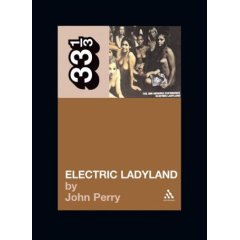
2. Jimi Hendrix’s Electric Ladyland by John Perry.

082641571701_aa240_sclzzzzzzz_.jpg

I read this in like two days. What a great book. Author John Perry was a young eyewitness to many of Jimi’s London gigs; most of the info here is culled from personal memories and observations, as well as discussions with all the people involved. Perry’s style is simple and always focused on the music. The book is divided into seven sections, including a thorough discussion of the instrumentation involved, a detailed track by track review of the album; even a section about the cover. Perry writes from a musician’s point of view, but the most interesting lines to me are about the initial reaction of the American critical press to Jimi Hendrix:

“Behind a whole raft of complaints about Hendrix’s undignified performance and his irritating failure to fit existing critical categories for black performers, lay the essential point that his songs mysteriously failed to punish the audience for being white. Hendrix didn’t play the wounded, angry black man, or the dignified bearer of oppression; he didn’t provide white critics with a handy receptacle for their guilt. They didn’t know quite what role he fulfilled.”

I got this for fifty cents at the Friends of the Library Sale.

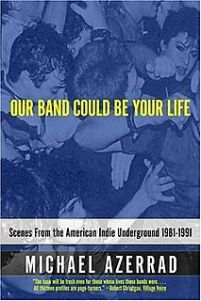
3. Our Band Could Be Your Life by Michael Azerrad.

our-band.jpg

Your life is probably nothing like any of the sort-of-famous indie bands covered here, unless you basically live in a van. I’m actually not even really sure if this qualifies as a great book. This book is actually just “okay.” Chances are, if you’re a fan of Sonic Youth, Ian McKaye, Dinosaur Jr, or Hüsker Dü you probably know most of this stuff already, or at least the stuff that’s interesting. And if you’re a fan of Beat Happening, well, there you go. This book has a whole chapter on Beat Happening. Actually, if you’re really interested in the whole indie rock thing, 1991: The Year Punk Broke is a much better document. But here I go comparing apples to oranges. I bought Our Band Could Be Your Life at Barnes & Noble for like three or four dollars.

4. Chronicles, Volume 1 by Bob Dylan

180px-bob_dylan_chronicles_volume_1.jpg

It took me a long time to get through this. Let me clarify: I read this in large, fifty page chunks, put it down, picked it up again months later. Dylan’s style is discursive and rambling; he elliptically deconstructs his own myth, picking away at the bits of identity he picked off of other musicians and poets on his way to fame. The book never really gets to that fame–to be clear, it discusses the after-effects of Dylan’s fame in detail: the obsessive fans who showed up at his home unannounced, the bewildering pressure to deliver some kind of messianic answer, the expectations to deliver a specific kind of record–but Chronicles spends most of its pages tracing and retracing Dylan’s youth in Minnesota and his days sleeping on friends’ couches in New York City. Will the second and third volumes ever come out? Who knows with this guy. This book was given to me by my cousin for Christmas a few years ago.

*Also recommended: Anthony Scaduto’s biography Bob Dylan.

5 . Transformer by Victor Bockris

transfusa.jpg

Lou Reed is a weirdo, and Victor Bockris wants you to know about it. Starting with Reed’s Long Island youth (complete with electro-shock therapy), Bockris’s biography covers pretty much everything right up through the Velvet Underground’s early nineties reunion: Reeds early apprenticeship in the Brill Building, the nascent days of the VU (plenty of Warhol anecdotes, of course), punk rock, several doomed romances, his years living with a transvestite, his karate skills, his yoga skills, and his all-bran diet, and of course, the drugs. Oh the drugs. Also, Reed’s solo career is also examined (including plenty of material from guitar god Bob Quine). Bockris seems to feel Magic and Loss is something of a watershed moment in modern rock (anyone who accidentally bought this album knows otherwise).

Bockris’s book employs a bitchy, dishy tone, rife with catty comments from everyone whoever worked with Reed: apparently Lou was a total asshole. Bockris reprints some painful comments (e.g. Reed on Springsteen, 1975: “Isn’t Springsteen over the hill?”); the most awkward moment comes in the book’s appendix, in a transcript of a meeting Bockris arranged between Reed and William Burroughs. Bad idea (Reed can’t remember the name of “that book you published”–Naked Lunch). I can’t remember, but I think I got this for like three or four bucks at Barnes & Noble.

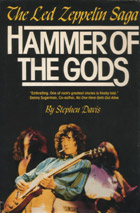
6. Hammer of the Gods by Stephen Davis

hammer_of_the_gods.jpg

“Here’s a red snapper for your red snapper!”

Intrigued? You should be! Burroughs makes a cameo here as well.

I don’t own this one. I read the good bits in high school though.

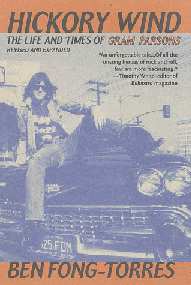
7. Hickory Wind: The Life and Times of Gram Parsons by Ben Fong-Torres

gparsons.jpg

Some jackass made a movie about Gram Parsons’ life a few years ago; I think Johnny Knoxville played Parsons. I didn’t see it, but I’m sure this book is way better. Rolling Stone alum Ben Fong-Torres clearly appreciates Parsons as not only the influential icon that he’s generally recognized as, but also as a truly gifted songwriter. Parsons’ early days in Winterhaven, Waycross, and Jacksonville (he attended the Bolles School) are scrutinized along with his brief stint at Harvard, his time in the Byrds and his days partying with the Rolling Stones in California hippy mansions. Also, another appearance by William Burroughs, who recommended a treatment to help kick the heroin. Parsons’ infamous death in the California desert is also put under the lens, right down to a time-line if I remember correctly. Good stuff. My uncle lent me this book, and yes, I returned it to him. So there.

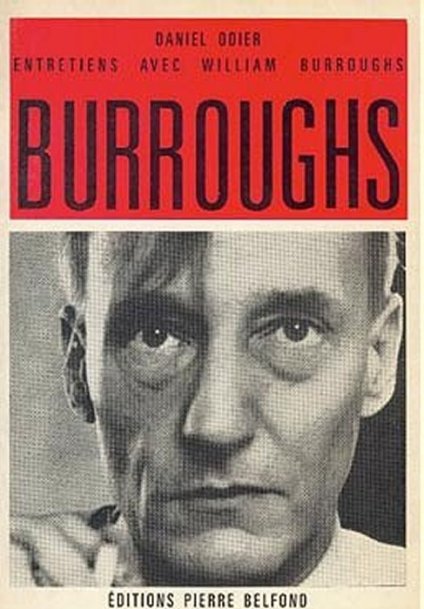
William Burroughs Cover Gallery

wbjob_france_1969.jpg

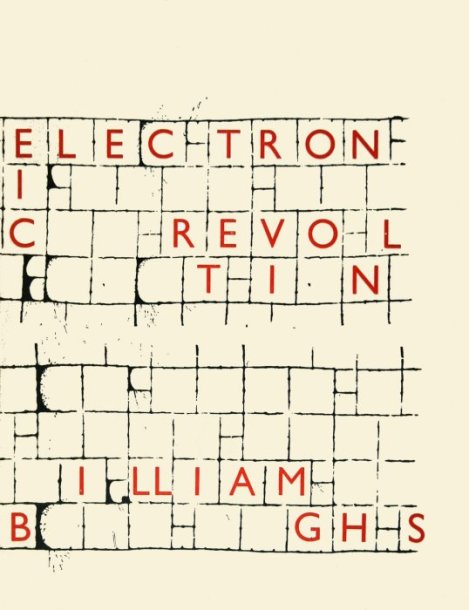
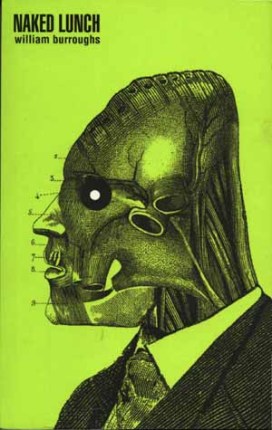
Burroughs appears on a large number of his covers, whether as a photograph, or something more iconic:

wbnl_germany_1992.jpg

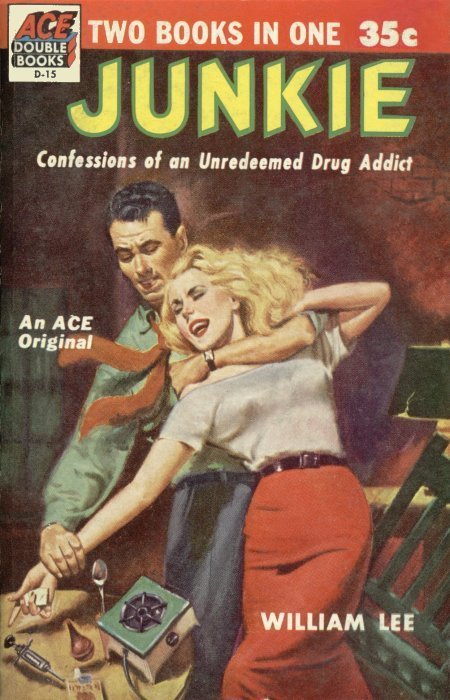
I like this early, lurid pulp edition of Junky. Note the spelling of the title, as well as Burroughs’ pseudonym, William Lee:

junkie_us_ace_1953_front.jpg

The Wild Boys: One of my faves.

wb_us_grove_1971.jpg

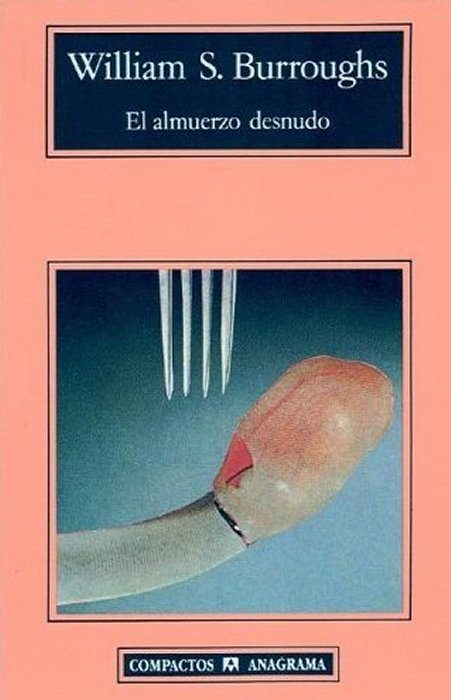
This Spanish edition of Naked Lunch really captures the squeamish quality of all things Burroughs:

wbnl_spain_2004.jpg

wbelrev_uk_blackmoor_1971.jpg

Check out the full gallery here.