Cousins? — Jim Jarmusch

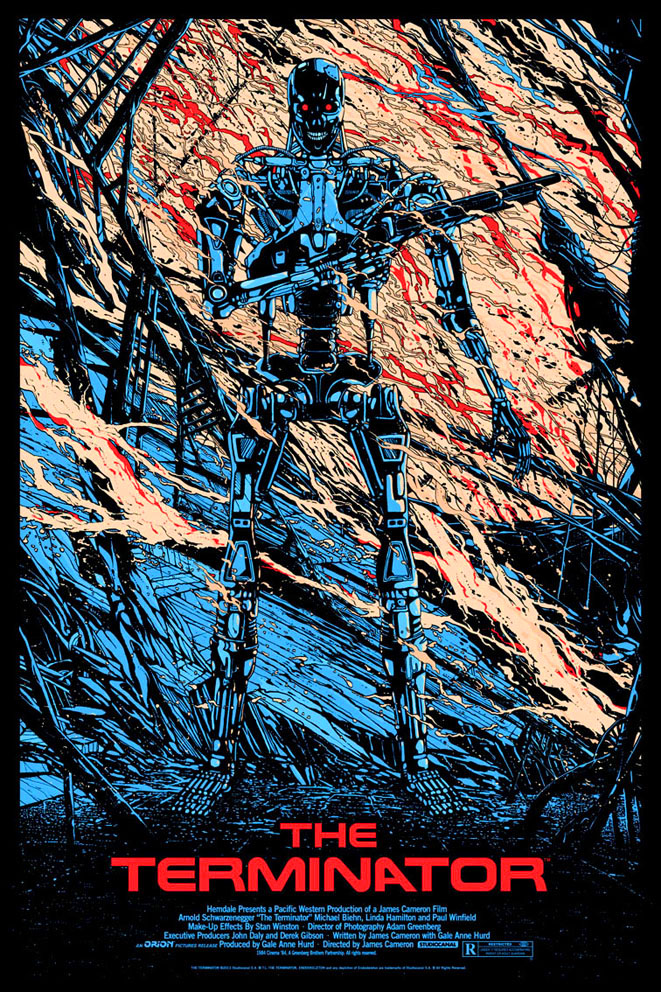
The Terminator (Film Poster) — Kilian Eng

term

Snowpiercer Riff

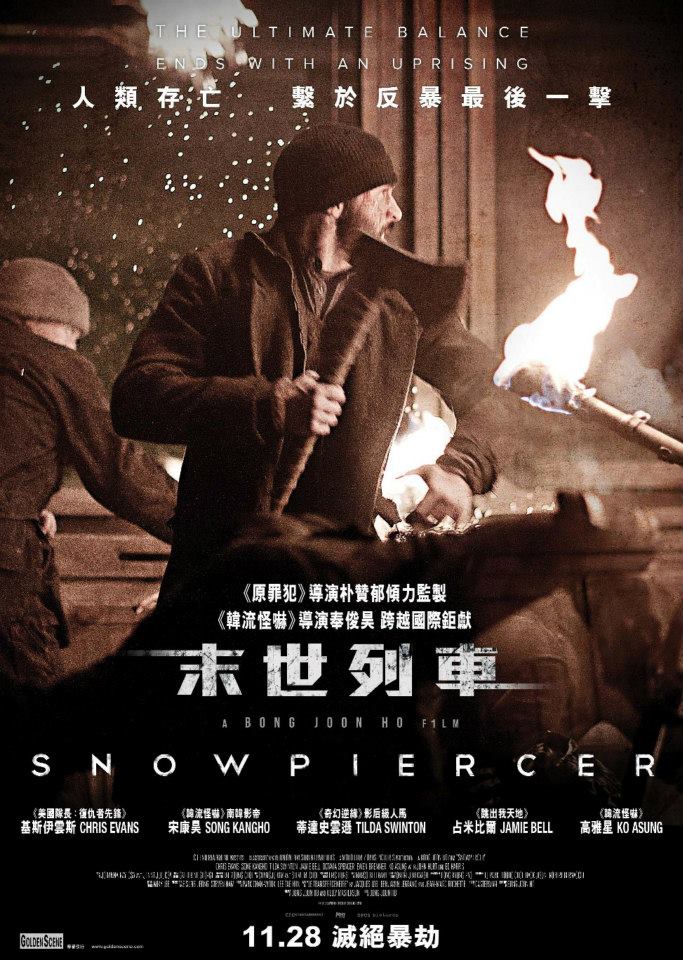
snowpiercer-hong-kong-poster

1. Snowpiercer, 2013, directed by Bong Joon Ho and produced by Park Chan Wook, is a sci-fi dystopian set on a mega-train, where the vestiges of humanity survive, protected from the new ice age outside. The plot involves the third-class passengers’ revolt against the elites who enjoy a privileged life at the head of the train. Etc.

2. You’ve seen this movie before, read this book before. You’ve played this video game.

3. Metropolis, Soylent Green12 MonkeysHalf-Life 2The Time Machine, the MaddAddam trilogy, Children of Men, BioShockZardozLogan’s Run, Brave New World, BrazilThe City of Lost ChildrenBad Dudes, Die HardThe Polar Express, etc.

4. Points 2 and 3 are lazy writing, and Snowpiercer deserves better. Although the film is not especially original, it does have a clear point of view, its own aesthetics, and an engaging, energetic rhythm, powered by strong (if purposefully cartoonish) performances from its cast.

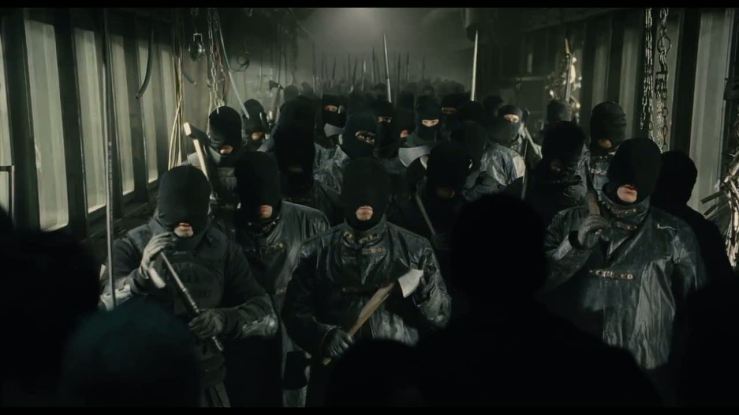
5. Snowpiercer is essentially structured like a video game. The heroes, a rebel alliance led by Chris Evans (Captain America, looking like The Edge from U2 for half the film), clear each train car—each game board—before moving on to the next challenge. An early standout scene involves a fight with a band of ninjas who for some reason ritually slaughter a fish before battle (the scene echoes the famous hammer hallway fight in Old Boy, a film directed by Snowpiercer producer Chan Wook Park). 
snowpiercer-trailer-2

6. The simple narrative structure of Snowpiercer allows the filmmakers to highlight the plot’s allegorical dimension. Highlight is the wrong verb: What I mean to say is hammer. Snowpiercer is not especially subtle in its critique of capitalism, with the engine that powers the train as a metaphor for capitalism itself—the engine determines the form of the train which in turn shapes the form of the society that must live in the train.

7. At Jacobin, Peter Frase offers a strong argument that the film challenges the entire system of capitalism and ultimately advocates transcendence of the system—not internal revolution.

8. While I think Frase’s essay offers a compelling analysis, I think that he simply wants the film to be better than it is. Snowpiercer, despite an apparent subversive streak, is still a Hollywoodish spectacle of violence and noise. It cannot transcend its own tropes (it can’t even revolutionize them). The vision of transcendence it offers is a rhetorical trick; not only that, it’s a stale trick, one that we can find at the end of any number of dystopian fictions: The exit door, the escape hatch, the way out.

9. I want to talk about that exit door—the end of the film: so major spoilers ahead. Continue reading “Snowpiercer Riff”

Reclining River Nymph at the Fountain — Lucas Cranach the Elder

July 13, 1838 (Nathaniel Hawthorne)

July 13th.–A show of wax-figures, consisting almost wholly of murderers and their victims,–Gibbs and Hansley, the pirates, and the Dutch girl whom Gibbs murdered. Gibbs and Hansley were admirably done, as natural as life; and many people who had known Gibbs would not, according to the showman, be convinced that this wax-figure was not his skin stuffed. The two pirates were represented with halters round their necks, just ready to be turned off; and the sheriff stood behind them, with his watch, waiting for the moment. The clothes, halter, and Gibbs’s hair were authentic. E. K. Avery and Cornell,–the former a figure in black, leaning on the back of a chair, in the attitude of a clergyman about to pray; an ugly devil, said to be a good likeness. Ellen Jewett and R. P. Robinson, she dressed richly, in extreme fashion, and very pretty; he awkward and stiff, it being difficult to stuff a figure to look like a gentleman. The showman seemed very proud of Ellen Jewett, and spoke of her somewhat as if this wax-figure were a real creation. Strong and Mrs. Whipple, who together murdered the husband of the latter. Lastly the Siamese twins. The showman is careful to call his exhibition the “Statuary.” He walks to and fro before the figures, talking of the history of the persons, the moral lessons to be drawn therefrom, and especially of the excellence of the wax-work. He has for sale printed histories of the personages. He is a friendly, easy-mannered sort of a half-genteel character, whose talk has been moulded by the persons who most frequent such a show; an air of superiority of information, a moral instructor, with a great deal of real knowledge of the world. He invites his departing guests to call again and bring their friends, desiring to know whether they are pleased; telling that he had a thousand people on the 4th of July, and that they were all perfectly satisfied. He talks with the female visitors, remarking on Ellen Jewett’s person and dress to them, he having “spared no expense in dressing her; and all the ladies say that a dress never set better, and he thinks he never knew a handsomer female.” He goes to and fro, snuffing the candles, and now and then holding one to the face of a favorite figure. Ever and anon, hearing steps upon the staircase, he goes to admit a new visitor. The visitors,–a half-bumpkin, half country-squire-like man, who has something of a knowing air, and yet looks and listens with a good deal of simplicity and faith, smiling between whiles; a mechanic of the town; several decent-looking girls and women, who eye Ellen herself with more interest than the other figures,–women having much curiosity about such ladies; a gentlemanly sort of person, who looks somewhat ashamed of himself for being there, and glances at me knowingly, as if to intimate that he was conscious of being out of place; a boy or two, and myself, who examine wax faces and faces of flesh with equal interest. A political or other satire might be made by describing a show of wax-figures of the prominent public men; and by the remarks of the showman and the spectators, their characters and public standing might be expressed. And the incident of Judge Tyler as related by E—- might be introduced

From Nathaniel Hawthorne’s American Note-Books.

The Library of the Palais Lanckoronski, Vienna — Rudolf von Alt