It takes energy to invest life with meaning (From Paul Bowles’s novel The Sheltering Sky)

As he walked along the hot road toward the walls of Bou Noura he kept his head down, seeing nothing but the dust and the thousands of small sharp stones. He did not look up because he knew how senseless the landscape would appear. It takes energy to invest life with meaning, and at present this energy was lacking. He knew how things could stand bare, their essence having retreated on all sides to beyond the horizon, as if impelled by a sinister centrifugal force. He did not want to face the intense sky, too blue to be real, above his head, the ribbed pink canyon walls that lay on all sides in the distance, the pyramidal town itself on its rocks, or the dark spots of oasis below. They were there, and they should have pleased his eye, but he did not have the strength to relate them, either to each other or to himself, he could not bring them into any focus beyond the visual. So he would not look at them.

From Paul, Bowles’s 1949 novel The Sheltering Sky. I like the passage; Bowles shows here that to be human is to invest an aesthetic (and simultaneously anesthetic) viewpoint into one’s daily life—and that to invest in this viewpoint is to calculate psychic and emotional costs and payoffs.


American Foulbrood — David Pettibone

a8b2c128acae38a6-03_david_pettibone

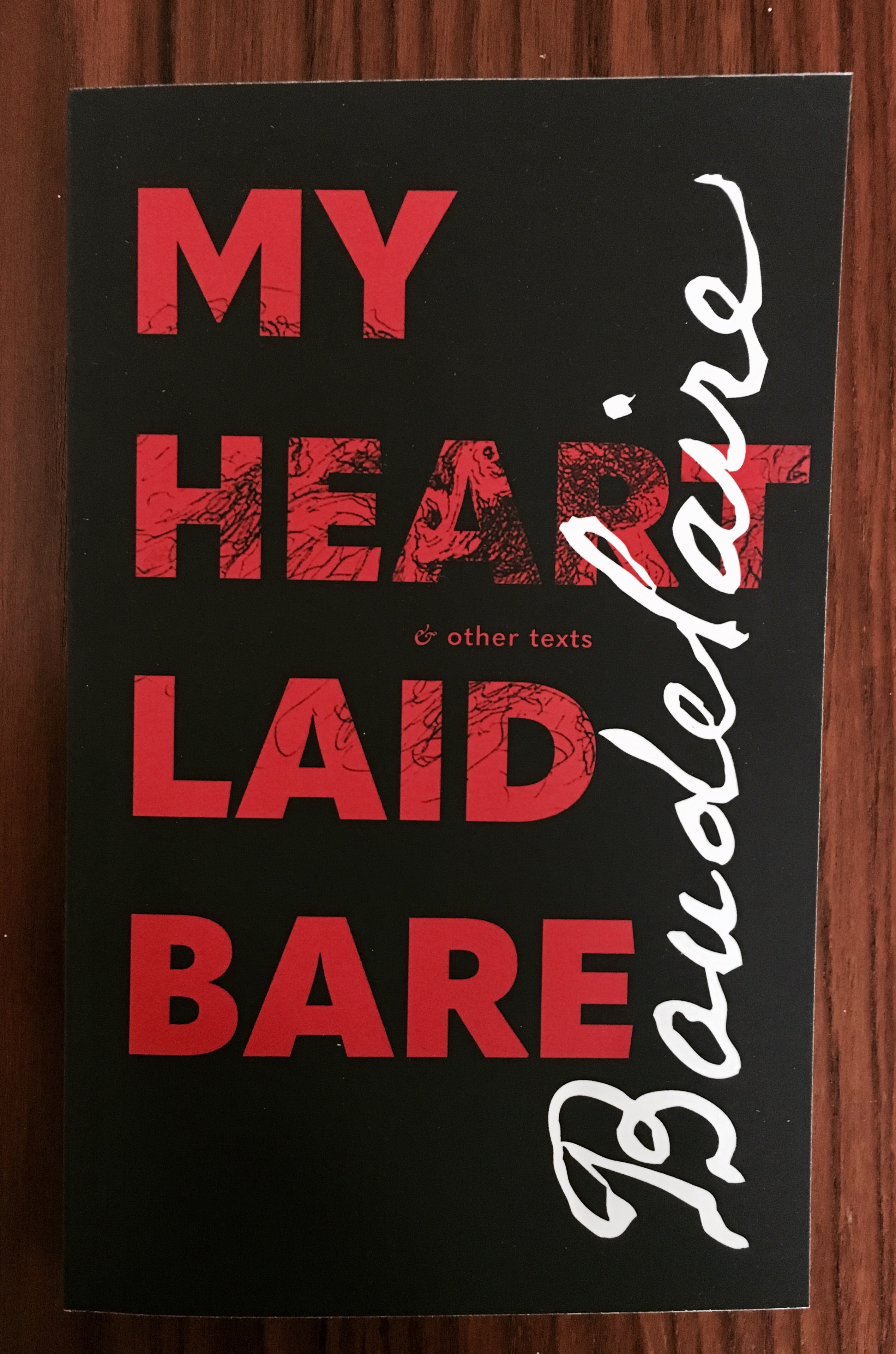
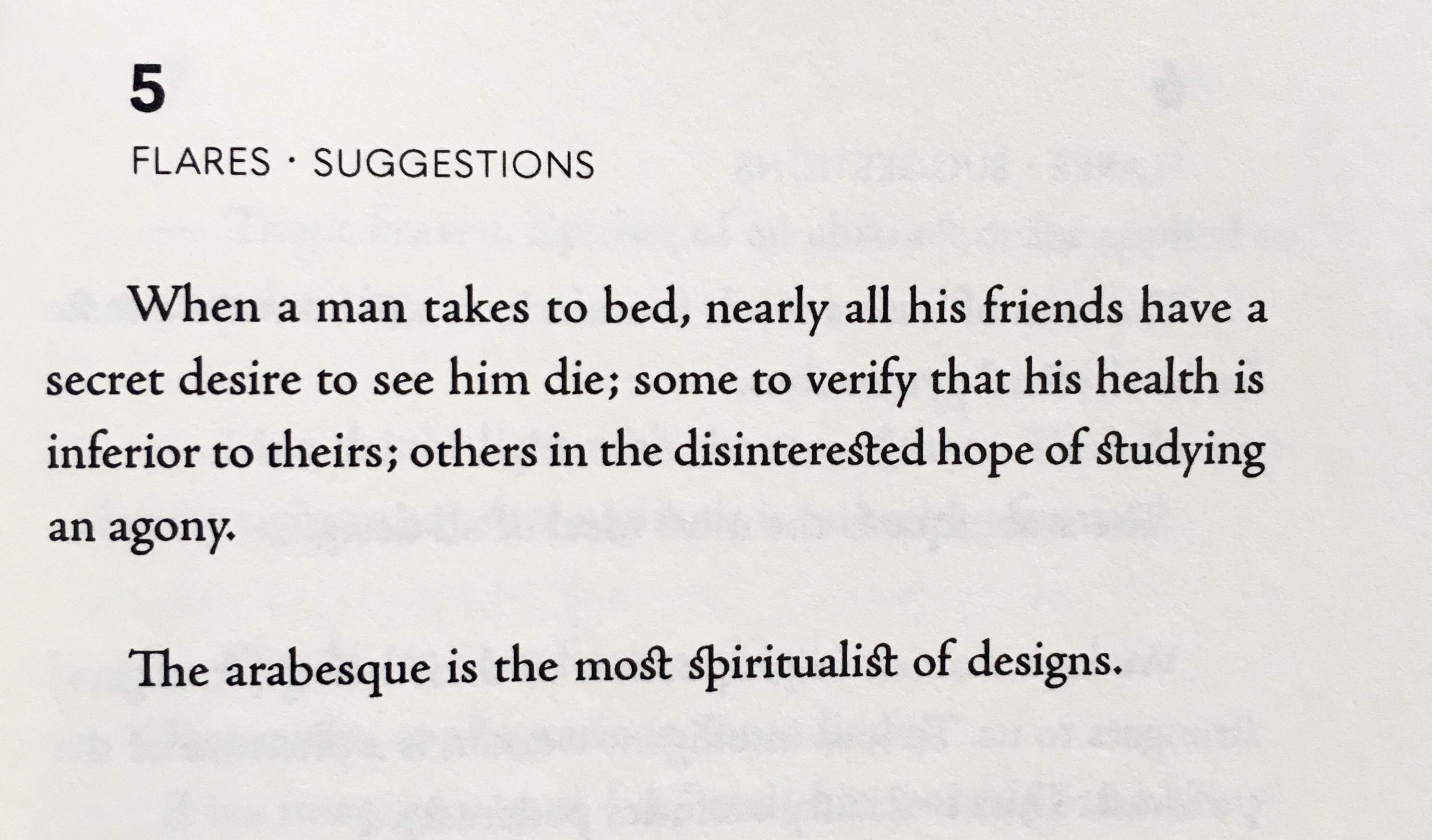
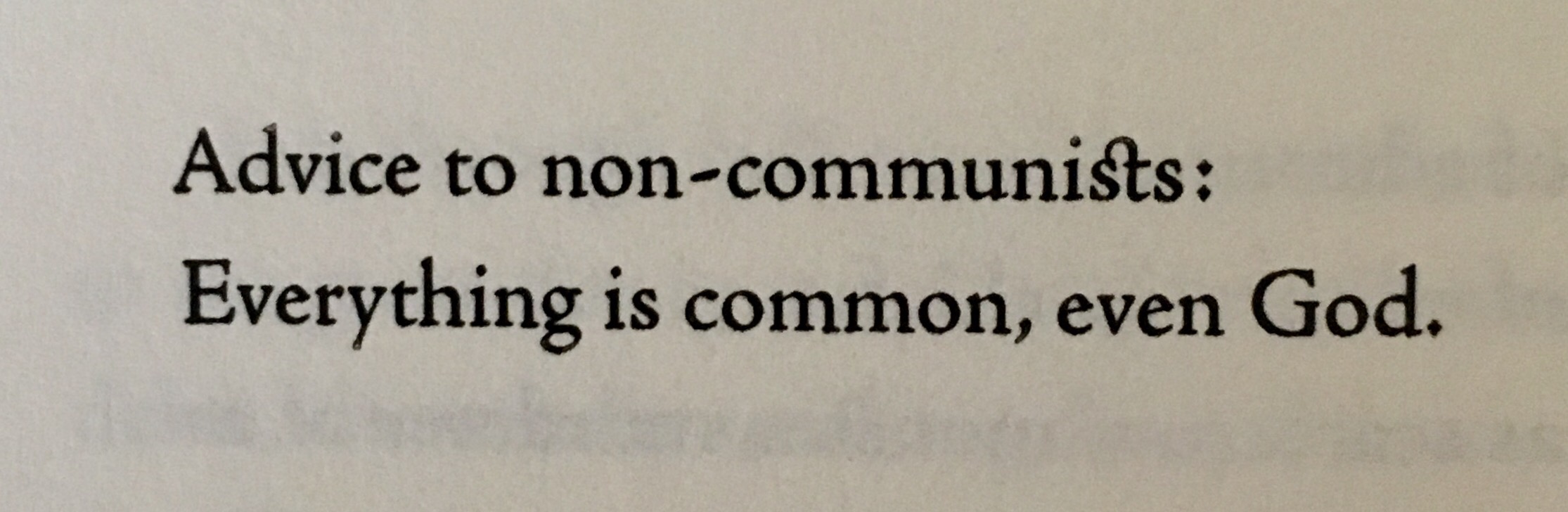
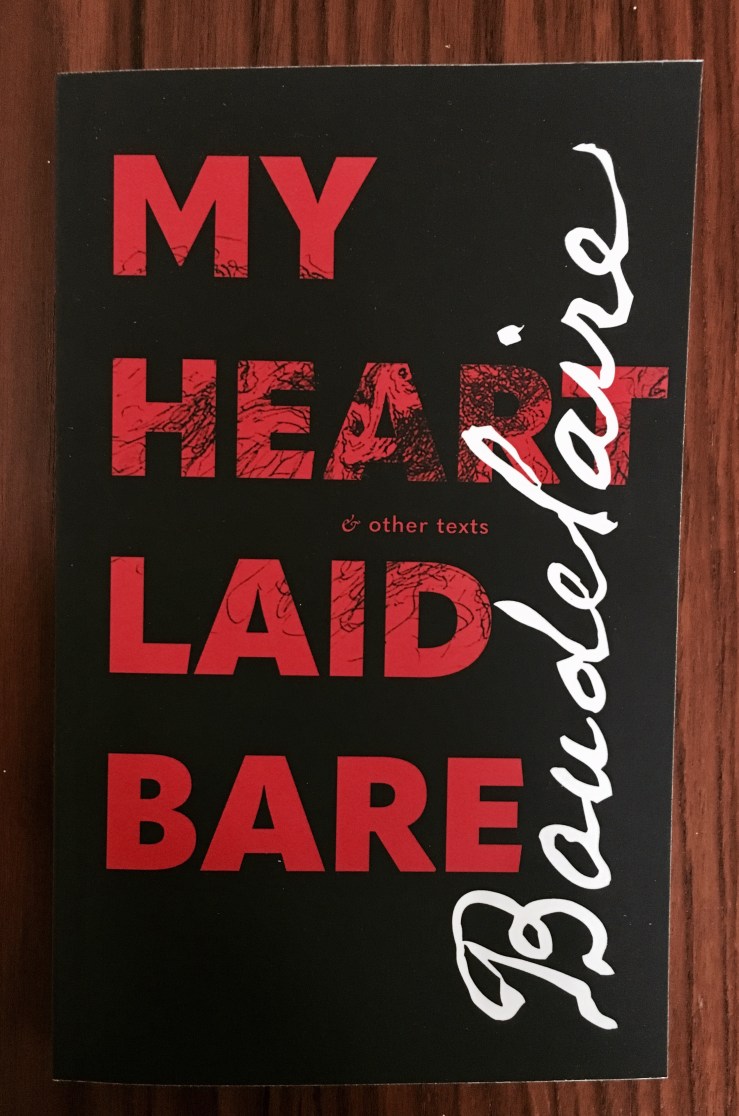
Baudelaire’s notebook of aphorisms and maxims, My Heart Laid Bare (Book acquired, 27 Feb. 2017)

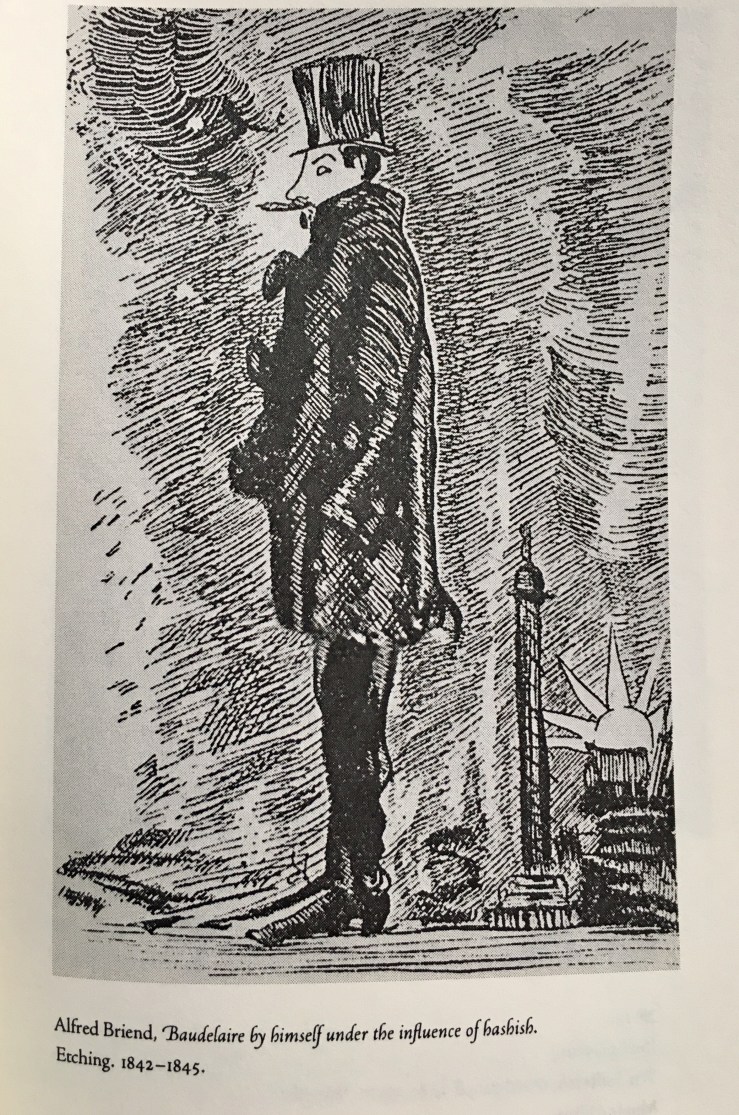
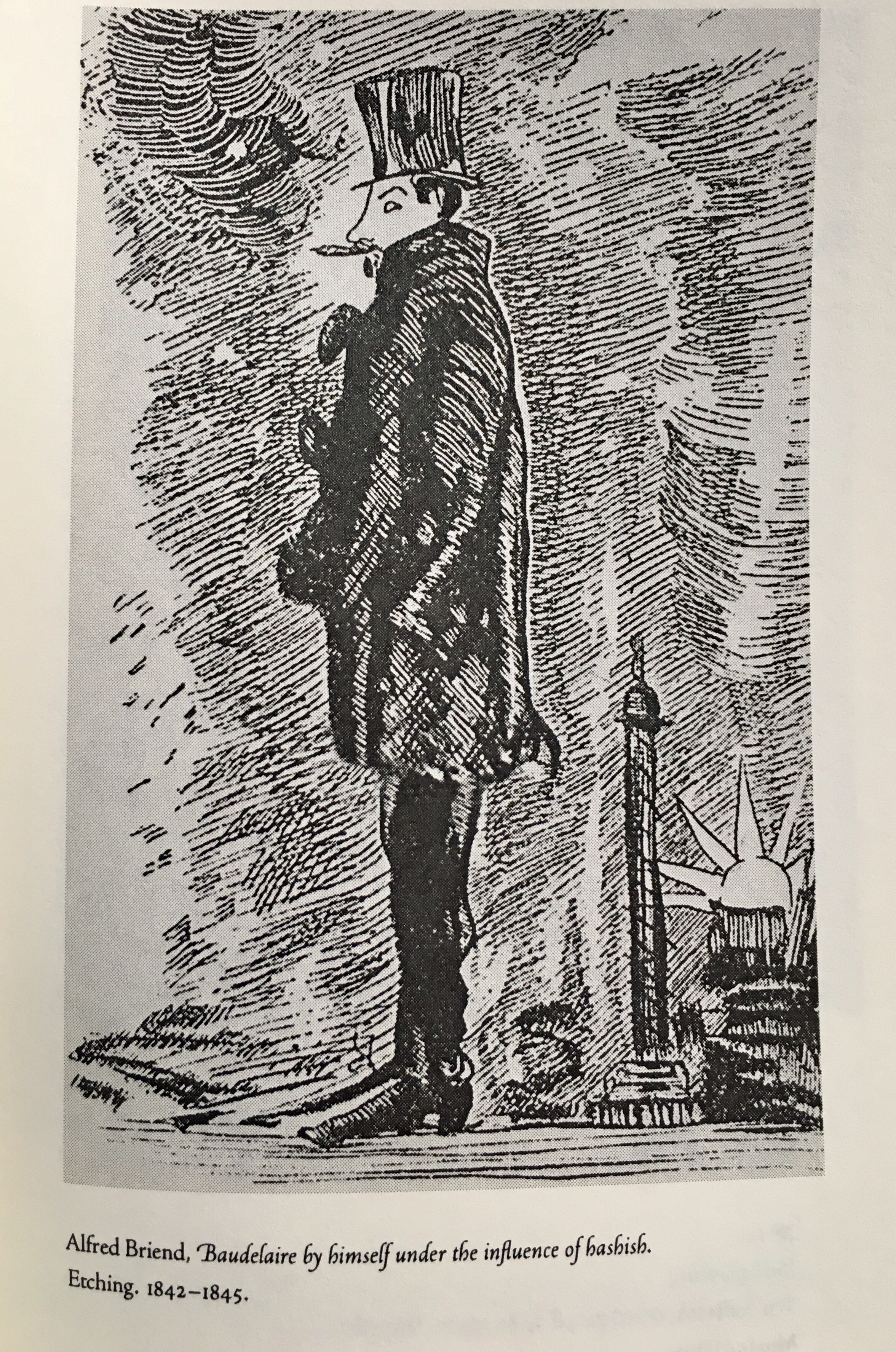
I’m a big fan of writers’ note-books (and maxims and aphorisms in general), and I’ve been enjoying Rainer J. Hashe’s new translation of Charles Baudelaire’s My Heart Laid Bare, which also collects Baudelaire’s “Flares” and “Consoling Maxims on Love,” and other fragments and notes and even illustrations—like this self-portrait:
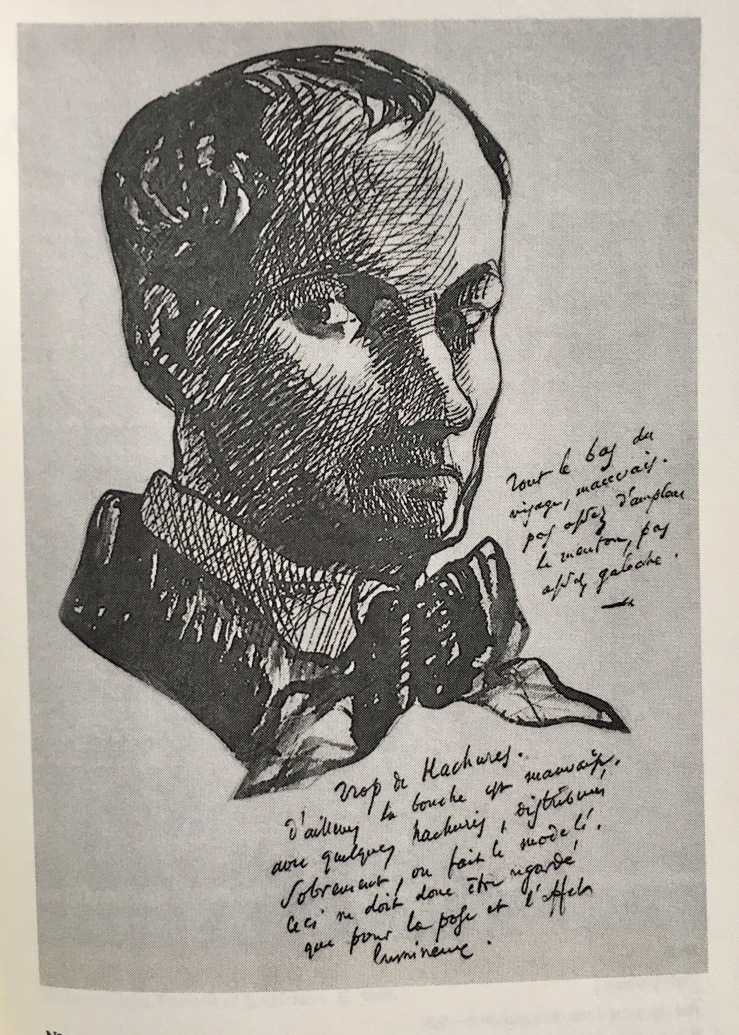
From publisher Contra Mundum’s blurb:

In My Heart Laid Bare, an apodictic work of aphorism, maxim, note, and extended reflection, we encounter a fierce dandy who revolts against utilitarianism: to be useful, Baudelaire gibes, is to be hideous. Yet, contrarily, it is not dissolution that this poète maudit praises or celebrates. Although he rejects Progress, he prizes what he calls true progress, for him moral, the work of the individual alone. The dandy is not disaffected, but a rigorous spectator that burrows into the heart of reality itself; situated at the center of the world, yet hidden from it, this incognito figure tears back the flesh of humanity like a devilish surgeon. Through this act of absorption, observation, and analysis, like Rimbaud’s Supreme Scientist, Baudelaire’s dandy acquires “a subtle understanding of the entire moral mechanism of this world.” Here we have the poet as philosopher king and transvaluator of values; here we have the disciplined flâneur. Baudelaire the keen symptomatologist who escapes “the nightmare of Time” via Pleasure or Work. If Pleasure is consumptive for him, Work is fortifying, that is, not the work of a profession, — curséd thing, — but the work of poiesis. A kind of poetic Marcus Aurelius forging his inner citadel, Baudelaire’s dandy-flâneur does not retreat into a monastic cell,
but situates himself amidst society: poet as vast mirror, poet as thinking kaleidoscope. To Nietzsche, My Heart Laid Bare contains “invaluable psychological observations relating to decadence of the kind in which Schopenhauer’s and Byron’s case has been burned.”

Notes for an Apocalypse — Dorothea Tanning

image

Sunday Comics 

From “A Halo of Flies,” The Saga of the Swamp Thing #30, November 1984. Art by Stephen Bissette with guest inks by Alfredo Alcala; coloring by Tatjana Wood.

I’m still really enjoying my re-read of Alan Moore’s run on Swamp Thing. There’s a cinematic quality to the work, evident in its (often-reserved) pacing, its attention to basic concepts like time and place (it’s astounding frankly how many “superhero” comics pay zero attention to basics like scale or the relationships between physical objects), and its framing of panels. I love how the single-page “Swamp Thing” illustration shows up near the end of this particular issue—like a long cold opening in a film or TV show.

In the Woods — Alex Colville

e88cb364ee90a00c85afcd99eeea369a.jpg

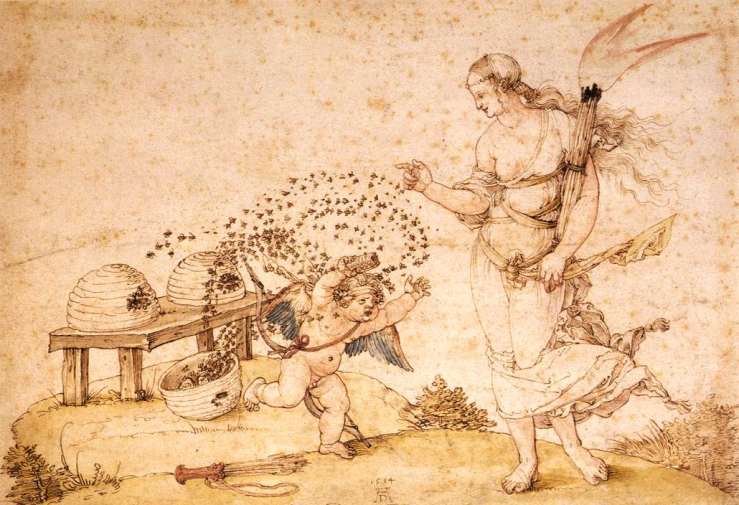
Cupid the Honey Thief — Albrecht Dürer

11cupid

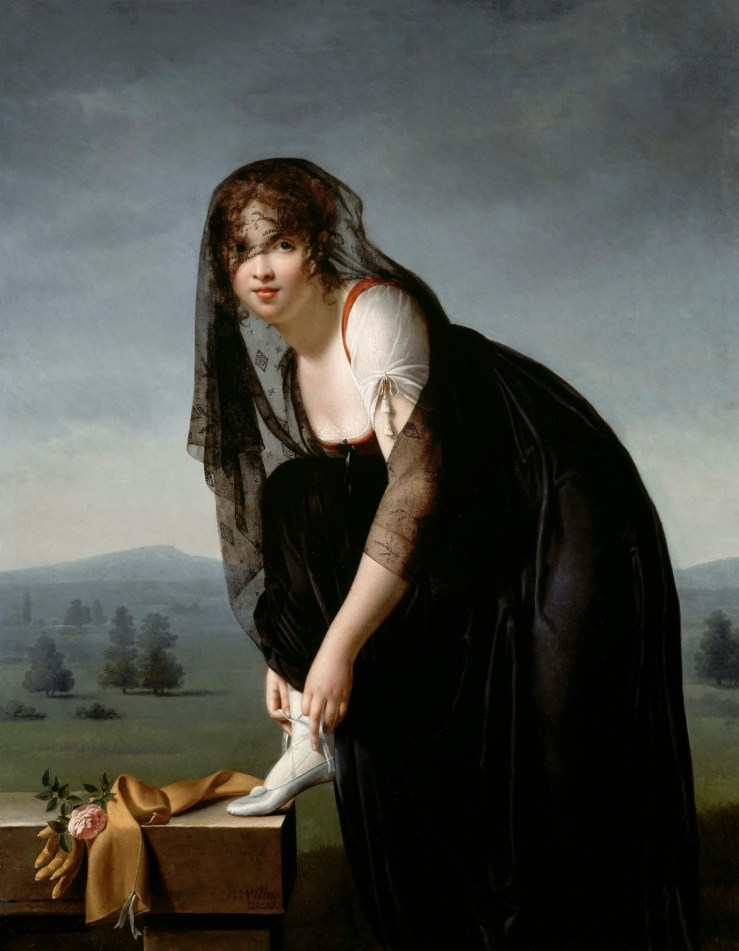
Une Étude De Femme D’après Nature — Marie-Denise Villers

belle

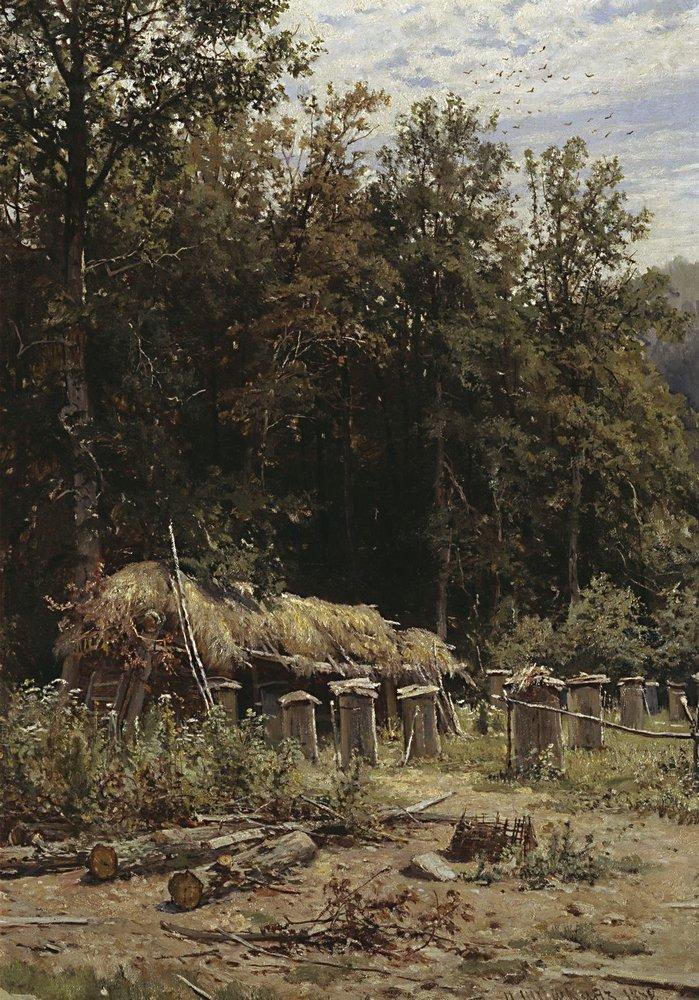
Bee Families — Ivan Shishkin

bee-families-1882

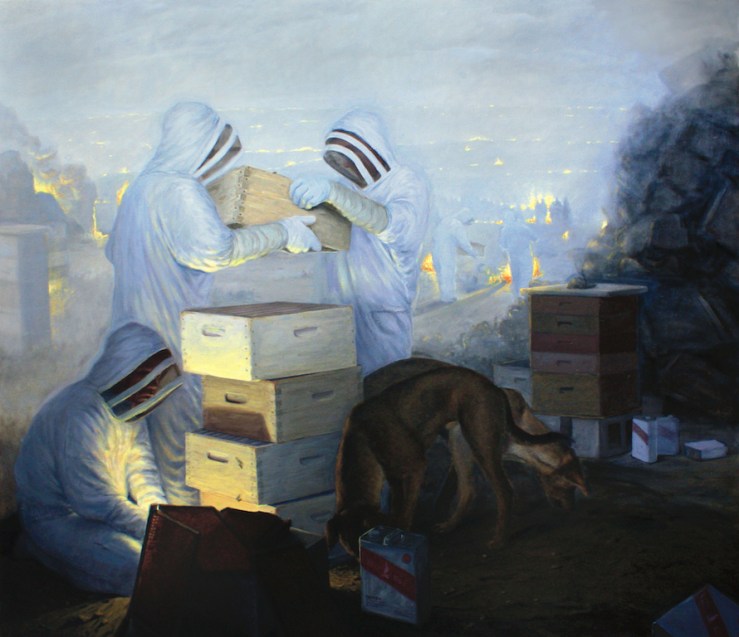
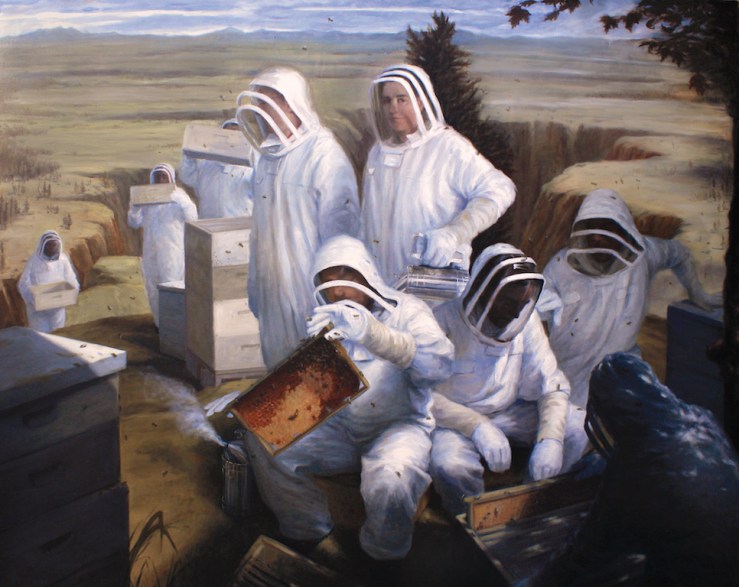
Beekeepers — David Pettibone

f835809f389dbe86-04_david_pettibone

A Beekeeper — Nikolai Bogatov

5122467201a37de45bf133f8e5f7e1f9

Humanity is everyone but one’s self (From Paul Bowles’s novel The Sheltering Sky)

“Europe has destroyed the whole world,” said Port.

“Should I be thankful to it and sorry for it? I hope the whole place gets wiped off the map.” He wanted to cut short the discussion, to get Kit aside and talk with her privately. Their long, rambling, supremely personal conversations always made him feel better. But she hoped particularly to avoid just such a tete-a-tete.

“Why don’t you extend your good wishes to all humanity, while you’re at it?” she demanded.

“Humanity?” cried Port. “What’s that? Who is humanity? I’ll tell you. Humanity is everyone but one’s self. So of what interest can it possibly be to anybody?”

Tunner said slowly: “Wait a minute. Wait a minute. I’d like to take issue with you on that. I’d say humanity is you, and that’s just what makes it interesting.

“Good, Tunner!” cried Kit.

Port was annoyed. “What rot!” he snapped, ‘You’re never humanity; you’re only your own poor hopelessly isolated self.” Kit tried to interrupt. He raised his voice and went on.

“I don’t have to justify my existence by any such primitive means. The fact that I breathe is my Justification. If humanity doesn’t consider that a justification, it can do what it likes to me. I’m not going to carry a passport to existence around with me, to prove I have the right to be here! I’m here! I’m in the world! But my world’s not humanity’s world. It’s the world as I see it.”

“Don’t yell,” said Kit evenly. “If that’s the way you feel, it’s all right with me. But you ought to be bright enough to understand that not everybody feels the same way.”

From Paul Bowles’s 1949 novel The Sheltering Sky.