“The Challenge” — Jorge Luis Borges

“The Challenge”

by

Jorge Luis Borges

Translated by d by Norman Thomas di Giovanni


All over the Argentine runs a story that may belong to legend or to history or (which may be just another way of saying it belongs to legend) to both things at once. Its best recorded versions are to be found in the unjustly forgotten novels about outlaws and desperadoes written in the last century by Eduardo Gutiérrez; among its oral versions, the first one I heard came from a neighborhood of Buenos Aires bounded by a penitentiary, a river, and a cemetery, and nicknamed Tierra del Fuego. The hero of this version was Juan Muraña, a wagon driver and knife fighter to whom are attributed all the stories of daring that still survive in what were once the outskirts of the city’s Northside. That first version was quite simple. A man from the Stockyards or from Barracas, knowing about Muraña’s reputation (but never having laid eyes on him), sets out all the way across town from the Southside to take him on. He picks the fight in a corner saloon, and the two move into the street to have it out. Each is wounded, but in the end Muraña slashes the other man’s face and tells him, “I’m letting you live so you’ll come back looking for me again.”

What impressed itself in my mind about the duel was that it had no ulterior motive. In conversation thereafter (my friends know this only too well), I grew fond of retelling the anecdote. Around 1927, I wrote it down, giving it the deliberately laconic title “Men Fought.” Years later, this same anecdote helped me work out a lucky story—though hardly a good one—called “Streetcorner Man.” Then, in 1950, Adolfo Bioy-Casares and I made use of it again to plot a film script that the producers turned down and that would have been called On the Outer Edge. It was about hard-bitten men like Muraña who lived on the outskirts of Buenos Aires before the turn of the century. I thought, after such extensive labors, that I had said farewell to the story of the disinterested duel. Then, this year, out in Chivilcoy, I came across a far better version. I hope this is the true one, although since fate seems to take pleasure in a thing’s happening many times over, both may very well be authentic. Two quite bad stories and a script that I still think of as good came out of the poorer first version; out of the second, which is complete and perfect, nothing can come. Without working in metaphors or details of local color, I shall tell it now as it was told to me. The story took place to the west, in the district of Chivilcoy, sometime back in the 1870’s. Continue reading ““The Challenge” — Jorge Luis Borges”
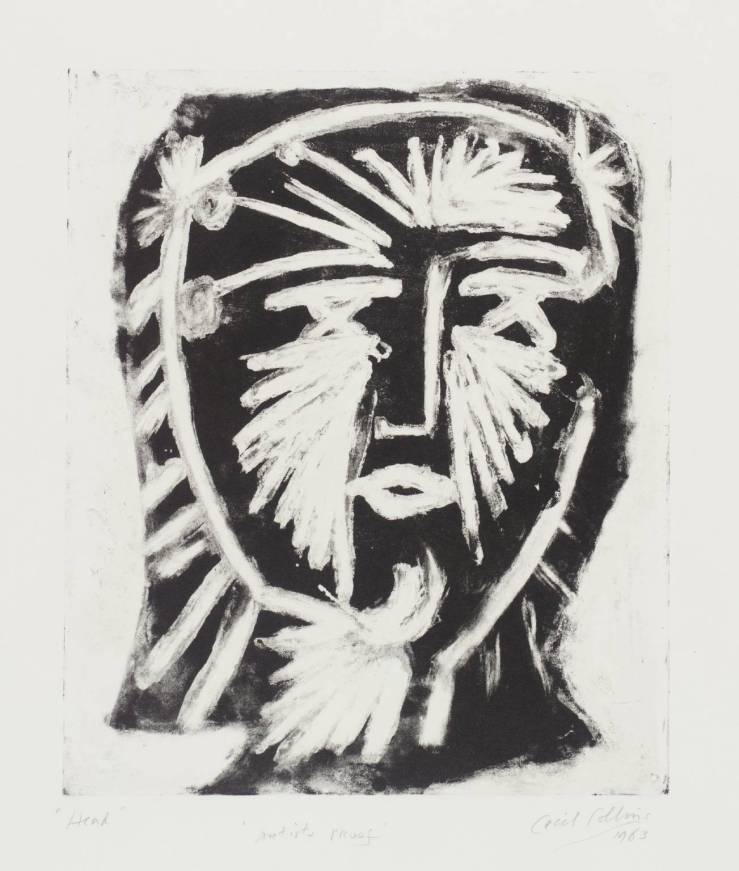
Head — Cecil Collins

Head, 1963 by Cecil Collins 1908-1989

The Vision and Inspiration of Joan of Arc — Louis Maurice Boutet de Monvel

The Vision and Inspiration of Joan of Arc, c. late 1909-early 1913 by Louis Maurice Boutet de Monvel (1850-1913)

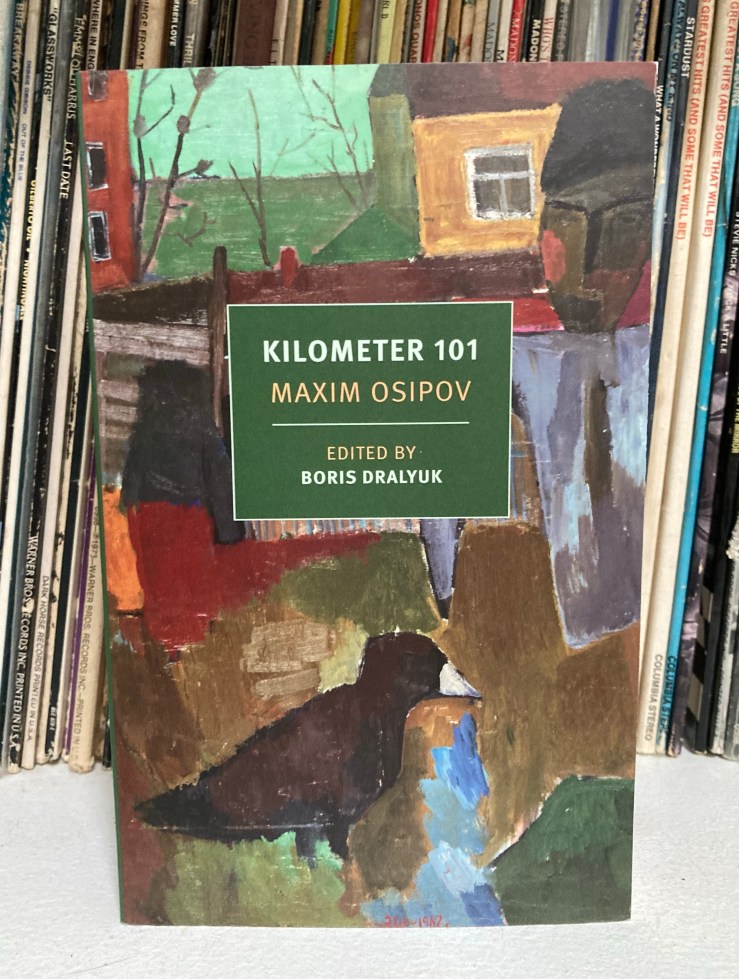
Maxim Osipov’s Kilometer 101 (Book acquired, early Sept. 2022)

Maxim Osipov’s Kilometer 101 collects six stories and four essays by the Russian author. The translations are by Boris Dralyuk, Nicolas Pasternak Slater, and Alex Fleming. Kilometer 101 is out next month from NYRB. Their copy:

The town of Tarusa lies 101 kilometers outside Moscow, far enough to have served, under Soviet rule, as a place where former political prisoners and other “undesirables” could legally settle. Lying between the center of power and the provinces, between the modern urban capital and the countryside, Tarusa is the perfect place from which to observe a Russia that, in Maxim Osipov’s words, “changes a lot [in the course of a decade], but in two centuries—not at all.” The stories and essays in this volume—a follow-up to his debut in English, Rock, Paper, Scissors—tackle major questions of modern life in and beyond Russia with Osipov’s trademark blend of daring and subtlety. Deceit, political pressure, ethnic discrimination, the urge to emigrate, and the fear of abandoning one’s home, as well as myriad generational debts and conflicts, are as complexly woven through these pieces as they are through the lives of Osipov’s fellow Russians and through our own. What binds the prose in this volume is not only a set of concerns, however, but also Osipov’s penetrating insights and fearless realism. “Dreams fall away, one after another,” he writes in the opening essay, “some because they come true, but most because they prove pointless.” Yet, as he reminds us in the final essay, when viewed from ground level, “life tends not towards depletion, towards zero, but, on the contrary, towards repletion, fullness.”

“The Wall” — Anne Sexton

“The Wall”

by

Anne Sexton


Nature is full of teeth
that come in one by one, then
decay, fall out.
In nature nothing is stable,
all is change, bears, dogs, peas, the willow,
all disappear. Only to be reborn.
Rocks crumble, make new forms,
oceans move the continents,
mountains rise up and down like ghosts
yet all is natural, all is change.

As I write this sentence
about one hundred and four generations
since Christ, nothing has changed
except knowledge, the test tubes.
Man still falls into the dirt
and is covered.
As I write this sentence one thousand are going
and one thousand are coming.
It is like the well that never dries up.
It is like the sea which is the kitchen of God.

We are all earthworms,
digging our wrinkles.
We live beneath the ground
and if Christ should come in the form of a plow
and dig a furrow and push us up into the day
we earthworms would be blinded by the sudden light
and writhe in our distress.
As I write this sentence I too writhe.

For all you who are going,
and there are many who are climbing their pain,
many who will bepainted out with a black ink
suddenly and before it is time,
for these many I say,
awkwardly, clumsily,
take off your life like trousers,
your shoes, your underwear,
then take off your flesh,
unpick the lock of your bones.
In other words
take off the wall
that separates you from God.

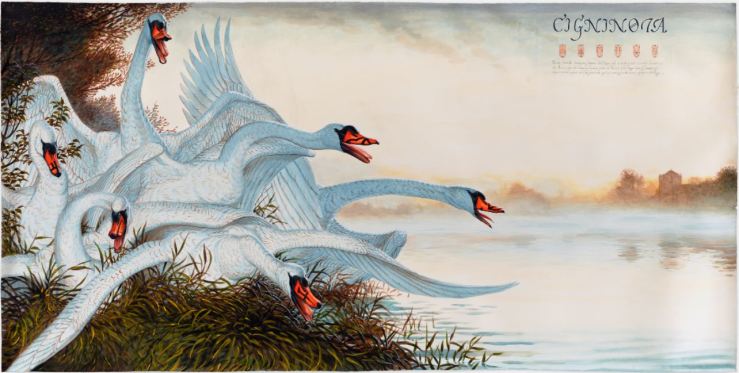
Cigninota — Walton Ford

Cigninota, 2020 by Walton Ford (b. 1960)

Jean-Luc Godard’s film Goodbye to Language

Traffic jam scene, Jean-Luc Godard’s film Weekend

“What Is to Be Done?” — Jean-Luc Godard

“What Is to Be Done?”

by

Jean-Luc Godard

Translation by Mo Tietelbaum

First published in English and French in Afterimage, 1970


  1. We must make political films.

  2. We must make films politically.

  3. 1 and 2 are antagonistic to each other and belong to two opposing conceptions of the world.

  4. 1 belongs to the idealistic and metaphysical conception of the world.

  5. 2 belongs to the Marxist and dialectical conception of the world.

  6. Marxism struggles against idealism and the dialectical against the metaphysical.

  7. This struggle is the struggle between the old and the new, between new ideas and old ones.

  8. The social existence of men determines their thought.

  9. The struggle between the old and the new is the struggle between classes.

  10. To carry out 1 is to remain a being of the bourgeois class.

  11. To carry out 2 is to take up the proletarian class position.

  12. To carry out 1 is to make descriptions of situations.

  13. To carry out 2 is to make concrete analysis of a concrete situation.

  14. To carry out 1 is to make British Sounds.

  15. To carry out 2 is to struggle for the showing of British Sounds on English television.

  16. To carry out 1 is to understand the laws of the objective world in order to explain that world.

  17. To carry out 2 is to understand the laws of the objective worlds in order to actively transform that world.

  18. To carry out 1 is to describe the wretchedness of the world.

  19. To carry out 2 is to show people in struggle.

  20. To carry out 2 is to destroy 1 with the weapons of criticism and self-criticism.

  21. To carry out 1 is to give a complete view of events in the name of truth in itself.

  22. To carry out 2 is not to fabricate over-complete images of the world in the name of relative truth.

  23. To carry out 1 is to say how things are real. (Brecht)

  24. To carry out 2 is to say how things really are. (Brecht)

  25. To carry out 2 is to edit a film before shooting it, to make it during filming and to make it after the filming. (Dziga Vertov)

  26. To carry out 1 is to distribute a film before producing it.

  27. To carry out 2 is to produce a film before distributing it, to learn to produce it following the principle that: it is production which commands distribution, it is politics which commends economy.

  28. To carry out 1 is to film students who write: Unity—Students—Workers.

  29. To carry out 2 is to know that unity is a struggle of opposites (Lenin) to know that the two are one.

  30. To carry out 2 is to study the contradiction between the classes with images and sounds.

  31. To carry out2 is to study the contradiction between the relationships of production and the productive forces.

  32. To carry out 2 is to dare to know where one is, and where one has come from, to know one’s place in the process of production in order then to change it.

  33. To carry out 2 is to know the history of revolutionary struggles and be determined by them.

  34. To carry out 2 is to produce scientific knowledge of revolutionary struggles and of their history.

  35. To carry out 2 is to know that film making is a secondary activity, a small screw in the revolution.

  36. To carry out 2 is to use images and sounds as teeth and lips to bite with.

  37. To carry out 1 is to only open the eyes and the ears.

  38. To carry out 2 is to read the reports of comrade Kiang Tsing.

  39. To carry out 2 is to be militant.

Fool and Bird — Cecil Collins

Fool and Bird, 1978 by Cecil Collins (1908-1989)

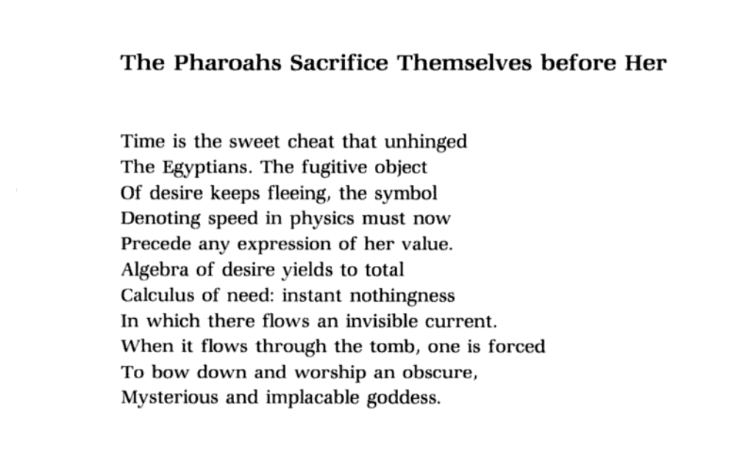
“The Pharaohs Sacrifice Themselves before Her” — Tom Clark

Petroleum — Martin Wittfooth 

Petroleum, 2021 by Martin Wittfooth (b. 1981)

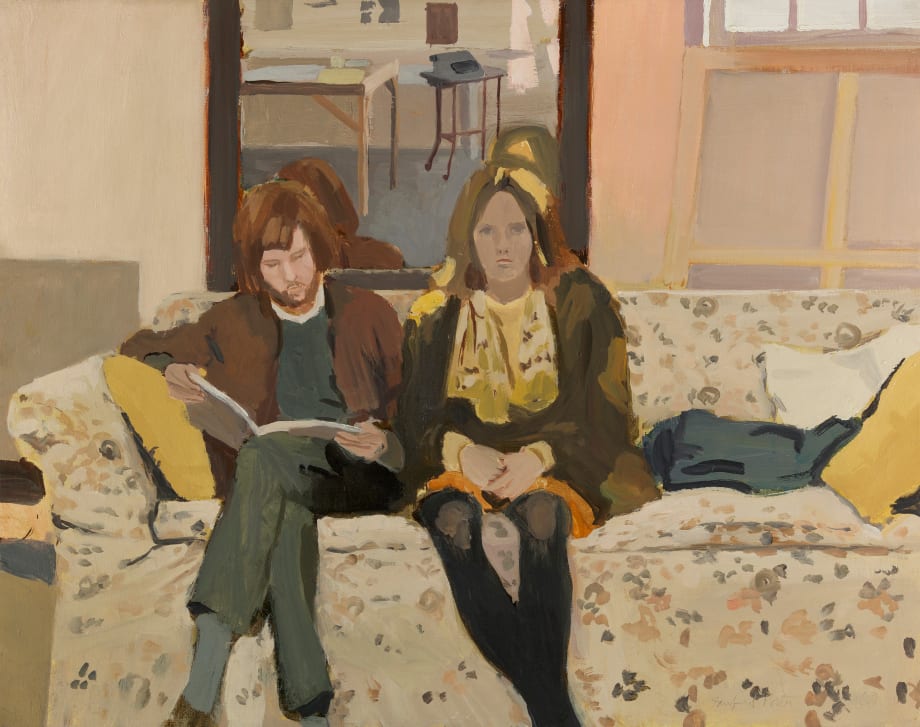
Double Portrait — Fairfield Porter

Double Portrait,1968 by Fairfield Porter (1907-1975)

Three minutes of Cormac McCarthy riffing on Wittgenstein

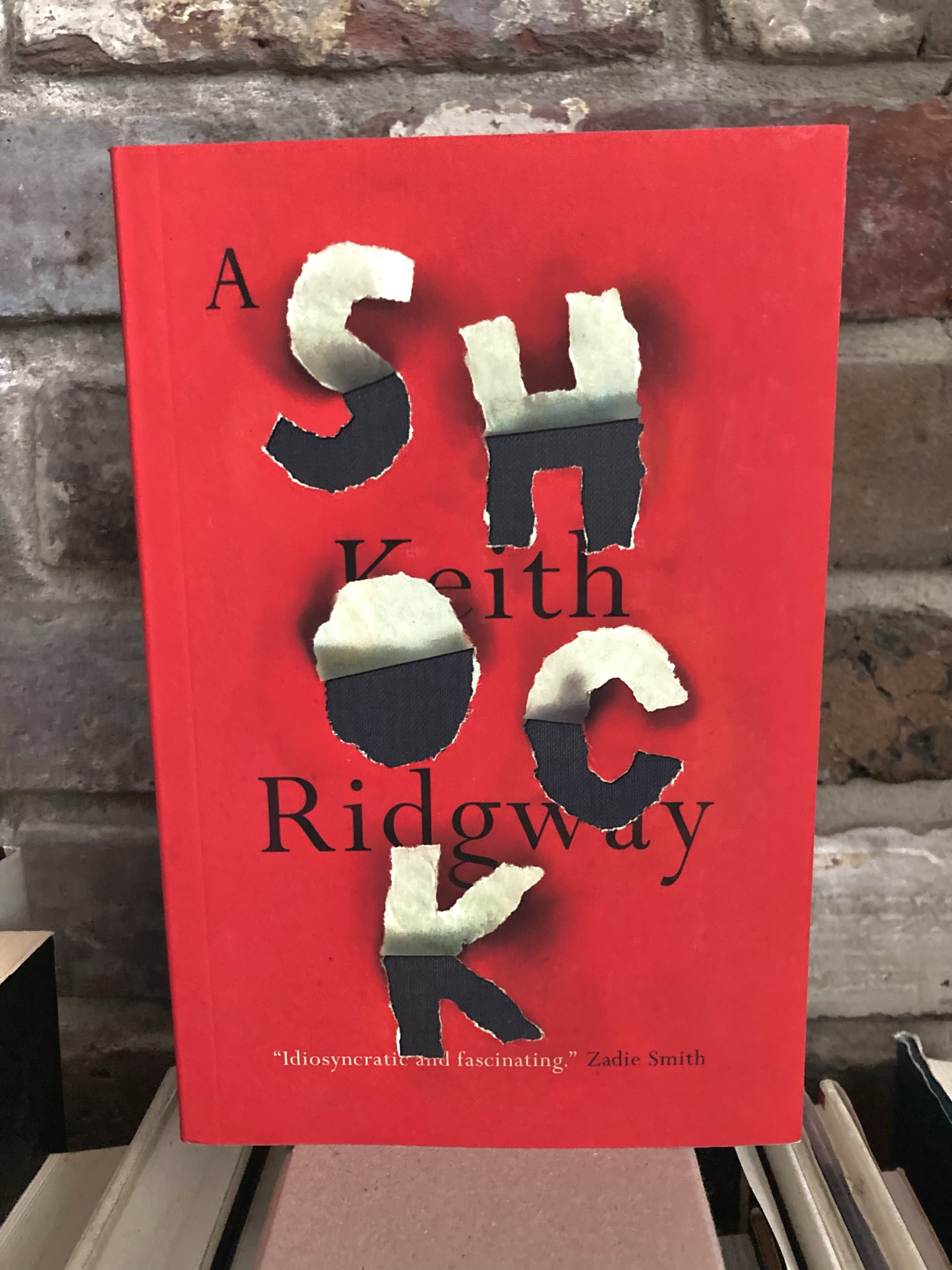
Keith Ridgway’s A Shock (Book acquired, 8 Sept. 2022)

I’d been meaning to pick up a copy of Keith Ridgway’s A Shock for a while now and today I did.

Here’s US publisher New Directions’ blurb:

Formed as a rondel of interlocking stories with a clutch of more or less loosely connected repeating characters, it’s at once deracinated yet potent with place, druggy yet frighteningly shot through with reality. His people appear, disappear, and reappear. They’re on the fringes of London, clinging to sanity or solvency or a story by their fingernails, consumed by emotions and anxieties in fuzzily understood situations. A deft, high-wire act, full of imprecise yet sharp dialog as well as witchy sleights of hand reminiscent of Muriel Spark, A Shock delivers a knockout punch of an ending.

Perhaps Ridgway’s most breathtaking quality is his scintillating stealthiness: you can never quite put your finger on how he casts his spell—he delivers the shock of a master jewel thief (already far-off and scot-free) stealing your watch: when at some point you look down at your wrist, all you see is that in more than one way you don’t know what time it is …

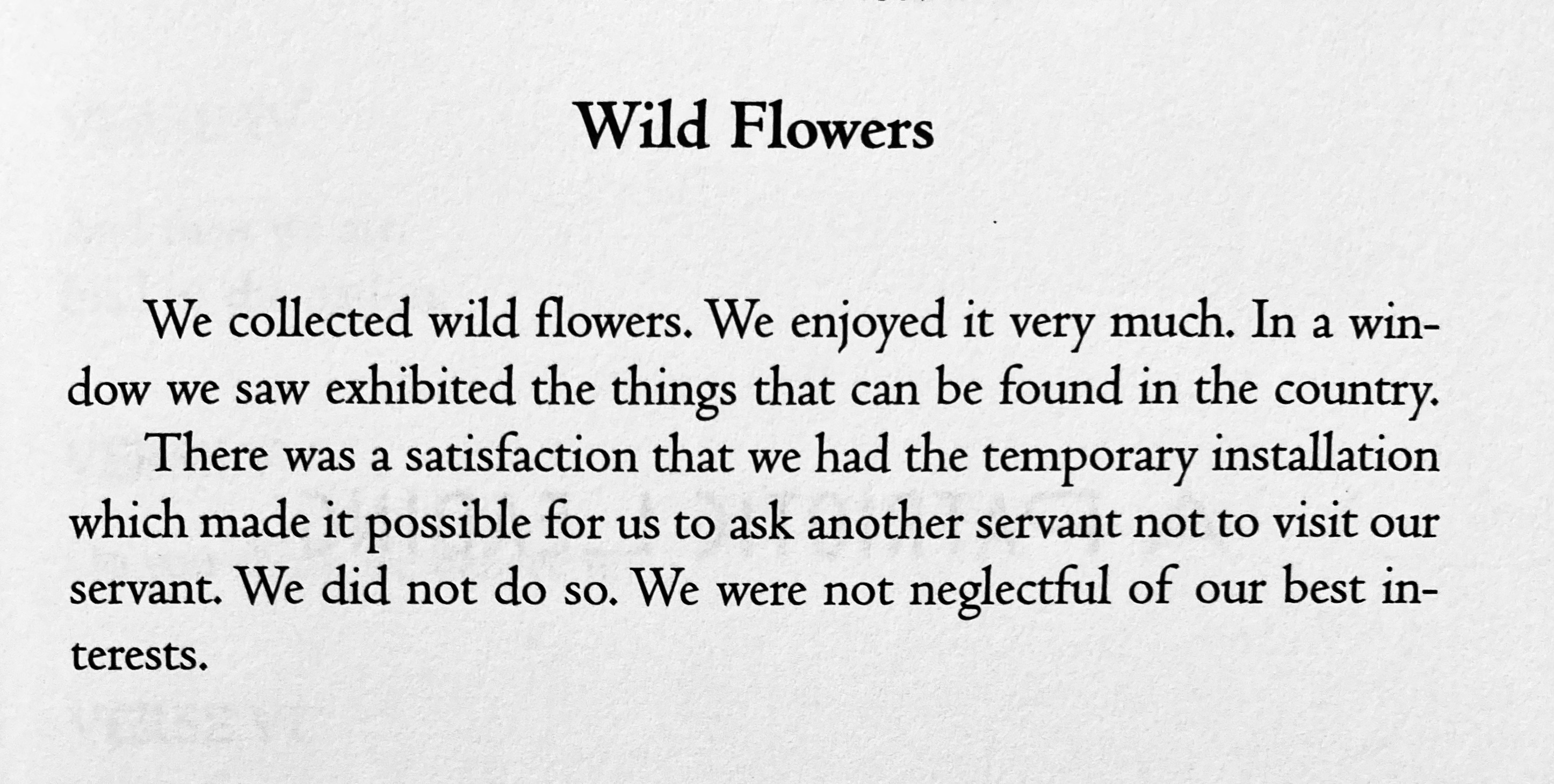
“Wild Flowers” — Gertrude Stein

The Wasteland — Jia Aili

The Wasteland, 2007 by Jia Aili (b. 1979)