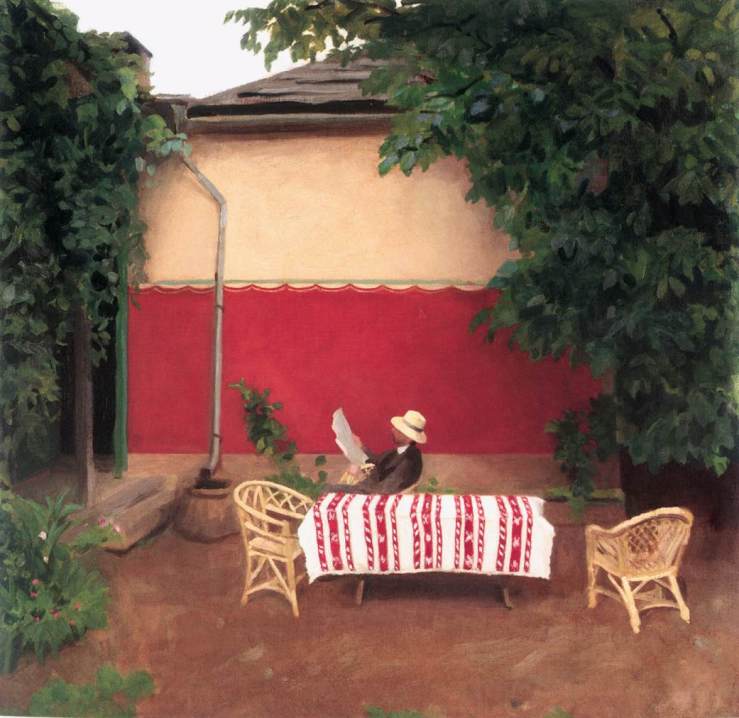
Red Wall — Karoly Ferenczy

red-wall-1910

Red Wall, 1910 by Karoly Ferenczy (1862-1917)

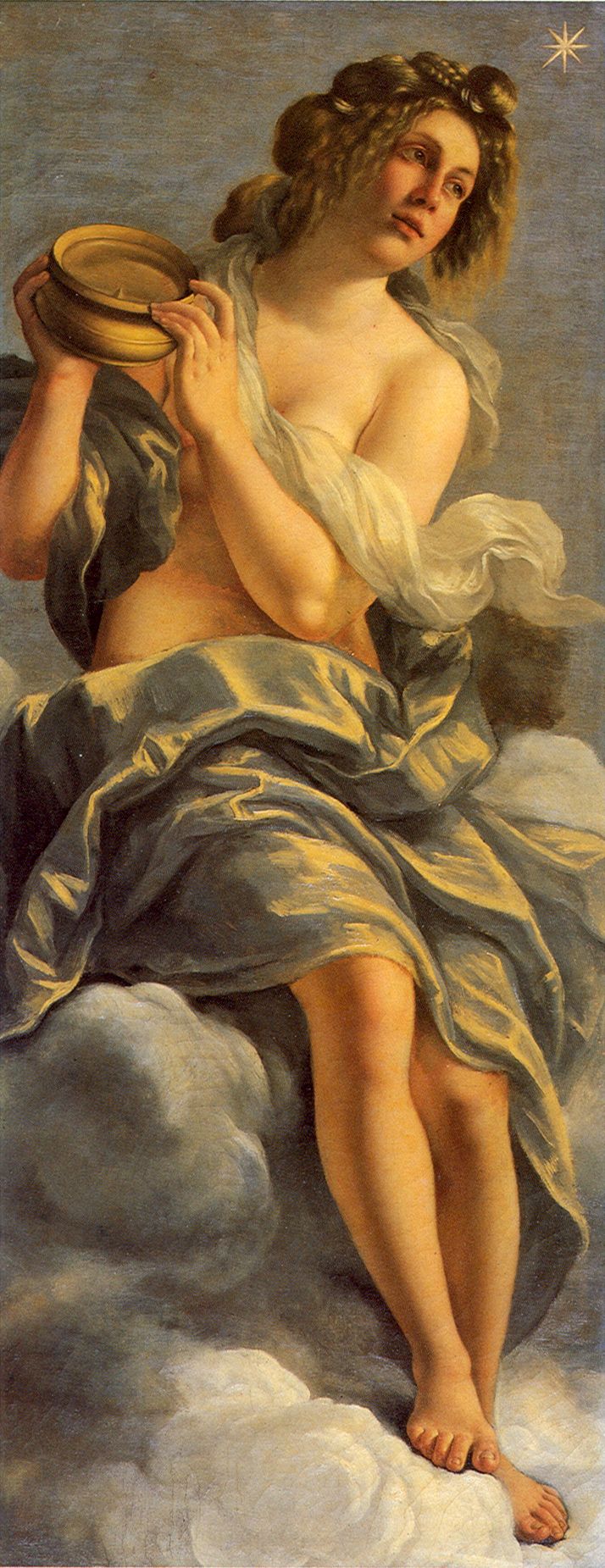
Allegory of Inclination — Artemisia Gentileschi

artemisia-gentileschi-allegoria-dell-inclinazione

Allegory of Inclination, 1615 by Artemisia Gentileschi (1593-1653)

Capillary Locomotion — Remedios Varo

capilary motion

Capillary Locomotion, 1959 by Remedios Varo (1908-1963)

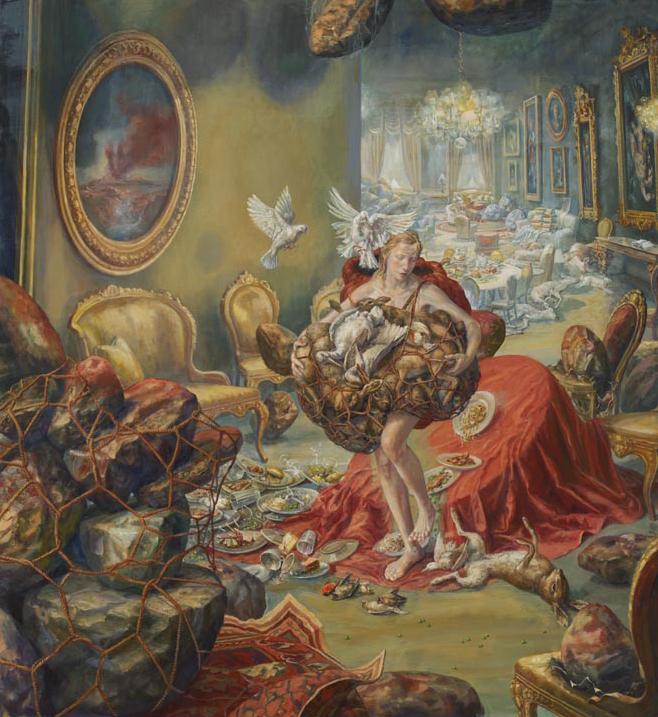
Self Portrait as After Party — Julie Heffernan

after20party20cropped

Self Portrait as After Party, 2013 by Julie Heffernan (b. 1956)

Antoine Volodine’s Post-Exoticism in 10 Lessons, Lesson 11 (Book acquired in July, 2018)

img_0454

Even though I haven’t gotten to Minor Angels yet, I went ahead and picked up Antoine Volodine’s Post-Exoticism in Ten Lessons, Lesson Eleven. Publisher Open Letter’s blurb:

Like with Antoine Volodine’s other works (Minor AngelsWe Monks & Soldiers), Post-Exoticism in Ten Lessons, Lesson Eleven takes place in a corrupted future where a small group of radical writers—those who practice “post-exoticism”—have been jailed by those in power and are slowly dying off. But before Lutz Bassmann, the last post-exoticist writer, passes away, journalists will try and pry out all the secrets of this powerful literary movement.

With its explanations of several key “post-exoticist” terms that appear in Volodine’s other books, Lesson Eleven provides a crucial entryway into one of the most ambitious literary projects of recent times: a project exploring the revolutionary power of literature.

Translated from the French by J. T. Mahany

You can read an excerpt from the book here.

Young Bean Farmer — Peter Doig

7eaaac799bf91410af1487a3fe217f4d

Young Bean Farmer, 1991 by Peter Doig (b. 1959)

The Demon Seated — Mikhail Vrubel

vrubel_demon

The Demon Seated, 1890 by Mikhail Vrubel (1856-1910)

Screenshot 2018-07-24 at 10.53.27 AM

The Misfortunes of Silenus (Detail) — Pierro di Cosimo

Screenshot 2018-07-05 at 8.49.17 PM

The Misfortunes of Silenus (detail), c. 1500 by Pierro di Cosimo (1462-1522)

Bamboozle the inspectors (Thomas Pynchon on Donald Barthelme)

One out of several humiliating features about writing fiction for a living is that here after all is just about everybody else, all along the capitalist spectrum from piano movers to systems analysts, cheerfully selling their bodies or body parts according to time-honored custom and usage, while it’s only writers, out at the fringes of the entertainment sector, wretched and despised, who are obliged, more intimately and painfully, actually to sell their dreams, yes, dreams these days you’ll find are every bit as commoditized as any pork bellies there on the financial page. To be upbeat about it, though, in most cases it doesn’t present much moral problem, since dreams seldom make it through into print with anything like the original production values anyway. Even if you do good recovery, learning to write legibly in the dark and so forth, there’s still the matter of getting it down in words that can bring back even a little of the clarity and sweep, the intensity of emotion, the transcendent weirdness of the primary experience. So it’s a safe bet that most writers’ dreams, maybe even including the best ones, manage to stay untranslated and private after all.

Barthelme, however, happens to be one of a handful of American authors there to make the rest of us look bad, who know instinctively how to stash the merchandise, bamboozle the inspectors, and smuggle their nocturnal contraband right on past the checkpoints of daylight “reality.” What he called his “secret vice” of “cutting up and pasting together pictures” bears an analogy, at least, to what is supposed to go on in dreams, where images from the public domain are said likewise to combine in unique, private, and, with luck, spiritually useful ways. How exactly Barthelme then got this into print, or for that matter pictorial, form, kept the transitions flowing the way he did and so on, is way too mysterious for me, though out of guild solidarity I probably wouldn’t share it even if I did know. The effect each time, at any rate, is to put us in the presence of something already eerily familiar … to remind us that we have lived in these visionary cities and haunted forests, that the ancient faces we gaze into are faces we know.

From Thomas Pynchon’s introduction to The Teachings of Don B. The introduction was republished yesterday in The Paris Review in a version that omits the first two paragraphs. You can read the full version of Thomas Pynchon’s essay on Donald Barthelme at ThomasPynchon.com.

Predator — Eteri Chkadua

81582dbb0740e6576b48a9d36f183e36

Predator, 2004 by Eteri Chkadua

Window at Night — Zoey Frank

zoey-frank-window-at-night

Window at Night, 2017 by Zoey Frank (b. 1987)

Berlin Windows #6 — Zoey Frank

frank-berlinwindows236

Berlin Windows #6, 2018 by Zoey Frank (b. 1987)

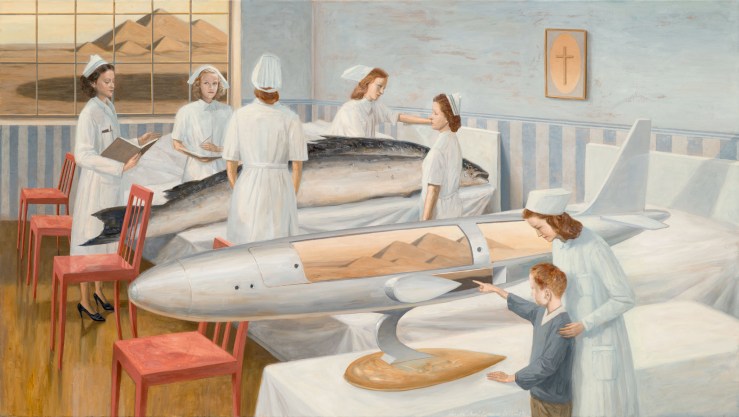
Night Nurse — Van Arno

f12865490764f615b9ead44f99504699

Night Nurse, 2017 by Van Arno

In order to be shown the sign (Gerald Murnane)

The shabbily dressed man spoke to his students at their first class as follows. The best service he could perform for them was to persuade them to give up writing fiction as soon as they had finished his course—or even before then. The writing of fiction was something that a certain sort of person had to do in order to explain himself or herself to an imagined parent or an imagined loved one or an imagined god. He himself had had two novels published more than ten years before but had had nothing published since then and had no intention of writing so much as a sentence of fiction during the remainder of his life. He had stopped writing fiction after having been shown a sign. He had had to write or to prepare to write fiction in order to be shown the sign, but having been shown the sign he no longer wished to write fiction. The shabbily dressed man then said to his class that he had probably said too much to them already and had probably confused them thoroughly. He then said that their first class was over, that their classes for the next month were cancelled, and that they should go away and write their first piece of fiction and deliver it to him three weeks later so that he could prepare photocopies for the workshop classes that would occupy him and them for the rest of the year.

From Gerald Murnane’s short story “The White Cattle of Uppington,” (1995); collected in Stream System (2018).

Saturday — André Derain

andrc3a9_derain_1913-14_le_samedi_oil_on_canvas_181_x_228_cm_pushkin_museum_of_fine_arts_moscow
Saturday, 1914 by André Derain (1880-1954)

The Pomps of the Subsoil — Leonora Carrington

Carrington, Leonora, 1917-2011; The Pomps of the Subsoil

The Pomps of the Subsoil, 1947 by Leonora Carrington (1917–2011)

Landscape with Couple Walking and Crescent Moon — Vincent van Gogh

Landscape with Couple Walking and Crescent Moon, 1890 by Vincent van Gogh (1853-1890)