I had no interest in watching the Legion television show.
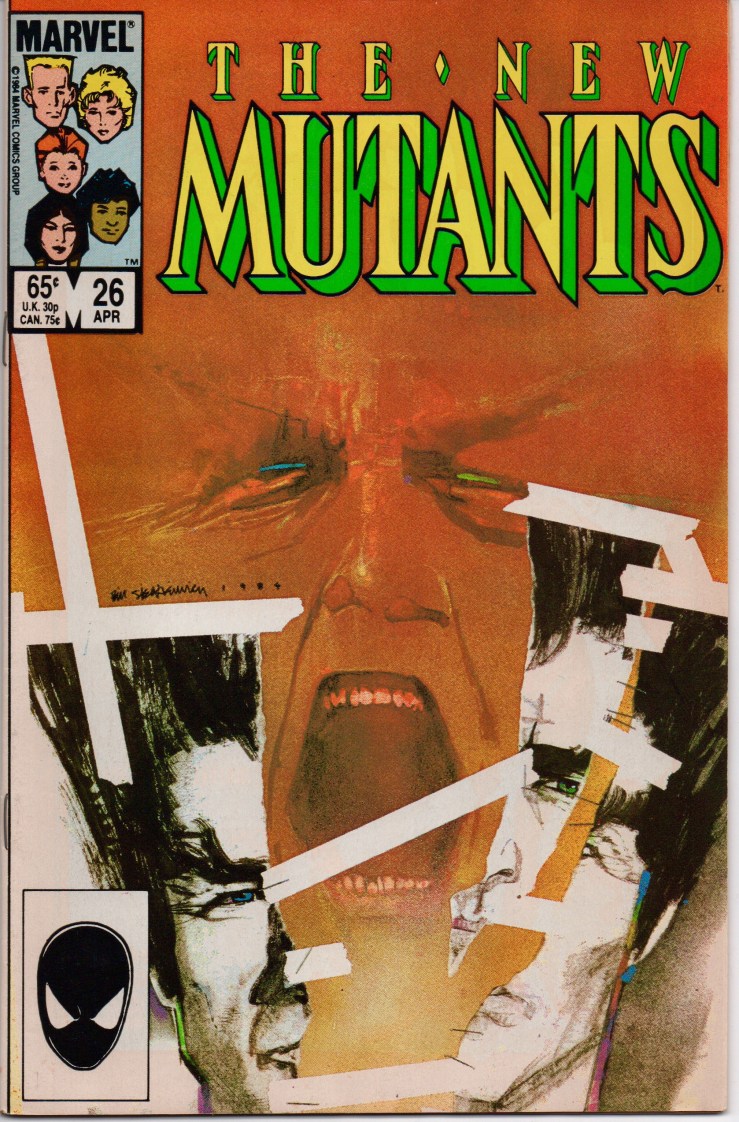
Bill Sienkiewicz is my favorite comic book artist of all time.
I like Sienkiewicz so much I can spell his last name correctly without looking it up. I like Sienkiewicz so much that he was the first artist I featured when I first started this silly Sunday Comics thing last year.
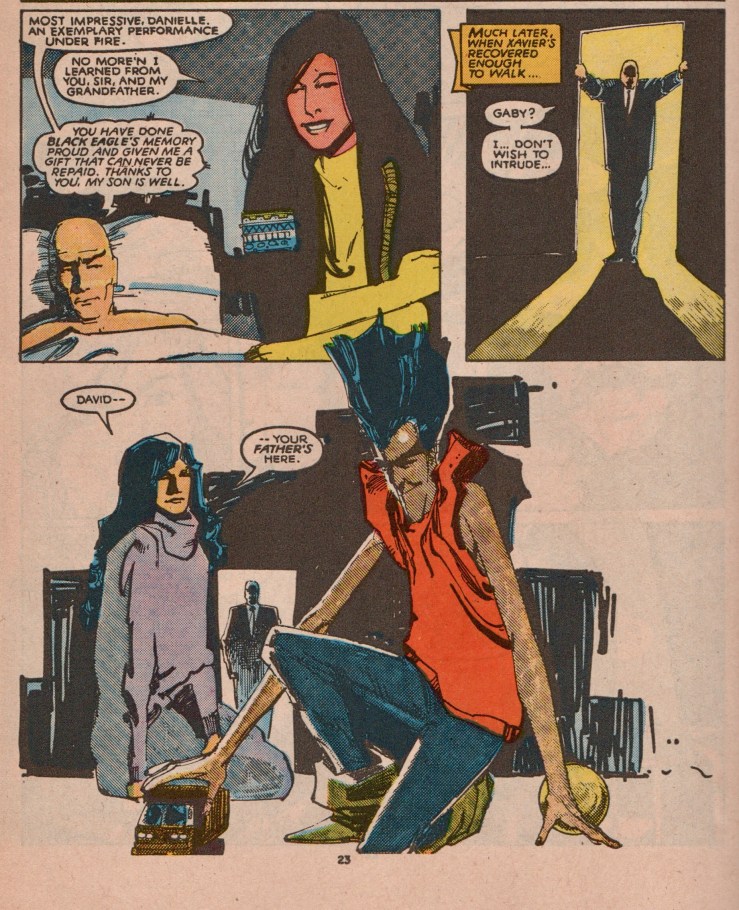
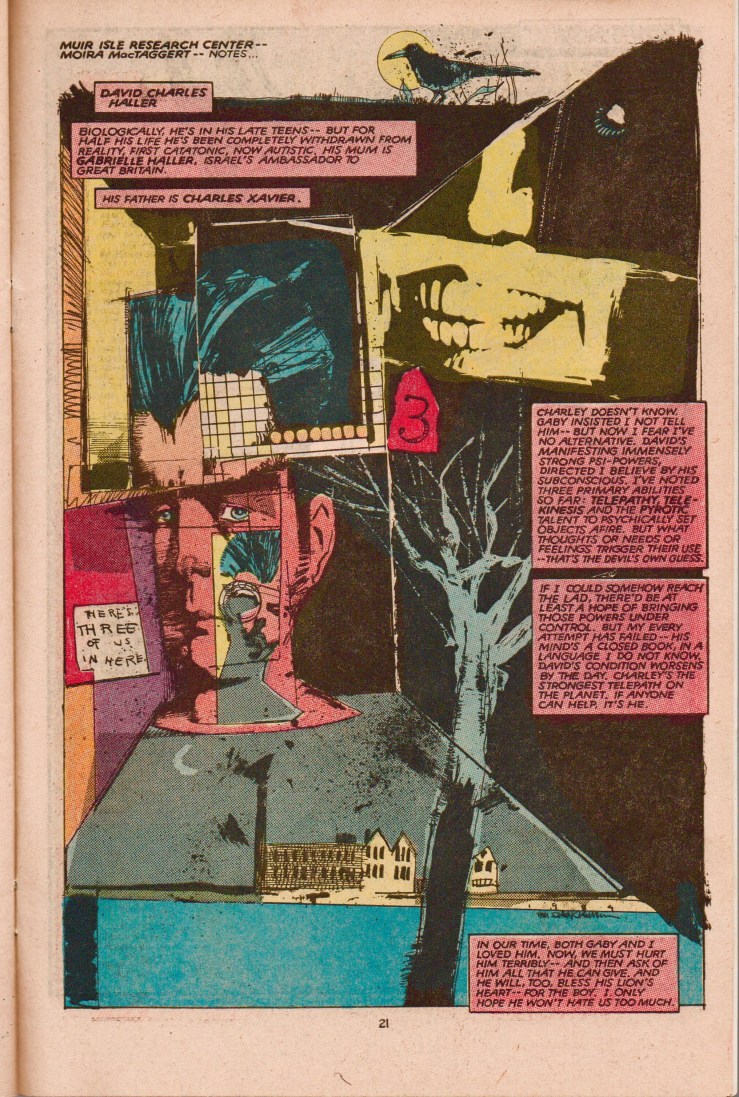
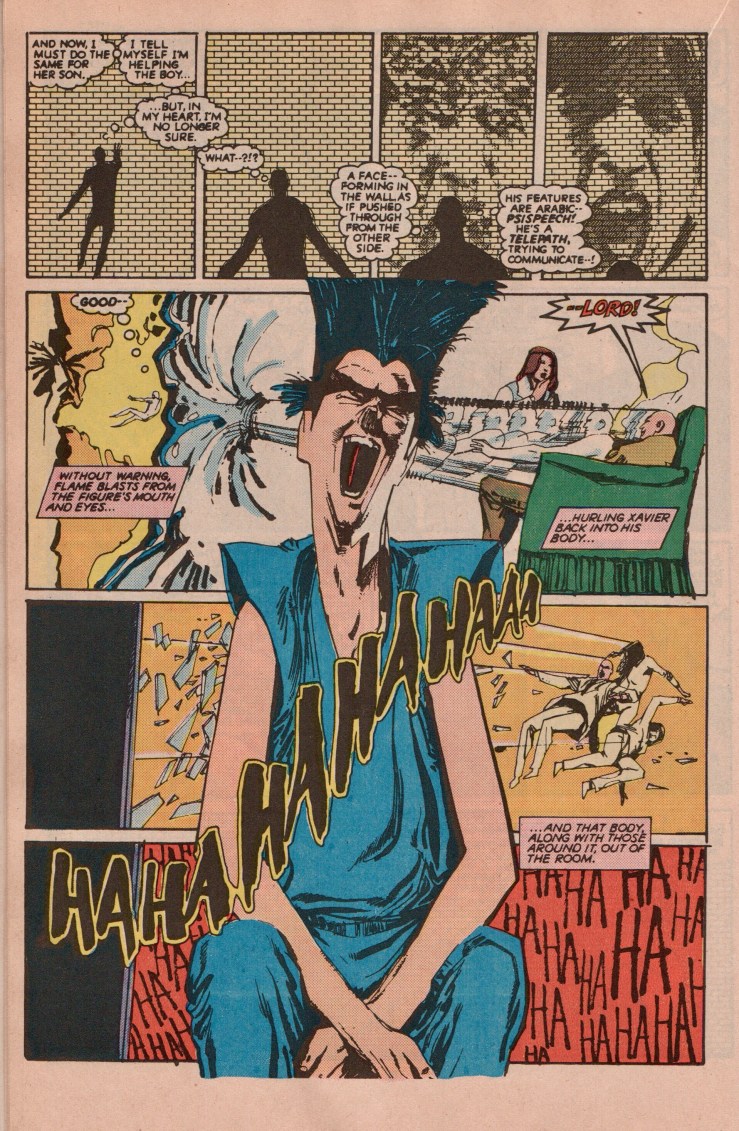
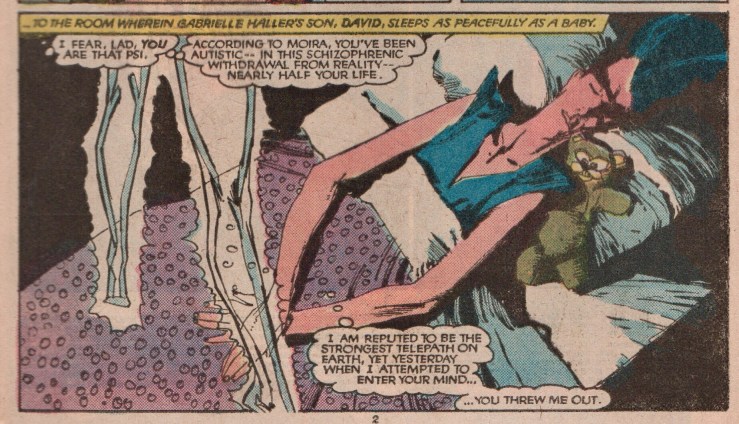
Sienkiewicz, along with Chris Claremont, created the character of David Haller (“Legion,” Professor X’s son). David first appeared in the last page of The New Mutants #25, Marvel Comics, March, 1985. (The issue is about the underrated duo Cloak & Dagger).
The New Mutants was/is my favorite childhood comic book. (By which I mean: Sienkiewicz’s run on The New Mutants was/is my favorite childhood comic book).
Here’s David’s début:
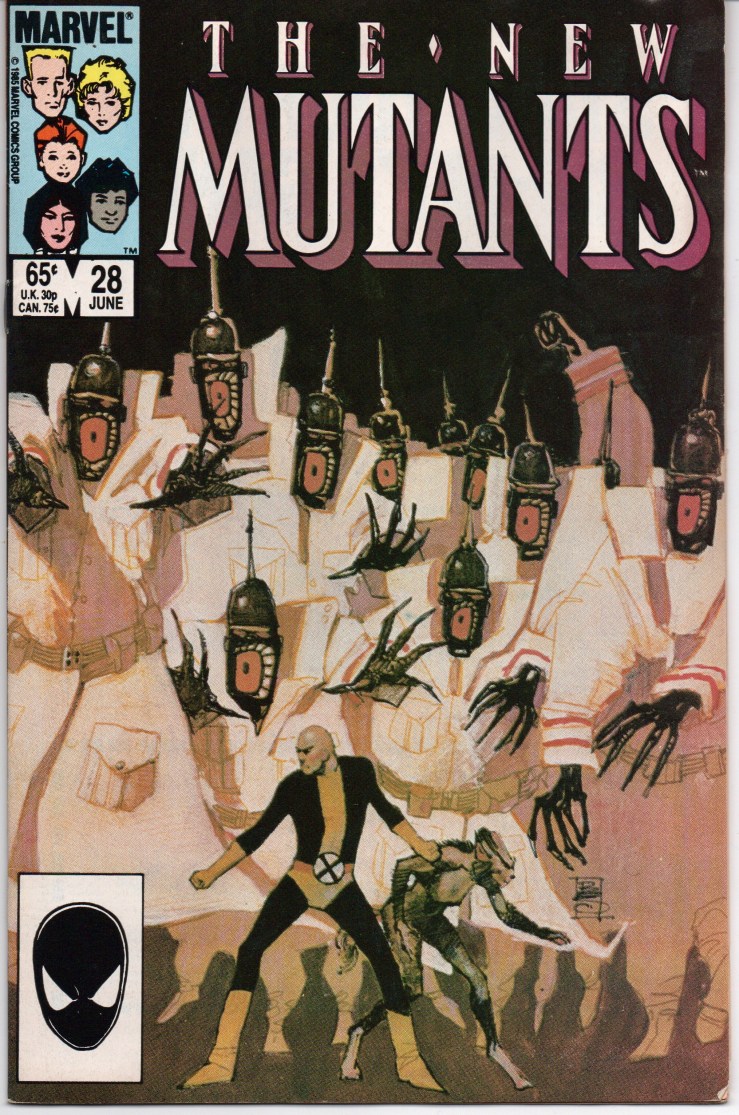
The next three issues of The New Mutants (27-29) tell the Legion story line.
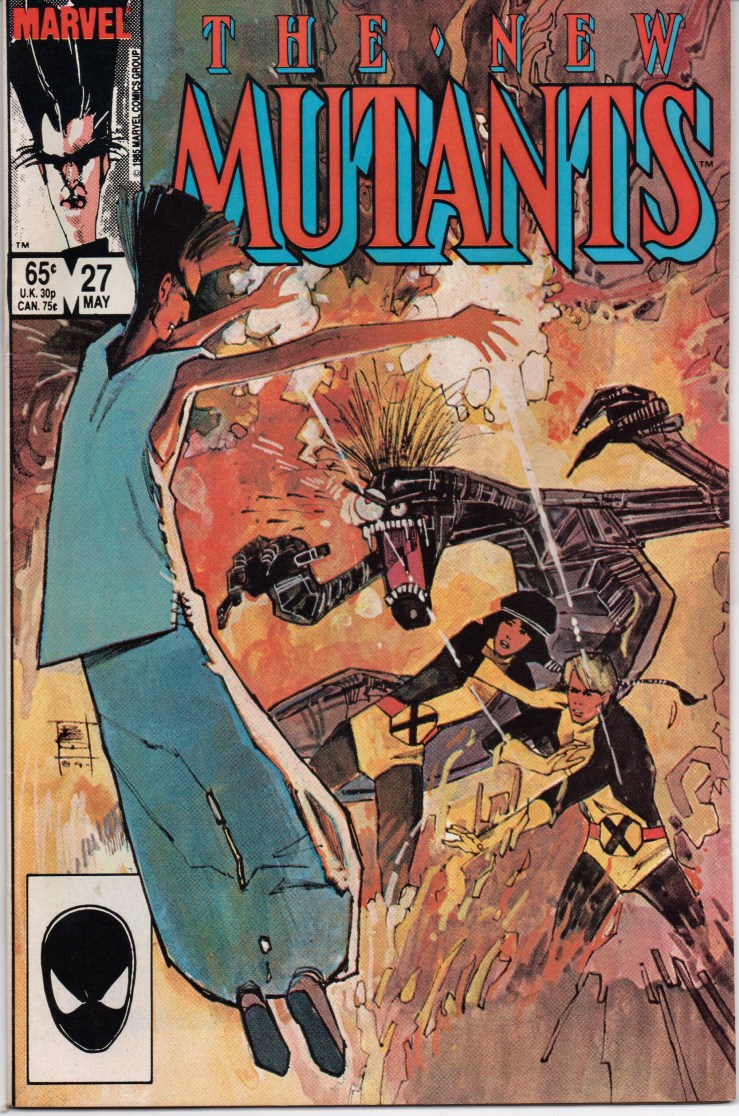
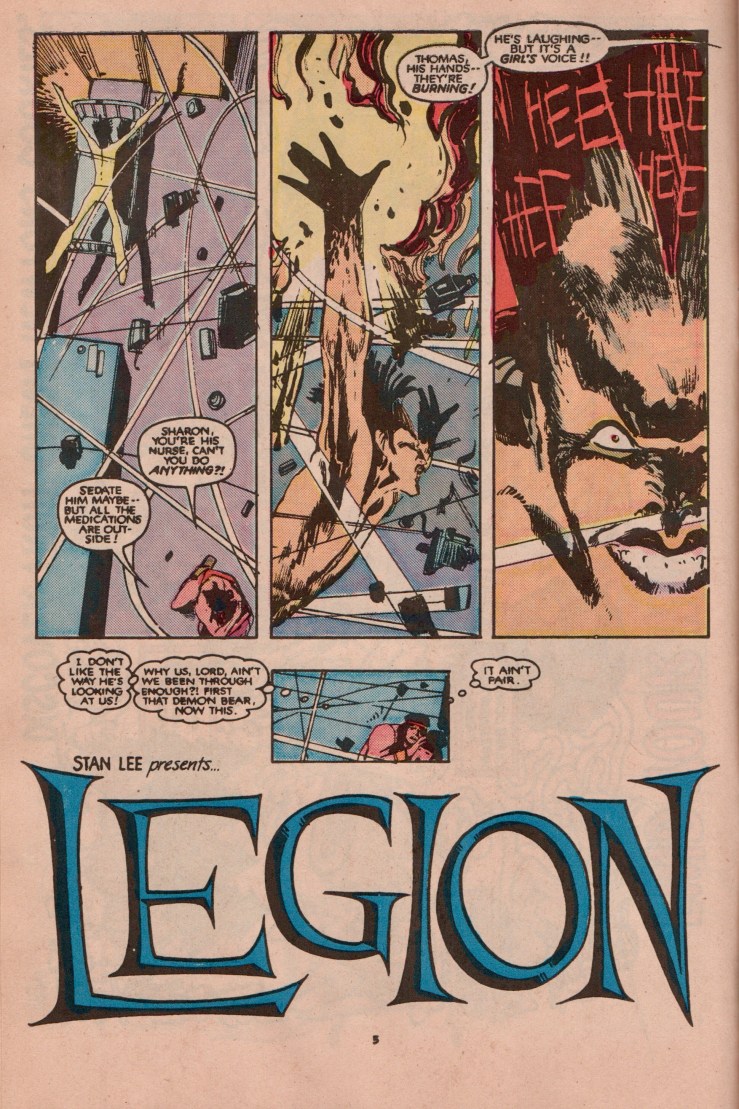 I recall liking the Legion story of The New Mutants, although it never stood out as strongly as The Demon Bear Saga, or the issues where Magneto took over The New Mutants’ leadership. But that isn’t why I had no interest in watching the Legion television show.
I had no interest in watching the Legion television show because every single Marvel television show that I’ve seen so far has been boring, or garbage, or boring garbage. And don’t even get me started on the execrable X-Men films, which have squandered so many good storylines. (Although I thought Deadpool was great, which sort of counts as an X-Men film, and I do have an interest in seeing Logan).
Anyway, after a few critics and authors I admire tweeted that Legion was, like, actually really good/excellent/thrilling/etc., I looked up the show, and saw that the showrunner and creator is Noah Hawley. That’s the dude who did FX’s Fargo, another TV show I was also wary of which also turned out to be excellent.
So, over the past four nights, I’ve watched the first four episodes of Legion. (I’ll watch the fifth tonight).
The show is fantastic.
It’s the first “superhero” show I’ve seen that succeeds not just in its script, casting, and themes, but aesthetically as well. Hawley smuggles in references to the original New Mutants run in a way that doesn’t feel like fanservice—but the other reference points here go past comic books and into film: Legion openly steals from Charlie Kaufman, Michel Gondry, Alfonso Cuaron, and Wes Anderson. (I mean this as a compliment). Hell, there’s something Pynchonesque about the show too, in its themes of paranoia, its treatment of the concept of reality, its streak of dark but somehow zany humor, and its subversive sexiness.
The casting for Legion is pretty great too. The guy who played the guy who died in the car crash on Downton Abbey so he could leave that show and get better shows does an admirable job as David. The temptation would be to play David as batshit crazy, but the portrayal is measured, often archly comical, and ultimately sympathetic. (Shit, I just looked that guy’s name up—I saw him on a web episode of High Maintenance as a stay-at-home dad who enjoyed wearing women’s clothes and thought he was great, but also thought, Damn, hope Matthew Crawley can get some higher-profile gigs—anyway, that dude, Dan Stevens, is in that new Disney live action Beauty and the Beast film with Hermione Hogwarts, so I guess he’s doing fine).
Where was I? Oh, casting—yeah, there are solid performances here. Aubrey Plaza plays a dead junkie who may or may not be a ghost in David’s head. Jean Smart (aka my least favorite Designing Woman) plays the not-Moira MacTaggart/not-Prof. X character Melanie Bird. Smart was smart in the second season of Hawley’s other FX show, Fargo, which also featured Rachel Keller, who is basically the second lead on Legion as Sydney Barrett (not subtle, I know), David’s untouchable girlfriend. And the show basically had me when Bill Irwin showed up. Like I said, it’s great stuff.
Probably my favorite thing about the show so far though is that it doesn’t seem particularly interested in being anyone’s franchise. It stays true to the paranoid spirit of mid-eighties Claremont X-Men, and seamlessly combines plot and aesthetics in a way that a show about a telepathic and telekinetic mutant would have to to succeed. It’s also dark without being self-serious or self-important. (So many superhero films and shows fail utterly here).
Anyway, I’ve loved the first few episodes, and even if the showrunners fuck it all up, hey, it’s just TV, right?