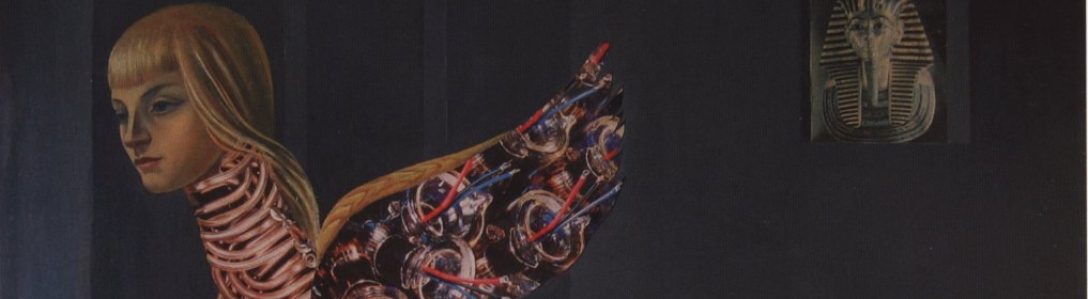
Self Portrait as Shantytown — Julie Heffernan

heffernan-self20portrait20as20shantytown2c2020142028671x102429

M

Agnus Dei (detail) — Francisco de Zurbarán

Screenshot 2016-05-19 at 6.06.47 PM

No possibility of transcendence (Elena Ferrante)

I’m always surprised when someone points out as a flaw the fact that my stories contain no possibility of transcendence. Here I’d like to move on to a statement of principle: since the age of fifteen, I haven’t believed in the kingdom of any God, in Heaven or on Earth—in fact, wherever you place it, it seems dangerous to me. On the other hand, I share the opinion that most of the concepts we work with have a theological origin. Theology helps us understand the origins of the dregs we even now resort to. As for the rest, I don’t know what to tell you. I’m comforted by stories that emerge through horror to a turning point, stories in which someone is redeemed as confirmation that peace and happiness are possible, or that one can return to a private or public Eden. But I tried to write a story like that, long ago, and I discovered that I didn’t believe in it. I’m drawn, rather, to images of crisis, to seals that are broken. When shapes lose their contours, we see what most terrifies us, as in Ovid’s “Metamorphoses,” Kafka’s “Metamorphosis,” and Clarice Lispector’s extraordinary “Passion According to G.H.” You don’t go beyond that; you have to take a step back and, to survive, reënter some good fiction. I don’t believe, however, that every fiction we orchestrate is good. I cling to those that are painful, those that arise from a profound crisis of all our illusions. I love unreal things when they show signs of firsthand knowledge of the terror, and hence an awareness that they are unreal, that they will not hold up for long against the collisions. Human beings are extremely violent animals, and the violence they are always ready to use in order to impose their own eternal, salvific life vest, while shattering those of others, is frightening.

Elena Ferrante in conversation with novelist Nicola Lagioia. English translation by Ann Goldstein. The full exchange between Lagioia and Ferrante will be published in Frantumaglia: An Author’s Journey Told Through Letters, Interviews, and Occasional Writings this fall. Read a longer (and fascinating) excerpt at The New Yorker. 

leis: track, footprint, furrow.

img_2356

From Joseph T. Shipley’s The Origin of English Words: A Discursive Dictionary of Indo-European Roots.

The Milkmaid (detail) — Johannes Vermeer

Screenshot 2016-05-19 at 10.54.13 AM

Basket of Fruit — Caravaggio

canestra_di_frutta_caravaggio

Two Pairs of Legs — Manuel Alvarez Bravo

two-pairs-of-legs-1929large

Vanitas (detail) — Hans Baldung

Screenshot 2016-05-18 at 1.10.53 PM

Vision of the Last Days (detail) — Hildegard of Bingen

Screenshot 2016-05-17 at 3.27.52 PM

The Pink Shirt — Tamara de Lempicka

tamara-de-lempicka-the-pink-shirt-i

A Chameleon — Ustad Mansur

a-chameleon-1612large

Like 8 minutes of Prince rehearsing “When Doves Cry” in 1984

Untitled — Vasile Kazar

unknown-title-4

Three Books

img_2325-1

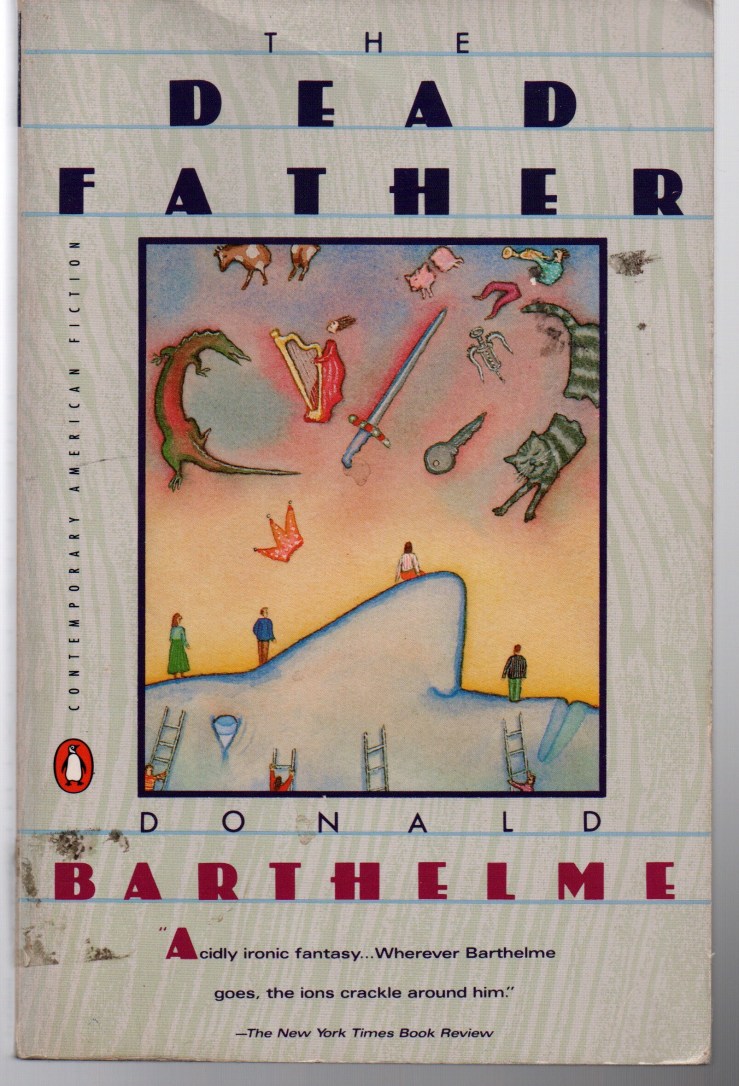
How Bluegrass Music Destroyed My Life by John Fahey. Third edition paperback from Drag City (DC 124). No designer credited.

I first read Fahey’s collection in 2000 or 2001, when it first came out—a good friend lent it to me and I returned it. Later, he loaned it to another friend who did not return it. I bought the book last summer while visiting the first friend (he took me to the Spoonbill & Sugartown bookshop in Brooklyn). Fahey’s book is sorta memoir, sorta fiction (at times), all weird and good. There’s a wonderful chapter about Fahey’s work on Michaelangelo Antonioni’s film Zabriskie Point that culminates in Fahey and Antonioni getting into a fistfight.

img_2320

Will Oldham on Bonnie “Prince” Billy by Will Oldham and Alan Licht. First edition trade paperback from W.W. Norton. Cover design by Faber using a painting (of Oldham) by Becky Blair.

The friend who lent me the Fahey book insisted for months that I pick up Will Oldham on Bonnie “Prince” Billy; when I kept neglecting to find it, he eventually just sent it to me. The book is basically the edited transcripts of discussions between Oldham and Licht. While there’s a heavy focus on Oldham’s music (and his acting career), the book is ultimately about creation and the artistic process. It is one of the better books about music that I’ve ever read. (A “Cosmological Timeline” at the end of the book begins in 1778 with Captain James Cook’s discovery of the “the Hawaiian tradition of surfing” and ends in 2011 with Jennifer Herrema changing RTX into Black Bananas).

img_2322

Sign ‘O’ the Times by Michaelangelo Matos. A 33 1/3 book from Continuum, 2004. No designer credited.

I bought this at a Friends of the Library sale maybe 10 years ago. Matos’s take on Prince’s 1987 double album weaves music history and music criticism into personal memoir. The book ends with Prince seeing Matos seeing Prince at an Ohio Players’ show in 1997.

Washing the Hair — Ito Shinsui

washing-the-hair

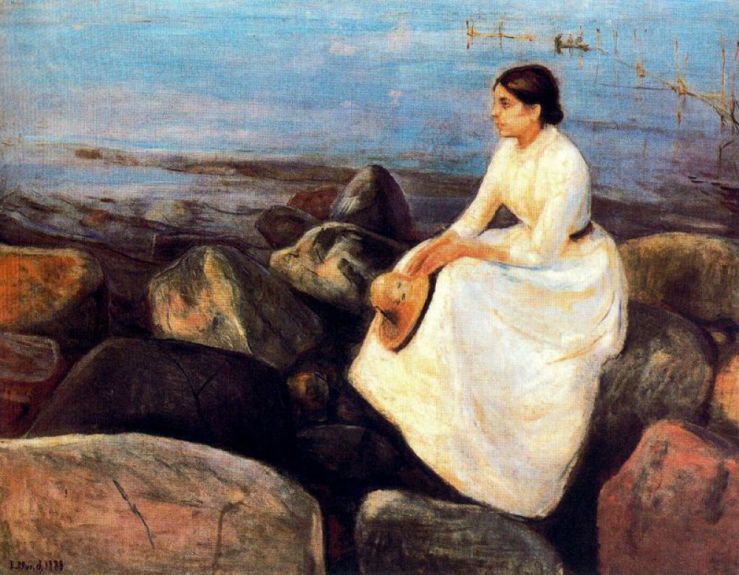
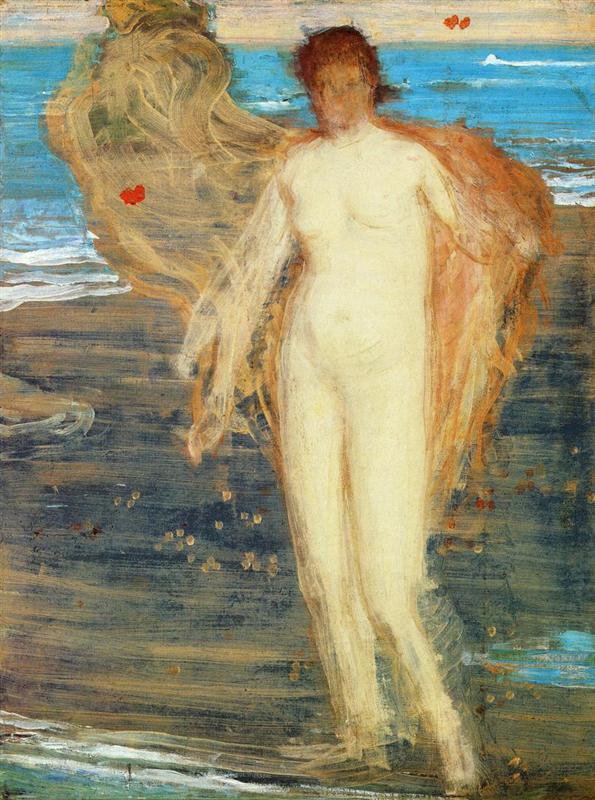
From this darkness packs of mad dogs will emerge, vipers, scorpions, enormous sea serpents (From Ferrante’s The Story of a New Name)

I made the dark descent. Now the moon was visible amid scattered pale-edged clouds; the evening was very fragrant, and you could hear the hypnotic rhythm of the waves. On the beach I took off my shoes, the sand was cold, a gray-blue light extended as far as the sea and then spread over its tremulous expanse. I thought: yes, Lila is right, the beauty of things is a trick, the sky is the throne of fear; I’m alive, now, here, ten steps from the water, and it is not at all beautiful, it’s terrifying; along with this beach, the sea, the swarm of animal forms, I am part of the universal terror; at this moment I’m the infinitesimal particle through which the fear of every thing becomes conscious of itself; I; I who listen to the sound of the sea, who feel the dampness and the cold sand; I who imagine all Ischia, the entwined bodies of Nino and Lila, Stefano sleeping by himself in the new house that is increasingly not so new, the furies who indulge the happiness of today to feed the violence of tomorrow. Ah, it’s true, my fear is too great and so I hope that everything will end soon, that the figures of the nightmares will consume my soul. I hope that from this darkness packs of mad dogs will emerge, vipers, scorpions, enormous sea serpents. I hope that while I’m sitting here, on the edge of the sea, assassins will arrive out of the night and torture my body. Yes, yes, let me be punished for my insufficiency, let the worst happen, something so devastating that it will prevent me from facing tonight, tomorrow, the hours and days to come, reminding me with always more crushing evidence of my unsuitable constitution. Thoughts like that I had, the frenzied thoughts of girlish discouragement. I gave myself up to them, for I don’t know how long.

From Elena Ferrante’s 2012 novel The Story of a New Name. English translation by Ann Goldstein.