Mrs. Abrams in Paris — Lucien Abrams

display_image (2)

RIP Wes Craven

RIP Wes Craven, 1939-2015

Like a lot of people my age (I was born in 1979), I grew up alternately seeking out and then trying to look away from snippets of Wes Craven films—posters, previews, surreptitious late-night cable screenings—hell, even Mad Magazine parodies. Nightmare fuel, sometimes glimpsed through webbed fingers. Was it A Nightmare on Elm Street or Swamp Thing I saw first, at 9 or 10, probably on the USA network? I know I didn’t see his cult classics until later, until I was in college—The Last House on the Left and The Hills Have Eyes. By then I’d seen the Nightmare on Elm Street films a few times in their raw VHS glory. My favorite is still Dream Warriors. And of course I saw Scream and its sequels in the theater—we loved it, thought it so clever, so meta! But my favorite Craven film by far is The People Under the Stairs, a 1991 dark fable that summarized Reagan’s eighties. Predatory capitalism as horror. Anyway, dude was a legend and his films will live on, both in and of themselves, but also as the generative material for films yet to come.

Gravure, Uno — Wilfredo Lam

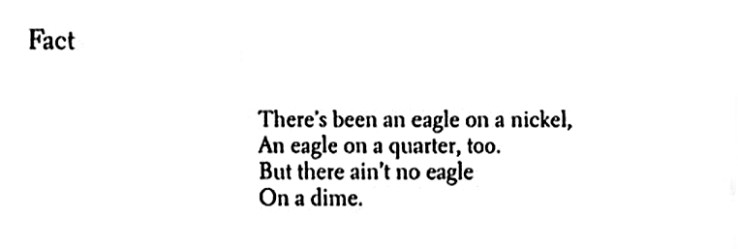
“Fact” — Langston Hughes

Screenshot 2015-08-30 at 6

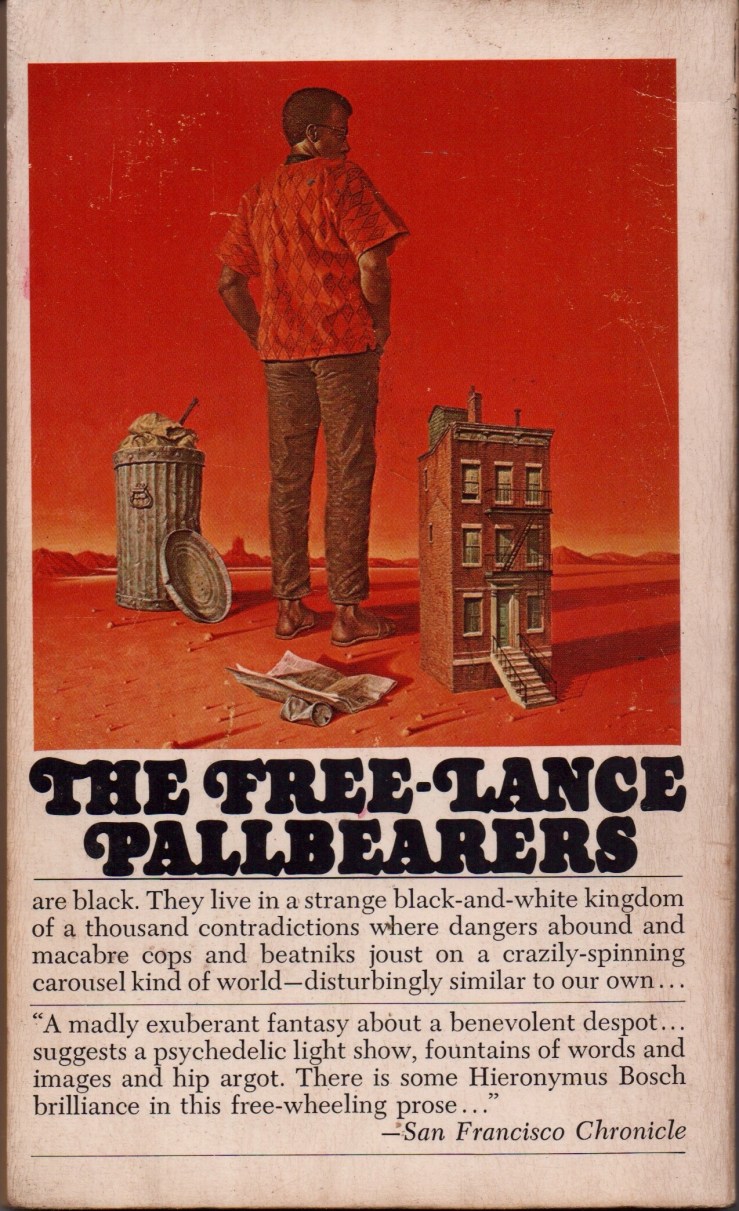
Ishmael Reed (Book acquired, 8.20.2015)

image

I love love love the cover of this Ishmael Reed mass market paperback Bantam edition of The Free-Lance Pallbearers. image

Two Friends — Egon Schiele

Crimes of the Moonlight Melonmounter (Cormac McCarthy’s Suttree)

Still Life with Watermelons, Frida Kahlo

Two pairs of brogans went along the rows.

You aint goin to believe this.

Knowin you for a born liar I most probably wont.

Somebody has been fuckin my watermelons.

What?

I said somebody has been …

No. No. Hell no. Damn you if you aint got a warped mind.

I’m tellin you …

“I dont want to hear it.

Looky here.

And here.

They went along the outer row of the melonpatch. He stopped to nudge a melon with his toe. Yellowjackets snarled in the seepage. Some were ruined a good time past and lay soft with rot, wrinkled with imminent collapse.

It does look like it, dont it?

I’m tellin ye I seen him. I didnt know what the hell was goin on when he dropped his drawers. Then when I seen what he was up to I still didnt believe it. But yonder they lay.

What do you aim to do?

Hell, I dont know. It’s about too late to do anything. He’s damn near screwed the whole patch. I dont see why he couldnt of stuck to just one. Or a few.

Well, I guess he takes himself for a lover. Sort of like a sailor in a whorehouse.

I reckon what it was he didnt take to the idea of gettin bit on the head of his pecker by one of them waspers. I suppose he showed good judgment there.

What was he, just a young feller?

I dont know about how young he was but he was as active a feller as I’ve seen in a good while.

Well. I dont reckon he’ll be back.

I dont know. A man fast as he is ought not to be qualmy about goin anywheres he took a notion. To steal or whatever.

What if he does come back?

I’ll catch him if he does.

And then what?

Well. I dont know. Be kindly embarrassin now I think about it.

I’d get some work out of him is what I’d do.

Ought to, I reckon. I dont know.

You reckon to call the sheriff?

And tell him what?

They were walking slowly along the rows.

It’s just the damndest thing I ever heard of. Aint it you? What are you grinnin at? It aint funny. A thing like that. To me it aint.


One of my favorite passages from Cormac McCarthy’s novel Suttree. The title of this post also comes from the novel, several pages later, after the melonmounter has been apprehended.

Entries under “D” from Captain Grose’s Dictionary of the Vulgar Tongue (1811)

The following definitions are from the “D” section of Captain Grose’s Dictionary of the Vulgar Tongue (1811).


DAB. An adept; a dab at any feat or exercise. Dab,
quoth Dawkins, when he hit his wife on the a-se with a
pound of butter.

DACE. Two pence. Tip me a dace; lend me two pence.
CANT.

DADDLES. Hands. Tip us your daddle; give me your hand.
CANT.

DADDY. Father. Old daddy; a familiar address to an old man. To beat daddy mammy; the first rudiments of drum beating, being the elements of the roll.

DAGGERS. They are at daggers drawing; i.e. at enmity,
ready to fight.

DAIRY. A woman’s breasts, particularly one that gives
suck. She sported her dairy; she pulled out her breast.

DAISY CUTTER. A jockey term for a horse that does not lift up his legs sufficiently, or goes too near the ground, and is therefore apt to stumble.

DAISY KICKERS. Ostlers at great inns.

DAM. A small Indian coin, mentioned in the Gentoo code of laws: hence etymologists may, if they please, derive the common expression, I do not care a dam, i.e. I do not care half a farthing for it.

DAMBER. A rascal. See DIMBER.

DAMME BOY. A roaring, mad, blustering fellow, a scourer of the streets, or kicker up of a breeze. Continue reading “Entries under “D” from Captain Grose’s Dictionary of the Vulgar Tongue (1811)”

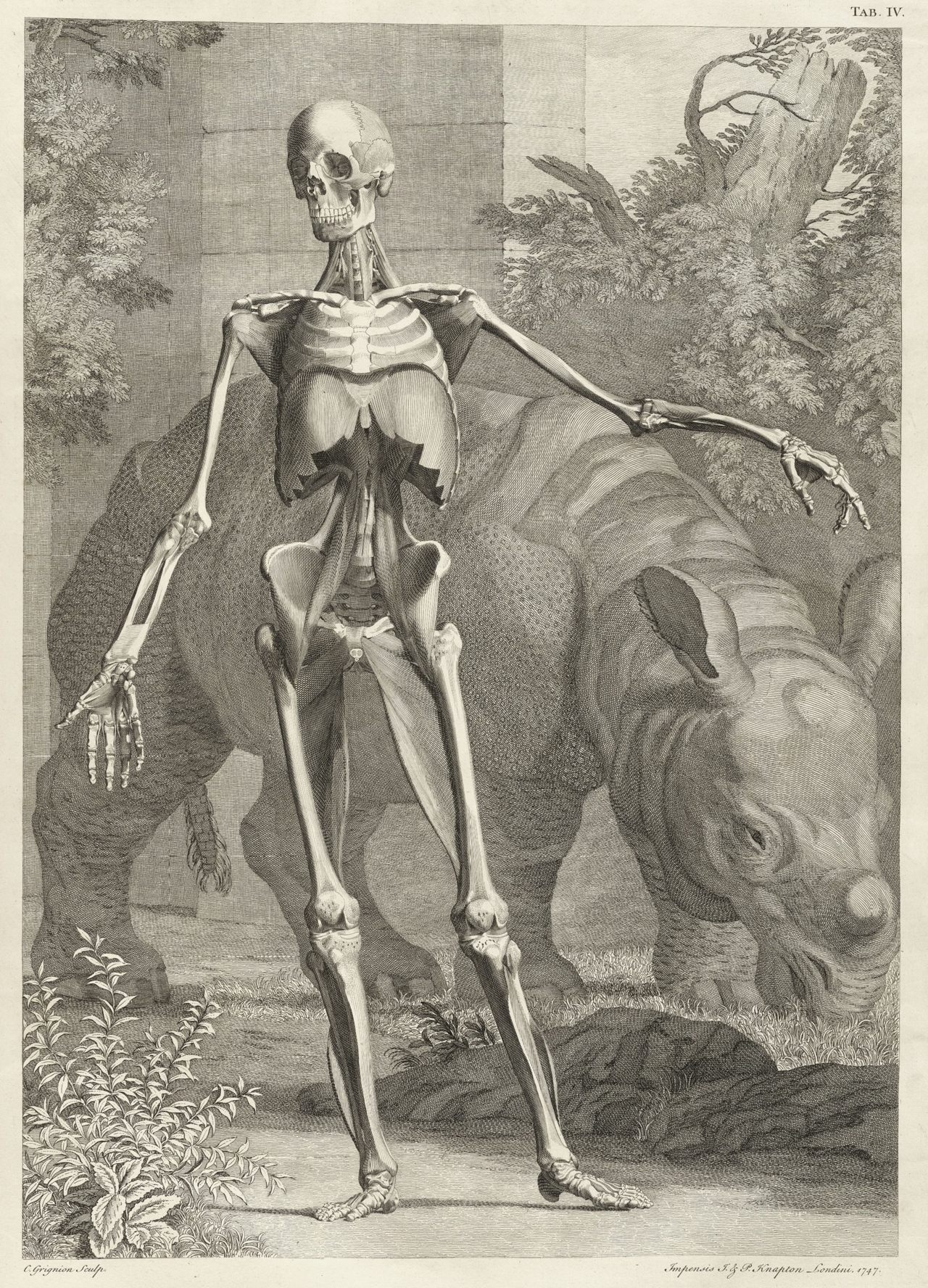
Engraving of Clara the Rhino and a Human Skeleton from Bernhard Siegried Albinus’ Tabulae sceleti et musculorum corporis humani

tumblr_m3vxj3Y3rr1rqs7fyo1_1280

(Via, more).

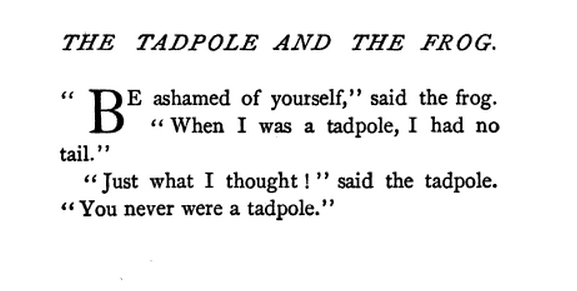
“The Tadpole and the Frog,” a fable from Robert Louis Stevenson

Screenshot 2015-07-29 at 9.49.20 AM

I’ve salvaged not a word (Cormac McCarthy’s Suttree)

From all old seamy throats of elders, musty books, I’ve salvaged not a word. In a dream I walked with my grandfather by a dark lake and the old man’s talk was filled with incertitude. I saw how all things false fall from the dead. We spoke easily and I was humbly honored to walk with him deep in that world where he was a man like all men. From the small end of a corridor in the autumn woods he watched me go away to the world of the waking. If our dead kin are sainted we may rightly pray to them. Mother Church tells us so. She does not say that they’ll speak back, in dreams or out. Or in what tongue the stillborn might be spoken. More common visitor. Silent. The infant’s ossature, the thin and brindled bones along whose sulcate facets clove old shreds of flesh and cerements of tattered swaddle. Bones that would no more than fill a shoebox, a bulbous skull. On the right temple a mauve halfmoon.

I read Cormac McCarthy’s Suttree five years ago and still haven’t recovered.

I started listening to the audiobook of it this week as I returned to my fall work (school) commute—the language is marvelous in the reading—but I have to go back and dwell on passages, like the one above, which resonates strongly with so much of McCarthy’s work—the son or grandson communing with the dead father, out of dimness, opposite equals advancing. And damn, somehow I’d forgotten that Suttree had a stillborn twin brother. And that the novel begins with a suicide. More to come.

Three Princesses of the Underworld — Viktor Vasnetsov

William Faulkner’s 4th grade report card

Screenshot 2015-08-28 at 12.27.24 PM

Via The Harry Ransom Center’s Instagram account.

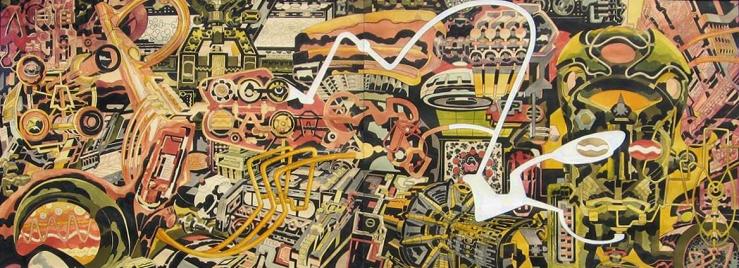
Dream Machine — Jack Kirby

kirby-machine

And here’s a topless Kirby at work on the painting:

KirbyWorking

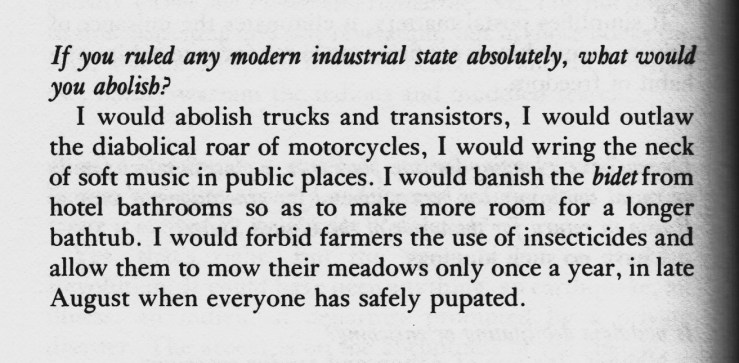
If Nabokov ruled any modern industrial state absolutely, what would he abolish?

image

From Vladimir Nabokov’s 1969 interview with James Mossman for BBC2’s Review. Reprinted in the same year in The Listener, and collected in Strong Opinions.

One Day This Will All Be Yours — Michael Kagan

kagan_006