Reading — Giovanni Boldini

Duel — Albert Bloch

“His sentences are oar strokes” (Thomas Bernhard)

His sentences are oar strokes that would propel him forward if it weren’t for the powerful current. Sometimes he pauses, falls silent and listens, as though to check whether his present situation might not have been replaced by its successor. “It’s impossible to direct anything.” Things still in the future and the distant past all pull on one string with him, sometimes ten times in the space of a single sentence. He is a man who thinks continually of great losses, without any detachment. The sea surfaces in him, and in the sea is a boulder, part of an enormous sunken city, the end of an unanticipated story, far in the past. Death knots his net … Colors that are nothing but extrusions of flesh narcotize him philosophically … The adducing of extremes, so as to be able to spit them out. Tensions between eerie subaquatic scenes. The word “yoke” occurs frequently. The word “true”—but also “untrue” and “unreal.” The word “ear of corn” may acquire the same meaning as “the whole of our welfare state.” They are his eyes that speak, they enact his thought, they pitch wildness and quiet alternately at the disquiet of others. The painter is such an oddity, I think, that no one understands him. Not a type. Always reliant on himself, and always rejecting everything coming at him, he has taken advantage to excess of all possibilities. To look at him is to look at the millennia. “Mountains, you know, can serve as telescopes, through which one can see into the future.” Or “inhumanly human.” He is able to irritate people, where there are no people. To suppress effervescence, where there is no effervescence. “Isn’t that an animal speaking? Am I not vermin?” Everything purposes the acceleration of his decay. Everything indicates a decisive childhood which was soon injured, a “stung nerve center,” an organically fertile double significance of insanity.

From Thomas Bernhard’s novel Frost.

“Virginal II” — Tim Hecker

Nude — Louis Valtat

“A Dream Within A Dream” — Edgar Allan Poe

dream

Reader with Red Book — Andre Masson

Dream, Think, Speak — Christopher Le Brun

Wim Wenders Riffing on Ozu

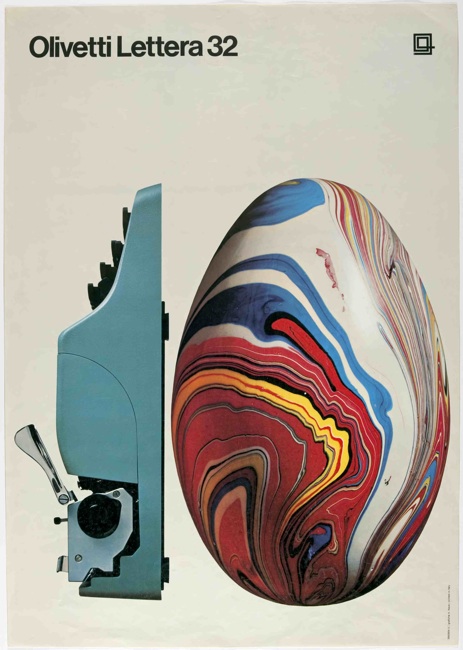
Olivetti Poster — Walter Ballmer

ballmer olivetti

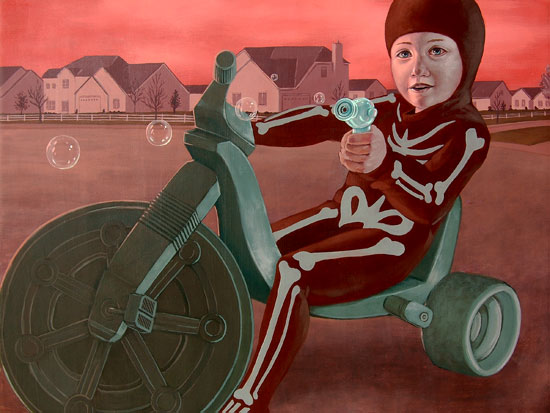
Suburban Terror — Casey Weldon

suburbanterror

“The Mermaid Wife,” A Legend of Scotland

“The Mermaid Wife”

From Folk-Lore and Legends of Scotland (1889)

A story is told of an inhabitant of Unst, who, in walking on the sandy margin of a voe, saw a number of mermen and mermaids dancing by moonlight, and several seal-skins strewed beside them on the ground.  At his approach they immediately fled to secure their garbs, and, taking upon themselves the form of seals, plunged immediately into the sea.  But as the Shetlander perceived that one skin lay close to his feet, he snatched it up, bore it swiftly away, and placed it in concealment.  On returning to the shore he met the fairest damsel that was ever gazed upon by mortal eyes, lamenting the robbery, by which she had become an exile from her submarine friends, and a tenant of the upper world.  Vainly she implored the restitution of her property; the man had drunk deeply of love, and was inexorable; but he offered her protection beneath his roof as his betrothed spouse.  The merlady, perceiving that she must become an inhabitant of the earth, found that she could not do better than accept of the offer.  This strange attachment subsisted for many years, and the couple had several children.  The Shetlander’s love for his merwife was unbounded, but his affection was coldly returned.  The lady would often steal alone to the desert strand, and, on a signal being given, a large seal would make his appearance, with whom she would hold, in an unknown tongue, an anxious conference.  Years had thus glided away, when it happened that one of the children, in the course of his play, found concealed beneath a stack of corn a seal’s skin; and, delighted with the prize, he ran with it to his mother.  Her eyes glistened with rapture—she gazed upon it as her own—as the means by which she could pass through the ocean that led to her native home.  She burst forth into an ecstasy of joy, which was only moderated when she beheld her children, whom she was now about to leave; and, after hastily embracing them, she fled with all speed towards the sea-side.  The husband immediately returned, learned the discovery that had taken place, ran to overtake his wife, but only arrived in time to see her transformation of shape completed—to see her, in the form of a seal, bound from the ledge of a rock into the sea.  The large animal of the same kind with whom she had held a secret converse soon appeared, and evidently congratulated her, in the most tender manner, on her escape.  But before she dived to unknown depths, she cast a parting glance at the wretched Shetlander, whose despairing looks excited in her breast a few transient feelings of commiseration.

“Farewell!” said she to him, “and may all good attend you.  I loved you very well when I resided upon earth, but I always loved my first husband much better.”

Iced Coffee — Fairfield Porter

List with No Name #40

  1. Sinbad the Sailor
  2. Tinbad the Tailor
  3. Jinbad the Jailer
  4. Whinbad the Whaler
  5. Ninbad the Nailer
  6. Finbad the Failer
  7. Binbad the Bailer
  8. Pinbad the Pailer
  9. Minbad the Mailer
  10. Hinbad the Hailer
  11. Rinbad the Railer
  12. Dinbad the Kailer
  13. Vinbad the Quailer
  14. Linbad the Yailer
  15. Xinbad the Phthailer

“Leda and the Swan” — W.B. Yeats

leda

“She” — Tom Clark

she