
David Mitchell talks about the inspiration behind his novel The Thousand Autumns of Jacob de Zoet. (Read our review).
Author: Biblioklept
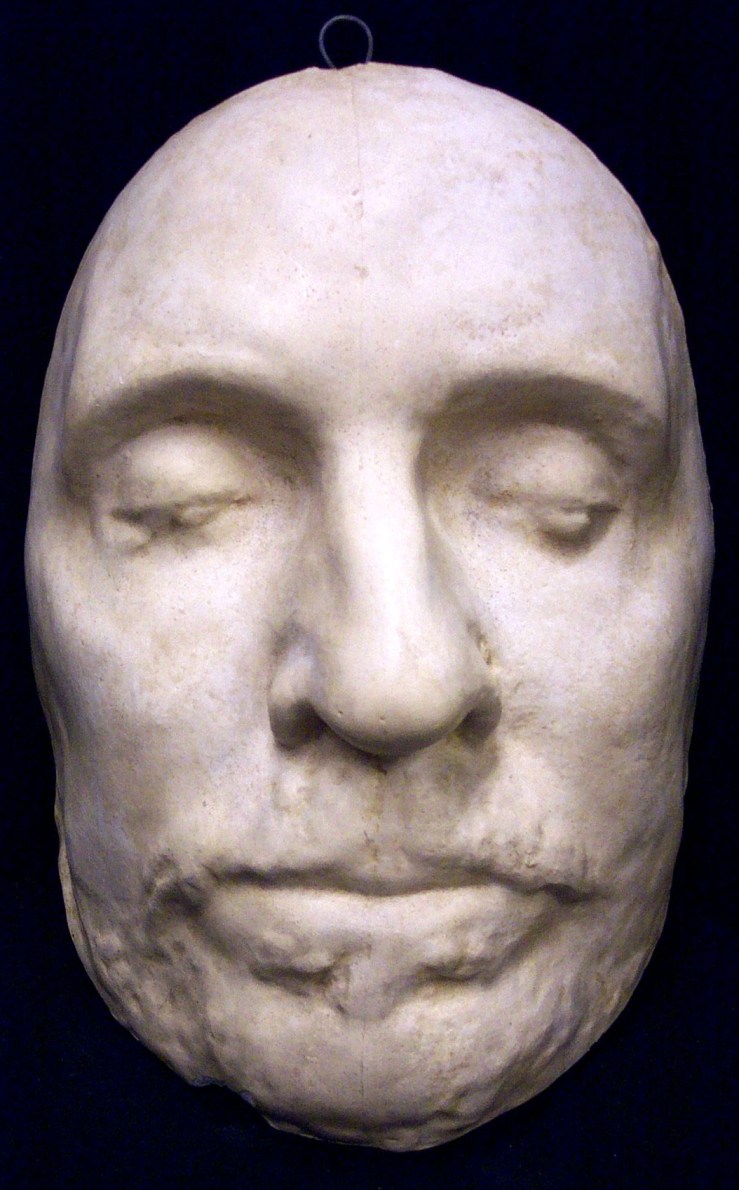
Oliver Cromwell’s Death Mask
Woman Leaving the Psychoanalyst — Remedios Varo

30 Seconds of Jonathan Franzen Hemming and Hawing
Orson Welles on Charlie Chaplin (1960 Interview)
Orson Welles talks about acting and directing in a 1960 interview in Paris. The interviewer steers the conversation to Charlie Chaplin, who bought Orson Welles’s idea for the film Monsieur Verdoux—and then cut Welles out of the creative process.
The Cocaine Scene from Charlie Chaplin’s Modern Times
“Notes on Accident Room” — F. Scott Fitzgerald
“Notes on Accident Room,” another fragment from F. Scott Fitzgerald’s Notebooks, which I am enjoying so very much—I know that The Notebooks are Fitzgerald’s sketches and ideas and quotes and anecdotes and dreams (etc.), but they read like some strange experimental novel.
Notes on Accident Room
Afternoon—Rolling table with splints, gauze bandages, rotten
Tiled floor—wall halfway
Tubes nitrous oxide (gas)
Deaf man—humble. Man with broken arm. Whether I took my coat off or not. Coat like intruding. Fireman’s child (make it wife) take wings, notices on door, smoking. Red headed conceited interne who took me other ward. Laughter of O’ O’Donovan’s nurse.
First Night—Thrice told story of the night before about the transfusion from the assailant to the victim. Why it was necessary. Crowding medical student. Barber. Barrel of fish. Souture with flap, the ordinary needle and black thin gut. The two lady dactors. “Externes” Blonde nurse. Bad cut of uniforms. Injections, pink disinfectant, needle and tweezers to draw it through, the flap. Negresses with gonorrhea probably. Zinder’s wife. Barber’s pretentiousness—wonderful. Oyster barrel from biggest sea food dealer in X. Can I work? Wiggles fingers. Straps on chair. Orderly and board washed; his morality. Big legs of doctoresses, petit bourgeousie manners of Zinder. Negroes by first name even by northerners. Discussion about dyes. Difference and relation between lady doctors one already the prom girl, her coat.
Second Night—Jamaica negro. His name. Writing it. Two wounds, one found. Drunk named Katy or Casey ( damn good name he says; hesitation saying it) Medical students in evidence. Princeton spies, Trimbles schedule (relatives, diet, time—other doctors’ rounds) Blood transference—won’t you have a chair? Not a wrinkle in the colored woman’s face—nor a flicker—her disease. How it sounded bad faucet, looked—wine sloshed around looking for vein, lost pump, elevators, close both doors, upstairs in biology laboratory. Previous memories “never mind how much” and “it’ll do you good” and joking while they do it and change of tone as if patient wouldn’t understand “Awful trouble getting this blood.” Little boy, fanning wet cast. Dirty feet. Miss Brady—her psychology. Miss Brady knowing everything. The stitches through the eyebrows, Niagara Falls, North Falls, Miss Brady kidding. The student who got fresh. The policeman. The sick negro kid with 103 degrees. The father with “six head of children” and the son with the dislocated arm that would have to be operated on.
He had other commission from outside. One of the nurses in the accident room, an abandoned movie fan, wanted to know if she was really going to marry a certain star. It was in all the magazines— all Bill had to ask her was yes or no.
Visit to the Plastic Surgeon — Remedios Varo

“Two Dreams” — F. Scott Fitzgerald
“Two Dreams,” a fragment from F. Scott Fitzgerald’s Notebooks—
(1) A trip to Florida with Howard Garrish and many bathing beauties. Asleep standing on the prow the beach and girls dancing. The one one skates like skiis. Like Switzerland, far castles and palaces. The horseman in the sea, the motor truck on sand, the horsemen coming ashore, the Bishop rears, falls, the horse saves him. My room, suits and ties, the view, the soldiers drilling under arcs in khaki, the wonderful water man is now Tom Taylor, I buy and ties wake in strange room. Blunder into Mother who nags me. My mean remarks.
(2) The colored burglar. Found clothes in hotel—underwear, suit; I discover pocket book, Echenard, my accusation.
New in the Stack: Werewolves and Angels and Faeries (Oh My)
As always, the stack overfloweth. Here are some of the more interesting looking titles to make their way to Biblioklept International Headquarters.
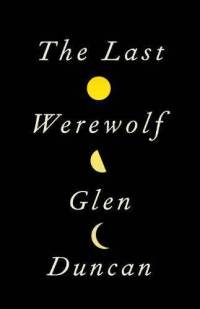 Glen Duncan’s new novel The Last Werewolf is a book about a werewolf. That’s kind of a terrible way to begin a write-up, but let’s state the obvious: you probably know if you want to read a werewolf book or not. Duncan’s hero Jake Marlowe skews more noir (as his name suggests) than twinky Twilight—he’s a hard-drinking , chain-smoking, 200-year-old rascal who’s just learned that the only other living werewolf has just died (hence, he’s like, the last werewolf, man); compounding matters, he’s more than ready to die himself. A sinister cabal called the World Organisation for the Control of Occult Phenomena is after Jake, testing the limits of his suicide wish. Duncan’s prose is harsh, visceral, and occasionally a bit purple, but horror genre fans looking for more, uh, bite (jeez, sorry) from their books may wish to check out The Last Werewolf, new in hardback from Knopf. You can read Justin Cronin’s (The Passage) take at The New York Times; in the meantime, a morsel—
Transformation woke me to the smell of rust and fuel and seaweed. I was lying on my spasming back on a metal table and the restraints were gone. So were my clothes. Shoulders, shins, head, hands and haunches shunted blood and hurried bone to meet the Curse’s metamorphic demand. My circus of consumed lives stirred. The world felt strangely undulant. I thought, Well, I hope you’re ready for this, kidnapping fuckers, whoever you are. Then, throbbing with hunger for living meat, I howled and rolled over onto my side.
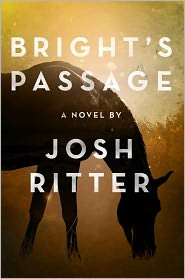 Bright’s Passage is the début novel from songwriter/musician Josh Ritter. This slim novel tells the story Henry Bright, a man who returns to the hills of West Virginia after the trauma of World War I only to have his wife (who is also his first cousin) die in childbirth. Bright buries her body and sets fire to their cabin, which sparks a massive forest fire. Bright then takes his infant son and flees, both from the fire and his unstable father-in-law, “The Colonel,” a vet of America’s adventures in the Philippines who still wears his uniform. The Colonel and his crazy sons pursue Bright, who is guided on the lam by the angel who talks to him—yeah, an angel directs Bright; in fact it was the angel’s idea that Bright marry his cousin, burn down his cabin, and run . . . also, the angel swears that Bright’s son is going to be, like, the new Messiah. Also, Bright’s horse talks. Ritter moves the action between Bright’s flight, his ordeal in WWI, and his youth in simple, concrete, declarative prose. There are echoes here of Chris Adrian’s angel stories (The Children’s Hospital and A Better Angel), and perhaps something of a Cormac McCarthy-lite vibe. Here’s an excerpt from obscure author Stephen King’s review in the Times—
At its best, “Bright’s Passage” shines with a compressed lyricism that recalls Ray Bradbury in his prime. When Henry, his talking horse — a kind of holy Mr. Ed — and the Future King of Heaven leave the woods and enter a small town, Ritter writes: “It seemed a tidy place of dappled white houses and American flags. . . . Even the trees here seemed to have a kind of deep green and prepossessing prosperity that the trees of the forest could have no share in.” Recalling his mother’s death, Henry remembers “a windstorm that made the trees bow to one another like ballroom dancers.” More striking still are Henry’s memories of life in the trenches, some of which compare favorably to the prose in Mark Helprin’s “Soldier of the Great War”: “Artillery passed high above their heads in singsong trajectories that merged and lifted with one another into strange musical chords, like cats crossing pump organs.”
Bright’s Passage is new in hardback from Random House.
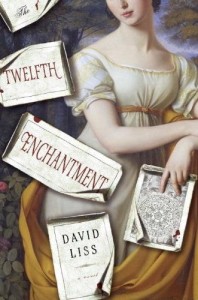 So we hit on the werewolves and angels, but what about those faeries? Honestly, that might have been a bit of a bait and switch, although David Liss’s new novel The Twelfth Enchantment does have faeries—but Romantic poets are slightly more prevalent in the book—only “Werewolves and Angels and Lord Byron and William Blake” sounds a bit clunky, doesn’t it? In any case, mea culpa. There are also Luddites and ghost dogs and alchemy and magic spells and all kinds of Gothic business going on in The Twelfth Enchantment, which gets a lot of mileage simply from its setting (the dawn of the Industrial Revolution), themes (the intersection of magick, alchemy, literature, and Gothic Romance), and characters (Byron, Blake, and Mary Crawford of Austen’s Mansfield Park). Our orphan heroine Lucy Derrick is in the clutches of her unsavory uncle who aims to marry her off until handsome, club-footed Lord Byron shows up at her house. He’s been hexed with a mystical curse and needs Lucy’s help; she soon finds herself snared in a web of dark intrigue, magic, and romance. The Twelfth Enchantment is a whimsical and lovingly crafted adventure story that will appeal to folks who dig literary mysteries (à la Jasper Fforde or pretty much any book that appropriates Jane Austen). The Twelfth Enchantment is new in hardback from Random House.
“I Want to Burn Every Novel I’ve Ever Written” — Read Richard Powers’s New Essay, “What Does Fiction Know?”
Places has published a new essay by novelist Richard Powers. “What Does Fiction Know” is kinda sorta about Berlin. A good read. From the essay—
Jane and I are in the aerospace hall, swept along from the 18th-century balloon fantasies to the Berlin Airlift, when I see it: the Rheintochter. I recognize it even before reading the tag. It’s a surface-to-air missile, one of the offspring of the V2, tested successfully but cancelled at the very end of the war in a power struggle between Göring, Speer, and Himmler. The romance of the name stops me: Wagner’s Rhine Maidens, guarding the gold that holds the secret to world dominion. The level of technology is stunning, years beyond the Allies’ similar efforts. But it’s the rocket’s gesamtkunstwerk — the total artwork of it — that does me in.
The thing is made of dark wood and bright chrome, shaped and polished like some loving piece of Amish furniture, as carefully crafted as anything out of the Museum of Decorative Arts: a lovely sculpture with a hint of Jugendstil. And it stands as just the simplest precursor to our infinitely more Wagnerian productions, those armed, unmanned drones right now winging through the Swat and Korengal valleys, the Predators and Reapers, controlled by satellite and coordinated by pilots at terminals on the far side of the planet. I stare at the Rhine daughter, seeing all the things she will yet grow up to become. Even a novelist can see that much; it does not take rocket science.
I feel like I’m having an asthma attack in a sealed coffin. Every guardedly optimistic, would-be redemptive human story I’ve ever shepherded into print has missed the point. We are built for this plot, shaped by evolution for it, and our steadily expanding mastery of the materials will not stop short of a magnum opus. No other craft that we put our hands to can hope to keep pace. By the time my wife and I find the exit through the labyrinth of machines, I want to burn every novel I’ve ever written.
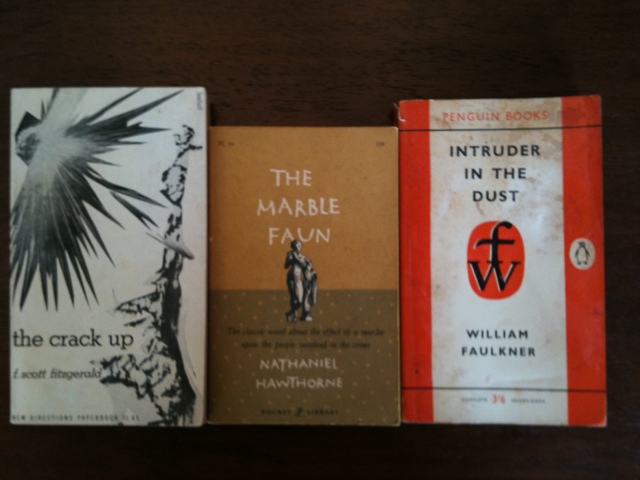
Bookstore Visit, 8.02.11
Meditation of St. Francis — Francisco de Zurbarán

Andy Warhol on Jasper Johns
This is kind of hilarious.
William Gaddis — A 1986 Filmed Interview
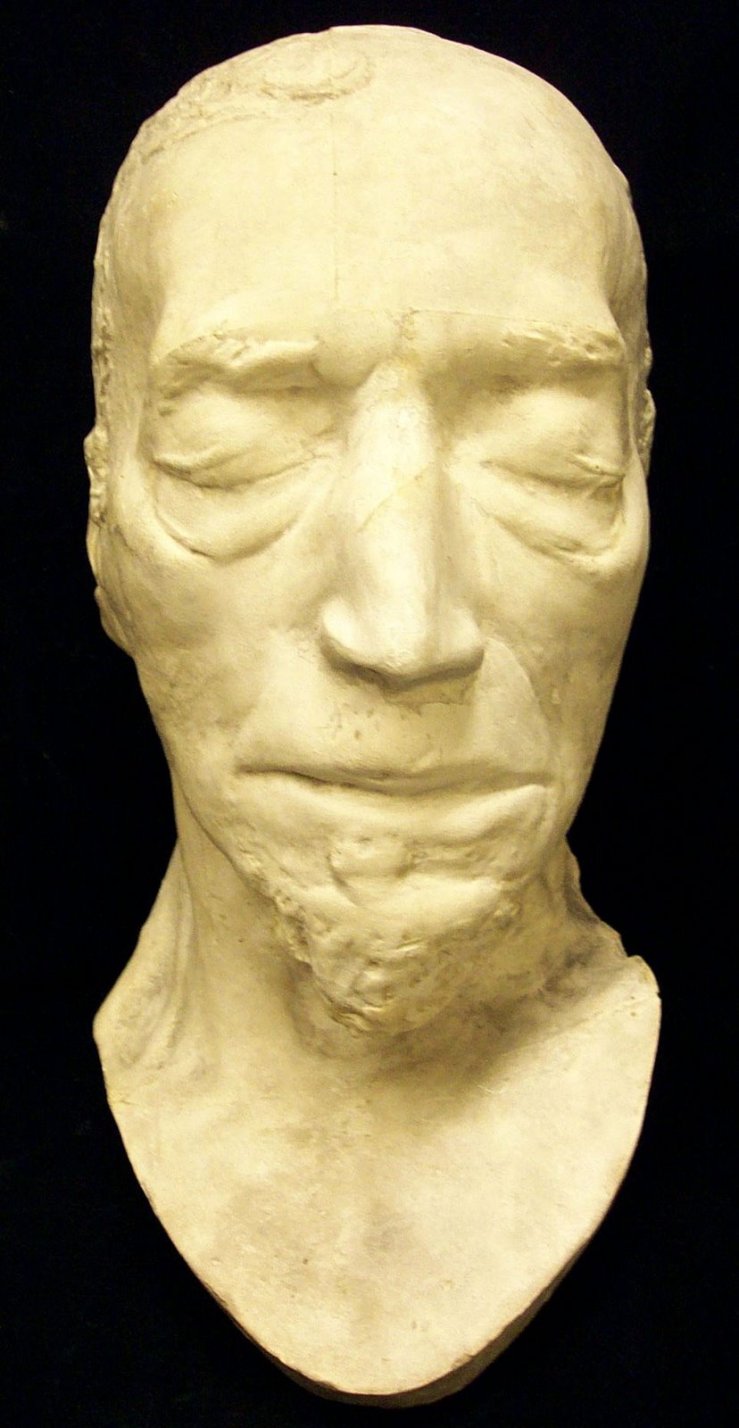
Disraeli’s Death Mask
“God Makes Mistakes” — J.R.R. Tolkien Rambles About Elves
 Biblioklept