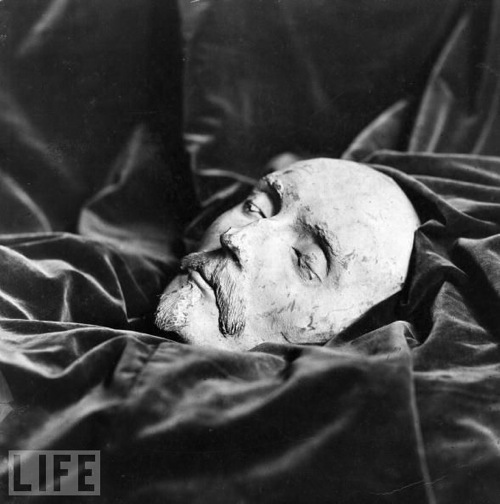
William Shakespeare’s Death Mask

Bad Dad

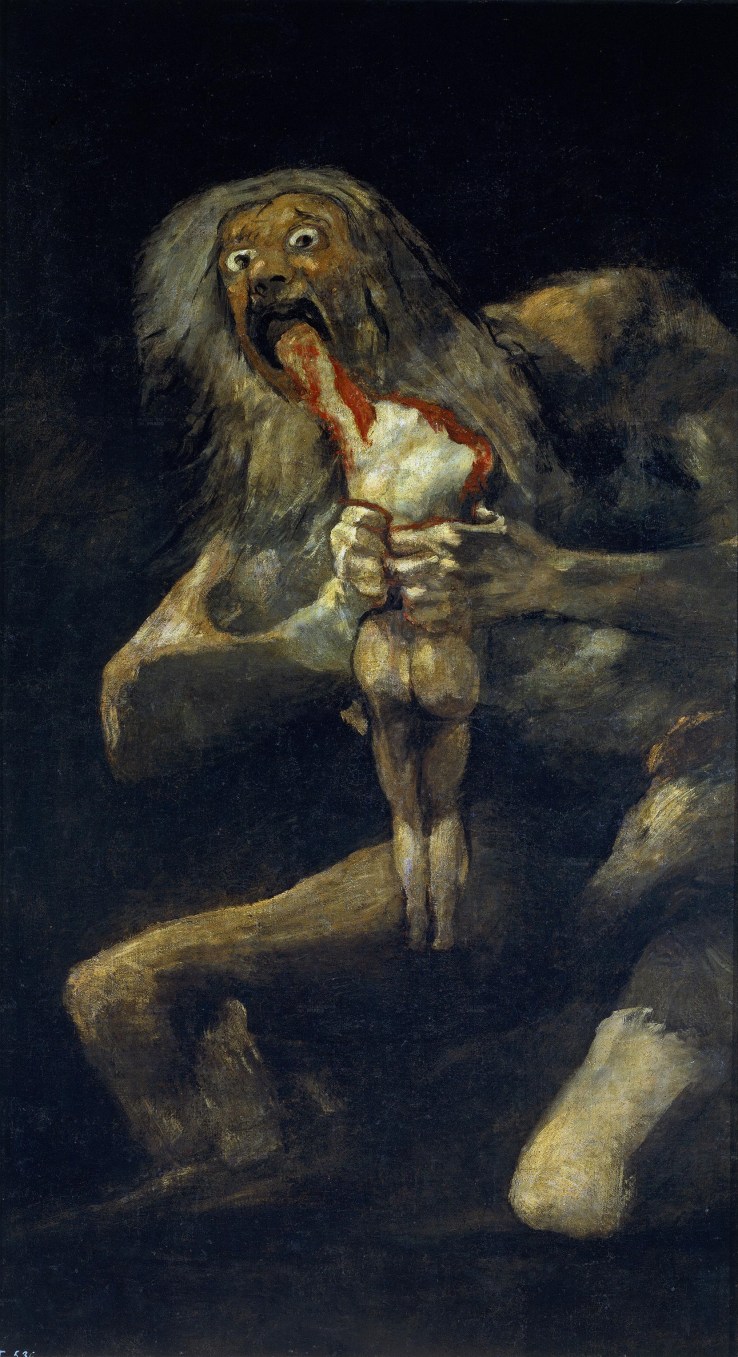
Saturn Devouring His Son -- Goya

Slavoj Žižek on Fatherhood

Nine Classic Paintings Revisited — Peter Greenaway Lectures on Art, Education, and More

(Via the nice people of Open Culture).

Biblioklept Does Bloomsday

Bloomsday blah blah blah — (all links lead to Biblioklept posts (yeah, we’re solipsists around here))—

How to read Ulysses

James Joyce talks dirty

Filming Finnegans

William Faulkner’s Joyce anxiety

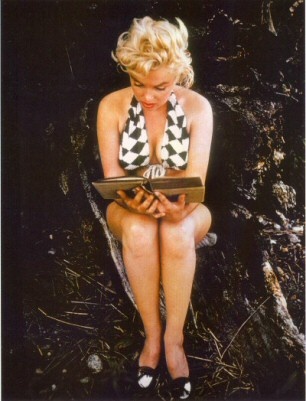
Marilyn Monroe reads Molly 

Biblioklept’s lousy review (the review is lousy, not the book) of Dubliners

Joyce’s entry on the 1901 Irish Census

Biblioklept’s review (not so lousy, the review) of a superior full-cast audio recording of Ulysses

James Joyce explains why Odysseus is the most “complete man’ in literature

Leopold’s Bloom’s recipe for burnt kidney breakfast

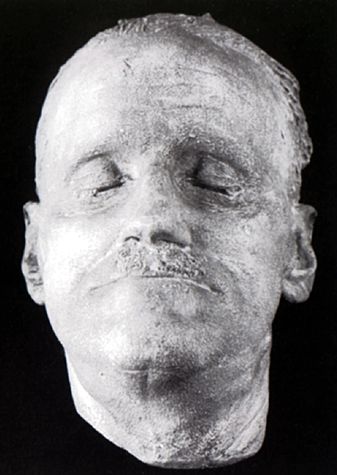
James Joyce’s death mask—


“Don’t Take Any Notice of What I’m Going to Say Because I Don’t Know What I’m Talking About” — Tom Stoppard on the Artist’s Bladder

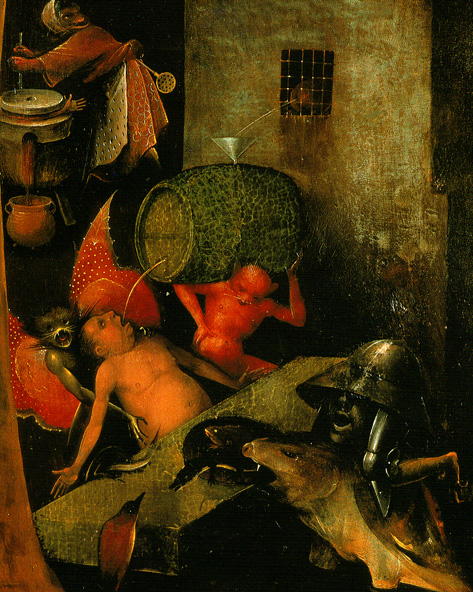
The Cask — Hieronymous Bosch

“If I Were to Write for People in General, I Would Have to Drastically Lower My Estimation of the Intelligence of My Reader” — William Vollmann on Difficult Books

In a 1993 interview with Larry McCaffery, William Vollmann explains why he doesn’t worry about book sales—

LM: You Bright and Risen Angels is a long, difficult, obsessive work. Were you aware when you were writing it that it was going to be difficult for this book to attract a large audience? In other words, is audience much of a consideration for you when you’re starting out with something, or do you just write the book you feel compelled to write?

WV: I just make the best book that I can and try to not worry about audience or if it will sell. The odds are against you, so why abuse your talent for the sake of a chimera? The only real pleasure for me in writing comes from pleasing myself. What readers think is interesting and illuminating (and it may even be correct), but that is nothing compared to the excitement of seeing a world develop. Besides, even though I like most individuals I meet, I have a pretty low opinion of people in general. So if I were to write for people in general, I would have to drastically lower my estimation of the intelligence of my reader. Rather than doing that, I write the way it seems the book has to appear. I don’t think that’s egotistic. There are often things I would like to include in my books—things about me personally and other materials—that I feel I have to leave out because they aren’t relevant to the book. I’m fairly ruthless along those lines, because I try to let nothing come in the way of what’s best for the book. If that means that the book won’t sell or that a publisher won’t buy it, then that’s my problem. I’ll suffer for that, but I won’t let the book suffer for it.

HBS — Fensler

Jeremy Bentham’s Death Mask


(More dead Bentham).

Alejandro Jodorowsky Documentary (BBC, For One Week Only)

The AV Club Interviews Comix Journalist Joe Sacco

The AV Club interviews Biblioklept fave Joe Sacco, whose books Palestine and Safe Area Goražde should be required reading for any thinking person. Sacco explores some of the messiest, ugliest terrains in the world, plumbing disaster and war with heart, wit, and insight (read our post on Sacco for more, including links to shorter works). From the interview—

AVC: You got out of journalism school in 1981, so in addition to the shift in public perception about comics as an adult medium, your career has also spanned a profound shift in the journalism industry. Do you think in some ways you’ve been the beneficiary of that?

JS: As many problems as I have with the mainstream media and the way it goes about its business, I’d say at least journalists were, for the most part, trained in discrimination. I have my problems, mostly with editorial decisions in bigger cities, in editorial offices as opposed to with columnists or reporters. I realize that, as time’s gone by with the new media—I’m talking about the electronic media—you could see a shift to emphasis on visuals and on shorter attention spans. I’m sorry, in a way, if my work is a beneficiary of that. I would hope my work has other attributes that have led to a success. But I can’t know for sure, you know? I think the comics market is the only growing part of the publishing industry, of the book-publishing trade. It’s increasing its share as time goes by. I think it also has to do with the sheer weight of good work that’s out there now—obviously not just my work. There are many other great cartoonists working in fiction and other fields that are just really doing work that has to be looked at, that you cannot ignore.

The Four and Twenty Elders Casting Their Crowns Before the Divine Throne — William Blake

“Diplomacy” — Lafcadio Hearn

“Diplomacy” by Lafcadio Hearn

IHAD BEEN ORDERED that the execution should take place in the garden of the yashiki. So the man was taken there, and made to kneel down in a wide sanded space crossed by a line of tobi-ishi, or stepping stones, such as you may still see in Japanese landscape-gardens. His arms were bound behind him. Retainers brought water in buckets, and rice-bags filled with pebbles; and they packed the rice-bags round the kneeling man–so wedging him in that he could not move. The master came, and observed the arrangements. He found them satisfactory, and made no remarks.

Suddenly the condemned man cried out to him:

“Honored sir, the fault for which I have been doomed I did not wittingly commit. It was only my very great stupidity which caused the fault. Having been born stupid, by reason of my karma, I could not always help making mistakes. But to kill a man for being stupid is wrong–and that wrong will be repaid. So surely as you kill me, so surely shall I be avenged;–out of the resentment that you provoke will come the vengeance; and evil will be rendered for evil.”

If any person be killed while feeling strong resentment, the ghost of that person will be able to take vengeance upon the killer. This the samurai knew. He replied very gently–almost caressingly:

“We shall allow you to frighten us as much as you please–after you are dead. But it is difficult to believe that you mean what you say. Will you try to give us some sign of your great resentment–after your head has been cut off?”

“Assuredly I will,” answered the man.

“Very well,” said the samurai, drawing his long sword;–“I am now going to cut off your head. Directly in front of you there is a stepping-stone. After your head has been cut off, try to bite the stepping-stone. If your angry ghost can help you to do that, some of us may be frightened. . . . Will you try to bite the stone?”

“I will bite it!” cried the man, in great anger–“I will bite it!–I will bite–”

There was a flash, a swish, a crunching thud: the bound body bowed over the rice sacks–two long blood-jets pumping from the shorn neck;–and the head rolled upon the sand. Heavily toward the stepping-stone it rolled: then, suddenly bounding, it caught the upper edge of the stone between its teeth, clung desperately for a moment, and dropped inert.

None spoke; but the retainers stared in horror at their master. He seemed to be quite unconcerned. He merely held out his sword to the nearest attendant, who, with a wooden dipper, poured water over the blade from haft to point, and then carefully wiped the steel several times with sheets of soft paper. .. . And thus ended the ceremonial part of the incident.

For months thereafter, the retainers and the domestics lived in ceaseless fear of ghostly visitation. None of them doubted that the promised vengeance would come; and their constant terror caused them to hear and to see much that did not exist. They became afraid of the sound of the wind in the bamboos–afraid even of the stirring of shadows in the garden. At last, after taking counsel together, they decided to petition their master to have a Ségaki-service performed on behalf of the vengeful spirit.

“Quite unnecessary,” the samurai said, when his chief retainer had uttered the general wish. . . . “I understand that the desire of a dying man for revenge may be a cause for fear. But in this case there is nothing to fear.”

The retainer looked at his master beseechingly, but hesitated to ask the reason of this alarming confidence.

“Oh, the reason is simple enough,” declared the samurai, divining the unspoken doubt. “Only the very last intention of that fellow could have been dangerous; and when I challenged him to give me the sign, I diverted his mind from the desire of revenge. He died with the set purpose of biting the stepping-stone; and that purpose he was able to accomplish, but nothing else. All the rest he must have forgotten. . . So you need not feel any further anxiety about the matter.”

And indeed the dead man gave no more trouble. Nothing at all happened.

Herman Melville on Hawthorne and Shakespeare’s Darkness

A passage from Herman Melville’s appreciation of Nathaniel Hawthorne, “Hawthorne and His Mosses”

Now it is that blackness in Hawthorne, of which I have spoken, that so fixes and fascinates me. It may be, nevertheless, that it is too largely developed in him. Perhaps he does not give us a ray of his light for every shade of his dark. But however this may be, this blackness it is that furnishes the infinite obscure of his background,–that background, against which Shakespeare plays his grandest conceits, the things that have made for Shakespeare his loftiest, but most circumscribed renown, as the profoundest of thinkers. For by philosophers Shakespeare is not adored as the great man of tragedy and comedy.–“Off with his head! so much for Buckingham!” this sort of rant, interlined by another hand, brings down the house,–those mistaken souls, who dream of Shakespeare as a mere man of Richard-the-Third humps, and Macbeth daggers. But it is those deep far-away things in him; those occasional flashings-forth of the intuitive Truth in him; those short, quick probings at the very axis of reality:–these are the things that make Shakespeare, Shakespeare. Through the mouths of the dark characters of Hamlet, Timon, Lear, and Iago, he craftily says, or sometimes insinuates the things, which we feel to be so terrifically true, that it were all but madness for any good man, in his own proper character, to utter, or even hint of them. Tormented into desperation, Lear the frantic King tears off the mask, and speaks the sane madness of vital truth. But, as I before said, it is the least part of genius that attracts admiration. And so, much of the blind, unbridled admiration that has been heaped upon Shakespeare, has been lavished upon the least part of him. And few of his endless commentators and critics seem to have remembered, or even perceived, that the immediate products of a great mind are not so great, as that undeveloped, (and sometimes undevelopable) yet dimly-discernible greatness, to which these immediate products are but the infallible indices. In Shakespeare’s tomb lies infinitely more than Shakespeare ever wrote. And if I magnify Shakespeare, it is not so much for what he did do, as for what he did not do, or refrained from doing. For in this world of lies, Truth is forced to fly like a scared white doe in the woodlands; and only by cunning glimpses will she reveal herself, as in Shakespeare and other masters of the great Art of Telling the Truth,–even though it be covertly, and by

Blockhead Folly — Goya

Terry Gilliam Explains “Derivative” to a Child (by Dissing Roland Emmerich)