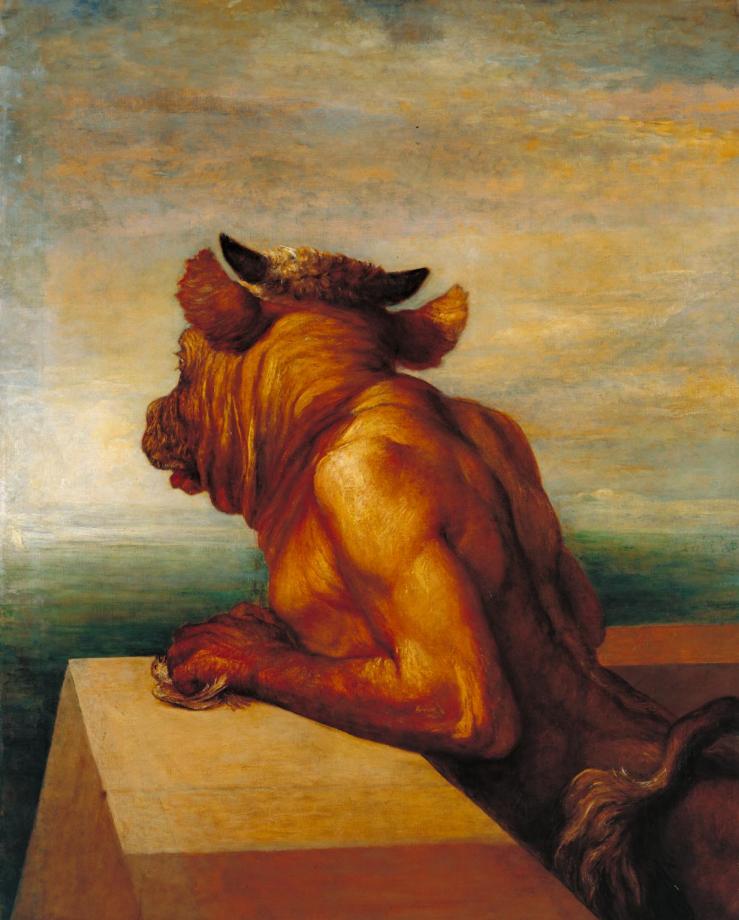
The Minotaur, 1885 George Frederic Watts (1817–1904)

The Minotaur, 1885 George Frederic Watts (1817–1904)
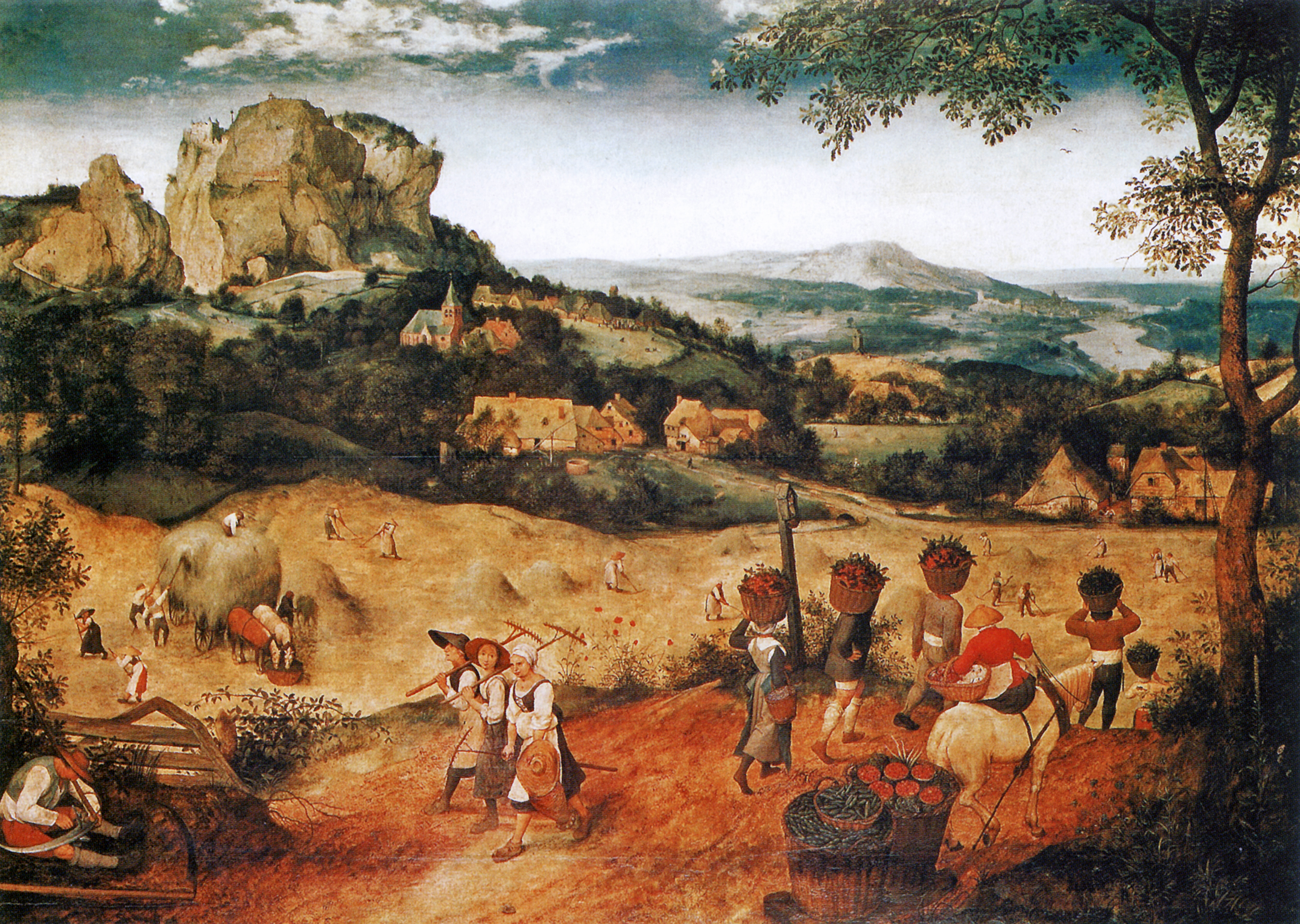
“Haymaking”
by
William Carlos Williams
The living quality of
the man’s mind
stands out
and its covert assertions
for art, art, art!
painting
that the Renaissance
tried to absorb
but
it remained a wheat field
over which the
wind played
men with scythes tumbling
the wheat in
rows
the gleaners already busy
it was his own—
magpies
the patient horses no one
could take that
from him


The Raconteur, 2019 by Ilya Milstein
Nude, 1967 by Gerhard Richter (b. 1932)
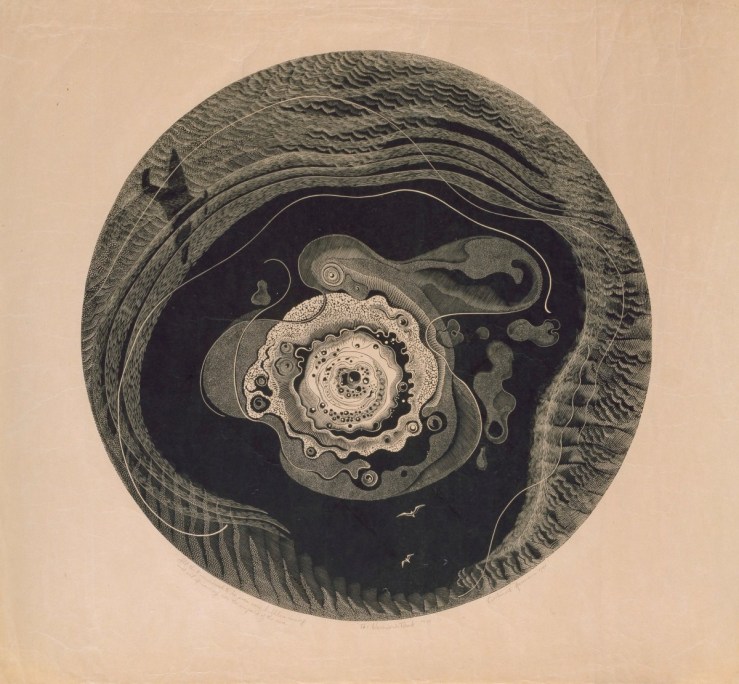
The Warrior’s Tomb, 1941 by Gertrude Hermes (1901–1983)
“A Postcard from the Volcano”
by
Wallace Stevens
Children picking up our bones
Will never know that these were once
As quick as foxes on the hill;
And that in autumn, when the grapes
Made sharp air sharper by their smell
These had a being, breathing frost;
And least will guess that with our bones
We left much more, left what still is
The look of things, left what we felt
At what we saw. The spring clouds blow
Above the shuttered mansion-house,
Beyond our gate and the windy sky
Cries out a literate despair.
We knew for long the mansion’s look
And what we said of it became
A part of what it is … Children,
Still weaving budded aureoles,
Will speak our speech and never know,
Will say of the mansion that it seems
As if he that lived there left behind
A spirit storming in blank walls,
A dirty house in a gutted world,
A tatter of shadows peaked to white,
Smeared with the gold of the opulent sun.
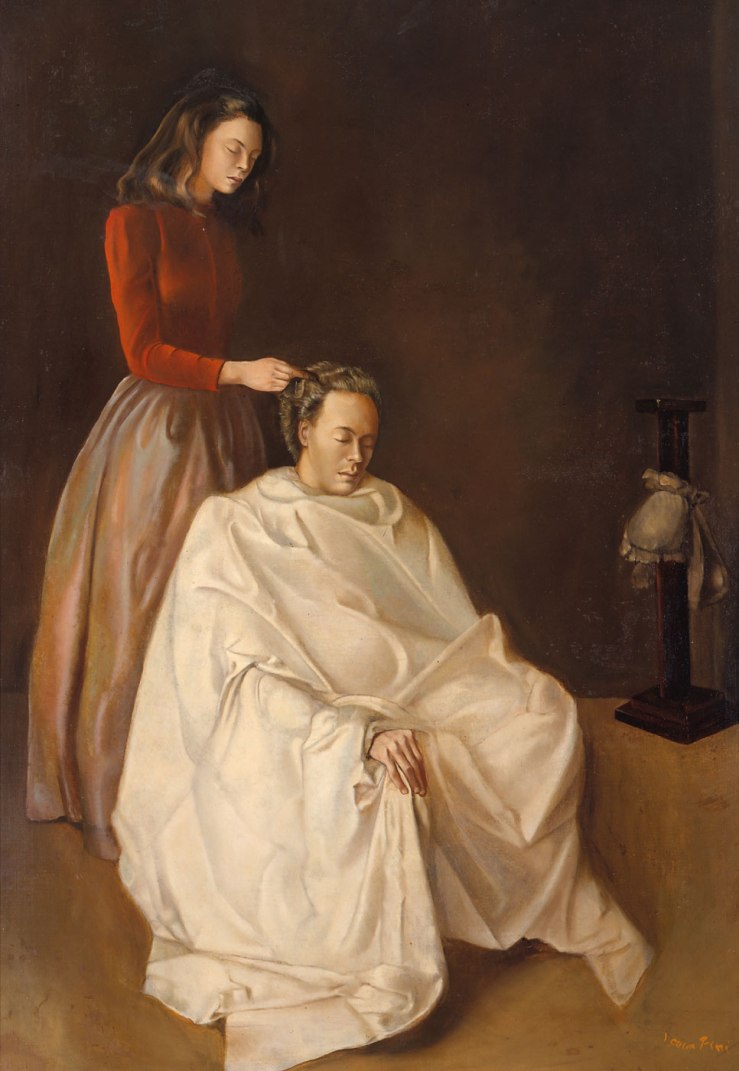
Operation I, 1939 by Leonor Fini (1908-1996)
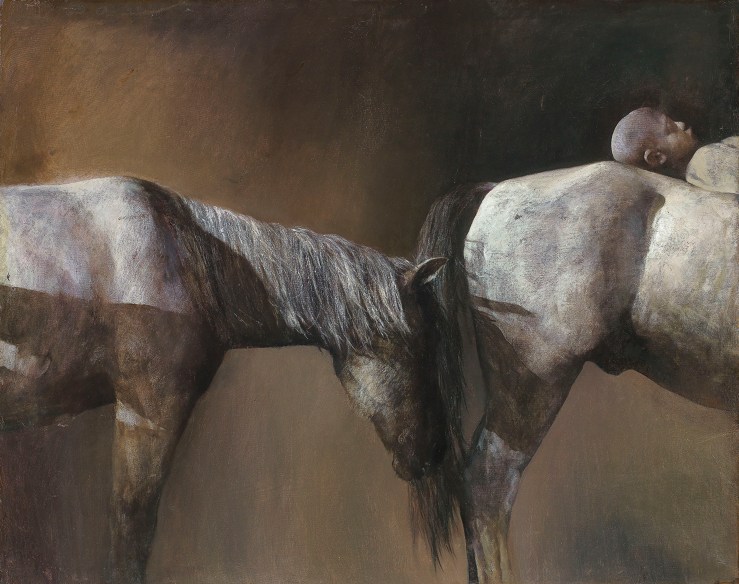
Life, 1988 by He Duoling (b. 1948)
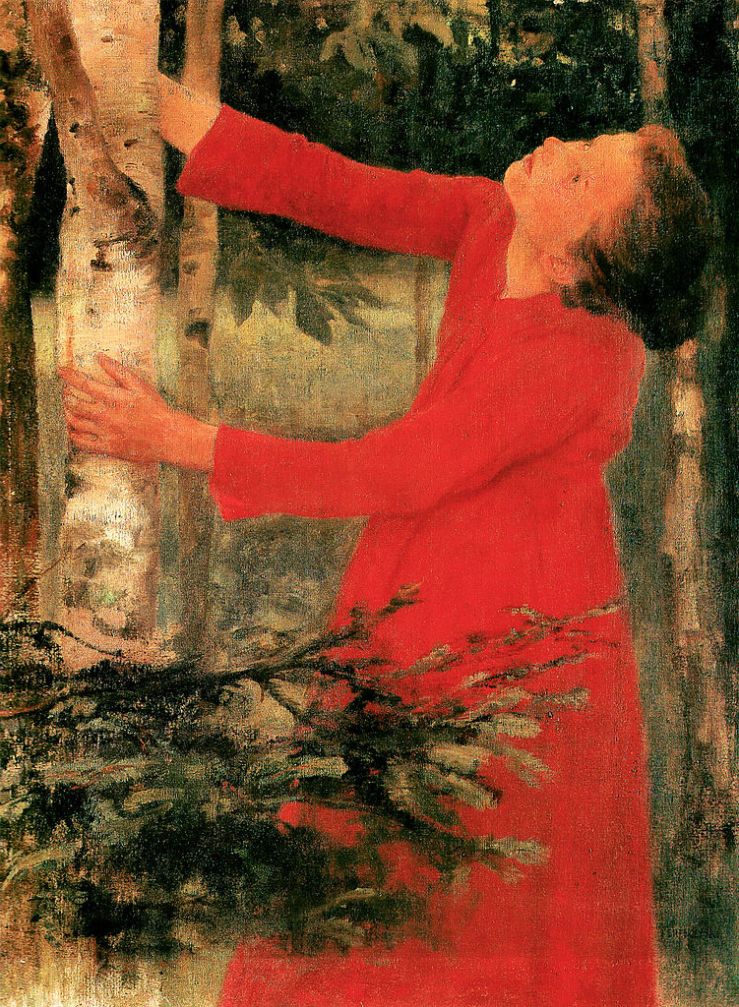
Birdsong, 1893 by Karoly Ferenczy (1862-1917)

Grace Sholto Douglas, 1940 by Leslie Hurry (1909–1978)

Film poster for The Man Who Fell to Earth by Tomer Hanuka.
June 23d.–Summer has come at last,–the longest days, with blazing sunshine, and fervid heat. Yesterday glowed like molten brass. Last night was the most uncomfortably and unsleepably sultry that we have experienced since our residence in Concord; and to-day it scorches again. I have a sort of enjoyment in these seven-times-heated furnaces of midsummer, even though they make me droop like a thirsty plant. The sunshine can scarcely be too burning for my taste; but I am no enemy to summer showers. Could I only have the freedom to be perfectly idle now,–no duty to fulfil, no mental or physical labor to perform,–I should be as happy as a squash, and much in the same mode; but the necessity of keeping my brain at work eats into my comfort, as the squash-bugs do into the heart of the vines. I keep myself uneasy and produce little, and almost nothing that is worth producing.
The garden looks well now: the potatoes flourish; the early corn waves in the wind; the squashes, both for summer and winter use, are more forward, I suspect, than those of any of my neighbors. I am forced, however, to carry on a continual warfare with the squash-bugs, who, were I to let them alone for a day, would perhaps quite destroy the prospects of the whole summer. It is impossible not to feel angry with these unconscionable insects, who scruple not to do such excessive mischief to me, with only the profit of a meal or two to themselves. For their own sakes they ought at least to wait till the squashes are better grown. Why is it, I wonder, that Nature has provided such a host of enemies for every useful esculent, while the weeds are suffered to grow unmolested, and are provided with such tenacity of life, and such methods of propagation, that the gardener must maintain a continual struggle or they will hopelessly overwhelm him? What hidden virtue is in these things, that it is granted them to sow themselves with the wind, and to grapple the earth with this immitigable stubbornness, and to flourish in spite of obstacles, and never to suffer blight beneath any sun or shade, but always to mock their enemies with the same wicked luxuriance? It is truly a mystery, and also a symbol. There is a sort of sacredness about them. Perhaps, if we could penetrate Nature’s secrets, we should find that what we call weeds are more essential to the well-being of the world than the most precious fruit or grain. This may be doubted, however, for there is an unmistakable analogy between these wicked weeds and the bad habits and sinful propensities which have overrun the moral world; and we may as well imagine that there is good in one as in the other.
Our peas are in such forwardness that I should not wonder if we had some of them on the table within a week. The beans have come up ill, and I planted a fresh supply only the day before yesterday. We have watermelons in good advancement, and muskmelons also within three or four days. I set out some tomatoes last night, also some capers. It is my purpose to plant some more corn at the end of the month, or sooner. There ought to be a record of the flower-garden, and of the procession of the wild-flowers, as minute, at least, as of the kitchen vegetables and pot-herbs. Above all, the noting of the appearance of the first roses should not be omitted; nor of the Arethusa, one of the delicatest, gracefullest, and in every manner sweetest, of the whole race of flowers. For a fortnight past I have found it in the swampy meadows, growing up to its chin in heaps of wet moss. Its hue is a delicate pink, of various depths of shade, and somewhat in the form of a Grecian helmet. To describe it is a feat beyond my power. Also the visit of two friends, who may fitly enough be mentioned among flowers, ought to have been described. Mrs. F. S—- and Miss A. S—-. Also I have neglected to mention the birth of a little white dove.
I never observed, until the present season, how long and late the twilight lingers in these longest days. The orange hue of the western horizon remains till ten o’clock, at least, and how much later I am unable to say. The night before last, I could distinguish letters by this lingering gleam between nine and ten o’clock. The dawn, I suppose, shows itself as early as two o’clock, so that the absolute dominion of night has dwindled to almost nothing. There seems to be also a diminished necessity, or, at all events, a much less possibility, of sleep than at other periods of the year. I get scarcely any sound repose just now. It is summer, and not winter, that steals away mortal life. Well, we get the value of what is taken from us.
Nathaniel Hawthorne’s journal entry for June 23, 1843. From Passages from the American Note-Books.
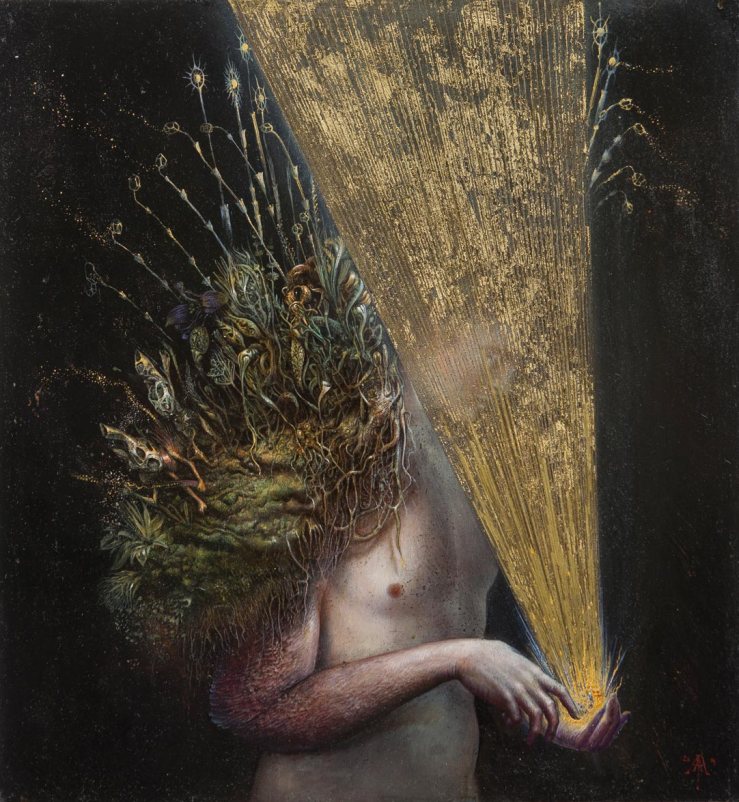
La pietra del filosofo (The Philosopher’s Stone), 2014 by Agostino Arrivabene (b. 1967)

Halfboy and Half Sister, 2018 by Stuart Pearson Wright (b. 1975)

The Thousand and One Nights, 1954 by Jane Graverol (1905–1984),

The Oneiroscopist, 1947 by Edith Rimmington (1902-1986)
 Biblioklept