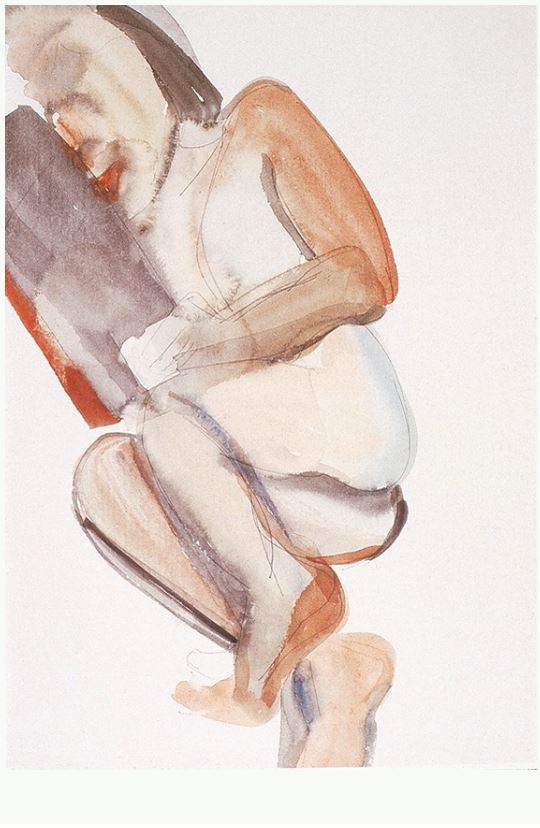
“Youwarkee” — Jorge Luis Borges

yo

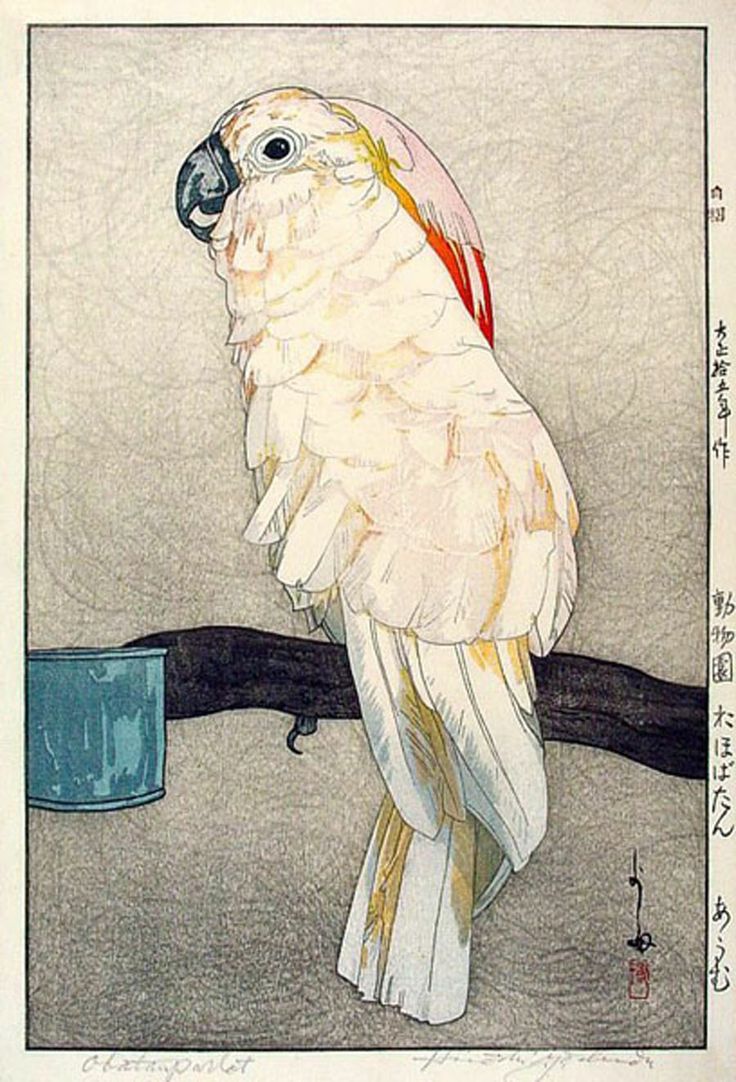
Obatan Parrot — Hiroshi Yoshida

698cf212a6c17282e4bcf8bb3608a8dd-hiroshi-yoshida-exotic-birds

Obatan Parrot, 1926 by Hiroshi Yoshida (1876-1950)

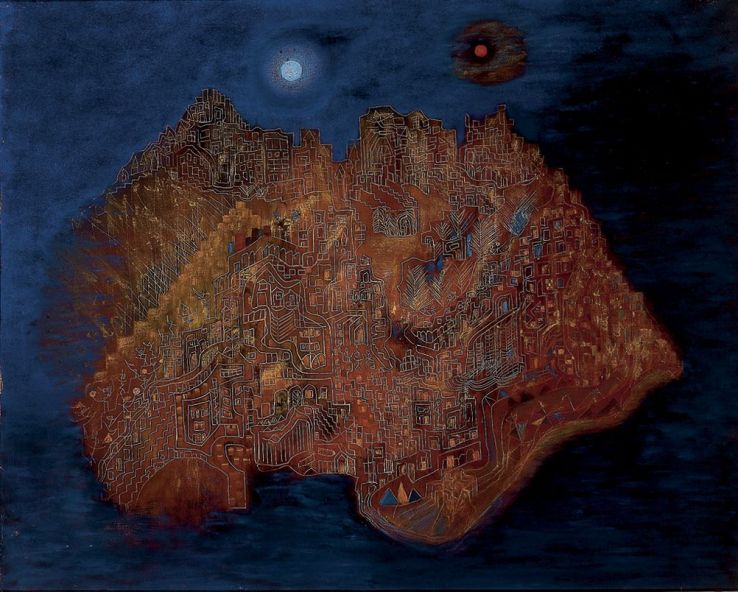
The Inner City — Alice Rahon

9e54175d8140d93f3049de38a6690254

The Inner City by Alice Rahon (1904–1987)

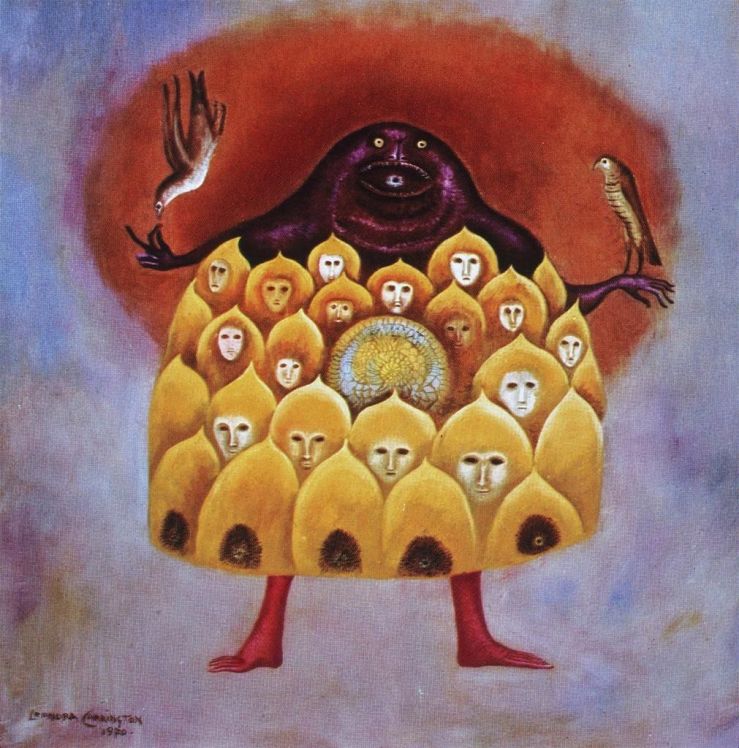
The God Mother — Leonora Carrington

08a11b329eca88910d78417434a56882

The Godmother, 1970 by Leonora Carrington (1917–2011)

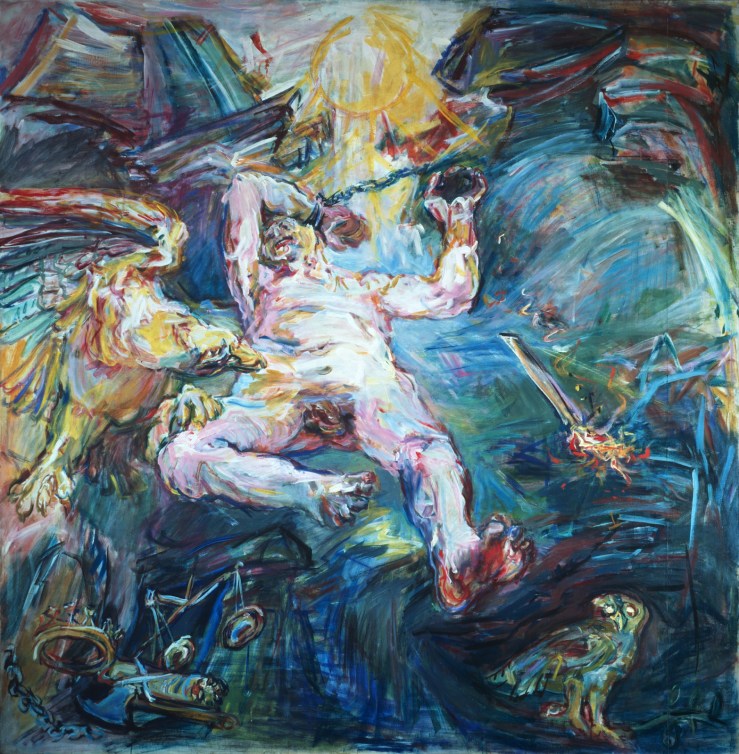
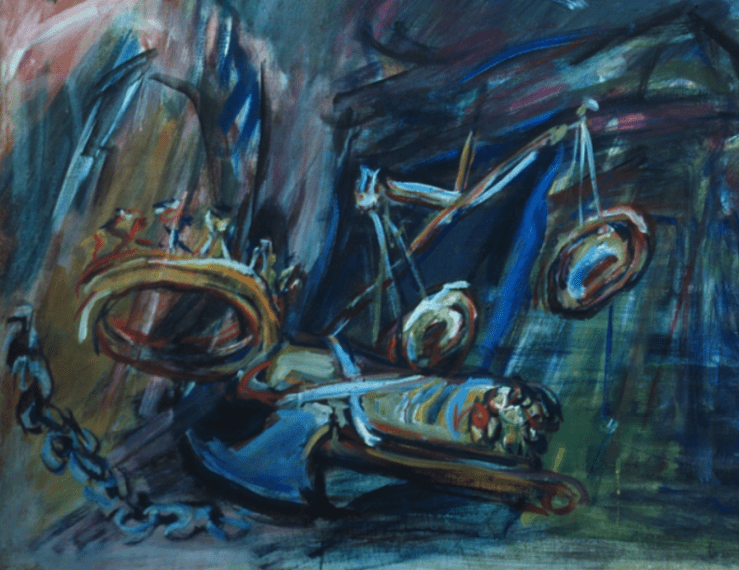
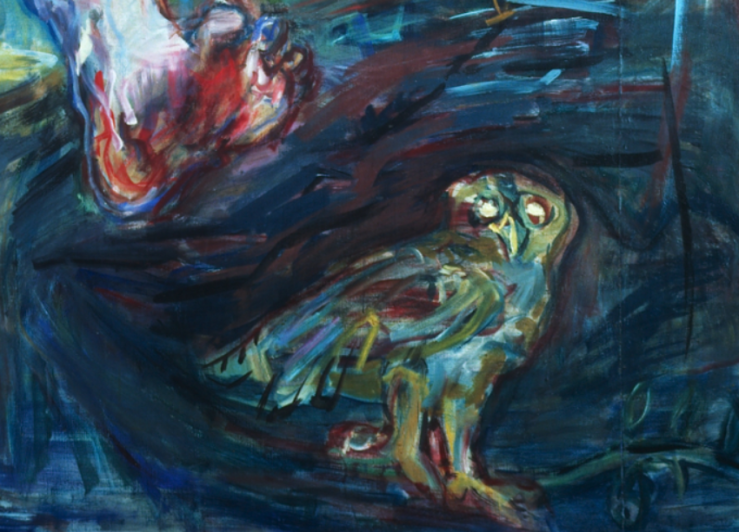
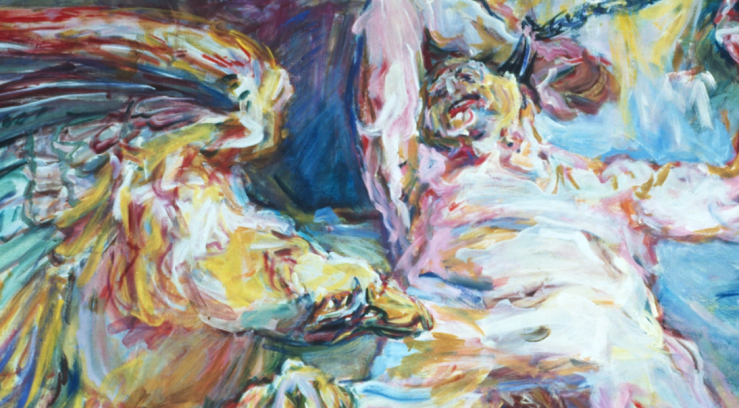
Prometheus — Oskar Kokoschka

p-1978-pg-210-3-png-10870

Prometheus (panel from The Prometheus Triptych), 1950 by Oskar Kokoschka (1886-1980)

Screenshot 2018-09-03 at 4.05.49 PMScreenshot 2018-09-03 at 4.05.37 PMScreenshot 2018-09-03 at 4.05.10 PM

Camus, Eliot, and Kuper’s Kafka (Books acquired, 31 Aug. 2018)

img_0894

I went to my favorite used bookshop on Friday afternoon to browse, order another Gerald Murnane novel, and pick up a copy of George Eliot’s Silas Marner.

I spied a late fifties mass market copy of Albert Camus’ novel Exile and the Kingdom from Vintage Books. I fell in love with the cover (by George Giusti) and ended up picking it up, although I’ll admit I haven’t read a Camus novel since college (it was The Plague if memory serves).

Browsing copies of Silas Marner, I found this monstrosity:

img_0892

I don’t even know where to start with this cover. I mean, even the colors seem to clash. It doesn’t really come across in the photo, but this hardback has a cheap greasy feel to it. I initially assumed that it was some kind of TV or film tie in, but as far as I can tell…no. Horrifying. I ended up going with the Oxford edition with Ferdinand Hodler’s painting Unemployed on the cover.

When I got home, the mail had come. It included a copy of Peter Kuper’s Kafkaesque, which collects 14 of Kuper’s illustrated Kafka translations. Publisher Norton’s blurb:

Award-winning graphic novelist Peter Kuper presents a mesmerizing interpretation of fourteen iconic Kafka short stories.

Long fascinated with the work of Franz Kafka, Peter Kuper began illustrating his stories in 1988. Initially drawn to the master’s dark humor, Kuper adapted the stories over the years to plumb their deeper truths. Kuper’s style deliberately evokes Lynd Ward and Frans Masereel, contemporaries of Kafka whose wordless novels captured much of the same claustrophobia and mania as Kafka’s tales. Working from new translations of the classic texts, Kuper has reimagined these iconic stories for the twenty-first century, using setting and perspective to comment on contemporary issues like civil rights and homelessness.

Longtime lovers of Kafka will appreciate Kuper’s innovative interpretations, while Kafka novices will discover a haunting introduction to some of the great writer’s most beguiling stories, including “A Hunger Artist,” “In The Penal Colony,” and “The Burrow.” Kafkaesque stands somewhere between adaptation and wholly original creation, going beyond a simple illustration of Kafka’s words to become a stunning work of art.

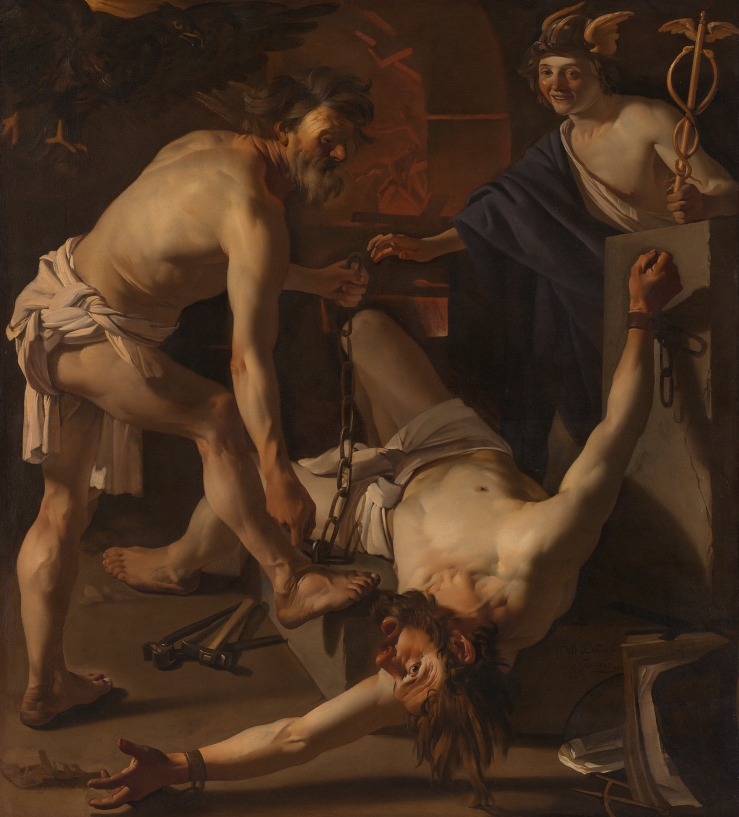
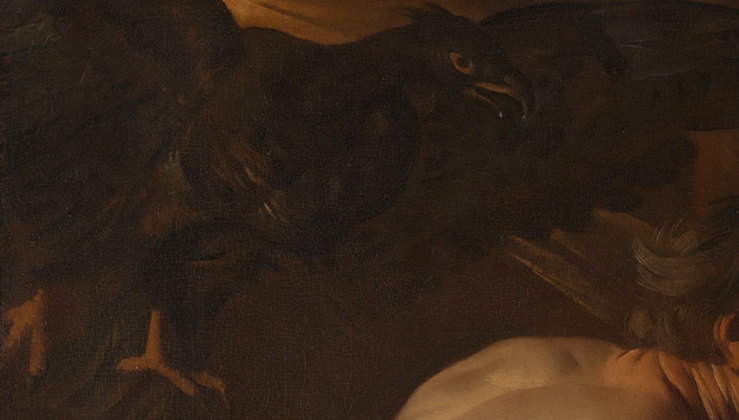
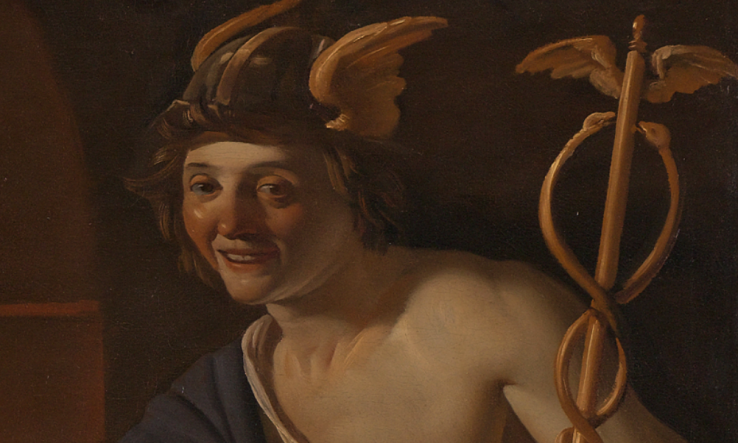
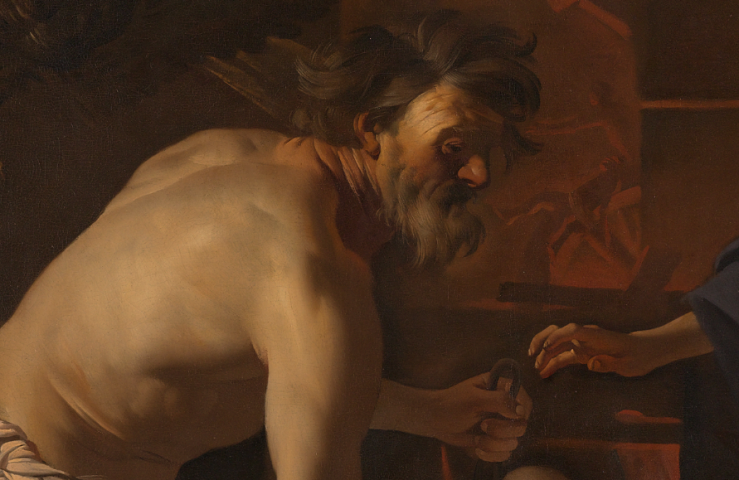
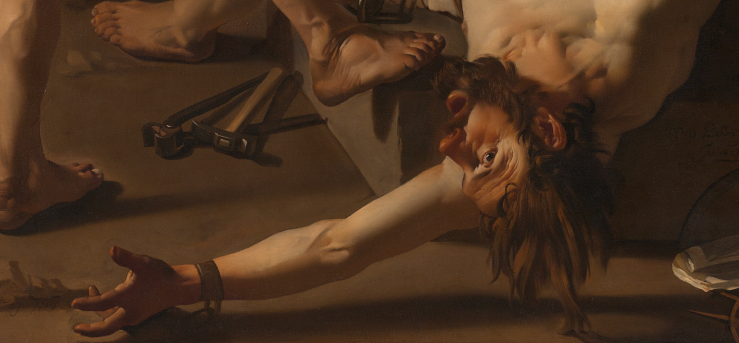
Prometheus Being Chained by Vulcan –Dirck van Baburen

Opnamedatum: 2008-09-05

Prometheus Being Chained by Vulcan, 1623 by Dirck van Baburen (c. 1595– 1624)

Screenshot 2018-09-01 at 11.11.19 AMScreenshot 2018-09-01 at 11.11.38 AMScreenshot 2018-09-01 at 11.12.01 AMScreenshot 2018-09-01 at 11.12.19 AM

Pigs, on a march, do not subject themselves to any leader among themselves, but pass on, higgledy-piggledy, without regard to age or sex | Sketches from Nathaniel Hawthorne’s journal entry for Friday, August 31st, 1838

A tailor is detected by Mr. Leach, because his coat had not a single wrinkle in it. I saw him exhibiting patterns of fashions to Randall, the village tailor. Mr. Leach has much tact in finding out the professions of people. He found out a blacksmith, because his right hand was much larger than the other.

A man getting subscriptions for a religious and abolition newspaper in New York,–somewhat elderly and gray-haired, quick in his movements, hasty in his walk, with an eager, earnest stare through his spectacles, hurrying about with a pocket-book of subscriptions in his hand,–seldom speaking, and then in brief expressions,–sitting down before the stage comes, to write a list of subscribers obtained to his employers in New York. Withal, a city and business air about him, as of one accustomed to hurry through narrow alleys, and dart across thronged streets, and speak hastily to one man and another at jostling corners, though now transacting his affairs in the solitude of mountains.

An old, gray man, seemingly astray and abandoned in this wide world, sitting in the bar-room, speaking to none, nor addressed by any one. Not understanding the meaning of the supper-bell till asked to supper by word of mouth. However, he called for a glass of brandy.

A pedlar, with girls’ neckerchiefs,–or gauze,–men’s silk pocket-handkerchiefs, red bandannas, and a variety of horn combs, trying to trade with the servant-girls of the house. One of them, Laura, attempts to exchange a worked vandyke, which she values at two dollars and a half; Eliza, being reproached by the pedlar, “vows that she buys more of pedlars than any other person in the house.”

A drove of pigs passing at dusk. They appeared not so much disposed to ramble and go astray from the line of march as in daylight, but kept together in a pretty compact body. There was a general grunting, not violent at all, but low and quiet, as if they were expressing their sentiments among themselves in a companionable way. Pigs, on a march, do not subject themselves to any leader among themselves, but pass on, higgledy-piggledy, without regard to age or sex.

From Nathaniel Hawthorne’s journal entry for Friday, August 31st, 1838. From Passages from the American Note-Books.

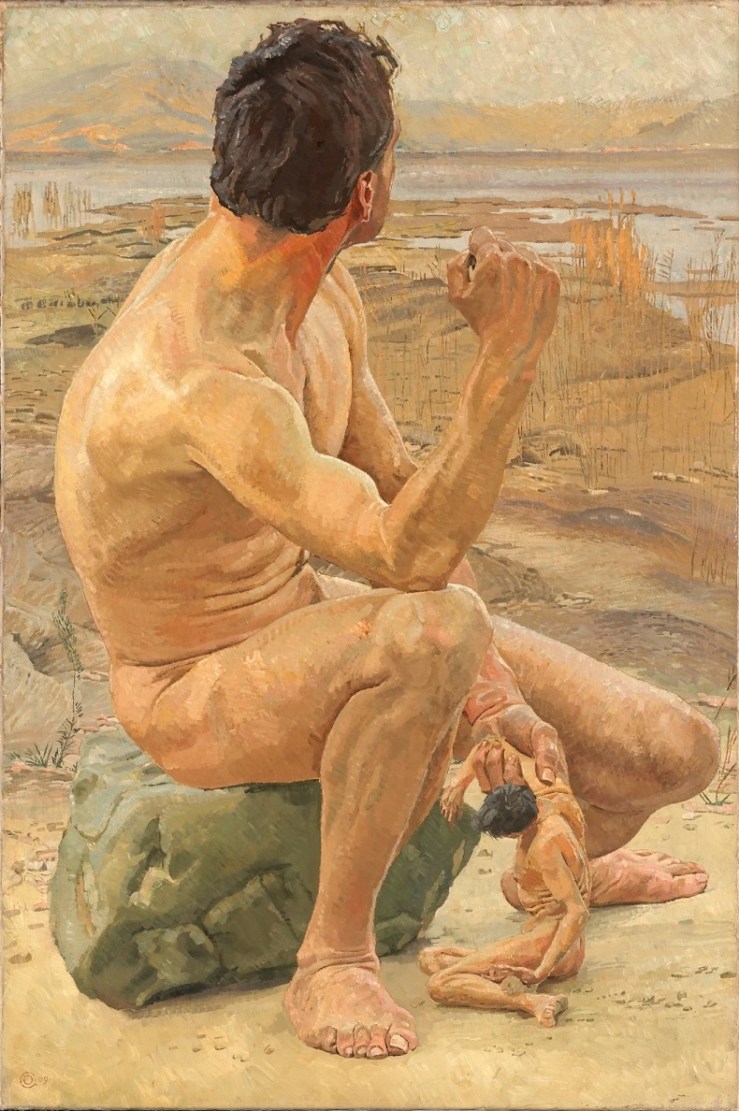
Prometheus — Otto Greiner

otto_greiner_-_prometheus

Prometheus, 1909 by Otto Greiner (1869-1916)

Screenshot 2018-08-30 at 3.42.13 PMScreenshot 2018-08-30 at 3.44.05 PM

Three-Cornered Hat — Walt Kuhn

4237frm_fc9c986c4391da3

Three-Cornered Hat, 1943 by Walt Kuhn (1880-1949)

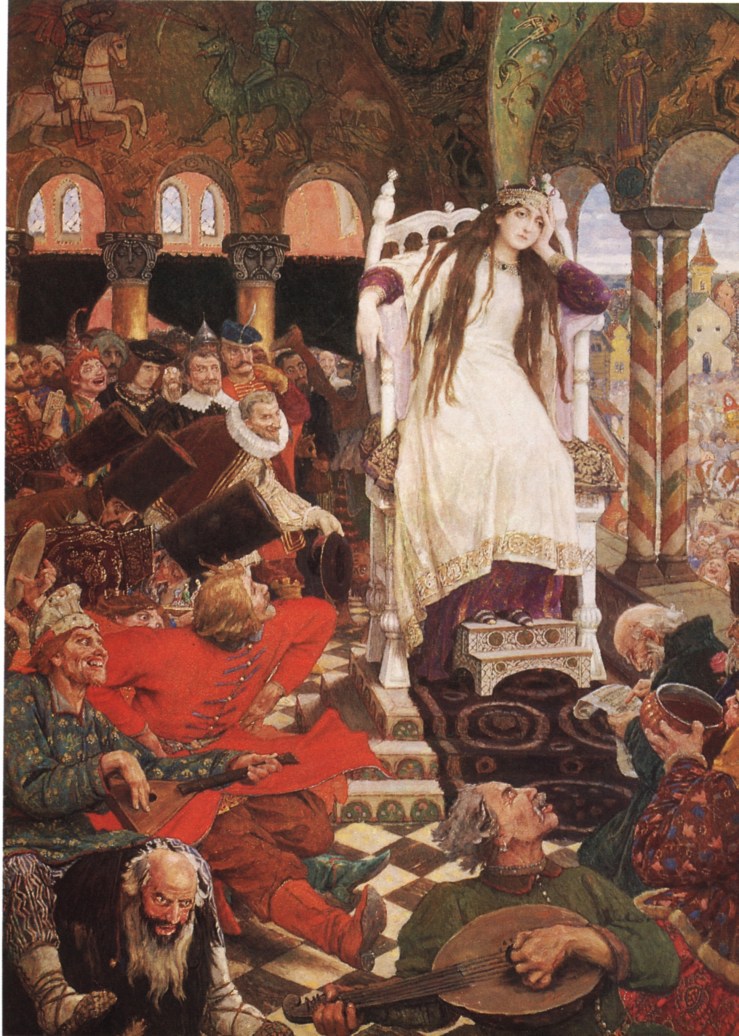
The Unsmiling Tsarena — Viktor Vasnetsov 

the-unsmiling-tsarevna-1926

The Unsmiling Tsarena, 1926 by Viktor Vasnetsov (1848-1926)

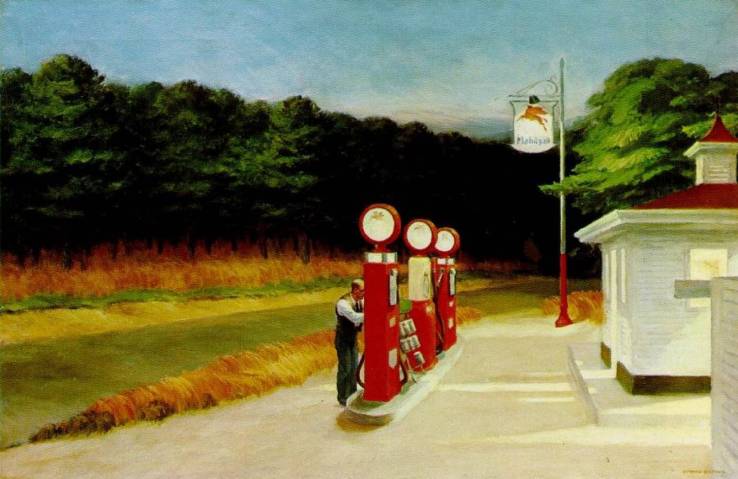
Edward Hopper was my inspiration for a lot of the songs I made up with my band The Modern Lovers

Edward Hopper, especially that painting of the gas station at night—Gas (1940)—was my inspiration for a lot of the songs I made up with my band The Modern Lovers when I was a kid. Especially “Roadrunner” owes to that gas station painting, but any songs I made up about lonely nights on lonely highways and the way lights were like friends in the dark. This is what “Roadrunner” was about. The Velvet Underground covered this kind of stark, lonely feeling of wonder and had a sound which, with its drowning darkness, felt right for my explorations into bleak, modern-world terror. That plus Hopper was a big part of my starting music.

From the Art News Muses column by Jonathan Richman.

edward-hopper-gas

The Listening Room — Rene Magritte

classic-1920

The Listening Room, 1952 by Rene Magritte (1898-1967)

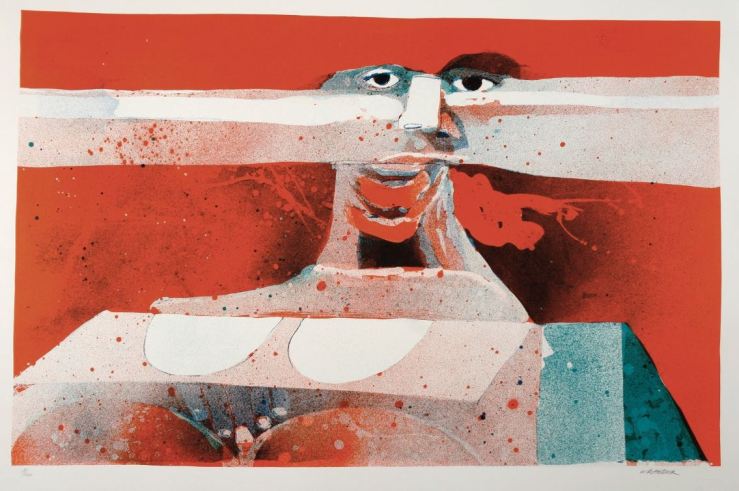
Sorrow — Hans Graeder

sorrow

Sorrow, by Hans Graeder (1919-1999)

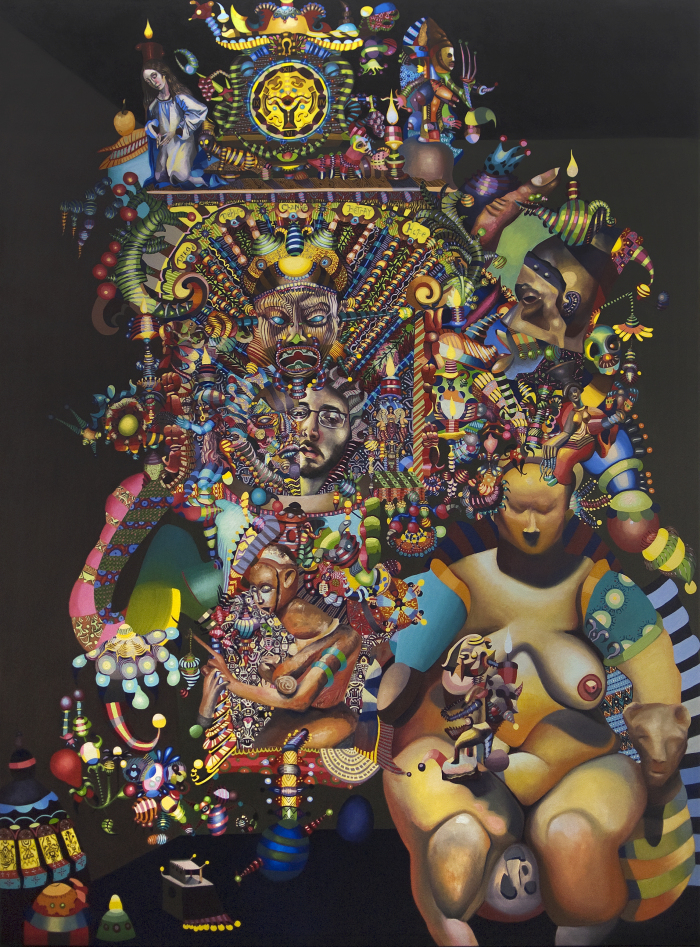
Venus and Time — Jacob Hicks

jacob2

Venus and Time, 2013 by Jacob Hicks (b. 1985)

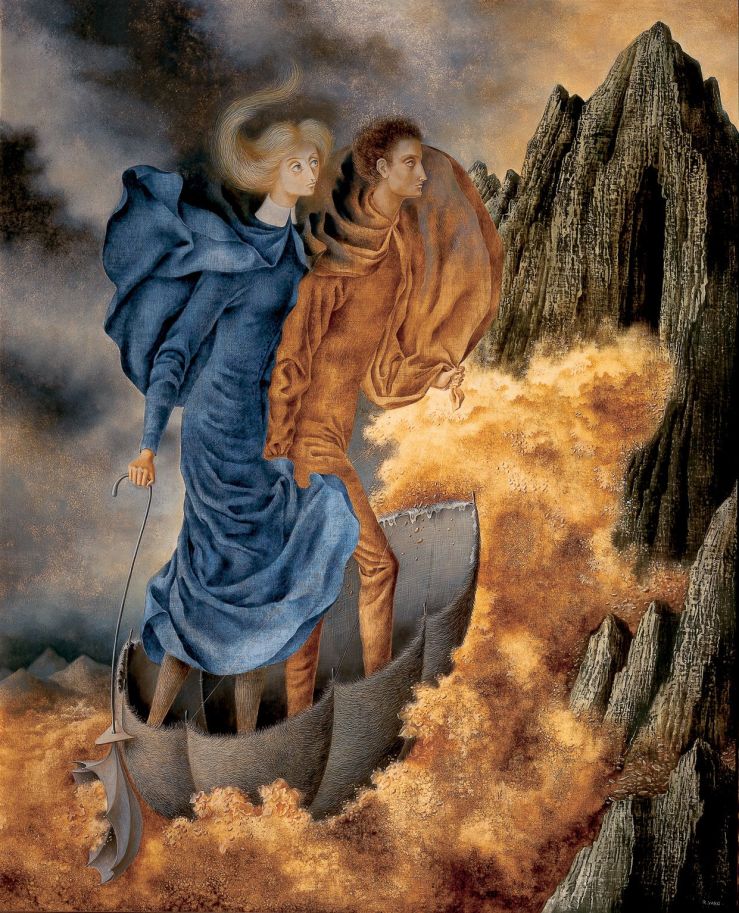
The Escape — Remedios Varo

c88dfd7bf5f2cdf78971920dbb659cc7

The Escape, 1961 by Remedios Varo (1908-1963)

Annie Reading — Lucian Freud

lucian freud

Annie Reading, 1961 by Lucian Freud (1922-2011)