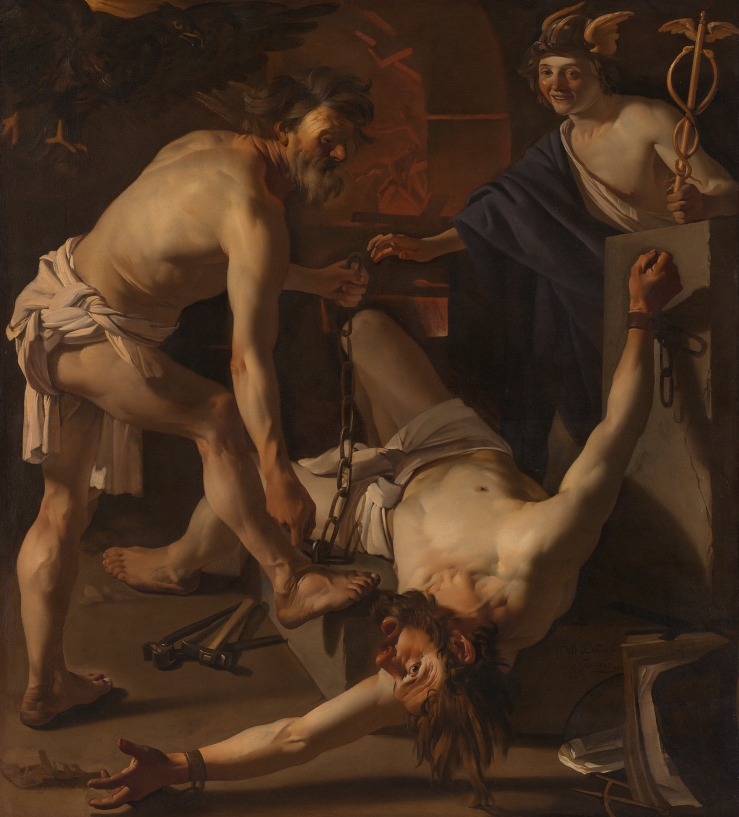
Prometheus Being Chained by Vulcan, 1623 by Dirck van Baburen (c. 1595– 1624)
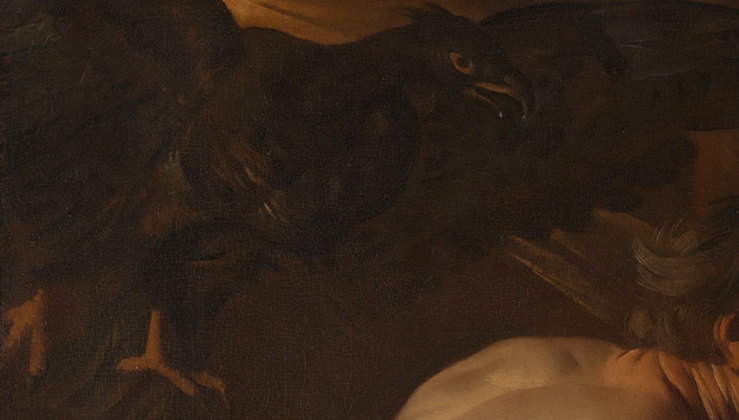
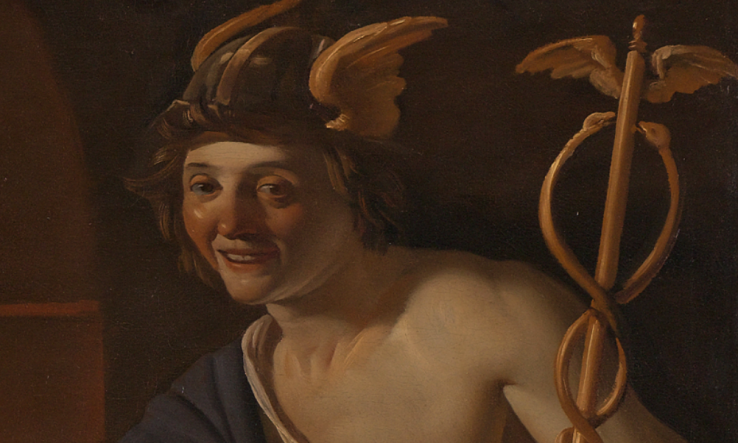
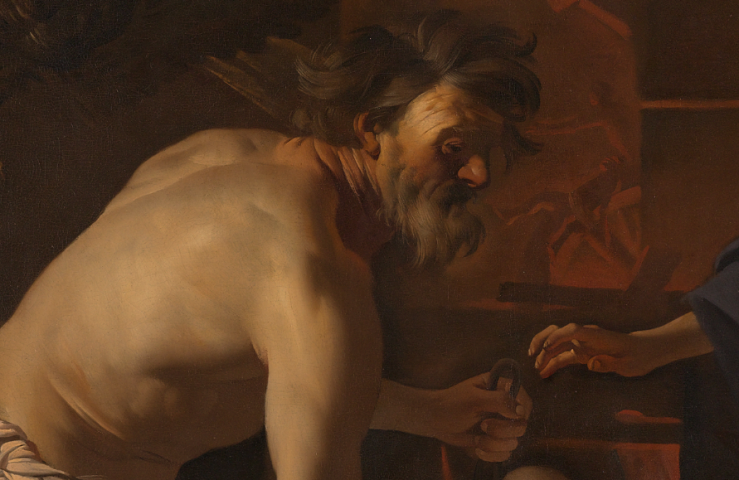
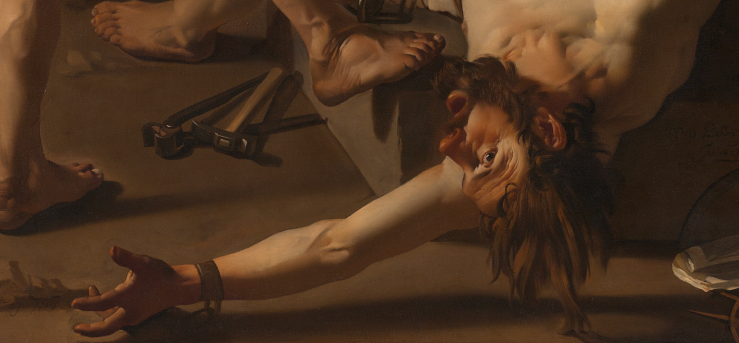

Prometheus Being Chained by Vulcan, 1623 by Dirck van Baburen (c. 1595– 1624)
A tailor is detected by Mr. Leach, because his coat had not a single wrinkle in it. I saw him exhibiting patterns of fashions to Randall, the village tailor. Mr. Leach has much tact in finding out the professions of people. He found out a blacksmith, because his right hand was much larger than the other.
A man getting subscriptions for a religious and abolition newspaper in New York,–somewhat elderly and gray-haired, quick in his movements, hasty in his walk, with an eager, earnest stare through his spectacles, hurrying about with a pocket-book of subscriptions in his hand,–seldom speaking, and then in brief expressions,–sitting down before the stage comes, to write a list of subscribers obtained to his employers in New York. Withal, a city and business air about him, as of one accustomed to hurry through narrow alleys, and dart across thronged streets, and speak hastily to one man and another at jostling corners, though now transacting his affairs in the solitude of mountains.
An old, gray man, seemingly astray and abandoned in this wide world, sitting in the bar-room, speaking to none, nor addressed by any one. Not understanding the meaning of the supper-bell till asked to supper by word of mouth. However, he called for a glass of brandy.
A pedlar, with girls’ neckerchiefs,–or gauze,–men’s silk pocket-handkerchiefs, red bandannas, and a variety of horn combs, trying to trade with the servant-girls of the house. One of them, Laura, attempts to exchange a worked vandyke, which she values at two dollars and a half; Eliza, being reproached by the pedlar, “vows that she buys more of pedlars than any other person in the house.”
A drove of pigs passing at dusk. They appeared not so much disposed to ramble and go astray from the line of march as in daylight, but kept together in a pretty compact body. There was a general grunting, not violent at all, but low and quiet, as if they were expressing their sentiments among themselves in a companionable way. Pigs, on a march, do not subject themselves to any leader among themselves, but pass on, higgledy-piggledy, without regard to age or sex.
From Nathaniel Hawthorne’s journal entry for Friday, August 31st, 1838. From Passages from the American Note-Books.
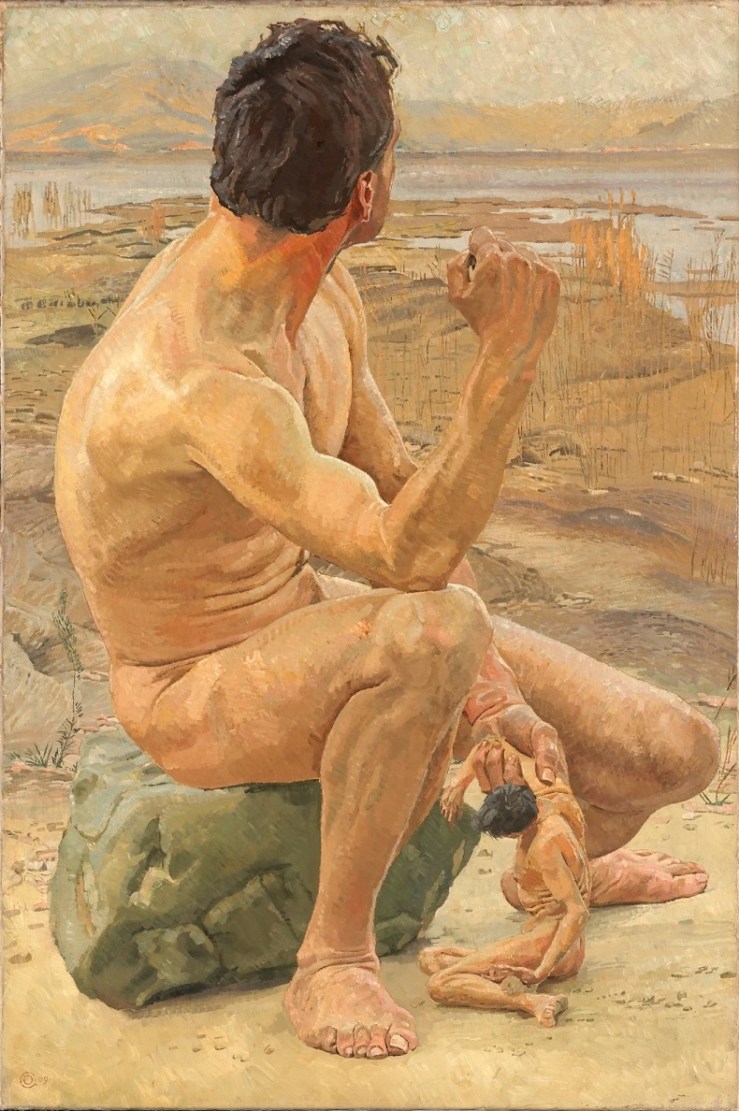
Prometheus, 1909 by Otto Greiner (1869-1916)
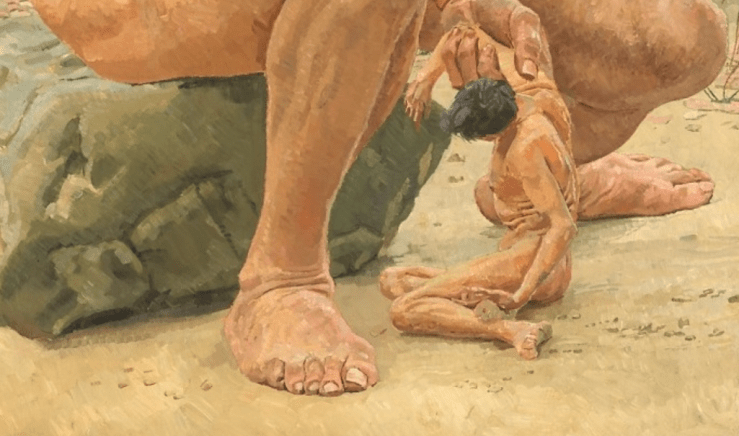

Three-Cornered Hat, 1943 by Walt Kuhn (1880-1949)
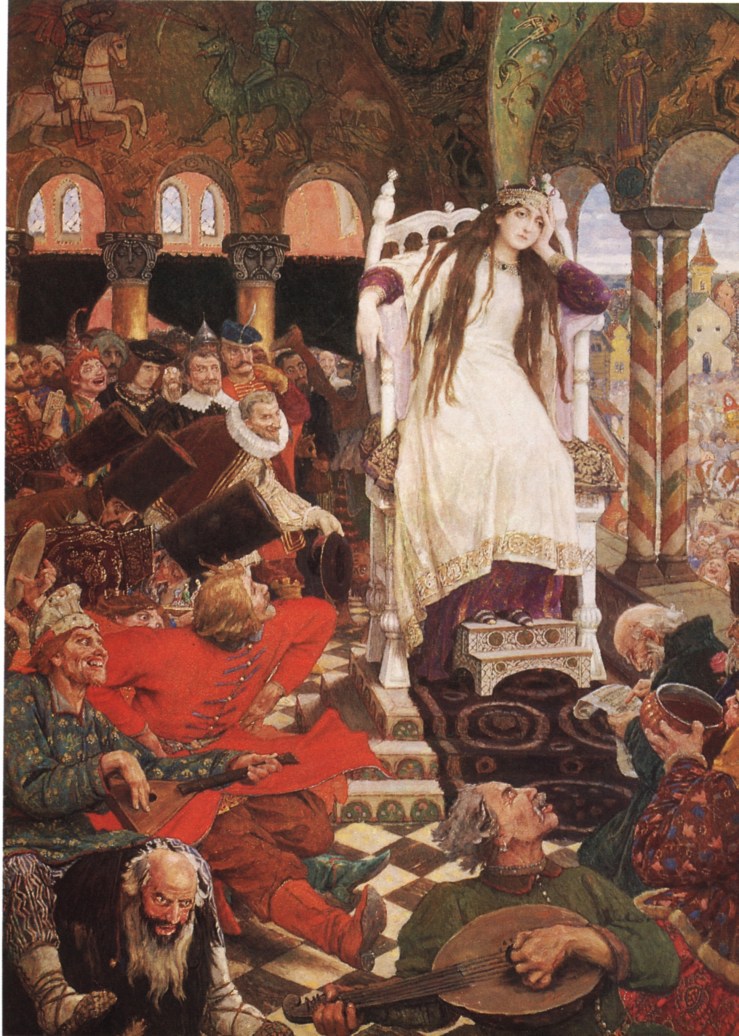
The Unsmiling Tsarena, 1926 by Viktor Vasnetsov (1848-1926)
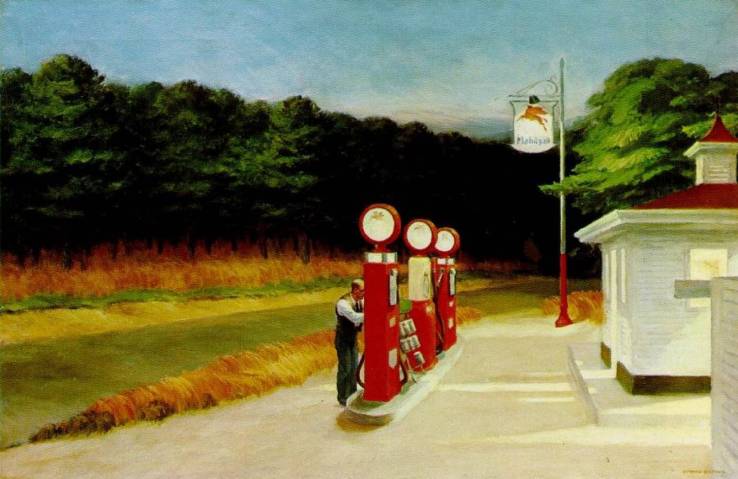
Edward Hopper, especially that painting of the gas station at night—Gas (1940)—was my inspiration for a lot of the songs I made up with my band The Modern Lovers when I was a kid. Especially “Roadrunner” owes to that gas station painting, but any songs I made up about lonely nights on lonely highways and the way lights were like friends in the dark. This is what “Roadrunner” was about. The Velvet Underground covered this kind of stark, lonely feeling of wonder and had a sound which, with its drowning darkness, felt right for my explorations into bleak, modern-world terror. That plus Hopper was a big part of my starting music.
From the Art News Muses column by Jonathan Richman.

The Listening Room, 1952 by Rene Magritte (1898-1967)
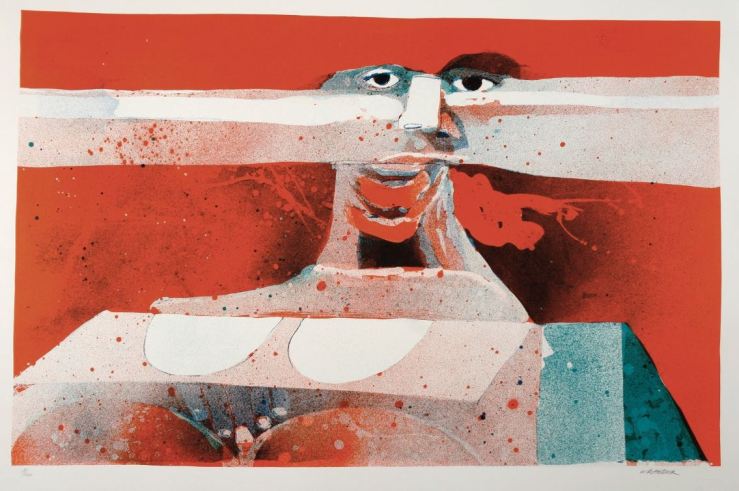
Sorrow, by Hans Graeder (1919-1999)
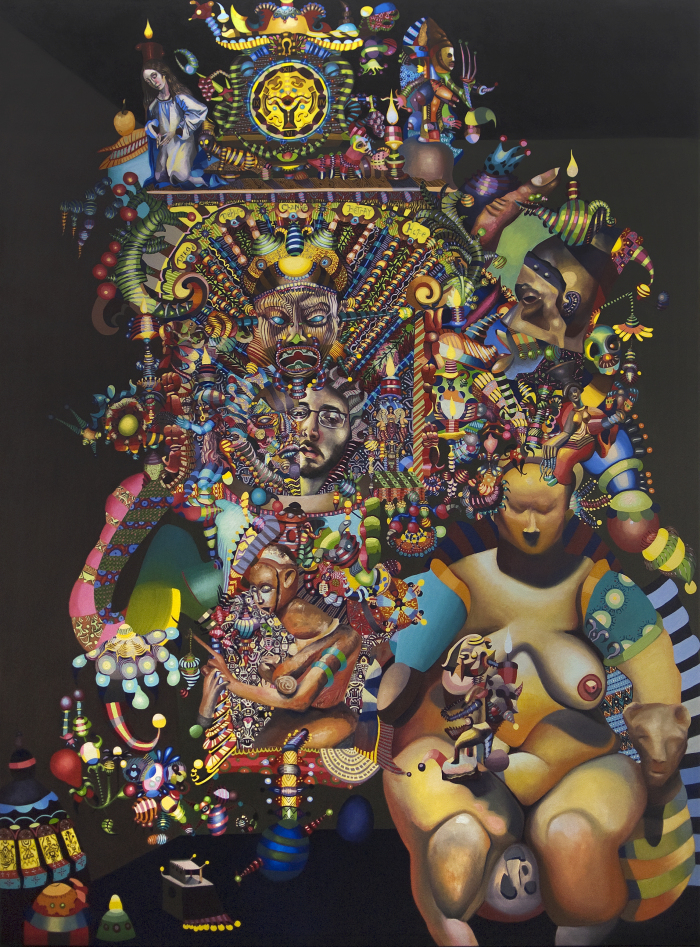
Venus and Time, 2013 by Jacob Hicks (b. 1985)
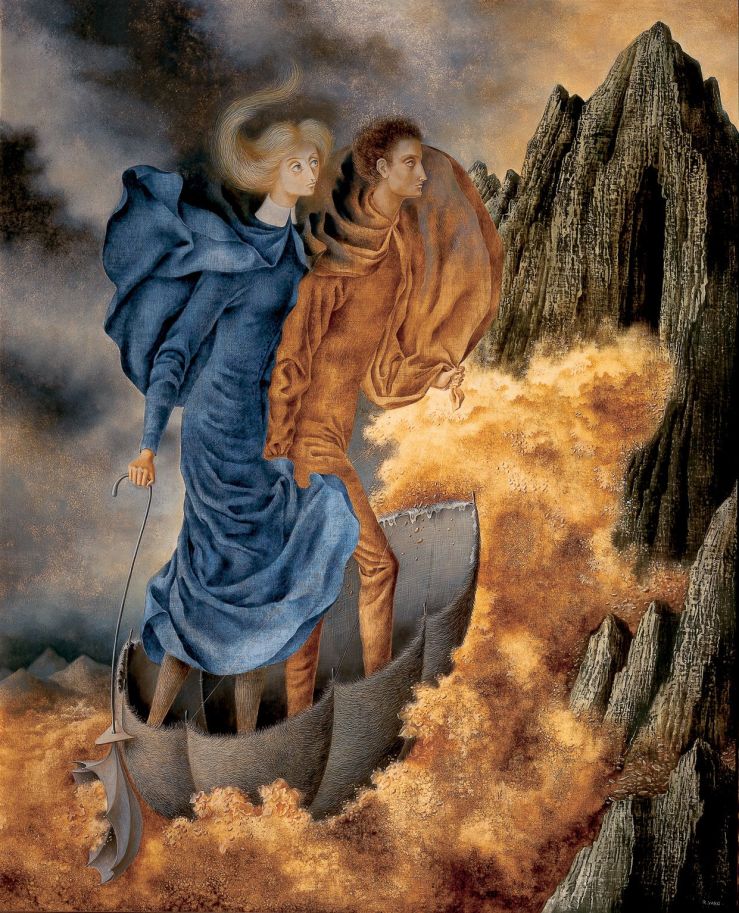
The Escape, 1961 by Remedios Varo (1908-1963)
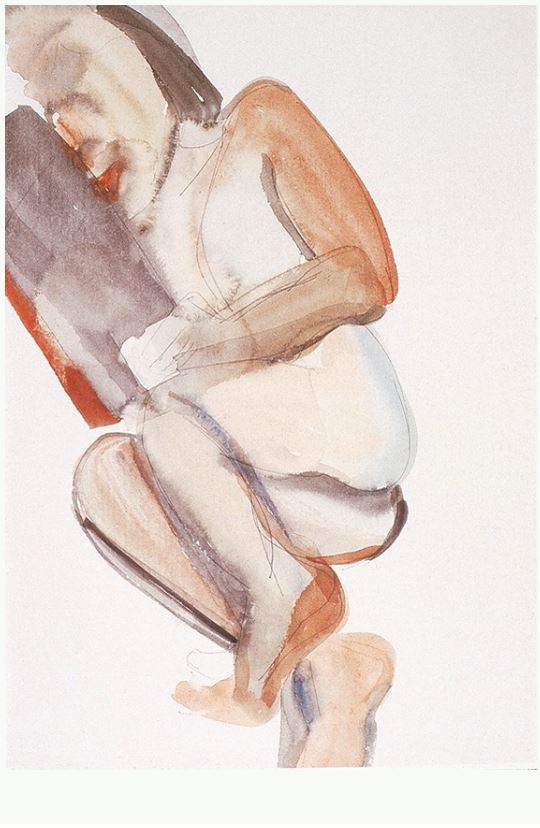
Annie Reading, 1961 by Lucian Freud (1922-2011)

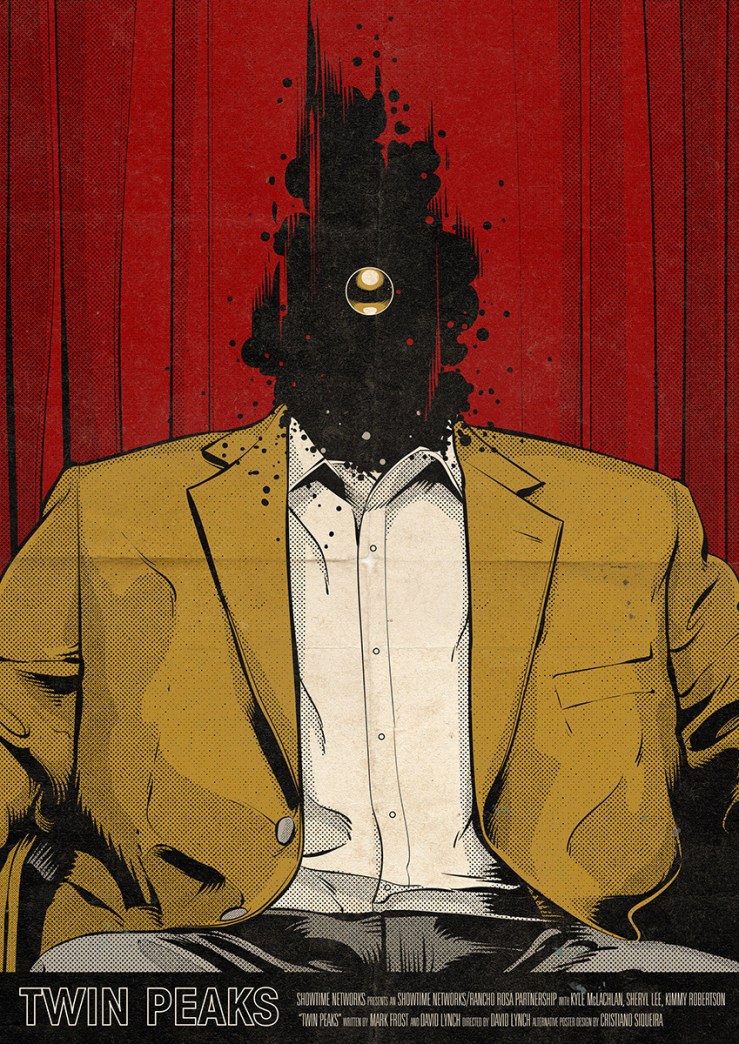
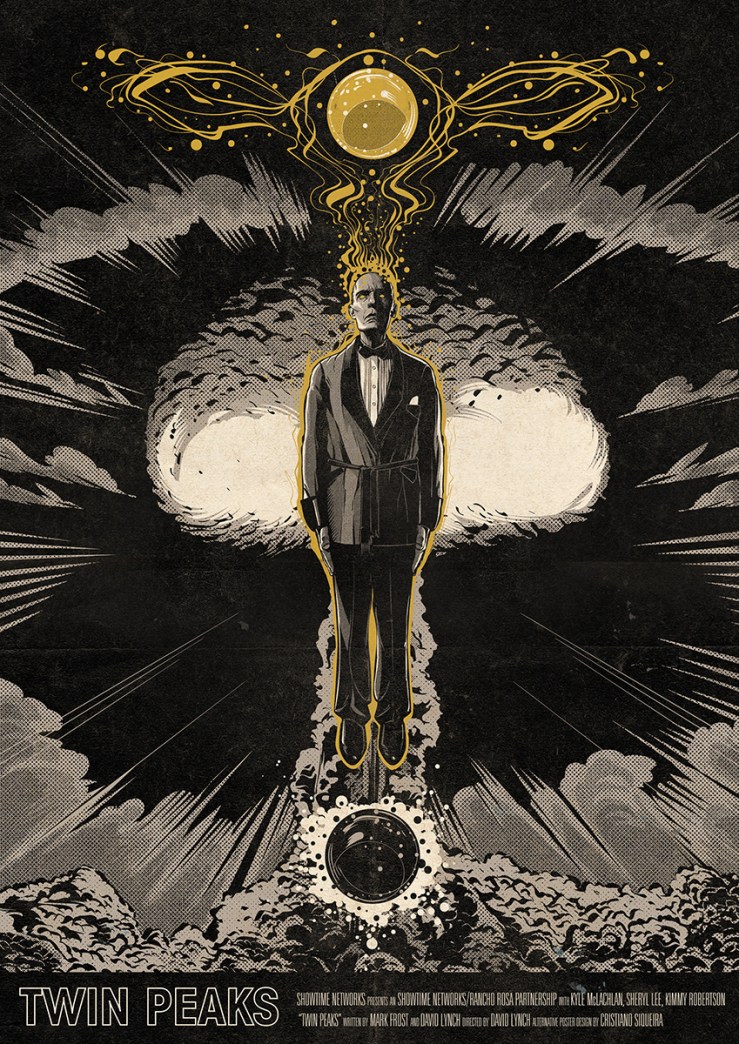

I somehow missed Cristiano Siqueira’s series of posters for Twin Peaks: The Return. Siqueira did a poster for each episode of David Lynch’s 2017 sequel—19 posters in all, including a bonus poster depicting Audrey. Check out all nineteen posters here.
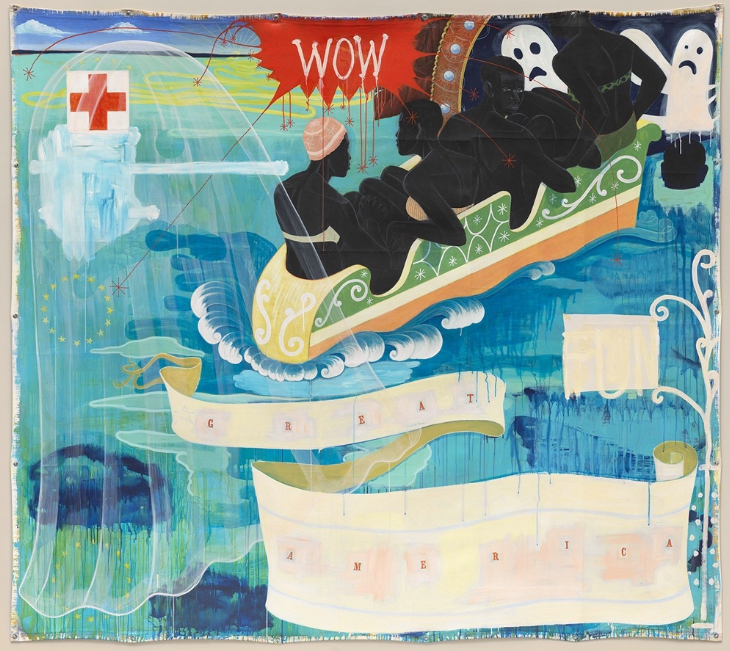
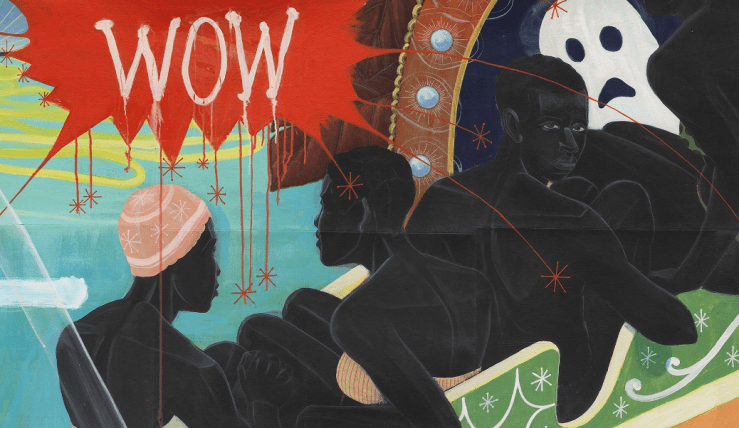
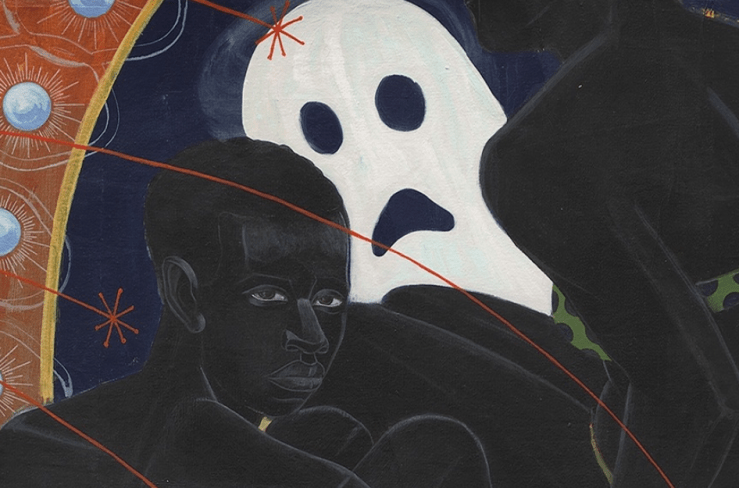
Great America, 1994 by Kerry James Marshall (b. 1955)

Untitled (Pinball Machine), 1971 (from Troubled Waters) by William Eggleston (b. 1939)

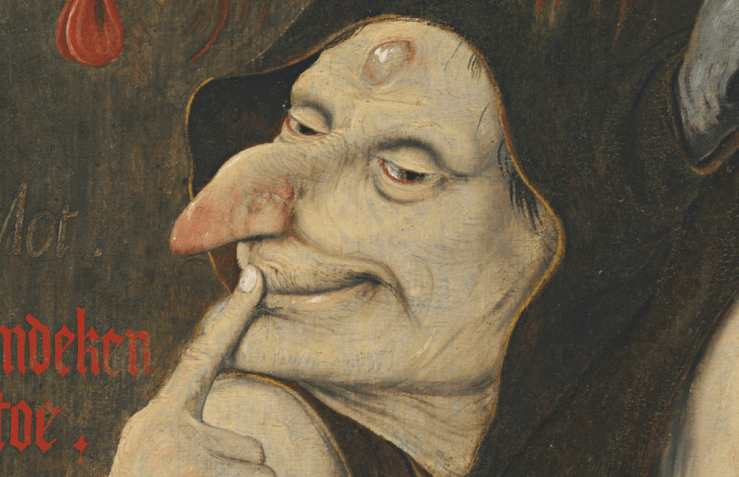
An Allegory of Folly, early 16th century by Quentin Matsys (1456/1466–1530)

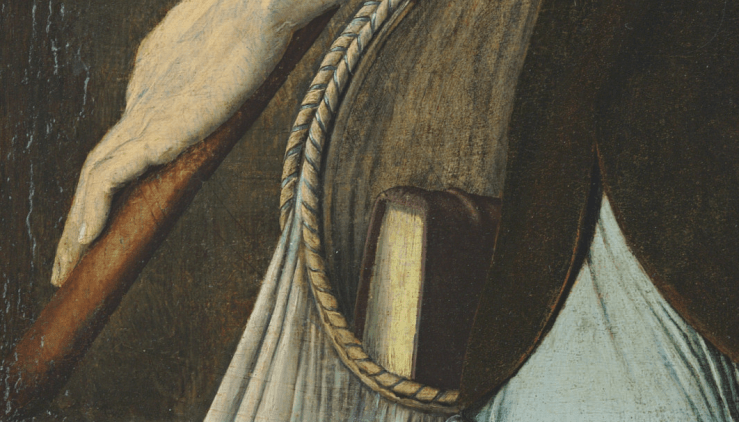


The Reader, 1861 by Edouard Manet (1832-1883)
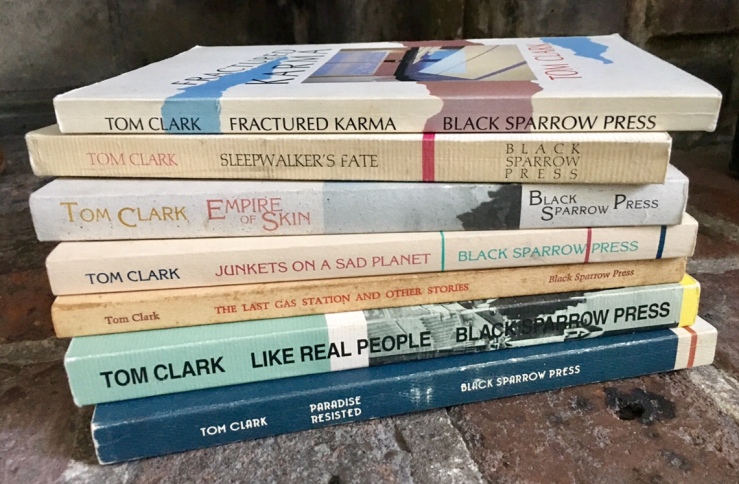
RIP Tom Clark, 1941-2018
The American poet Tom Clark died in the first hour of Saturday, August 18th, 2018 in Berkely California. The cause of the death happened a few hours earlier, late Friday night, as a motorist collided his sedan into Tom Clark as Clark tried to cross the street. Clark was 77.
Tom Clark authored over two dozen poetry collections, many published by Black Sparrow Press. He also wrote a number of literary biographies, including a pair on Jack Kerouac, bios of Robert Creeley and Charles Olson, and a biography of John Keats called Junkets from a Sad Planet that is actually a series of poems. (But also actually a biography of Keats). Clark was the poetry editor for The Paris Review from 1963-1973 (maybe you read his interview with Allen Ginsberg there). Clark was also a blogger—an excellent blogger. He updated his blog a few hours before the car collision that killed him.
I first read Tom Clark in the middle of September, 2013. I read Fractured Karma (1990) and I had never heard of him before. I know the time specifically not because I have a good memory (I don’t), but because I wrote about it then:
I picked up Tom Clark’s Fractured Karma two weeks ago somewhat randomly. My local bookshop had reorganized some shelves, putting all the Black Sparrow titles together. Fractured Karma must have been on top, because I don’t see how else I would’ve picked up a book with the word “karma” in the title. The book opened to this page:
That’s all there is on that page, and something about it—the form, the phrasing—cracked me up. It’s part of a long poem called “He was born blind” about the British comedy actor George Formby. The poem is amazing: I read it there in the store. It reminded me immediately of David Markson’s notecard novels—something about how Clark includes so much reality into his poem. But there’s also this perceptive (if oblique) sense of humor behind it all. I ended up devouring the book, reading the whole thing that weekend. It was one of those holy shit reading moments, frankly. Once I finish typing this I’m going to go pick my kids up and we’re going to go to the bookstore and I’m going to get another Tom Clark book and read it this weekend.
I actually did go to the bookstore after writing that post and pick up another book by Clark, Sleepwalker’s Fate (1992). The store had several books by Clark, and I wasn’t sure which one to get. I remember that the title Sleepwalker’s Fate stood out, so I picked it up and thumbed through it, and I remember reading the poem “Terminator Too” there in the store—it did something electric to me—the goofy title, the winking irony, but also the earnestness of the poem, which paraphrases a few lines from Wordsworth’s Preface to Lyrical Ballads. Here it is:
“Terminator Too” by Tom Clark—
Poetry, Wordsworth
wrote, will have no
easy time of it when
the discriminatingpowers of the mind
are so blunted that
all voluntary
exertion dies, andthe general
public is reduced
to a state of near
savage torpor, morose,stuporous, with
no attention span
whatsoever; nor will
the tranquil rustlingof the lyric, drowned out
by the heavy, dull
coagulation
of persons in cities,where a uniformity
of occupations breeds
cravings for sensation
which hourly visualcommunication of
instant intelligence
gratifies like crazy,
likely survive this age.
Sleepwalker’s Fate is a good starting place to read Tom Clark’s poetry, as are Fractured Karma and the collection Paradise Revisited (1984). Here’s one from Paradise Revisited:
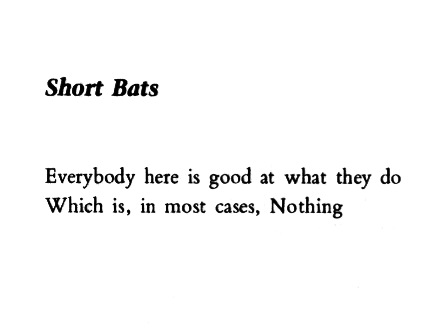
The later poetry collection Like Real People (1995) is also pretty great. It includes this humdinger:

Like Real People also includes a series of autobiographical sketches and stories told in an engaging but straightforward manner. The epilogue there is particularly good—Clark mulls over what it means to write an autobiography, straining against his anxieties over framing his own life stories. Tellingly, he lards the essay with quotes and ideas from other folks. Clark’s poetry often takes on the form of translation, citation, history, or reinterpretation (as we see in “Terminator Too,” above), and works like Empire of Skin (1997) and Junkets on a Sad Planet (1994) are particularly ambitious. Empire of Skin is a series of poems that take on the history of the American fur trade through a lens critical of Manifest Destiny. Junkets on a Sad Planet is an impressionistic series of riffs on Keats’ short life (“junkets” is a pun). From Junkets—
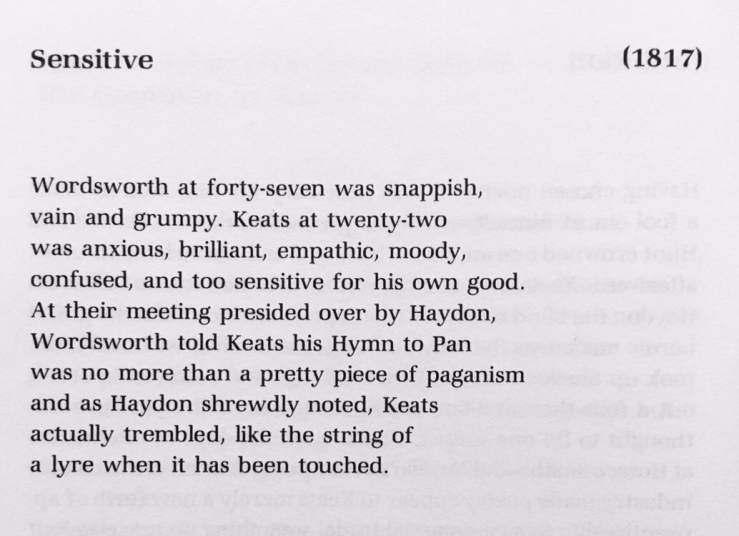
What a lovely condensation of biography, history, and poetic anxiety!
I’ll close with one of my favorite Clark poems, “Heavy,” which discharges poetic anxiety. Clark dedicated the poem to Jack Kerouac and Charles Olson—the gods in the first line, perhaps?–figures he would later write biographies on.
Peace be with Tom Clark.

 Biblioklept