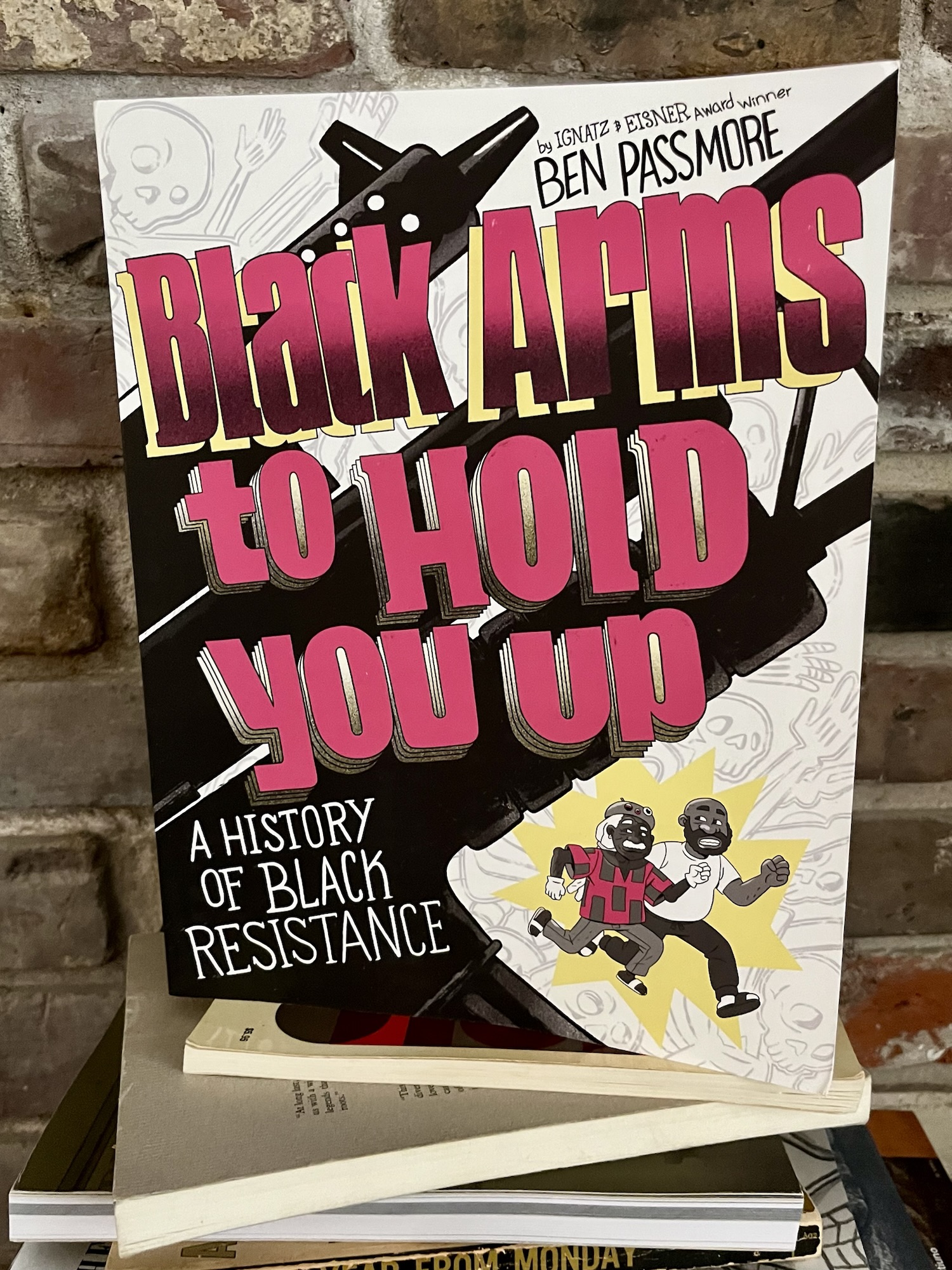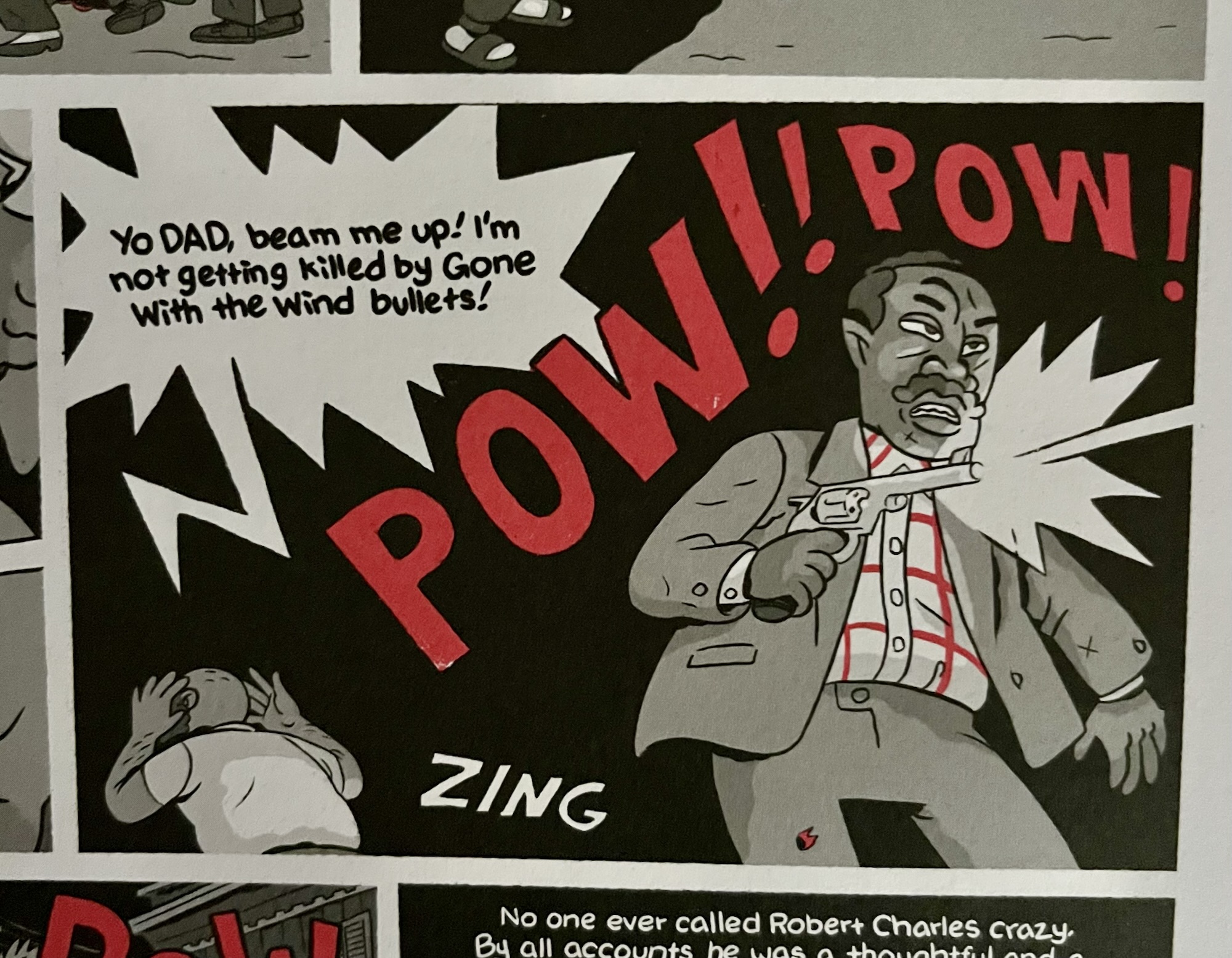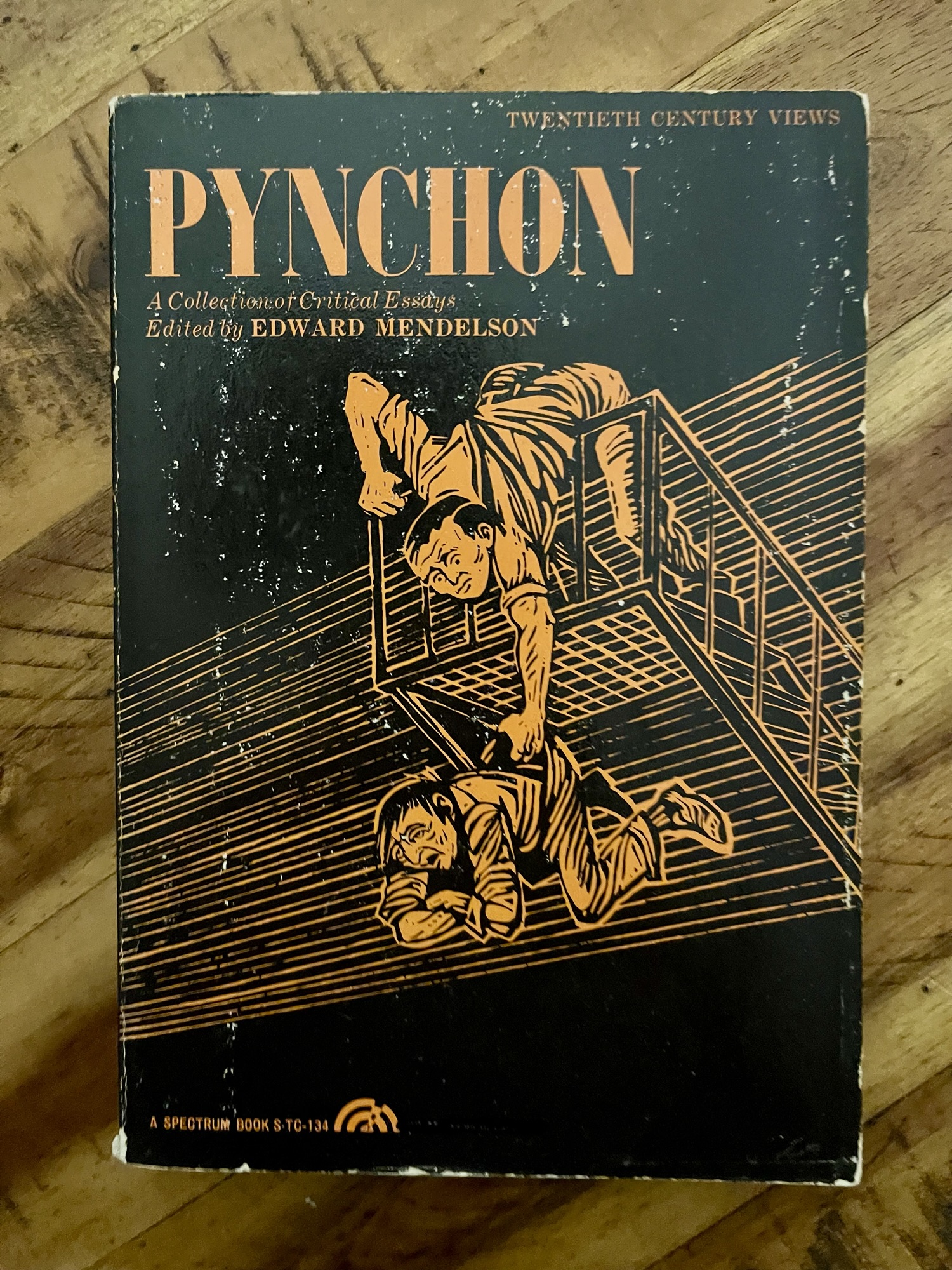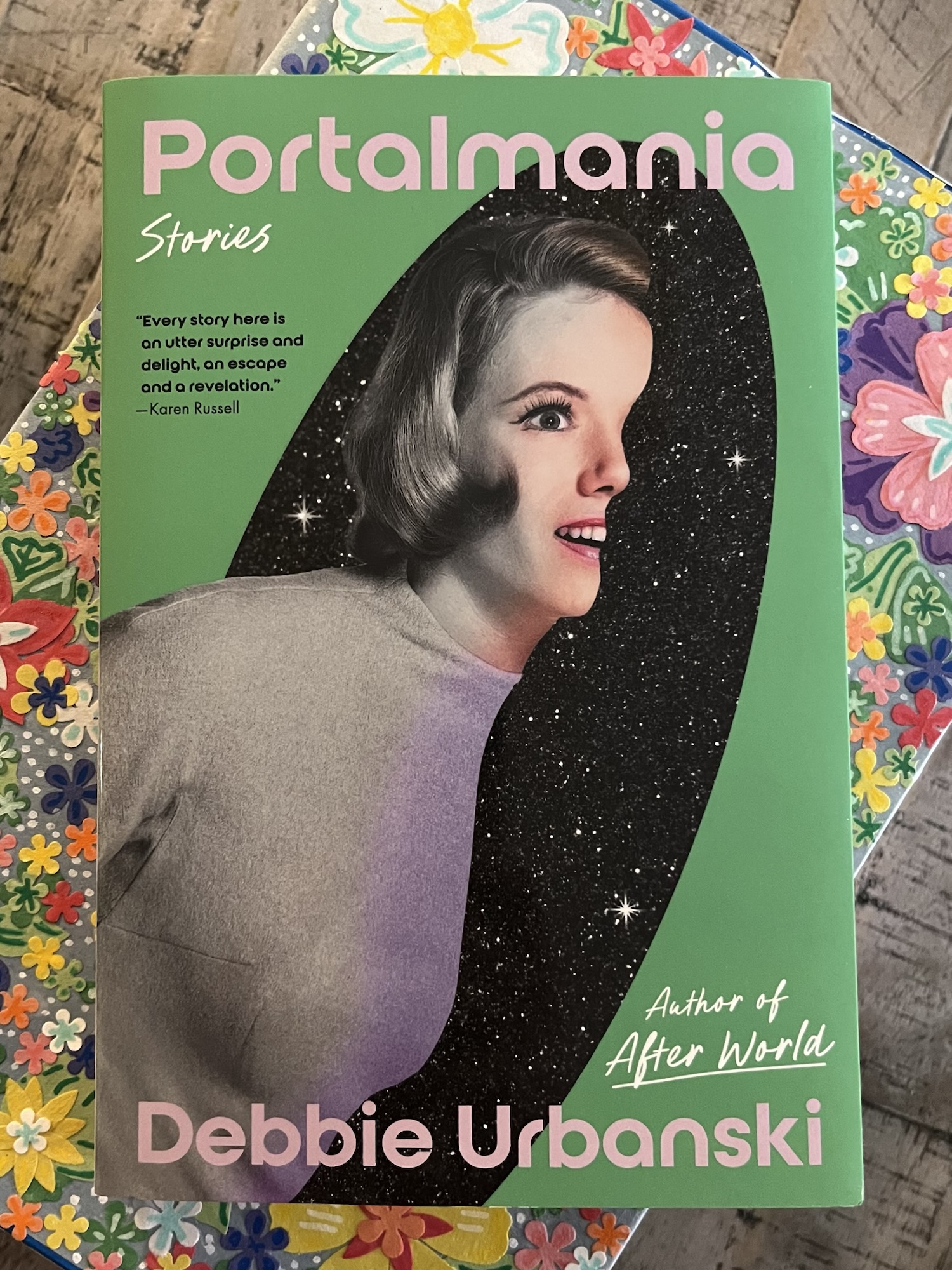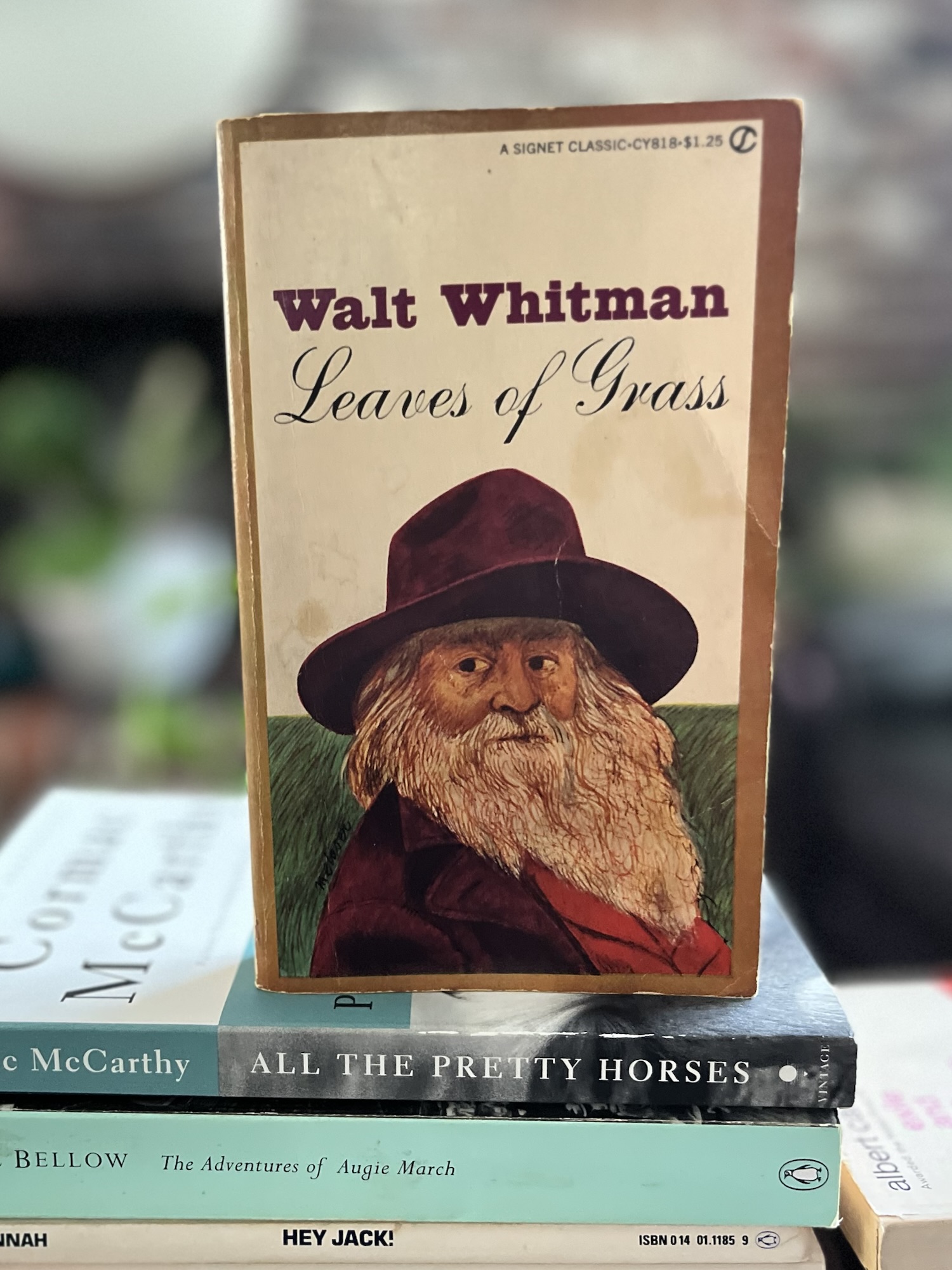
Benito Pérez Galdós’ Miaow (Book acquired, mid May 2025)

Benito Pérez Galdós’ 1888 novel Miaow is forthcoming in English translation this summer by Margaret Jull Costa, via NYRB. Their blurb:

Ramón Villaamil has been a loyal civil servant his whole life, but a change in government leaves him out of a job and still two months short of qualifying for his pension. Initially optimistic that he’ll be able to find work and pull his family out of their financial straits, he spends his days visiting the administration, pestering his ex-colleagues to put in a good word for him, and begging his friends in high places for money. At home, Villaamil’s wife, daughter, and sister-in-law—whose feline appearances earn them the nickname “the Miaows”—are unimpressed by Villaamil’s failures, and the only joy left in Villaamil’s life is his young grandson Luis. When Luis’s disgraced father, the handsome and dastardly Víctor Cadalso, reappears in their lives with promises of easing their financial burdens, Villaamil has no choice but to allow him back into their midst, even as he knows there is nothing pure about Víctor’s intentions and his return might spell their ruin.

Benito Pérez Galdós’s satire of middle-class life bears comparison with the novels of Charles Dickens and Honoré de Balzac, serving up a scathing critique of the hypocrisy and corruption of nineteenth-century Spanish society and the dehumanizing rituals of work. Margaret Jull Costa’s new translation brings out the tragedy, the comedy, and the vitality of Pérez Galdós’s prose.

Not really a blog about books acquired, May 2025

The afternoon my best friend died, three review titles arrived at Biblioklept World Headquarters. That was the first Monday in May 2025.

The next day, the first Tuesday in May 2025, a lovely new copy of Moby-Dick arrived, designed and illustrated by my old internet friend Dmitry Samarov. I was regularly breaking down into a kind of horrified shaking disbelief throughout this day. My best friend read Moby-Dick before I did. He told me it was funny and that I could read it, “No problem man.” He loaned me his copy of Pierre when I had to read it in grad school. I never gave it back.

On Wednesday–do I need to clue you in that this was the first Wednesday of May 2025? I seem to have lost my sense of time and scale this month, untethered from the Spring semester, which ended right as May began, unencumbered from any normalizing duty other than fatherhood and husbandry and just generally trying to be a good citizen–also generally numb in my nascent grief to the daily horrors of the what we call news or current events or what-have-you–but, yeah, I seem to have lost some days here… (maybe they’ve been colonized by the “Asiatick Pygmies” of Thomas Pynchon’s Against the Day, who colonized the “eleven missing days” of September 1752)… So well anyway on this first Wednesday of May 2025 the growing book pile took a silly turn, with the arrival of a massive book and a not-so-massive book, both by Henrik Pontoppidan. Other books arrived too. It’s the Spring catalog, or maybe the Summer catalog, I guess.

I managed to write something about my friend on Wednesday. I simply had to.

Thursday was the second Thursday of May, 2025, making it 8 May 2025, the 88th birthday of Thomas Pynchon. For over a decade now, I’ve celebrate my favorite author’s birthday on this blog as part of the Pynchon in Public “tradition,” but I couldn’t muster what I had planned (a riff on the forthcoming Vineland adaptation and the new novel, Shadow Ticket). The notes I sketched in late April for the piece strike me as silly, glib even.

That Thursday afternoon my friend’s wife (widow? fuck!) called me to ask me to deliver the eulogy at his “Celebration of Life Ceremony” at the beach the following Thursday. I started working on it. It was painful but somehow easy to write. It was very, very difficult to edit.

On Friday, Jon Lackman and Zack Pinson’s biography The Woman with Fifty Faces: Maria Lani and the Greatest Art Heist That Never Was arrived at Biblioklept World Headquarters. My daughter had seven girls over to make their own pizzas that night. I read The Woman with Fifty Faces in one sitting; it was wonderful. It was the first thing I’d read that was not in some way connected to my friend’s death. I loved the experience of reading it. It offered relief.

This Friday, the second one of May, 2025 was the first day I hadn’t broken down at some point. I was absorbed in a study of grief. I was trying to shape my memories into something tangible, or at least something having a form, which is to say, something formal. I was googling things like, how long should eulogy be words. I was on the phone with old friends, replying to emails and messages from old friends. I was also contending with acquaintances I barely recalled, and none too fondly, who luridly “reached out” wanting details under the guise of “offering condolences.” I was amassing words.

More review copies on Saturday. Friends from out of town came over and we all drank far too much. There was another grief to attend to, a dead father, a man we had all adored, a fantastic storyteller, a raconteur even, if we’re feeling grand with our words, and I miss him too. My dead friend was a huge fan.

Sunday was Mother’s Day and I had forgotten about it. My own mother and father were both suffering from acute bronchitis, and I had held off on delivering the news of my friend, worried that they would worry for me and his family and his young young children. Sorrow is bad for health. But when family members reached out to me with sincere concern, prompted by the trickle of news on social media about the upcoming Celebration of Life — forgive me, I’m just gonna call it a funeral, it was a funeral, no matter what we want to say — anyway, the trickle turned into a stream, and then I called my mom with the news. I don’t have any physical proof like a recording, but her wailing immediate refusing disbelieving repeated NO sounded exactly like my own. But from a chronological position, it seems that I must have inherited that cry from her, no?

The next day she called me to tell me a story I’d never heard from either her or my friend — years ago, when I was living in Tokyo and he was still in Jacksonville, he stopped by my parents house, unannounced, simply because he was driving by and wanted to share some of my latest emailed updates with my parents and hoped that they would share some too. “We had spaghetti dinner together. It was so nice,” my mother said. My bones turned into jelly and my eyes took to sweating.

This next day was of course the second Monday of May, 2025, the one week mark. The document I’d titled “eulogy” was a massive incoherent patchwork of memories, good times, riffs, and material cribbed from friends, including an entire email so beautifully-written from a friend that I thought about just passing it off as my own. The document also included five Langston Hughes poems, several lines from Moby-Dick, two longish quotes from Emerson (neither of which I understood or understand), a chapter on mourning rites from an early-twentieth century anthropology book, numerous David Berman and David Bowie lyrics, and the entirety of Elizabeth Bishop’s “One Art.” It was at least 9,000 words longer than it should be.

I don’t remember anything about that Tuesday or Wednesday. Two or three books came in the mail, I think, and I finally drove in a car, I think. I think I remembered to attend the houseplants. I must have actually written the eulogy those days. What I remember mostly is sweating from the back of my legs, stripping away all the ornament and artifice I’d borrowed from literature and poetry and philosophy. I practiced reading it a few times. Some of my oldest, dearest, bestest friends arrived from the other side of the country that night.

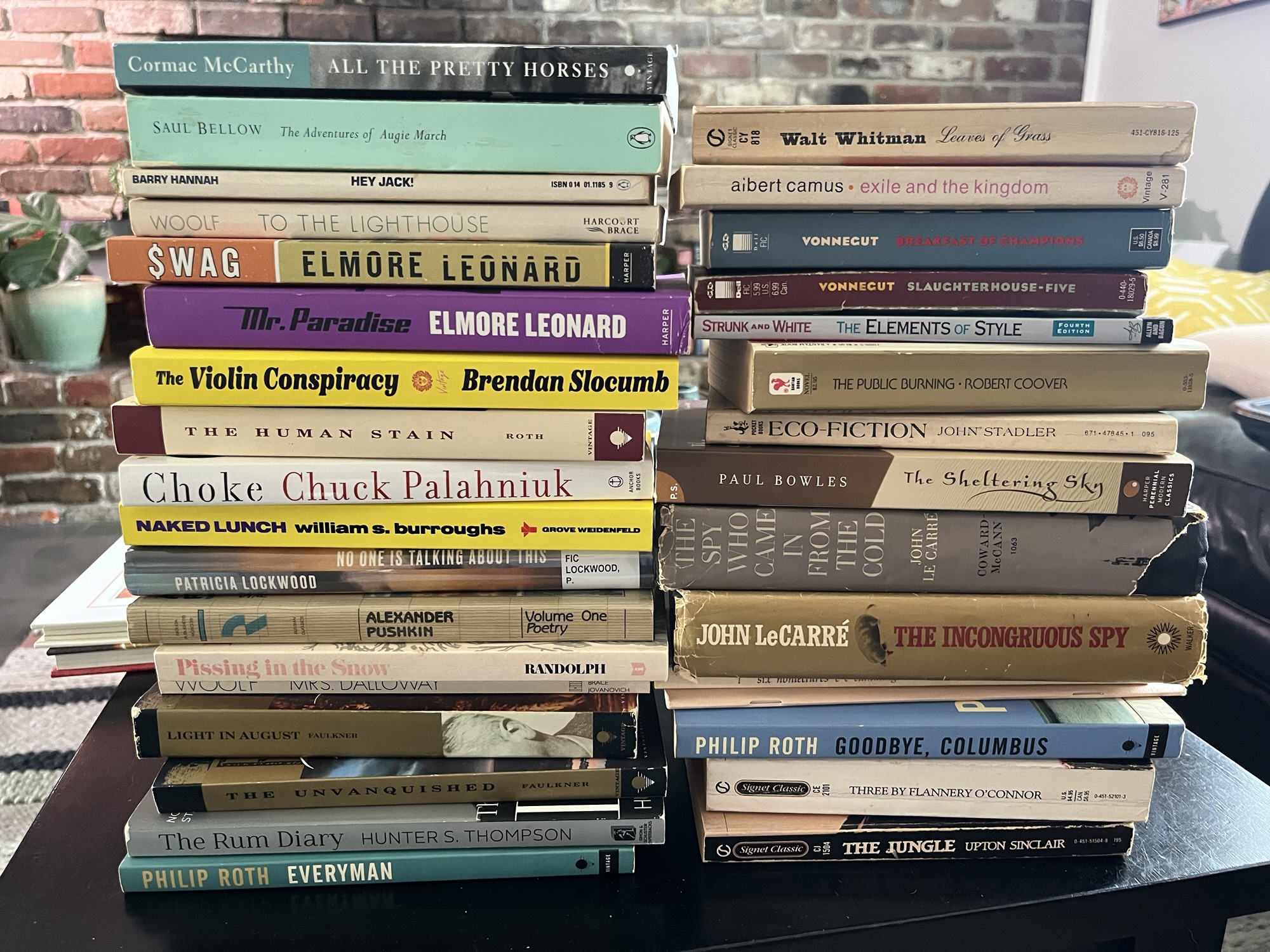
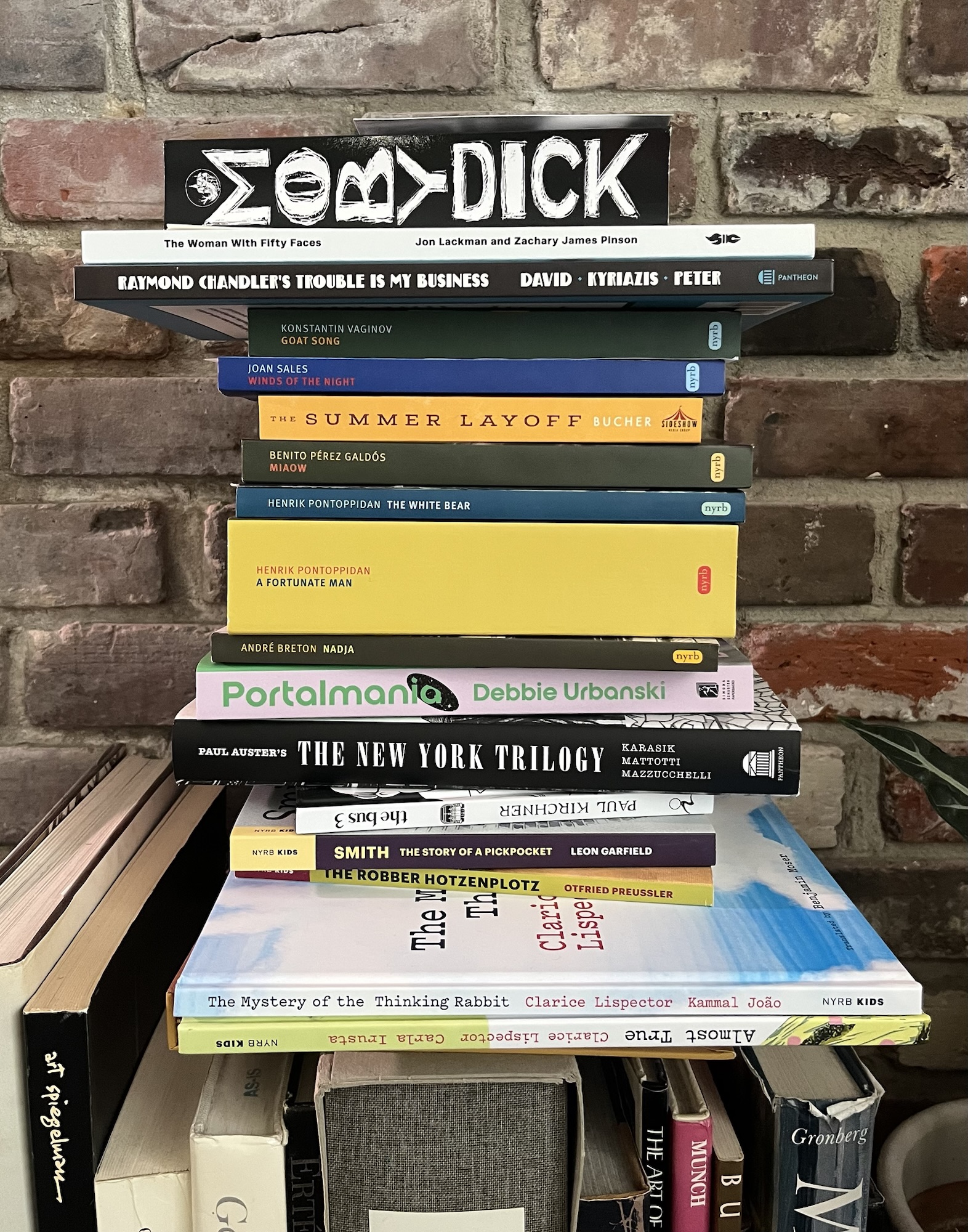
On Thursday those friends came over. My wife would drive us all out to the beach for the funeral. We started in on a few cheap watery domestics, maybe a little too early. The drive seemed interminable. I can’t really capture the vibe in the pavilion—and while I’m here not capturing things, I apologize if you’ve made it this far–I suppose this post is a bait-and-switch, what with the picture of a stack of books, right? The “Not really” in the blog’s title should really not be there at all, right? But the thing is, I need to get this all out, just like the thing I needed to write two weeks ago. If I don’t write it here I feel like I’ll never write anything here again. This is ostensibly a blog dedicated to art and literature, but it’s really more like a pastebook, a form of emotional and aesthetic recordkeeping that I’ve kept up for almost two decades now. The books in the picture above didn’t pile up as neatly as the photo suggests, but they did pile like that, causing me anxiety all month, reminding me that my attention was too thinned out. I was not as attentive to my children as I should have been in those weeks. My houseplants suffered. But so I have to let all that anxiety out here, and I’m sorry if it’s alienating to a potential audience, and I’m sorry to write that I am really writing this for me, for writing that If I don’t get these words out of my body I will not be able to write other words on this blog ever again

—but the vibe in the pavilion. Very strange, moving from hysterical laughing to crying. Lots of great stories. The mic or PA went out in the middle of my eulogy so I ended up delivering it in the loudest voice I could muster. The pavilion was crammed, literally standing room only, such that the fire marshal or the marshal’s deputy or the person nominally in charge of these duties decreed that the doors be opened and about half of the people should mill about. The Atlantic breeze was lovely, even if it was in the high eighties. I saw and spoke to people I hadn’t seen in fifteen years, twenty years, thirty years. I was struck by how fucking old we all looked. My best friend’s brother looked exactly the same as their father had looked when we were thirteen, fourteen. I have felt iterations of oldtiredadult in my life; I’ve even felt mature and occasionally even wise (knowing that any trickle of wisdom I purchased through mistake and incaution). But I have never really felt grown up until last Thursday. I don’t really know what any of those words mean. We tossed flowers into the Atlantic’s chill waves.

I knew I’d have sand in my loafers all night. About a dozen of us went to a dive bar a mile away and got plastered. I had forgotten that there were still bars that people smoked in. A musician played four Seger covers in a row, keeping the beat with his prosthetic leg. The bar’s owner had a school desk set up right by the stage, where he was apparently attending to the bookkeeping, a pen in one hand, a menthol in the other. A vendor in a special vest kept trying to give us vape products. An older woman showed up after midnight and established an ad hoc outdoor kitchen where she fried lumpia, which we ate in large quantities. She told us several dirty jokes where the punchlines were, without variation, oral sex. We missed our friend; he would’ve had a great time that night.

My sweet wife, designated driver, got me and the boys over the river and back home, putting up with our arguing over Zappa. She fell into our mistake back at home though, committing herself to vodka while we polished off a bottle of bourbon.

Friday was an agony overcome in small measures by barbecue and beers, a slow stretching anti-wake of sorts where folks drifted in and out of our house. It was a strange party, but also so wonderful, so full of love and support and all things corny, I suppose. I gave away a copy of Moby-Dick (a Norton Crit) and my backup copy of Gravity’s Rainbow. I foisted a redundant Barry Hannah novel on a friend. Folks drifted off in lacy jags, or at least that’s how I’ll choose to characterize it here. A few stayed the night, sleeping on couches in a half-remembered skill perfected and then promptly abandoned over twenty years ago.

I didn’t really sleep, again. I had only really slept one night out of the past lost eleven days, and then I suppose on the point of exhaustion. I had not eaten healthily and over three days and nights had overindulged in alcohol in a way I had not in years. I drove my friend to the airport so he could return to his family in Portland, got out of my car around 11am on Saturday, aiming myself for my bed. I was having difficulty breathing, or not so much difficulty breathing, as sharp pain when breathing. This pain was enormously exacerbated when I lay down and relieved somewhat when I stood. The pain intensified throughout the day; it was something new. I weird dull pain in my neck and the back of my throat. Not esophageal, exactly. By three it was almost impossible to breathe anything but the most shallow breaths without intense pain; I could not lie down because of the pain, despite being exhausted. My wife insisted we visit an urgent care clinic in a CVS; the nice doctor there insisted with caring urgency that I go to the closest emergency room. Six hours and lots of tests later I was back at home in even worse pain but with a diagnosis of pericarditis, likely brought on from stress, and a prescription for prednisone.

On the third Sunday of March, 2025, I was finally able to truly fall asleep for the first time in weeks. I felt a bit better on Monday, although the steroids have made me feel a little loco I’ll admit. Today was the first day I’ve felt anything close to normal in a while–I mowed the lawn, which had gotten a bit wild, and attended many of my poor neglected houseplants. And then I exorcised the stack of books that had stackingly stacked up, a pillar of publishers’ good will that radiated anxiety-inducing waves. Let this post be a totem against that. I look forward to peeking in to some and reading others in full and maybe even ignoring one or two (not yours if somehow yours is included in the stack; not yours). And all my apologies again.

I feel better now. Just different.


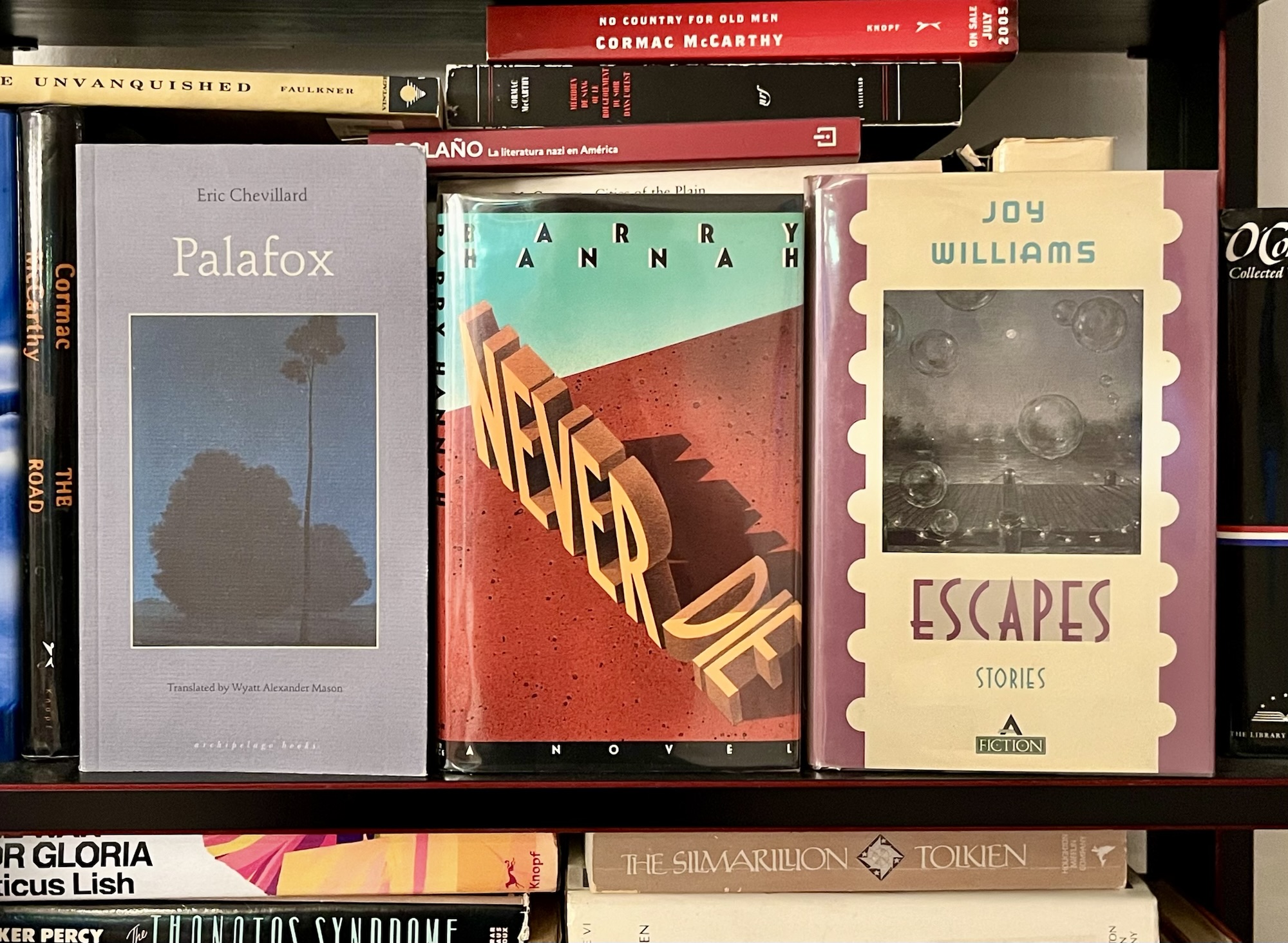
Chevillard/Hannah/Williams (Books acquired, 2 May 2025)

I dropped off a few books for trade credit and wound up with hardback first editions of Barry Hannah’s Never Die and Joy Williams’ 1990 collection Escapes. I also couldn’t pass up on Éric Chevillard’s Palafox in translation by Wyatt Mason. (I really dug Chris Clarke’s translation of Chevillard’s short novel The Posthumous Works of Thomas Pilaster.)

If you feel like feeling a little depressed and feeling a little amused in a way that creates a new, not-so-little feeling, you can read the title track of Joy Williams’ Escapes, “Escapes” (by Joy Williams) at Granta. From the story:

My mother was a drinker. Because my father left us, I assumed he was not a drinker, but this may not have been the case. My mother loved me and was always kind to me. We spent a great deal of time together, my mother and I. This was before I knew how to read. I suspected there was a trick to reading, but I did not know the trick. Written words were something between me and a place I could not go. My mother went back and forth to that place all the time, but couldn’t explain to me exactly what it was like there. I imagined it to be a different place.

As a very young child, my mother had seen the magician Houdini. Houdini had made an elephant disappear. He had also made an orange tree grow from a seed right on the stage. Bright oranges hung from the tree and he had picked them and thrown them out into the audience. People could eat the oranges or take them home, whatever they wanted.

How did he make the elephant disappear, I asked.

‘He disappeared in a puff of smoke,’ my mother said. ‘Houdini said that even the elephant didn’t know how it was done.’

Was it a baby elephant, I asked.

My mother sipped her drink. She said that Houdini was more than a magician, he was an escape artist. She said that he could escape from handcuffs and chains and ropes.

‘They put him in straitjackets and locked him in trunks and threw him in swimming pools and rivers and oceans and he escaped,’ my mother said. ‘He escaped from water-filled vaults. He escaped from coffins.’

I said that I wanted to see Houdini.

‘Oh, Houdini’s dead, Lizzie,’ my mother said. ‘He died a long time ago. A man punched him in the stomach three times and he died.’

Dead. I asked if he couldn’t get out of being dead.

‘He met his match there,’ my mother said.

Riff on some Friends of the Library Sale acquisitions

My move over the last few years when I go to a Friends of the Library Sale is to fill the ten dollar paper bag with a handful of pristine trade paperbacks I think will recoup the ten bucks in trade at my local used bookstore. I then pick through for titles to bolster my children’s growing personal libraries and for books that I might want to give away to friends, family, and students. And maybe I might get lucky with some overlooked gem — a first edition, a rarity, an oddity.

Most of what I picked up today was for my son to pick through. He took the Camus, Vonnegut, O’Connor, Palahniuk, and McCarthy. My daughter had zero interest in any of the haul.

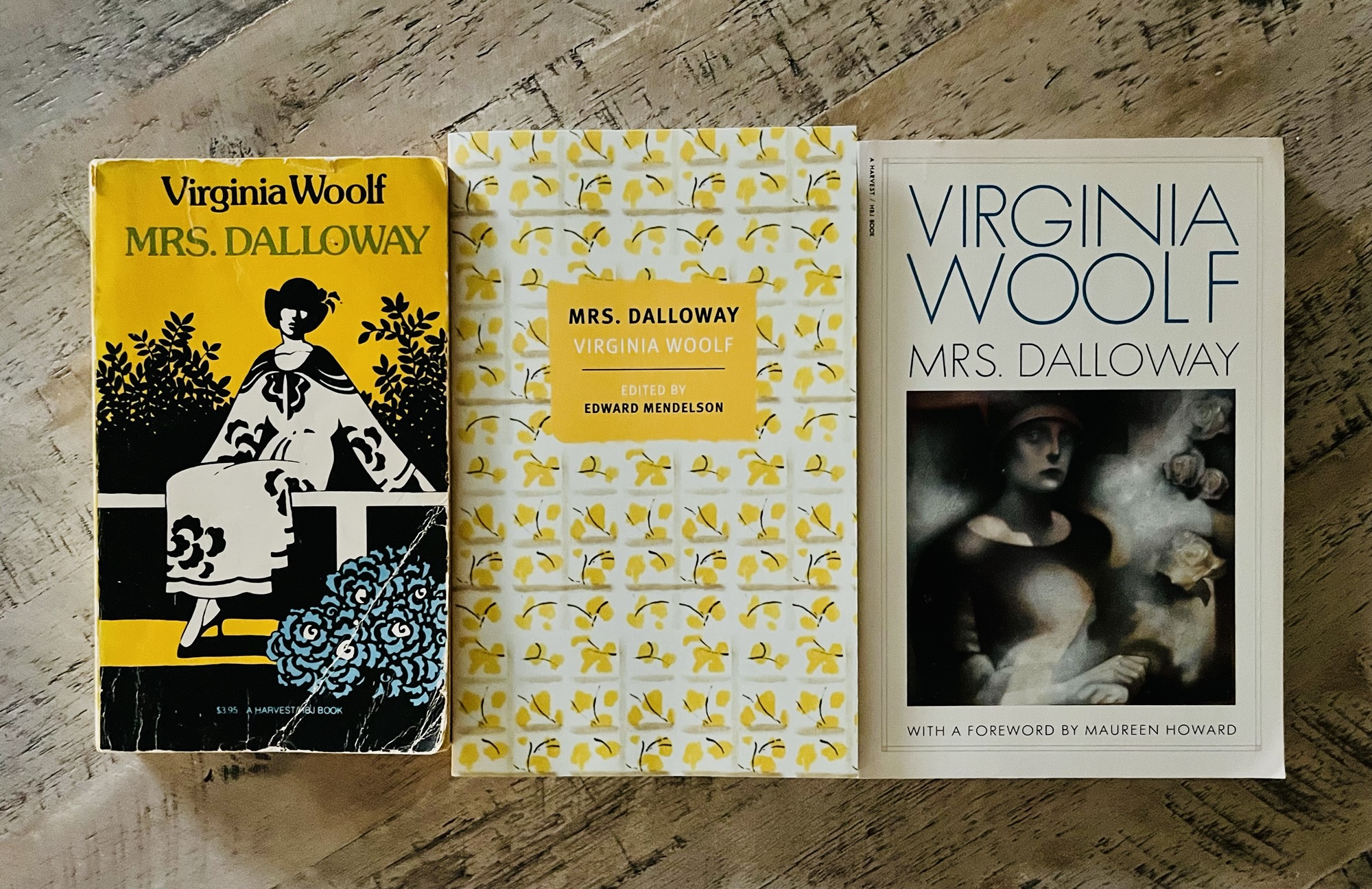
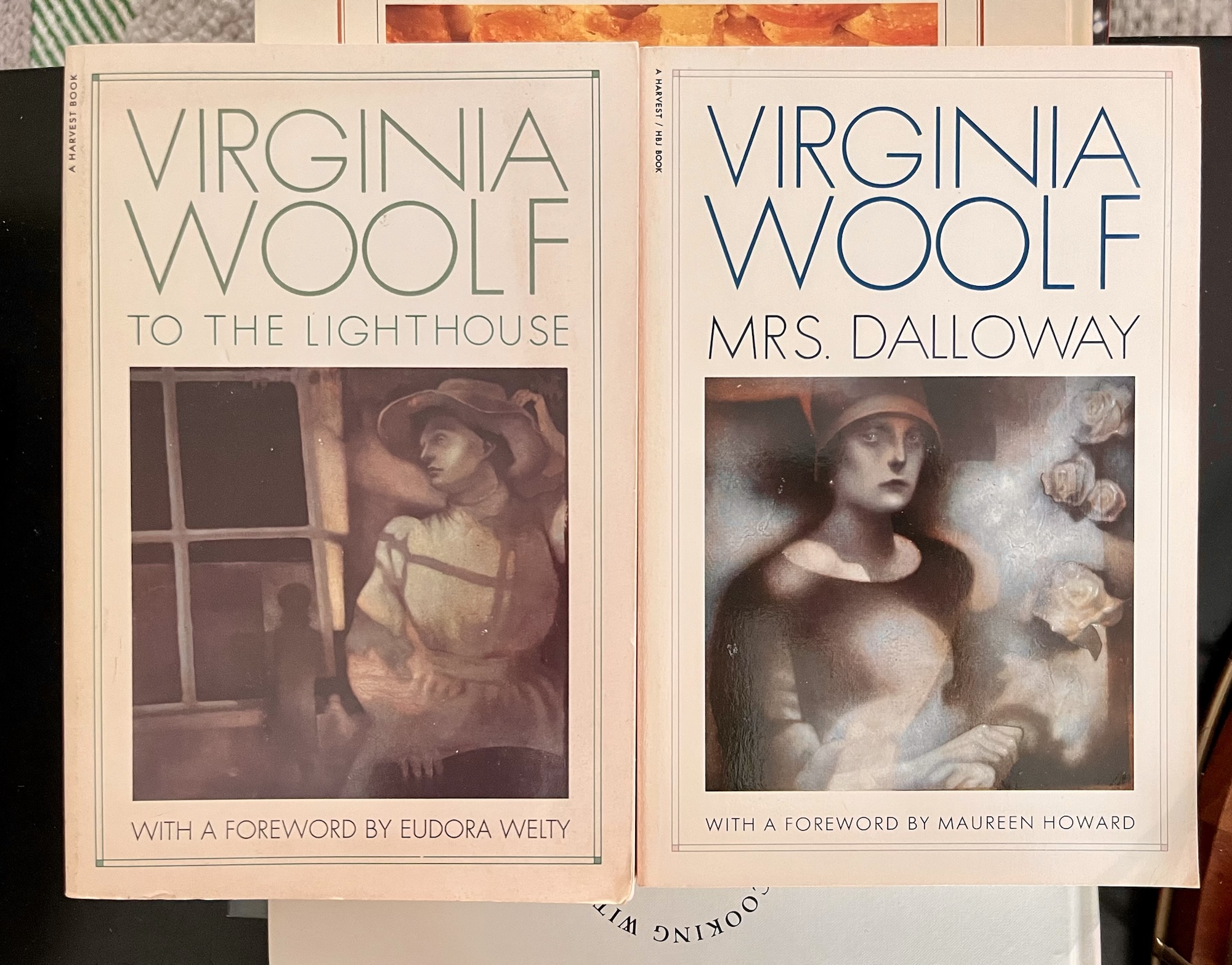
I wound up with several of the exact same editions of titles I already own (Camus’ Exile and Kingdom; Faulkner’s A Light in August; William Burroughs’ Naked Lunch) and lots of books we already have in other editions, most of which I’ll give away or trade. But I’ll be happy to trade out the cheap mass markets of Mrs. Dalloway and To the Lighthouse I’ve had forever in favor of these HBJ Woolfs (Wolves?):

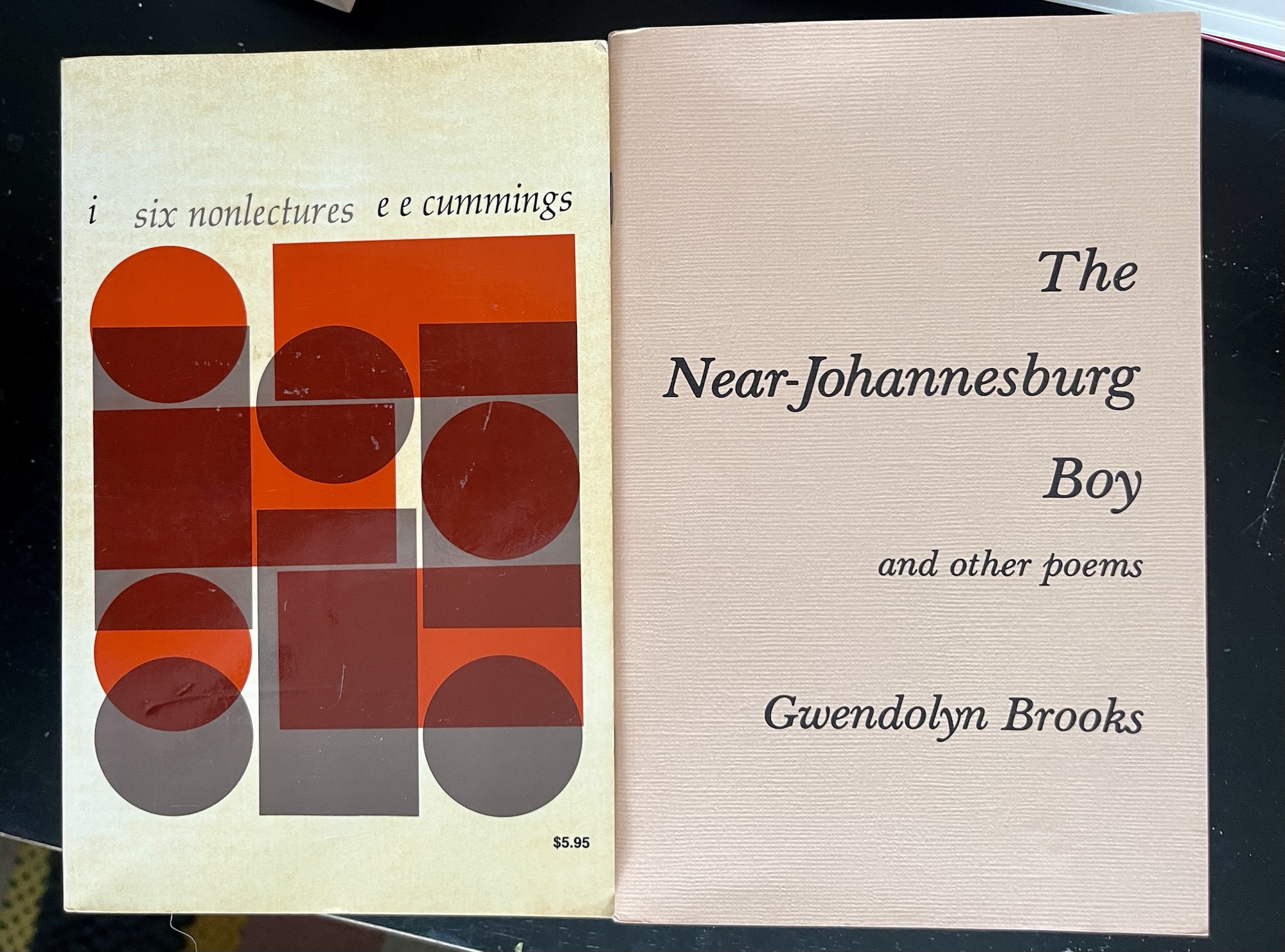
My two favorite finds today were cummings’ six nonlectures (the midcentury cover is lovely) and a Gwendolyn Brooks chapbook, The Near-Johannesburg Boy:

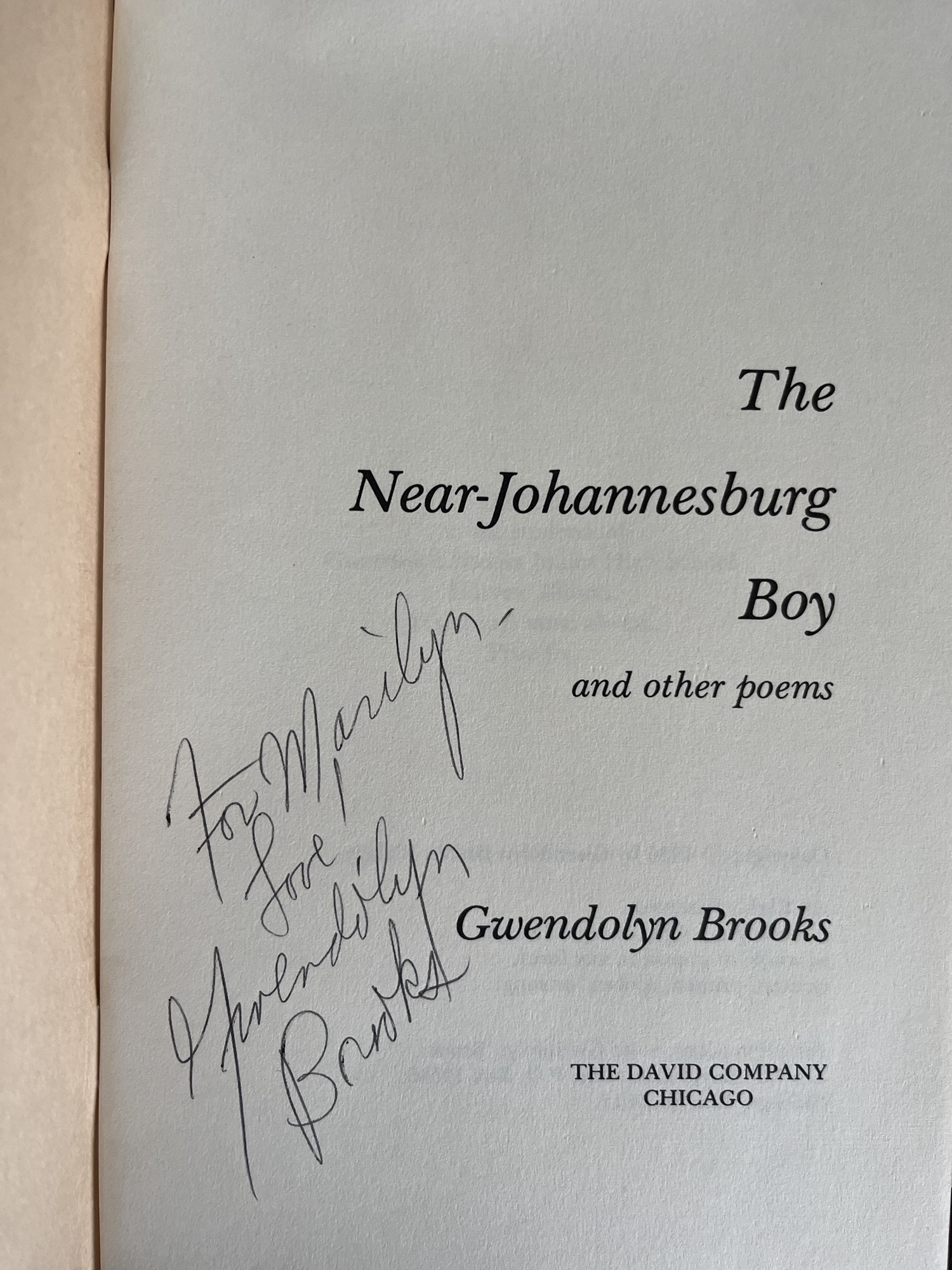
It wasn’t until I got home that I realized the Brooks’ chapbook was signed:

I had actually found two signed Brooks’ books at my favorite local used shop, also both inscribed to “Marilyn” (one was Blacks; I can’t remember the other one; they were both priced a bit beyond my casual range).

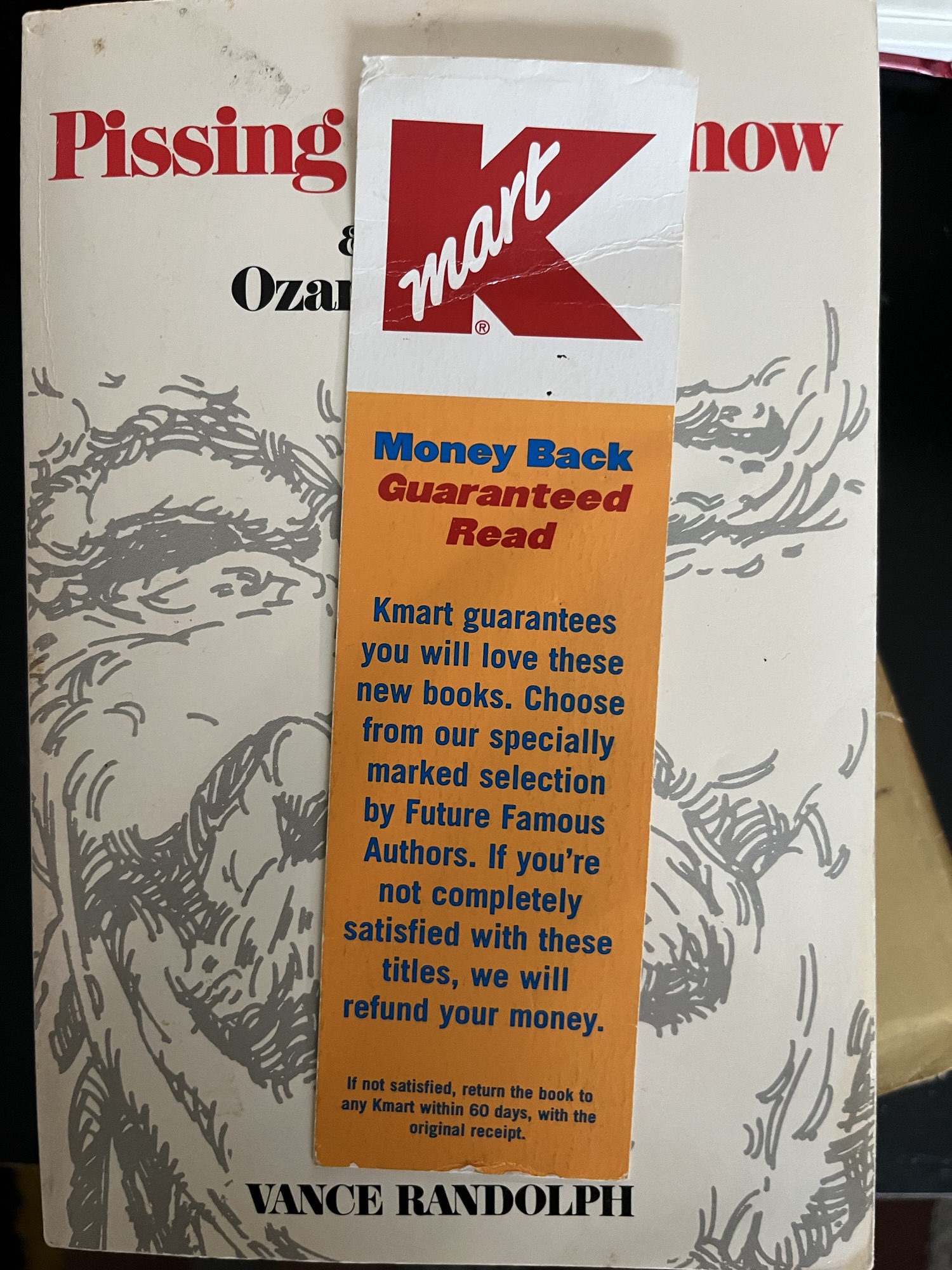
But maybe my favorite find was this Kmart bookmark:

The Kmart bookmark was tucked into a trade paperback University of Illinois Press copy of Randolph’s Pissing in the Snow. I doubt the collection of Ozark folktales was originally purchased at Kmart. But who knows.

Pissing in the Snow was one of the first books I wrote about on this blog, nearly twenty years ago. I look forward to passing it on to a student sooner or later.


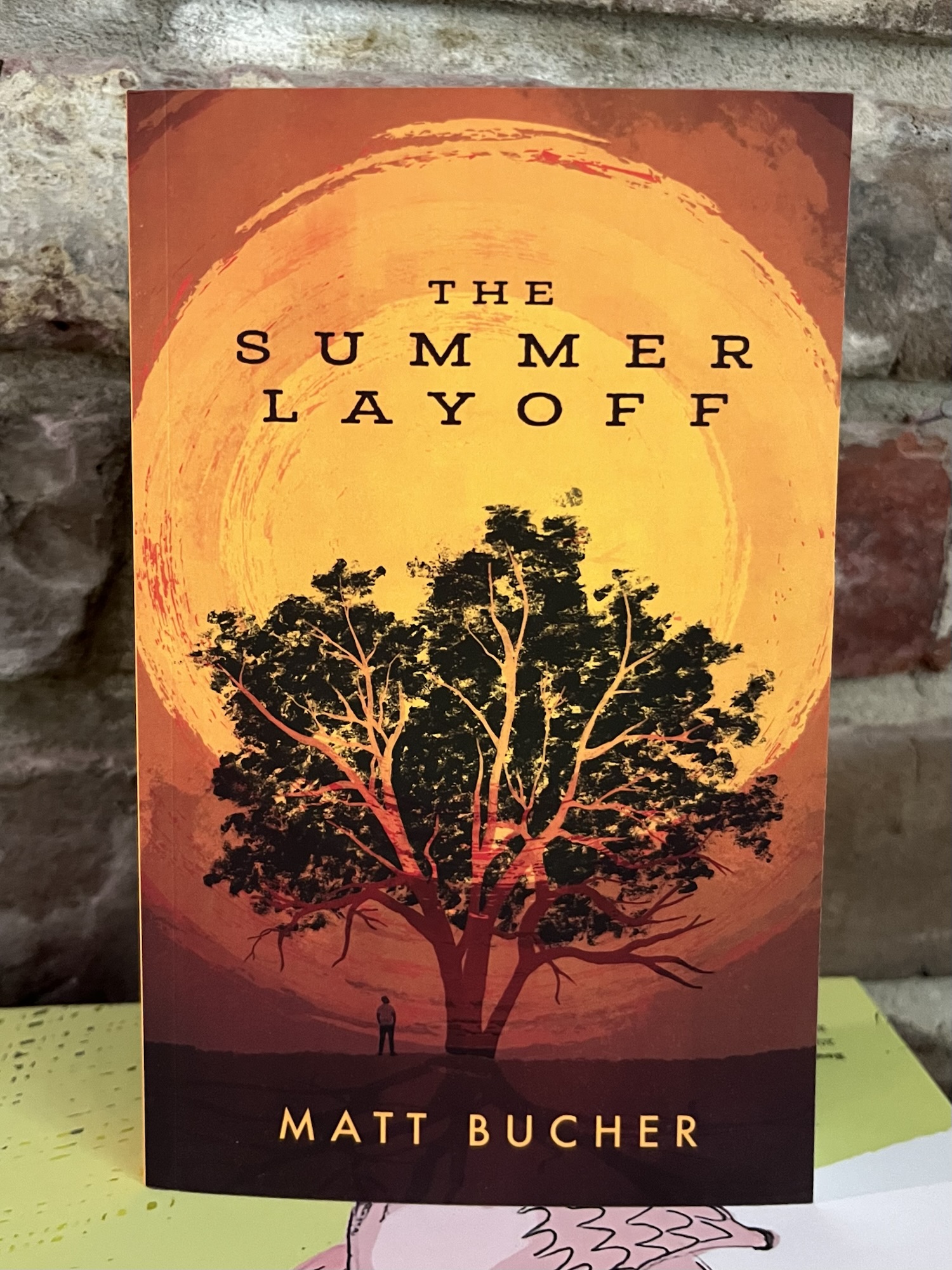
Matt Bucher’s The Summer Layoff (Book acquired, 24 April 2025)

Matt Bucher’s forthcoming novel The Summer Layoff is a semi-sequel to his debut, The Belan Deck. Blurb:

On Day 1, the narrator of The Summer Layoff is unceremoniously canned from his soul-sucking corporate job. But, he has a generous severance package that affords him the time off to do nothing, for once. Instead of attending virtual meetings and reviewing PowerPoint files relating to an amorphous Al project, he can now take long walks through his Texas suburb, write in his diary, scroll Wikipedia for hours at a time, and contemplate normal human anxieties. Part catalog, part self-help note-to-self, The Summer Layoff is a meditation on the modern metaphysics of work and stasis.

From my review of The Belan Deck:

Let’s talk about the spirit and form of The Belan Deck. Bucher borrows the epigraphic, anecdotal, fractured, discontinuous style that David Markson practiced (perfected?) in his so-called Notecard Quartet (1996-2007: Reader’s BlockThis Is Not A NovelVanishing Point, and The Last Novel). “An assemblage…nonlinear, discontinuous, collage-like,” wrote Markson, to which Bucher’s narrator replies, “Bricolage. DIY culture. Amateurism. Fandom. Blackout poems.”

Bucher’s bricolage picks up Markson’s style and spirit, but also moves it forward. Although Markson’s late quartet is arguably (I would say, by definition) formally postmodernist, the object of the Notecard Novels’ obsession is essentially Modernism. Bucher’s book is necessarily post-postmodern, taking as its objects the detritus and tools of postmodern communication: PowerPoint, Google Street View, Wikipedia, social media, artificial intelligence.

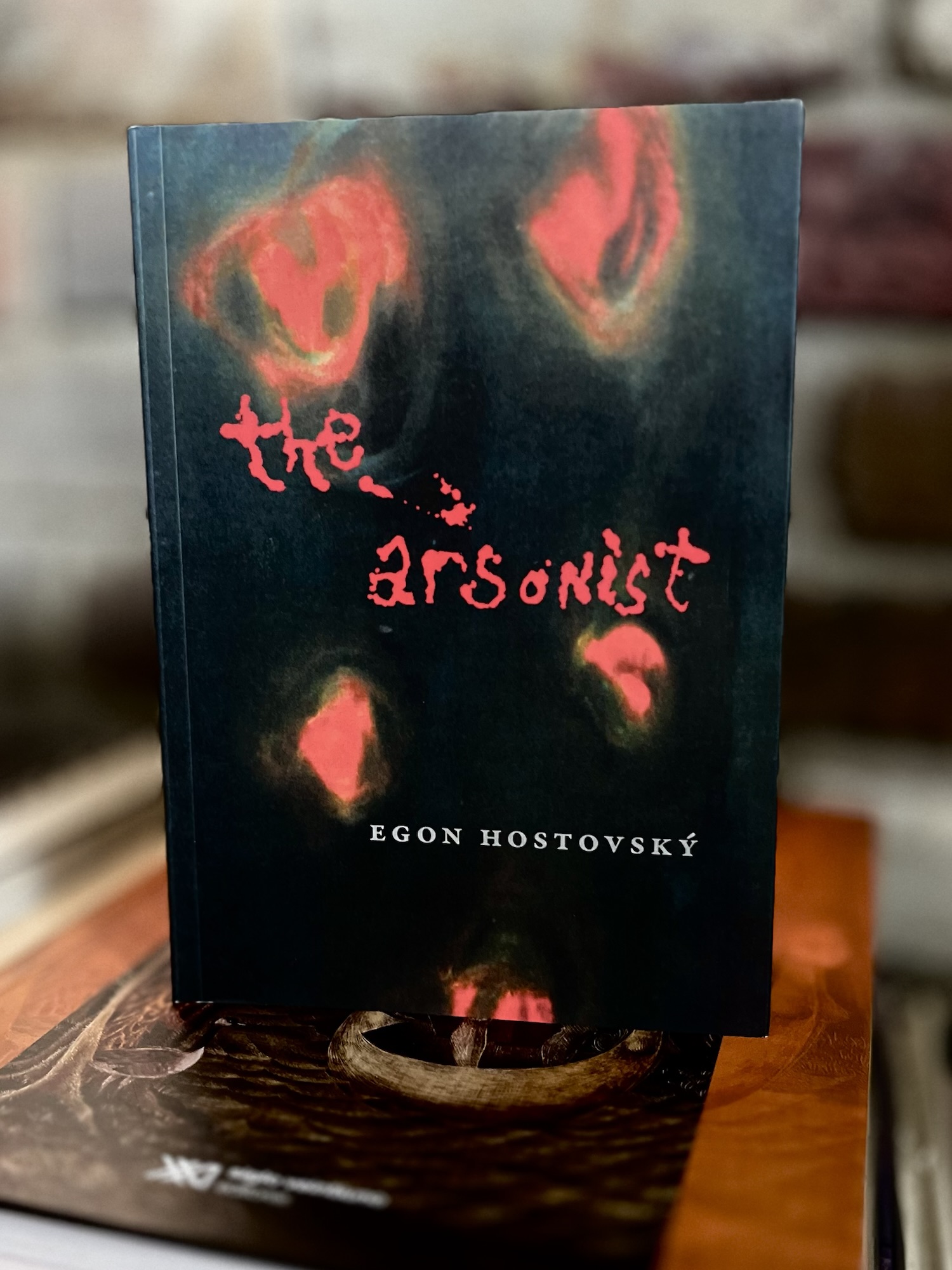
Egon Hostovský’s The Arsonist (Book acquired, 22 March 2025)

Egon Hostovský’s The Arsonist is new in translation by Christopher Morris from Twisted Spoon. Their blurb:

Awarded the Czechoslovak State Prize for Literature in 1936, The Arsonist explores the world of youth against the backdrop of a small eastern Bohemian border town being menaced by an invisible firebug. Time and fire, their ability to reshape and destroy, are central. Encoded in echo, wind, and smoke — in the gesture and in the whisper — the true nature of events is too intangible and fleeting, too pregnant with the unknown, to provide any genuine certainty, and this is the real source of the townsfolk’s terror. Their misguided attempts to identify the elusive arsonist ultimately reveal the emptiness and inflexibility of their own lives. One of the most distinctive voices in 20th-century Czech letters, Hostovský’s mix of mysticism, irony, and wit, all leavened by the influence of Expressionism on his early work, results in a richly textured narrative amid an atmosphere of growing peril that serves as a harbinger of the catastrophe to come. This is the first English translation.

Zuzana Brabcová’s Ceilings (Book acquired, 22 March 2025)

I’m excited about Zuzana Brabcová’s novel Ceilings, in English translation by Tereza Novická. Here’s publisher Twisted Spoon’s blurb:

Kin to the work of Leonora Carrington and Unica Zürn, Ceilings is a polyphonic novel that takes place in a mental hospital in Prague where the “narrator” is undergoing detox treatment for substance abuse. As the borders blur between inner experience and the outer world, between reality and dream, as the walls and ceilings hemming in the desire for freedom fantastically break open as if into the unknown and gender fluidly shifts between brother and sister, who are one and the same, Brabcová’s flights of imagination portray how difficult it is to “come out of oneself” and to engage with the other in a multifarious world that demands it of us, no matter how ambivalently.

Marquis de Sade’s Stories, Tales, & Fables (Book acquired, mid-March 2025)

I’m excited about this one — R.J. Dent’s translation of the Marquis de Sade’s short work from Contra Mundum. Their blurb:

Written in his Bastille cell in the years between 120 Days of Sodom and Justine, this is the first English translation of Marquis de Sade’s collection of short works, Stories, Tales, and Fables.

Essential reading for all Sade devotees, Stories, Tales, and Fables is an introduction for those who are not yet familiar with the work of this controversial French literary innovator. The short works in this collection range from the dramatic novella, Dorci, to comic tales such as The Duped Judge. Whether he is writing bawdy, exuberant comedies, supernatural tales, or human tragedies, Sade is essentially a moralist, and his exploration of the darker side of human nature remains as relevant to our society as it was to his own.

Psychologically perceptive and defiantly unconventional, Stories, Tales, and Fables reveals the compelling force of Sade’s narrative powers. An accomplished and artful fiction writer, Sade, like all great writers, asks penetrating questions about society, life, and humanity. This collection also includes a selection of Sade’s non-fiction, ranging from his insightful survey of the novelist’s art, Some Thoughts on the Novel, to his Last Will and Testament, as well as several essays about Sade’s work by renowned authors including Apollinaire, Heine, Masson, Anatole France and Paul Ėluard.


Paul Griffiths’ let me tell you/let me go on (Book acquired, 24 March 2025)

Paul Griffiths’ Ophelia novels are collected in one volume from NYRB for a US release:

“So: now I come to speak.” With this line, Shakespeare’s Ophelia starts telling her story. In let me tell you, this newly revealed woman uses exactly the same words Shakespeare gave her in Hamlet, shifted as in a kaleidoscope to create a very different voice: her own. We hear her personal narrative from childhood to the moments before the start of the play, when she knows she has a fateful decision to make. Along the way, we discover whole new angles on her father, her brother, the prince, and other characters who come out from behind the curtain.

In let me go on, her decision made, she refashions herself. Emerging from her old world, she explores a new one, of magical variety yet coherent. As she goes in search of what she may still become, she meets a new cast of characters, some poignant, some hilarious. Paul Griffiths gives this remarkable protagonist—and us—a play-full of humor, poignancy, passion, adventure, and a great many surprises.

Stephen Dixon’s Frog (Book acquired, 7 March 2025 — thanks Tilford!)

A big thank you to one of my oldest friends, P. Tilford, for sending me a copy of Stephen Dixon’s Frog.

From “Frog in Prague”:

They stand still. “And Kafka?” Howard says.

“Kafka is not buried here.”

“No? Because I thought—what I mean is the lady at my hotel’s tourist information desk—the Intercontinental over there—and also the one who sold me the ticket now, both told me—”

The man’s shaking his head, looks at him straight-faced. It’s up to you, his look says, if you’re going to give me anything for this tour. I won’t ask. I won’t embarrass you if you don’t give me a crown. But I’m not going to stand here all day waiting for it.

“Here, I want to give you something for all this.” He looks in his wallet. Smallest is a fifty note. Even if he got three-to-one on the black market, it’s still too much. He feels the change in his pocket. Only small coins. This guy’s done this routine with plenty of people, that’s for sure, and he’d really like not to give him anything.

Margie Sarsfield’s Beta Vulgaris (Book (and some beet seeds) acquired, 2 Feb. 2025)

I got a review copy of Margie Sarsfield’s debut novel Beta Vulgaris the other week. It came with a little packet of beet seeds.

Publisher Norton’s blurb:

Elise and her boyfriend, Tom, set off for Minnesota, hoping the paycheck from the sugar beet harvest will cover the rent on their Brooklyn apartment. Amidst the grueling work and familiar anxieties about her finances, Elise starts noticing strange things: threatening phone calls, a mysterious rash, and snatches of an ominous voice coming from the beet pile.

When Tom and other coworkers begin to vanish, Elise is left alone to confront the weight of her past, the horrors of her uncertain future, and the menacing but enticing siren song of the beets. Biting, eerie, and confidently told, Beta Vulgaris harnesses a distinct voice and audacious premise to undermine straightforward narratives of class, trauma, consumption, and redemption.

I missed my window to plant beets here in north Florida.

Vincenzo Latronico’s Perfection (Book acquired, late Feb. 2025)

Vincenzo Latronico’s Perfection, in translation by Sophie Hughes, is new from NYRB. Their blurb–

Anna and Tom, an expat couple, have fashioned a dream life for themselves in Berlin. They are young digital “creatives” exploring the excitements of the city, freelancers without too many constraints, who spend their free time cultivating house plants and their images online. At first, they reasonably deduce that they’ve turned their passion for aesthetics into a viable, even enviable career, but the years go by, and Anna and Tom grow bored. As their friends move back home or move on, so their own work and sex life—and the life of Berlin itself—begin to lose their luster. An attempt to put their politics into action fizzles in embarrassed self-doubt. Edging closer to forty, they try living as digital nomads only to discover that, wherever they go, “the brand of oat milk in their flat whites was the same.”

Perfection—Vincenzo Latronico’s first book to be translated into English—is a scathing novel about contemporary existence, a tale of two people gradually waking up to find themselves in various traps, wondering how it all came to be. Was it a lack of foresight, or were they just born too late?

Markus Werner’s The Frog in the Throat (Book acquired, late Feb. 2025)

The Frog in the Throat by Markus Werner is forthcoming in translation by Michael Hofmann. Publisher NYRB’s blurb:

In a small town in Switzerland, Franz—ex-clergyman, ex-husband, current counselor of locals at loose ends— is being haunted by his recently deceased father, Klement. In life, Franz was caught cheating on his wife and defrocked, after which Klement never spoke to him again. In death, Klement visits his son in the form of a frog in the throat, choking him, yes, but also giving voice to an old dairy farmer devoted to the old ways, forever railing against his son and the whole modern mess he represents.

The same can be said of this novel, in which these two voices clash, harmonize, and ultimately offer up all the mutual recognition and incomprehension that is family life. A miniature tragicomic masterpiece, Markus Werner’s second novel is as bursting with life as a Dickens novel: not only Franz’s high-strung shenanigans and the father’s settled life among the cattle, but the lives of his sister and brother and the land all around.

As in all of Werner’s work, the world looks grim (“I sit around, I drink, I brood, I pat myself down for flaws and find many and each evening I say: Starting tomorrow, I’m going to get a grip on myself”) but never less than comic—a view captured marvelously in Michael Hofmann’s vivid translation.

Blog about some February acquisitions

A weeks-long back-and-forth with a colleague about certain flavors of Modernist novels led to this colleague, a friend really, to come by my office with a stack of about 80 pages he’d printed, front and back, demanding that I take a look at some utter nonsense, probably the kind of nonsense I’d abide. This particular nonsense was a printed .pdf of Camilo José Cela’s 1988 novel Cristo versus Arizona in the original Spanish. “It’s all just one long sentence!” my colleague declared. I was immediately intrigued, and am still on the lookout for Martin Sokolinsky’s 2007 English translation. Wikipedia, cribbing the Publisher’s Weekly review of that translation describes Christ Versus Arizona as “set in the American Old West during the gunfight at the O.K. Corral in 1881. It consists of a monologue in one long sentence, inside the head of Wendell Liverpool Espana, who is the son of a prostitute and observes the gunfight.” I expressed my delight with the concept. My colleague then reverted to his argument, which, I will badly summarize as something like, All these Modernists tried this nonsense and some point just to show off at the expense of the reader. He extolled again the virtues of Dubliners over Ulysses, a book with its head in its ass; he decried Faulkner’s worst tendencies—a gifted writer who could offer up a perfect novel and then birth an abomination like The Sound and the FuryCristo versus Arizona, he assured me, was Cela’s abomination; he then urged me to read Cela’s masterpiece, La colmena, which he translated as The Beehive. And then I had an 11:00am class to attend to.

Driving home I realized that I might actually have a copy of an English translation of La colmena. I did: Anthony Kerrigan’s translation, The Hive. I pulled it out, started reading, and kept going. I love it! The next day my colleague brought in two Cela novels he’d read (and annotated the hell out of) in graduate school: La colmena and La familia de Pascual Duarte. I think that was on a Thursday. On Friday I browsed a used bookstore and picked up Kerrigan’s translation of Cela’s The Family of Pascual Duarte (with a cool Milton Glaser cover). I also picked up Ivan Ângelo’s novel The Celebration (in translation by Thomas Colchie); I’ve gotten to the point where I just scoop up any of the Avon Bard Latin American translations when I come across them — which is what I did a week later when I browsed a different used bookstore (or, really, a different location of the same booksellers; I was right next to this location because several of my son’s paintings were exhibited in a gallery nearby as part of a contest he had entered a few months ago without telling us (these details are not important to the story; my son is a talented painter though and I am proud).

Which is what I did a week later, scoop up another Avon Bard Latin American translation — this time Macho Camacho’s Beat by Luis Rafael Sánchez, in translation by Gregory Rabassa. I also picked up Juan Rulfo’s Pedro Páramo (trans. Lysander Kemp), which I’ve been meaning to read for a while now, and another Cela — Mrs. Caldwell Speaks to Her Son (trans. by J. S. Bernstein).

And so well back to Camilo José Cela then–I’m almost finished with The Hive, delayed at times by checking in against the original La colmena, mostly to get a sense of some of choices the translator made, a process I’m looking forward to repeating again with The Family of Pascual Duarte, a process that’s included riffing on the writing with my colleague, my friend who brought by a big stack of papers, a ridiculous pile of papers, that one-word sentence of a novel, Cristo versus Arizona, the novel I would love to acquire soon.

Stephen Dixon’s Interstate (Book acquired, 27 Jan. 2025)

I finally broke down and bought a copy of Stephen Dixon’s 1995 novel Interstate via an online bookseller; I’d been trying to pick up a used copy of it or his novel Frog for a while now, after devouring 1988’s Garbage last year. I was able to get a signed first edition for less than the novel’s original price listing, which is maybe a little depressing? The novel has eight sections; I read the first last night, in something like a trance. Here is the novel’s first paragraph:

He’s in the car with the two kids, driving on the Interstate when a car pulls up on his side and stays even with his for a while and he looks at it and the guy next to the driver of what’s a minivan signals him to roll down his window. He raises his forehead in an expression “What’s up?” but the guy, through an open window, makes motions again to roll down his window and then sticks his hand out his window and points down at the back of Nat’s car, and he says “My wheel, something wrong with it?” and the guy shakes his head and cups his hands over his mouth as if he wants to say something to him. He lowers his window, slows down a little while he does it, van staying alongside him, kids are playing some kid card game in back though strapped in, and when the window’s rolled almost all the way down and the hand he used is back on the steering wheel, the guy in the car sticks a gun out the window and points it at his head. “What? What the hell you doing,” he says, “you crazy?” and the guy’s laughing but still pointing, so’s the driver laughing, and he says “What is this? What I do, what do you want?” and the guy puts his free hand behind his ear and says “What, what, what? Can’t hear ya,” with the driver laughing even harder now, and he says “I said what do you want from me?” and the guy says “Just to scare you, that’s all, you know, and you’re scared, right?—look at the sucker, scared shitless,” and he says “Yeah, okay, very, so put it away,” and the kids start screaming, probably just took their eyes off the card game and saw what was happening, or one did and the other followed, or they just heard him and looked or had been screaming all the time and he didn’t hear them, but he doesn’t look at them through the rearview, no time, just concentrates on the gun and guy holding it and thinking what to do and thinks “Lose them,” and floors the gas pedal and gets ahead of the van but it pulls even with him and when he keeps flooring it stays even with him and even gets a little ahead and comes back with the guy still pointing the gun out the window and now grinning at him, driver’s in hysterics and slapping the dashboard, things seem to be so funny, and he thinks “Should I roll the window up or keep it down, for rolling it up the guy might take it the wrong way and shoot, if he’s got bullets in there,” and he looks around, no other cars on their side of the Interstate except way in the distance front and behind, no police cars coming the other way or parked as far as he can see on the median strip, and he yells “Kids, get down, duck, stop screaming, do what Daddy says,” and sees them in the rearview staring at the van and screaming and he shouts “I said get down, now, now, unbuckle yourselves, and shut up, your screaming’s making me not think,” and slows down and rolls the window up and van slows down till it’s alongside him, the guy holding the gun out and one time slapping the driver’s free hand with his, and then the guy points the gun at the backseat with the kids ducked down in it and crying, maybe on the floor, maybe on the seat, for he can’t see them, and he swerves to the slow lane and the van gets beside him in the middle lane, and then he pulls onto the shoulder, stops, shifts quickly and drives in reverse on it bumping over some clumps, and the van goes on but much slower and from about a hundred and then two and three and four hundred feet away the guy steadies his gun arm with his other hand and aims at his car and he yells “Kids, stay down,” for both are now looking out the back, maybe because of the bumping and sudden going in reverse, and bullets go through the windshield. He screams in pain, glass in his head and a bullet through his hand, yells “Girls, you all right?” for there’s screaming from in back but only one of them, and his oldest daughter says “Daddy, Julie’s not moving, Daddy, she’s bleeding, Daddy, I don’t see her breathing, I think she’s dead.”

Jane Bowles’ Feminine Wiles (Book acquired, 17 Jan. 2025)

I couldn’t pass up this slim 1976 Black Sparrow Press edition of Jane Bowles’ sketches, letters, and photos — even if a lot of it is reproduced in the later collection My Sister’s Hand in Mine.

I reviewed Bowles’ sole novel, Two Serious Ladies, a decade ago:

Here’s a short review of Jane Bowles’s only novel, Two Serious Ladies: The book is amazing, a confounding, energetic picaresque suffused with sinister humor and dark delight. I read it knowing nothing about the plot on the recommendation of Ben Marcus, who described it as “so insane, so beautiful, and in some sense, unknowable to me. On the surface, it’s not really about much, but the arrangement of words does something chemical to me.” My recommendation is to dispense with the rest of my review and read Bowles’s novel.

Dino Buzzati’s The Bewitched Bourgeois: Fifty Stories (Book acquired, late Dec. 2024)

I got a review copy of Lawrence Venuti’s selection of Dino Buzzati short stories he’s translated as The Bewitched Bourgeois a few days before we left for a family vacation at the end of last year in Mexico City. I’d meant to take it with me, thinking that the (often very short) short stories would make ideal plane, airport, and I’m-exhausted-but-want-a-quick-brain-snack reading. But I ended up throwing José Donoso’s novel The Obscene Bird of Night into my ancient North Face Recon instead in a weird effort to get its last hundred and fifty pages “finished” before the so-called “next year.” I achieved that goal and am now rereading big chunks of The Obscene Bird of Night. I should have brought the Buzzati. I think it would have been ideal for my needs at the time, based on the handful of tales I’ve read so far.

Here’s NYRB’s blurb:

Dino Buzzati was a prolific writer of stories, publishing several hundred over the course of forty years. Many of them are fantastic—reminiscent of Kafka and Poe in their mixture of horror and absurdity, and at the same time anticipating the alternate realities of The Twilight Zone or Black Mirror in their chilling commentary on the barbarities, catastrophes, and fanaticisms of the twentieth century.

In The Bewitched Bourgeois, Lawrence Venuti has put together an anthology that showcases Buzzati’s short fiction from his earliest stories to the ones he wrote in the last months of his life. Some appear in English for the first time, while others are reappearing in Venuti’s crisp new versions, such as the much-anthologized “Seven Floors,” an absurdist tale of a patient fatally caught in hospital bureaucracy; “Panic at La Scala,” in which the Milanese bourgeoisie, fearing a left-wing revolution, find themselves imprisoned in the opera house; and “Appointment with Einstein,” where the physicist, stopping at a filling station in Princeton, New Jersey, encounters a gas station attendant who turns out to be the Angel of Death.