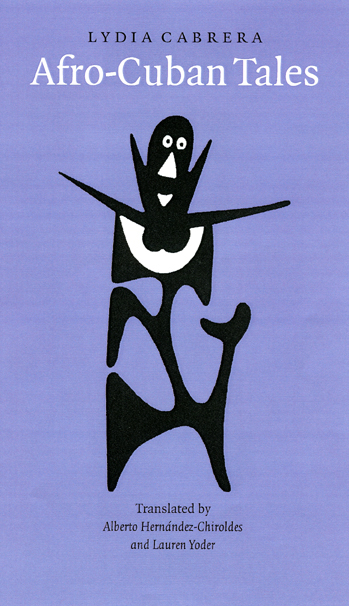
Lydia Cabrera–Afro-Cuban Tales

afro-cuban-tales.jpg

In a sublime synthesis of traditional folklore and imagistic surrealism, Lydia Cabrera’s Afro-Cuban Tales questions the normative spaces occupied by bodies. Deriving from animist tradition, her characters exist in an impossible multiplicity of spaces, being at once animals and plants, humans and gods. Cabrera’s characters endure trials of biological identity and social co-existence, and through these problems they internalize authority, evince taboos, and create a social code. Cabrera’s trickster characters provoke, challenge, or otherwise disrupt the symbolic order of this code. In “Bregantino Bregantín,” a story that recalls Freud’s primal horde theory, as well as the work of more contemporary theorists such as Julia Kristeva and Judith Butler,  narcissist Bull kills all the males of his kingdom and takes all the women for himself.  The sadistic titular turtle of “Papa Turtle and Papa Tiger” uses the power of his dead friend’s antlers to shame, torment, and torture the other animals of his community. And in the magical realism of “Los Compadres,” Capinche seeks to put the horns on his best friend Evaristo by sleeping with his wife–a transgression that ends in necrophilia. This union of sex and death, creation and destruction is the norm in Cabrera’s green and fecund world; the trickster’s displacements of order invariably result in reanimation, transformation, and regeneration—the drawing, stepping-over, and re-drawing of boundaries. A couple of days, Bob hipped me to this really cool Run Wrake short film called Rabbit. While not directly related to Afro-Cuban Tales, this film nonetheless captures the book’s key themes and motifs of death and resurrection, transformation and language, and the trickster’s power to disrupt social and familial codes. Highly recommended.

Girl With Curious Hair–David Foster Wallace

dfw.gif

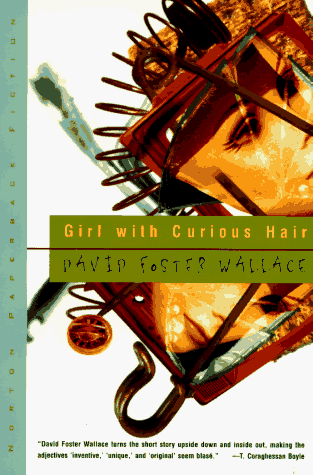
Scott Martin was kind enough to loan me this book. Did he know that it would forever change the way I read? It was the first semester of my freshman year in college, and I was slowly reaching beyond stuff like Henry Miller, Wm Burroughs and Franz Kafka. David Foster Wallace’s short story collection Girl With Curious Hair introduced me to a whole new world of writing. Reading DFW is like having a very witty friend tell you a moving and funny story over a  few beers. He’s hilarious, thought-provoking, and not nearly as hard to read as people seem to think (by the way, simply googling “David Foster Wallace” will yield several vitriolic essays by people who think that DFW is somehow duping his readers. He’s not. These people don’t know a good story when they read one.)

Girl features “real people” like Alex Trebek, David Letterman, and Lyndon Johnson as characters, but constantly destabilizes any realism these figures might lend to the story. The novella included in this collection, Westward the Course of Empire Takes Its Way, alludes directly to John Barth’s Lost in the Funhouse (another book I’ve loaned out and never gotten back). Westward takes a critical but humorous look at how culture is commodified: the plot centers around a reunion for everyone who has ever acted in a McDonald’s commercial. At the reunion, plans are revealed for a series of real-life “Funhouses,” based on the work of “Dr. Ambrose” (Barth’s stand-in in Westward).

Girl with Curious Hair is probably the best starting point for anyone interested in DFW but daunted by 1000 pages of Infinite Jest (IJ is yet another one I loaned out and never got back). Girl‘s stories have a little more ‘pop’ to them than DFW’s latest collection, Oblivion, and Girl tends to be easier to find used than DFW’s other collections, Brief Interviews with Hideous Men (actually a better collection, in my opinion) and A Supposedly Fun Thing I’ll Never Do Again (a collection of hilarious essays and nonfiction).

To sum up: if you still haven’t read DFW go consume this book; when you’re done you’ll be left wondering: “What other good stuff have I been missing out on?”

William Burroughs Cover Gallery

wbjob_france_1969.jpg

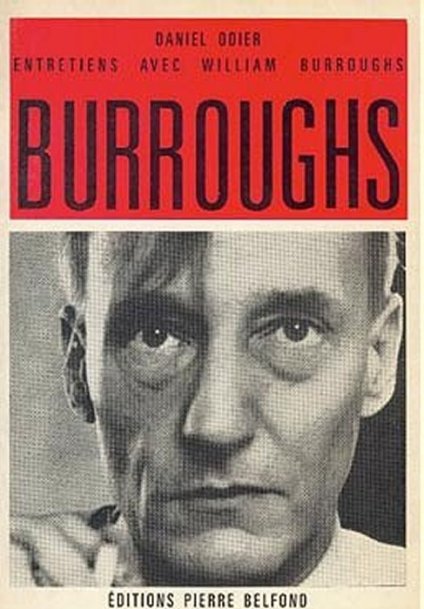
Burroughs appears on a large number of his covers, whether as a photograph, or something more iconic:

wbnl_germany_1992.jpg

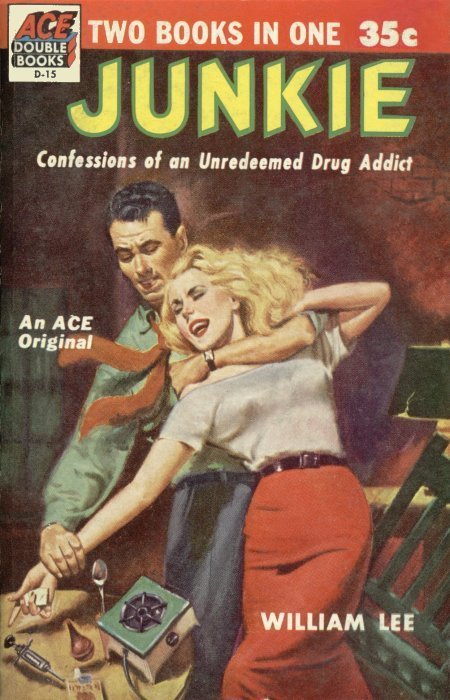
I like this early, lurid pulp edition of Junky. Note the spelling of the title, as well as Burroughs’ pseudonym, William Lee:

junkie_us_ace_1953_front.jpg

The Wild Boys: One of my faves.

wb_us_grove_1971.jpg

This Spanish edition of Naked Lunch really captures the squeamish quality of all things Burroughs:

wbnl_spain_2004.jpg

wbelrev_uk_blackmoor_1971.jpg

Check out the full gallery here.

The Religious Experience of Philip K. Dick

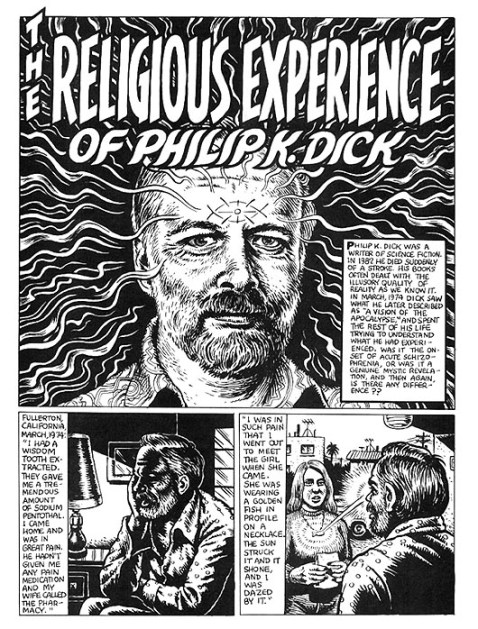
Want to learn about PK Dick’s bizarre apocalypse visions? Sure you do–and who better to tell a bizarre story than underground comix avatar Robert Crumb, whose accoutnt is available here in full.  Dick’s revelations led him to believe that he was coexisting in a Roman Empire that never fell, and that the spirit of the prophet Elijah lived within him. Highly recommended. 

weirdo1.jpg

Foucault’s Pendulum — Umberto Eco

fp.jpg

Go here to see a Foucault Pendulum at work.

Snagged as part of the same cache from the Shinjuku-nishiguchi school that yielded Kinski Uncut. Not really a theft–I traded a VHS tape of a six-hour Cosby Show marathon into the book trade for these books.

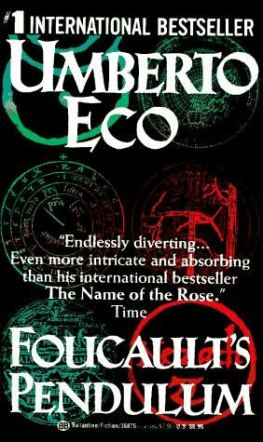
Foucault’s Pendulum is a detective story fertile with semiotic pranks–a ludic maze of meaning, history, and logic. Dan Brown’s The Da Vinci Code basically rips off Eco, keeping some of the gnostic speculation, and dumbing down both the plot and the writing. Steal from the greats, I guess…

Something I love about this book is that it was a huge bestseller and I always find meet people who’ve read it (or find out that people I know have read it). Have you, gentle reader, read this book?

I loaned the book to RP a few years back; perhaps he’ll consider loaning it to you.

America’s Most Commodified: Ernest Hemingway

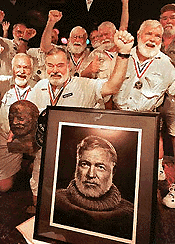
A few posts back, this blog turned some attention to what happens when writers become commodities sold by persona. Commodification results in a kind of lazy cultural shorthand that pre-empts the need to actually read the author and discuss their works: the author instead becomes a signifier of an abstracted ideal, a rubric of adjectives that the consumer can use to “identify” with their own life. It seems to me that no author has been more commodified than Ernest Hemingway. For example, check out The Ernest Hemingway Collection for a selection of clothes, home furnishings, and other chintzy crap. From their website:

“You can now share in his spirit as an adventurer, author and romantic. His legend can be brought to your home through this entire Ernest Hemingway Collection. Every item has been hand selected and approved to ensure authenticity. Enjoy this celebration of the man and the memory.”

Yes! You too can buy a certain kind of authenticity! But do throw pillows and bed spreads really convey a balance of macho resolve and artistic sensitivity just because a corporartion sticks Hemingway’s name on them? Who buys this stuff anyway? According to this article, it’s the “new male shoppers” that are interested in this kind of decor–and what do the “new male shoppers” read? They don’t have to read Hemingway, because distinguished literary journals such as Maxim and Men’s Vogue have already digested and sanctified it for them: Hemingway gets the stamp of approval–he was macho, a hunter and a drinker and a fighter–just one of the frat boys.

Years ago, at a party in Gainesville, I remember a guy bringing up Hemingway. I was on the outs with Hemingway at this point, so I prodded the guywhy did he like Hemingway? What about the work was so meaningful to him? More prompting yielded what I should have guessed: the guy drunkenly, laughingly admitted that he hadn’t read anything by Hemingway, it was just a stock answer that he gave to the question: “Who’s your favorite writer?”

ernest.gif

Who are the future stock answers? It seems like the hard-drinking ex-pat writers of the 30’s and 40’s had the right balance of persona and mystique to create their own mythos–but what about today’s greats? How will the future sell them?

Guy Fawkes Day and V for Vendetta

“Remember, remember the 5th of November…”

I was lucky enough to live in New Zealand for a few years as a kid, so I got to experience Guy Fawkes Day. We made effigies of Guy, and then we burned them on a bonfire. There was a barbecue, and fireworks. To me it seemed a strange mixture of the Fourth of July and Halloween.

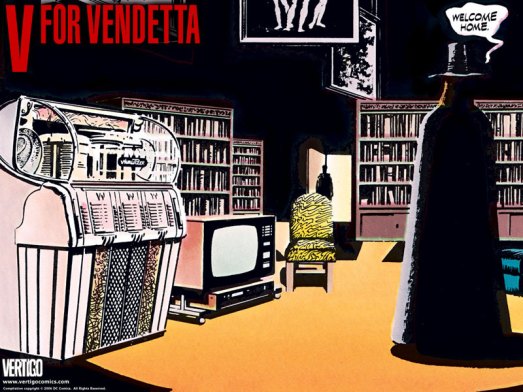
It was a few years after my last Guy Fawkes experience that I read Alan Moore’s V for Vendetta. V, an anarchist who wears a stylized Guy Fawkes mask, wages a vigilante war on a harsh authoritarian government. Along with Frank Miller’s The Dark Knight Returns, V was a first for me, something different than the stuff I was reading at the time, stuff like The Uncanny X-Men and the ill-fated Valiant Comics imprint (I actually made a small fortune selling early Valiant issues I owned).  

A film version of V for Vendetta was released in 2006; Alan Moore famously had his name removed from it. I enjoyed the film, although it certainly wasn’t as good or thought-provoking as Moore’s original story; and even though the film looked good, the passive experience of watching an action movie can’t measure up to David Lloyd’s original art work and that wonderful space between the panels of comics that engages the reader’s imagination.

v_for_vendetta_5_800×600.jpg

This afternoon I finished the first graphic novel of Alan Moore’s  run writing Swamp Thing, and I can’t wait until my library hold on the second graphic novel comes in. I had no idea Saga of the Swamp Thing would be as good as it was, nor as beautifully illustrated; it’s actually much better than V for Vendetta or Moore’s other famed work, Watchmen (and none of these titles are even in the same league as Moore’s masterpiece, From Hell). Alan Moore and Steve Bissette’s run on the DC Comics series essentially led to DC’s creation of the edgier Vertigo imprint for their more “mature” titles, such as The Sandman. These titles helped to change the audiences of “comic books” and helped to make the graphic novel a new standard in the medium (no mean feat, considering the fanboyish culture of comic nerds, a culture that prizes rarity of print run over quality of storytelling).

V for Vendetta illustrates what happens when we don’t allow for dissent, what happens when ideas are both prescribed and proscribed, and all dialogue is muted. Authoritarian governments consolidate their power from the silencing of ideas. A healthy society requires all sorts of opinions, even ones we don’t like. The smiling Americans in this photo aren’t burning effigies of would-be revolutionaries, they are burning something much more dangerous–books.

book-burning.jpg

A Wrinkle in Time

I loved this book as a kid. Madeline L’Engle’s A Wrinkle in Time explores the the intersections of space and time against a backdrop of adolescent angst. Our intrepid heroine Meg goes on a trans-dimensional quest to find her missing physicist father. Dad has disappeared due to his work on a project involving a tesseract. Go check out Tomorrowland’s brilliant write up of the tesseract.

Charles Bukowski

I must have been in the 1oth or 11th grade when I borrowed three Charles Bukowski novels from M***ael J***ings. These were:

Women, easily my favorite and Bukowski’s best. I didn’t return this one.

The short story collection, Tales of Ordinary Madness. I kept this one too, but it is no longer in my possession. Loaned out, never to be returned.

And another collection, The Most Beautiful Woman in Town. I think I gave this back; anyway, I don’t have it anymore.

I was reading Henry Miller and Hemingway at the time, and macho Bukowski fit right in. Something about being a teenager, trying to gain access to the “adult world”–or something like the adult world. How to act, what to say. I read just about all the short stories that Bukowski wrote. Factotum and Post Office were two of my favorites. Everyday when I see our mailman I think of Post Office.

 Our mailman is old, and skinny as a sick girl, and he has a nose like a bird’s beak to boot. He runs his entire route; he has a strange little knock-kneed hustle. He always tells me to “Stay safe” when I see him. He’s withered. Post Office makes working for the post office sound like an annihilating, damning, Sisyphean task. I wonder: “Does the mailman not feel safe?”

Charles Bukowski

Bukowski painted some pictures.

Factotum was recently made into a movie starring Matt Dillon as Bukowski’s alter-ego, Henry Chinaski. Mickey Rourke played the “real” Bukowski in a horrible-looking movie called Barfly. I haven’t seen either film.

So Bukowski’s sort of been “branded” commodified as “type”–like Hemingway and Miller (and HST, and Anaïs Nin, and Wm Burroughs,  and Nietzsche, and so on) He becomes a stolen writer, a lazy gesture, a footnote in the movie Swingers. Then again, maybe a few people saw that movie and picked up Hollywood, a really funny late-period Bukowski novel about making the film that will come to be Barfly. In Hollywood, Bukowski endures the trouble of having other people manipulate his writing and sweats sweats sweats that he might have sold out.

Scary Books–Pt IV

What are some of your favorite scary books and stories? Please share.

Jeff Smith–Bone

I got Jeff Smith’s Bone: One Volume Edition in the mail today. I love getting mail, maybe that’s why I love Netflix so much.

This book collects every single issue of Smith’s self-published Bone comic book series, which first came out back in the early nineties…I still have the first couple of issues (think they might be worth anything?)

When Bone originally came out, I was very much into Dave Sim’s Cerebus and other black & white indie comics of a “dark” nature–and despite Dave Sim’s recommendations, Bone was too sweet-natured for me. I couldn’t appreciate Smith’s Walt Kelley-esqe art (the Pogo strip had perplexed me as a kid), and Smith’s layered plot moved too slowly–I realize now it started slow because Smith had all 1300 pages of the series plotted out from the first issue.

A few weeks ago, I was searching through some old graphic novels, looking for a particular Asterix book for some reason, when I came across the first graphic novel in the Bone series, Out from Boneville. I started re-reading it to find that it was waaaaaay funnier than I had realized, and that the art was beautiful and logical and spare and clean. Luckily, Smith has made his work easily accessible, in one big (seriously, this book is heavy) edition.

Will post more on this as I read. 

Scary Stories: Scary Books–Part III

When was the last time you read Poe? Stories like “The Tell-Tale Heart” and “The Fall of the House of Usher” explore the ebb and flow of manic identity and the horror of displacement. These are rich texts. While you’re revisiting Poe, check out the lesser-known but masterful “Descent into the Maelstrom.”

I always read “The Raven” with my students on Halloween, and then we watch The Simpsons version of “The Raven” from one of the first “Treehouse of Horror” episodes.

Check it out!


This edition makes a great introduction to Kafka. “In the Penal Colony,” the horrific tale of a machine that kills you by inscribing your sentence on you, is pretty scary.

From Hell: Scary Books–Part II

 Alan Moore (writer), Eddie Campbell (artist).

Alan Moore’s well-researched, 500+ page graphic novel theorizes that the Jack the Ripper murders were in fact a conspiracy to get rid of a royal’s illegitimate child who posed a threat to the Victorian lineage. I can’t say enough good things about this book. I am a huge fan of graphic novels, and this is one of the best, right up there with Art Spiegelman’s Maus, Dave Sim’s Cerebus and Joe Sacco’s Palestine. The intricate plot involves Masonic conspiracy, Victorian sexual mores, 19th century surgery, insanity, and a blood ritual resulting in transcendental time travel. Eddie Campbell’s art does a wonderful tight-rope act in putting order to chaos. His scratchy inks burst with emotion–I can’t imagine a better artist for this story. I actually wonder if some of Moore’s other work (V for Vendetta, Watchmen) would resonate deeper with me had an artist of Campbell’s caliber (Bill Sienkiewicz or Mike Mignola, possibly) worked on those books. I doubt it though. I always recommend this book to persons who don’t think graphic novels are literary. I won’t loan it out though. I don’t want it to go MIA.

(By the way, the Hughes brothers-directed movie adaptation of this novel, starring Johnny Depp, IS NOT the same story at all. I know, hard to believe that Hollywood could screw up great source material, but nonetheless true).

Scary Books–Part I

I love Halloween.

Some favorite scary books:

The monster’s point of view.

One of my classes is reading this version of Macbeth right now. I know–the cover sucks (the cauldron look’s like a latte), but I think it makes a fantastic introduction to Shakespeare; great for highschool students.

 We’re also watching Roman Polanski’s 1971 film version.

macbeth1.jpg

 And who can deny this old chestnut?

Fun links, methinks

Ricotta Park is stealing my gig. Fair enough, considering my gig is stealing. RP does a few mini book reviews today, including a review of The Psychic Soviet by ex-Nation of Uylsses frontman Ian Svenonious. Some consider Ulysses by James Joyce to be the best book ever written in English. Not me though! (It’s Moby Dick, hands down).

Go hit up Troglogyte Mignon to see some art (you need it kid!) Her watercolors are humorous and often affecting. A sample below (reproduced with permission of the artist).

smitten-b.jpg smitten panty lovers unite troglodyte mignon art


I found BibliOdyssey when looking for other “biblio” blogs. I was crushed, green to the gills with envy. This blog is fantastic! Go get some knowledge.

Shelfari is MySpace for book nerds. Go set up a shelf and meet some people. Argue about books. Posit Hemmingway as way overrated, or find that certain somebody who also trucked their way through Celine’s Journey to the End of the Night.

If you live in Jacksonville, no doubt you already travel daily to The Urban Core and Urban Jacksonville. What’s that you say? You haven’t visited yet? Go get some awareness (local, son!) Urban Jax has a great post today on artist Dan May. Urban Core was kind enough to include this blog in his write-up of Top 10 Jacksonville Blogs (the ‘klept came in lucky number 7! woo!) Urban Core was voted the best blog in Jacksonville by local indie paper Folio Weekly.

More fun links and hi-jinks next week.

Abominable Fallout by Dan May. Copyright Dan May, 2006.

Graham Greene and Donnie Darko

The Portable Graham Greene, ed. Philip Stratford. I haven’t read a single story in this beautiful Viking Portable Library edition, save “The Destructors,” (full text here) (sorry, the page is no longer up [3/07]. Ed.) which I only read because it was referenced in one of my favorite movies, Donnie Darko.

I found this one in another teacher’s classroom. My uncle Lee had just given me a copy of Greene’s The Quiet American, which I finished in a weekend; it’s a slim, spare novel, and I enjoyed it quite a bit, despite the fact that Brendan Fraser was on the cover (the book was re-released to coincide with a film adaptation that I never saw). Anyway, I’d just read TQA, and I saw this beautiful Viking Portable Library edition (I’m a big fan of VPL), so I surreptitiously absconded with it only to never read it. A meaningless theft?

Anyway, last year a new director’s cut of Donnie Darko came out; the wife and I saw it at the San Marco Theater, I was reminded of the book, and read “The Destructors.” “The Destructors” is a simple story about a teenage gang that destroys a beautiful old house from the inside to the outside. “The Destructors” functions as an abyss structure or reading rule that informs the text-proper of Donnie Darko (it’s assigned reading from an English teacher). If you’re a fan of this movie (and if you’re not, why not?!) check out this story; it’s short and to the point. Flipping through it again, I realize that I should probably put The Portable Graham Greene back on the “To Read” stack.

If you haven’t seen Donnie Darko, enjoy the following review courtesy The Comic Critic.

Riddley Walker–Russell Hoban

I never gave Riddley Walker back to Patrick Tilford (aka TLFRD). A few years ago I loaned it to a student who never returned it. Said student never returned Dune, or The Left Hand of Darkness, or several Jules Verne novels either. Doesn’t matter, I know that he read them.

This book is a favorite. Russell Hoban’s coming-of-age story takes place in a future that has regressed to the iron age due to a catastrophic war. Hoban writes in his own language, a mutated English, full of fragments of the 20th century.

I couldn’t find an image of the edition I stole/lost. This edtion from 2000 features an introduction by Will Self, whose latest book, The Book of Dave, apparently was directly influenced by Riddley Walker. Will Self’s book Great Apes deeply, deeply disturbed me. Nothing repulses me more than images of chimpanzees dressed as humans; Great Apes is the literary equivalent.

Great Apes was an airport bookstore buy; I suppose at some point on this blog I will address the “airport bookstore buy.”